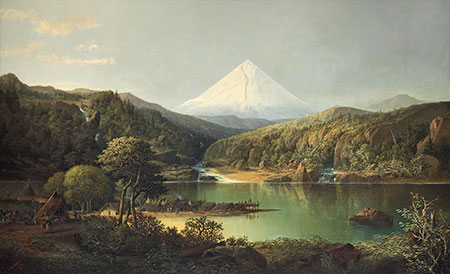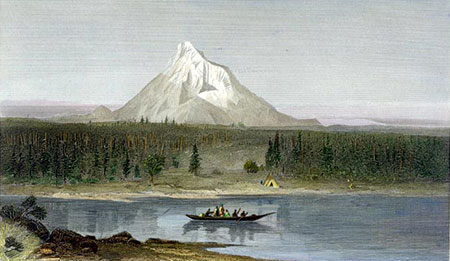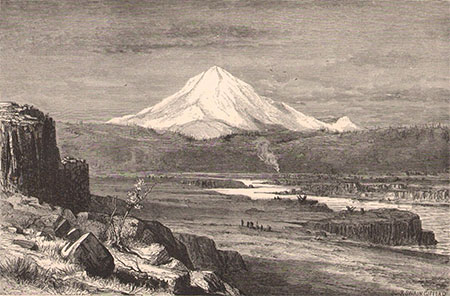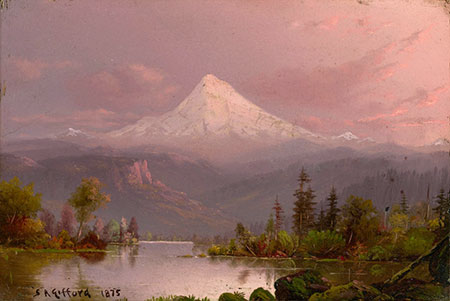
First Look at the Gorge Fire

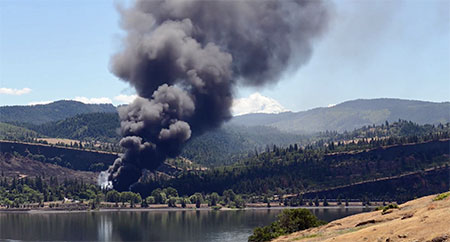
GorgeFire01

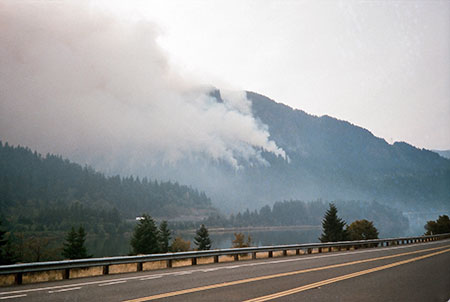
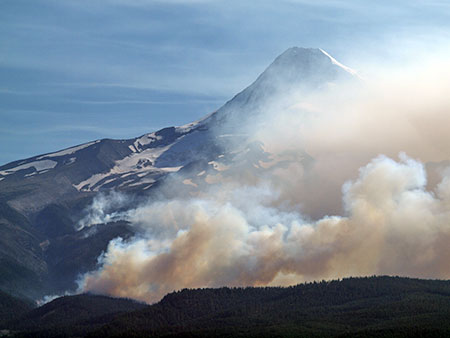
Eagle Creek Fire during the initial, explosive phase (US Forest Service)

Officially the Eagle Creek Fire in the Columbia River Gorge is still fully involved, now at 35,000 acres and just 10 percent contained by firefighters. Rain in the forecast for the coming week suggests that the fire will continue to slow as October approaches, and our attention will turn toward the changes that fire has once again brought to the Gorge.

The Gorge is a second home for many of us, and in some ways the fire was akin to watching our “home” burn. But that’s a human perspective that we should resist over the long term if we care about the ecological health of the Gorge. Fire is as natural and necessary as the rain in this amazing place, though that’s a truth that we have been conditioned to resist. I’ll post more on that subject in a subsequent article.

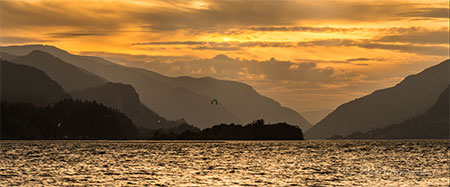
GorgeFire02

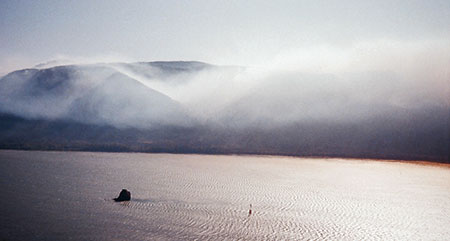
Surreal Gorge landscape under smoky skies from the Eagle Creek Fire (US Forest Service)

For now, we’re just beginning to learn about the impact of the fire, even as it continues to burn. Thankfully, no lives have been lost, no serious injuries reported and very few structures have been lost. That’s a testament to our brave emergency responders (many of them volunteers) and the willingness of most Gorge residents to abide by evacuation orders. It has surely been a frightening and stressful time for those who call the Gorge home.

The impact on public lands is still largely unknown, but the Oregon side of the Columbia River Gorge has one of the most concentrated, most heavily used trail systems in the world, and the damage to trails is likely to be significant. The Forest Service is likely to close affected trails for months or even years in order to assess the damage and determine how best to restore them.

GorgeFire03

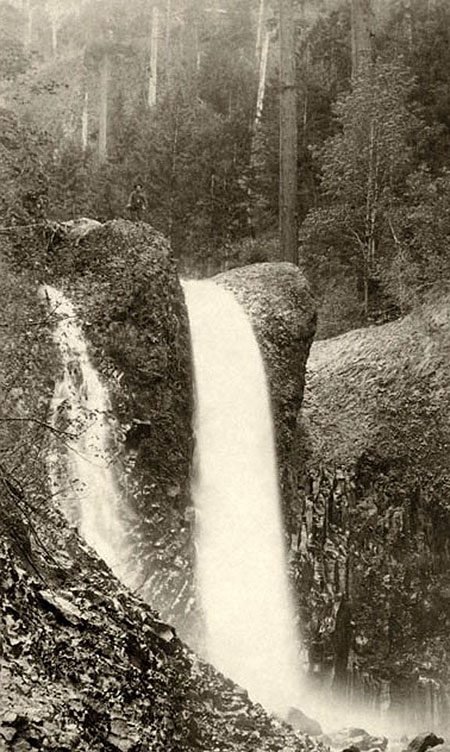
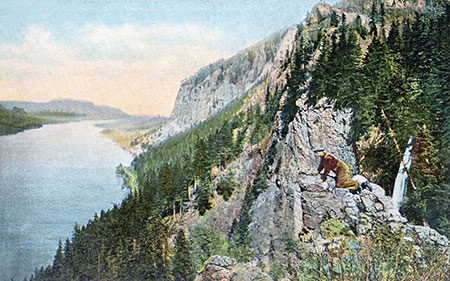
1930s hiker at a viewpoint along the Perdition Trail (with Multnomah Falls beyond)

If you’ve lived here for awhile, you’ll also recall that we lost the Perdition Trail, an iconic, prized connection between Wahkeena Falls and Multnomah Falls, to the 1991 Multnomah Falls Fire. The reasons were complex, and it will tempting for the Forest Service to let some trails go, given their shrinking trail crews. We should not allow this to happen again.

Every trail should be restored or re-routed, and new trails are also needed to spread out the intense recreation in the Gorge. Trails advocates will need to work together to ensure this. Trailkeepers of Oregon (TKO) has set up a mailing list dedicated to Gorge trail restoration, if you’re interested in working on future volunteer projects. You can sign up for periodic updates and events here.

______________________

On September 10, I drove SR 14 on the Washington side of the Gorge for my first look at the fire, starting in Hood River. Below each of the following annotated photos, I’ve linked to much larger versions that I encourage you to view if you’re reading this on a large monitor, as they provide a better sense of the fire’s impact.

As hoped, much of the burn is in a patchy “mosaic” pattern, a healthy and desirable outcome for the ecosystem. This is how fires used to occur in our forests, before a century of suppression began in the early 1900s. Mosaic burns allow for mixed forest stands and exceptional wildlife habitat to evolve, even as we might mourn the loss of familiar green forests.

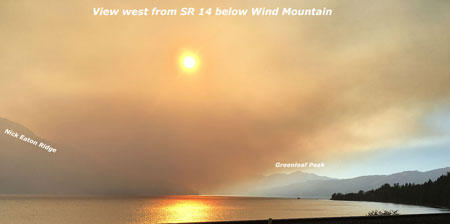
The wind pattern on Sunday had shifted from westerly to a northwesterly direction, producing a bizarre effect: smoke from the fire hugged the vertical wall that is the Oregon side of the Gorge, while the Washington side was cleared of smoke and under a bright blue sky. The view, below, shows this split-screen effect from near Wind Mountain.

GorgeFire04

(Click here for a large view)

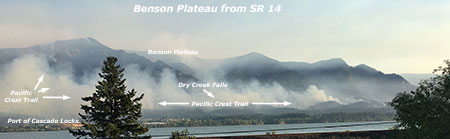
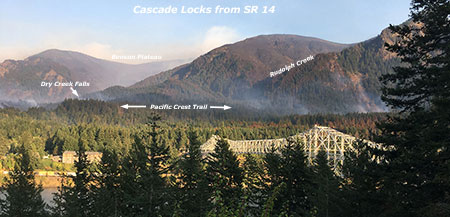
Moving west, the combination of ongoing wildfire and back-burning by firefighters was producing a continuous plume along the base of the Oregon cliffs, from Herman Creek east to Shellrock Mountain, as seen below. The Pacific Crest Trail traverses this section, and is undoubtedly affected by the fire.

GorgeFire05

(Click here for a large view)

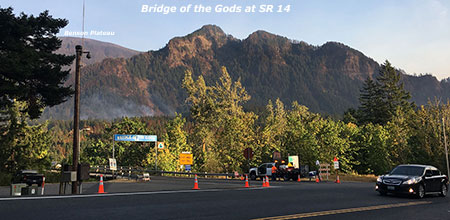
From the Bridge of the Gods wayside, opposite Cascade Locks, the impact of the fire on the canyons that fan out from Benson Plateau is visible. Some areas (below) show a healthy mosaic burn, while some of the upper slopes show wider swaths of forest impacted. The alarming proximity of the fire to the town of Cascade Locks is also evident in the scorched trees visible just above the bridge in this view. This was a close call for those who live here.

GorgeFire06

(Click here for a large view)

Turning further to the east from the Bridge of the Gods wayside (below), the ongoing wildfire and back-burning shown in the previous photos can be seen in the distance, beyond the town of Cascade Locks.

GorgeFire07

(Click here for a large view)

The scene at the Bridge of the Gods bridgehead (below) is an ongoing reminder that we’re a long way from life returning to normal for Cascade Locks residents. For now, I-84 remains closed and this is the only route into town, and only open to those with proof of residency.

GorgeFire08

(Click here for a large view)

Moving further west, the 2000-foot wall of cliffs in the St. Peters Dome area that stretches from McCord Creek to Horsetail Creek (below) come into view.

Here, the fire has also burned in mosaic pattern, with many patches of green forest surviving. But the frightening effects of the firestorm that occurred in the first days of the fire is also evident, with isolated trees on cliffs hundreds of feet above the valley floor ignited by the rolling waves of burning debris that were carried airborne in the strong winds that initially swept the fire through the Gorge.

GorgeFire09

(Click here for a large view)

A second view (below) of the St. Peters Dome area shows the burn extending toward Nesmith Point, nearly 4,000 vertical feet above the Gorge floor.

GorgeFire10

(Click here for a large view)

Moving west along SR 14 to the viewpoint at Cape Horn, the impact of the fire on areas west of Horsetail Falls comes into view (below), along with a better sense of the mosaic pattern of the burn. This view shows the Horsetail Creek trail to be affected by the first, as well as the slopes on both sides of Oneonta Gorge.

In this earlier piece on Oneonta Gorge, I described the dangerous combination of completely unmanaged visitor access and an increasingly dangerous logjam at the mouth of the Gorge. The fire will almost certainly trigger a steady stream of new logs rolling into Oneonta Gorge and adding to the massive logjam in coming years.

GorgeFire11

(Click here for a large view)

Moving further west, the area surrounding iconic Multnomah Falls and Wahkeena Falls comes into view (below). As with other areas, the fire burned in vertical swaths along the Gorge face, leaving more mosaic patterns in the burned forest. From this view, trees along the popular 1-mile trail from Multnomah Falls Lodge to the top of the falls looks to be affected by the fire, as are forests above Wahkeena Falls.

GorgeFire12

(Click here for a large view)

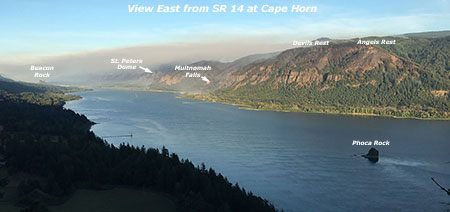
This wide view looking east from above Cape Horn (below) shows most of the western extent of the fire, with the north-facing slopes of Angels Rest heavily burned, while the west and south-facing slopes were less affected.

GorgeFire13

(Click here for a large view)

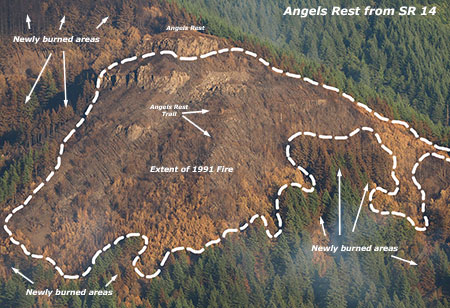
A closer look at Angels Rest shows that the burned area in the current fire closely matches the area that burned in the 1991 (below), along with slopes on the opposite side of Coopey Falls. The Angels Rest Trail was heavily impacted by the 1991 fire, and will clearly need to be restored after this fire, as well.

GorgeFire14

(Click here for a large view)

I’ve marked an approximation of the 1991 fire extent at Angels Rest in this closer look (below) at the summit of Angels Rest, based on tree size. Tall conifers burned in today’s Eagle Creek fire survived the 1991 fire, and mark the general margins of that earlier fire.

Areas within the 1991 burn were still recovering and consisted largely of broadleaf trees, like Bigleaf and Vine maple. Depending on the heat of the fire and whether their roots survived, these broadleaf trees may be quick to recover, sprouting from the base of their killed tops as early as next spring.

The recurring fires at Angels Rest offer an excellent case study for researchers working to understand how natural wildfires behave in successive waves over time. This, in turn, could help Gorge land managers and those living in the Gorge better plan for future fires.

GorgeFire15

(Click here for a large view)

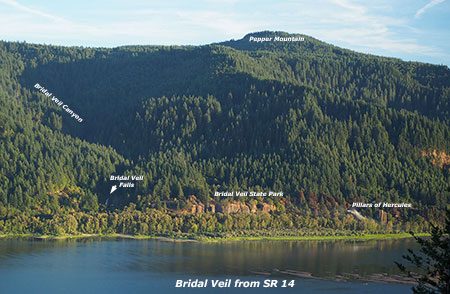
Finally, a look (below) at the western extent of the fire shows a few scorched areas in Bridal Veil State Park, including the forest around the Pillars of Hercules. Bridal Veil Canyon appears to have escaped the burn, though some trees near Bridal Veil Falls may have burned.

GorgeFire16

(Click here for a large view)

I’ve titled this article as my “first look” because the story of the Eagle Creek fire is still being written. Only after the fall rains arrive in earnest will we have a full sense of the scale of the fire.

As new chapters in the Eagle Creek saga unfold, I’ll continue to post updates and share perspectives on this fire and our broader relationship with fire as part of the natural systems that govern our public lands. With each new fire in close proximity to Portland, we have the opportunity to expand and evolve how we think about fire, and hopefully how we manage our public lands in the future.

More to come…

TKO’s 10th Anniversary at Owl Point

OVR10th00

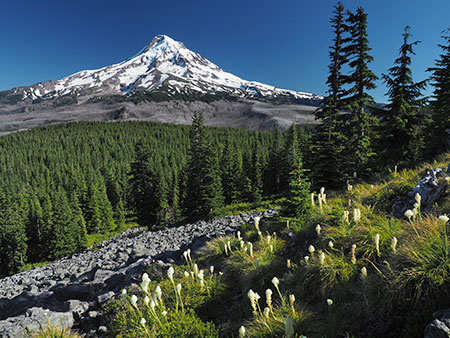
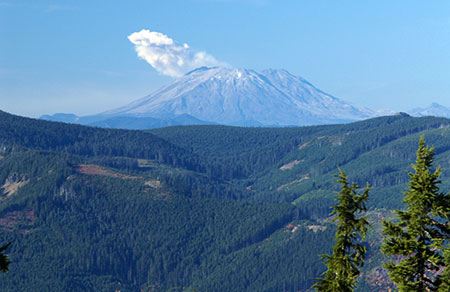
Mount Hood from Owl Point

Ten years ago, on September 22, 2007, Trailkeepers of Oregon (TKO) was borne out of an ad-hoc effort by a group of volunteers to save what is now known as the Old Vista Ridge Trail. On September 10 of this year, TKO will be celebrating our anniversary with (naturally!) a day of trailkeeping on the Old Vista Ridge Trail.

But this day will be a first for TKO, as we will have U.S. Forest Service officials on hand to formally re-dedicate the trail, bringing it out of the shadows and officially recognized are more than half a century. Of course, there will be some celebrating at Owl Point to wrap up the festivities, too!

OVR10th01

(Click here for a larger map)

The Old Vista Ridge Trail is a true gem. It winds through subalpine forests past a string of dramatic views, sprawling talus slopes and tiny meadows before arriving at Owl Point, the star attraction along the old route. Owl Point offers an exquisite view of our favorite mountain, and from a unique perspective that is surprisingly uncommon, even to longtime Mount Hood lovers.

OVR10th02

This sign once marked the start of the Old Vista Ridge Trail

Under a new agreement with the Forest Service, TKO will maintain the Old Vista Ridge Trail in perpetuity as part of bringing it back into the official USFS trail system. The first phase of this adoption agreement extends to Alki Point, one stop beyond Owl Point, where the big Washington volcanoes spread out on the northern horizon. In the future, TKO has plans to adopt the rest of the old trail to tiny Perry Lake, and also to build a new connector trail that will eventually make Owl Point a destination that can be reached from Laurance Lake, just a few miles from Parkdale.

Here’s a look back to how the Old Vista Ridge Trail came on to TKO’s radar, or more accurately, how this old trail inspired the volunteers who would come to form TKO.

Following a Faint Path in 2006

OVR10th03

The author visiting with the incomparable Roberta Lowe!

The Old Vista Ridge story starts with epic field guide authors Don and Roberta Lowe. I can’t begin to describe the impact their classic books had on my life growing up in Oregon, and I was stunned when they answered a letter I wrote to them as a student way back in the 1980s, ans was working on a field guide project of my own.

Today, I’m happy to report that I meet with Roberta Lowe periodically for lunch, and I continue to embarrass her by bringing along stacks of their books for autographs every time we get together (I have dozens… sorry, Roberta!). One of their books holds the key to Old Vista Ridge. It’s this one:

OVR10th04

This is the most collected of the Lowe’s many books

The Lowes published the now-coveted “50 Hikes” guide in the mid-1980s, and it was unique in that it contained several “lost trails” in Mount Hood country — old routes that hadn’t been maintained in years and were on the brink of becoming forever lost to neglect.

One of these lost gems was the Old Vista Ridge Trail. Don Lowe’s photo of Mount Hood from Red Hill, the off-trail cinder cone that was the main destination in their description of Old Vista Ridge stuck in my mind for two decades before I finally made the effort to explore this old route in 2006.

Red Hill can be seen from the Timberline Trail, and as I planned the hike from this high perspective in the summer of 2006, I also noticed a series of rocky outcrops and meadows near Red Hill, along the Old Vista Ridge Trail. Where these viewpoint accessible from the old trail, too?

OVR10th05

Looking toward Red Hill and Owl Point from the Timberline Trail (Mt. St. Helens on the horizon)

On October 6, 2006, hiking partner and fellow photographer Greg Lief joined me for a first trip along the Old Vista Ridge Trail. At first, the faint trail was encouraging: lots of downfall, but also sections that were completely intact after more than 40 years of neglect.

OVR10th06

Greg Lief on the Old Vista Ridge Trail in 2006

OVR10th07

Hundreds of logs blocked the trail in 2006

OVR10th08

A few signs of maintenance, long ago – note the cut ends on the logs in the foreground

But as we pressed further from that “Trail Not Maintained” sign at the trailhead, conditions deteriorated rapidly. By the time the old trail crested the ridge top, we were wading through waist-deep thickets of huckleberries and mountain ash, and barely able to find the old tread.

We weren’t the only people visiting Old Vista Ridge, though. Plastic flagging periodically marked the route, especially where the going was most rough. Clearly, other folks cared about this old trail.

OVR10th09

Yikes… rough going, here!

The string of viewpoints I had seen from above on the Timberline Trail, proved illusive once we were down in the forest. Eventually, we followed a game trail through a beautiful subalpine meadow and came to what I thought might be the main viewpoint — and a stunning view of Mount Hood emerging from autumn clouds in the late afternoon sun. After capturing this beautiful scene, we declared victory, and trudged back through two miles of brush and fallen trees to the trailhead.

OVR10th10

Our first look at the view from The Rockpile in October 2016

Once back at home, I realized that the viewpoint we had reached was not the one we were aiming for — the prominent outcrop I had seen from up on the Timberline Trail. Instead, it was a talus dome now known as The Rockpile, just a quarter mile or so from the main viewpoint. Time to return!

So, two weeks later, on October 22, Greg and I returned to fight our way back up the Old Vista Ridge Trail, this time certain we would find that most prominent viewpoint. But first, we pressed on to find the end of the Old Vista Ridge Trail, at tiny Perry Lake. It was more of a pond, but lovely, nonetheless. We also explored the remains of the old Red Hill Guard Station and fire lookout, near the lake.

OVR10th11

Tiny Perry Lake in October 2016

Next, we traced our steps back up the Old Vista Ridge Trail to another viewpoint we had passed along the way, a spot we now know as Alki Point that features a view looking north toward the Columbia River Gorge and the big Washington volcanoes.

OVR10th12

The panoramic view from Alki Point in October 2016

As we stood admiring Alki Point and taking a few photos, we had an amazing stroke of luck: steam suddenly began billowing from Mount St. Helens! We stayed and watched the minor eruption, capturing these rare photos of the event:

OVR10th13

Mount St. Helens erupting on October 22, 2006

OVR10th14

(Click here for a larger view)

The last order of business on that memorable October 22 trip was to find the main viewpoint that had stood out so prominently from the Timberline Trail.

We soon discovered that it was just off the main trail, and could be found by skirting above a series of talus slopes adjacent to the trail. As we approached the rugged, windswept viewpoint, a Great Horned Owl floated close overhead — and now Owl Point had a name!

OVR10th15

Our stunning first look at Mount Hood from Owl Point in October 2006

Our first look at Owl Point was simply stunning, and far beyond what I had imagined when looking down on the area during that summer of 2006. The viewpoint was just far enough from the mountain to give remarkable perspective, but close enough that we felt we could reach out and touch it. It is simply one of the finest views of the mountain, anywhere.

Bringing Old Vista Ridge back in 2007

The beauty of Owl Point (and later, threats of a proposed dirt bike play park that would destroy the trail) stuck in my mind after those first trips in the fall of 2006, and by the summer of 2007 several folks on the fledgling Portland Hikers online forum (now OregonHikers.org) conspired to simply go and maintain this beautiful old trail. We really had no idea what we were doing, nor that we would be creating some hard feelings with the USFS that we would eventually have to reconcile in order to formally adopt the trail.

OVR10th16

September 22, 2007 founding trip to Old Vista Ridge

The 2007 volunteer work included several ad hoc “clipper trips” by Portland Hikers forum members to clear brush, and dozens of logs were cleared by experienced chainsaw volunteers among our web community. Our most notable of these informal events came on September 22, 2007, when a group of volunteers met to take on the most unruly sections of brush along the old trail.

OVR10th17

Volunteers made a big impact that day!

OVR10th18

Sawing logs in 2007

The impact we made on that day particular inspired everyone, and on way down the mountain that evening, we talked about creating a service arm of the old Portland Hikers community. A few weeks later, we had formed what was originally known as the “Trails Association of Oregon”, though by early 2008 we had switched to Trailkeepers of Oregon (TKO). Soon, we had non-profit status, and the rest if history, as the saying goes!

OVR10th19

Celebrating at Owl Point on September 22, 2007

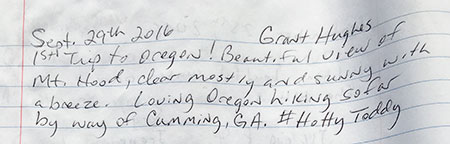
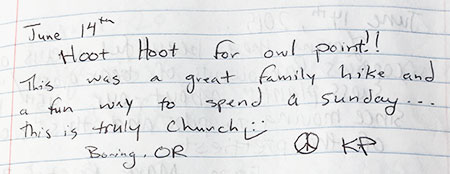
If you haven’t guessed by now, I’ve been involved with TKO and its Oregon Hikers Forum and Field Guide from the beginning, so the grand re-opening of Old Vista Ridge is a pretty big thrill for me. In 2012, we posted a summit log at Owl Point, and there is nothing more rewarding than reading the inspired comments from hikers reconnecting with nature as they take in the view. Here are some samples from the past couple years:

OVR10th20

OVR10th21

OVR10th22

OVR10th23

OVR10th24

OVR10th25

OVR10th26

OVR10th27

As we move forward under the new agreement, TKO will continue to care for this trail in partnership with the Forest Service. We have lots of work planned to improve the trail and make the experience even better, and I’ll periodically showcase that work here.

How to Join TKO at the September 10th Event

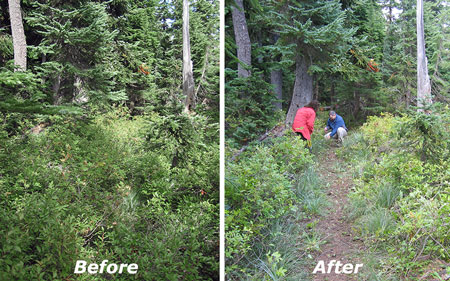
If you have never been part of a trail stewardship project, TKO’s September 10 event at Old Vista Ridge is a wonderful way to start. For the adventurous, we’ll have a couple crews using crosscut saws to clear logs — a very cool experience, if you’ve never done that before.

For the less adventurous, we’ll also have crews doing what we did way back in 2007: taking loppers to huckleberries and mountain ash along the trail. If you’ve pruned a hedge, then you can do this!

OVR10th28

TKO volunteers in a recent project at Punchbowl Park, near Hood River

One of the best things about being part of a TKO crew is knowing that you’ve helped keep our trails around for future generations to enjoy. It’s a VERY satisfying feeling! It’s easy to RSVP for the event, but space is limited. Just go to this link and sign up online on the TKO website:

September 10 • Old Vista Ridge 10th Anniversary Project

We’ll have other fun events as part of this special stewardship project, including the trail dedication and a 10th Anniversary celebration at the end of the day.

As always, thanks for reading the WyEast Blog, and I hope you’ll consider joining us on September 10, too!


Addendum

Over the past week, TKO has been working closely with the U.S. Forest Service to monitor the Eagle Creek Fire in the Columbia River Gorge and the potential of the fire to move south. Based on an abundance of caution for the health and safety of the many volunteers who had registered for this event, TKO and the Forest Service have decided to postpone the September 10 Old Vista Ridge event until a later date. I’ll provide updates here on the blog, when available.

To respond to Buck’s comment (below), TKO will be also working with the Forest Service to assess the trail damage in the Gorge after the smoke clears, and will be working (likely for years) to restore the trails there. In the meantime, TKO has set up a dedicated e-mail list that you can join to receive periodic updates on that effort and opportunities to help:

TKO Response to the Eagle Creek Fire & Special E-mail List

Thanks for asking, Buck!

Proposal: Raker Point Trail

01RakerPointPostcard1940s

The view from Raker Point in a 1930s postcard

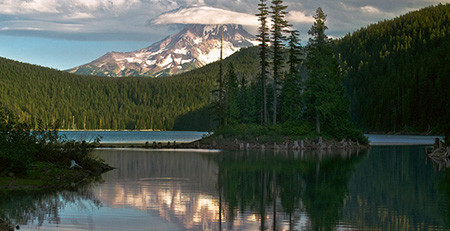
Each year, thousands visit beautiful Lost Lake, one of the most beautiful and iconic places in Mount Hood country. The view of Mount Hood mirrored in the lake has been photographed countless times and has graced hundreds of postcards, calendars and scenic books. Some visitors to the lake climb the old lookout trail to Lost Lake Butte, which provides a sweeping view of the mountain, but only glimpses of the lake as once-burned forests continue to recover there.

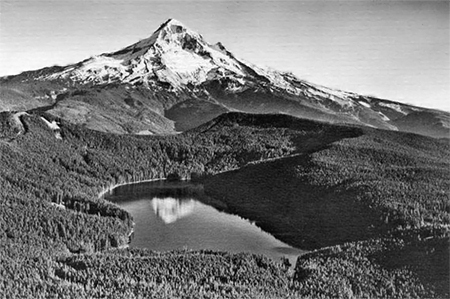
Yet, not long ago, another dramatic view was possible: Lost Lake nestled in the forests beneath Mount Hood, framed with blooming Pacific Rhododendrons. This scene was captured from the crest of Raker Point, a rocky spur due north of Lost Lake, and briefly a forest lookout site in the early 1930s.

02RakerPointPostcardLarge1950s

The view from Raker Point as captured in a Ray Atkeson postcard in the late 1940s

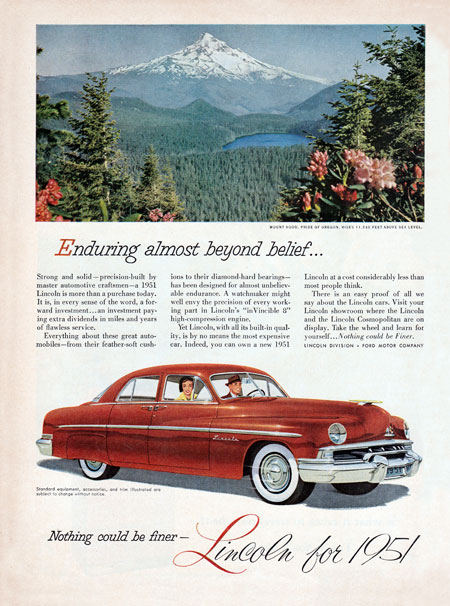
The view from Raker Point appeared in early postcards, and was later captured by Oregon’s famed photographer Ray Atkeson (above) in images that appeared widely in calendars, postcards and even automobile ads (below) in the 1950s.

03RakerPointLincolnAd1951

1951 Lincoln ad featuring the view from Raker Point

Ironically, the famous images captured by Atkeson were made possible by the industrial logging that began sweeping our national forests in the decades following World War II. By the late 1940s, a logging spur pushed over the saddle between Sawtooth Ridge and Raker Point, providing easy access to the spectacular view, even as it enabled the destruction of old growth forests that once grew there.

Today, the old logging road to Raker Point has been decommissioned by the Forest Service and the clearcut slopes are slowly recovering. Now, Raker Point has become all but forgotten.

Where is Raker Point?

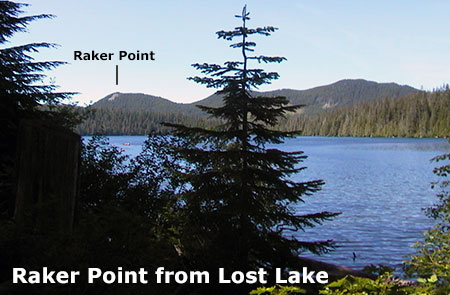
04RakerPointFromLostLake2001

Raker Point isn’t the tallest or most impressive among the Cascade peaks that rise up around Lost Lake, but it is the best positioned for a grand view of the lake and Mount Hood. Raker Point can be seen from the Lakeshore Trail, where it rounds the south end of the lake, as shown above.

When the Forest Service first brought a road to Lost Lake and lookout towers to the Lost Lake area in the 1920s and early 1930s, Raker Point was much more prominent, thanks to wildfires in the early 1900s that had cleared both Raker Point and Lost Lake Butte. Their open summits made ideal forest lookout sites.

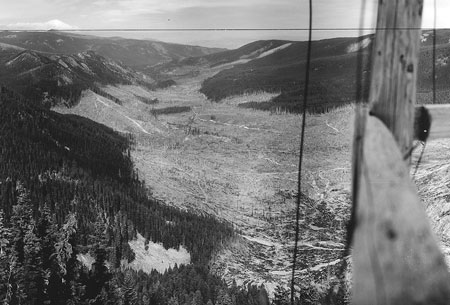
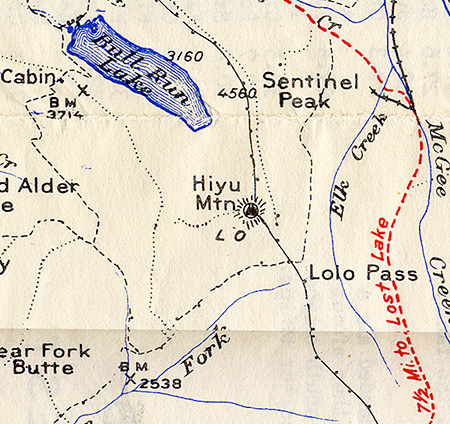
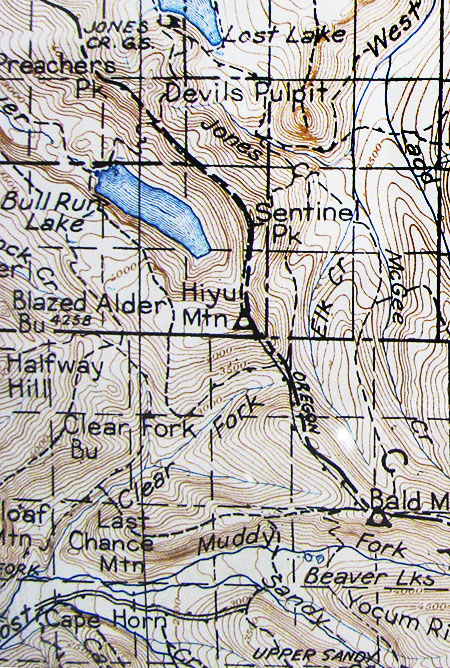
This early 1930s view shows Raker Point and other nearby peaks from Hiyu Mountain, another lookout site located several miles to the south, and Raker Point’s bald summit clearly stands out:

05HiyuMountainView1930s

[click here for a larger image]

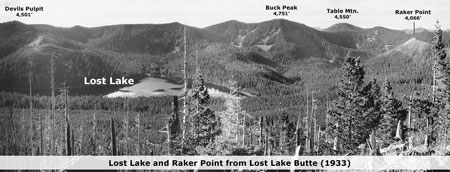
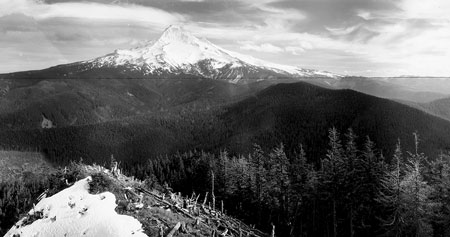
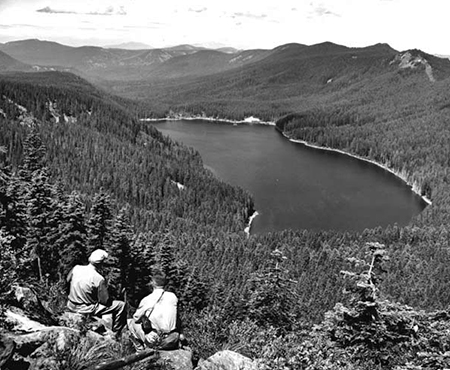
A closer 1933 view from nearby Lost Lake Butte in 1933 shows the scorched summit of Raker Point much more clearly. The impressive old growth forests of the Lost Lake Basin are also on display in this view:

06LostLakeButteWest1933

Scorched Raker Point from Lost Lake Butte in the early 1930s

This rare 1933 perspective of Raker Point and Lost Lake is from Sawtooth Ridge, where a temporary (and misnamed) “Raker Point” lookout was briefly located:

07RakerPointWest1933

[click here for a larger panorama]

The origin of Raker Point’s name is unclear, but it’s likely that an early Forest Service ranger or surveyor named the peak — and perhaps was the namesake, too?

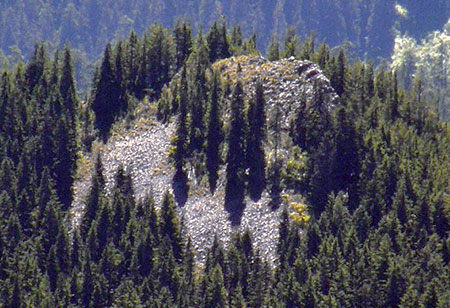
Today, forests have returned to all but the rocky summit and surrounding talus slopes on Raker Point. This view (below) from the Lake Branch Road shows the now green slopes, with just a small opening near the top of the butte. Does this mean the classic view of Lost Lake and Mount Hood captured by Ray Atkeson in the 1940s has been lost?

08RakerPoint03

Raker Point rises above the talus fields along the Lake Branch Road

The answer can be found on the opposite side of Raker Point. This view from Indian Mountain, located a few miles north and across the Lake Branch Valley from Raker Point, shows the still open, rocky crest framed in talus slopes and groves of Noble Fir:

09RakerPointFromIndianMountain2011

The rocky crest of Raker Point from the north, as viewed from Indian Mountain

While rhododendrons may not thrive on the summit, the views of Mount Hood and Lost Lake are clearly still intact, though probably framed in Noble fir boughs and drifts of huckleberries.

The Proposal

The Lost Lake area already has a fine network of trails, but a new route to Raker Point would bring needed opportunities to this popular recreation area.

First, the classic view from Raker Point is reason enough to warrant trail access to the summit. But a trail to Raker Point would also serve as a more attainable challenge for families visiting Lost Lake.

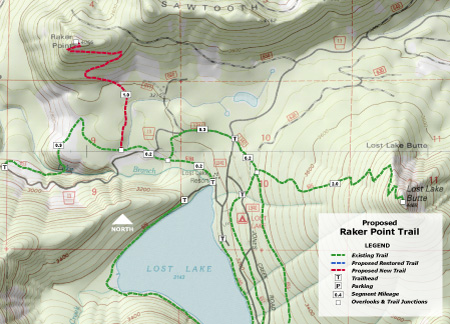
Today, hikers can make the 2-mile trek to the summit of Lost Lake Butte. Yet, while the view from there is excellent, it pales in comparison to Raker Point. More importantly, a trail to Raker Point would shave 400 feet of elevation gain in half the distance compared to the Lost Lake Butte hike, making it much more accessible to casual hikers and families with young children.

10RakerPointProposal

[click here for a large map]

The proposed trail is simple: it would begin along a segment of the Old Skyline Trail that traverses the base of the Raker Point, and connects to the nearby campground, resort cabins and lodge at Lost Lake.

Trail building would be straightforward, as well. The area is outside protected wilderness, so would not present limitations on the use of power saws and or other heavy equipment in the construction. The modest 1-mile length of the proposed new trail also puts it within financial reach in this era of cash-strapped federal land agencies.

11LostLakeButteWestPanorama1933

[click here for a large panorama]

The new trail would also be accessible from trailheads along the Lake Branch Road, allowing hikers to visit the trail without adding to the crowds and congestion at Lost Lake, proper.

What would it take to make this happen? Interest from Forest Service officials, for sure, but support from the Lost Lake Resort operators, in particular, could put this new trail on a fast track. The resort would clearly benefit from a new family-friendly trail option near the lodge, and would be powerful advocates if they were to bring this argument to the Forest Service.

So, consider mentioning the idea if you happen to visit the resort this summer..!

__________________________

Postscript: at about the time I was writing this article, uber-adventurer Paul Turner was exploring Raker Point and nearby Sawtooth Ridge. He posted some excellent photos from his trip over here on the Oregon Hikers forum. Thanks, Paul!

Big Changes coming to the Gorge Power Line…

GorgePowerline02

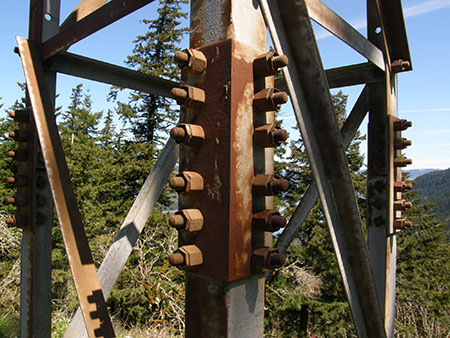
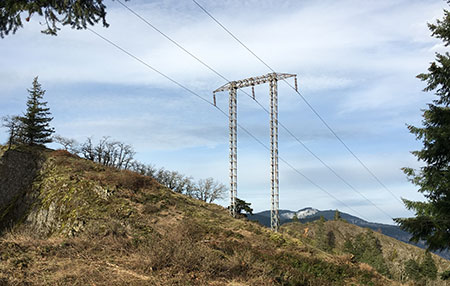
These venerable steel towers will soon be a memory in the Gorge


Author’s preface: having spent more than 30 years in public service, it frustrates me to see any level of government making anything less than a consistent, substantial and meaningful effort to engage the broader public in its decision making. All public entities should be held to this high standard, whether local, state or federal.

So, when I stumbled across the Bonneville Power Association (BPA) decision to significantly rebuild the prominent power line corridor that links Bonneville Dam to Hood River, I was disappointed to learn that the decision involved a handful of select stakeholders and two short windows for public comment that saw little notice or participation. We should expect more, and the BPA should step up its commitment to real public engagement, not meager efforts that do little more than check regulatory boxes.

_______________

According to a retired BPA employee who once joined me on a hike near Starvation Creek, the daring alignment of the power line corridor that provided the first electricity from Bonneville Dam to Hood River is the doing of no less than Franklin D. Roosevelt. As the story goes, FDR was on his famous tour of the Mount Hood Loop Highway on September 28, 1937, with stops to inspect Bonneville Dam and dedicate Timberline Lodge.

GorgePowerline03

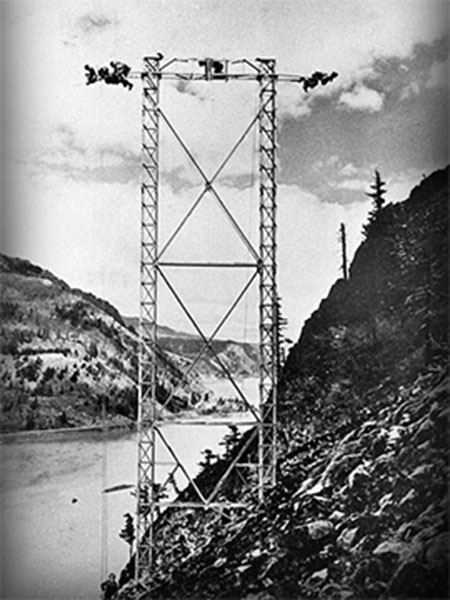
BPA workers building the daring new power lines across Shellrock Mountain in 1937 (BPA)

After leaving Bonneville, FDR asked about the power lines that were under construction, and a BPA official told the president they would be built on slopes high above the Gorge, where the terrain was easier to navigate. FDR reportedly barked at the official “I want those power lines down here, where the people can see the electricity that we’re bringing to their communities!”

So began the project to build the BPA power lines across the rugged cliff faces of the Columbia River Gorge. Amazingly, most of the work was done by hand, with pack mules carrying materials to the often dizzying cliff-top tower locations. While it’s hard to view any power line as “scenic”, the sheer audacity in how these towers were designed and built can’t help but impress hikers passing under them today.

GorgePowerline04

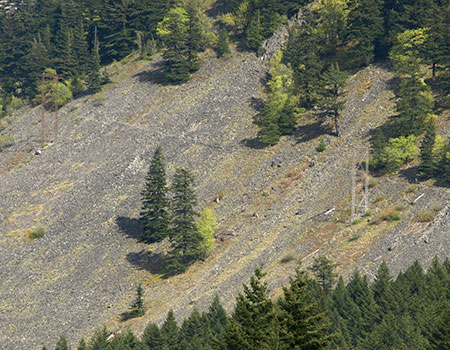
The Shellrock Mountain power line and trail today

The Bonneville to Hood River corridor is one among many power lines that transmit hydro-power along the Columbia, but this corridor is notable in that much of it is serviced through a network of trails where the terrain was too extreme to support service roads. Many of these trails have morphed into recreation trails over the years.

Big Changes Coming this Summer

GorgePowerline05

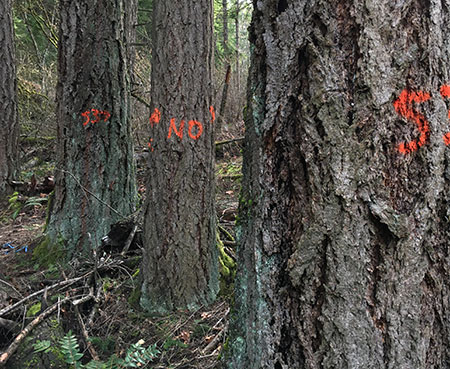
Trees marked for cutting at Viento State Park

After eighty years of maintaining the Gorge power line corridor in much the same state, the BPA is about to significantly change both the look of the towers and some of the access routes. I stumbled across this reality earlier this spring when I was exploring the area above Viento State Park, where I encountered a few dozen mature Douglas fir marked for cutting.

At first, I thought it might be a thinning project of some sort, but upon some research, discovered that the BPA was about to replace all of the steel towers and many of the wood pole towers along the corridor and expand several of the access spur roads. Up to 30 of the new towers will be steel “mono-poles”, a departure in both look and height from somewhat rustic old structures that now exist on the corridor.

The project also proposes to remove up to 747 trees to allow access roads to be widened and rebuilt, and the BPA proposes “temporary disturbance” to over 58 acres and “permanent disturbance” to about one-third of an acre.

GorgePowerline06

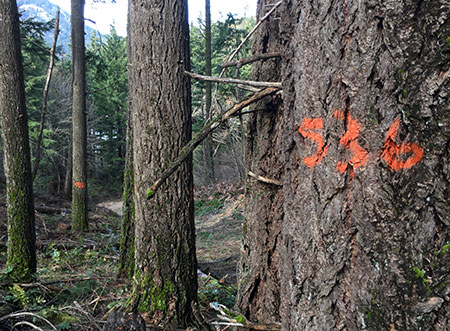
More trees marked for cutting in the Gorge power line corridor

For the scoping phase of this project, the BPA opened a public comment period of six weeks and held a public meeting in Hood River in the spring of 2014. They received 12 written comments during the scoping phase and four people attended this meeting. Sadly, this dismal turnout was during the critical window for raising issues to be considered by the BPA as part of the environmental assessment.

The agency also reached out to tribes and a few interest groups they have long engaged in their public outreach, but their effort falls short of a meaningful commitment to fully engage the public, as evidenced by the meager input they received. The BPA held a second public meeting and opened a final six-week comment period on the draft environmental assessment last fall. As one of the largest and most reliably funded public agencies in existence, the BPA can and should do better.

Who Weighed in?

GorgePowerline07

The BPA’s overly aggressive removal of native vegetation in the power line corridor and subsequent abundance of invasive species was a theme in comments received

While the BPA received very little input from their limited effort to reach out to the public, there were a few commenters. The Friends of the Columbia River Gorge were one again our reliable and invaluable watchdogs in the Gorge weighed in with extensive comments, including the following on the BPA proposal:

[The BPA should] mitigate scenic impacts by installing new structures that would be less visually discordant in the landscape. Where steel towers are needed, we ask that weathering steel be employed to reduce visibility.

Include a robust invasive species eradication and restoration strategy. The BPA transmission line corridor is frequently infested with invasive plants, such as Armenian blackberry. While replacing structures, BPA should remove invasive plants and restore native vegetation communities that would be compatible with long-term vegetation management requirements. 


BPA should also thoroughly document existing native vegetation communities and determine the need for future vegetation management. BPA’s past vegetation removal efforts have removed vegetation that poses no threat to the transmission line system, which unnecessarily harms wildlife habitat and creates openings for invasive plants.

The Pacific Crest Trail Association also weighed in, with concerns about how the proposed changes could degrade the PCT where the power line crosses the trail near the Bridge of the Gods trailhead. Among their concerns:

The existing view from the trail is a long line of sight down a decidedly unnatural appearing power line corridor, crisscrossed with roads. Forest Service scenery management principles dictate that developments viewed from a sensitive viewing area should strive to mimic “the form, line, color, texture, and pattern common to the landscape.”

Contrary to this, the improved roads will stand out visually as artificial, in what’s already an artificial corridor of cleared vegetation. The improvements would disrupt the PCT traveler’s experience because they clearly mark human manipulation and diminish the desired sense of remoteness from civilization.

While it’s suboptimal for the PCT to follow any road at all, at least the existing condition of the road is rustic. Upgrades to the road, including resurfacing with imported materials, will make it appear and feel more industrialized for the PCT traveler. A related effect, because the road is already dominant over the trail, is that people get lost and continue to follow the road, despite trail signage. Improving the road would exacerbate this situation. 


 The trail crosses directly under one of the structures, in fact, between the poles and their guy lines. This site can’t help but appear impacted by the proposed improvements. There will be three poles instead of two, and, clearly a good deal of ground disturbance involved in upgrading this structure. 


These exacerbated visual impacts to the trail could be best ameliorated by reconfiguring the intersection, and reconstructing portions of the PCT where necessary to meet the BPA line in a spot that lends itself better to disguise. Such a trail relocation would be as much as .5 mile long, and would require its own NEPA study. We propose that this NEPA study, and subsequent trail construction by PCTA’s volunteer crews, be funded by BPA as a mitigation measure. 


The Columbia River Gorge National Scenic Area (CRGNSA) unit of the U.S. Forest Service wrote extensive comments, mostly reminding the BPA of regulatory requirements related to the Gorge and the need to conduct environmental assessments when trails or other recreation facilities within the corridor would be significantly impact. The CRGNSA did not comment on opportunities to improve the access trails along the corridor to serve as recreational trails.

What to Expect this Summer?

This project is now going forward in largely the form that was first proposed in 2014 as the preferred action by the BPA. What does this mean for your favorite trails in the Gorge? Here’s are some key excerpts from the BPA’s 410-page draft environmental assessment, beginning with a project overview:

“The Proposed Action is to: (1) rebuild portions of the Bonneville-Hood River transmission line within the rebuild area for the Project (the 22-mile-long segment from structure 1/5 to the Hood River Substation); (2) rebuild the Cascade Locks Tap [author’s note: this is the point where the community of Cascade Locks taps into the power line corridor]; and (3) improve and extend the access road and trail system that allows BPA access to and from the transmission line. Specifically, the Proposed Action would involve the following components:

  • Removal of wood-pole and lattice-steel H-frame transmission line structures constructed prior to 1999 (including cross arms, insulators, hardware, and guy wires) and replacement with a combination of wood-pole H-frame structures and steel-monopole structures. 

  • Retirement of unnecessary transmission line structures. 

  • Replacements of conductors and guy wires. 

  • Replacement of insulators and hardware in locations with no structure or conductor replacement. 

  • Improvement, reconstruction, and extension of existing access roads and trails. 

  • Installation or replacement of bridges, fords, culverts, and access road gates. 

  • Establishment of temporary staging areas, helicopter flight yards, and tensioning sites (for pulling and tensioning conductors). 

  • Installation of temporary guard structures for stringing lines over roads and other utilities. 
  • Removal of vegetation at various locations along the transmission line right-of-way and access 
roads. 

  • Re-vegetation of areas disturbed by construction activities.

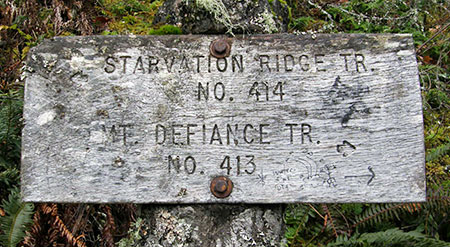
Hikers are mostly likely to notice the changes on trails that also serve as access to the power lines or cross the corridor, including the Pacific Crest Trail, Starvation Ridge, Mount Defiance, Wygant and Mitchell Point trails. Off-trail explorers will also see changes in the bluffs above Viento State Park and on Shellrock Mountain.

GorgePowerline08

The Mount Defiance and Starvation Ridge Trails could be noticeably affected where they pass through the power line corridor

Here’s an except from the environmental assessment that describes the changes we will likely see in these places:

“BPA currently uses a combination of existing roads and foot trails to access the transmission line. BPA holds permits and access road and foot trail easements for access across public and private land. Through these permits and easements, BPA has previously constructed roads and foot trails to access the transmission line. These access roads and foot trails are primarily located within the transmission line right-of-way, but there are also some access roads and foot trails located outside the right-of-way where required due to terrain constraints or other factors.

In a few locations, BPA currently does not have express easement rights to use some existing roads or foot trails that provide access to the transmission line. At these locations, BPA would acquire about 4.4 miles of easement rights to use various sections of the existing roads and trails. Generally, BPA obtains a 50-foot-wide easement for access road rights and 20-foot-wide easements for foot trails.  

BPA’s existing access roads for the line are typically 14 feet wide with an additional 3-foot offset from each side for slopes or drainage ditches, resulting in a total disturbance width of about 20 feet. Access road reconstruction and improvement activities associated with the Proposed Action would occur within this prism, except in areas with curves or on steep slopes where work would occur outside of this prism because of necessary cut and fill.

In areas with identified sensitive resources, such as wetlands or sensitive habitat, access road widths would be reduced to 12 feet and the offsets on either side would be reduced to 2 feet, for a total area of disturbance of 16 feet to minimize temporary and permanent impacts.  

Trail reconstruction or extension activities would result in a typical trail bed width of 18 inches that would require a total clearing area of 2 to 4 feet. For trails crossing steep talus areas, such as Shellrock Mountain, trail bed widths may be as small as 12 inches due terrain constraints. To provide trail stability in these steep areas, sideboards would be installed with rebar or rocks would be keyed into the hill.

On talus slopes, the trail bed would be comprised of compacted course surface material. In non-talus areas, the trail bed would be at grade and would consist of native material. All trail work areas would be accessed by foot and trail improvement, reconstruction, or extension work would be conducted with hand held equipment.”

More information on the project can be found on the BPA’s project website.

It’s never to late to be heard…

GorgePowerline09

BPA power line tower to be replaced on the Viento Bluffs

With a little more effort in their public outreach (like contacting trail organizations), the BPA would certainly have heard plenty of comments from the general public, and especially from hikers who regularly visit the corridor. Much of the commentary would likely have focused on how popular trails like Starvation Ridge and Mount Defiance will be impacted by the project.

But it could also have been an opportunity for hikers to propose expanded use of the power line trails by hikers, including areas like Shellrock Mountain and the area between Starvation Creek and Viento Creek that have tremendous scenic value. While the Forest Service declined to call out this opportunity, these trail sections also could help complete Gorge Trail 400.

No doubt the BPA wouldn’t be enthusiastic about bringing more hikers to the corridor, but the land belongs to the public and there’s no reason not to make full use of the routes the BPA will be building and maintaining with our public funds.

GorgePowerline10

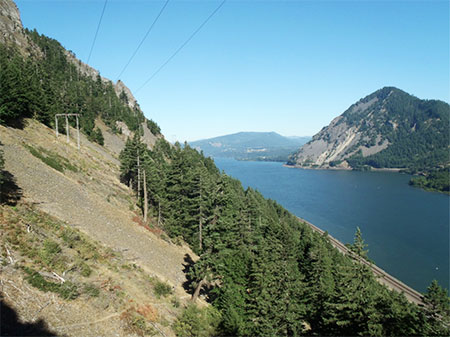
The BPA corridor crossing Shellrock Mountain (BPA)

Is it too late to weigh in? Yes, for the most part. The project entered the final stage of the environmental impact process this spring and is scheduled to move into construction this summer. But if you’re concerned about how the construction is proceeding on the ground, you can contact the BPA directly with your concerns or comments:

Chad Hamel

Project Manager

Bonneville Power Administration

P.O. Box 61409

Vancouver, WA  98666-1409

Tel 800-622-4519

The most interesting section of BPA trail that is not currently a signed route is the trail over Shellrock Mountain. While this is only for the most experienced hikers today, it’s a great adventure that includes magnificent views of the Gorge that few enjoy. Hopefully, this route will someday be connected to Gorge Trail 400 — as it should have been as part of this project.

In the meantime, consider exploring the corridor by visiting the connecting trails at Mitchell Point, Wygant Peak, Starvation Creek and where the PCT crosses the corridor on the route to Dry Creek Falls.

Most of the land in the corridor is in public ownership and managed by Oregon Parks and Recreation or the U.S. Forest Service, so you are free to walk the trails and service roads here. This is the best way to see first-hand how your public lands are being managed, even if the BPA has let us down in their efforts to involve the public in this project.

Punchbowl Park is (mostly) open for Business!

PunchbowlParkUpdate01

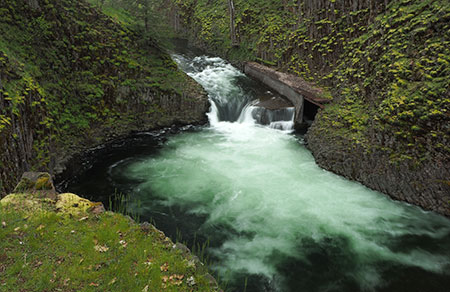
Punchbowl Falls

Spring is a wonderful time to visit the new Punchbowl Falls County Park, located on the West Fork of the Hood River, near Dee. This article is offered an update on the new trails that area gradually being constructed in the park and a guide to visiting this beautiful area for a sneak preview while the trails are being completed.

Punchbowl Falls Park was acquired from a private timber company by the Western Rivers Conservancy just a few years ago, and finally came into public ownership in 2015 when Hood River County received a state grant to transfer the land from the conservancy. Trailkeepers of Oregon (TKO) has since been busy constructing a new loop trail geared toward families and casual hikers looking for an easy stroll with a lot of scenery.

PunchbowlParkUpdate02

New entry sign at Punchbowl Falls Park

In 2016, TKO volunteers completed most of the West Fork Trail, a scenic route that traverses the open bluffs above the Punchbowl Gorge before arriving at a spectacular cliff-top viewpoint above Punchbowl Falls. The remaining segment of the West Fork Trail is expected to be completed by early summer, and will include a short spur to a viewpoint of beautiful Dead Point Falls, where a boisterous Dead Point Creek cascades into the West Fork.

PunchbowlParkUpdate03

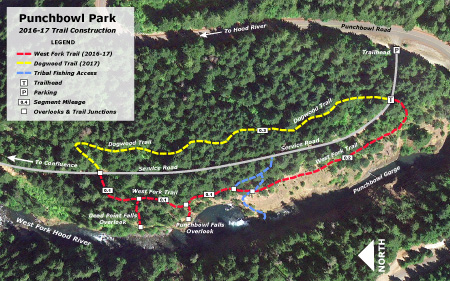
Punchbowl Falls Park Trails

(Click here for a large, printable trail map)

Over the summer and fall, TKO also expects to complete the Dogwood Trail, a short forest hike that will create a loop back to the trailhead. The completed loop will be just 0.8 miles in length, making it ideal for families and casual hikers. While the West Fork portion features views and rugged terrain, the Dogwood Trail offers a quiet forest and vibrant fall colors from vine maple and dogwoods that thrive under the Douglas fir and Ponderosa pine canopy.

The West Fork Trail

You can hike most of the new West Fork Trail now. Just look for an obvious new path heading off to the left about 100 feet down the park service road from the gate at the trailhead. The new trail descends briefly through forest before providing the first of many views into the Punchbowl Gorge.

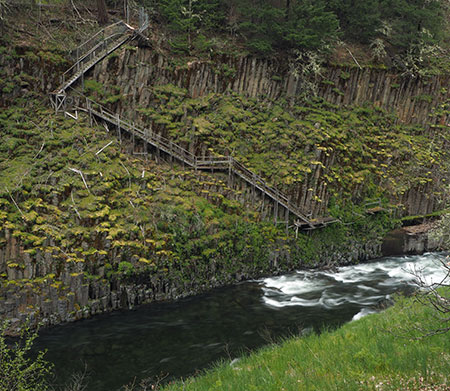
As you travel this section, you’ll pass through several groves of gnarled Oregon White Oak that thrive along the rocky bluffs. Watch for the collapsing remains of an old stairwell making its way down the cliffs on the far side of the Gorge, too. These stairs were built in the 1950s, when the concrete fish ladder was constructed along the west side of the falls. While the ladder mars the natural beauty of the area, it does provide passage to extensive upstream fish habitat for salmon and steelhead.

PunchbowlParkUpdate04

The old stairway to the fish ladder has seen better days…

You will also pass a series of faint trails that cross the new hikers route. While these informal paths are often used by kayakers to portage the falls, they were originally travelled by tribal fishermen visiting the falls. The area below the falls is still reserved for tribal fishing, and you may see local Native Americans fishing for salmon and steelhead from the cliffs inside the Punchbowl, just as their ancestors have for centuries.

The new trail soon descends through more Oregon White Oak groves to the spectacular viewpoint of Punchbowl Falls. Plan to spend some time here watching the mesmerizing churn of the falls into the huge pool below. Keep an eye on kids and pets, here — there are no railings along the abrupt cliff edge.

PunchbowlParkUpdate05

The massive amphitheater at Punchbowl Falls

On clear days the viewpoint above Punchbowl Falls has an added surprise: Mount Hood rising in the distance, above the Punchbowl Gorge. From this viewpoint, you may also see tribal fishermen on the rocks below — while it is fine to watch them work from above, please be courteous.

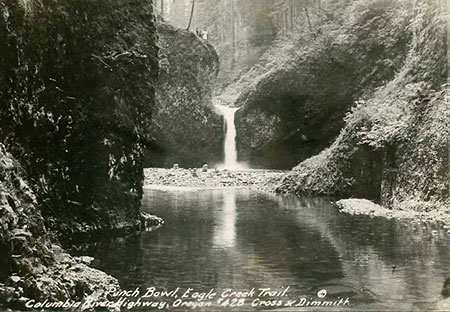
The fish ladder to the right of the falls was completed in 1959. Here’s what Punchbowl Falls looked like before the ladder was constructed:

PunchbowlParkUpdate06

Punchbowl Falls before the fish ladder was constructed in 1959

Hopefully, the ladder can someday be rebuilt in a way that restores some of the beauty of this spot, as it surely could not have been built in this manner under today’s environmental protections. This amazing place has deep significance to Native Americans, and it seems appropriate to undo some of the impacts of our modern age on a place so valued by the tribes.

From the Punchbowl overlook, the route climbs back into forest for a few hundred yards. TKO crews are still completing the groomed tread, but the rough path is easy to follow. Watch for a faint side trail heading off to the left a few yards before the West Fork Trail ends at the service road. This spur path leads to a terrific view of Dead Point Falls, where Dead Point Creek cascades into the West Fork. Watch kids and pets here, too, as the viewpoint is unprotected.

PunchbowlParkUpdate07

Deadpoint Falls

While the West Fork Trail currently ends at the park service road, the Dogwood Trail will soon begin on the opposite side of the road and provide a loop trail back to the trailhead. In the meantime, read on for other places to explore…

Exploring the Confluence

PunchbowlParkUpdate08

The Confluence

It’s easy to explore the northern section of Punchbowl Falls Park using the park service road and some of the fishing trails that crisscross the area. One of the most dramatic places to visit is the confluence of the West and East forks of the Hood River.

To reach the confluence, turn left on the service road from the end of the West Fork Trail and follow it to an obvious turnaround, where the road makes a sharp turn to the right, around the nose of a ridge. Look for a fisherman’s path on the left, heading steeply downhill hill to the confluence.

PunchbowlParkUpdate09

Rowdy East Fork Hood River at the Confluence

The two rivers area study in contrasts. The East Fork is unruly and filled with glacial till, and has built a huge pile of cobbles were it meets the West Fork at the confluence. The West Fork is cold and clear, with a large eddy that makes for good fishing and safe place for kids to wade in summer.

Wildflowers and Fall Colors

PunchbowlParkUpdate10

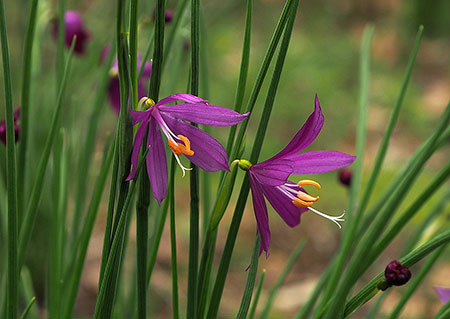
Grass Widow above the Punchbowl Gorge

Spring and fall are the best times to visit Punchbowl Falls Park. In spring the waterfalls are at their best, and there are wildflowers blooming throughout the park. In fall, the park lights up with autumn colors that only the east side forests can offer. Both seasons are quiet compared to the summer months, when the park can be quite busy with swimmers and floaters on weekends.

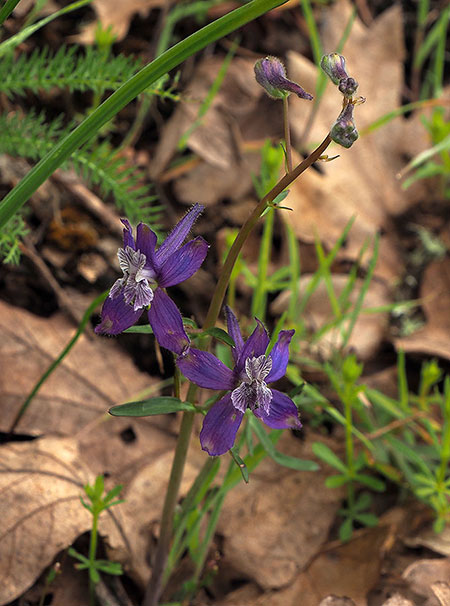
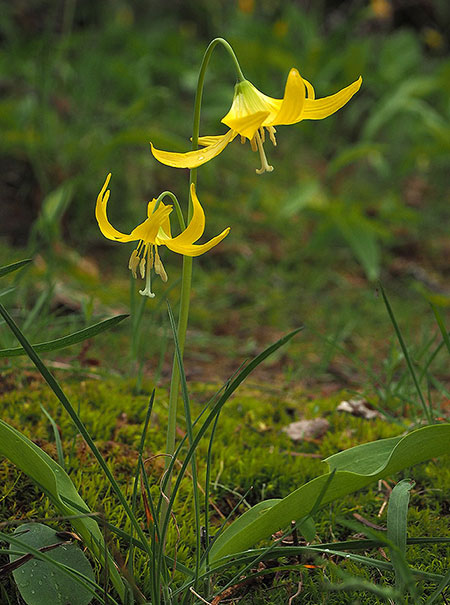
Wildflowers at the park are a unique blend of east and west. In April, the bluffs above Punchbowl Gorge are blanketed with Grass Widow (above), a desert flower common in the Columbia Gorge east of Rowena. The same meadows of grass widow are shared by Larkspur (below), more common in the wet west end of the Gorge.

PunchbowlParkUpdate11

Larkspur along the West Fork Trail

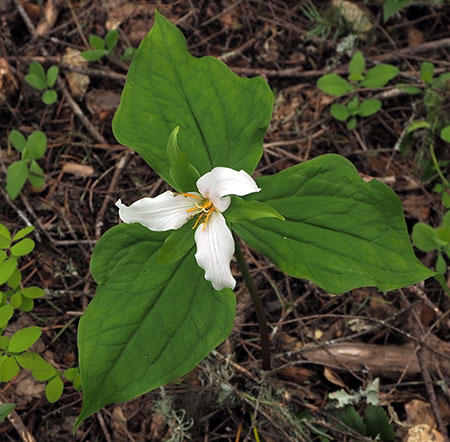
In forested areas, you’re likely to see Trillium (below), a hallmark of the rainforests of the western Gorge, and in early spring you’ll find Glacier Lily (below) where the trail passes through Oregon White Oak groves.

PunchbowlParkUpdate12

Trillium along the Dogwood Trail

PunchbowlParkUpdate13

Glacier Lily near the Punchbowl Falls overlook

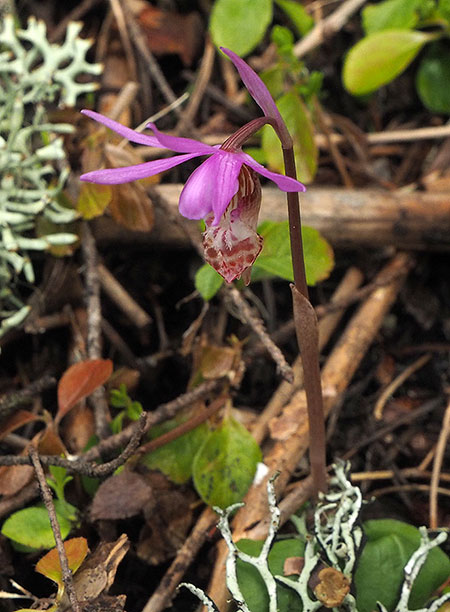
Watch closely and you might spot Calypso Orchid (below). This is another native more common in the wet forests of the west Gorge, but makes its home in the transitional forests of Punchbowl Falls Park.

PunchbowlParkUpdate14

Calypso Orchid along the Dogwood Trail

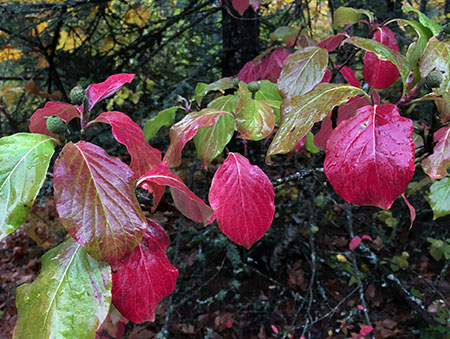
In autumn, Pacific Dogwood (below) brings brilliant color to the forest understory throughout the park. In western Oregon, dogwood generally fade to pale yellow or pink in the fall, but on the east side of the Cascades, these graceful trees take on brilliant shades of coral, crimson and burgundy. In spring, Pacific Dogwood also blooms with handsome white flowers. When completed, the new Dogwood Trail will pass through several groves of these beautiful trees.

PunchbowlParkUpdate15

Dogwood in Autumn at Punchbowl Falls Park

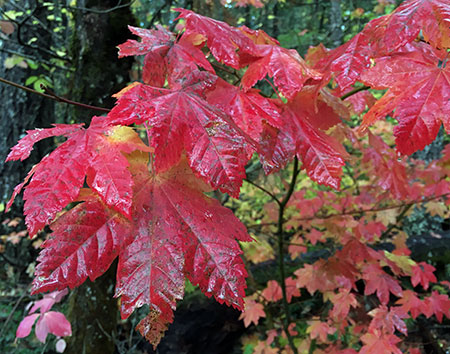
Vine Maple is everywhere in the forests of Punchbowl Falls Park, and like the native dogwood, these graceful trees light up in autumn, providing shades of crimson, orange and bright yellow. Vine Maple crowd the route of the new Dogwood Trail, and will combine with the dogwoods to make this an exceptionally beautiful autumn hike.

PunchbowlParkUpdate16

Vine Maple in Autumn

Fall colors in Punchbowl Park peak in mid-October and spring wildflowers are at their best from mid-April through early June.

A View into the Gorge

PunchbowlParkUpdate17

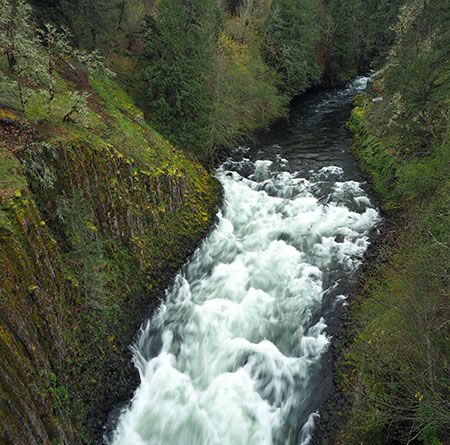
West Fork entering Punchbowl Gorge

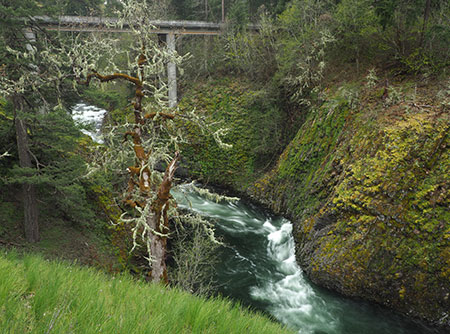
If you still have time after visiting the West Fork Trail and the confluence, once last corner of Punchbowl Falls Park you might want to explore is the dizzying view from the bridge located just beyond the trailhead parking area. Simply walk about 200 yards to the soaring bridge for a spectacular look into Punchbowl Gorge, but use care — the railings are uncomfortably low!

PunchbowlParkUpdate18

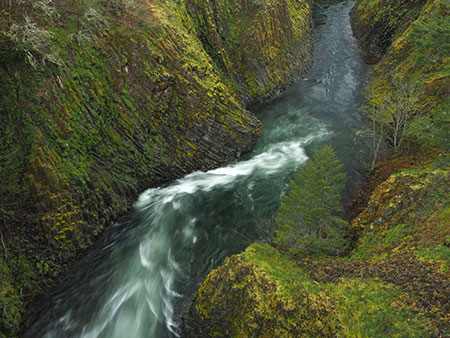
The Narrows in Punchbowl Gorge

The view upstream from the bridge encompasses the West Fork roaring into the narrow mouth of the Gorge, framed by towering walls of columnar basalt. The small structure just upstream is a river gauge used to monitor stream flows on the West Fork. The view downstream from the bridge peers into the narrows section of the gorge, with the West fork carving stunning curves and pools into the basalt walls.

These scenes, and the massive basalt amphitheater of Punchbowl Falls area among the best Columbia River basalt formations found anywhere in the region. It’s mind-boggling that this spectacular canyon was in the hands of a private timber company for more than a century! Thankfully, it is now protected in perpetuity as a nature park.

What’s Ahead?

PunchbowlParkUpdate19

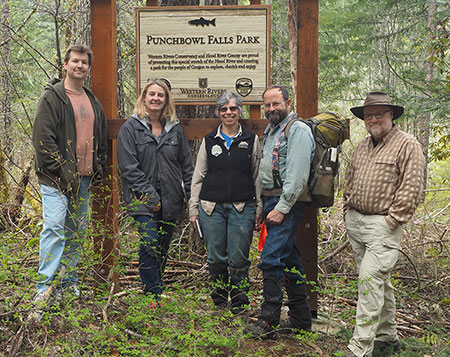
The author with TKO volunteers and county officials at a recent scouting trip at Punchbowl Park

Much work lies ahead for Punchbowl Falls Park this year. TKO has several volunteer work parties planned (you can learn more about them here), and Hood River County will begin improving the parking area at the trailhead to be a more accessible.

By fall of 2017, the new Dogwood Trail should be completed, and TKO volunteers will install trail signs on both the West Fork and Dogwood trails, officially opening the new loop to visitors. Over the long term, Hood River County and TKO are also planning an extension of the West Fork trail to the confluence and other trails in the new park.

Where to Find Punchbowl Falls Park?

PunchbowlParkUpdate20

Punchbowl Gorge and bridge from the West Fork Trail

It’s easy to get to the new park! From Hood River, take 12th Avenue south where it soon becomes Tucker Road (aka Route 281). Follow Tucker Road and signs pointing to Lost Lake. After crossing the Hood River at Tucker Bridge, watch for the Dee Highway immediately veering off to the right.

Follow Dee Highway (also part of Route 281) to the rusty, dusty remains of the old mill town of Dee. Veer right again, crossing railroad tracks and then the East Fork Hood River, then turn right again onto Punchbowl Road just beyond the bridge. Stay straight on Punchbowl Road at a 3-way junction, then enter forest at a hairpin turn. Watch for the parking area on the right, just short of the high bridge over the West Fork Hood River.

The new trail begins just beyond the metal gate that marks the park service road.

Enjoy!


Bierstadt in Oregon

Bierstadt01

Albert Bierstadt’s magical 1869 vision of Mount Hood

Long before white settlement had reshaped the American West, artists were traveling with early explorers to capture scenes of the stunning landscape and native peoples. This was the first view most Easterners in our young country had of places like Yellowstone, the Grand Canyon and Yosemite — places that would eventually become the crown jewels of our national park system.

And just as Mount Hood and the Columbia River Gorge are still believed by many to be part of the national park system, the painters and photographers of the mid-1800s captured them in their untouched state along with the other great places in the West. This article tells the story of how Albert Bierstadt and other artists of the era came to Oregon to capture the beauty of our mountain and the Columbia River, how their art helped inspire the original national parks movement and how their work still resonates with us today.

Longing for Nature

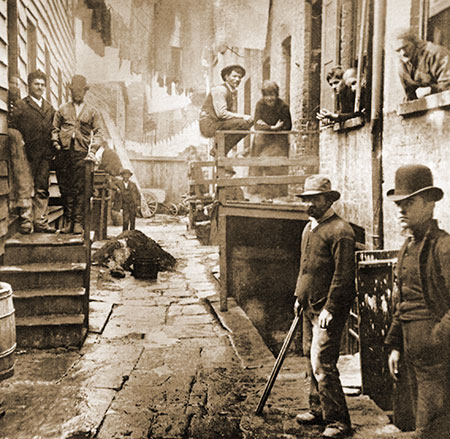
In the mid-1800s, the Industrial Revolution was in full swing in the cities along America’s east coast, and the public was beginning suffer from its effects. In booming New York, massive tenements were constructed to house factory workers in apartments that were often without daylight and access to fresh air or plumbing.

Bierstadt02

Crowded life in New York’s tenements of the mid-1800s led to a public yearning for a greener world

Coal burning was creating stagnant clouds of pollution that coated our eastern cities in soot, and there was a growing yearning for the greener, simpler world of our agrarian past. The carnage of the America Civil War in the 1860s only compounded the nostalgia. Thus, the Romantic period of the 19th Century was a movement that responded to pressures of the Industrial Revolution, glorifying a past rooted in nature.

Bierstadt03

Simple access to light and fresh air was a luxury in New York’s mid-1800s tenements

The Romantic movement emphasized the sublimity and beauty of nature, and dominated American art during this period, especially the untamed American West that was glorified in monumental landscapes by artists of the Hudson River School.

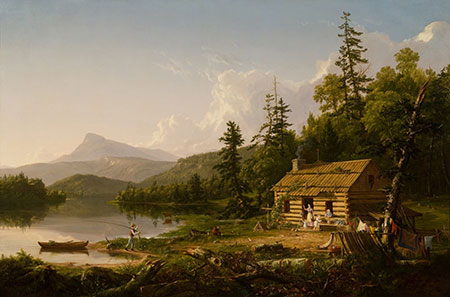
Bierstadt04

Thomas Cole’s 1847 “Home in the Woods” envisioned an idyllic green world in stark contrast to life in the big cities of the Industrial Revolution

The Hudson River School was a mid-19th century American art movement embodied by a group of landscape painters whose aesthetic vision came to define romanticism in this country. The paintings for which the movement is named originally depicted the Hudson River Valley and its founding is generally credited to Thomas Cole, who painted until his early death in 1848.

The Second Wave

Cole was followed by a second wave of Hudson River artists who grew to become celebrities in their time, including Frederic Edwin Church, Albert Bierstadt, and later, Thomas Moran.

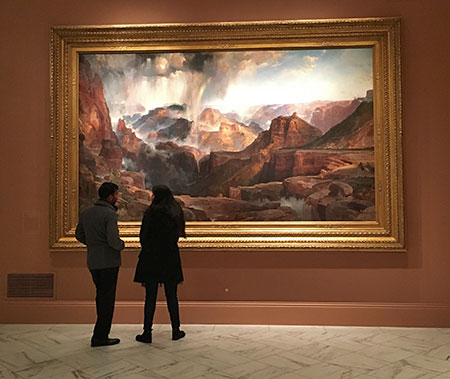
Bierstadt and Moran became best known for their epic paintings of the untamed American West in the last half of the 1800s. Their paintings were the popular equivalent of movie blockbusters today, with huge canvases dramatically unveiled in sensational public events.

Bierstadt05

Thomas Moran’s dramatic scene of a storm over the Grand Canyon still wows viewers today

While the Hudson River School artists often glorified nature, they also brought people into their scenes in an idealized way, as part of the epic landscape. Native Americans were portrayed as nobly beautiful in these romanticized landscapes, and conversely, Bierstadt also created similarly noble scenes of white settlers migrating west in his Oregon Trail paintings, on their way to claim lands belonging to Native Americans.

The two ideas are a strange contradiction, given the de facto genocide that was unfolding upon Native Americans in the West when Cole and Bierstadt were creating these masterpieces. But the Hudson River artists were glorifying nature (and American Indians) as a divine creation of their Christian God, and so it makes sense that their paintings also fit the “manifest destiny” justification for westward migration of white settlers, however contradictory.

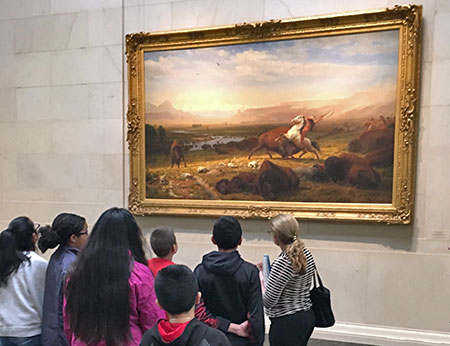
Bierstadt06

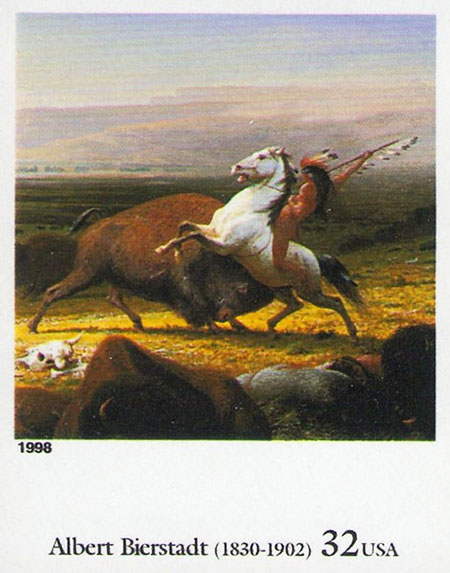
Just as Bierstadt’s “Last of the Buffalo” (1889) brought the reality of the slaughter of America’s bison herds to Easterners in the 1800s, it now provides a window into the past for new generations of Americans learning about the western migration. It was the last of his monumental paintings, and directly triggered the first bison census, leading to protections for the species.

While Hudson River artists worked in dramatic realism, their romanticized scenes were often an idealized hybrid of multiple locations captured by the artists in their field studies in the West. Both Cole and Bierstadt made regular trips to what were often very remote, rugged locations for their studies, then returned to their studios to create the massive masterpieces that evoked the overall sense of wonder they had experienced in the West.

Bierstadt07

Bierstadt’s “Oregon Trail” (1869) helped establish the enduring mythology of westward migration.

This is often a point of criticism for these painters, as the country was also experiencing the invention of photography, and realism in painting was increasingly being held up against tintype photos by early photographers to gauge their accuracy. Yet, just as photographers attempt to capture light and subject in a way that captures the drama and feeling of a place, Hudson River artists were similarly compiling scenes that captured their own memories and experiences in a West.

Bierstadt08

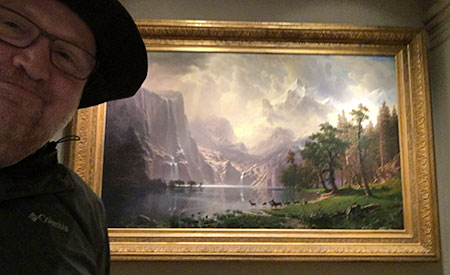
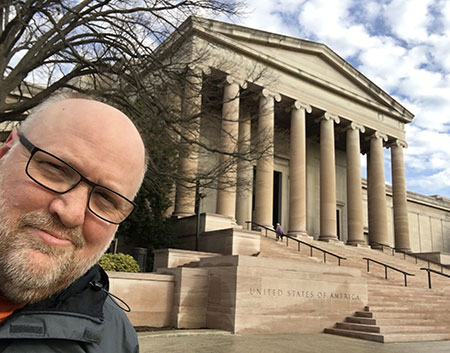
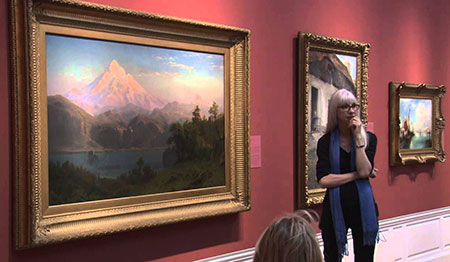
The author on a recent pilgrimage to view Bierstadt’s “Among the Sierra” (1868), on permanent display in the Smithsonian American Art Museum.

The Hudson River artists also influenced the creation of our first national parks, with masterpieces of Yellowstone and Yosemite that persuaded Congress to establish the very first protections for our most spectacular wild places. Albert Bierstadt painted many scenes in Yosemite over the years, along with many other wild places across the West that would ultimately be protected from exploitation.

Bierstadt in Oregon

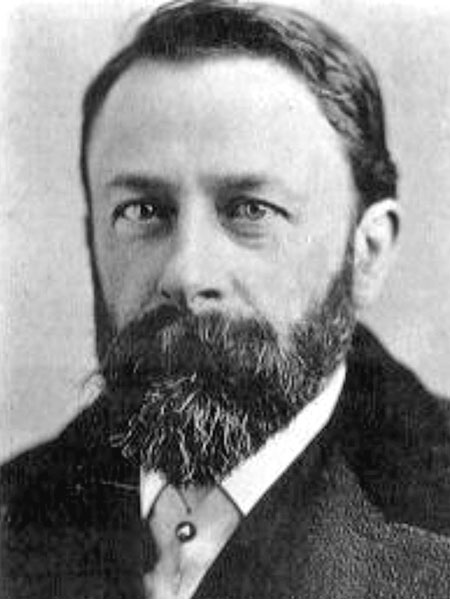
Albert Bierstadt was born in Solingen, Germany, in 1832, but soon immigrated with his parents to New Bedford, Massachusetts at the age of two. He began drawing as a child, and by his early twenties was painting with oils as part of the Hudson River School movement. He would paint over 500 paintings over the course of his remarkable life.

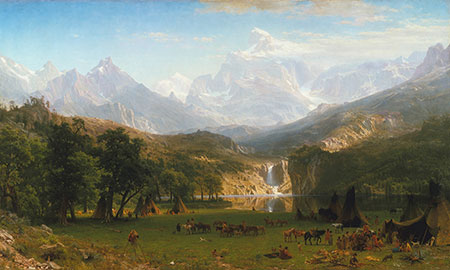
In 1859, he traveled west with a U.S. Government survey crew, sketching scenes that he would later turn into his epic masterpieces in his studios in New York and Rome. This was one of many trips west for Bierstadt over his long painting career. One of these paintings, “Landers Peak, Rocky Mountains”, sold for $25,000 after it was completed in 1863, an astronomical figure for that time (Bierstadt later purchased this painting from the buyer to give to his brother).

Bierstadt09a

Albert Bierstadt “Landers Peak, Rocky Mountains” (1863)

 [click here for a large view]

Bierstadt’s huge, panoramic paintings were an immediate sensation with the public, and he quickly became the preeminent painter of the American West during the mid-1800s.

Bierstadt first came to Oregon beginning in the early 1860s, and painted Mount Hood at least four times — the most of any Pacific Northwest scene. He made at least three extended trips to Oregon, twice in the 1860s and later in the 1890s, as his career was winding down.

Bierstadt09b

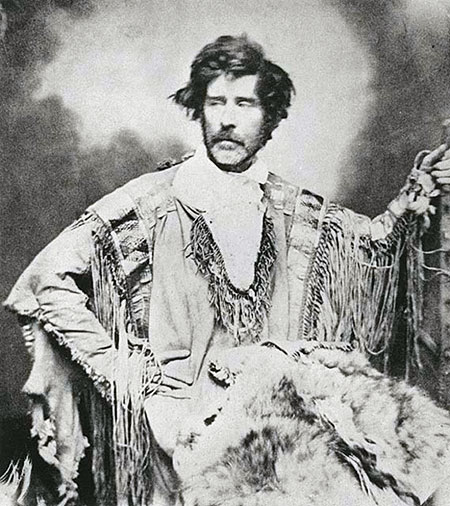
Albert Bierstadt in the mid-1800s

This undated, possibly earliest Bierstadt work shows a scene on the Columbia River, with trio of canoes and a towering version of Mount Hood, basking in alpenglow. At first, the peak looks more like Mount Rainier, but a closer look shows a reasonably accurate rendering of the Sandy Headwall and other west face features, albeit with a healthy dose of artistic license:

Bierstadt10

One of Albert Bierstadt early paintings of Mount Hood (date unknown)

Another early Bierstadt work from the same lower Columbia River perspective shows alpenglow lighting up the mist along the river and, notably, what appears to be Barrett Spur on the mountain’s north flank, makes this a somewhat more literal image:

Bierstadt11

Albert Bierstadt “Morning Thirst – Mount Hood” (date unknown)

In the fall of 1863, Bierstadt made his second trip west and painted a pastoral scene on the north side of the mountain, as viewed from the Hood River Valley. This spare, relatively small portrayal (just 20 inches wide) is much more literal, with many familiar north face features captured, along with Lookout Mountain, to the east. Bierstadt also used artistic license to include Mount Jefferson peeking over the west shoulder of Mount Hood:

Bierstadt12

Albert Bierstadt’s 1863 view of Mount Hood from the Hood River Valley

This painting is thought to have been in preparation for the much larger paintings of Mount Hood that would follow. His companion on the 1863 trip, Fritz Hugh Ludlow, recalled the visit in a published account that followed:

“After a night’s rest, Bierstadt spent nearly the entire morning making studies of Hood from an admirable post of observation at the top of one of the highest foothills — a point several miles southeast of town, which he reached under the guidance of an old Indian interpreter and trapper” (Atlantic Monthly. December 1864)

In 1865, Bierstadt completed a very large piece that pictures an idealized, but much more literal Mount Hood towering over the Columbia Gorge. Multnomah Falls and even Larch Mountain are included in the artist’s blend of iconic features. Mount Jefferson and the Three Sisters float on the distant horizon:

Bierstadt13a

Albert Bierstadt’s massive 1865 painting of Mount Hood created a public sensation

[click here for a large version]

This massive painting measures ten feet wide by six feet tall, and created a sensation with the American public when it was unveiled. In 1876, it was one of six monumental paintings selected by Bierstadt for display at the Paris World’s Fair, bringing Mount Hood to international fame.

The painting was one of many portraits of Mount Hood that become part of the public’s imagination of the West, finally putting a face on the towering icon that settler accounts had described at the end of the Oregon Trail. Today, this painting can be viewed at Gerald Peters Gallery in Santa Fe, New Mexico.

This stunning work shows the mountain and Gorge in much more detail than his earlier studies. Mount Hood’s most familiar features — Barrett Spur, Yocum Ridge and Illumination Rock — are detailed, along with Multnomah Falls, Latourell Falls, Phoca Rock and Sherrard Point atop Larch Mountain.

Bierstadt13b

Detail from Bierstadt’s “Mount Hood” (1865)

The Gorge peaks are oddly deforested in this view. While logging in the Gorge cleared most of the slopes around Larch Mountain by the end of the 1800s, the forests probably would have been much more intact in 1865, when access to the Gorge was still extremely limited, so the barren slopes are more likely artistic license. Yet, Bierstadt did include trees in the foreground that are true to the Gorge, with rugged conifers typical of ancient Douglas fir that have survived the extreme Gorge elements, twisted white oaks and a billowy group of bigleaf maple in the right foreground.

In 1869, Bierstadt completed what to many is his ultimate masterpiece of Mount Hood: a smaller (five feet wide by just over four feet tall), more refined version of his 1865 work that brings all of the elements of the earlier painting with much more dramatic, evening light.

Bierstadt14a

Albert Bierstadt 1869 refinement of his more famous 1865 Mount Hood portrait

[click here for a large version]

This final piece is housed right here our very own Portland Art Museum, and worth the price of admission, alone. Bierstadt’s final take on our mountain remains the most glorious of the Romantic period paintings of Mount Hood.

While it’s easy to critique Bierstadt’s creative rearranging of geography, it’s also understandable: visitors today still seek that “perfect spot” where all of the pieces of the tableau that make up the Gorge and Mount Hood experience.

The view from Sherrard Point on Larch Mountain comes close, for example, with its 360-degree view encompassing the Gorge, Columbia Delta, Mount Hood, the string of big Cascade volcanoes in the distance and the craggy top of Larch Mountain and its magnificent stand of Noble fir filling the foreground. A mind’s eye recollection of the view of being there brings all of these pieces together as part of the memory, just as Bierstadt combined elements in his paintings that were about the experience of being there, not simply documentation of the elements.

Bierstadt14b

A closer look at Bierstadt’s 1869 masterpiece shows Multnomah Falls (left), Latourell Falls (center), Larch Mountain and Sherrard Point (center right) and Mount Jefferson in the distance

Mid-1900s Mount Hood Loop Highway visitors picked up postcard folios at souvenir stands and roadhouses along the loop looking to capture their memory in a similar way. These little booklets contained a series of cards showing off the most iconic spots in the Gorge and on the mountain that a visitor might have seen in a day spent driving the loop, but just as Bierstadt rearranged scenic elements, the folio covers of these postcard collections often blended the images to create a mosaic that pulled all of the pieces together.

Bierstadt15

1940s Loop Highway Postcard Folio

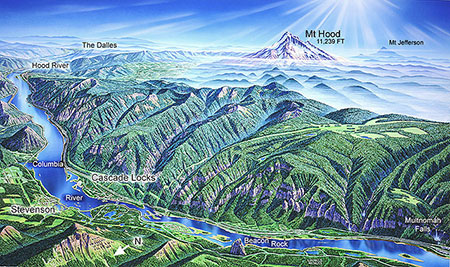
More recently, cartographic artist Jim Niehues created a magnificent, modern-day mental map of the area with just enough cartographic license to capture the feeling of being there, while still preserving the basic geography of the Gorge and mountain.

Bierstadt16

Like Bierstadt before him, Jim Niehues brought a mind’s eye view of Mount Hood and the Gorge together in this stunning piece of cartographic art

Bierstadt visited the region long before the south side of Mount Hood had become the focus of tourism in the 1920s, with the arrival of the loop highway. Instead, his visits took him to the north side of the mountain to points along the Columbia River and in the Hood River Valley that were accessible by rail.

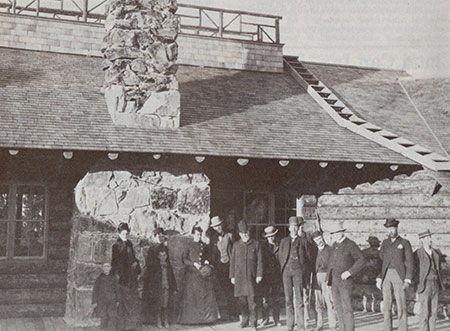
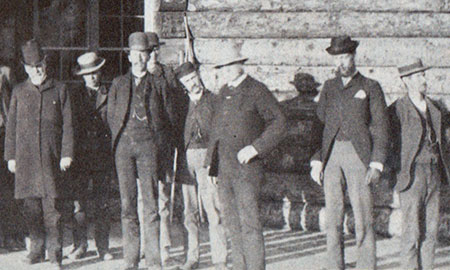
It’s unknown if he actually visited the slopes of the mountain on his visits in the 1860s and 70s, when his famous works of Mount Hood were created, but Jack Grauer’s “A Complete History of Mount Hood” shows Bierstadt visiting Cloud Cap Inn in 1890. According to Grauer, Bierstadt is third from the right in this rare photo, wearing a light hat:

Bierstadt17a

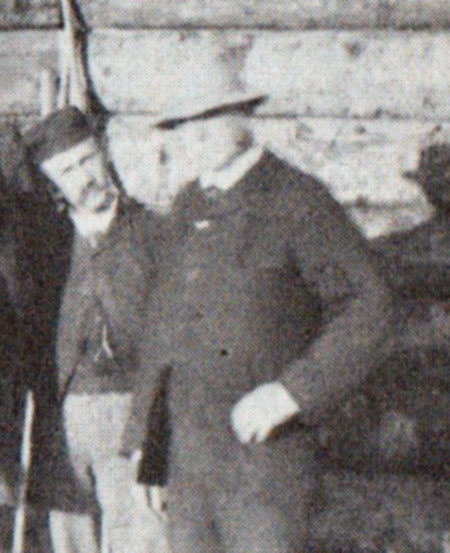
Closer views suggest and older and grayer Bierstadt:

Bierstadt17b

Bierstadt17c

Albert Bierstadt would have been 60 years old at the time of this visit. Clearly, this trip shows that he remained an intrepid explorer in his later years. The trip to Cloud Cap Inn, which had opened just one year prior, entailed a train ride from Portland to Hood River, where the horse-drawn Cloud Cap Stage was waiting to take visitors on a rugged, five-hour ride up the mountain to the lodge that was not for the faint-of-heart.

Bierstadt17d

Albert Bierstadt stood here!

Today, you can still see the ruts of the original stage road that led to the inn at grades in excess of 20 percent. Since the 1940s, a new road has criss-crossed the original stage route in a graded series of switchbacks, allowing modern-day visitors to marvel at the ordeal that earlier visitors like Bierstadt endured on the way to Cloud Cap!

Bierstadt’s Other Works in the Region

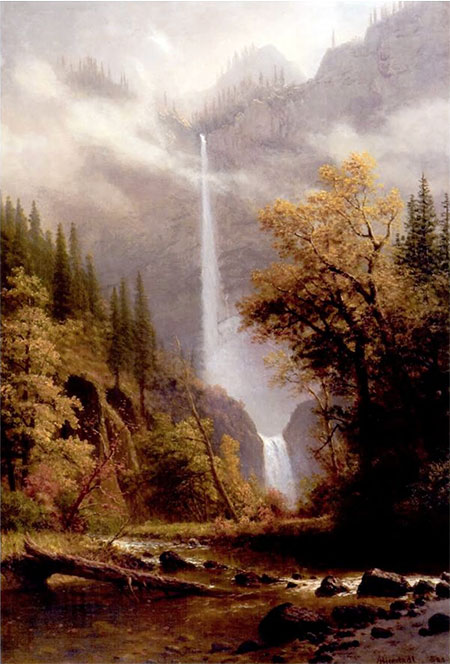
While Bierstadt’s epic paintings of Mount Hood were widely known and celebrated, his rendering of Multnomah Falls is less known, possibly because it came later in his career, and at just 3 by 5 feet, was relative “small” compared to his huge panoramic scenes. Bierstadt captures Multnomah Falls with much literal accuracy on a typically misty autumn day:

Bierstadt18a

Bierstadt’s “Multnomah Falls” (late 1800s)

[Click here for a large version]

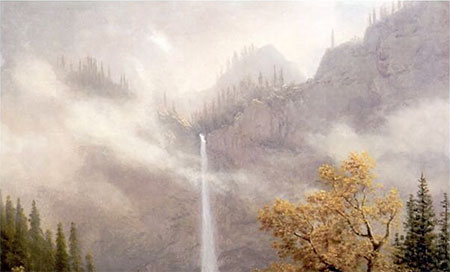
Today, Bigleaf maples still frame the falls in gold in autumn, but Bierstadt did add a rocky bluff beyond the falls to add depth to the painting:

Bierstadt18b

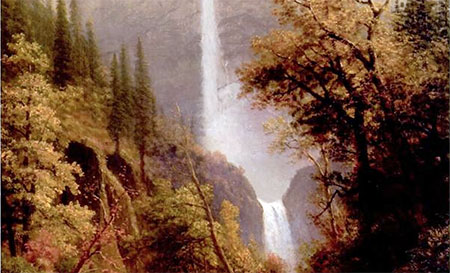
Though this painting is undated, Bierstadt likely created it before a log bridge spanning the lower falls was built in the early 1880s:

Bierstadt18c

The stream detail in the foreground gives a sense of what it must have been like to approach our tallest waterfall in its truly wild state, before today’s developed paths and viewpoints were built:

Bierstadt18d

Bierstadt painted the Columbia River as a foreground for most of his Mount Hood scenes, but surprisingly, a view down the Columbia Gorge from near Crown Point was not one of his subjects. This undated Bierstadt painting of the Columbia captures a scene that may be on the east side of the Cascades in desert country, perhaps in the vicinity of today’s Horsethief Butte State Park, looking west:

Bierstadt19

Albert Bierstadt’s Columbia River scene

If Bierstadt did make it to the mid-Columbia region, it’s unclear whether he visited Celilo Falls. It surely would have provided all of the elements for one of his panoramic paintings, complete with a Native American villages and fisherman working the salmon runs, yet there are no paintings of Celilo among his works.

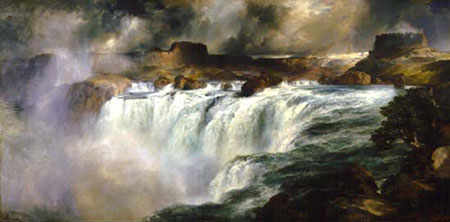
Instead, we can only wonder what his take might have been, perhaps alogn the lines of Thomas Moran’s stunning portrayal of “Shoshone Falls” (1900) on the Snake River:

Bierstadt20

Thomas Moran’s “Shoshone Falls” (1900)

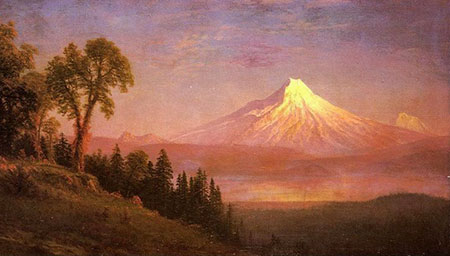
Bierstadt painted several of the big Cascade Mountain volcanoes, including this view of Mount Adams, perhaps inspired by alpine meadows above Takhlakh Lake the mountain’s west side:

Bierstadt21

Albert Bierstadt’s “Mount Adams” (1875)

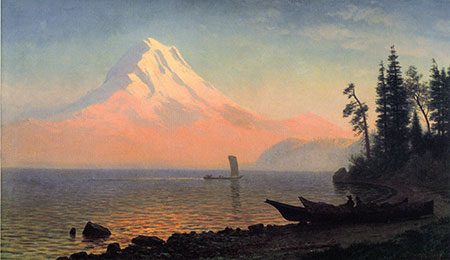
He made a few paintings of Mount St. Helens, all from the shore of the lower Columbia River. This scene shows Mount Adams (or possibly Mount Rainier) peeking over the shoulder of St. Helens:

Bierstadt22

Albert Bierstadt’s “Mount St. Helens” (date unknown)

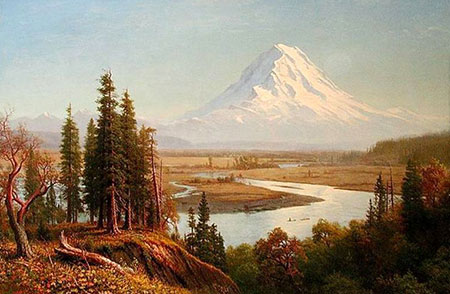
Bierstadt painted mighty Mount Rainer from the tidal flats of Puget Sound, near Tacoma, in a scene that includes our native Madrona trees (on the left), a nice touch of literal accuracy:

Bierstadt23

Albert Bierstadt’s “Mount Rainier” (date unknown)

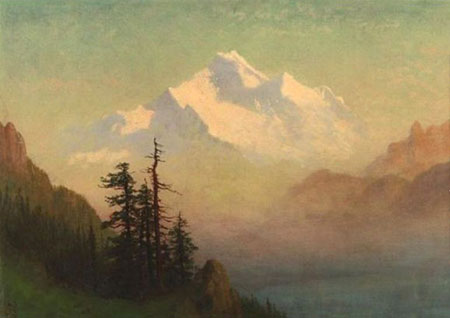
Finally, for avid hikers this small, untitled Bierstadt piece sure looks like Mount Jefferson as viewed from northwest of Jefferson Park, above the Whitewater trail:

Bierstadt24

Untitled Bierstadt piece — is this Mount Jefferson?

At the time Bierstadt was in Oregon, this would have been a remarkably rugged, remote area for anyone reach, so it’s probably more likely coincidence that this so closely resembles Jefferson, but who knows? Maybe we will discover another undocumented chapter in his travels in the future.

The Other Painters

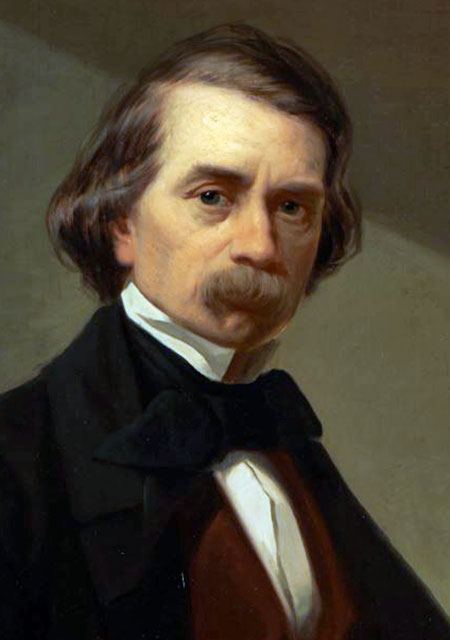
There were many fine paintings of Mount Hood made by other artists during the 1800s, when Bierstadt was visiting the region. Explorer and self-taught artist Paul Kane is best known for his early portraits of native people in the West. Kane was among the earliest to arrive in Mount Hood country and paint the mountain while spending the winter of 1846 at Fort Vancouver.

Bierstadt25a

Paul Kane in the 1840s

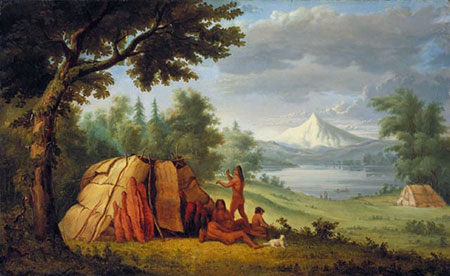
Among Kane’s best known work is a scene depicting Chinook people living along the lower Columbia River in the early 1850s, with Mount Hood as the backdrop:

Bierstadt25b

Paul Kane’s “Chinook Indians in front of Mount Hood” (1850s)

John Mix Stanley was another prominent explorer and self-taught painter who visited the region. Stanley first came west in 1842, and was known for his portraits of Native American life captured during the first half of the 1800s.

Bierstadt26a

John Mix Stanley

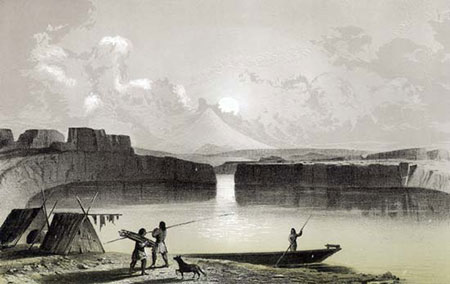
His 1855 lithograph of Mount Hood shows tribal life along the Columbia, as viewed from near The Dalles:

Bierstadt26b

In 1865, a fire at the Smithsonian destroyed much of his work, and Stanley set about recreating some of the most memorable scenes from his travels in the West from sketches and memory.

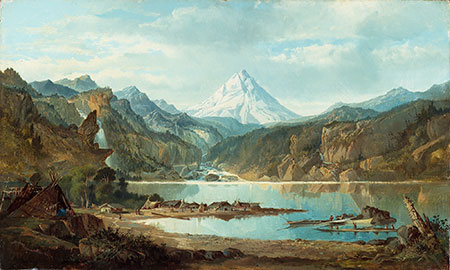
His trip through the Columbia Gorge by boat in 1853 apparently made a special impact on Stanley, and his 1870 “Mountain Landscape with Indians”, captured these memories in composite. This painting was also likely inspired by the success of Bierstadt’s panoramic 1865 view of Mount Hood, as well:

Bierstadt26c

Stanley’s first rendition of Mount Hood from the Columbia River (1870)

In 1871, Stanley created a much larger (five by eight feet!) version of the same scene with a more stylized Mount Hood. This masterpiece blends the west face of Mount Hood, familiar as the view on Portland’s skyline, and elements from throughout the Gorge, including a Native American village:

Bierstadt26d

Stanley’s panoramic 1871 masterpiece of Mount Hood and the Columbia River

[click here for a large version]

Boston artist Robert Swain Gifford created a somewhat bizarre version of Mount Hood in 1874 that continues to circulate widely today as a collectable print:

Bierstadt27a

R.S. Gifford’s stylized 1874 take on Mount Hood

This exaggerated view attempts to capture the mountain from the north side, in the vicinity of Hood River, but is oddly cartoonish in comparison to other, more realistic works that were being created at that time.

In the 1880s, Gifford created this much more accurate etching of Mount Hood from the Columbia River narrows at The Dalles:

Bierstadt27b

R.S. Gifford’s 1880s engraving of Mount Hood from The Dalles

Though he was not known for his western art, Gifford’s 1880s rendering of Mount Hood has been widely published and remains popular with print collectors today.

Another painter by the name of Gifford (though unrelated) was Sanford Robinson Gifford, another Hudson River School artist. Sanford Gifford created this dreamlike view of Mount Hood and the Columbia River in 1875:

Bierstadt28

Sanford Robinson Gifford’s “Mount Hood” (1875)

Sanford Gifford’s scene is not too far from reality, with elements that nearly exist in reality as viewed from the north side of the river near today’s Washougal.

Artist Frederick Ferdinand Schafer was a German immigrant with a studio in San Francisco. He painted scenes from throughout the West, including this view of Mount Hood described as being from The Dalles:

Bierstadt29

Ferdinand Schafer’s “Mount Hood” (date unknown)

Schafer worked from field notes and sketches, which might explain why this scene “from The Dalles” looks nothing like the area. Instead, this perspective of the mountain could be from the upper Hood River Valley, possibly merging the canyon of the East Fork Hood River with the mountain as it appears from the valley. The trees on the right look a lot like mountain hemlock, though they might be inspired by Ponderosa pine that are found through the east Gorge.

Connecticut painter Gilbert Munger was another student of the Hudson River School, and a friend of John Mix Stanley. Munger served as an engineer in the Civil War, and traveled west after the war as part of an emerging movement of more literal, grounded landscape painting that adhered to geographic accuracy.

Bierstadt30a

Gilbert Munger in the 1870s

Munger painted at least two versions of Mount Hood in the 1870s that show his characteristic attention to accuracy, both from the Hood River area:

Bierstadt30b

Bierstadt30c

Both of Munger’s pieces faithfully show the iconic, open foothills that define the east Gorge today from Hood River eastward. His paintings have enough detail to show the Eliot Glacier on Mount Hood’s northeast slope with surprising accuracy for the time.

San Francisco artist Julian Walbridge Rix created one of my favorite early paintings of Mount Hood, an 1888 scene from the Hood River area that faithfully captures both the geography of the mountain and the local geology and ecology of the east side forests:

Bierstadt35

“Mount Hood” (1888) by Julian Rix

Rix was a member of San Francisco’s Bohemian Club and may have been encouraged by Albert Bierstadt as he began his landscape painting career in the 1870s.

A truly pioneering painter who should be more celebrated here in Mount Hood country is Grafton Tyler Brown. He painted in the late 1800s, and was notable as the first African American painter to work in the Pacific Northwest and California. Brown was born in Philadelphia, where his father was a freeman and abolitionist.

Bierstadt36a

Grafton Tyler Brown in his studio

Brown moved to San Francisco while in his twenties and working as a lithographer. He later lived in Portland and Victoria, British Columbia during his painting career. Brown painted at least two surviving paintings depicting Mount Hood. The first was completed in 1884 and shows a bright scene along the Hood River, near the town of Hood River:

Bierstadt36b

Brown’s “Mount Hood” (1884)

The detail on this piece looks almost like it was painted with modern acrylics.

A later piece completed by Brown in 1889 shows a classic Columbia River scene near The Dalles with Mount Hood reflecting in the river:

Bierstadt36c

John Englehart arrived later on the scene, painting western landscapes in the 1890s and early 1900s. In 1902, Englehart moved his studio from San Francisco to Portland, where he exhibited in the Lewis and Clark Centennial Exposition in 1905.

Englehart’s Mount Hood paintings follow the Hudson River School style, but the art world had moved on to European impressionism by the time he was creating these scenes, and he never attained the acclaim of earlier Hudson River artists.

This Englehart scene shows Barrett Spur on the left, suggesting a view from the west or northwest, perhaps along the Sandy River:

Bierstadt37a

Mount Hood scene by John Englehart

This Englehart painting is a different take on the mountain, with a river scene that seems too small to be the Columbia River, though there’s no reason to assume that the artist didn’t simply stylize that detail for the purpose of his composition:

Bierstadt37b

Englehart’s vision of Mount Hood… and the Columbia River?

These Englehart pieces appear to be from the 1890s.

Eliza Barchus was another pioneering artist based in Portland who made her name at the 1905 Lewis & Clark Exposition, where she won a gold medal for her landscapes. Barchus was widowed at the age of 35, and her artwork became the sole source of income for her family at a time when very few women were working artists. She ran a downtown studio in Portland and later expanded her business to include construction and homebuilding.

Bierstadt38a

Eliza Barchus in the 1890s

Bierstadt39b

Eliza Barchus in her Portland studio in the early 1900s

Barchus painted romantic scenes of Mount Hood, the Columbia Gorge, Multnomah Falls and many other familiar scenes here in Mount Hood country during her long life (she lived to be 102 years old).

Bierstadt39c

“Mount Hood” (early 1900s) by Eliza Barchus

William Samuel Parrott also had a studio in downtown Portland in the late 1800s, and specialized in Pacific Northwest landscapes. Like Munger, his paintings were geographically accurate, yet also captured the romantic sensibility of the Hudson River School. This Mount Hood scene by Parrott is in the Portland Art Museum collection, though not currently on public display:

Bierstadt40

William Parrott’s rendering of Mount Hood (late 1800s)

There were other landscape artists working the Pacific Northwest during the late 1800s, but the public was moving on toward new trends in art. The popularity of the Hudson River style had faded from public favor by the turn of the 20th Century, replaced by interest in impressionism and other more modern artistic movements.

It’s not coincidental that the romantic landscape era of painting faded with end of the Western frontier, as the two were intertwined in the American imagination. But art from the era still offers a lasting sense of this remarkable period in our history in way that early photography or writing from the period don’t fully capture. Thanks to the vision and audacity of artists like Bierstadt, we can still experience what it felt like to live in that time of wonder and exploration.

Bierstadt is still inspiring our imagination…

Bierstadt died in 1902, twelve years after his last visit to Mount Hood. For many decades during the era of modern art, his work was dismissed and ignored as out of fashion, but he was rediscovered in the 1970s. His legacy has since been celebrated in popular art, including a couple of U.S. postage stamps in recent years.

Bierstadt41

Bierstadt’s “Last of the Buffalo” celebrated by the U.S. Postal Service in 1998

Why the resurgence in interest? While Bierstadt’s work in the 1800s served to capture the pristine spectacle of the American West, today it serves as a reminder of what once what, and what might be — what should be — as we move into an new era of restoration in our country’s evolution.

There’s an ironic tragedy in the fact that Bierstadt’s career centered on celebrating the wild, unspoiled beauty of the west, yet culminated with “The Last of the Buffalo” a stark warning of what we had already lost — and what he had witnessed in the half-century he spent documenting the American West. We’ll never know if Bierstadt had misgivings about the effect his paintings had in spurring western migration, but he was clearly aware of the effects that white settlement of the West had wrought.

Bierstadt42

One of Bierstadt’s many stunning takes on Yosemite appeared on this stamp in 2008

It’s also no accident that I’ve used Bierstadt’s Mount Hood masterpiece as the backdrop for the Mount Hood National Park Campaign website. In this magical piece, Bierstadt brought together the essential elements of what makes the Mount Hood area so unique, and so worthy of Park Service protection as a national shrine.

It’s true, much restoration is needed and a completely different management mindset is in order to bring Mount Hood and the Gorge back to their former ecological state. But Bierstadt’s dreamlike portrayal provides the perfect inspiration to aim for that lofty vision, and break away from our current, unsustainable path of incremental over-development and exploitation.

Postscript

A disclaimer from the author upon posting this article: while I’m an avid fan of the Hudson River School artists who traveled to the American West in the 1800s, I’m certainly no scholar on the subject! I welcome any corrections or additions that more knowledgeable readers might provide.

Bierstadt43

The author on a recent visit to see the great western landscape paintings at the Smithsonian American Art Museum

This article has been in the works for about five years, as I’ve not only had to learn the subject matter, but was also surprised to discover that the life of Albert Bierstadt is poorly covered by historians. This may be due to his art falling out of favor by the time of his death in 1902, but hopefully the future will bring a more thorough look at this remarkable American.

Bierstadt44

Bierstadt’s “Mount Hood” (1869) is on permanent display at the Portland Art Museum (courtesy Portland Art Museum)

In the meantime, make your own pilgrimage to the Portland Art Museum to see our very own Bierstadt Mount Hood masterpiece in person. You will surely be inspired by his timeless vision of our mountain!

Metlako Landslide!

metlakocollapse01

Metlako Falls from the viewpoint that is no more…

The buzz in hiking circles over the past few weeks has been the massive cliff collapse at iconic Metlako Falls on Eagle Creek. While the falls, itself (and the gorgeous surrounding amphitheater that also includes 100-foot Sorenson Creek Falls) was not affected by the collapse, the cliff-edge viewpoint that countless hikers have visited over the decades is now only a memory.

It started with a crack in the ground…

In late November, local hiker Karl Peterson posted a report with images of a deep, ominous crack in the forest floor above the Metlako viewpoint at his Portland Hikers Facebook group. Karl correctly predicted that some sort of collapse or landslide was imminent, though few expected something of this scale.

metlakocollapse02kep

The foreboding crack that formed in November (photo: Karl E. Peterson)

metlakocollapse03kep

Another view of the crack in late November (photo: Karl E. Peterson)

While major landslides and cliff collapses are regular events that continue to shape the Gorge as we know it, Karl’s discovery of the crack appears to be the first time an imminent collapse was observed and predicted in this way. Karl also reported trees leaning toward the 200-foot abyss, a more common predictor of landslides.

Roughly a month after Karl’s discovery, a massive 300-400 foot long section of the east wall of the gorge below Metlako Falls dropped 200 feet into Eagle Creek. The collapse occurred sometime between December 17 (currently, the date of the last known photo taken from the overlook) and 26 (when the first known photos of the collapse were taken), but was apparently not witnessed by anyone – and thankfully, nobody was injured or killed by the event.

metlakocollapse04nz

Metlako Falls from above the old viewpoint – for reference, the arching maple in front of the falls is the same as the one to the left of the falls in the opening photo in this article (photo: Nathan Zaremskiy)

Given the year-round crowds on the Eagle Creek trail, the lack of eyewitnesses suggests the collapse occurred at night, or perhaps on a day when travel was especially light due to winter weather in the Gorge that week.

The sheer volume of debris in the creek was enough to temporarily block the stream, and a deep pool is still backed up behind the jumble of automobile-sized boulders and smaller material, as shown in these amazing photos by Karl, and fellow photographers Don Nelsen and Nathan Zaremskiy:

metlakocollapse05dn

A view of the sheer escarpment where the cliff split off and the large pool created by the debris in the creek below (photo: Don Nelsen)

metlakocollapse06dn

A wider view of the new escarpment and debris at the base of the cliff, with Metlako Falls in the distance (photo: Don Nelsen)

metlakocollapse07nz

This dizzying view looks straight down from the brink at Eagle Creek, pushed against the west cliff wall by the debris pile (photo: Nathan Zaremskiy)

The escarpment left by the collapse is sheer and still unstable, with trees and remnants of forest floor still dangling on the edge, as shown in these photos taken after the event:

metlakocollapse08dn

This view looks downstream toward the old viewpoint location and the full extent of the collapse (photo: Don Nelsen)

metlakocollapse09nz

Another view looking downstream from just below the old viewpoint, and toward the bend in Eagle Creek at the north end of the Metlako gorge (photo: Nathan Zaremskiy)

A portion of the short spur trail to the old Metlako viewpoint still exists… until it ends at this scary abyss:

metlakocollapse10kep

The old spur trail ends abruptly at the edge of the new escarpment… yikes! (photo: Karl E. Peterson)

Nathan Zaremskiy also created this stunning YouTube video of the scene after the collapse:

Just the Gorge doing its thing?

It turns out that the collapse at Metlako is as routine to the evolution of the Gorge landscape as rain, waterfalls and basalt cliffs, albeit measured over decades and centuries.

Several collapses have occurred over the past few decades, and are fairly well documented. One of the most dramatic occurred on September 6, 1995 when a massive, bus-sized slab of basalt dislodged from the vertical cliff behind Multnomah Falls.

Even in the era before ubiquitous cell phone cameras, one visitor managed to capture this startling image of the of the rockfall exploding into the splash pool at the base of the falls, completely inundating Benson Bridge (you can see it if you look closely) with water and debris:

metlakocollapse11multnomah1995

The astonishing photo capturing the rockfall at Multnomah Falls in 1995 (USFS)

One person on the bridge was slightly injured with flying rock debris, but amazingly, no deaths or other injuries were reported.

In 1973, a massive cliff collapse along Tanner Creek below Wahclella Falls was so large that it temporarily stopped the flow of the creek, cutting off the water supply downstream to the Bonneville Hatchery. The landslide created a lake on Tanner Creek that persisted until the late 1970s, long enough to show up on USGS topo maps:

metlakocollapse12tannermap

The lake formed by the Tanner Creek cliff collapse in 1973 lasted just long enough to appear on USGS maps.

Today, this slide is still recovering, and remains one of the most visible and fascinating places to witness the power of nature at work. The trail to Wahclella Falls was rebuilt as a loop in the late 1980s, with the western leg traveling over the toe of the landslide, among the giant boulders left in its wake.

metlakocollapse13tannercreek01

The view downstream toward the Tanner Creek landslide debris field (and west leg of the loop trail).

metlakocollapse14tannercreek02

The giant boulders in this downstream view are at the toe of the Tanner Creek landslide, and initially dammed the creek here to form a small lake.

The east leg of the loop trail climbs high above the creek, providing a birds-eye view of the scene, and true sense of scale of the event:

metlakocollapse15tannercreek03

This view across Tanner Creek canyon shows hikers along the trail section that crosses the debris field below one of several house-sized boulders scattered in the rubble.

Though we don’t know exactly how or when the jumble of house-sized boulders scattered below Wahclella Falls arrived there, they each bring their own story of a catastrophic wall collapse that is part of a continuum as the Gorge streams continue to etch their canyons into the underlying basalt.

metlakocollapse16tannercreek04

Each of the giant boulders scattered below Wahcella Falls has its own story of a major cliff collapse.

A less-traveled canyon just over the ridge from Tanner Creek also experienced a major wall collapse sometime in the recent past. Moffett Creek cascades over its own spectacular series of wateralls, but no trails lead into this remote canyon. Instead, explorers follow the stream, where massive boulders are scattered along the way. In one section, they form a beautiful moss-covered garden, with glacier lilies blooming on top of the boulders in early spring:

metlakocollapse17moffettcreek01

Giant boulders scattered along Moffett Creek

At Moffett Falls, the first waterfall on the stream, a major rockfall dropped the garage-sized boulders in front of the cascade sometime in the late 1980s or 1990s:

metlakocollapse18moffettcreek02

The huge boulders below Moffett Creek Falls are relatively new arrivals to the scene.

This event also obliterated an alder forest that extended along the canyon floor below the falls, perhaps as the debris dam abruptly collapsed under the pressure of Moffett Creek backing up behind it.

What’s next for Metlako?

Eagle Creek is perhaps the most visited trail in the Gorge, with hikers crowding the area since the trail first opened nearly a century ago, but the history of the old spur trail and viewpoint at Metlako Falls is unclear.

Because of the early popularity of the trail, it’s odd that old photos of the falls don’t seem to exist, compared to the many photos and postcards from the 1920s and 1930s of other waterfalls and overlooks along the trail. This suggests that the viewpoint at Metlako Falls was developed later.

metlakocollapse19eaglecreek01

Overflowing parking at Eagle Creek is not new..!

metlakocollapse20eaglecreek02

Early photos of Punchbowl Falls and other sights along the Eagle Creek trail are common… so why not Metlako Falls?

The galvanized steel posts and cable railings at the old viewpoint were newer than the original hand cables that famously line several of the exposed cliff sections along the trail, so it seems likely they were added later – perhaps with the spur trail, itself.

One possibility could be that Civilian Conservation Corps (CCC) workers built the spur and overlook in the 1930s, when other trails were being added throughout the Gorge. The railing design also matches that of other trails built in the 1930s and 1940s in the Gorge.

metlakocollapse21eaglecreek03

Panoramic view of the old viewpoint at Metlako, now lost to the ages.

(click here for a large view of the old Metlako viewpoint)

metlakocollapse22eaglecreek04

The steel railings at Metlako seemed newer than the original trail (and the tagging still newer)

For now, the Forest Service has roped off the short spur trail that once led to Metlako Falls, warning hikers to stay away from the still-unstable area. But the agency is also reported to be exploring the possibility of a new viewpoint of the falls.

Such a viewpoint seems unlikely, based on early reports by hikers. The collapse took away an enormous amount of cliff, yet left a section near the falls that now blocks the view from the new cliff wall downstream. If so, Metlako may live on mostly as a memory for most, though photographers with drones will no doubt attempt to recreate the iconic view that once was!

Like losing an old friend…

…and on a personal note, the news of the Metlako viewpoint collapse came hard, as I had been doing periodic maintenance of the overlook several years ago as a volunteer for Trailkeepers of Oregon to preserve the view.

metlakocollapse23eaglecreek05

Improving the view at Metlako Falls

The work consisted of carrying an 18-foot pole pruner to the site and trimming the thicket of bigleaf maple shoots, ocean spray and snowberry that blocked the view and encouraged visitors to climb over the railing (!) for a look at the falls.

It was fun and rewarding work, albeit unnerving to watch the trimmings float over the vertical brink of the 200-foot cliff and into the creek, below. I worked with the sure safety of a the cable fence, but always thought about the rugged early trail builders who worked along these cliffs to create the original Eagle Creek trail – brave souls!

So, to close out this article, I’ll post one of the last photos I took from the old viewpoint in June 2016…

metlakocollapse24eaglecreek06

Metlako Falls as it will live on in photographs and memories.

…and along with so many other hikers and waterfall lovers, say goodbye to this wonderful spot…

2017 Campaign Calendar!

mhnp_calendar01

[click here for a large image]

Each year since the Mount Hood National Park Campaign began in 2004, I’ve published a wall calendar to celebrate the many reasons why Mount Hood and the Columbia River Gorge should be our next national park. You can pick up a calendar here:

 2017 Mount Hood National Park Campaign Calendar

The calendar sales help cover some of the costs of keeping the campaign website and WyEast blog up and running. More importantly, they ensure that I continue to explore new places in the gorge and on the mountain, as each calendar consists exclusively of photos I’ve taken in the previous year. In this article, I’ll provide some of the stories behind the photos in the new Mount Hood National Park Campaign Calendar.

 The Calendar

Beginning in 2016, I’ve published the calendar at Zazzle, where the quality of printing and binding is much better than my former printer. The excellent print quality shows in the front cover (above), a view of the northwest face of Mount Hood from Cathedral Ridge where the color accuracy does justice to the vibrant cliffs on this side of the mountain.

An added bonus with Zazzle is the ability to include a full-color spread on the back of the calendar. As with the 2016 calendar, I’ve used this space to show off some of the flora I’ve photographed over the past year – and this year, I added berries and a butterfly to the mix, too:

mhnp_calendar02

[click here for a large image]

The monthly layout remains the same as last year, with a classic design that serves nicely as a working calendar for kitchens or offices:

 mhnp_calendar03

The finished calendar hangs 14 inches wide by 22 inches tall, with a white wire binding.

 The Images

The following is a rundown of the 12 images inside the calendar by month, with a link to a large version of each image, too. This year, I’ve posted especially large versions to allow for a closer look at these scenes (in a new window), and you can see them by clicking the link beneath each preview image.

The 2017 calendar begins with a chilly Tamanawas Falls for the January image. This impressive waterfall is located on Cold Spring Creek on Mount Hood’s east slope:

mhnp_calendar04

Tamanawas Falls in winter clothes

 [click here for a large image]

This popularity of this trail in winter has ballooned in recent years, from almost no visitors just a decade ago to traffic jams on winter weekends today.

The scenery explains the popularity. While the trail is lovely in the snow-free seasons, it’s downright magical after the first heavy snows in winter. The scene below is typical of the many breathtaking vistas along the hike during the snow season.

mhnp_calendar05

Cold Spring Creek gets just a little bit colder

It’s still possible to have the place to yourself, however. Go on a weekday, and you’re likely to find just a few hikers and snowshoers on the trail. Thus far, no Snow Park pass is required here – though that will surely come if the weekend crowds continue!

For February, I picked an image of Mount Hood’s steep north face, featuring the icefalls of the Coe and Ladd glaciers:

mhnp_calendar06

Mount Hood’s mighty north face from Owl Point

[click here for a large image]

This view is unique to the extent that it was taken from the Old Vista Ridge trail to Owl Point – a route that was reopened in 2007 by volunteers and provides a perspective of the mountain rarely seen by most visitors.

 For March, I selected an image of Upper Butte Creek Falls:

mhnp_calendar07

Lovely Upper Butte Creek Falls in spring

[click here for a large image]

This is on the margins of Mount Hood country, but deserves better protections than the Oregon Department of Forestry (ODF) can ever provide, given their constitutional obligation to log state forests to provide state revenue.

While ODF has done a very good job with the short trails that reach the waterfalls of Butte Creek, the bulk of the watershed is still heavily managed for timber harvests. Who knows, someday maybe it will be part of a Mount Hood National Park? It’s certainly worthy.

On this particular trip last spring, I returned to the trailhead to find these notes on my windshield:

mhnp_calendar08

Our future is in good hands!

Not much damage to the car, and the note more than made up for it! I did contact Jesse, and ended up speaking to his dad. I thanked him for being an excellent parent. With dads (and moms) like this, our future is in good hands!

For April, I picked this scene from Rowena Crest at the height of the Balsamroot and Lupine bloom season:

mhnp_calendar09

Rowena Crest in April splendor

[click here for a large image]

Just me and a few hundred other photographers up there to enjoy the wildflowers on that busy, sunny Sunday afternoon! Look closely, and you can see a freight train heading west on the Union Pacific tracks in the distance, lending scale to the enormity of the Gorge.

For the May image, I chose the classic scene of Punch Bowl Falls along the popular Eagle Creek Trail in the Gorge:

mhnp_calendar10

Punch Bowl Falls in spring

 [click here for a large image]

The spring rains faded quickly this year, resulting in much lower flows along Eagle Creek by the time spring greenery was emerging, making it less chilly to wade out to the view of the falls. To the right of the falls you can also see the latest downfall to land in front of the falls. To my eye, this adds to the scene, so I see it as a plus.

This isn’t the first big tree to drop into the Punch Bowl in recent years. In the mid-2000s, another large tree fell directly in front of the falls, much to the frustration of photographers:

mhnp_calendar11

Punch Bowl Falls in 2006 with an earlier fallen tree in front of the falls

 That earlier tree was flushed out a few years ago, only to be replaced by the current, somewhat less obtrusive downfall a couple of years ago. Here’s a wider view showing this most recent addition, including the giant root ball:

mhnp_calendar13

Gravity at work once again at Punch Bowl Falls

This pattern will continue as it has for millennia, as other large Douglas fir trees are leaning badly along the rim of the Punch Bowl. They eventually will drop into the bowl, too, frustrating future generations of photographers!

 The Punch Bowl, itself, changes over time. This early view from the 1920s shows a lot more debris inside the bowl compared to recent decades, possibly from erosion that followed an early 1900s forest fire in the Eagle Creek canyon:

mhnp_calendar12

Punch Bowl Falls in the 1920s

Look closely and you can see flapper-era hikers on the rim of the bowl and several rock stacks left by visitors on the gravel bar – some things never change!

The June image in the new calendar is the opposite of Punch Bowl Falls. While thousands visit Eagle Creek each year, the remote spot pictured below is rarely visited by anyone, despite being less than a mile from Wahtum Lake and the headwaters of Eagle Creek. This view is from a rugged, unnamed peak along Waucoma Ridge, looking toward another unnamed butte and snowy Mount Adams, in the distance:

mhnp_calendar14

A place of ancient significance, yet lost in our modern time

[click here for a large image]

For the purpose of keeping track of unnamed places, I’ve called the talus-covered butte in the photo “Pika Butte”, in honor of its numerous Pika residents. The peak from which the photo is taken is an extension of Blowdown Ridge, a much-abused, heavily logged and mostly forgotten beauty spot that deserves to be restored and placed under the care of the National Park Service.

The view of “Pika Butte” was taken while exploring several off-trail rock knobs and outcrops along Blowdown Ridge, but what made this spot really special was stumbling acxross a cluster of Indian pits (sometimes called vision quest pits). One pit is visible in the lower left corner of the wide view (above) and you can see three in this close-up view from the same spot:

mhnp_calendar15

If only these stones could tell us the story behind the mystery!

Nobody really knows why ancient people in the region made these pits, but it’s always a powerful experience to find them, and imagine the lives of indigenous peoples unfolding in the shadow of Mount Hood. These pits had a clear view of the Hood River Valley, with the Columbia River and Mount Adams in the distance. Indian pits often feature a sweeping mountain or river view, adding to the theory that they were built with a spiritual purpose.

For July, another photo from Owl Point along the Old Vista Ridge trail. This wide view shows some of the beargrass in bloom on the slopes of Owl Point on a sunny afternoon in July:

mhnp_calendar16

Mount Hood fills the skyline from Owl Point

[click here for a large image]

Since this historic trail was adopted by volunteers in 2007, it has become increasingly popular with hikers. Several geocaches are located along the way, as well as a summit register at Owl Point with notes from hikers from all over the world. A few recent entries among hundreds in the register show the impact that this amazing “new” view of Mount Hood has on visitors to Old Vista Ridge:

mhnp_calendar17

mhnp_calendar18

mhnp_calendar19

In a few months I’ll share some exciting news about the Old Vista Ridge Trail, Owl Point and the surrounding areas on Mount Hood’s north slope. Stay tuned!

For August, I picked another scene on the north side of the mountain, this time at iconic Elk Cove along the Timberline Trail:

mhnp_calendar20

Swale along Cove Creek in Elk Cove

[click here for a large image]

The hiker (and his dog) approaching me in this photo stopped to chat, and I was surprised to learn that he was a regular reader of this blog!

As we talked about the changes to the cove that came with the 2011 Dollar Lake Fire (that burned the north and west margins of the cove), he mentioned finding the foundation from the original Civilian Conservation Corps (CCC) shelter in the brush near Cove Creek! We crossed the creek and in a short distance, came to the unmistakable outline of the shelter:

mhnp_calendar21

The old Elk Cove shelter foundation is surprisingly intact – but hidden

This structure was once one of several along the Timberline Trail, but fell into disrepair following avalanche damage sometime in the 1950s or early 1960s. This image is apparently from the mid-1960s, showing the still somewhat intact ruins of the shelter:

mhnp_calendar22

The beginning of the end for the Elk Cove shelter in the 1960s

The location of the shelter was a surprise to me, as I had long thought the building was located near a prominent clearing and campsite near the middle of Elk Cove. Now that I know the exact location, I plan to reproduce the 1960s image on my next trip to the cove, for comparison.

For September, I chose a quiet autumn scene along Gorton Creek, near the Wyeth Campground in the Columbia Gorge (below). This is a spot I’ve photographed many times, just downstream from popular Emerald Falls:

mhnp_calendar23

Pretty Gorton Creek in the Wyeth area of the Gorge

[click here for a large image]

This area has a fascinating history, as today’s Wyeth Campground is located on the grounds of Civilian Public Service Camp No. 1, a World War II work camp for conscientious objectors. The men serving at this camp built roads and trails throughout the Gorge, in addition to many other public works projects. The camp operated from 1941-1946. You can learn more about the Wyeth work camp here.

The October scene is familiar to anyone who has visited the Gorge. It’s Multnomah falls, of course, dressed in autumn colors:

mhnp_calendar24

A bugs-eye view of Multnomah Falls?

[click here for a large image]

If the photo looks different than your typical Multnomah Falls view, that’s because I blended a total of eight images to create a horizontal format of this very vertical falls to better fit the calendar. Here’s what the composite looked like before blending the images:

mhnp_calendar25

To young photographers of the digital age, blending photos is routine. But for those of us who started out in the age of film photography and darkrooms, the ability to blend and stack images is nothing short of magical – and fun! While younger photographers are increasingly exploring film photography as a retro art, the digital age is infinitely more enjoyable than the days of dark rooms, chemicals and expensive film and print paper for this photographer.

I paused before including a winter-season photo of Wahclella Falls for the November calendar image (below). Why? Because I’ve used a photo from this area in nearly every calendar since I started assembling these more than a decade ago. It’s my favorite Gorge hike – I visited Tanner Creek and Wahclella Falls five times in 2016 – and have photographed this magnificent scene dozens of times, and yet it never gets old.

mhnp_calendar26

Wahclella Falls is a winter spectacle!

[click here for a large image]

I decided to include this Wahclella Falls scene because it captured a particularly wild day on Tanner Creek last winter. The stream was running high, filling the canyon with mist and seasonal waterfalls drifted down the walls of the gorge on all sides.

The huge splash pool at the base of the falls was especially wild – more like ocean surf than a Cascade stream, and if you look closely, you can also see a hiker braving the rain and cold to take in this view:

mhnp_calendar27

Roaring falls, big boulder… and tiny hiker

I also liked the turbulent stream below the falls, which also boiled more like ocean surf than a mountain stream:

mhnp_calendar28

Tanner Creek comes alive in winter

 So, another calendar featuring Wahclella Falls? Yes, and it certainly won’t be the last. This is among the most magical places in the Gorge – or anywhere!

 Finally, for the December image I selected a photo from my first official attempt at capturing the Milky Way over Mount Hood. This view is across Laurance Lake, on the north side of the mountain:

mhnp_calendar29

Milky Way rising over Laurance Lake and Mount Hood

[click here for a large image]

The glow on the opposite side of the lake is a campfire at the Kinnikinnick Campground, and was just a lucky addition to the scene. While we waited for the Milky Way to appear, there were several campers arriving, making for some interesting photo captures. With a 30-second exposure set for stars, this image also captures the path of a car driving along the south side of the lake to the campground:

mhnp_calendar30

Headlights and campfires in a Laurance Lake time exposure

My tour guide and instructor that evening was Hood River Photographer Brian Chambers, who I profiled in this WyEast Blog article in June. Thanks for a great trip, Brian!

mhnp_calendar31

The author with Brian Chambers somewhere under the Milky Way

So, if you’re looking to support the blog and Mount Hood National Park campaign or just have an ugly fridge to cover, you can order the new calendar on Zazzle.

_________________

…and finally, given the unusual events in our recent national election, some reflections on what it might mean for Mount Hood and the Gorge…

Post-election deju vu: back to the future..?

mhnp_calendar32

Viewed through the lens of protecting public lands and the environment, the presidential election results on November 8 are discouraging, at best. For those of us who have voted in a few elections, it feels a lot like the Reagan Revolution of 1980.

So, the following is a bit of speculation on what lies ahead based upon what we’ve been through before, but with the caveat that unlike that earlier populist surge against government, the environmental agenda of the coming Trump administration is somewhat less clear and appears less ideologically driven.

Ronald Reagan’s vision for government brought a very specific mission to dismantle environmental regulations and open up public lands to commercial interests. To carry out the mission, President Reagan appointed the highly controversial James Watt to head the Department of Interior, and the nearly as controversial Anne Gorsuch to run the EPA. John Block was tapped to head of the Department of Agriculture (which oversees the U.S. Forest Service). Watt and Gorsuch were attorneys, Block a farmer who had entered politics as an agriculture administrator in the State of Illinois.

mhnp_calendar33

James Watt’s radical vision for our public lands threatened to derail Ronald Reagan in his first term

Watt and Gorsuch became infamous for their open disdain for conservationists and the agencies they were appointed to administer. Watt was the Reagan administration’s sympathetic gesture to the original Sagebrush Rebellion. Block focused primarily on an ideological rollback of farm subsidies and programs that dated to the Dust Bowl, and that would eventually be his downfall.

The important lesson is that all three rode in with a “revolution” mandate, and over-reached in their zeal to rewrite American policy overnight. The blowback was instant, and though they did harm our conservation legacy during their embattled tenures, they didn’t have the lasting impact many had feared. Both Watt and Gorsuch were forced to resign before the end of President Reagan’s first term, and Block resigned in the first year of Reagan’s second term.

mhnp_calendar34

Even Readers Digest covered the EPA Superfund scandal that drove Anne Gorsuch out of office!

Gorsuch was eventually pushed out by Reagan for attempting to conceal EPA Superfund files from Congress as part of an unfolding scandal, becoming the first agency head to be cited for contempt of Congress. Before the scandal drove her from office, Gorsuch became Anne Gorsuch Burford when she married James Burford, Reagan’s Bureau of Land Management (BLM) chief, further fueling concern about whether environmental protections could be objectively enforced on BLM lands.

John Block lasted five years, but was pushed out in early 1986 as the worst farm crisis since the Great Depression unfolded under his tenure. Watt left in more spectacular fashion after stating (apparently a joke) that an ideally balanced advisory panel would include ”a black, a woman, two Jews and a cripple.” (and in the age of Google, he has been deservedly forgotten, with the more consequential James Watt – inventor of the steam engine – reclaiming his name in history).

mhnp_calendar35

Bloom County has some fun with Oregon’s Rajneeshee saga… and Ronald Reagan’s failed cabinet appointees

Will history repeat itself? We’ll see, but there is no reason to assume that the conservation community – and, importantly, the American public – will be any less motivated to speak out if the Trump administration attempts a similar rollback on public land and environmental protections to what the Reagan Administration attempted.

Yes, there will be lost ground, but there will also be unexpected gains. That’s our system. Recall that the same President Reagan who brought James Watt to the national stage also signed the Columbia River Gorge Scenic Area Act into law thirty years ago, on November 17, 1986 (famously “holding his nose”, in his words). In his first term, President Reagan signed the Oregon Wilderness Act into law on June 26, 1984, creating 22 new wilderness areas covering more than 800,000 acres.

As President Obama said in his reflection on the election, “democracy is messy”. He also reminded the president-elect that our system of governance is more cruise ship than canoe, and that turning it around is a slow and difficult process, no matter what “mandate” you might claim. That is by design, of course.

…and the WyEast Blog in 2017..?

Looking ahead toward 2017, I hope to keep up my current pace of WyEast Blog articles as I also continue my efforts as board president for Trailkeepers of Oregon, among other pursuits. And spend time on the trail, of course!

mhnp_calendar36

The author somewhere in Oregon’s next national park…

As always, thanks for reading the blog, and especially for the kind and thoughtful comments many of you have posted over the years. The blog is more magazine than forum, but I do enjoy hearing different perspectives and reactions to the articles.

Despite the election shocker this year, I’ve never felt better about Mount Hood and the Gorge someday getting the recognition (and Park Service stewardship) they deserve! That’s because of a passionate new generation of conservations are becoming more involved in the direction of our nation and our public land legacy. The 2016 election seems to have accelerated the passion this new generation of stewards brings to the fight.

Our future is in very good hands, indeed.

 See you on the trail in 2017!

 Tom Kloster | Wy’East Blog


Warren Falls: A Postscript (Part 1 of 2)

warrenfallspostscript01

Warren Falls lives! Well, on a few days each year, after heavy rainfall…

The campaign to restore Warren Falls in the Columbia River Gorge is over, at least for now.

The Oregon Department of Transportation (ODOT) is putting the final touches on the latest section of the Historic Columbia River Highway (HCRH) State Trail, from Starvation Creek to Lindsey Creek (more on that in part two of this article), and undoing their diversion tunnel at Warren Falls was not part of the deal.

While Warren Creek now has an especially handsome bridge on the new state trail, the dry cliffs of beautiful Warren Falls (below) will continue to be a ghostly testament to the arrogance and carelessness of our modern age – except on those rare stormy days each winter when the falls briefly reappears (above).

warrenfallspostscript02

Warren Falls as it exists most of the time… for now…

Restoring the falls would have been the perfect companion to the HCRH State Trail project, itself an epic restoration project. Samuel Lancaster would surely have approved, too. It was a once in a century opportunity to do the work while heavy equipment was right in front of the falls. But if fighting City Hall is an uphill battle, then the castle walls at ODOT are still more foreboding.

The agency isn’t a monolith. There was encouragement and support from sympathetic professionals at ODOT along the way, albeit plenty of opposition from others. In the end, the agency formerly known only as the Oregon Highway Department revealed its roots, reluctant to step beyond its narrow right-of-way.

And yet the Historic Highway State Trail project, itself, is a bold step forward from simply building highways, and one the agency has been truly committed to. Thus, I’m hopeful about ODOT’s future, and the new state trail has much for us to be proud of.

warrenfallspostscript03

So very close… but not this time…

[click here for a larger view]

Perhaps most disappointing is ODOT’s lack of ownership and sense of responsibility for a stream diversion project that today would be considered a crime against nature. Even when Warren Creek was diverted and the falls destroyed in 1939, it was jarringly at odds with the vision and reverence for the landscape of Samuel Lancaster’s Columbia River Highway, and should have sent up red flags for the Highway Department.

Still more astonishing was learning during the course of this project that none other than Conde McCullough – engineering deity to many as the designer of Oregon’s most treasured highway bridges of the 1920s and 30s – signed off on the diversion project while serving as chief engineer!

Worse, we also learned along the way that it was completely illegal to destroy the falls, even back in 1939, as revealed in this article on the blog.  Oregon wasn’t a very big place back then, so it’s hard to believe the law protecting the falls went unnoticed at the time… but the truth on that point will likely never be known.

warrenfallspostscript04

Warren Falls flows briefly in 2015

Perhaps the greatest irony in the Warren Falls saga is that the original diversion project was designed to protect one the bridges on Sam Lancaster’s famous new road – by destroying one of the more spectacular waterfalls along the route. Lancaster died in March 1941, so it’s doubtful that he was even aware of the project as it moved forward in 1939. Let’s hope so, anyway.

Today, the crumbling diversion dam and tunnel are still listed as “assets” by ODOT, but are really just orphans, and now all but forgotten by the agency for the foreseeable future. Short of Oregon Parks and Recreation (OPRD) taking on the decommissioning as part of some sort of larger Warren Creek restoration project, the most likely outcome is continued deterioration of the diversion structure until nature finally reclaims it.

So, the campaign to restore Warren Falls is over… or is it?

Postscript… and premonition?

After years of attending meetings, writing letters, giving tours to all manner of advocates and officials and even a segment on OPB’s “Oregon Field Guide”, there weren’t many stones left to turn in coaxing ODOT to bring Warren Falls back to its original glory. On the surface, there’s very little to show for the effort.

But is that really true? It depends on how you define victory.

warrenfallspostscript05

OPB crew at Warren Falls in 2012

Yes, in the immediate future ODOT will continue to treat Warren Creek like a glorified storm culvert, and the former Warren Falls will continue to be a depository for “trash” (what the original engineers called the rock and woody debris we now know are essential to a stream health) separated from the creek’s flow. That’s a shame, and a missed opportunity for the agency to show that it has evolved from its “Highway Department” past.

warrenfallspostscript06

OPB crew above Warren Falls in 2012

But over the past five years, tens of thousands of people have learned the story of Warren Falls thanks to the OPB coverage, thousands more have viewed the WyEast Blog stories here and on the Restore Warren Falls Facebook page, and hundreds have visited the falls site, with more making the side trip each year to pay homage to what once was – and will be, again.

Until they see the silent cliffs where Warren Falls once flowed, most of these visitors have no idea that today’s Hole-in-the-Wall Falls is simply a man-made attraction that came at the cost of destroying Warren Falls. Armed with the history of Warren Falls, few who visit can view it as anything less than an environmental tragedy.

So, despite losing this round, Warren Falls has a lot of new friends, and a lot of people who love the Gorge have gained a better understanding of the lasting cost of “progress” and the chore of undoing our handiwork, even in places we seek to protect most.

Which brings me to…

(Not so) Secrets of the Monkey Wrench Gang…

Oh, how I wish I could share all of the schemes for liberating Warren Falls that have come my way over the past five years! They range from temporary performance art to more permanent alterations that would probably be illegal… if any governing entities were actually concerned about the fate of Warren Falls.

Still more surprising is the range of Monkey-Wrench-Gang-wannabes who proposed taking the restoration of Warren Falls into their own hands: you’ll just have to use your imagination, but some were rather prominent folks who left me speechless with their audacious plans.

So, I’ll share a few highlights, with the strict caveat from the WyEast Blog Legal Department:

NONE OF THESE ACTIVITIES APPEARS TO BE LEGAL, at least not without prior permission from the OPRD or ODOT (and good luck with that, by the way), and therefore the following DOES NOT CONDONE OR ENDORSE these ideas in any way!

Whew. Okay, well one of the most popular schemes is to roll plastic tarps over the giant “trash rack” that forms the screen over the Warren diversion tunnel. This would allow the pristine waters of Warren Creek to ride a plastic liner above the tunnel and over the natural falls. Sort of a giant slippery-slide, but with a real surprise at the end!

warrenfallspostscript07

The massive “trash rack” that turned Warren Falls dry in 1939

Someday (on my deathbed, or possibly at the dedication of a restored Warren Falls?) I may reveal an especially prominent individual who personally pitched a version of the slippery slide to me – truly, one of the more unexpected twists in this five-year saga!

Most versions of the slippery slide focused on getting a really good look at what an unaltered Warren Falls looked like via a temporary restoration. But Warren Creek gets pretty wild and wooly in winter, so this would likely be a very brief restoration.

There’s also the question of what would happen to the tarps, once swept away, as there is a lot of potential for adding more man-made junk to an already defaced stream (assuming the tarps didn’t get hung up on the cliffs or left hanging form the outflow to Hole-in-the-Wall Falls).

warrenfallspostscript08

OPB’s Michael Bendixen filming the “trash rack” above the brink of Warren Falls in 2012

Others suggested (WyEast Blog Legal Department repeat notice: not condoning this!) speeding up the “weathering” process that has already begun to expose and compromise the steel beams that form the “trash rack” at the top of the falls.

It turns out that in just the ten years since I’ve been advocating to restore the falls, this part of the diversion has shown noticeable deterioration, and seems to be speeding up. It turns out the top of the “trash rack” is the weakest point in the design, and is steadily unraveling. So, I’m not sure Mother Nature needs much help at this point, despite the enthusiastic volunteers out there.

warrenfallspostscript09

OPB’s Michael Bendixen on top of the “trash rack” that rests on a cobble dam that is gradually eroding away

These photos show the vulnerability of the steel “trash rack” beams where the mortar that once fully embedded them above the diversion tunnel has been significantly compromised since 1939 by the relentless flow Warren Creek:

warrenfallspostscript10

A closer look at the lip of the “trash rack” showing the masonry cap on the cobble dam

warrenfallspostscript11

The masonry cap has worn thin where it anchors the top of the “trash rack” and a small garden flourishes where debris has clogged the giant grate

warrenfallspostscript12

Creative types see an opportunity to speed up the demise of the “trash rack” where these steel beams are almost freed from the concrete cap by weathering

The motive for speeding up the release of the beams varies among schemes and schemers.

One version is to allow enough stream material to pass under the protective “trash rack” to plug up the surprisingly narrow diversion tunnel leading to Hole-in-the-Wall Falls. Which is just 60” in diameter. This is probably what Mother Nature has in mind, though it may take awhile.

Another angle on speeding up the weathering at the top of the steel beams is to allow larger debris (logs, large rocks) to wedge between the beams, thus acting as levers to literally tear it apart with hydraulic pressure during high stream flow. To a large extent, this is already happening, as at least half the rack is plugged with smaller cobbles that are twisting and bending the steel beams with the effects of freeze and thaw during the winter months.

warrenfallspostscript13

Vince Patton from Oregon Field Guide inspecting the access vault on the west end of the “trash rack”

At least one Warren Falls fan spotted the open vault above the west end of the diversion structure and suggested diverting the creek into this hole (WyEast Blog Legal Department reprise: this is not an endorsement! Plus, you might fall into a tunnel that spit out as a man-made waterfall!), where it could move debris large enough to plug the bypass tunnel. I’m not positive, but I think solid basalt prevents this from happening – either through creative monkey-wrenching or courtesy Mother Nature. But I was impressed at the attention to detail from those who love Warren Falls!

As much as I enjoyed hearing these inspired pitches for a DIY restoration of Warren Falls, one of the reasons I advocated for removing the “trash rack” structure and filling the bypass tunnel in an orderly way was to avoid having a bunch of steel debris entombed at the lip of this beautiful falls. I’d still much prefer a thoughtful decommissioning of the diversion over a disorganized mess – whether triggered by humans or nature.

We owe it to future generations to do this right. And who knows, we may still get the chance!

What the Future Holds: Warren’s Cousins

Short of an unforeseen intervention, the restoration of Warren Falls by forces of nature will take awhile. But it turns out that Warren Falls has some similarly trod-upon cousins in the area who have suffered flagrant abuse, then been abandoned to recover on their own.

The good news: in all cases, nature is winning… albeit, very slowly.

warrenfallspostscript14

White River Falls needlessly goes dry each summer, thanks to a derelict Pacific Power diversion that sends the river around the falls (visible dropping in on the right).

A spectacular example is White River Falls, located in a state park by that name on the east side of Mount Hood. The falls is just upstream from the confluence of the White River with the Deschutes River.

More than a century ago, the Wasco Milling Company diverted much of the falls to a giant pipeline that fed a powerhouse downstream. Energy from the powerhouse was transmitted to The Dalles. Wasco Milling later sold the plant to Pacific Power, and it was finally shut down in 1960, when the land was transferred to the state of Oregon.

Pacific Power left quite a mess behind. The abandoned power plant, numerous pipelines and the diversion dam all still survive on state park land today. During high runoff in winter and spring the diversion channel is overwhelmed, and the former glory of White River Falls is on display. But by late summer, the entire flow is still diverted into the bypass channel, tumbling around the falls where the diversion pipe once existed.

warrenfallspostscript15

The derelict diversion channel at White River Falls

In this way, the situation at White River is not unlike present-day Hole-in-the-Wall Falls burping out of the Warren Falls bypass tunnel where it once connected to a flume that carried the creek over the old highway and to the Columbia River.

And like Warren Falls, the bypass channel “falls” at White River is a sad, ugly duckling compared to the magnificent original falls. But while there is no plan to formally decommission the diversion at White River Falls, the approach to the diversion dam is increasingly clogged with silt and debris, and should eventually fail, finally closing the chapter on the Wasco Milling Company era.

A few years ago, I reported on a now-scrapped scheme by Wasco County officials to reboot the White River generating plant, proving once again the wise words of John Muir: “Nothing dollarable is safe.” Even in an Oregon state park, it turns out.

A closer cousin to Warren Falls is popular Bridal Veil Falls, located at the far west end of the Columbia Gorge. Though few of the thousands of visitors who hike to the base of Bridal Veil Falls each year can even imagine what this spot looked like just a few decades ago, it was one of the most heavily degraded areas in the Gorge.

warrenfallspostscript16

The lower tier of famous Bridal Veil Falls was altered for mill operations! Who knew?

The mill town of Bridal Veil was once located just 100 yards below the falls, though the town is now nothing more than concrete foundations and rusted cables covered in moss and undergrowth. In this eastward view (below) from the early 1900s, today’s Bridal Veil exit from I-84 to Multnomah Falls would be located near the buildings at the far end of the mill town.

warrenfallspostscript17

The mill town of Bridal Veil in the early 1900s

The pile of rough-cut timber in the foreground marks the terminus of log flumes that fed the Bridal Veil mill. At least three timber flumes carried logs and rough lumber to the mill from the slopes of Larch Mountain. One flume closely followed Bridal Veil Creek with the kind of roller coaster ride theme park “log rides” have tried to replicate ever since.

In the scene below (from about 1900) the audacious scale of the flume is evident as it courses down the canyon, about a mile above Bridal Veil Falls, and just below Middle Bridal Veil Falls. The area had already been heavily logged by this time and the stream was viewed as nothing more than a steady water source and convenient path for moving old-growth timber to the mill.

warrenfallspostscript18

The main flume followed a ravaged Bridal Veil canyon to the mill

This view (below) of the converging flumes coming into the mill site conceals Bridal Veil Falls, which is located directly beneath the flumes. Today’s trail to the falls would have travelled under all three flumes where they converge in this scene.

warrenfallspostscript19

Flumes over Bridal Veil Falls (the falls is located directly below the flumes)

Bridal Veil Falls not only had a trio of log flumes passing overhead, the falls itself was also modified by the mill, presumably to carry water to the mill (though this is just my own speculation – I’d love to hear from mill historians who know more about this!)

The photo below shows the falls in the late 1800s, just before the lower tier had been raised about 15 feet, creating a pool below the upper tier and allowing for a diversion structure (?) to presumably carry a piped portion of the creek to the nearby mill.

During periods of low water today, you can still see parts of the diversion structure at Bridal Veil Falls poking from the water (below).

warrenfallspostscript21

Lower tier of Bridal Veil Falls as it exists today

Here are detailed views of the diversion structure that raised the lower tier of Bridal Veil Falls to what we see today:

warrenfallspostscript22

A closer look at what seems to be a cobble dam that raised the height of the lower tier of Bridal Veil Falls…

warrenfallspostscript23

…and a still closer look…

This rare view from the early 1900s shows the diversion structure already in ruins or perhaps under construction? In either case, its purpose only lasted a short period, and in this way the falls is a kindred spirit to Warren Falls, where the short-lived diversion functioned for barely a decade before becoming obsolete and abandoned.

warrenfallspostscript24

The cobble dam shortly after construction… or perhaps after it was abandoned?

Today, there are still a lot of concrete and steel reminders of the mill town, though they’re often hidden in plain sight, under layers of rust, moss and ferns. For example, this view (below) of the stream below Bridal Veil Falls reveals a “boulder” that is actually a concrete footing and an intake pipe for one of the mill ponds.

warrenfallspostscript25

Mill relics hiding under moss at Bridal Veil Falls

Other large waterfalls on Bridal Veil Creek were impacted by the mill operation, but have recovered dramatically in the decades since the mill finally closed in the 1960s. Here are then-and-now photos of Middle and Upper Bridal Veil Falls:

warrenfallspostscript26

[click here for a larger version]

warrenfallspostscript27

[click here for a larger version]

In more recent years, stolen automobiles have periodically been pushed from the cliffs along historic Palmer Mill Road into Bridal Veil canyon. Some of these dumped vehicles have been pulled from the canyon, but others are too difficult to reach, and are slowly fading into the forest.

While they have undoubtedly released engine fluids into the creek and have plastic parts that will last for decades, nature and Bridal Veil Creek are nonetheless making short work of the rest of these vehicles.

warrenfallspostscript28

Moss and ferns consuming a dumped Hyundai Santa Fe just above Upper Bridal Veil Falls (photo courtesy Jamen Lee)

Unlike Warren Falls, the waterfalls on Bridal Veil Creek were never completely diverted from their natural streambed, yet the overall impact of logging and milling at Bridal Veil had a much larger impact on the larger watershed than anything Warren Creek endured. The fact that Mother Nature has consumed most of what wasn’t salvaged when the flumes were pulled from Bridal Veil canyon in the mid-1900s is an inspiration for the ongoing recovery of Warren Falls.

In time, all traces of our impact on the environment really can heal – provided we allow it to happen. Responsibly cleaning up after ourselves would be a more noble path, of course, but at least nature seems to forgive us in time… so far.

Warren Falls Lives!

warrenfallspostscript29

False alarm! Horsetail does look a lot like Warren Falls, though…

A few weeks ago, the local waterfall hunting community had a brief moment of excitement when a vintage 1918 film seemed to include a rare view of Warren Falls! But after looking more closely at the images, it turned out to be Horsetail Falls in very low flow. So, the hunt for a photograph of Warren Falls before the 1939 diversion project continues.

But the similarity was real, so the following is a rough guess of what we might see – and perhaps, sooner than we think: Warren Falls flowing again, returning its amazing amphitheater to mossy green, as the diversion structure continues to crumble into history.

warrenfallspostscript30

For waterfall devotees, this is Horsetail Falls superimposed on Warren’s dry cliff with the reversed base of Dry Creek Falls providing the foreground.

[click here for a large version]

Of course, we already know what a small amount of flow over Warren Falls looks like during high runoff events, as shown in previous photos in this article. What we don’t know is what the full force of Warren Creek might look like coming over this 120-foot escarpment, and especially what it might do with 77 years of accumulated stream debris piled at the base of the natural falls.

We have a pretty good idea, though, based on recent dam removals around the Pacific Northwest. It turns out that streams are surprisingly quick to redistribute accumulated debris and restore themselves to their natural stream state, as we’ve seen with dam removals on the Hood, Little Sandy and White Salmon rivers.

Today, Warren Creek below falls has been reduced to ditch, radically moved by ODOT from its former channel in the 1950s and devoid of the rocks and woody debris essential to a healthy stream since 1939, thanks to the “trash rack”.

warrenfallspostscript31

Add some rocks and logs to lower Warren Creek and it might look like this someday

[click here for a large version]

When Warren Falls returns, the huge pile of stream debris will begin to move downstream, and the debris-starved lower section of Warren Creek will develop the pools and eddies necessary for salmon and steelhead to spawn, as imagined above.

The good news is that the new HCRH State Trail passes high and wide over Warren Creek, ensuring that the creek can evolve back to a natural state in the future without a redux of the 1930s highway impacts that led to the diversion of Warren Falls.

When will Warren Falls return? Not just now… but perhaps sooner than we think.

Meanwhile, we wait… and watch.

_____________________

(Part two of this article will focus on a review of the newly completed Historic Columbia River Highway State Trail segment from Starvation Creek to Wonder Creek, and passing Warren Falls)

_____________________

 To revisit the complete history of the Restore Warren Falls project, here are earlier WyEast blog articles on the subject:

 An Overdue Warren Falls Update (and a bombshell!)

“Warren Falls Lives… Again?”

Warren Falls Solutions

“Warren Falls, we’re ready for your closeup…”

 Warren Falls Mystery… Solved!

Restoring Warren Creek Falls

_____________________

Warren Falls on Oregon Field Guide

_____________________

Restore Warren Falls on Facebook!


Dollar Lake Fire: Five Years After

dollarfirefiveyears01

The Dollar Lake Fire from Bald Butte in August 2011

In 2006, the Bluegrass Fire raced along Bluegrass Ridge, torching the subalpine forests above Elk Meadows on Mount Hood’s east flank. In 2008, the Gnarl Fire burned a much larger swath of the east slope, from just above Elk Meadows to the Eliot Branch canyon, nearly destroying century-old Cloud Cap Inn, Snowshoe Lodge and the historic structures at nearby Tilly Jane Campground. Heroic efforts by Forest Service firefighters spared these priceless jewels of Mount Hood’s history, with the fire burning within a few yards of these old structures.

In August 2011, the Dollar Lake Fire was the third in a string of major fires that would ravage the slopes of Mount Hood in a period of just five years, this time burning the north slopes of the mountain. Lightning started the Dollar Fire started on a weekend, just below the popular Elk Cove trail and was immediately reported by hikers in the area.

dollarfirefiveyears02

The Dollar Lake Fire burning below Elk Cove

The Dollar Fire soon erupted to become one of the most fiercely fought and carefully documented fires in recent memory as it swept to the west, eventually threatening Bonneville Power Administration transmission lines at Lolo Pass and the nearby Bull Run Watershed, source of Portland’s drinking water.

The fire wasn’t fully contained until the end of September of that year, eventually burning more than 6,200 acres of forest (maps and photos of the fire can still be viewed on the InciWeb interagency website).

dollarfirefiveyears03

Flare-up in the Dollar Lake Fire in August 2011

Firefighting efforts were initially slow to arrive at the Dollar Fire, and some (including the media and members of Oregon’s Congressional delegation) accused the Forest Service of purposely allowing the fire to grow because it was inside the Mount Hood Wilderness where it didn’t threaten areas open to commercial logging. But a subsequent investigation pointed to overstretched firefighting resources, a growing problem as the federal land agencies struggle to fund the spiraling forest fire phenomena across the west.

dollarfirefiveyears04

Location of the Dollar Lake and Gnarl fires

 [click here for a large map]

By the time fall rains arrived, the fire had burned almost the entire north slope of Mount Hood, a 5-mile swath stretching from the Eliot Branch on the east to Cathedral Ridge on the west. Almost all of the burn was subalpine Noble fir forest, though a few old-growth mountain hemlock stands along the Timberline Trail were burned at Elk Cove and Cairn Basin.

dollarfirefiveyears05

Timeline and extent of the Dollar Lake fire

[click here for a large map]

The eastern extent of the Dollar Burn contained large stands of Western larch, a fire forest species adapted to frequent, low intensity fires. Most of these trees did not appear to survive the fire, however, due to its extreme heat and intensity.

dollarfirefiveyears06

Ground zero for the Dollar Lake fire is the foreground in these views from the Elk Cove Trail taken before the burn and five years after the fire

 [click here for a large map]

In fact, very few trees survived the fire except along its margins, where a beneficial mosaic burn pattern left standing trees and some undergrowth to help begin the recovery phase. This is the new reality facing our forests, as a century of fire suppression continues to fuel catastrophic fires that completely destroy forest on a massive scale.

Summer 2012: Immediate Aftermath

dollarfirefiveyears07

Total destruction along Vista Ridge in 2012

The dense network of trails that cross through the Dollar Burn provide a front-row seat to how (and if) our forests recover from catastrophic fires inside a protected wilderness, without human intervention. In the immediate aftermath of the Dollar Fire, the picture was bleak. In the heart of the burn, the forest kill was nearly complete, as even the duff layer on the forest floor was burned away, exposing a thin layer of volcanic soils vulnerable to erosion.

dollarfirefiveyears08

Blackened trees in 2012, before scorched bark began to peel away

One of the first lessons of the fire was the importance of tree debris in stabilizing the unprotected soil. The living trees in this forest weren’t burned so much as boiled alive as their living cambium layer was superheated beneath their bark. The surprising result in the first season after the fire was scorched bark peeling away to reveal untouched wood underneath.

The piles of peeled bark provided an immediate layer of mulch over the exposed soil, with smaller twigs and limbs also helping to form the beginnings of a new duff layer on the burnt soil.

dollarfirefiveyears09

Trees inside the burn shed their scorched bark in the first year, helping stabilize exposed soils

The roots of some understory plants in the worst of the burn zone also survived the fire, including huckleberry, beargrass and avalanche lilies. Two years after the fire, seeds blown into the burn began to establish, and the recovery was underway in surprisingly short order. Read more about the initial recovery in this 2012 WyEast Blog article.

2016: Five Years of Recovery

This year marks the five-year anniversary of the fire, and the recovery within the Dollar Burn is in full swing, though it will take a century or more for the area to fully recover – more on that in a moment.

How does the Dollar Burn of today compare to the first summer after the fire? As the July scenes along the Vista Ridge Trail (below) show, the understory is recovering rapidly.

dollarfirefiveyears10

Comparison of the recovery along the Vista Ridge Trail in 2012 and 2016

In 2012, avalanche lilies sprung from bulbs spared by the heat of the fire, creating striking stripes of white blossoms and bright green foliage where these plants survived. A few beargrass (a close relative of the lily family) also survived, thanks to deep underground roots that escaped the fire. A few scattered huckleberry and other understory shrubs also sprouted from surviving roots in the first summer after the fire.

In recent years, the beargrass and avalanche lily display in the Dollar Burn has become a spectacular attraction for early season hikers on the Vista Rigde Trail as these fire survivors continue flourish and spread in the bright new conditions. Other shrubby survivors, like huckleberry, have also continued to recover, thriving in the bright new conditions created by the fire.

But the story in the last few years of the recovery has been the arrival of new plants in the burn zone, blown in by seed or deposited by wildlife. These include more understory species, but also the first few conifers to take root.

dollarfirefiveyears11

This trailside log was a favorite resting spot for hikers on the Vista Ridge Trail before the Dollar Fire. Since the fire, hikers still rest here and have begun to polish away the charred surface along the top of the log – presumably with a charcoal backside as their souvenir!

After five years, most of the scorched bark has fallen from the torched trees, and the trunks underneath have bleached from their initial golden shades of newly exposed wood to weathered silver and gray shades of a “ghost forest”.

The standing ghost trees still retain a surprising number of their limbs, and perhaps more surprising, very few have toppled in the five years since the fire. This is testament to the fact that the core of these trees didn’t burn. Most will stand for decades before insects and decay finally bring them down.

dollarfirefiveyears12

These felled Noble fir along Vista Ridge Trail reveal a forest that was more than 300 years old before the fire

A few trees in the burn zone were cut by firefighters in an attempt to create fire lines. Today, these cut stumps provide a look at the age of this forest. While the trees in the Dollar Burn aren’t particularly large by Pacific Northwest standards, they were actually quite old. The cut tree shown above was more than 300 years old and stump below is from a tree that had grown on Vista Ridge for 360 years!

dollarfirefiveyears13_360years

This ancient Noble fir was 360 years old when it succumbed to the catastrophic Dollar Lake fire

The extreme weather conditions and thin soils make for a hard life for subalpine trees, stunting their relative size compared to lower-elevation forests.

The relatively modest size of these trees compared to their impressive age is another reminder of the vulnerability of our subalpine Noble fir forests that are still being logged commercially. While they continue to be “harvested” in unprotected areas under the premise of sustainability, these trees take centuries to reach a size worthy of commercial cutting, making the “harvest” more like mining than tree farming.

The Pioneers

dollarfirefiveyears14

Fireweed is the rock star of the pioneer plants species in the burn zone

The understory in the Dollar Burn is noticeably greener just five years after the fire, and a closer look reveals a handful of plant species doing the heavy lifting at this stage in the forest recovery. At the top of the list of pioneer species is fireweed, (described here in the previous article in this blog).

dollarfirefiveyears15

Fireweed crowding the Vista Ridge Trail in 2016

True to its name, fireweed has evolved to be the first in line to resettle burned or disturbed areas. These plants produce massive quantities of winged seeds that can quickly reach very large areas. They are also hardy perennials with large root systems, so also play an important role in stabilizing exposed soil.

In the Dollar Burn, fireweed has already colonized large areas, creating a spectacular flower displays from mid-summer through fall.

dollarfirefiveyears16

Showy blooms of Fireweed in late summer on Vista Ridge

Look between the drifts of fireweed and you’ll find other pioneers taking root. One surprising species is the diminutive wild dwarf bramble (sometimes called wild strawberry for its resemblance of its runners and leaves to domestic strawberries). These tiny plants are now found throughout the burn, threading through piles of bark and limbs.

dollarfirefiveyears17

Wild dwarf bramble growing over charred bark along the Vista Ridge Trail

Huckleberries also continue their comeback, mostly from the surviving roots of established plants that grew before the fire but also as seedlings. In a few spots, the understory was not completely destroyed, and in these areas huckleberry is responding strongly to the bright conditions with abundant berry production.

dollarfirefiveyears18

Huckleberry seedlings emerging on Vista Ridge

dollarfirefiveyears19

Huckleberry seedlings growing from the base of a burned snag on Vista Ridge

dollarfirefiveyears20

Huckleberries that survived the fire are producing abundant berry crops in the suddenly sunny environment in the Dollar Burn

Though they were among the few understory survivors, the recovery of beargrass has been more gradual than expected. Most plants seem to be growing from roots that survived the fire, though the first big bloom of these survivors (and the seeds they produced) only arrived over the past two years.

dollarfirefiveyears21

Beargrass emerging from surviving roots are just beginning to produce blooms within the burn zone

Clumping grasses have also arrived throughout the burn, as well as the occasional rush in moist, protected pockets.

dollarfirefiveyears22

Rush growing in a moist hollow on Vista Ridge

dollarfirefiveyears23

Clumping grasses are taking root in some of the driest areas of the Dollar Burn

Elderberry is among the few woody understory pioneers to arrive in this stage of the Dollar Burn recovery. These plants are scattered widely, growing in less burned areas, and may also be growing from surviving roots.

dollarfirefiveyears24

This young Elderberry shrub is just getting started in the burn zone in 2016

Conifers are just getting started five years after the Dollar Fire. Almost all of the conifer seedlings at this point in the recovery are Mountain hemlock and Noble fir, the dominant evergreens in Mount Hood’s subalpine forests.

By counting branch tiers, a few young trees as old as four years can be found, but most are one or two year-old seedlings. But if you look closely, there are also many seedlings that have not survived the harsh summers in the burn zone, where there is little shade and the sandy mountain soils are extremely dry by the time rain reappears in the fall.

This is the sorting process at work, where only a few seedlings will survive winter cold, summer heat and competition from understory plants to someday become part of the new forest canopy.

dollarfirefiveyears25

Young Mountain hemlock in the Dollar Burn in 2016

dollarfirefiveyears26

Three-year old Noble Fir in the Dollar Burn in 2016

Though most of the Dollar Fire was an overheated catastrophe for the forest, killing almost everything, there are a few spots where the fire cooled and burned in a “mosaic” pattern, leaving a few surviving trees and much of the understory.

These areas are lush islands of life just five years after the fire, underscoring their importance in the recovery and why cooler mosaic burns can be beneficial to the long-term health of a forest. Pioneer species are much more abundant in heavily burned areas that are immediately adjacent to these surviving patches than in other parts of the burn, as plants quickly spread from these islands of green.

dollarfirefiveyears27

Island of green where the Dollar Lake Fire spared a section of forest that now serves as a nursery for regenerating the burn zone

While the Dollar Burn is recovering at nature’s pace, without human intervention, the Forest Service has given the nearby Gnarl Burn section along Cloud Cap Road a recovery boost by planting conifer seedlings. These trees were planting in 2010, about a year before the Dollar Lake Fire and following commercial removal of burned trees along the historic road.

dollarfirefiveyears28

Planted conifers in the Gnarl Burn along Cloud Cap Road in 2016

Today, these trees are thriving, and the main effect of replanting is the diversity of species, including lodgepole pine, western larch, Western white pine, Englemann Spruce and even whitebark pine at higher elevations. Noble fir and mountain hemlock do not seem to have been part of the replanting, perhaps because these species are the most likely to recover without human intervention.

The Long View?

dollarfirefiveyears29

Hazard tree warning at the Vista Ridge trailhead

Hikers on the north side of Mount Hood will continue to have a front-row seat to the forest recovery in the Dollar Burn. Already, there are some surprising lessons.

First, the main victims of blowdown since the fire have often been the few trees that survived the fire intact. This is because of the sudden exposure of their canopy to winter winds and snow loads, and is a surprising blow to the forest recovery these trees would otherwise be helping to seed the burn zone.

dollarfirefiveyears30

Toppled surviving Noble fir in the burn zone in 2016

dollarfirefiveyears31

A surviving canopy becomes a liability in a burned forest, as surviving trees along Vista Ridge were tipped by winter storms in 2016

The Dollar Burn generally stayed well below timberline (and the Timberline Trail), leaving most of the alpine zone intact. But where the fire did burn into places like Elk Cove, Eden Park and Cairn Basin, we will also have an opportunity to watch how alpine ecosystems react to fire.

Some of Mount Hood’s most ancient forests grow in this zone, and have presumably survived because they are somewhat isolated from lower-elevation forests and often grow in moister conditions where snowpack is greater and summer days are cooler. But the forest could take centuries to recover in these areas, impacting the many species of plants and wildlife that live exclusively at this elevation.

dollarfirefiveyears32

It could take centuries for this high-elevation forest of Mountain hemlock and Whitebark pine on Vista Ridge to recover from the fire

In human terms, it’s hard to see forest fire cycles in perspective, but in the case of the Dollar Burn, we have the benefit of early photographs from the area. Forest surveys show that the Red Hill area on the north edge of the Mount Hood Wilderness burned in the early 1900s, and were barely recovering by the 1950s (see below).

dollarfirefiveyears33

The view from Owl Point in 1952 and 2016 shows the cycle of fire on Mount Hood’s north slope over the past century (top photo courtesy Hood River History Museum)

[Click here for a larger version]

Today, the forest in this northern edge of the wilderness has substantially recovered after a century of regrowth, and now the view is reversed: the silvery ghost forests of the Dollar Fire now mark the once-green slopes of Mount Hood as viewed from Owl Point, while green forests and beargrass meadows cover the former Red Hill burn in the foreground.

dollarfirefiveyears34

Looking down on the Dollar Burn and Owl Point in the distance from the Timberline Trail in 2016

So far, so good, but the larger question in an era of climate change is whether our forests will continue to recover from catastrophic fire – or logging – in the way that we have always assumed they will.

As the recovery unfolds in the Dollar Lake, Gnarl and Blue Ridge burns on Mount Hood we’ll learn how resilient our forests really are, and hopefully make better decisions in protecting them for the benefit of future generations.

Fireweed: a rose by any other name..?

Fireweed01

Fireweed frames Umbrella Falls on the East Fork Hood River

Somewhere in the long history of botanical naming slander was committed, as the common name “Fireweed” was given to one of the most beautiful and useful plants found in our forests – and around the world. Thus, the noble Fireweed (Chamerion angustifolium) comes to be associated with notoriously invasive plants like Horseweed, Bindweed, Chickweed, Tumbleweed and Pigweed!

But Fireweed is anything but a weed, at least by the most common definitions:

weed  (wēd) noun

A plant considered undesirable, unattractive, or troublesome, especially one that grows where it is not wanted and often grows or spreads fast or takes the place of desired plants.

To the contrary, Fireweed is a widespread native in northern latitudes, growing from sea level to timberline in a remarkable range of habitats. The common name is half-right, as Fireweed is among the first and most prolific plants to return to burned areas, performing an essential role in stabilizing soil and providing shade for other flora to gradually return. Fireweed is equally at home in moist meadows, forest margins and wherever the ground has been disturbed by human or natural activity.

Fireweed02

Fireweed has carpeted the 2011 Dollar Fire on the north slopes of Mount Hood

The string of fires over the past decade on the east and north slopes of Mount Hood have brought a sea of brilliant Fireweed blossoms to the mountain each summer. Fireweed spreads readily by seed, but are hardy perennials, so they provide years of soil stabilization once established in burned forests or disturbed areas.

Fireweed blossoms are spectacular: their spikes can grow as tall as six feet, though typically they are 3-4 feet in height. Their flowering plumes can have 50 or more blossoms, opening first at the base of the spike and progressing through their long blooming season, typically from June to September.

Fireweed03

Fireweed flower spike

Each Fireweed blossom has four petals that alternate with four narrow sepals, surrounding white stamen and a pistil that splits in fourths.

Depending on your eyes, the blossoms are anything from hot pink to bright fuchsia. The flower stems are often bright crimson, as well, adding to the striking appearance of these plants during their bloom season.

Fireweed04

Fireweed flower spike

The leaves on Fireweed long, narrow strips, radiating from the stem like steps on a ladder. Their leaves give the Fireweed its Latin name of “angustifolium” (meaning narrow-leaved). A close look at the leaves reveals an unusual feature: circular veins looping back to the leaf stem instead of terminating at the edges like most plants.

Given their adaptability to the wide range of habitats we have in Oregon, it’s not surprising that Fireweed is found across much of North America, as well as northern Europe:

Fireweed05

Fireweed is especially common in the boreal snow forests of Alaska and Canada, where the provincial flag of the Yukon Territory incorporates the Fireweed blossom:

Fireweed06

While Fireweed has an important ecological role as a pioneer species in burned areas, it was also collected by native peoples in the Northwest for a variety of human uses. Its leaves were brewed to make tea, and nutrient-rich spring shoots were collected as edible greens. Even the fluffy silk from its seed pods were used for weaving.

Today, Fireweed honey and other products from its nectar are still made where the flower is in abundance in places like Alaska, Canada and Northern Europe.

Fireweed Life Cycle

Fireweed07

Young Fireweed patch in a recently burned area

Fireweed is a perennial species with the spirit of an annual. While it springs to life from hardy roots and stems each spring, Fireweed grows as easily from its abundant seeds as any annual species, and thus its ability to quickly colonize burned or disturbed areas.

Young plants often produce one large flower spike and a couple of small spikes from auxiliary buds along the main stem. The young Fireweed shown in the photo above are typical, with young plants growing in a dense patch, each producing one main flower spike.

As Fireweed plants continue to grow over successive seasons, they form multiple branches, each with one or more large flower spike. In this way, a single mature plant is eventually capable of producing dozens of spikes. The image below shows a larger, mature Fireweed with several large flower clusters growing from the main plant.

Fireweed08

Mature Fireweed with multiple stems

Just as the blossoms of Fireweed open progressively beginning from the base of the flower spikes toward, older blossoms soon produce elongated pink seed capsules (below) even as the tip of the flower spike is still producing blossoms.

Within each capsule, seeds are attached to a fluff of silk that acts as a tiny parachute to carry them far and wide when the capsule splits open. This is the secret to the Fireweed’s remarkable ability to colonize.

A single Fireweed plant can produce 300 to 400 seeds per capsule and as many as 80,000 seeds per plant that will float as far as the wind will take them. Seeds can persist in the soil for years and survive fire, further helping the plant function as a pioneer species in burned areas.

Fireweed09

Fireweed seed capsules opening to reveal silk seed parachutes (USDA)

Fireweed seedlings quickly grow to form their first flower spike and produce seeds by their second year, while also establishing rhizomes that allow mature plants to spread and form clumps.

The first seedlings in a burn often take root where fire debris provides protection and mulch, with new plants quickly filling in the gaps in the first years after a fire. First year Fireweed seedlings look like this:

Fireweed10

First year Fireweed seedlings

This two-year old seedling is coming into its prime in a still scorched area of the Dollar Fire burn, along the Vista Ridge trail:

Fireweed11

Second-year Fireweed with a main flower spike and several auxiliary spikes

This more mature Fireweed plant has begun to spread its rhizomes and form a clump as it sends up multiple flower spikes in a protected spot by a fallen tree:

Fireweed12

Mature Fireweed

Adding to their colorful display, Fireweed leaves often turn to blazing shades of red and crimson in autumn, another showy feature of this remarkable plant:

Fireweed13

Fireweed foliage in autumn shades of red (USDA)

At higher elevations, the perennial stems of Fireweed are flattened by winter snowpack, but can survive the winter cold to produce broader clumps when new growth emerges in the next growing season.

What’s in a name?

With all of its beauty, versatility and ecological function, why isn’t the Fireweed more celebrated – outside of the Yukon Territory, that is?

Oh, be some other name! What’s in a name? That which we call a rose by any other name would smell as sweet…”

(Juliet Capulet, upon seeing her first Fireweed..?)

 One reason might be its humble name, so one option would be to revert to the British name of “Rosebay Willowherb”, a common name with origins in its herbal use dating to the late 1500s.

Fireweed14

Fireweed frames Mount Hood from Waucoma Ridge

But in the spirit of bucking norms and traditions, how another option that could be a more complimentary, modern version of it’s weedy current name? Like Fireroot? Or Fireflower? How about Fireleaf? Nope… doesn’t quite work.

How about… Firestar! Hmm… this minor adjustment would honor its essential role in stabilizing burned forests, but with a positive spin – after all, it is a “star” in this role! What do you think?

Yes, it would be a really big lift. A quick web search reveals an aerospace company, energy crystals, software brand, sci-fi novel, rolling fire doors and… a mutant Marvel Comics superheroine! If all of the above are anything like the Yukon Territory, they’d be honored to share their corporate namesake with a beautiful wildflower, right?

Where to see Fire…. star!

Fireweed15

Fireweed crowds the Vista Ridge trail as it passes through the Dollar Fire burn

I’m not really sure how to go about establishing a new common name for a flower, but since many have multiple common names, it must be possible. So, why not try?

In that spirit, here are a couple of trails where you can enjoy magnificent displays of Firestar on the slopes of Mount Hood from mid-July into September:

Elk Cove Trail: this moderately steep trail travels through the heart of the 2011 Dollar Fire, passing near the origin of the fire just below the Coe Overlook and lots of Firestar. The overlook makes a good stopping point for those looking for a shorter hike, though Elk Cove is always a lovely place to spend an afternoon.

Vista Ridge to Eden Park & Cairn Basin: this moderately graded trail hikes through the western expanse of the 2011 Dollar Fire, passing fields of Firestar along the way before looping through idyllic Eden Park and Cairn Basin. Be prepared for a couple crossings of Ladd Creek, a glacial stream that fluctuates with summer melt on hot afternoons.

Enjoy!

A New Vision: Restoring Hiyu Mountain

Hiyu01BullRunHood1900s

Early 1900s view of Mount Hood and Bull Run Lake, with Hiyu Mountain on the far right and Sentinel Peak on the left

Hidden in plain sight at the foot of Mount Hood and the headwaters of Portland’s Bull Run watershed, Hiyu Mountain is a little-known, much abused gem. No one knows why this graceful, crescent-shaped mountain was named with the Chinook jargon word for “much” or “many”, and sadly, only a very few know of Hiyu Mountain today.

This little mountain deserves better. The broader vision of the Mount Hood National Park Campaign is to heal and restore Mount Hood and the Gorge as a place for conservation and sustainable recreation, ending a century of increasing commercial exploitation and profiteering. As part of this vision, Hiyu Mountain could once again become a place of “hiyu” beauty, where snowcapped WyEast fills the horizon and where Bull Run Lake, indigo source of Portland’s drinking water, could finally be seen and celebrated by the public these lands belong to.

Two Worlds

Hiyu02BullRunHood2010GuyMeacham

Dodge Island and Mount Hood from Bull Run Lake; Hiyu Mountain is the tall, crescent-shaped ridge rising behind the island (photo courtesy Guy Meacham)

Hiyu Mountain rises 1,500 feet directly above Bull Run Lake, the uppermost source of Portland’s water supply. Lolo Pass is on the south shoulder of the mountain, connecting the Hood River and Sandy River valleys. The two sides of Hiyu Mountain mountain couldn’t be more different.

The northern slope that forms the shoreline of the Bull Run Lake is almost untouched by man, almost as pristine as it was when the Bull Run Watershed was established in the late 1800s.

Hiyu03TopoMap1911

Early 1900s map of Hiyu Mountain and Bull Run Lake

Massive old growth Noble fir forests tower along these northern slopes, where rain and snow from Pacific storm fronts is captured, emerging in the crystal mountain springs that form the headwaters of the Bull Run River.

Almost no one visits this part of Bull Run, save for an occasional Portland Water Bureau worker. This land has been strictly off-limits to the public for nearly 120 years, and remained untouched even as the Bull Run Reserve was developed as a municipal watershed.

Hiyu04ForestMap1915

Early 1900s map showing Hiyu Mountain and the first trails over Lolo Pass

On the south slope of Hiyu Mountain things were surprisingly pristine until the 1950s. This area was also part of the original Bull Run Reserve, but was later ceded – in large part because the south slopes of Hiyu Mountain drain to the Clear Fork of the Sandy River, and away from the Bull Run watershed.

Since the 1950s, a conspiracy of forces has almost completely altered the south face of the mountain and its summit crest. By the mid-1950s, the Forest Service had begun what would become an extensive industrial logging zone here, mining ancient trees in dozens of sprawling, high-elevation clear cuts in the remote Clear Fork valley.

These forests will take centuries to recover, and are today mostly thickets of plantation conifers in woeful need of thinning. The maze of logging roads constructed to cut the forests are now buckling and sliding into disrepair on the steep mountain slopes.

Hiyu05TopoMap1927

1927 map of Hiyu Mountain, Bull Run Lake and the south corner of Lost Lake

By the late 1950s, a logging road had finally pushed over the crest of Lolo Pass. At just 3,330 feet, Lolo is the lowest of mountain passes on Mount Hood and a route long used by Native Americans. But surprisingly, it was the last to see a road in modern times. The road over Lolo Pass coincided with the completion of The Dalles Dam in 1957, some 50 miles east on the Columbia River.

While the dam is most notorious for drowning Cello Falls, a place where native peoples had lived, fished and traded for millennia, it also sent half-mile wide power transmission corridors west to Portland and south to California. Thus, the new road over Lolo Pass enabled the most egregious insult to Hiyu Mountain, with the parade of transmission towers we see today tragically routed over the shoulder of Mount Hood.

The power corridor took advantage of the easy passage over Lolo Pass, an absence of tourists and public awareness (at the time) on this remote side of the mountain, and was built with complete disregard for the natural landscape. It remains as Mount Hood’s worst scar.

Hiyu06TransmissionLines

The Bonneville Power Administration’s quarter-mile wide perpetual clearcut that follows their transmission lines over the shoulder of Hiyu Mountain

 Today, the south side of Hiyu Mountain remains a jarring landscape of ragged clearcuts, failing logging roads and the quarter-mile wide swath of power lines.

With regular clearing and herbicides, the Bonneville Power Administration (BPA) ensures that nothing much grows under its transmission lines except invasive weeds. It’s a perpetual, linear clearcut that serves primarily as a place for illegal dumping and a shooting range for lawless gun owners who ignore (or shoot) the hundreds of BPA “no trespassing” signs. It is truly an ugly and shameful scene that cries out for a better management vision.

The Lookout Era

Hiyu07Lookout1930

The original lookout tower on Mount Hood in the late 1920s

By 1929, the Forest Service had built a 20-foot wooden lookout tower with an open platform atop Hiyu Mountain (above). It was an ideal location, with sweeping views of both the Bull Run Reserve and the entire northwest slope of Mount Hood. A roof was soon added to the original structure, but in 1933 a more standard L-4 style lookout cabin replaced the original structure (below). The new lookout provided enclosed living quarters for lookout staff, complete with a cot, table and wood stove – and an Osborne fire finder in the center of the one-room lookout.

Hiyu08Lookout1933

The 1933 Hiyu Mountain Lookout in the 1950s

Hiyu09Firefinder

Osborne Fire finder in the 1930s (USDA)

When the new Hiyu Mountain lookout was constructed in 1933, the Forest Service was also completing a comprehensive photographic survey from its hundreds of lookout sites throughout Oregon. These photos are now an invaluable historical record. Forest Service photographers used a special panoramic camera to capture the full sweep of the view from each lookout, creating a trio of connecting panoramas from each location.

The following photographs are taken from a panoramic survey at Hiyu Mountain in 1934, and tell us what the area looked like in those early days.

The first photo (below) looks north, toward Bull Run Lake, but also shows the fresh fire lane cut into the forest along the Bull Run Reserve boundary – visible on the right and along the ridge at the top of the photo.

Hiyu10BullRunLakeView1934

Bull Run Lake from Hiyu Mountain in 1934

(click here for a larger photo)

The fire lane is no longer maintained and has now largely reforested. The northern view also shows a simple wind gauge mounted on a pole below the lookout tower and the perfect cone of Mt. St. Helens on the horizon, as it existed before its catastrophic 1980 eruption.

The view to the northeast (below) shows Mount Adams on the distant horizon, and a completely logged West Fork Hood River valley, below. The Mount Hood Lumber Company milled the old growth trees cut from this valley at the mill town of Dee, on the Hood River. The ruins of their company town (and a few surviving structures) can still be seen along the Lost Lake Highway today. Trees cut in the West Fork valley were transported to Dee by a train, and a portion of today’s Lolo Pass road actually follows the old logging railroad bed.

Hiyu11WestForkView1934

The logged-over West Fork valley from Hiyu Mountain in 1934

(click here for a larger photo)

Unfortunately, much of the West Fork valley continues to be in private ownership today. Longview Fiber owned the valley for decades, but sold their holdings in a corporate takeover in the late 2000s to a Toronto-based Canadian trust. More recently, Weyerhauser took ownership of the valley, and has embarked on a particularly ruthless (and completely unsustainable) logging campaign that rivals the complete destruction seen in these photos from the 1930s (watch for a future WyEast Blog article on this unfortunate topic).

To the southeast (below), Mount Hood fills the horizon in spectacular fashion, but there are some interesting details in the photo, too. In the foreground, the rocky spur that forms the true summit of Hiyu Mountain has been cleared to enhance the lookout views. The continued swath of logging in the West Fork valley can be seen reaching the foot of Mount Hood on the left.

Hiyu12HoodView1934

Mount Hood from Hiyu Mountain in 1934

(click here for a larger photo)

A detailed look (below) at the western panorama in the Hiyu Mountain series shows a lot of cleared forest, a necessity as the summit ridge continues in this direction for than a mile, blocking visibility for the new lookout. In this detailed scene, we can also see stacked logs and lumber that were presumably used to build a garage and other outbuilding that were added to the site in the 1930s.

Hiyu13WestView1934

Recently cleared trees at the Hiyu Lookout site in 1934

 (click here for a larger photo)

When it was constructed, the lookout on Hiyu Mountain was remote and reached only by trail. Materials for the new structured were brought in by packhorse. The nearest forest guard station was at Bull Run Lake, where Portland Water Bureau rangers staffed log cabins while guarding the water supply.

A dense network of trails connected the Hiyu Mountain lookout to Bull Run Lake and other lookouts in the area. As the 1930s era Forest Service map (below) shows, a telephone line (the dash-dot line) also connected Hiyu Mountain to other lookouts on Hiyu Mountain and to the cabins at Bull Run Lake. The phone line north of the lookout followed the fire lane, and is likely still there, lost in the forest regrowth.

Hiyu14TrailsMap

1930s map of Hiyu Mountain showing the extensive trail network of the pre-logging area

The 1930s forest map also shows the original alignment of the (then) new Oregon Skyline Trail, now the Pacific Crest Trail (PCT). According to the map, the trail crossed right through the logged-over area of the West Fork valley (between the tributaries of Elk Creek and McGee Creek on the map) in the 1934 panorama photos, so not exactly a scenic alignment. Today’s McGee Creek trail is a remnant of this earlier route from Mount Hood to Lost Lake.

Today’s PCT stays near the ridge tops, roughly following some of the old forest trails from Mount Hood to Lolo Pass, then across the east slope of Hiyu Mountain, toward Sentinel Peak. A 1946 forest map (below) shows the Oregon Skyline Trail to already have been moved to the ridges between Bald Mountain and Lost Lake, though the area was still without roads at the time.

Hiyu15_1946TrailsMap

1946 forest map of the Hiyu Mountain area – oddly, Lolo Pass is not even marked!

By the early 1950s, there were dozens of forest lookouts in the area north of Mount Hood, with structures on nearby Buck Mountain, Indian Mountain, Lost Lake Butte, Bald Mountain, East Zigzag Mountain, West Zigzag Mountain and Hickman Butte. All were within sight of the lookout on Hiyu Mountain, and must have provided welcome — if distant – company to lookout staff.

During the 1950s, roads were finally pushed into the Clear Fork valley and over Lolo Pass as the industrial logging era began on our national forests. During this period, a logging road was constructed between Lolo Pass and Bull Run Lake, including a spur that climbs to the summit of Hiyu Mountain.

Hiyu16BullRunView1953

Bull Run Lake from Hiyu Mountain in the 1950s

Though not widely known today, the logging agenda of the U.S. Forest Service from the 1950s through the 1980s did not spare the Bull Run Reserve. In the 1960s and 70s, alone, some 170 mile of logging roads were cut into the mountain slopes of Bull Run. By the 1990s, 14,500 acres of these “protected” old growth forests of 500-year old trees had been cut, or roughly 20 percent of the entire watershed had been logged. Public protests and legal challenges to stop the logging began as early as 1973, but only in 1996 did legislation finally ban the destruction of Bull Run’s remaining ancient forests.

By the early 1960s, the Forest Service had begun to phase out the forest lookouts, and Hiyu Mountain’s lookout structure was removed by 1967. Since then, the main function of the summit road has been to log the south slope and summit ridge of the mountain and to provide access to radio antennas where the old lookout building once stood. The easy road access to the summit also brought one of Mount Hood’s seismic monitors to Hiyu Mountain in more recent years.

The Ridiculous Red Zone

Hiyu17BullRunLake1960

Hiyu Mountain is the long, dark ridge rising above Bull Run Lake and in front of Mount Hood in this 1960s photo

As recently at the 1980s, it was still legal – and physically possible – to follow the old, unmaintained lookout trail from Lolo Pass to the summit of Hiyu Mountain. Sadly, the Forest Service has since officially closed the trail as part of their stepped-up campaign with the City of Portland Water Bureau to deny any public access to the Bull Run Reserve, even for areas outside the physical watershed.

A few have dared to follow the Hiyu Mountain trail in recent years, and report it to be overgrown, but in excellent shape. The trail climbs through magnificent old Noble fir stands before emerging at the former lookout site. The route doesn’t come remotely close to the actual water supply in Bull Run, which underscores the ridiculousness of the no-entry policy.

Meanwhile, in recent years the City of Portland has been forced to flush entire reservoirs at Mount Tabor and in Washington Park because of suspected contamination from vandals. Yet, these reservoirs continue to be completely accessible and uncovered and in the middle of the city, protected only by fences.

Hiyu18BullRunLakeHiyuPWB

Mount Hood from Bull Run Lake – Hiyu Mountain is the tall ridge immediately in front of Mount Hood in this view (Portland Water Bureau)

Why so little security in the middle of Portland, where the actual water supply is in plain sight and easily vandalized, and so much security where there is little chance of coming anywhere near the water source?

The answer seems to be a mix of dated laws, entrenched bureaucracy and a heavy dose of smokescreen marketing. Portland’s water supply has been under scrutiny by federal regulators in recent years for its vulnerability to tampering – or, perhaps more likely, natural hazards like landslides (Bull Run Lake was created by one, after all), catastrophic forest fires or even a volcanic eruption at nearby Mount Hood. This is because the water coming into city pipes is currently unfiltered.

Hiyu19TourBus

Portland’s Water Bureau provides day tours for a limited number of Portlanders each summer willing to pay $21 for the trip. This is the only way the public can legally visit Bull Run (Wikimedia)

Portland’s elected officials are loathe to fund the price tag for modernizing the system to make it more safe and resilient. In their effort to avoid having to fund and build a filtration system, the City has instead relied heavily on the feel-good mystique of the Bull Run Reserve as a pristine, off-limits place where such measures simply aren’t needed. So far, Portlanders seem content to buy this excuse for preserving the status quo.

That’s too bad, because it’s always shortsighted to exclude the public from access to our public lands, especially if the purpose is as important as ensuring safe drinking water in perpetuity.

A better approach for both the City and the Forest Service would be just the opposite: look for opportunities to involve Portlanders in their Bull Run watershed, including trails like the route to Hiyu Mountain that could give a rare look at the source of our drinking water. Which brings us to…

A New Vision for Hiyu Mountain?

Hiyu20TillamookForestCenterTribune

The popular reproduction lookout tower at the Tillamook Forest Center (Portland Tribune)

We already have a model for honoring Hiyu Mountain’s history at the Tillamook Forest Center, in Oregon’s Coast Range. This relatively new interpretive site is occasionally mocked for its prominent forest lookout tower without a view, but the purpose of the lookout is to educate visitors, not spot fires. Each year, thousands of visitors get a glimpse of how these lookouts came to be, and why they have largely disappeared from the landscape.

A similar project could work at Hiyu Mountain, though a restored lookout tower there could be for the dual purpose of educating visitors on both the history of forest lookouts and the story of the Bull Run Reserve, with birds-eye view of Bull Run Lake from the tower. A restored Hiyu Mountain tower could also provide a more aesthetic alternative for mounting Forest Service communications equipment now installed on top of the mountain.

The concept below would reopen the road to the summit of Hiyu Mountain to the public, with a restored lookout tower as the main attraction. Visitors would have stunning views of Mount Hood and into Bull Run Lake. The old lookout trail from Lolo Pass would also be reopened, providing a way for more active visitors to explore the area and visit the restored lookout tower.

Hiyu21ConceptMapSmall

(Click here for a larger map)

This concept would not put anyone in contact with Bull Run Lake or any of Portland’s Bull Run water, though it would provide a terrific view of the source of our drinking water. It would also pull back the shroud of secrecy around our watershed that allowed hundreds of acres of irreplaceable Bull Run old growth to forest be quietly logged just a few decades ago – the very sort of activity the public should know about when it’s happening on our public lands.

Another feature in this concept is an accessible trail (see map, below) to viewpoints of Bull Run Lake and a pair of scenic ponds that somehow survived the massive Forest Service clearcutting campaign on Hiyu Mountain’s crest.

The idea is to provide much-needed trail experiences for people with limited mobility or who use mobility devices, such as canes, walkers or wheelchairs. Trails with this focus are in short supply and demand for accessible trails is growing rapidly as our region grows. Why build it here? Because everyone should be able to see and learn about their water source, regardless of their mobility.

Hiyu22AllAccessTrailMapSmall

(Click here for a larger map)

These recreational and interpretive features would also allow Hiyu Mountain to begin recovering from a half-century of abuse and shift toward a recreation and interpretive focus in the future. While logged areas are gradually recovering, the area will need attention for decades to ensure that mature stands of Noble fir once again tower along Hiyu Mountain’s slopes.

What would it take..?

What would it take to achieve this vision? The Hiyu Mountain lookout trail is in fairly good shape, and could be restored by volunteers in a single season if the entry ban were lifted. The concept for an accessible loop could be funded with grants that specifically target accessible trails if the Forest Service were to pursue it. And forest lookout organizations already maintain several historic lookouts in Oregon, so they could be a resource for recreating and maintaining a lookout at Hiyu Mountain.

Hiyu23BullRunGate

Welcome to your Bull Run watershed… (Wikimedia)

Most of the infrastructure is already in place, and just waiting for a better management vision for Hiyu Mountain. I’ve described one here, and there are surely others that could provide both public access and restoration.

But only the U.S. Forest Service and City of Portland Water Bureau can move us away from the antiquated entry ban at Bull Run. Hiyu Mountain would be the perfect place to start!


Meet Brian Chambers!

BrianChambers01

Editors note: periodically, I feature local artists and writers in this blog. Brian Chambers is a local photographer in Hood River who has been capturing stunning images of Mount Hood and the Columbia River Gorge. Here’s a recent conversation with Brian.

Brian has also offered to donate a portion of any sales resulting from this interview to the Friends of the Gorge, Trailkeepers of Oregon (TKO) and the Columbia Land Trust, so be sure to mention the blog if you purchase Brian’s photos! (more info following the interview)

_______________

WyEast Blog: Great to meet you, Brian! How long have you been shooting landscape photography in the area?

Brian Chambers: I first came to Hood River on vacation in 1996. I immediately fell in love with the place and had moved here within one year. That was back in the old days of film. I had done a ton of photography way back in high school and had my own darkroom but did less and less as I got older. I was doing a little bit of photography when I moved here but it wasn’t until I bought my first DSLR in 2008 that my hobby became a full-blown addiction.

BrianChambers02SevenmileHill01

Mount Hood from the Eastern Gorge

(click here to view a large version in Brian’s gallery)

WyEast: What are your favorite Gorge locations for shooting – the ones you go back over and again?

Brian: It changes so much from year to year. I tend to find a new location and maybe pre-visualize some images in my mind. I will go back over and over until I am satisfied with the images I can capture with my camera. I will keep trying until I get that special combination of light and composition that really matches what I had seen in my mind.

The thing I like the most about the gorge is the variety. If I had the energy I could shoot a fresh snow fall on a mountain stream at sunrise, at lunch take on moss covered waterfall, at sunset capture the most amazing wildflower scene, and a midnight capture an abandoned house in the middle of a wheat field. I really feel the options are arguably the best in the country.
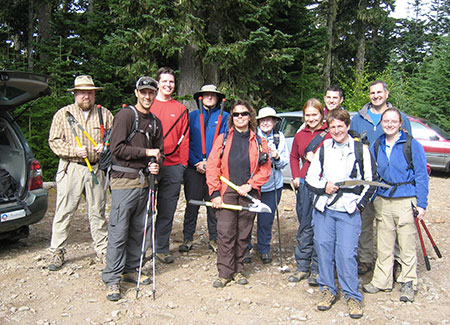
BrianChambers03UpperHoodValley

Upper Hood River Valley orchards at sunrise

 (click here to view a large version in Brian’s gallery)

Some of my favorites include shooting the orchards of Hood River, Hood River itself with the river in the foreground and the mountain behind it, the view down the gorge anywhere there is exciting light from places like Rowena, Underwood viewpoint, Mitchell point. I have been heading to some of the more off-trail waterfalls and really enjoying the exploring aspect of that. I love Mt Adams in the fall for the color. I could go on all day.
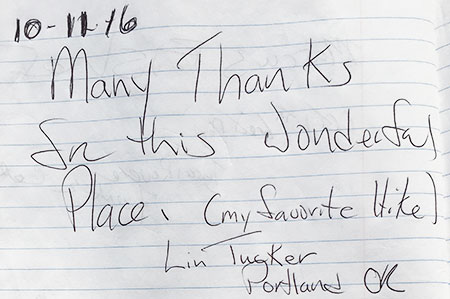
Early in the spring I am really drawn to the east hills. A few years ago it was the Rowena crest, then it was Dalles Mountain, then it was the Memaloose Hills Hike area.
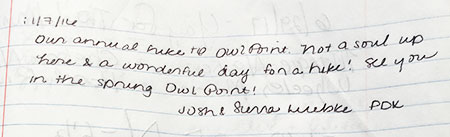
BrianChambers04RowenaSunrise

Sunrise a Rowena Crest

(click here to view a large version in Brian’s gallery)

WyEast: What makes those locations special?

Brian: One big factor is the flowers. Especially this year, although it was an early bloom, it was off the charts good. I don’t think I have ever seen it that good. I love the openness of the land, being able to see the light interacting with terrain. The different compositional options, with 360 degree views and the amazing mountain and gorge views in the background. Sitting in a field of wildflowers all alone watching the rising sun dancing with Mount Hood and lighting up the flowers. It doesn’t get much better than that.

WyEast: What about your favorite Mount Hood locations?

Brian: Well in the winter I spent a ton of time snowshoeing up the White River. It has such an easy access to an amazing mountain view with the river in the foreground. I am almost embarrassed to say how many times I have gone up there looking for the perfect light. I finally got a couple of images I am pretty happy with this year. Persistence can pay off.

BrianChambers05WhiteRiverSunrise

Sunrise on Mount Hood and the White River

 (click here to view a large version in Brian’s gallery)

In the summer I often am heading up to the WyEast Basin and Cairn Basin area. I like that you can take several different trails to get there and it is this wonderful mix of high alpine, lush wildflowers, refreshing streams and small waterfalls with some of the best close-up views of the mountain. The number of great subjects in such a small area is almost mind-boggling.

WyEast: Some of your most stunning photos are shot during the golden hours of early morning or evening – do you have any tips for shooting in those conditions?

Brian: Getting up earlier and staying out later is usually the simplest thing people can do to greatly improve their photography. It is very difficult to get as compelling a photo in the middle of the day. The rapidly changing light around sunrise and sunset can really add a ton of interest, color and excitement to your images. Watch the sky, satellite images and weather forecasts to see if there is going to be enough clouds to make the sky interesting but not too many so that the sun is blocked.
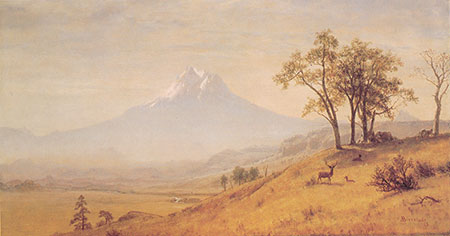
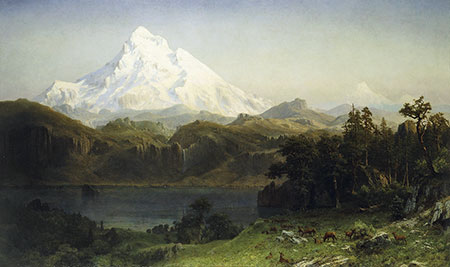
BrianChambers06CairnBasin

Late afternoon wildflowers near Cairn Basin on Mount Hood

 (click here to view a large version in Brian’s gallery)

A tripod is critical for getting clear shots when it is darker. I suggest shooting in RAW not JPEG and bracketing your exposures to capture all of the detail in the brightest and darkest parts of the image.

Be Patient. I can’t tell you the number of times I have been taking pictures and all the other photographers have left and 10 minutes after a boring sunset the sky just lights up.

BrianChambers07AdamsSunset

Autumn sunset at Mount Adams

(click here to view a large version in Brian’s gallery)

That being said, I would be lying if I didn’t say I am just like everyone else in that I sometimes can’t pull myself out of bed in the early morning and I sometimes head to the brewpub at sunset rather than out to shoot. My family is pretty tolerant of me heading out to shoot but I try to balance life and responsibility with photography. Find the balance that makes you happy.

WyEast: You also have some amazing photos that feature the night sky. How exactly do you capture those images?

Brian: It is surprisingly easy if you have a fairly new digital camera. Have a solid tripod. I suggest getting to your location before it gets dark. Set up all your gear, compose your image and focus. Cameras are unable to auto-focus in the dark so you need to focus before it gets too dark and then set your camera to manual focus so it will not try to refocus.

Start taking pictures before it is totally dark and see what happens. Learn how to adjust your camera in manual exposure. Set your aperture to wide open (the smallest number possible), your shutter speed to around 20 or 30 seconds. Crank your ISO up to 800 or 1600 or even higher and fire away. The beauty of digital is it doesn’t hurt to mess up. If it is too dark crank up your ISO higher or lengthen your shutter speed. If it is too bright turn your ISO down.  Look at your results and see what works and what doesn’t. Play and have fun.

BrianChambers08CooperSpurStars

Milky Way and Mount Hood from below Cooper Spur

 (click here to view a large version in Brian’s gallery)

WyEast: Those are great tips! Some of your images of Mount Hood and the Gorge also feature lightning, which seems especially challenging to capture. Other than not standing on high ground – which, actually, it looks like you were – what can you tell us about getting a great lightning photo?

Brian: First of all be safe. I think a lot photographers tell stories of risking life and limb to “get the shot”. Probably not worth it and often just an embellishment to make it sound more dramatic. I like to find a place where I can shoot while sitting in the car or at least find shelter immediately.

BrianChambers09EastGorgeLightning

Thunderstorm lighting up the East Gorge

(click here to view a large version in Brian’s gallery)

It helps to have a cable release or some other way of triggering your camera like a remote control. That allows you to be safe in the car while the camera is outside. If it is dark and you can use a long exposure you can just set the camera to shoot continuously. Sort of a “spray and pray” method but there is nothing worse than missing that solitary lightning bolt.

If it is daylight, the “spray and pray” method doesn’t work because most cameras get bogged down and stop shooting after 20 seconds or so. In that case you can just watch and try to push the button with every strike. It sounds impossible but it can work with a little practice. We don’t get much lightning here so I have yet to invest in a lightning trigger but it’s a device that senses the lightning and takes the photo for you. Pretty handy if you do a ton of lightning shots.

BrianChambers10LostLakeLightning

Lightning at Mount Hood and Lost Lake

 (click here to view a large version in Brian’s gallery)

I have a couple of apps that show you live lightning hits so you can see if it’s worth heading out. And be ready if the conditions change. One of my favorite lightning shots at Lost Lake (above) was purely luck. I was there to take a photo of the sunset when a small storm popped up. I kept taking pictures until I got my shot.

WyEast: You’re based in Hood River, Brian. I’m wondering where you see the fine art scene going in the Gorge over the long term? Do you see art becoming a significant part of the Gorge and Mount Hood economy in the future?

Brian: It is definitely growing. I don’t think there were any art galleries in town when I moved here in 1997. Now it seems like there is one on every block. Many restaurants and breweries also display local artists. Hood River has over 20 new outdoor works of art on display around town. There are so many talented artists in the gorge. I think people are drawn to the quality of life and inspired by amazing beauty at our doorstep.

BrianChambers11StormyGorge

Stormy Gorge evening

(click here to view a large version in Brian’s gallery)

Art can play a significant part in the economy. It is just one more great reason for people to visit the gorge and it fits well with the winery and brewery tours, the Fruit Loop orchard tour and outdoor recreational tourism that the gorge is so rightly known for. I think the artwork can be a long-term reminder of the specialness of the area and for both tourists and people who live here. I love when people look at one of my pictures and it reminds them of some special times they have had here.

BrianChambers12SpiritFalls

Spirit Falls on the Little White Salmon River

(click here to view a large version in Brian’s gallery)

One thing that I am very excited about is helping to organize a temporary art gallery event in downtown Hood River on July 1st -3rd week. Eighteen local artists, including myself, have banded together to showcase and hopefully sell our work. We are having beer and wine and small plates of food, with an opportunity to view work from wide variety of different types of artists.

We will all be on hand all three days to discuss our artwork. The event will be at 301 Oak Street in downtown Hood River. I encourage anyone interested to stop in and say “hello”!

WyEast: That sounds like a great event, Brian! As an artist working in the Gorge, what are some of the challenges you’ve faced in becoming established?

Brian: It has been a slow steady process. Sometimes it seems agonizingly slow.  When I first started taking pictures I didn’t dream that people would want to purchase them. I looked around and saw so many great photographers.

BrianChambers13DufurHomestead

Abandoned homestead near Dufur, Oregon

 (click here to view a large version in Brian’s gallery)

Early in my progression as a photographer I was lucky enough to be accepted into the Columbia Center for the Arts. At that time it was a critical place of support for me. They encouraged me and treated me as a true artist so that I began to think of myself that way. I started to sell some work and began to grow in confidence. Every year they would have a photo contest and I was fortunate enough to win first place among hundreds of entries, including some really talented photographers.

That was a big step for me. Then I branched out and started displaying my work in local bakeries, restaurants and brewpubs. I started to gain more followers and confidence. In the last year or so, I have started to post more consistently on Facebook (www.facebook.com/BrianChambersPhotography/) and connect with people there.

BrianChambers14GorgeHike

Brian teaching photography on a recent Friends of the Gorge outing

I have also begun teaching a little (including the Friends of the Gorge hike where we met). It is something I really enjoy and want to get better at, and something I have considered doing more frequently in the future.

Hood River is full of talented photographers and artists and most of them have been really supportive and welcoming to me.

WyEast: When we met recently on that Friends of the Gorge hike, we talked about the controversy over oil and coal trains traveling through the Gorge. Since then, of course, a worst-case scenario unfolded when an oil train derailed in Mosier on June 3 of this year. What are your thoughts on the oil and coal trains moving through the Columbia River rail corridor?

Brian: That was a real eye opener for me.  I had been out for a road bike ride in the exact location ½ hour before the accident. When I heard about it I actually went to take pictures from across the river. You can see a time lapse I took on my Facebook page. Just watching all the black smoke block out the view of Mt Hood was really a horrible sight.

BrianChambers14OilTrainStill

Brian captured this video of the June 3rd oil train crash in Mosier, Oregon

 (click here to view a large version of this video in Brian’s gallery)

I got stuck in a traffic jam heading home. It took me 2 hours to get home when it would normally take me 10 or 15 minutes. It really made me think about how the unique geography and infrastructure of the Gorge can really amplify any disaster. There are very limited driving options, and if one or two roads are closed people can become trapped.

I also think the accident was not a worst-case scenario. It was lucky it didn’t happen in the center of Mosier or Hood River, where there is a lot more potential for damage and it was lucky it happened on an unusually light wind day. If it had been windy I can only imagine how bad the fire could have been.

WyEast: You’ve hiked the trails of Mount Hood and the Gorge and have seen the growing crowds. Many are concerned that the area is being loved to death. What are your thoughts?

Brian: Wow, what a question. This is something I think about almost daily. Even in my short time here I have seen a tremendous change in the volume of hikers to areas that were once quiet and relatively unknown, like the Columbia Hills Park and Memaloose Hills. I used to go there in the spring and see almost no one. This year they were just packed with people. Which, on one hand, is wonderful that people are out there learning to love the gorge and discovering new places. It is great for society that people are out exercising and recharging in nature. I feel like people will fight to save places once they see how special they are.

BrianChambers16ColumbiaHills

Columbia Hills State Park in spring

 (click here to view a large version in Brian’s gallery)

On the other hand, overcrowded trails and unsafe parking lots are a real concern and take away from everyone’s enjoyment.  As a photographer, I am always looking for the un-crowded wild places and I am afraid as I share them I might be contributing to them becoming crowded and over used.

There is an area near The Dalles that I am just in love with right now and I went there more than a dozen times the last couple years during the wildflower bloom and saw less than a handful of other hikers, and usually didn’t see anyone. Although part of the reason for that is starting my hike before 5 AM! I am torn between never telling anyone about it and wanting everyone to know how amazing it is. The word is already getting out and I suspect it will be packed in a couple years.

BrianChambers17SevenmileHill02

Mount Hood from an “undisclosed location”…

 (click here to view a large version in Brian’s gallery)

I guess I am an optimist. Nature seems to have the ability to not just heal people, but also itself. Just last week I was walking through the Dollar lake fire on Mt Hood. A few years ago it was a scene of total destruction. Everything dead and blackened. Now it’s hard to see the ground due to the huge number of flowers. If we can just try to get out of the way the land can usually do amazing things to recover from damage.

BrianChambers18GorgeSunset

Gorge Sunset near Mitchell Point

 (click here to view a large version in Brian’s gallery)

Ultimately, I think the best answer is more trails. That is why I fully support the work you and others like you are doing. Saving the remaining wild places and creating sustainable hiking trails. I hope as the crowds worsen that will become a bigger priority for more and more people.

WyEast: Last question, and one you probably knew was coming: you’re a veterinarian by trade, so I’m wondering if you’d like to weigh in on bringing dogs into the Gorge? And in particular, what are some tips you would offer for keeping dogs (and people) safe, based on your experiences as a care giver?

Brian: Well, one disease that people new to the area may not have heard of is salmon poisoning. Don’t let your dog eat raw salmon or steelhead. It can cause severe vomiting and diarrhea that can be fatal. As I am sure all hikers already know, there are a few ticks in the area! There are plenty of good tick control medications available for your dog.

BrianChambers19GorgeRainbow

East Gorge rainbow

 (click here to view a large version in Brian’s gallery)

There are lots of dangers out on the trails and roads most of which can be avoided by keeping your dog on a leash and using common sense. I just recently saw a dog that was bitten by a rattlesnake on Dog Mountain. I have seen dogs killed by heat stroke, dogs killed by trains, falls from cliffs, cuts caused by skis, dogs lost in the wilderness, attacked by coyotes and other wild animals, falls from the back of pickup trucks, and too many hit by cars to count.

We also have a lot of poison oak in the Gorge. Keeping your dog on a leash is also a good way to make sure he stays out of poison oak, which can also be transferred to you from your dog’s coat.

BrianChambers20McCallSunset

Spring sunset in the Gorge from Memaloose Hills

 (click here to view a large version in Brian’s gallery)

Lastly, just like you and I, you should avoid overdoing the activity level for your dog’s fitness level. If you have an out of shape dog that doesn’t exercise, don’t start with a long bike ride on a hot day. As your dog starts to age you need to start to reduce the length of the hikes and bikes to ones that will not cause them pain or distress.

It can be hard to do because the dogs often want to go, even when their body is unable. Talk with your vet if your dog is slowing down or seeming stiff and sore, as there are plenty of options to help with that.

WyEast: That’s great information! Thanks for taking the time to chat, Brian – and for celebrating the Gorge and Mount Hood with your amazing photography. We look forward to seeing more of your work!

Brian: It really was my pleasure.

_______________

You can support Brian Chambers’ photography by following him on Facebook:

Brian Chambers Photography on Facebook

Through July 15th, Brian will be donating 20% of proceeds from photos he sells to people who mention this article to the Friends of the Gorge, Trailkeepers of Oregon (TKO) and the Columbia Land Trust, so it’s a great time to support him! (please note that this excludes the July 1-3 pop up gallery)

 Check out more of Brian’s images at:

Brian Chambers Gallery on Zenfolio

 And you can contact Brian directly through e-mail by clicking here.

And finally, learn more about the July 1-3 pop up art gallery in Hood River at:

Art in the Gorge on Facebook


WyEast Roundup!

Lots going on as we enter 2016 in WyEast country, so this article is a bit of a roundup, beginning with yet another commemorative nod from our federal government in the form of…

Columbia River Gorge Priority Mail Express Stamp!

WyEastRoundup01Stamp01

On December 30, 2015 the U.S. Postal Service released another stamp celebrating the Columbia River Gorge, joining the 1992 USPS postcard of the same, classic scene of Crown Point as viewed from Chanticleer Point (Women’s Forum Park).

WyEastRoundup01Stamp02

While the 1992 commemorative card was an affordable $0.19, the new Gorge stamp is a hefty $22.95, making for a steep addition to stamp collections! This new Priority Mail Express stamp is available in panes of 10 (for a mere $229.50!), and in the words of the Postal Service, the new stamp “celebrates the grandeur of the Columbia River Gorge” with the following:

Approximately 80 miles long and up to 4,000 ft. deep, the gorge runs along the Columbia River to form part of the border between Oregon and Washington. The stamp art captures the beauty of the Columbia River as it winds its way through the steep cliffs of the Cascade Mountain Range. The historic Vista House sitting atop Crown Point and overlooking the river 725 ft. below shimmers in the golden light of the setting sun.

Illustrator Dan Cosgrove of Chicago worked under the direction of Phil Jordan of Falls Church, VA, to create the stamp image.

The artists captured a faithful rendering of the scene, but I can’t help but wonder why a local illustrator wasn’t selected? After all, the Portland region is home to so many, including Paul A. Lanquist (PAL), the creative force behind dozens of “new retro” posters of Pacific Northwest scenes, like this view of Vista House:

Courtesy: Discover the Northwest

Courtesy: Discover the Northwest

So, save your money on that spendy USPS stamp and consider supporting a Northwest artist, instead. You can find Paul Lanquist’s posters at Discover the Northwest and many other outlets.

Still Creek Trails

As part of a recent series of articles on the Mirror Lake backcountry and Wind Creek Basin, I proposed the following concept for eventually expanding trails in this pocket wilderness:

WyEastRoundup02StillCreek01

(click here for large map)

After posting these articles, I happened to be researching the area for a related topic and was surprised to find many of my “proposed” trails on early maps. I’m going to chalk that up as “imitation being the sincerest form of flattery” as I’m sure I’ve studied these maps before, and must have noticed these earlier trails! Or so it would seem?

Nonetheless, it was a pleasant (re)surprise to discover that we once had a hefty trail network here, as it helps make the case for bringing more trails in this area to reality someday. Past is prologue! And who knows, maybe some of these old treads still survive?

WyEastRoundup02StillCreek02

(click here for large map)

A closer look at the 1937 forest map (above, marked with red arrows) reveals a rim trail that followed the north side of Still Creek valley from Camp Creek to – what’s that? – a trail between Still Creek and Mirror Lake!

These old trails show up on a more “official” 1939 forest map (below), with added detail showing the connector to Still Creek continuing south to (what still exists today as) the Eureka Peak trail. This explains what has always been an odd trail fragment at Eureka Peak and raises the intriguing question of whether the segment north of Still Creek to Wind Lake and beyond still exists?

WyEastRoundup02StillCreek03

(click here for large map)

These old routes persist on forest maps dating into the late 1940s, when the commercial logging assault on our forests began wiping out hundreds of miles of old trails (below).

WyEastRoundup02StillCreek04

(click here for large map)

But Mirror Lake, the Wind Creek Basin and Still Creek valley were still recovering from the catastrophic Sherar Burn when the logging bonanza took off in the mid-1900s, and were mostly spared from clear cutting and logging roads. That not only gave today’s pocket wilderness, but it also bodes well for traces of these old trails to still survive – and someday be rediscovered and restored, perhaps?

Eliot Crossing Update

Lots of news on the Eliot Crossing proposal, first described in this WyEast Blog article from 2014. As reported earlier, the Forest Service is moving a trail project forward this year that will finally restore the missing section of the Timberline Trail at the Eliot Branch crossing.

The following map originally appeared in this blog, but later became a Trailkeepers of Oregon (TKO) map for the purpose of the Eliot Crossing project, and now is being shared with the Forest Service, as well:

WyEastRoundup03EliotCrossing

(click here for large map)

In January, Claire Pitner, Forest Service project manager for the new trail at the Hood River Ranger District, sent this good news to local non-profits involved in the project:

“I wanted to let you know that the environmental analysis for the Eliot Reroute was signed yesterday. Furthermore, earlier this week we received word that the Regional Office is providing funding to complete the project. Much of the work will be done using a contractor with volunteer assistance as well.

“We are working on finalizing the contract package in hopes of having a contractor long before we are able to access and do work at the site. I’m looking forward to working with TrailKeepers to get some good work done this summer!”

By early February, the local media picked up on the story with (surprise!) mentions of the WyEast Blog in The Oregonian and Willamette Week – a nice plug for the blog and the Eliot Crossing project!

In early March, the TKO board will be meeting with the Forest Service and several other non-profit organizations to begin planning volunteer activities related to the project. It should be a fun, family-friendly opportunity for volunteers to be part of the project, and I’ll post updates on the project as more details become available.

LG TV Mystery Mountain Ad

I’ll end the roundup on a whimsical note, courtesy LG, the electronics giant. I spotted the following print ad over the holidays and something about it looked too familiar – as it should have. This is our very own Trillium Lake…

Do not attempt to adjust your television…

Do not attempt to adjust your television…

…except it isn’t, unless you’re looking in the rear-view mirror of your kayak (or canoe). A closer look at the mountain (below) shows all the major features of WyEast reversed, with a misplaced White River glacier flowing down the southwest slope of the mountain (imagine the mayhem in Rhododendron!), and poor Illumination Rock and Mississippi Head rudely moved to the east side of the mountain:

This looks vaguely familiar…

This looks vaguely familiar…

But the really goofy part of this ad is the appearance of what seems to be an Italian (Burano?) or perhaps Icelandic fishing village teleported to the Oregon Cascades:

Preview of a future Forest Service concession..?

Preview of a future Forest Service concession..?

As always, it’s good to see our mountain (and Gorge) making regular appearances in print media from around the world, even if the graphic artists can’t resist making a few improvements. Even with the artistic tinkering, these ads underscore the world-class nature of these amazing places… and their national park-worthiness, of course!

2016 Campaign Calendar!

00aCalendarCoverGumjuwac

Each year since 2004, I’ve produced an annual “Mount Hood National Park Campaign Scenic Calendar”. It’s mostly for fun and to showcase the mountain (and Gorge) in a way that helps move beyond the too-often heard “it’s too [fill in the defeatist excuse] to become a national park.”

Wrong! In fact, the spectacular scenery, dramatic human history and sheer diversity of ecosystems in such a compact space make it a perfect candidate! Thus, the “idea campaign”, now entering its 12th year.

Each scenic calendar does put a modest $4 into keeping the campaign website and this blog up and running, but the main reason for picking one up is to simply enjoy looking at our someday national park through every month of the year. They sell for $29.95 over on my new campaign store:

Mount Hood National Park Campaign Store

If you’ve purchased a campaign calendar before, you’ll note that I’ve moved from CafePress to Zazzle for printing. This is in part due to CafePress dropping large format calendars from their offerings. But in truth, I’ve had mixed experiences with the company in recent years, and have heard the same from others who purchased calendars there. So, it was time to bail.

By contrast, Zazzle seems to provide a much better customer experience and the print quality is exceptional – especially compared to CafePress. I’ve been impressed, and I think you’ll be pleased, too!

Now, bear with me as I indulge in my annual reflections from the past year as illustrated by photos from the 2016 calendar…

The Cover Shot

00bCalendarCoverGumjuwac

Mount Hood and valley fog from Gumjuwac Overlook

The view on the cover of the 2016 calendar is from a favorite viewpoint that is surprisingly unknown and never crowded. It’s along the Gumjuwac Trail, and the combination of a steady climb and not much information on maps or guidebooks to indicate a viewpoint seems to have kept this spot out of the mainstream… for now!

The cover shot came on one of those bright blue mountain days when the East Fork Hood River valley was blanketed in dense, freezing fog, thanks to a classic temperature inversion.

00cCalendarCoverGumjuwac

Silver thaw on vine maple along the Gumjuwac Trail

The temperature at the trailhead along the East Fork that November day was a foggy 28 degrees. The first part of the climb along the Gumjuwac Trail was through a wonderland of glazed trees before breaking out of the fog about 1,500 feet above the trailhead. There, the temperature was suddenly in the 40s and allowed for a relatively balmy lunch in the sun!

The Monthly Images

For the January image in the 2016 calendar, I chose a photo taken along the historic Bennett Pass Road (below) after the first big snowfall of the 2014-15 winter season. As it turned out, it was also the last big snowfall! We soon entered a long year of drought in the Pacific Northwest that left the Cascades with the lightest snow pack in years.

01CalendarBennettPass

January features Mount Hood from Bennett Pass Road

The February image of the north face of Mount Hood (below) was taken from a mostly bare Old Vista Ridge Trail in mid-May, with a fresh coast of spring snow at the upper elevations of the mountain that belied the ongoing drought. The trail would normally have 5-10 feet of snow on the ground at that time of year, but the drought of 2015 was already well underway, and many mountain trails were eerily snow-free by early June.

02CalendarNorthFace

February features a close-up of the north face of Mount Hood

For March, I chose a close-up photo of Wahclella Falls (below) on Tanner Creek taken in early May. This has become one of the most popular trails in the Gorge, and remains my favorite, as well. In 2015, I hiked this lovely trail a total of seven times, spanning the four seasons.

On this particular trip, an impromptu, full-blown Bohemian wedding unfolded on the rocks above the falls while I was shooting this image – complete with baskets of rose petals and various acoustic instruments wafting (somewhat in tune) above the roar the falls. It was undoubtedly an unforgettable wedding for the lucky couple, and just another quirky Gorge experience for hikers passing through..!

03aCalendarWahclellaFalls

March features Wahclella Falls on Tanner Creek

The Wahclella Falls photo required a bit more commitment than simply showing up with a tripod. The falls are well-guarded with huge, truck-sized boulders, so to capture this image I packed creek waders and eased out to about mid-thigh in very “refreshing” water to get a clear view of the falls. After 20 minutes in the stream, it took awhile for the circulation to return to my legs…

03bCalendarWahclellaFalls

Thawing my legs after some quality time in the middle of Tanner Creek

This year I started a new guided hike series for the Friends of the Gorge focuses on waterfall photography for beginners. Tanner Creek is the perfect trail for this, with world-class scenery along a short, safe loop trail.

Though the main goal for most hikers at Tanner Creek is Wahclella Falls, the lower creek is especially good for learning the camera basics of long exposures and filters. The April scene (below) was captured during one of these guided hikes.

04aCalendarTannerCreek

April features a sylvan scene along lower Tanner Creek

While poking around the boulders along Tanner Creek for a good photo that day, I nearly stepped on a pair of garter snakes (below) sunning themselves in the filtered sunlight. I assume this to be a mother and offspring, but will defer to the herpetologists on that point!

04bCalendarTannerCreek

Garter snakes on the banks of Tanner Creek

For the May image, I selected a perennial favorite of a lot of photographers, Triple Falls on Oneonta Creek (below). This is one of those spots that just calls out “national park!” It’s a completely unique waterfall that perfectly captures the elements that make Gorge scenes like this unmistakable: bright, crystal clear streams tumbling over sculpted black basalt, framed by velvet blankets of moss and ferns and shaded by the lush foliage of the Cascade rainforest. It’s no wonder the Gorge waterfalls have become iconic, drawing admirers from around the world.

05aCalendarTripleFalls

May features Triple Falls on Oneonta Creek

The trail to Triple Falls was briefly closed on a couple of occasions in 2015 thanks to a large landslide that occurred just below Middle Oneonta Falls, about a half mile below Triple Falls. On the way down from my trip to Triple Falls, I ran into Bruce Dungey (below), a U.S. Forest Service trail crew legend who has worked for the agency for 38 years and in the Gorge since 1992. He had been fine-tuning a temporary route his crew had built through the landslide.

05bCalendarTripleFalls

Forest Service trail crew legend Bruce Dungey working on the big slide that briefly closed the Oneonta Trail last year

We chatted as he was packing up his gear and hiked back to the trailhead together. Bruce quietly lamented the collapse of funding for trail crews in the Gorge over the time he has worked here. As recently as the 1990s, three crew leaders (including him) each led a crew of five working on Gorge trails. Today, there are a total of three trail workers remaining for the entire scenic area.

During the same period, Bruce has seen trail use explode, and he and his remaining crew are struggling just to keep up with the sheer numbers of hikers. Making things worse are bizarre new “sports” like trail bombing, where hikers intentionally cut across switchbacks for the fun of it, in a race to get to the bottom.

Bruce will soon be retiring, taking an immense amount of knowledge of the Gorge trails with him. My conversation with him was yet another reminder that we all need to work together to rearrange our priorities, and move recreation funding to the top of the priority list at our federal agencies.

06aCalendarOwlPoint

June features Owl Point on the Old Vista Ridge Trail

The June image is another from Owl Point (above), a beautiful rocky perch along the Old Vista Ridge Trail. The trail here was almost lost to neglect after being dropped from Forest Service maintenance in the 1970s, but since 2007, this old gem has been gradually restored by a small army of anonymous volunteers.

Today, the old trail looks better than ever, keeping alive one of the earliest routes built on the mountain. Hikers have noticed: the summit register at Owl Point recorded more than 60 entries in 2015, including visitors from as far away as Japan and Europe, and Owl Point is now featured in several hiking guides.

The Owl Point hike took special meaning for me this year, as I was able to take an old friend and college roommate (below) there for a one-day reunion. We couldn’t have had a more idyllic day. It’s no secret that trails are the perfect place for reconnecting with old friends!

06bCalendarOwlPoint

Old friends and mountain trails are a perfect combination!

For July, I selected one of my few wildflower scenes from 2015 (below), captured along the Timberline Trail near Timberline Lodge.

07aCalendarTimberlineTrailHood

July features the Timberline Trail near Timberline Lodge

The early wildflower bloom caught many hikers by surprise, with places like Elk Cove and Paradise Park peaking a full month early from their typical August bloom time. I was among them, and completely missed the bloom at Elk Cove for the first time in over a decade.

The following side-by-side shows Elk Cove still blooming in late August in 2012 and completely gone to seed by August 4 in 2015:

07bElkCovePortraitComparison

The August image in the new calendar is also from the Timberline Trail, this time in a sloping lupine meadow captured in early July on the brink of White River Canyon (below).

08aCalendarWhiteRiverRim

August features lupine meadows on the slopes of White River Canyon

The vastness of the White River Canyon is always an awesome thing to see, and despite the retreat of the White River Glacier, its rugged terminus is still an impressive sight, too. It’s hard to know just how far the glacier will recede with climate change upon us, but it’s fair to say that the lower extent in this photo from last summer (below) may be gone in just a few years, leaving a few moraines behind to mark its former extent.

08bCalendarWhiteRiverRim

White River Glacier is receding in a warming climate…

For September, I chose a photo of the relatively new log bridge on the Trail 400 (The Gorge Trail) over Gorton Creek (below). This handsome footbridge replaced a nearly identical version that had decayed enough to become unstable a few years ago. But the new bridge has quickly weathered to appear as if it has been here for decades, making this is one of the more photogenic spots in the Gorge. It’s rarely busy here, so also a favorite escape of mine on otherwise crowded weekends in the Gorge.

09aCalendarGortonCreekBridge

September features the Gorge 400 Trail bridge over Gorton Creek

When approaching the Gorton Creek area, this sign (below) at the entrance of the Wyeth Campground always seems odd – after all, most campgrounds in the Gorge have piped water systems from nearby springs.

09bCalendarGortonCreekBridge

Surprising sign at the Wyeth Campground…

But the story behind the water problems at Wyeth unfolds as you approach Emerald Falls, the unofficial name for the photogenic lower cascade on Gorton Creek. A 1930s-era diversion dam and pipe system at the falls has gradually been falling apart, with various jury-rigged efforts to keep the system functioning over the years.

When I visited Gorton Creek this year, the latest fix consisting of a riprap of logs (below) had been placed beneath a new section of water line leading to the campground. It’s unclear if this fix will actually restore potable water at Wyeth, but there’s apparently a renewed effort by the Forest Service to do so.

09cCalendarGortonCreekBridge

The fragile, exposed waterworks below Emerald Falls

Fall colors were surprisingly good this year, despite the devastating drought that saw many deciduous trees dropping their leaves in mid-August. By late October, however, many Gorge trails were lighting up with the familiar bright yellow displays we expect from our resident maples, including Elowah Falls (below).

10CalendarElowahPano

October features Elowah Falls

The Elowah Falls photo is actually a 3-image, blended panorama from a long-forgotten overlook that was bypassed when the modern trails were built in the McCord Creek area. It still provides one of the finest views of the falls, but only if you know where to find the old trail!

11aCalendarMirrorLakeWaterfowl

November features tunra swans at Mirror Lake, below Crown Point

For November, I selected an image from “the other” Mirror Lake described in this blog article. While I was able to capture some fall colors and even a group of tundra swans flying through the scene, my main goal in visiting this spot was to replicate an 1870s image of this same spot (below), as captured on glass slides by pioneering photographer Frank Haynes.

11bCalendarMirrorLakeWaterfowl

Echo Bay Comparison (1880s – 2015)

Click here for a larger image

I didn’t quite nail it, in part because I didn’t want to spook the abundant waterfowl resting here, and also because I was running out of dry land to walk on. But it was fun to trace the footsteps of an early photographer. Next time, I’ll try getting a bit closer to the exact spot where Frank Haynes stood by visiting outside of the migratory season for swans, geese and ducks.

For December, I picked a somewhat unconventional (for me) image of a group of mountain hemlock, noble fir and Alaska cedar near Barlow Pass after the first (and only) heavy snowfall, below.

12aCalendarSnowyBarlowPass

December features a winter wonderland near Barlow Pass

But my real goal on that early snowshoe trip last winter was a different photo, the view of Mount Hood from the Buzzard Point overlook (below) along the historic loop highway. In the end, I thought I’d break from tradition and use a more intimate scene for the calendar – hopefully, you will agree, and apologies if you prefer the alpenglow scene!

12bCalendarSnowyBarlowPass

Later that evening near Barlow Pass

The new calendar format offered by Zazzle also gives me the back cover of the calendar to design, and that’s a major enhancement over CafePress. I thought long and hard about what to put on the back, and ended up doing a wildflower collage (below), since close-up images of flora never make it into my calendars.

13CalendarBackCover

The back cover features nine of my favorite wildflower images

For the curious, the flora were taken at the following locations, starting in the upper left and working across:

Top Row:

  • Vine maple near Clear lake
  • Clackamas White Iris near Pup Creek Falls
  • Fairy Slipper (or Calypso) orchid near Cabin Creek

Middle Row:

  • Tiger lily along the Horsetail Creek trail
  • Columbine near the base of Elowah Falls
  • Paintbrush along the summit of Hood River Mountain

Bottom Row:

  • Chocolate lily in the hanging meadows above Warren Creek
  • Gentian along McGee Creek
  • Maidenhair fern near Upper McCord Creek Falls

That’s it for this year’s calendar! Looking ahead toward 2016, I hope to keep up my current pace of WyEast articles as I focus more of my efforts as a volunteer for Trailkeepers of Oregon, among other pursuits. And spend time on the trail, of course!

14CalendarHappyNewYear

“You know, this would make a GREAT national park!”

As always, thanks for reading this blog, and especially for the kind comments you’ve sent over the years. I’ve never felt better about Mount Hood and the Gorge someday getting the recognition (and Park Service stewardship) they deserve! That’s largely because of a passionate new generation of Millennials who are questioning the tactics and somewhat stale vision of the conservation movement’s old guard.

While it’s true that we oldsters have savvy and insight borne of experience, it’s also true that fighting too many battles can leave activists tired and resigned. So, bring on the new blood with their refreshing idealism and optimism! We are about to hand them the keys to the movement, and I very much like where they want to take us.

Happy trails to you in 2016!

Tom Kloster | Wy’East Blog