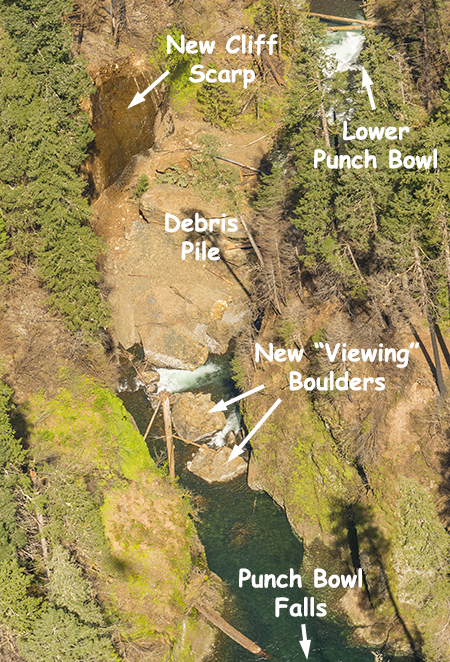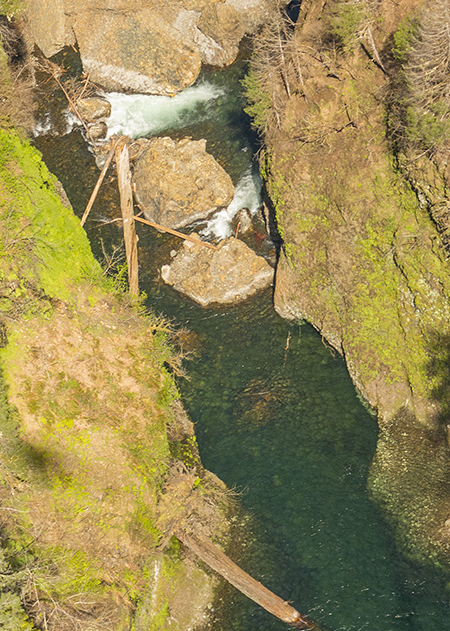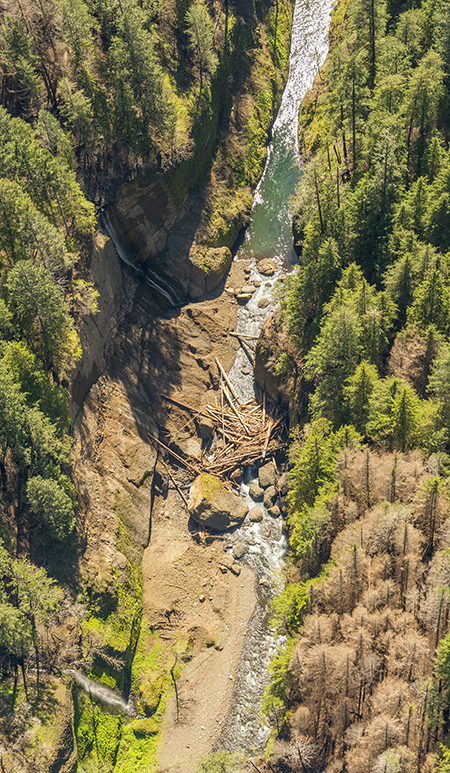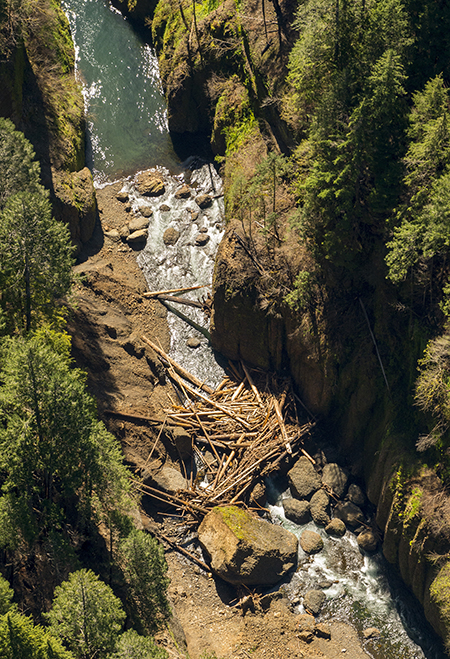
Arrah Wanna Time Travel

ArrahWanna00

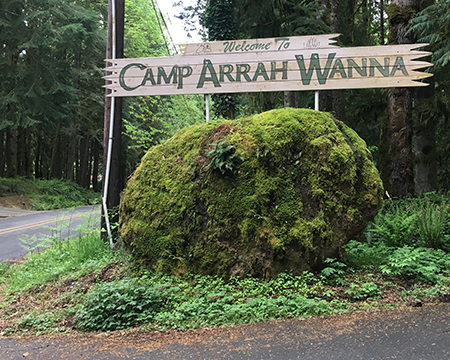
The giant boulder at the camp entrance is hard to miss!

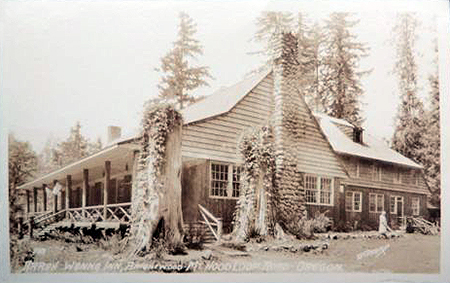
Earlier this year, I attended a Trailkeepers of Oregon (TKO) event at Camp Arrah Wanna, a venerable youth camp located in the deep forests along the Salmon River, west of Mount Hood. The camp’s origins are a bit hazy, but today’s youth camp emerged from the Arrah Wanna Inn, one of many roadside hotels and restaurants that lined the Mount Hood Loop Highway soon after it opened in the early 1920s.

ArrahWanna01

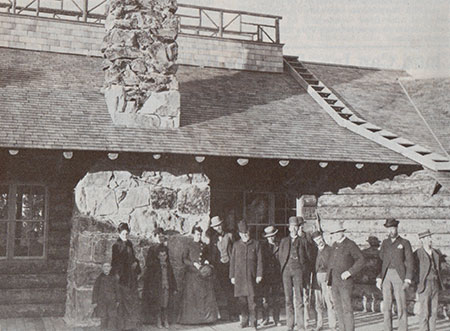
The original Arrah Wanna Inn as it appeared in the 1920s

During the heyday of the Arrah Wanna Inn, travelers explored the area in a growing network of trails to nearby forest lookouts and along the Salmon River. Locals also served as fishing and horseback tour guides to the growing stream of auto tourists.

ArrahWanna02

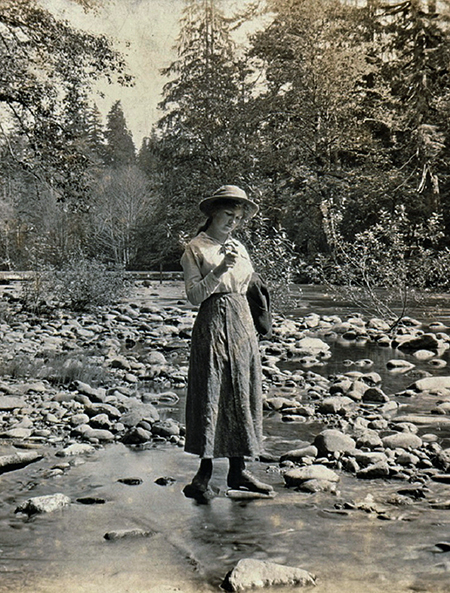
Early visitor to the Salmon River near Camp Arrah Wanna in 1915 (Wikimedia Commons)

Today, the camp hosts outdoor school each spring, faith-based youth camps in summer and winter and many other private retreats and events over the course of the year.

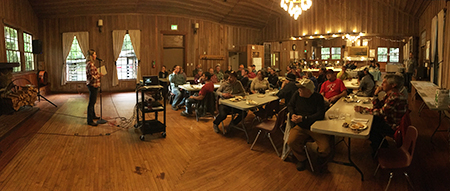
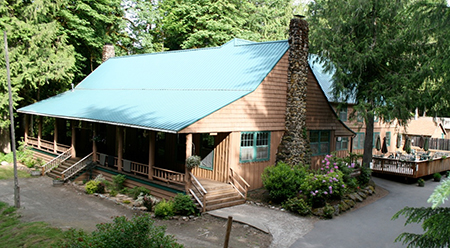
Today’s main lodge at the camp is housed in the historic Arrah Wanna Inn building. And though it has been decades since I spent my summers in high school and college working at camp, walking into the dining room in the main lodge brought back a flood of great memories.

ArrahWanna03

The rustic dining hall in the main lodge

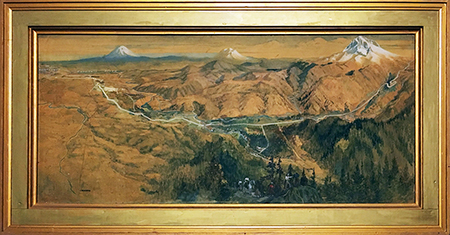
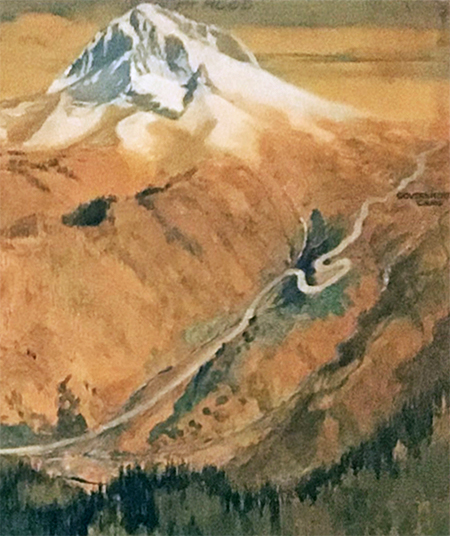
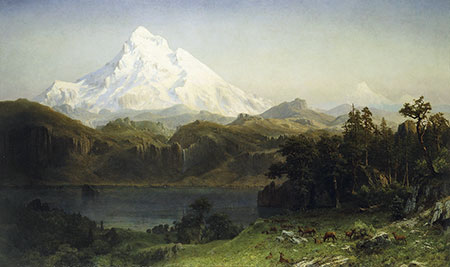
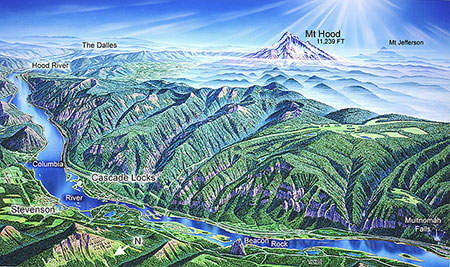
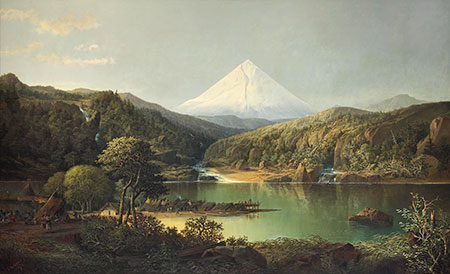
Walking through the old dining room, something hanging above the east fireplace caught my eye: a huge watercolor panorama of the surrounding Mount Hood country!

ArrahWanna04

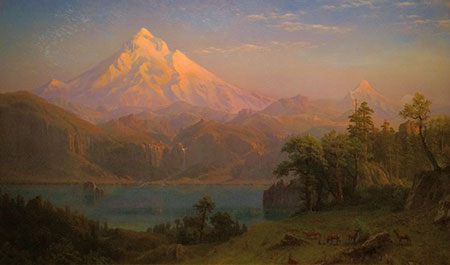
The panoramic masterpiece in the main lodge dining room

[click here for a large view]

Panoramic, hand-tinted photos and paintings of Mount Hood were popular in the early 1900s, but this was different. This painting was intended so have some geographic accuracy, and is clearly a custom original. The frame and age of painting suggest that it was originally done for the Arrah Wanna Inn, and simply came with the building when Camp Arrah Wanna was established.

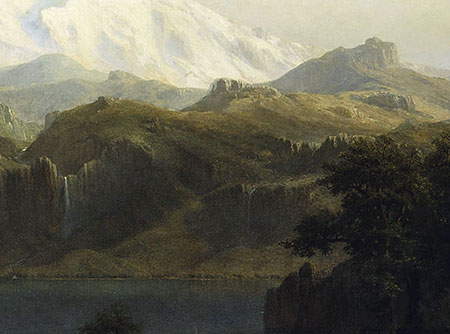
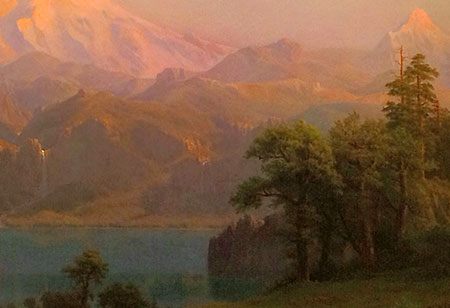
The artist behind this beautiful painting is unknown, though there may be a signature hidden inside the frame or on the back of the painting. The rest of this article is a tour of the details in this amazing, little known painting, section by section.

Taking a closer look…

ArrahWanna05

Close-up of the Salmon and Sandy River valleys with Mount Adams on the horizon

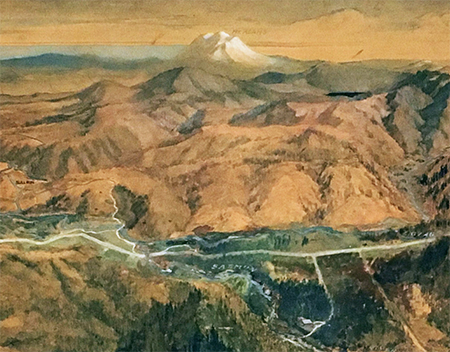
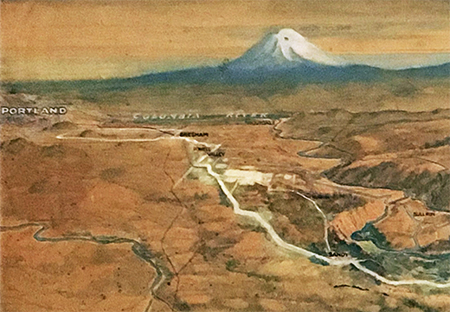
Front and center in the painting is the Welches community, known today as the Resort at the Mountain. Mount Adams appears on the horizon in this view, which is geographically correct. The large butte in front of Mount Adams in a mystery, however. My guess is that it reflects Hickman Butte, locked away behind the gates that close the Bull Run watershed to the public today, but the site of a prominent forest lookout in the 1920s, when I think this painting was made.

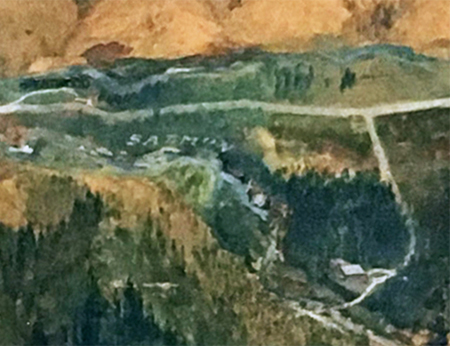
Looking more closely at the details in the Welches area, you can clearly see the Arrah Wanna Inn, which is why I believe this was created for the Inn as a custom artwork.

ArrahWanna06

Detail of the Arrah Wanna Inn in the 1920s or early 1930s

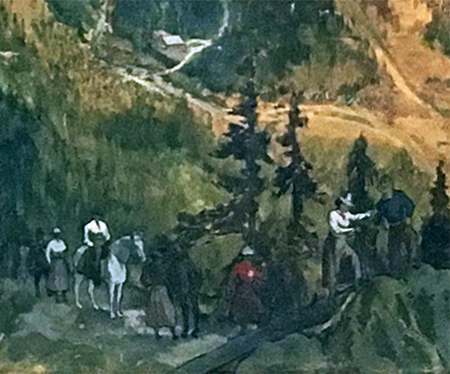
In the foreground of the painting, a horseback party has arrived at a viewpoint overlooking the Salmon and Sandy River valleys (below). The artist has used some license here to place both Mount Adams and Welches in view, but in reality Mount Adams can only be seen from the upper part of Huckleberry Mountain. The long-unmaintained Arrah Wanna Trail did climb directly to Huckleberry Mountain, and there were viewpoints of the the valleys from sections of this old trail, so I think the artist simply merged these perspectives.

ArrahWanna07

Detail of horseback party arriving at a viewpoint on Huckleberry Mountain

It’s hard to see, but the image shows a man leading five women and two horses to this viewpoint, with a second man bringing up the rear. We can only guess on the significance of the group — is it a biographical detail of the artist, perhaps? We’ll probably never know.

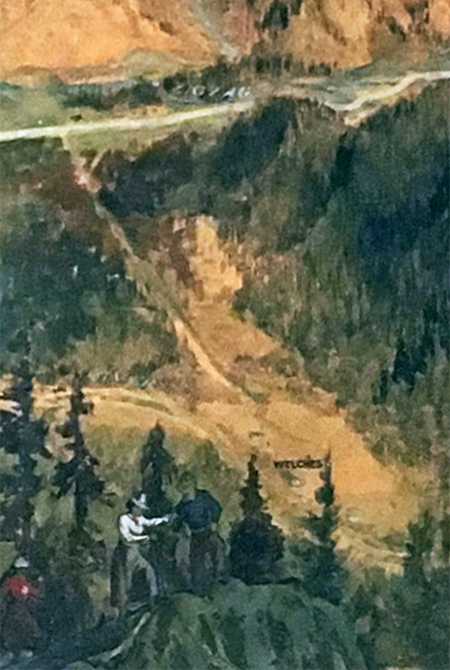
Also visible in this close-up look at the painting (below) is the Samuel Welch homestead and pasture that gave the community its name. The pasture was once known as “Billy’s Goat Pasture”, after Samual Welch’s son William, and today has been converted to be part of the golf course at the Inn at the Mountain.

ArrahWanna08

Detailed view of the Samuel Welch homestead that is today’s Welches community

Moving to the upper left corner of the painting (below), the artist included remarkable detail of Portland and the farm towns like Gresham, Powell Valley, Troutdale and Sandy that have since become suburbs.

Look closely, and you can see that the artist has carefully included Mount Scott, Kelley Butte, Mount Tabor and Rocky Butte in the painting details, as well as the Clackamas River, Cazadero interurban rail line, Columbia River and once-perfect cone of Mount St. Helens on the horizon.

ArrahWanna09

Mount St. Helens rising above the Sandy River eastern edge of Portland

These details show the artist to be a person with excellent knowledge of the area, since several of these features are in gegrpahically correct, but not actually visible from Huckleberry Mountain without floating a couple thousand feet above the summit.

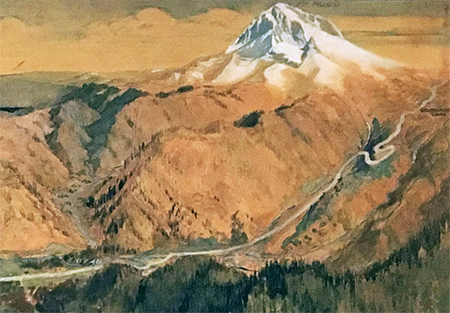
Moving to the right side of the painting, the artist has rendered a beautiful and very accurate portrait of Mount Hood (below). Zigzag Mountain — the long ridge in front of the mountain — is correctly shown as burned over. Lookout photos from the 1930s confirm that nearly all of this ridge burned in the early 1900s, though forests have largely returned today.

ArrahWanna10

Beautifully rendered view of Mount Hood and the historic loop highway

A closer look (below) shows the confluence of the Zigzag and Sandy Rivers at today’s Zigzag community. The gray coloring along the Sandy River (approaching from the top) is also accurate to the period. In the early 1900s, the devastation from the Old Maid Flat eruptions of the late 1700s were still on display, as early photos show. Though mostly forested now, the valley floor was still a mostly open plain of cobbles and volcanic debris when the painting was created.

ArrahWanna11

Detailed view of the Zigzag River confluence with the Sandy River

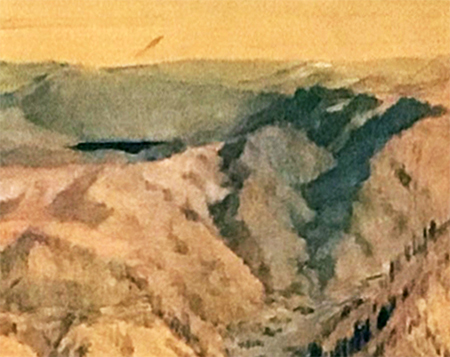
There’s another example of artistic license in this part of the painting, too. The large lake in the distance (below) appears to be Bull Run Lake, with Buck Peak rising behind it. The lake is completely hidden from the vantage point for the painting by intervening peaks and ridges.

ArrahWanna12

Bull Run Lake is included in the details of this painting

I had to “fly” to over 18,000 feet — almost 3 vertical miles — above Huckleberry Mountain to actually see Bull Run Lake from this perspective. But the artist’s license in showing this detail is also another example of great knowledge of the area landscape, as the position of the lake is geographically correct. That’s a real feat in an era when only a few, small-scale topographic maps of the region existed!

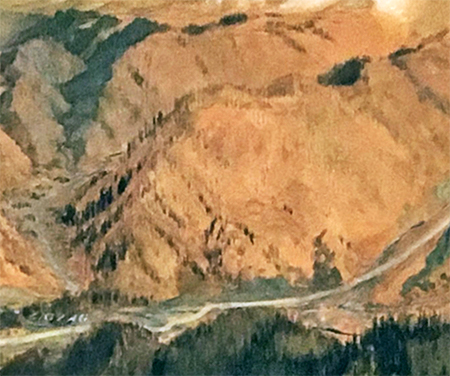
Looking more closely at Mount Hood and the loop highway where it climbs through the Zigzag Valley and up Laurel Hill to Government Camp (below) shows more terrific details. On the mountain, major features like Steel Cliff, Illumination Rock, Reid Glacier and Yocum Ridge are all included and proportionally accurate, with a bit of artistic license. If you look very closely, you can even pick out Cathedral Ridge, McNeil Point and Barrett Spur, all of which are geographically accurate from the vantage point of Huckleberry Mountain.

ArrahWanna13

Mount Hood and the Zigzag Valley

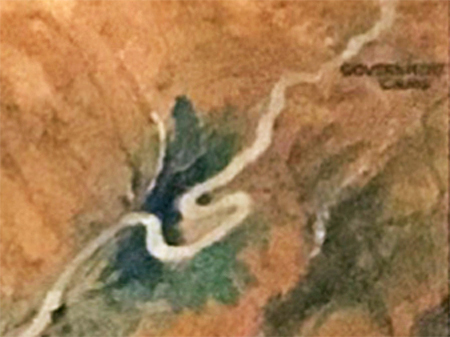
Looking very closely at Laurel Hill and the highway approach to Government Camp (below), the old loops on the historic highway are shown in great detail, along with the Little Zigzag River at the first highway switchback and Yocum Falls on Camp Creek to the right of the third switchback. The burn details are also correct, here, as most of the area around Government Camp had burned and was just beginning to recover in the early 1900s.

ArrahWanna14

Detailed view of the historic loop highway where it climbs Laurel Hill to Government Camp

The kind staff at Camp Arrah Wanna allowed me to share these images, and hopefully they will satisfy your curiosity, as well. The camp is a non-profit operation, and not really equipped to handle tourists dropping by to admire old paintings! But if you or an organization you belong to is looking for a site for a retreat or gather, consider supporting Camp Arrah Wanna! It’s one of the real gems on the old highway circuit, and relies on event bookings to keep this beautiful slice of history alive.

ArrahWanna15

The historic Arrah Wanna Inn is now the main lodge at Camp Arrah Wanna (photo: Camp Arrah Wanna)

You can learn more about Camp Arrah Wanna and find contact information here:

Camp Arrah Wanna

24075 E. Arrah Wanna Boulevard

Welches, Oregon  97067 

I’m also able to share even higher resolution images of the painting than what I posted for this article. Please reach out to me if you’re interested.

Horkelia Meadow… or is it Hackelia?

Horkelia01UpperSouthHoodView

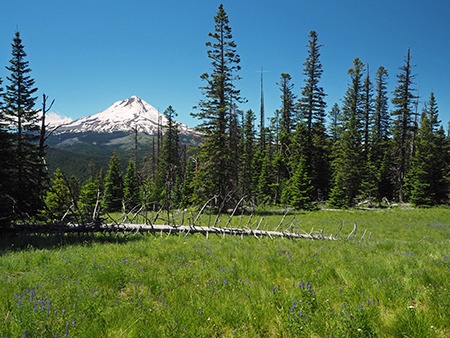
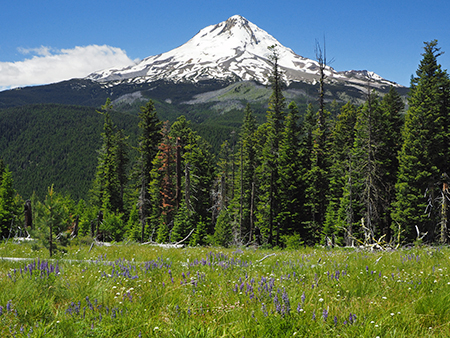
Mount Hood from Horkelia Meadow

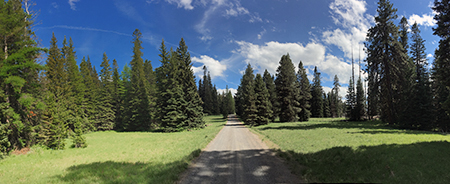
On the east side of Mount Hood lies a pretty mountain meadow that is visited by thousands each year, but known to very few. Right about now, this little meadow is in its peak summer bloom, thanks to a low snowpack this year. The place is Horkelia Meadow, a modest, subalpine gem in the Fire Forest country of the eastern Cascades.

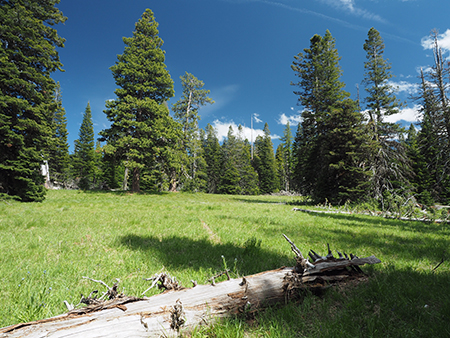
If you’ve ever traveled Lookout Mountain Road to the High Prairie trailhead, you’ve passed right through Horkelia Meadow, though you can be forgiven for not being familiar with the name. Years ago, a Forest Service sign marked the spot, but only a discarded signpost remains today.

Horkelia02LookoutRoad

Horkelia Meadow straddles popular Lookout Mountain Road

Horkelia Meadow marks an area where a layer of underlying volcanic rock forces the water table to the surface at the top of the steep western scarp of Lookout Mountain. The geology creates a number of springs in the vicinity, and at rolling Horkelia Meadow, the soils are just moist enough to keep the surrounding conifer forests at bay.

The resulting meadow is the perfect habitat for an array of wildflowers and wildlife. You’re likely to see elk and deer sign here, as well as raptors in the big trees that edge the meadow, preying on mice, voles and even the snowshoe hare that live here.

Horkelia03TopoMap

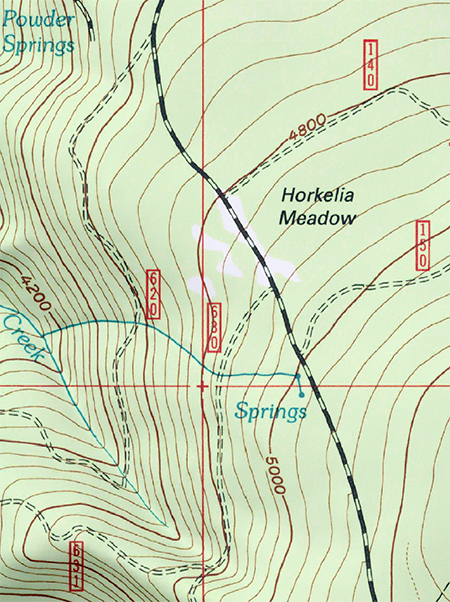
Horkelia Meadow is located in the subalpine forests on the north slopes of Lookout Mountain

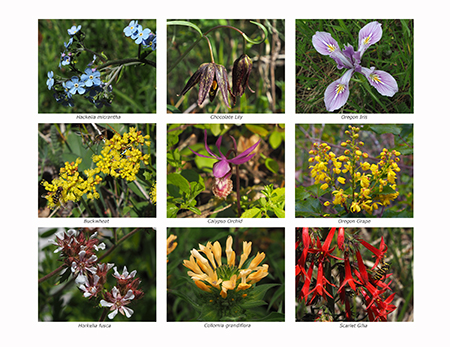
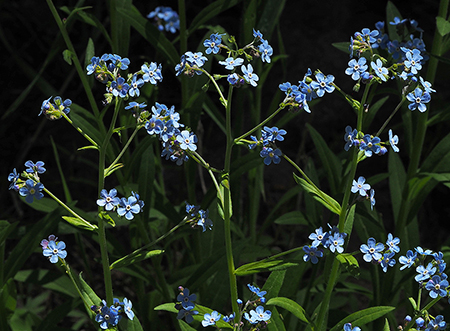
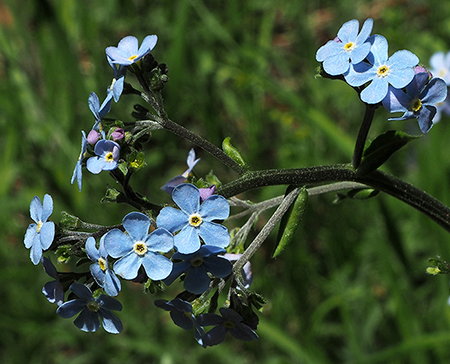
Among the earliest blooms of summer at Horkelia Meadow come from a wildflower commonly known as Jessica Sticktight, Blue Stickseedof simply Stickseed. These are showy flowers that line the borders of Horkelia meadow, along the forest margins.

Horkelia04HackeliaMicrantha

Blue Stickseed

Horkelia05HackeliaMicrantha

Blue Stickseed flower detail

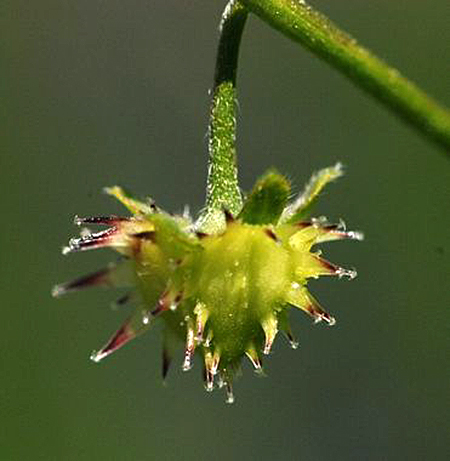
The common name “Stickseed” is self-explanatory when you look at the seed pods that form after the bloom, with each fruit covered in sticky spikes (below). When they dry out in late summer, they’re well designed to hitch a ride on passing wildlife — or your hiking socks!

But what caught my eye after a recent visit to the meadow was the botanical name for Blue Stickseed: Hackelia micrantha.Surely, there must be a connection to the naming of Horkelia Meadow?

Horkelia06HackeliaMicranthaCaliforniaNativePlantSociety

Seed pod on Blue Stickseed (photo: California Native Plant Society)

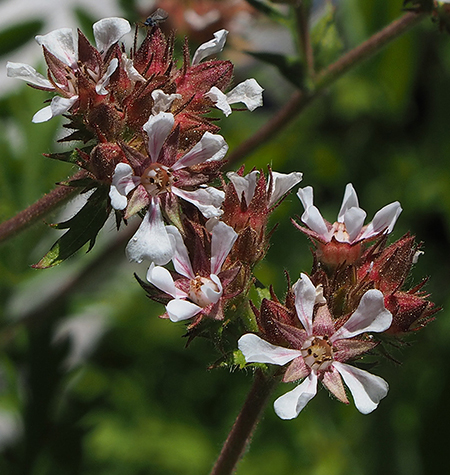
After searching through a stack of wildflower guides and web resources, I learned that Horkelia fusca or Tawny Horkelia does, indeed, grow in the area. It has been spotted at nearby Bottle Prairie and Brooks Meadow, both located to the north of Horkelia Meadow and about 1,000 feet lower in elevation.

So, a return trip was in order to see if Horkelia fuscaactually grows at Horkelia Meadow. Sure enough, it’s scattered throughout the lower sections of the meadow, far from Lookoout Mountain Road. Where Blue Stickseed is abundant throughout the meadow, Tawny Horkelia is scattered about, sometimes in open forest along the meadow edges, sometimes in dry spots near the center of the lower meadow.

Horkelia07TawnyHorkelia

Tawny Horkelia at its namesake meadow

Compared to the showy Blue Stickseed, Tawny Horkelia is a humble bystander in the meadow. These are modest little plants, happy to fill a niche in the ecosystem, but mostly noticeable to wildflower fans.

Therefore, my hunch is that a case of mistaken identity made its way onto Forest Service maps, as Hackelia micrantha— the Blue Stickseed — is lush and very prominent in the meadow during its bloom, and worthy of being its namesake. It’s also dominates along the heavily traveled upper meadow, where Lookout Mountain Road passes through, and where Tawny Horkelia doesn’t seem to grow.

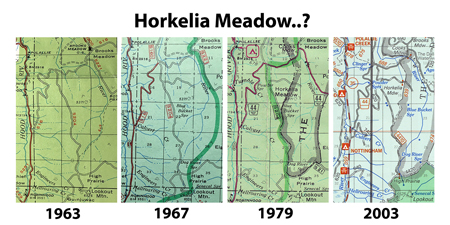
Meanwhile, it also seems that Horkelia Meadow was named fairly recently. The original primitive road was built through the meadow in the 1930s as part of the Bennett Pass Road (see this article on the blog), but Forest Service maps suggest that the Horkelia Meadow was named sometime in the early 1970s.

Horkelia08MapHistory

[Click here for large view]

This is when industrial logging and associated road building went into high gear in the Lookout Mountain area (see below), and the old dirt road to Lookout Mountain was rebuilt and graveled to handle log trucks. During this period, named landmarks were helpful for logging crews navigating the tangle of new roads. I think Horkelia Meadow was (mis)named for that very purpose.

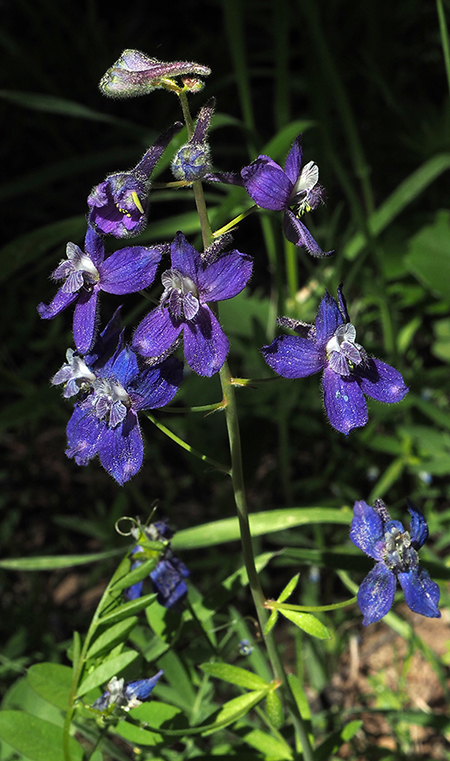
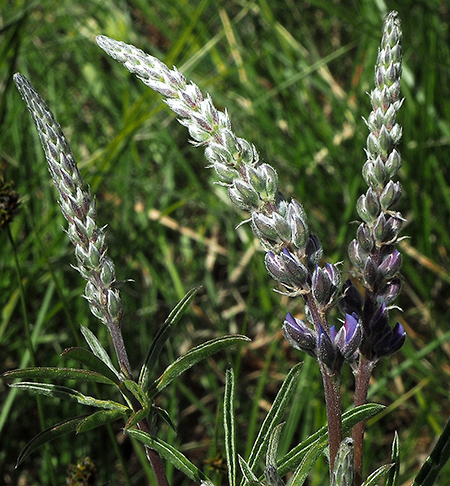
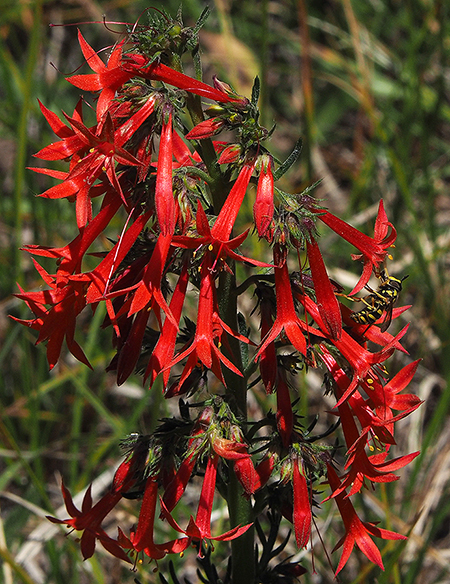
Horkelia Meadow has a bouquet of wildflower species and is a fine spot for a casual ramble to explore its secrets — hidden in plain sight! In early summer the Blue Stickseed are joined by Larkspur sprinkled throughout the meadow. Later, Scarlet Gilia, yellow Buckwheat and blue Lupine take over in a second wave of flowers.

Horkelia09Larkspur

Larkspur in early June at Horkelia Meadow

Horkelia10Lupine

Lupine just beginning to bloom in early June at Horkelia Meadow

Horkelia11ScarletGilia

Scarlet Gilia in late June at Horkelia Meadow

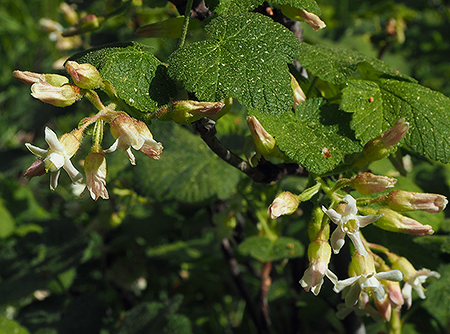
In addition to the wildflowers, low thickets of Sticky Currant also grow on the meadow margins and along fallen trees that have dropped into the meadow (below). The summer berries on this species of currant are (as the name suggests) sticky and not edible, but the flowers put on an attractive show in early summer.

Horkelia12Currant

Sticky currant at Horkelia Meadow

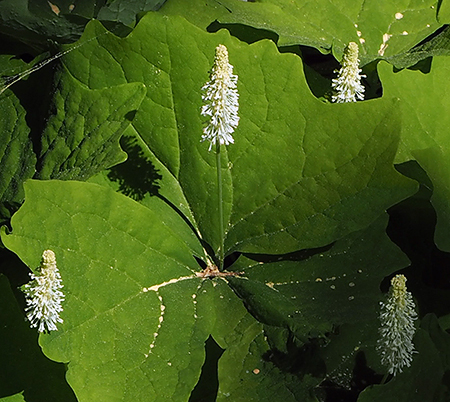
The summer wildflower show also extends into the shade of the forests that surround Horkelia Meadow, with lush carpets of Vanilla Leaf (below), white Anemone and other wildflowers more commonly found in the wet forests along the Cascade crest.

Horkelia13VanillaLeaf

Vanilla Leaf at Horkelia Meadow

Fire suppression in the 20th century combined with aggressive clear cutting by the Forest Service over the past four decades has disrupted much of the Fire Forest ecosystem on the east side of Mount Hood. In many areas, the result is a crowded thicket of true firs, replacing the fire-dependent species of Ponderosa pine, Western larch, Lodgepole pine and Douglas fir that used to dominate. This, in turn, has triggered a cycle of beetle infestations among the crowded, weakened fir forests across the mountains of Eastern Oregon, often followed by catastrophic fires that kill even the fire-dependent tree species.

The good news is that the Forest Service has begun thinning some of these unnatural forests in an effort to restore the Fire Forest structure, including the use of controlled burns in some areas (see “Fire Forests of the Cascades”) Over time, this could help restore the natural forest ecosystem.

Horkelia14BurnedStump

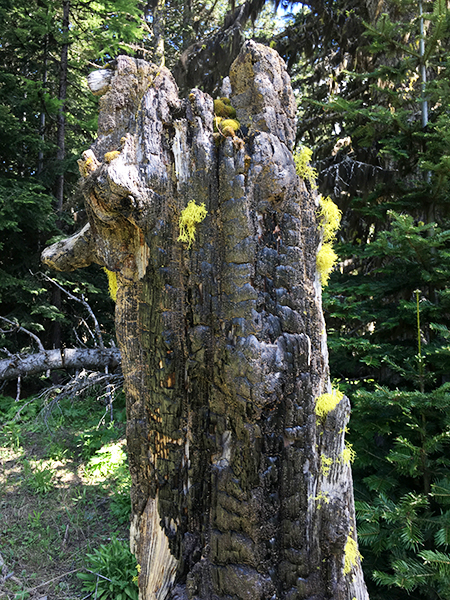
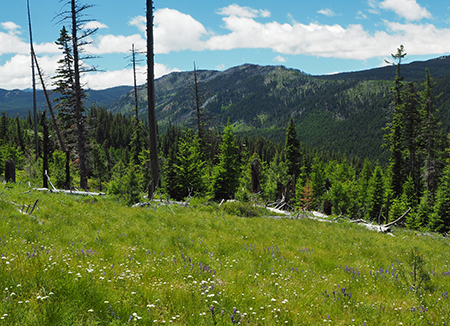
A walk around Horkelia Meadow shows remnants of the old Fire Forest cycle that once dominated the area, creating open, park-like forests under towering trees. If you look closely, you can even find a few traces (above) of the last forest fire to sweep through the area, decades ago, when the forests were much different than today.

Horkelia15LarchGrove

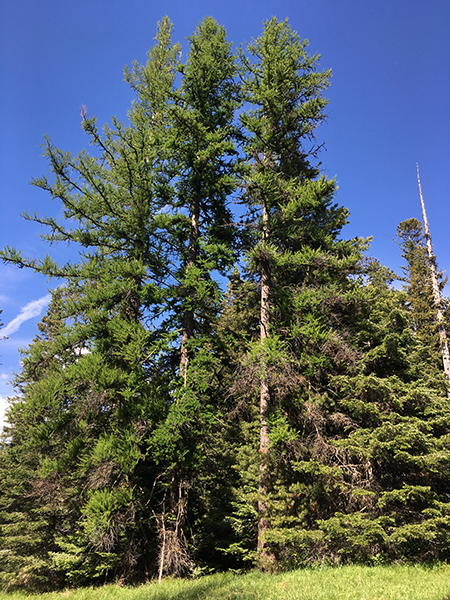
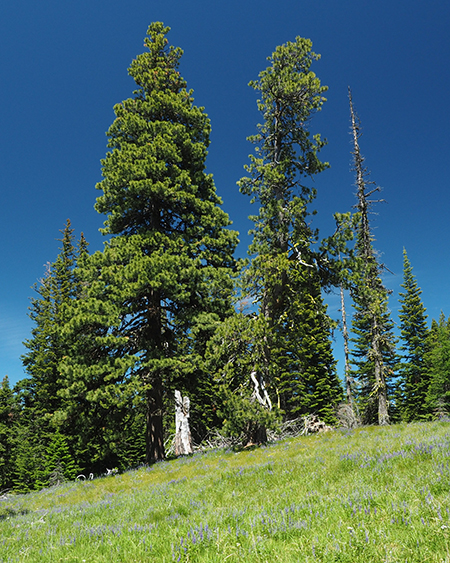
A trio of fire-dependent Western Larch along the east margins of Horkelia Meadow

Whether fire returns to the areas as a planned burn or natural event, the Fire Forest species are still here and ready to resume their role as the dominant trees of this ecosystem… if we will allow it.

Exploring Horkelia Meadow

Horkelia16SmallMap

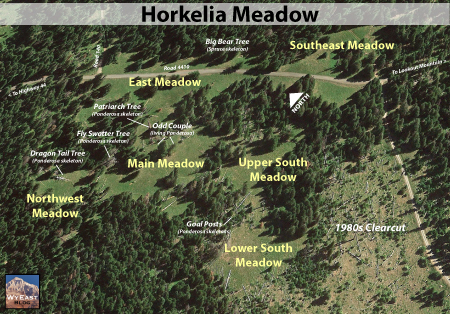
[Click here for a handy, large map to print for your tour!]

The old Fire Forest remnants scattered around Horkelia Meadow, some living and some standing as skeleton trees, provide easy landmarks for a tour. The starting point for exploring the meadow is the high point at the east end of the meadow, just off the Lookout Mountain road (from the recommended parking spot described at the end of the article, follow the road uphill for 100 yards).

At this upper end of Horkelia Meadow stands a gnarled, burly skeleton of what I call the “Big Bear Tree” (below), as it looks like it might be lumbering off into the woods, having lost his top. The low, dense branching on this ancient skeleton suggests this was an enormous Englemann spruce, a species that thrives in forests along the Cascade crest, especially along meadow margins. A living Englemann spurce can be found at the lower edge of of the main meadow, below.

Horkelia17BigBearTree

The “Big Bear” skeleton tree at the upper end of Horkelia Meadow

In early summer, the meadows around the “Big Bear Tree” are also filled with Blue Stickseed and Larkspur.

Heading downhill and across the road, pass a larch grove and head toward the bones of a very large, double-trunked Ponderosa pine (below). I call this old tree the “Patriarch” because it clearly ruled over Horkelia Meadow until fairly recently. Air photos show this giant still standing and alive in 2005, but toppled by 2010. The amount of bark left on the trunk is a good indicator of how recently this tree died.

Horkelia18PatriarchTree

“Patriarch Tree” at the center of the meadow, a huge, double-trunked Ponderosa pine that has toppled within the last decade or so

Horkelia19PatriarchTree

Newly toppled Patriarch Tree at Horkelia Meadow

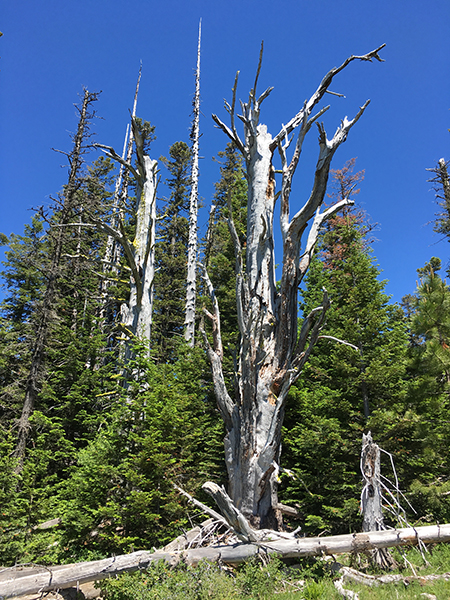
Next, head downhill into the main meadow, located to the west and tucked away from the road, out of sight to passing travelers. Here, a large, multi-trunked Ponderosa Pine I call “The Flyswatter” towers over the scene at the north end of the meadow. This big snag is a favorite of raptors, especially owls, and is actually two snags, with the tall, single-trunked skeleton of what was likely a Grand fir wrapped in the bleached limbs of the old Ponderosa.

As you walk toward “The Flyswatter”, look for a couple of handsome Lodgepole pine growing along the east margin of the main meadow, another important species in Fire Forests.

Horkelia20Flyswatter

“The Flyswatter” skeleton tree and the lower part of Horkelia Meadow

Horkelia21FlySwatter

“The Flyswatter” tree skeleton

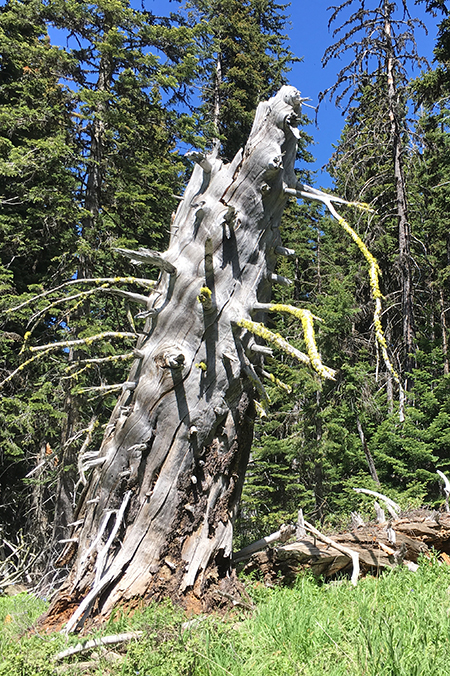
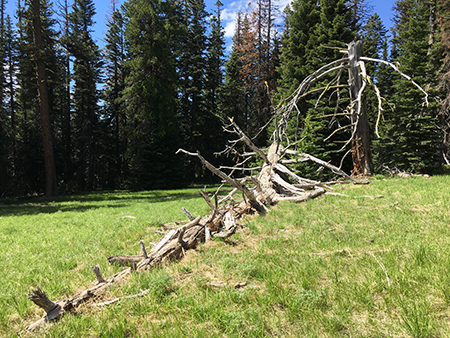
Just beyond “The Flyswatter” (and over a large, collapsed trunk you’ll need to navigate) is the mostly hidden northwest meadow. This pretty spot used to be guarded by another large Ponderosa pine that has long since become a skeleton, and now lies across the meadow. Based on air photos, it looks to have fallen sometime in the 1970s (below). I call this one the “Dragon Tail” tree (below).

Horkelia22Dragon

The “Dragon Tail” tree in the hidden northwest meadow

Returning to the main meadow, a pair of big Ponderosa pine come into view (below) at the top of the slope. I call these the “Odd Couple”, as one is a nearly perfect Ponderosa specimen, while its twin is anything but, with a twisted, leaning top and huge, gnarled branches. Both were once in the shadow of the massive “Patriarch Tree”, whose skeleton lies just a few yards away.

Horkelia23OddCouple

The heart of Horkelia Meadow, with the “Odd Couple” to the left of center

Horkelia24OddCouple

The “Odd Couple” at the center of Horkelia Meadow

The grassy, shaded landing between this pair of Ponderosa makes a nice spot to relax and enjoy the surrounding meadow. From here, you can appreciate the tortured life of the southernmost tree of the pair. The deep scar running down the west side of its trunk and deep wound at the base of the trunk suggest a lightning strike — a common cause of demise for big trees that grow in exposed places like Horkelia Meadow (below).

Horkelia25OddCouple

Scarred trunk of the southernmost “Odd Couple” pair

Lightning may have taken out the nearby Patriarch Tree, too — seen here from the Odd Couple:

Horkelia26OddCouple

The “Patriarch Tree” skeleton lies just beyond the “Odd Couple”

Look up into the tortured twin and you can see (below) that the main trunk is really a surviving limb that took over to replace the main trunk after the original top was destroyed — whether by lighting or simply a windstorm.

Horkelia27OddCouple

The curvy, leaning top of the southern “Odd Couple” twin

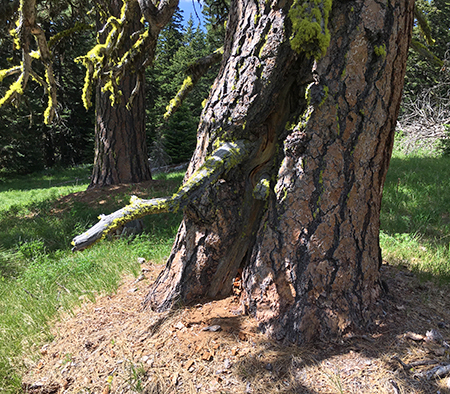
The base of this old tree (below) shows another familiar trademark of big Ponderosa pine, a broad dome of “puzzle pieces” that have accumulated around the tree over the decades. These platforms of accumulated bark chips and pine needles give these handsome trees their park-like appearance, as if the meadow has been carefully trimmed around the tree.

Horkelia28OddCouple

Ponderosa bark piled up to form an apron around this giant at Horkelia Meadow

Ponderosa don’t choose to be multi-trunked, but they can adapt this way when topped by weather or lightening. The extra load of lateral limbs adapting to become a replacement trunk results in some very impressive trees, with upturned limbs 18″ or more across emerging from the trunk of the twisting “Odd Couple” twin (below). Over time, though, these trees are still more prone to collapse than single-trunked trees from heavy snow accumulation or wind on their bulky branch structure.

Horkelia29OddCouple

Heavy-duty limbs on the more gnarled of the “Odd Couple” Ponderosa pair

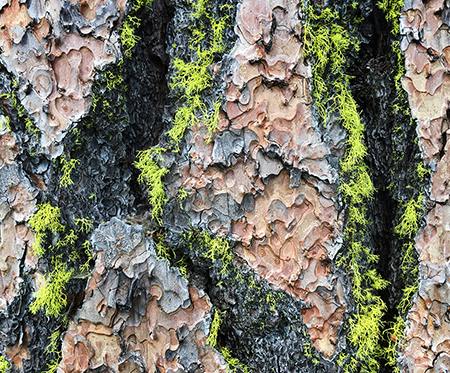
The bark on Ponderosa pine is both fascinating and beautiful. The puzzle-like flakes (below) continually shed as the bark on the tree grows. The dark furrows in the bark form as the tree expands under its thick bark jacket, pulling it apart

Horkelia30OddCouple

Bark detail on the more gnarled of the “Odd Couple” Ponderosa pine

Ponderosa pine bark on a mature tree can be several inches thick, and this is the main defense against fire, a needed and necessary part of the Fire Forest ecosystem. The combination of protective bark and high crown allows the biggest trees to survive multiple fires and thrive to produce offspring after each successive burn. In this way, the recently fallen “Patriarch Tree” could easily be the parent of the “Odd Couple” and other big Ponderosa pine around Horkelia Meadow.

Horkelia31OddCouple

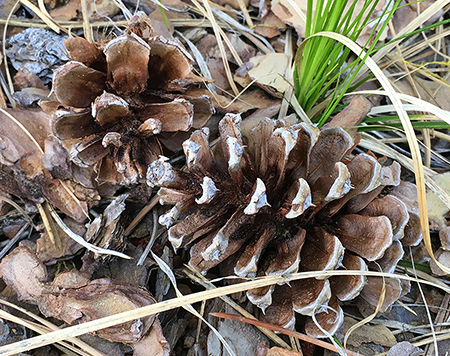
Recent cones from the more gnarled twin of the “Odd Couple” Ponderosa pine at Horkelia Meadow

The gnarled sibling in the “Odd Couple” has had a harder life that its twin, for sure, but it continues to generate cones and seeds (above). In the end, that’s all a Ponderosa Pine lives to do, no matter how funky its shape. Over time, the toughest, most resilient trees decide the future of the forest with their offspring.

Horkelia32OddCouple

Old fire rings between the “Odd Couple” Ponderosa pine trees

If you do find yourself having a snack or picnic under the “Odd Couple”, you won’t be the first. Nearly lost in a thick carpet of Ponderosa needles is a pair of old fire rings (above). How long since these were uses? Decades, perhaps? They could even date back to a time when herders brought sheep up from the Dufur Valley to graze the slopes of Lookout Mountain in the early 1900s, and have since been forgotten in this little meadow (and just in case, please leave them be as remnants from an earlier time).

So, where’s the mountain?

Horkelia33SouthMeadowHood

Mount Hood from the lower south meadow

The upper and main meadows offer occasional peeks at the top of Mount Hood, but the best views are from the south meadows, located downslope from Lookout Mountain Road, beyond a curtain of trees. Here, the western scarp of Lookout Mountain begins to fall away quickly, with the south meadows perched above steep forested slopes, below.

To reach the hidden south meadows, head across the main meadow through a gap in the trees that is directly in line with the Odd Couple. Here, you’ll arrive at the top of the upper south meadow, and you can then meander downhill through another gap to the larger, lower south meadow. Mount Hood Views abound here, and the lower meadow is also a fine spot for a picnic.

Horkelia34LowerSouthMeadowBluegrassRidge

Bluegrass Ridge from the lower south meadow

The view from the lower south meadow also includes Blue Grass Ridge, which forms the eastern edge of the Mount Hood Wilderness. From here, you can see the traces of the 2006 Bluegrass Fire that burned most of the crest of Bluegrass Ridge, and the 2008 Gnarl Fire that burned the eastern slopes of Mount Hood all the way to Cloud Cap Inn, on the northwest horizon.

These recent burns are recovering quickly, with a bright green understory of Western larch, Lodgepole pine and White pine emerging under a ghost forest of bleached snags. While these were the first fires to burn the east slope of the mountain in more than a century, the landscape they left behind is what the area looked like before fire suppression in the 20th Century — a diverse mosaic of mature and recovering Fire Forests.

Horkelia35SouthMeadowSharkFishing

Shark fishing in the south meadow… can you see “Jaws”?

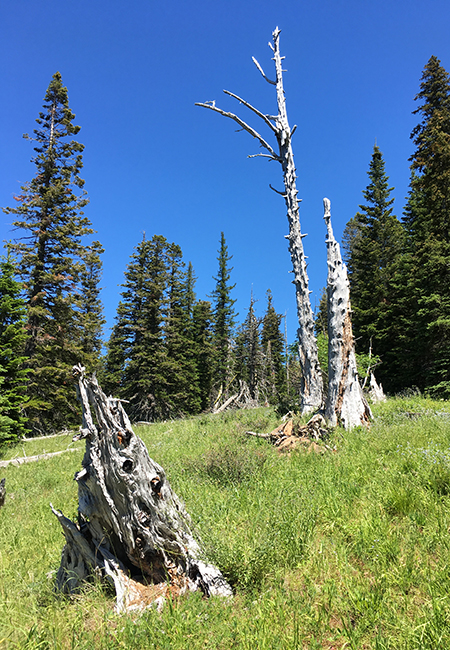
There are a few more name-worthy skeleton trees along the way as you drop down to the lower south meadow. First, you’ll pass a bleached stump that I originally called “Jaws”, but then spotted a “fisherman” complete with a deep sea fishing rod just up the hill — and thus, “Shark Fishing” for this trio (above).

At the top of the lower meadow a pair of stout Ponderosa skeletons are the “Goal Posts” (perhaps because it’s World Cup season). The meadows just below the “Goal Posts” have an excellent mix of wildflowers right now, too, and are where the Scarlet Gilia were in bloom on my last visit.

Horkelia36SouthMeadowGoalPosts

The Goal Posts in the lower south meadow

I know it’s a little silly to name all of these ghost trees, but hopefully it will help navigate the meadows if you choose to visit. It’s also a way for me to stop and appreciate the story each of these silent old patriarchs has to tell… and it’s just fun, too!

Horkelia Meadow at Work

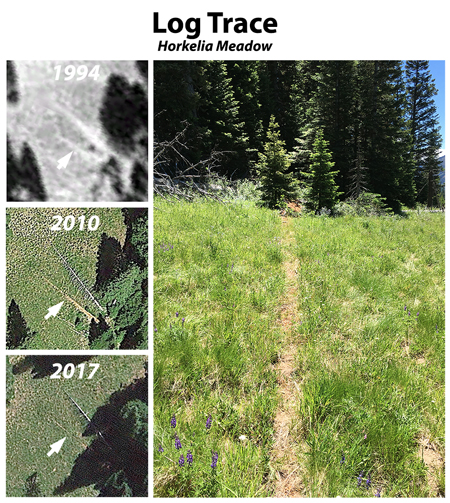
I used to worry that fallen trees would eventually consume precious meadows with the accumulating debris, but it turns out that the meadows do just fine in consuming the trees, instead. One phenomenon you might notice as you explore Horkelia Meadow is log traces. These look like very straight trails, at first, but are really just places where fallen trees have nearly been absorbed into the meadow, and the grasses and wildflowers have all but covered what’s left of the fallen log.

There’s a prominent log trace in the upper south meadow that tells the story nicely. Fuzzy air photos from the mid-1990s (below) show a pair of fallen, bleached skeleton trees lying intact across the meadow. These trees could easily have stood as snags for decades after they died, but once on the ground, trees begin to decompose much more quickly.

Fifteen years later, in 2010, air photos show that the smaller of the two skeleton trees had really begun to fall apart, while the larger tree was mostly intact and still many of it’s bleached limbs.

Horkelia37LogTraceComparison

[Click here for a large view]

By last summer, however, air photos show the smaller tree had faded to a line of decaying wood in the meadow and the larger tree has lost most of its remaining limbs over the previous seven years. Today, the smaller tree has left just a trace in the meadow, and will soon completely disappear.

This cycle has played out countless times at Horkelia Meadow over the centuries, with many trees falling and fading into the meadow, each adding more valuable organic matter to the soil in the process. While new trees continue to emerge along the meadow margins, they’ll eventually suffer the same fate, too. The meadow is holding its own in this battle with the surrounding forest!

Horkelia38SnagSeedling

Young Grand Fir growing where an old giant once stood

As you explore the lower south meadow, you may notice a lot of blowdown along the lower margins of the meadow. These trees weren’t brought down by old age or meadow moisture, but instead were victims of a late 1980s clearcut. The extent of the clearcut is obvious on the map at the top of the article, and as you can see, it is littered with blowdown.

The fallen trees in the clearcut all point uphill. That’s because the prevailing winds coming from the west pushed them that way after the surrounding forests were logging, leaving the remaining trees suddenly exposed them to the full brunt of winter storms. Some of these could have simply been left behind by loggers — perhaps they too small to bother cutting — and larger trees might have been left to reseed the clearcut. Most have since toppled.

Horkelia39ClearcutBlowdown

Heavy blowdown on the edges of the 1980s Horkelia clearcut

Other blowdown along the margins of the meadow occurred in areas where trees were clearly left standing as a failed “buffer” to protect the meadow — a common practice that has destroyed thousands of trees along similar clearcut margins throughout the Mount Hood area. And after thirty years, the clearcut is just beginning to recover from logging, yet another reminder that high elevation clearcuts in the Cascades were never a sustainable practice, and never should have happened. Let’s hope we’ve seen the end of it here.

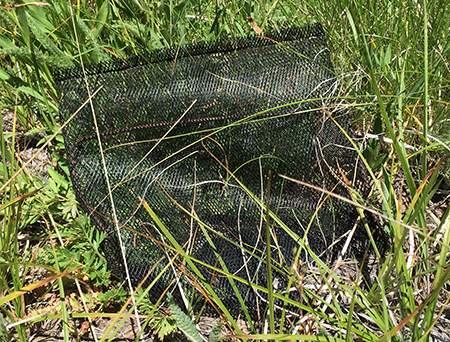
If you walk through the old clearcut, you’ll also notice hundreds of what look like small, nylon mesh bags sprinkled about. These were used to protect new  seedlings when the clearcut was stocked with a new “plantation” of trees. It’s another failed effort, as most of these seedlings did not survive the harsh winters and dry summers here.

Horkelia40ReplantingBag

Non-biodegradable seedling nets from the 1980s logging at Horkelia Meadow

Unfortunately, you will also notice these little mesh bags throughout the lower south meadow. Whether intentional or simply through sloppy incompetence, the Forest Service actually “replanted” a natural meadow when the adjacent clearcut was replanted. What were they thinking? Fortunately, all that survives are the dozens of nylon bags, and the meadow remains intact and thriving today.

If you’re looking for a community service, scout troop or other group project and want to help Horkelia Meadow out, I suspect the Forest Service would give you the okay to retrieve these bags from the meadow. Unfortunately, they are not biodegradable, so will be there until they are removed. They’re held down by metal stakes, but can be pulled out by hand if you wear a pair of heavy gloves. Give the Hood River Ranger District a call if you’re up for the task!

How to get there…

Horkelia Meadow is easy to visit, and makes for a nice add-on to your trip to Lookout Mountain or other hikes in the area. It’s best visited in morning or evening, as the southwest exposure is often hot during the summer. You can walk the margins of the meadow in under an hour and gain a nice appreciation of flora, large and small, of this lesser-known spot.

Horkelia41SignPost

All that’s left of the old Horkelia Meadow sign is this old signpost

To find the meadow, follow paved Forest Road 44 about 3.5 miles from the Highway 35 junction, toward Dufur. Just beyond the busy Surveyors Ridge Trailhead (on the left), watch for the poorly signed Lookout Mountain (Road 4410), on the right. Horkelia Meadow straddles this dusty, sometimes bumpy gravel road 1.3 miles from the Forest Road 44 junction.

Horkelia42Road140

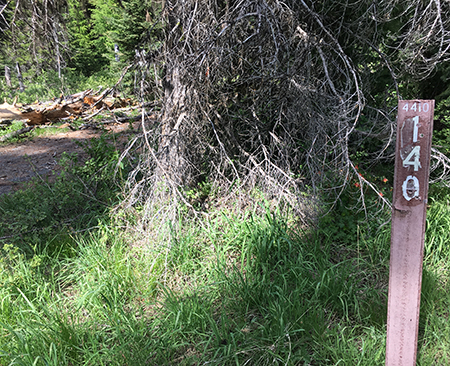
Park at the marked Forest Road 140 spur

I recommend parking at the junction with primitive road 140, on the left as just as you reach Horkelia Meadow. There’s room to park here without impacting the meadow wildflowers, but be sure you don’t blog the spur road.

To tour the meadow, walk up the road to the upper end, watching for the “Big Bear” skeleton on the left, then use the map at the top of this article to find your way.

Horkelia43BotanyClass

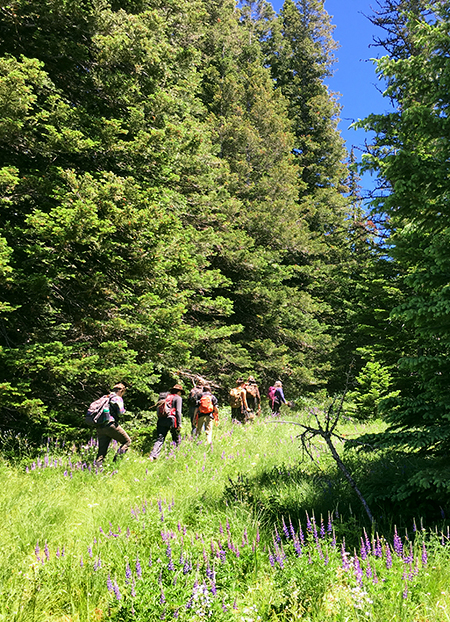
Botany class exploring Horkelia Meadow

To help protect the area, please follow these basic rules of meadow etiquette when exploring, as there is no developed trail at Horkelia Meadow:

  • Hose or brush off boots before every hike to help slow the spread of invasive species, especially when hiking off-trail
  • Don’t gather flowers, seeds or anything else in the meadows — “take only memories (and photos) and leave only footprints”
  • Don’t step on flowering plants, step between them
  • Try not to follow faint paths you might encounter in the meadows — while they are likely deer or elk trails, repeated walking on them could make them permanent
  • No fires, dogs, loud voices or drones (aargh!) that might disturb the wildlife and other visitors when venturing off-trail, especially in meadows

You’ll undoubtedly have the place to yourself — but if you should see a car parked along the road, consider stopping another time for your visit.

Thanks, and enjoy Horkelia Meadow! Or is it Hackelia Meadow…?

Memaloose Road is on a roll!

MemalooseRoadBoulder01

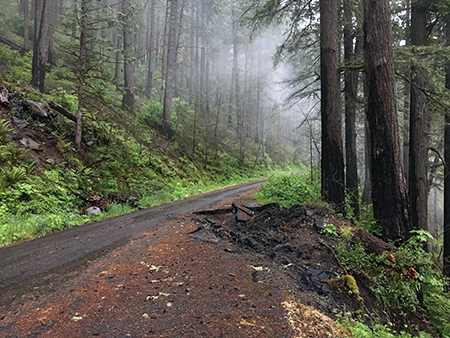
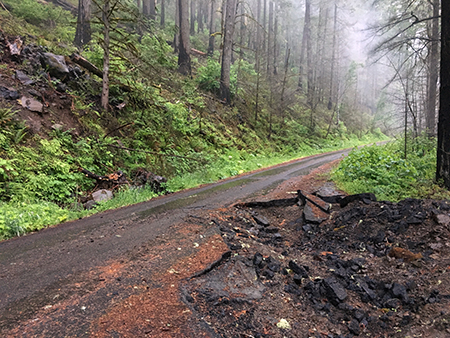
Memaloose Road had a rough winter…

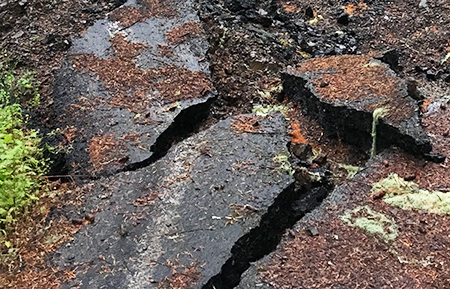
Attention geomorphology nerds! (and if you didn’t have to Google that word just now, consider yourself one!) The aftermath of an impressive micro-geology event that unfolded over the winter is on full display along Memaloose Road, in the Clackamas River canyon.

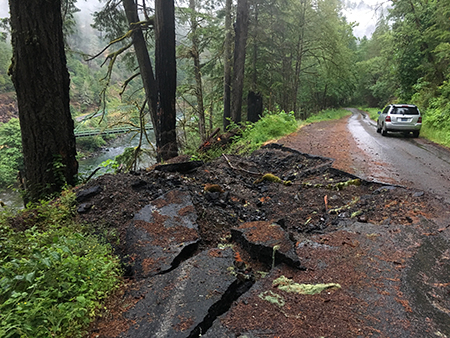
Less than a mile from the Memaloose Bridge over the Clackamas River, a huge new crater appears in the paved road. I stumbled upon the scene a couple of weeks ago, while traveling up Memaloose Road to document the forest recovery from the 36 Pit Fire.

MemalooseRoadBoulder02

This is no landslide… it’s a crater!

The human-caused fire (started by target shooters, sadly) burned 5,520 acres of the lower Clackamas River canyon in September 2014, including the newly protected wilderness in the South Fork and Memaloose Creek canyons.

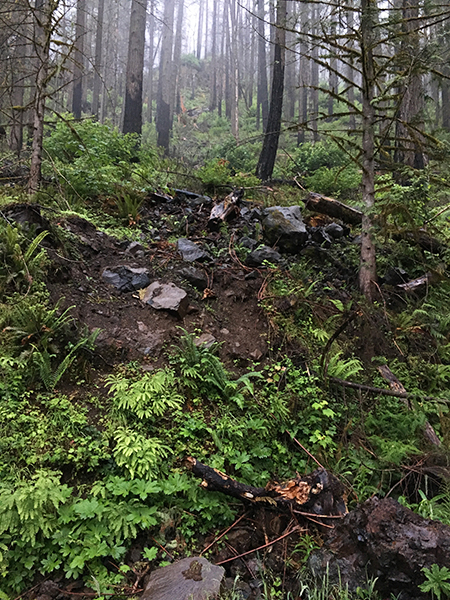
At first, I assumed this to be a landslide triggered by the fire burning away vegetation that normally holds down soil on the steep canyon walls. But upon closer inspection, this was clearly an impact crater, not a slide. A 15-foot wide hole has been punched through six inches of asphalt, leaving a 4-foot deep crater in the road!

MemalooseRoadBoulder03

A few minor repairs may be in order, here…

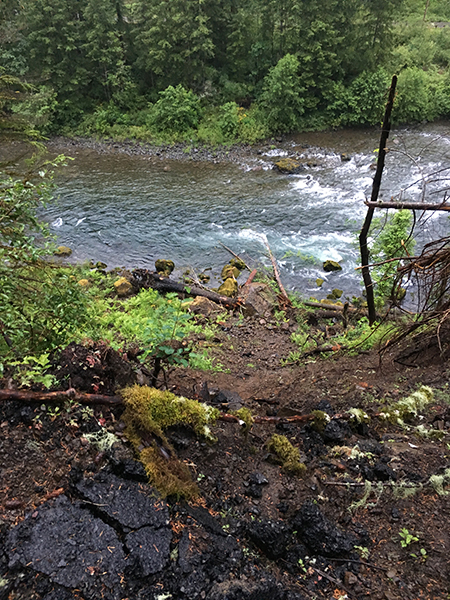
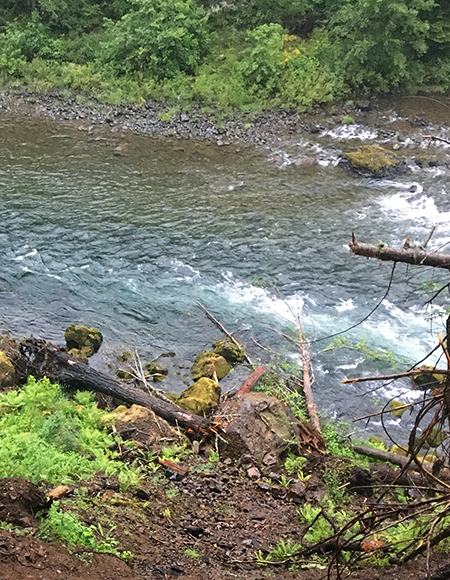
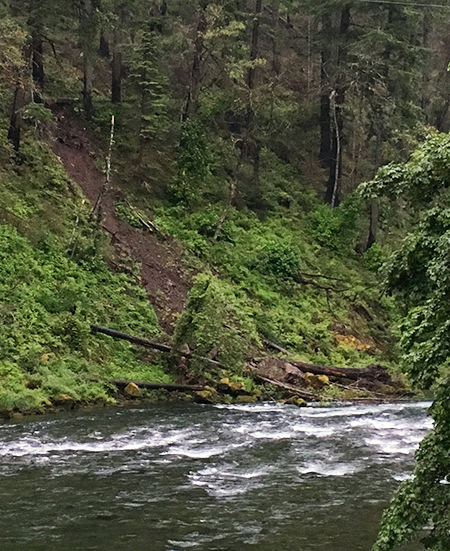
At first, I thought a large, falling tree might have somehow torpedoed the road, but looking downslope toward the Clackamas River, the culprit was in plain sight. A van-sized boulder had rolled down the slope and is now lodged against the south bank of the river!

MemalooseRoadBoulder04

Path of destruction… and the answer to the crater mystery!

The boulder did a thorough job of clearing the slope in its path, but what struck me in looking at it from above was just how ordinary this boulder is in comparison to the thousands of mega-boulders that dot the Clackamas River. In this way, the rolling boulder at Memaloose Road is a nice glimpse into the everyday shaping of the canyon, where countless events like this have carved the landscape we know today.

MemalooseRoadBoulder05

The big, bulldozing boulder resting in its new, riverfront home. For scale, the freshly skinned logs lying next to the boulder are a 18″ or more in diameter. The nearby moss-covered rocks were in place before the rock fall, and may have helped block the new boulder from rolling further into the river.

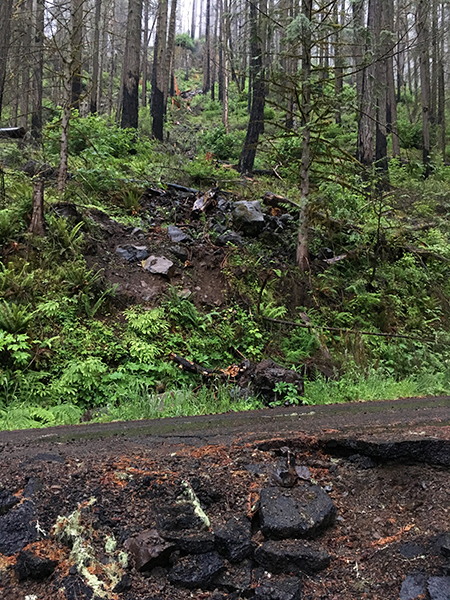
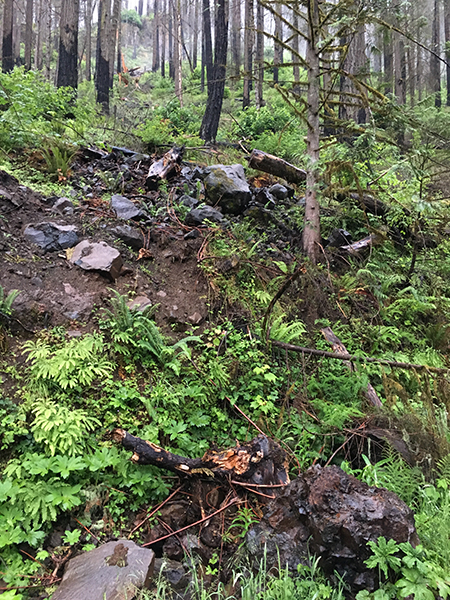
So, where did the new boulder come from? A view up the slope from the fresh crater tells the story. A low, 30-foot basalt rim lines the top of the canyon wall, and the path of destruction to the road is plainly marked by a mowed-down understory and several shattered trees (below).

Through sheer gravity and cracks that form in the basalt layer, boulders like the one at Memaloose periodically break loose. This is the ongoing erosion process that has played out for millennia in the Clackamas River canyon, and it’s a great opportunity to see this process playing out in real time.

MemalooseRoadBoulder06

The path of destruction above the road.

Part of me wishes I could have been here to watch the big boulder blast this path, especially when it reached the road cut, which worked like a ski jump to launch the boulder into the air, landing it on the outside edge of the road and creating the impact crater. Wow, what a spectacle! Well, maybe from a safe distance, anyway..!

The best seats in the house for this event were at the base of the road cut, where a colony of Maidenhair Ferns grow along the road (below). They watched the giant, airborne boulder soar overhead, yet managed to miss its wrath. If only ferns could talk…

MemalooseRoadBoulder07

The “jump” that launched the huge boulder into space.

MemalooseRoadBoulder08

A closer view of the path of destruction, including several smaller boulders and trees that were brought down the by the big boulder…and the lucky colony of Maidenhair Ferns.

This view (below) looking downhill and toward the Memaloose Bridge (in the background) gives a sense of the size of the crater, and what the impact must have been like. Fortunately, my car wasn’t parked there at the time (…though it does have the required Forest Service trail permit on the dash…) The big Douglas Fir on the left was narrowly spared by the big boulder, and also survived the 36 Pit Fire to hopefully live for many more years. The boulder could have easily snapped this 4-foot diameter tree, and did crush other large trees in its path.

MemalooseRoadBoulder09

The crater with the Memaloose Bridge and Clackamas River in the distance

The rolling boulder can also be seen from Highway 224 (below) on the opposite side of the Clackamas River, where the path of destruction and jumbled pile of trees and smaller rocks and boulders gives a hint of what happened here.

MemalooseRoadBoulder10

The big boulder and its path of destruction from the opposite side of the Clackamas River

On the way out, I noticed a fresh pile of gravel at the south end of the Memaloose Bridge, which suggests that road repairs are imminent. So, if you enjoy forensic geology and seeing Mother Nature at work*, stop by the Memaloose Road sooner than later!

How to get there…

The boulder roll took place just off Highway 224 and makes for a short and interesting side trip if you’re headed for a hike further up the canyon. Memaloose Road is easy to find, too. Follow Highway 224 to Estacada, then continue approximately 9 miles to the Memaloose Bridge, where you will turn right to head across the bridge and up Memaloose Road. This is a 1-lane bridge and road – watch for log trucks! The boulder crater is less than a mile up Memaloose Road.

Oh, and watch your step when checking out the crater… it’s a long slide down to the river!

______________

*Mother Nature does, indeed, bat last… always…


Cliff Collapse at Punch Bowl Falls!

00EagleCreekCollapse

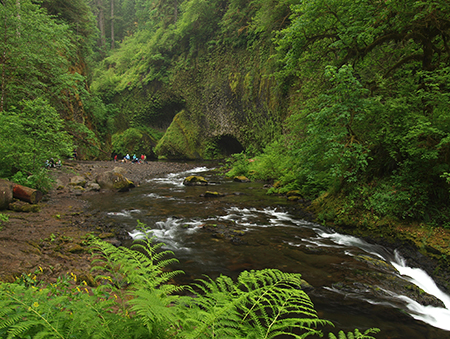
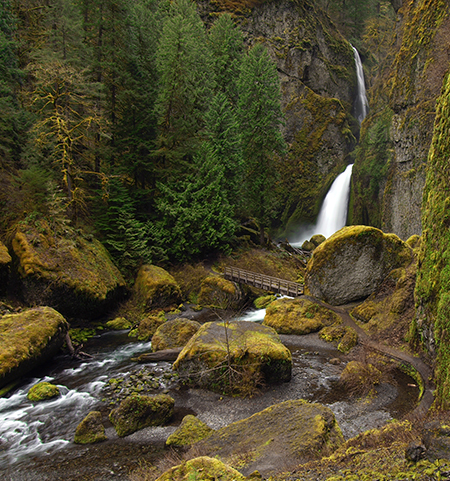
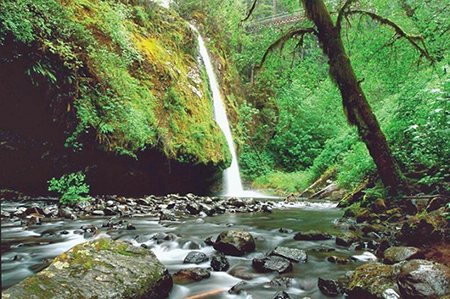
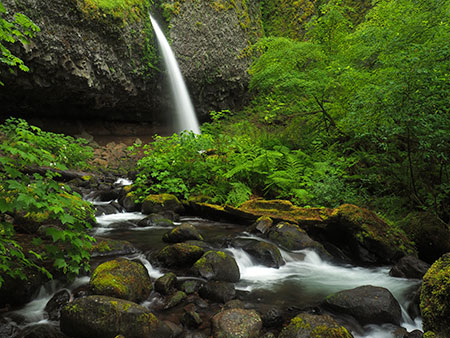
Punch Bowl Falls as it once was…

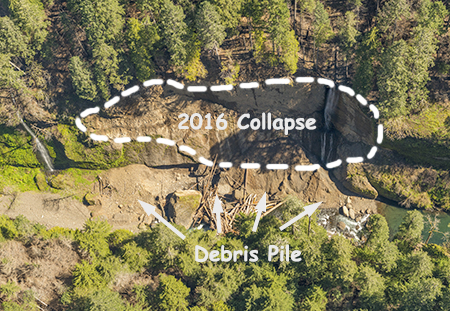
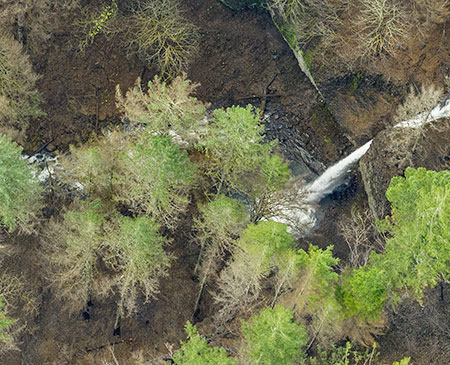
Sometime over the past few months, a huge basalt wall just below iconic Punch Bowl Falls collapsed. Today, a huge debris pile of truck-size boulders have rerouted Eagle Creek and changed this idyllic spot for centuries to come.

The collapse follows a similar basalt wall collapse at Metlako Falls in late 2016, and is another powerful reminder that the spectacular landscape of the Columbia River Gorge continues to be a work in progress, always changing, and never on our terms. We can only react and adapt.

01EagleCreekCollapse

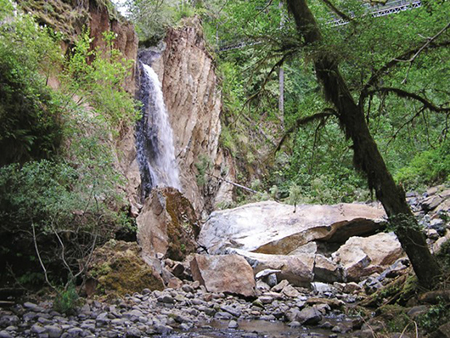
The great amphitheater at Punch Bowl Falls as it once was…

The news of the collapse comes from a second, major aerial photo assessment in late April by the State of Oregon of the Eagle Creek Burn, the second survey following hundreds of December 2017 images described previously in this article and this article in the WyEast Blog.

A four-person Forest Service crew also reached the scene a few weeks ago, before being turned back by extensive damage to the Eagle Creek Trail. They also reported the massive changes at Punch Bowl Falls as a scene of devastation.

02EagleCreekCollapse

This sketch shows the approximate area that has now collapsed into Eagle Creek

The collapse at Punch Bowl Falls clearly occurred after the earlier aerial images were captured, as the wall is clearly intact in the December 2017, view, below. With the Eagle Creek Trail closed by the fire and largely impassable to hikers due to debris, it was a stroke of good fortune that nobody was there to be injured or killed — just as the Metlako Falls collapse in late 2016 somehow occurred during the busy Christmas holiday week without harming hikers.

03EagleCreekCollapse

This December 2017 image clearly shows the west wall (upper left) of the Punchbowl Falls amphitheater still intact (State of Oregon)

This article examines the Punch Bowl collapse in detail from the new images and also includes an update on the Metlako collapse and our first post-fire views of Tunnel Falls.

The Great Mossy Grotto

04EagleCreekCollapse

“The Grotto” in 2016, with hikers peeking into the entrance to the Punch Bowl

The cathedral-like space below Punch Bowl Falls is known informally as “The Room” or the “Grotto” to hikers, and is the spectacular prelude to the iconic peek into the Punch Bowl, one of the most photographed scenes in the world. The massive space begins at Lower Punch Bowl Falls and leads to the narrow entrance to the Punch Bowl, proper.

On a typical summer day in years passed, the cobble beach at the Grotto was filled with hikers soaking feet in the cold water of Eagle Creek, stacking stones and wading into the creek for photos of Punch Bowl Falls — a necessary commitment to photographing the falls during much of the year, and part of what made the trip so memorable.

05EagleCreekCollapse

The Punch Bowl cliff collapse of 2018 (State of Oregon)

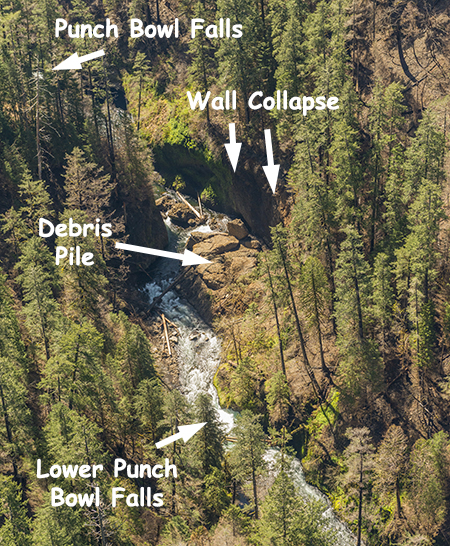
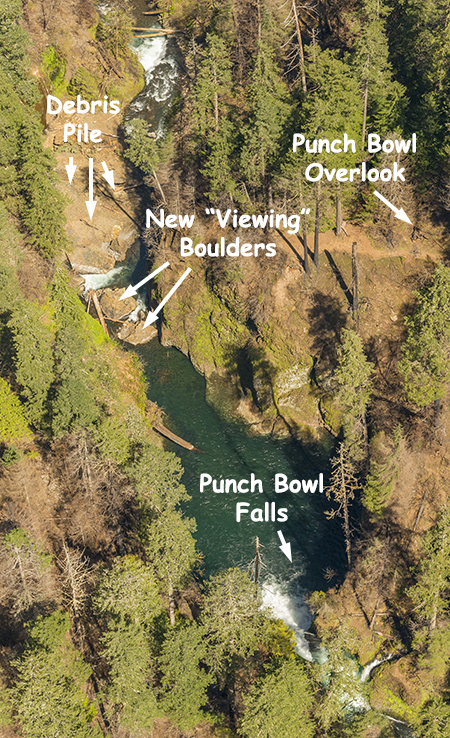
The cliff collapse has changed all of this. A 300-foot section of the sheer, 150-foot high wall that formed the west side of the Grotto calved off, leaving a huge bench of debris in what used to be the main channel of Eagle Creek (shown in the annotated photo, above).

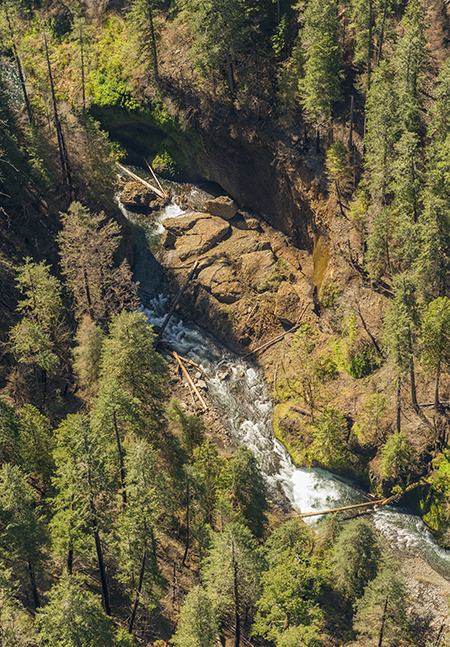
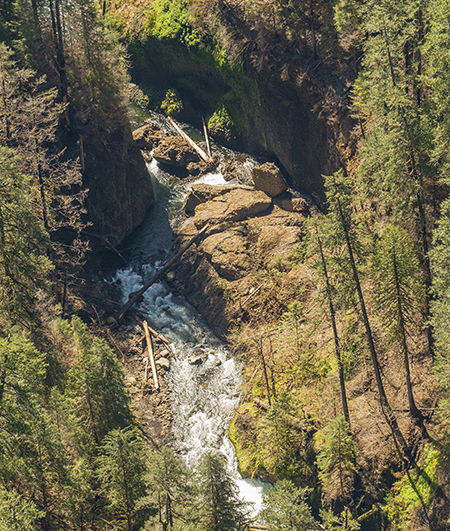
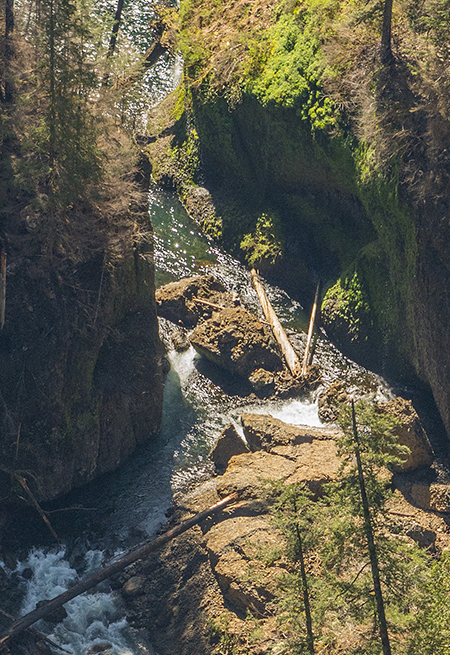
A closer look at the debris pile (below) shows roughly a dozen giant basalt slabs that survived the collapse intact. Their closely fitted position — like pieces in a basalt jigsaw puzzle — also suggests that the wall calved off as one huge slab, tipping over like a domino before breaking apart where it landed in Eagle Creek.

06EagleCreekCollapse

The former cliff wall now resides flat, like pieces in a jigsaw puzzle (State of Oregon)

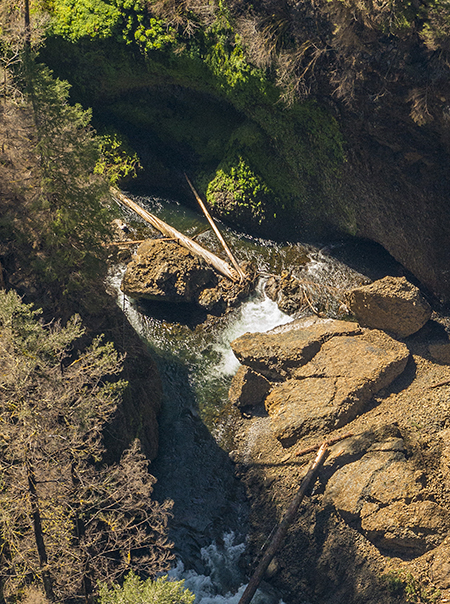
This look (below) at the debris pile shows one of the larger boulders (in the upper left) sitting squarely in the narrow entrance to the Punch Bowl. Depending on your aesthetic, this boulder will block the classic view of Punch Bowl Falls, provide an interesting foreground once covered in moss and ferns — or, perhaps, provide the ultimate viewpoint? But the view here has clearly been changed forever.

07EagleCreekCollapse

These giant boulders landed in one of the most photographed scenes in the world… (State of Oregon)

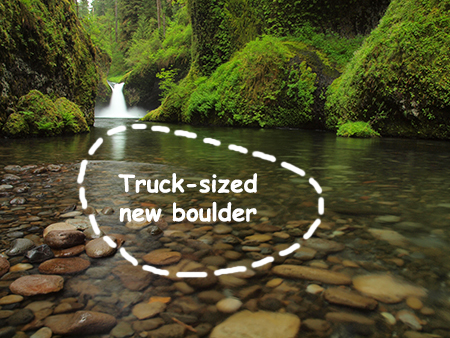
This annotated “before” view of Punch Bowl Falls gives a sense of where the large new boulder (and a few smaller boulders) rests:

08EagleCreekCollapse

A large, new boulder sits here — and is approximately the same height as the rounded, fern-covered rocks on the right in this “before” view.

This close view (below) focuses on the boulders that now reside in the entrance to the Punch Bowl. At the time of the collapse, it’s likely that Eagle Creek was completely dammed behind the new debris, and quickly carved a new channel around the east edge of the landslide (in the lower right corner).

09EagleCreekCollapse

Eagle Creek made quick work of a debris pile that almost certainly plugged the outlet to the Punch Bowl, forming the new channel in the lower left in this view (State of Oregon)

This close view (below) shows more detail of the series of horizontal slabs that make up the debris pile, with Eagle Creek turning abruptly to the east in its new channel. It’s likely that the “viewpoint” boulder sitting in the entrance to the Punch Bowl was originally connected to the rest of the debris pile following the collapse, with the stream carving channels on both sides of the rock as it found a new path past the debris.

10EagleCreekCollapse

Reaching the new “viewpoint” boulder (shown with logs lying across it) could be challenging during the wet months (State of Oregon)

The large, blocky boulder tipped on edge near the left side of the above photo looks large enough to block the creek from further eroding the west  side of the debris pile (below the new cliff face) in the near future. If so, Eagle Creek may have already found its permanent channel around the new terrain.

Eagle Creek is a powerful stream that cannot be safely forded for much of the year. If this is the “new” main channel, with a vertical cliff on one side and a couple of garage-size boulders on the other, the new land created by the debris pile will only be accessible during the low water months of late summer. This could be a good thing if it means fewer boots and flip-flops on the new terrain as it slowly recovers — though frustrating to visitors hoping for a look into the Punch Bowl.

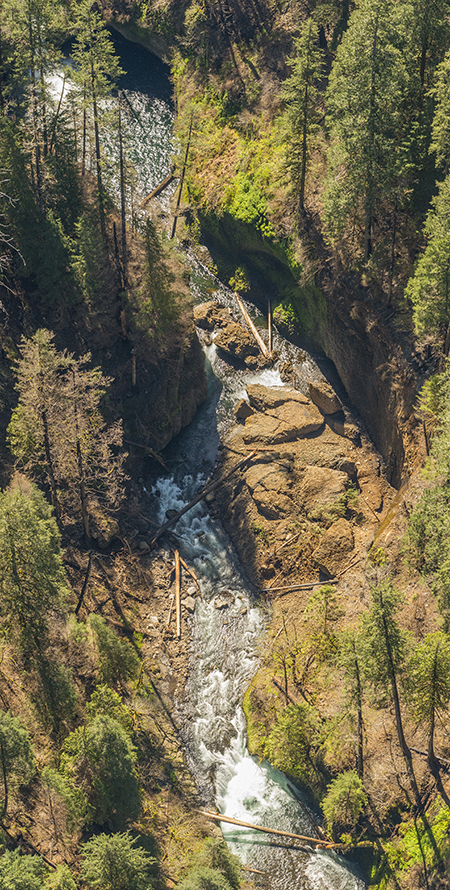
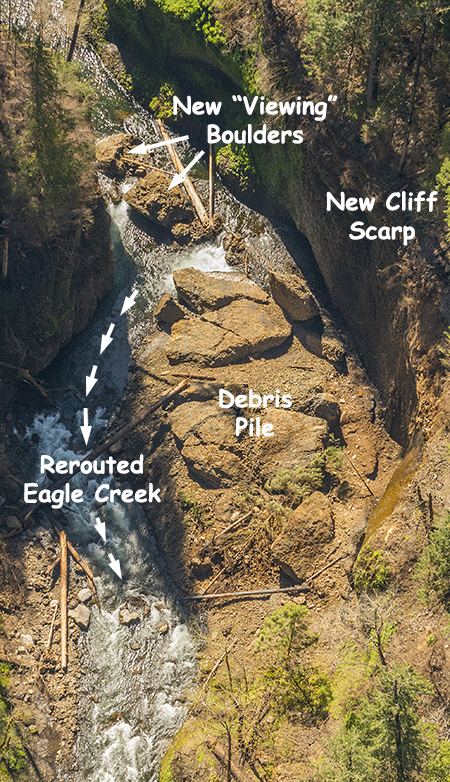
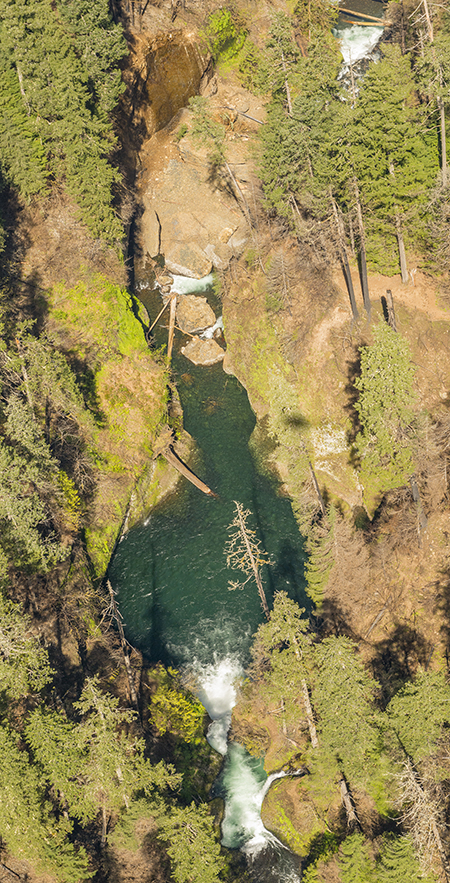
This more vertical perspective (below) shows all of the pieces in context — Punch Bowl Falls in the extreme upper left corner, the new debris pile and fresh cliff scarp on the right, re-routed Eagle Creek in the center and Lower Punch Bowl Falls at the bottom center:

11EagleCreekCollapse

Big changes at Punch Bowl Falls (State of Oregon)

[click here for a very large version of the above photo]

This even closer, annotated version (below) shows the new features in detail:

12EagleCreekCollapse

The Punch Bowl cliff collapse in detail (State of Oregon)

As jarring as these changes to Punch Bowl Falls may be to look at, there’s (hopefully) some comfort in knowing this is simply part of the geologic process that continues to make the Columbia River Gorge such a unique and exceptionally beautiful place.

Consider that exactly 45 years ago, a similar, somewhat larger collapse occurred at Tanner Creek, the next drainage to the west of Eagle Creek. Today’s Wahclella Falls trail meanders through the still-fresh looking landslide there, and like the collapse at Eagle Creek, huge basalt slabs survived collapse at Tanner Creek intact.

In fact, the Tanner Creek canyon below Wahclella Falls is littered with giant basalt reminders that the steep cliffs of the Gorge are in a continual state of erosion, though in our short life spans these events seem rare. Each of the the dramatic, moss-covered boulders in this view of Wahclella Falls (below) tells a story much like the one unfolding at Eagle Creek.

13EagleCreekCollapse

The long history of landslides at Wahclella Falls is on full display with dozens of truck and house-sized basalt boulders crowding Tanner Creek

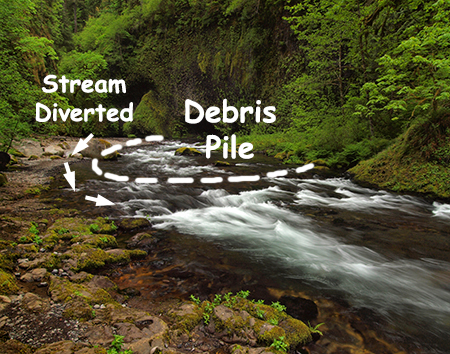
The cliff collapse at Punch Bowl Falls follows the same storyline, with Eagle Creek carving a new channel through the debris, removing smaller material in the process, and leaving the larger, solid blocks of basalt in place. The annotated photo (below) shows how the new channel and debris pile will appear at stream level, from the foot of the Lower Punch Bowl trail — once hikers are allowed to return here:

14EagleCreekCollapse

Approximate location of the new Eagle Creek channel through the Grotto

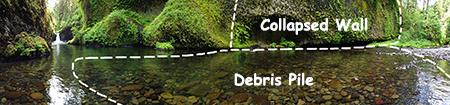
This annotated panoramic view (below) of Punch Bowl Falls and the Grotto wall before the collapse shows the extent of the cliff that has dropped away. As the photo shows, Eagle Creek had significantly undercut the cliff, leaving an overhang 10-15 feet deep that was likely the main cause of the eventual cliff collapse.

15aEagleCreekCollapse

Panoramic view of Punch Bowl Falls (left) and the Grotto wall overhang before the collapse

The overhang along the Grotto wall at Eagle Creek had much in common with another recent collapse that occurred in Oregon’s Coast Range. At Drift Creek Falls, a similarly undercut basalt wall (below) abruptly dropped into the creek, exploding into a large debris pile and a few large, intact slabs of the former cliff face. Like Eagle Creek, the Drift Creek trail happened to be closed for construction at the time of the collapse, preventing what might have been a human tragedy on this very popular trail.

15bEagleCreekCollapse

Drift Creek Falls before the 2010 cliff collapse (Photo by Greg Lief)

15cEagleCreekCollapse

Drift Creek Falls immediately after the 2010 cliff collapse (U.S. Forest Service)

A series of views looking downstream at the Punch Bowl cliff collapse round out the new images captured by the State of Oregon. The view below shows a clearly “overfilled” Punch Bowl, raised a few feet from its previous level by the new debris pile, downstream. This annotated view also shows the Punch Bowl overlook along the Eagle Creek Trail.

16EagleCreekCollapse

Downstream perspective on the big changes that have come to Punch Bowl Falls (State of Oregon)

This is a somewhat closer look at the Punch Bowl and debris pile, looking downstream:

17EagleCreekCollapse

Downstream view of the Punch Bowl and debris pile now blocking the lower entrance (State of Oregon)

This annotated view (below) shows the narrow entrance to the Punch Bowl, now blocked by the new “viewing” boulders, with the debris pile and new cliff scarp, beyond:

18EagleCreekCollapse

View of the entrance to the Punch Bowl and the new debris pile and cliff scarp (State of Oregon)

This very close view (below) of the “viewing” boulders shows a fair amount of debris under the surface of the Punch Bowl pool, and the beginning of what will almost certainly be a substantial log pile at this location:

19EagleCreekCollapse

Close-up of the new “viewing” boulders that landed in the entrance to the Punch Bowl on Eagle Creek (State of Oregon)

Forest Service officials surveying the impact of the Eagle Creek Burn linked the cliff collapse at Punch Bowl Falls to the fire, and it’s true that many of the burned slopes of the Gorge have been experienced severe erosion and landslides since the fire. But a similar collapse happened just downstream at Metlako Falls, before the fire, showing these dramatic events to simply be part of the ongoing shaping of the Columbia River Gorge.

As shown previously, the basalt wall in the Grotto at Punch Bowl Falls had already been significantly undercut by Eagle Creek over centuries, and was ripe for collapse. If the fire had an effect, it’s most likely that increased runoff from burned slopes sped up the inevitable by seeping into cracks that were already forming in the cliff, and triggering the event.

If this is true, then we may see more cliff collapses in the Gorge in coming years — but rather than being caused by the fire, they represent part of an ongoing process in the Gorge that conditions like heavy rain events, runoff from burned areas, extended freezes or even seismic events (the theory behind the ancient Bridge of the Gods landslide!) can trigger.

More Metlako Collapse Images

The new aerial series of the Eagle Creek Burn provides more views of the 2016 cliff collapse at Metlako Falls. In the five months since the first series of photos were captured, Eagle Creek has continued to carve away at the debris pile dam. Logs from the fire are also already entering Eagle Creek in large quantities, and dozens more were stacked on the Metlako debris pile over the winter, doubling the size of the logjam just since December.

20EagleCreekCollapse

Eagle Creek has been busy stacking logs on the new debris pile below Metlako Falls (State of Oregon)

A closer look (below) at the debris pile shows a difference in how this cliff came down compared to the more recent collapse at Punch Bowl. While the wall at Punch Bowl appears to have tipped forward and crashed face-down into Eagle Creek, the collapse at Metlako appears to have slipped down vertically, partly intact. This is suggested by the large basalt slab holding back the logjam, where the weathered, mossy former face of the cliff is facing up on this huge remnant.

21EagleCreekCollapse

Close of view of the huge log pile on top of the Metlako Falls debris pile, and the dam that still backs up Eagle Creek (State of Oregon)

While the Punch Bowl cliff collapse involved the entire vertical face of the cliff, a closer look at Metlako collapse shows that an upper layer of basalt split off, landing in front of a largely intact, lower basalt layer. The annotated view below shows the newly exposed rock face of the upper basalt layer and the clear break between the two layers of basalt. This might explain why the rock slipped into the canyon here, as opposed to tipping over and landing face down, like the Punch Bowl collapse.

22EagleCreekCollapse

The Metlako collapse appears to have slipped in, not tipped over (State of Oregon)

[click here for a very large version of the above photo]

The above view also suggests that similar collapses have occurred downstream along this section of the Metlako gorge (to the left, in the photo) and went unnoticed — perhaps because this adjacent area was out of view from the former Metlako spur trail and viewpoint. The moss layer on the cliff face in the downstream area show this collapse to have occurred prior to the December 2016 event, while the still raw debris pile below this adjacent cliff face suggest it was still a relatively recent collapse.

In both cases, the presence of underground springs suddenly emerging at the new cliff scarp as a pair of waterfalls suggests a lot of water flowing between the basalt layers in this cliff section, destabilizing the upper basalt layer until it finally collapsed under its own weight.

Finally, Tunnel Falls Images

23EagleCreekCollapse

Our first look at Tunnel Falls shows a heavily burned landscape (State of Oregon)

[click here for a very large version of the above photo]

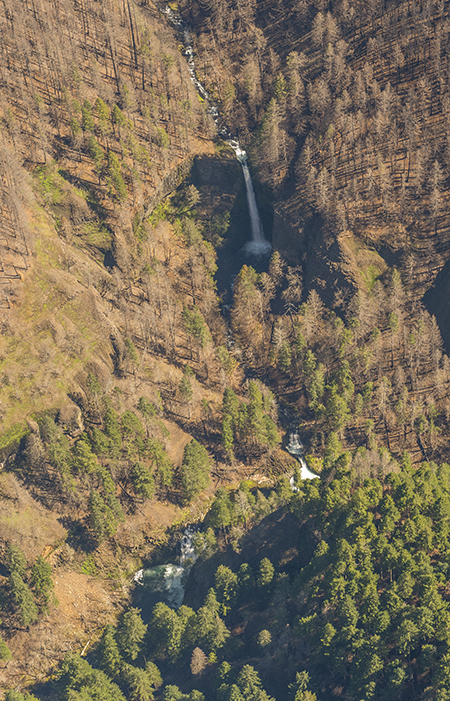
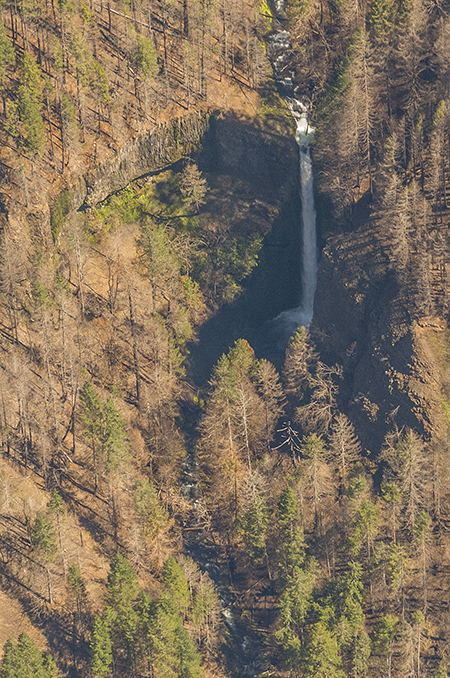
Finally, the new State of Oregon images give us a look at Tunnel Falls, on Eagle Creek, a spot that was missed in the December images. While much of the lower portion of the Eagle Creek canyon was moderately burned in the fire, the area around Tunnel Falls appears to be more severely affected.

While the slope above the falls appear heavily burned, the protected canyon at the base of the falls (below) appears to have experienced more of a mosaic burn, with several large conifers surviving the fire. This bodes well for a rapid recovery of the riparian corridor along this part of Eagle Creek.

24EagleCreekCollapse

Several large trees along the East Fork survived the fire in a “mosaic” burn pattern (State of Oregon)

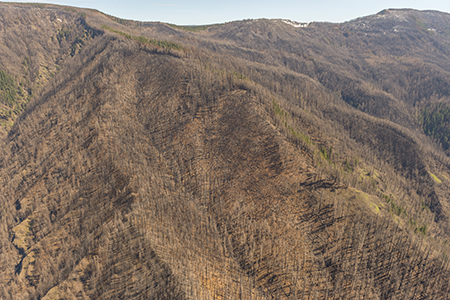
Before the Eagle Creek Fire started in September 2017, an earlier blaze called the Indian Creek Fire had been burning for weeks in the headwaters of Eagle Creek, on the slopes of Indian Mountain. These fires merged soon after the Eagle Creek fire erupted. The new State of Oregon images provide the first look at the Indian Creek area, and show an extensively burned landscape with the forest mostly killed by the fire.

25EagleCreekCollapse

Indian Mountain is badly burned in the headwaters of Eagle Creek (State of Oregon)

As recently as the early 1980s, the upper slopes of nearby Tanner Butte were still largely open meadows, and recovering from fires that burned there in the early 1900s. Today, dense beargrass still lines the trail to Tanner Butte, a remnant of when beargrass and huckleberry meadows that once covered the butte, and scattered conifers that became today’s forests were just taking hold.

The northern slopes of Indian Mountain (in the distance in the above view) are still recovering from the same early 1900s fire that burned Tanner Butte, and still consist of mostly open beargrass meadows and a scattering of stunted subalpine trees.

26EagleCreekCollapse

Detailed look at the severe burn that occurred along the slopes of Indian Mountain, at the headwaters of Eagle Creek (State of Oregon)

As the new Eagle Creek Burn moves into recovery, we’re likely to see a similar landscape emerge on the high ridges here over the coming decades. Lower, wetter slopes will initially recover with thickets of red alder, vine maple and other deciduous trees before conifer forests once again become established. The dry, upper slopes will take much longer, with beargrass and huckleberries as the first pioneers.

This new burn will take decades to recover, but because it is protected as wilderness, it will also provide a unique opportunity to study a western Cascade forest recovery as nature intended, without human intervention.

Making peace with the changed landscape…

Sometimes when it rains, it pours. In the span of just over a year, the landscape of our beloved Eagle Creek, a place that is nothing short of a temple to so many, has radically changed. The collapse of the idyllic viewpoint of Metlako Falls in December 2016 was shocking, and the human-caused Eagle Creek Fire still seems surreal to those who consider the Gorge their refuge from the everyday stresses of life.

27EagleCreekCollapse

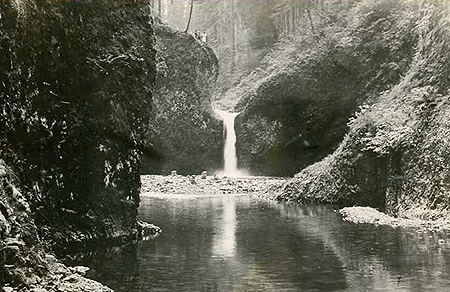
Punchbowl Falls in the early 1900s, when piles of gravel released from turn-of-the-century fires filled the bowl

The first set of aerials after the fire had some good news — Punch Bowl Falls had dodged the worst of the fire! But now the recent cliff collapse at Punch Bowl has forever changed a spot that is perhaps most sacred to those who love the Gorge. It’s still hard to absorb the reality of these events, even as we study the images.

I wrote this article with an eye toward describing and understanding the natural history of these events, and hopefully in a way that also respects the emotional ties that so many have to Eagle Creek and Punch Bowl Falls. I share that sense of loss and sadness at these changes, too.

It will be awhile before hikers are allowed back into the Punch Bowl Falls area. The Eagle Creek trail has been heavily impacted by loose debris and falling trees from the fire, and the wall collapse at the Punch Bowl will almost certainly be closed to the public until the terrain has stabilized. More changes are likely, too — inevitable, in fact— as the area continues to recover.

28EagleCreekCollapse

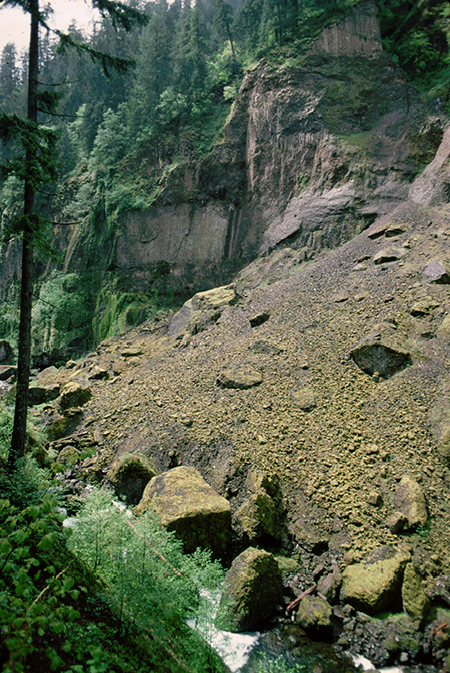
The Tanner Creek collapse in the spring of 1986, just 13 years after the massive landslide occurred. Today’s loop trail crosses the base of the landslide, and the landslide has become part of the landscape.

I was just eleven years old when the collapse at Wahclella Falls briefly dammed Tanner Creek and forever changed that area. While it was shocking to see the aftermath, over time the landscape has begun to recover. Just 20 years after the collapse, the new (modern) trail through the landslide was built, and today the giant boulder garden created along Tanner Creek is part of the awesome beauty and spectacle of the area. I look forward to watching a similar recovery at Eagle Creek — and hopefully I’ll live long enough to see the newly created landscape wrapped in moss and ferns, and framed by young stands of Bigleaf maple and Western red cedar!

We’re so fortunate to live in a place where the natural landscape is still under construction, though it does require us to take a longer view to adapt to the big changes that inevitably occur. The recovery will take years, so finding peace in witnessing and understanding the awesome natural processes at work is my own refuge for coping with the changes.

I hope you can find some refuge there, too.

_____________

Editor’s note: for the first time since starting this blog in the fall of 2008, I fell behind my usual pace of posting at least monthly, as I’ve been tending to some challenging family needs. But I do have a nice backlog of topics and will hopefully make up for lost time over the next few months!

As always, thanks for taking the time to stop by!

Tom Kloster • May 2018

After the Fire: A Closer Look (Part 2 of 2)

00McCordSunset

January sunset in the Eagle Creek burn, near Elowah Falls

This is the second article in a two-part series that explores a remarkable set of stunning, often startling aerial photos captured by the State of Oregon in early December. Their purpose was to assess the risks for landslides and flooding from the bare, burned Columbia River Gorge slopes following the September 2017 Eagle Creek Fire. But these amazing photos also provide the first detailed look at the impact of the fire, and for those who love the Gorge, a visual sense of how our most treasured places fared.

The first article covered the west end of the burn, from Shepperd’s Dell to Ainsworth State Park. This article covers the eastern part of the burn, from Yeon State Park to Shellrock Mountain. More information on the photos follows the article.

_______________________

Ainsworth State Park and McCord Creek

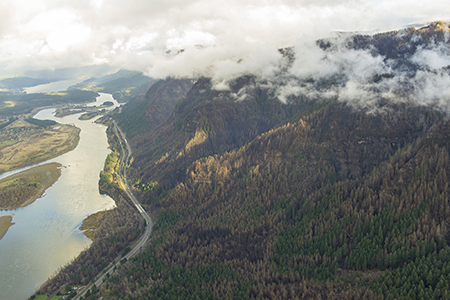
This first image in this second part of the series looks east from above Ainsworth State Park, toward Bonnevillle Dam. The Gorge was heavily burned along this stretch, from the banks of the Columbia River at the community of Warrendale to the tall crests of Wauneka Point and Nesmith Ridge.
01aColumbiaRiverBonnevilleFromAinsworthArea

Looking east from above Ainsworth State Park toward Bonneville Dam (State of Oregon)

[click here for a large photo]

The huge amphitheater along the Nesmith Point trail is on the right in the above view, and appears to be heavily burned. Little-known Wauneka Point is in the upper left corner of the photo, and also appears to be badly burned, as shown in a close-up view (below):
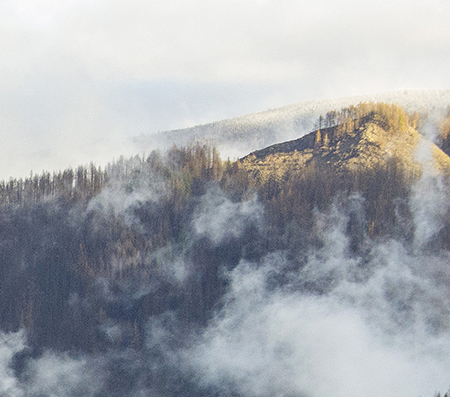
01bWaunekaPoint

Scorched Wauneka Point after the fire (State of Oregon)

Wauneka Point is notable for its remoteness. Some reach this spot by scaling the ridge from nearly 3,000 feet below, at Elowah Falls, while others follow the faint Wauneka Point Trail from the headwaters of Moffett Creek. This is fortunate, as the rocky outcrop of Wauneka Point also has one of the most elaborate and unusual Indian pit complexes found in the Gorge.

Fires here are a regular occurrence, too — photos from the early 1900s show a recovering forest and hundreds of bleached snags along Wauneka Ridge, much as the ridge now appears after the Eagle Creek Fire. It’s likely that Native Americans living along the lower Columbia River periodically burned these ridge tops to promote huckleberry, beargrass and other sun-loving foods and materials that were gathered in the higher elevations of the Gorge.

Another detailed look at this photo helps explain why parts of the Upper McCord Creek Trail were so heavily impacted by debris after the fire. This close-up view (below) shows extensive landslides on the slopes above the trail that have released tons of loose rock and debris onto the section of trail that switchbacks up the slope beneath the cliff band. While slides like these will eventually be stabilized by recovering forests, more debris is certain in the near-term, as the forest understory begins to take hold.
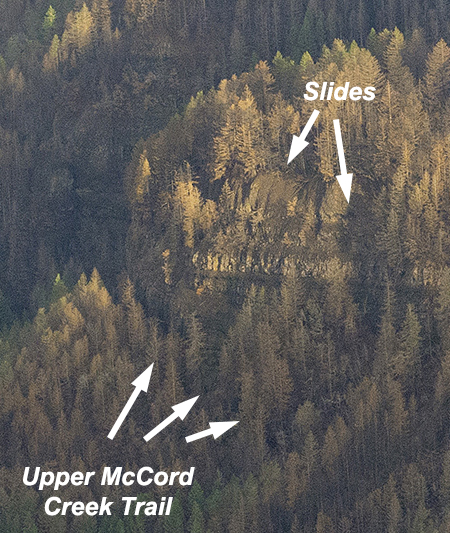
01cUpperMcCordSlides

Landslides on the slopes above the Upper McCord Creek Trail (State of Oregon)

Another detail that emerges from this photo is the widely varied pattern of a “mosaic” fire, from blackened, completely burned forests to green, intact conifer stands that have survived the initial heat and stress of the fire. A closer look (below) at a section of forest that straddles the Nesmith Point Trail shows a heavily burned area in the center, surrounded by surviving forest.
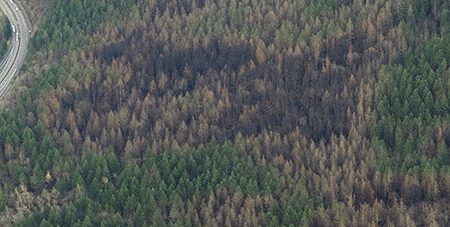
01dNesmithTrailMosaicBurn

Mosaic burn patterns straddling the Nesmith Point Trail (State of Oregon)

This mosaic burn pattern is beneficial for the forest ecology, as it rejuvenates the understory where the canopy has survived, while creating forest openings that will eventually create a more diverse forest where the burn destroyed old canopy:

This close-up view (below) shows the McCord Creek delta, where it enters the Columbia River:
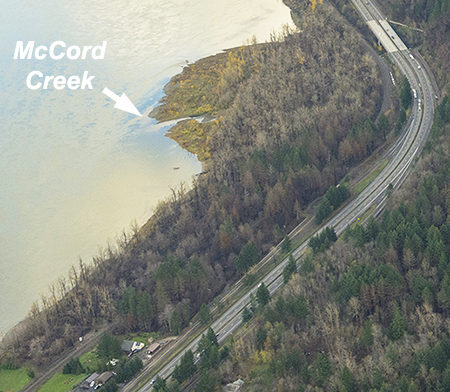
01eMcCordDelta

McCord Creek Delta (State of Oregon)

Tributary deltas like these are likely to grow significantly throughout the Eagle Creek Burn area in coming years as erosion from burned slopes loads up the creeks with extra rock and gravel. This is another beneficial aspect from the fire cycle, with gravel deltas and debris in streams providing some of the best fish and riparian habitat in the Gorge.

This spectacular image (below) from the State of Oregon series captures the massive amphitheater that holds Elowah Falls, on McCord Creek. The twin cascade of Upper McCord Creek Falls is also visible, just above Elowah Falls, as well as the bridges of I-84, the Union Pacific Railroad and the recently built Historic Columbia River Highway State Trail:
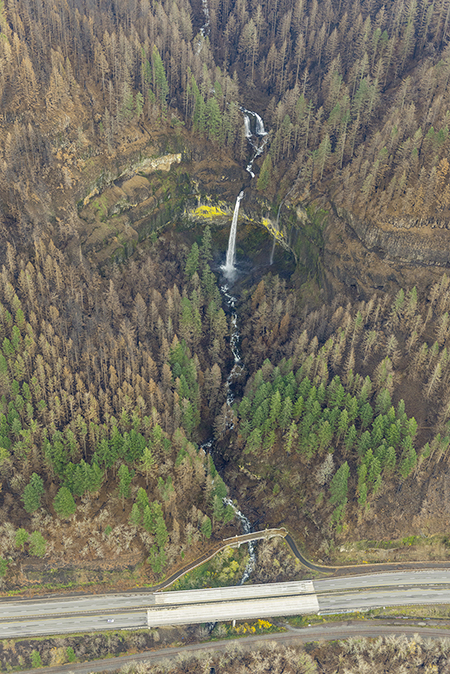
02aElowahFallsUpperMcCordFalls

Elowah Falls and McCord Creek (State of Oregon)

[click here for a large photo]

Though much of the McCord Creek drainage was badly burned in the fire, some of the tree canopy survived, especially the tall conifers that grow along the creek below Elowah Falls (below).
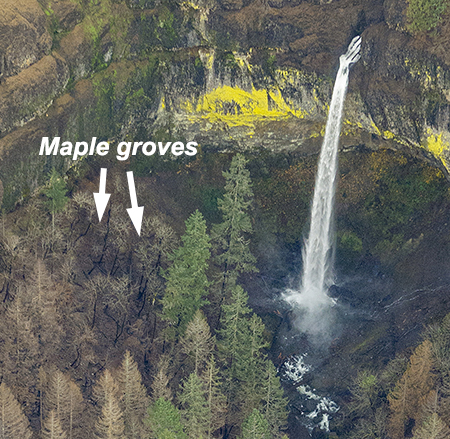
02bElowahFallsMaples

Elowah Falls after the fire (State of Oregon)

We won’t know the fate of the beautiful Bigleaf maple groves that line the creek in the lower McCord Creek canyon until later this spring, but it’s unlikely their crowns have survived. Unlike Douglas fir and other conifers, maples lack thick, insulating bark needed to survive the heat of the fire, nor the height to protect their upper branches from the flames. Instead, maples have evolved to simply regrow from their surviving roots after fire, often forming multi-trunked trees with a circle of shoots that emerge from around the skeleton of the parent tree.
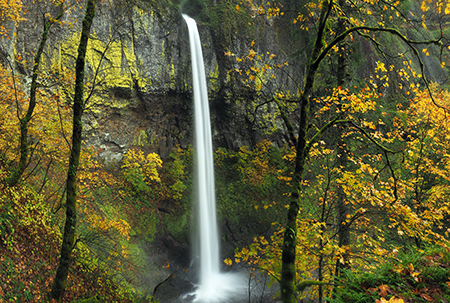
02cElowahPano2015

Elowah’s graceful Bigleaf maple groves in autumn, lighting up the forest in 2014

While many riparian strips within the Eagle Creek Burn resisted the fire, some of the steepest slopes along McCord Creek below Elowah Falls (below) were badly burned. The geology of this section of the canyon doesn’t help the cause, as it consists of loose, slide-prone Eagle Creek Formation clays and gravels. This notoriously unstable formation is responsible for most of the ongoing slides and collapses that occur in the Gorge, including the epic Table Mountain landslide that briefly created the fabled Bridge of the Gods in 1450 A.D., near today’s Cascade Locks.
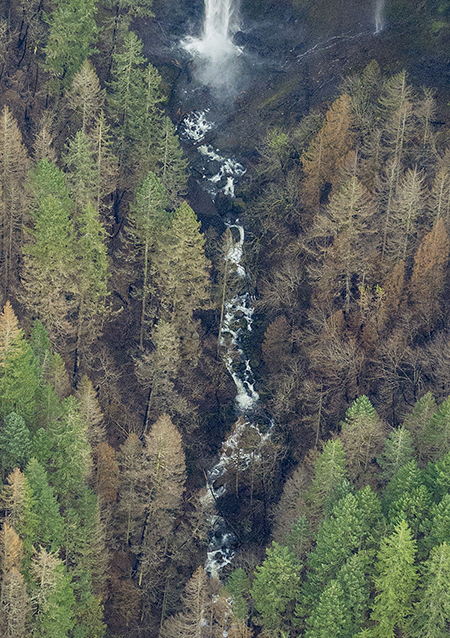
02dElowahFallsMcCordCreek

Slide-prone McCord Creek below Elowah Falls (State of Oregon)

On a recent tour of this section of the McCord Creek Trail with State Park officials, it was clear (below) that a complete re-route of this iconic trail may be needed over the long term if this already slide-prone section of the trail further deteriorates as a result of the fire:
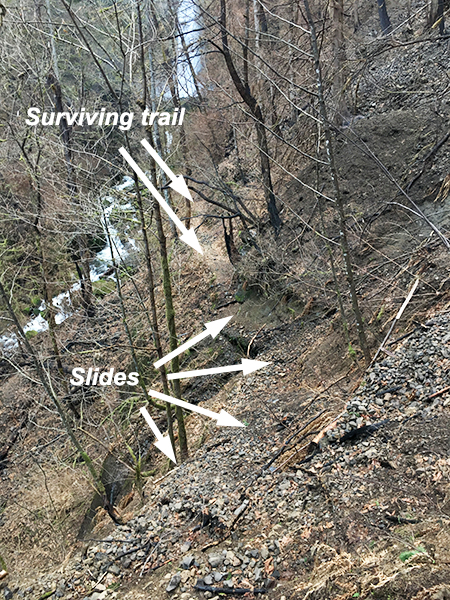
02eMcCordCreekTrail2018

Post-fire landslide damage below Elowah Falls

As difficult as it is to absorb these images of devastation from the Eagle Creek Fire in places like this, it’s also an opportunity to watch and learn from the forest recovery that is already underway. While I won’t see tall groves of mossy Bigleaf maples arching over McCord Creek again in my lifetime, many of today’s Millennials will live to see a substantial return of forests across much of the Eagle Creek Burn.
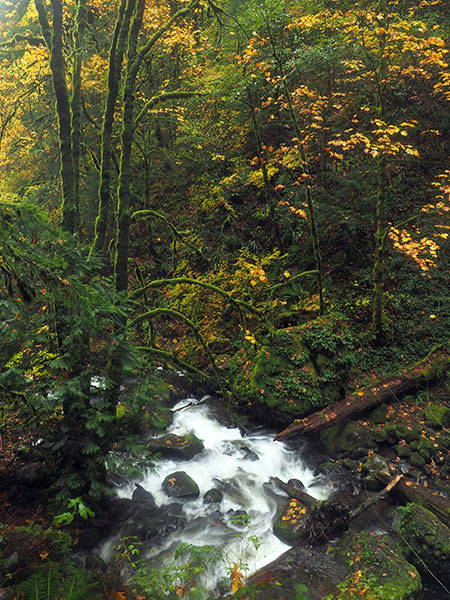
02fMcCordCreek2015

Beautiful McCord Creek canyon before the fire; today’s Millennials will live to see young forests like this return to the Gorge in their lifetime

This photo provides a even closer view of the Elowah Falls amphitheater and Upper McCord Creek Falls:
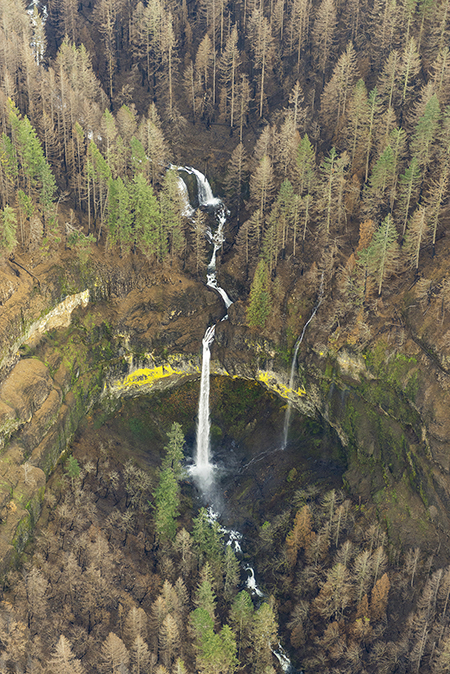
03aElowahFallsUpperMcCordFalls

Elowah Falls after the fire (State of Oregon)

[click here for a large photo]

The fire was more intense in the McCord Creek canyon, above Elowah Falls, including these slopes (below) above Upper McCord Creek Falls, as this close-up view shows. Here, the trail can be seen on the bare slope adjacent to the falls:
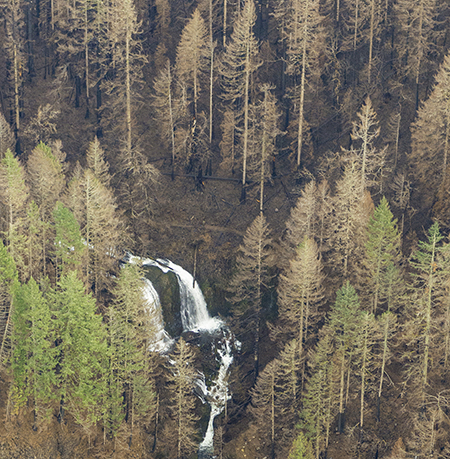
03bUpperMcCord

Upper McCord Creek Falls after the fire (State of Oregon)

Here is a closer look at Upper McCord Creek Falls from a January visit with State Park officials that confirms the devastating impact of the fire here:
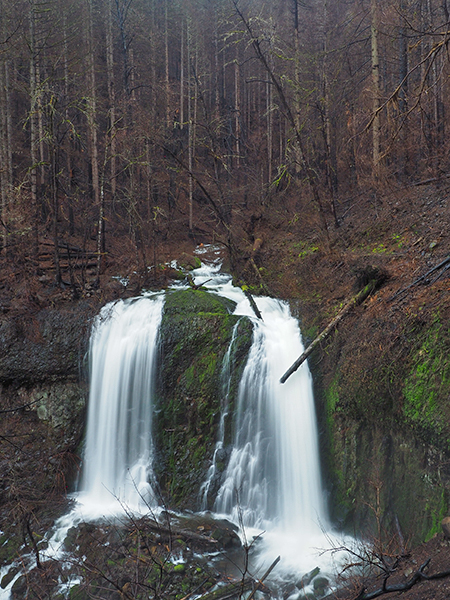
03cUpperMcCordCreekFalls2018

Upper McCord Creek Falls in January

Few trees survived in this area, and erosion is severe in several of the small streams that flow into McCord Creek from Nesmith Ridge. Yet, even with the devastation from the fire, signs of the recovery were already apparent in January, just four months after the fire, with new vegetation emerging in the middle of winter.

The burned riparian forest along the upper section of McCord Creek included 50-60 year old stands of Bigleaf maple and Red alder, and both species appear to have been killed by the fire. Unlike maple, the alder stands are less likely to regrow from surviving roots, and instead mostly rely on new seedlings. Red alder are uniquely adapted and prolific at this, and are among the first trees to colonize burned or disturbed areas.
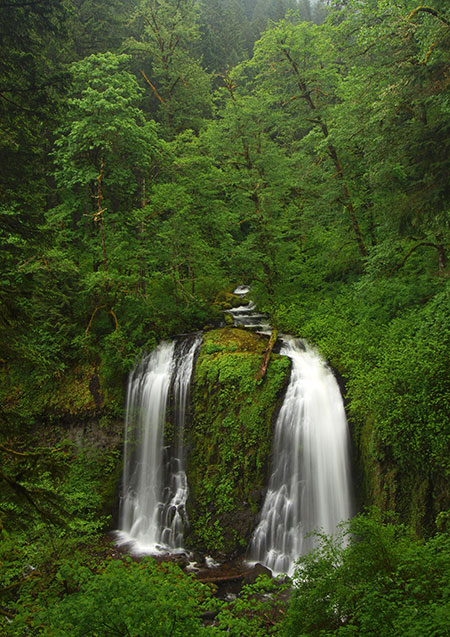
03dUpperMcCordFalls2012

Upper McCord Creek Falls framed by Red alder before the fire

Still considered a “weed tree” by a timber industry more interested in lumber than healthy forests, these trees (and other pioneering, soil-stabilizing broadleaf species) are still sprayed with herbicides in recovering clearcuts to allow rows of hand-planted Douglas fir seedlings to grow, instead. Yet, Red alder are an essential species in the process of natural forest recovery in the Pacific Northwest. While the big conifers will take many decades to once again tower above McCord Creek, a scene with Red alder framing the creek, like the one shown above, may be just 20-25 years in the future if they are allowed to grow.

As an early colonizer, Red alder not only help to quickly stabilize exposed soils, they also serve as a nitrogen fixer, restoring 80-200 pounds of nitrogen per acre through their roots when pioneering a disturbed site. As the forest recovery unfolds in the Eagle Creek burn, these humble trees will stabilize some of the toughest terrain and help other species that follow become established in the rich soil they create. This process may not be the fasted way to grow lumber, but it’s the most sustainable way to ensure the long-term health of our forests.

This photo from the State of Oregon series shows a mostly scorched forest in the upper McCord Creek canyon, with only a few surviving trees:
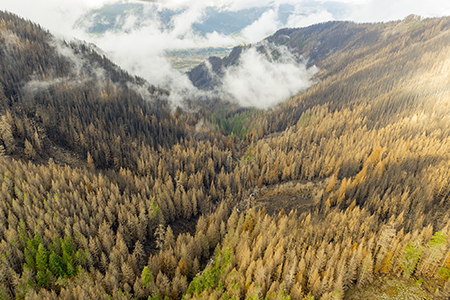
04aMcCordCreekCanyon

Upper McCord Creek canyon (State of Oregon)

[click here for a large photo]

A closer look at the photo shows a few surviving bands of forest that will help begin the recovery. This section of surviving trees will also help shade a section of McCord Creek as other, more heavily burned parts of the watershed recover:
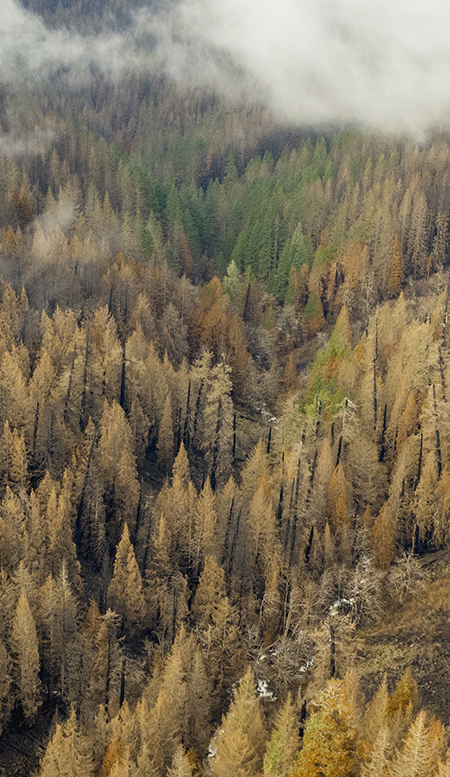
04bMcCordCreekCanyon

Patches of surviving forest along upper McCord Creek (State of Oregon)

This photo also provides another peek at Wauneka Point, mostly burned but with a few surviving tree stands that will help restore the forest on this ridge:
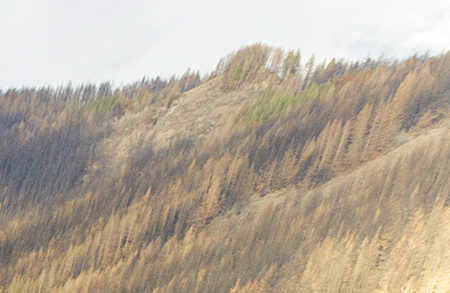
04cMcCordCreekCanyonWaunekaPoint

A few surviving trees at Wauneka Point after the fire (State of Oregon)

The faint, historic trail to Wauneka Point from the Moffett Creek trail was already in jeopardy of being lost to lack maintenance and use, and sadly, the fire may seal its fate in becoming another “lost trail”. Debris from burned trees will quickly overwhelm the path without some periodic maintenance, something that has not occurred here for many years.

The burn provides an opportunity to rethink trails like the one on Wauneka Point, including making new connections to allow hikers to more easily use them from more accessible trailheads along the highway corridor.

Moffett Creek, Munra Point and Tanner Creek

Moving east of Wauneka Point, the next photo of the Eagle Creek Burn provides a glimpse into remote Moffett Creek canyon, one of the wildest, most untouched places in the Columbia River Gorge:
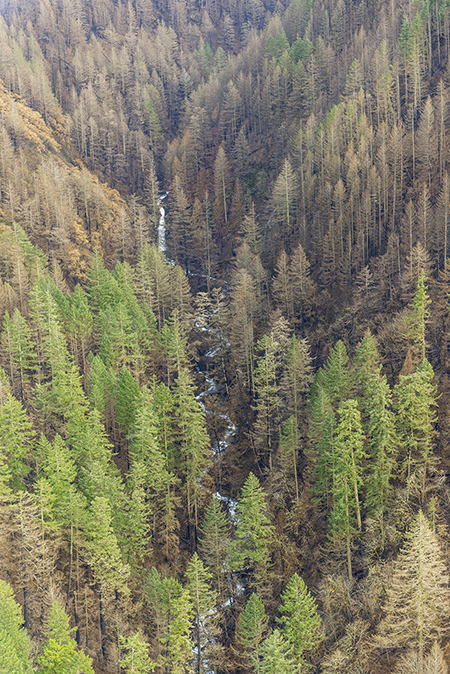
05aMoffettCreekFalls

Moffett Creek canyon after the fire (State of Oregon)

[click here for a large photo]

At about the time the original Columbia River Highway was built in the early 1900s, a group of Portlanders proposed a daring trail into Moffett Creek canyon, much like what was built along Eagle Creek at the time, but the project stalled. Today there are no trails into Moffett Creek canyon, though a few visit Moffett Falls each year by following the creek a mile upstream from where the stream flows into the Columbia River. A few more explorers climb farther, to beautiful Wahe Falls, but only the most intrepid explorers have rappelled down the string of 11 spectacular waterfalls hidden in the depths of Moffett Creek canyon.

Some of the big conifers in the lower canyon appear to have survived the fire, but this close-up view (below) of Moffett Falls shows that the forest around the falls was less fortunate:
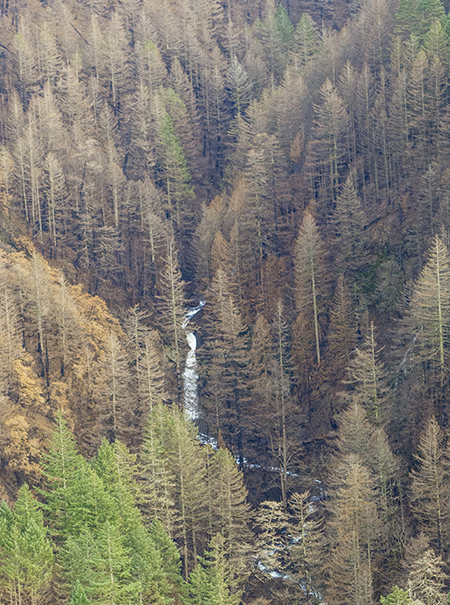
05bMoffettCreekFalls

Moffett Falls after the fire (State of Oregon)

Last April, I visited Moffett Falls with a friend, and was surprised by the number of fallen trees and debris in the lower canyon from the rough winter of 2016-17, but I never imagined that the entire forest would soon burn. This is Moffett Falls as it looked last spring, before the fire:
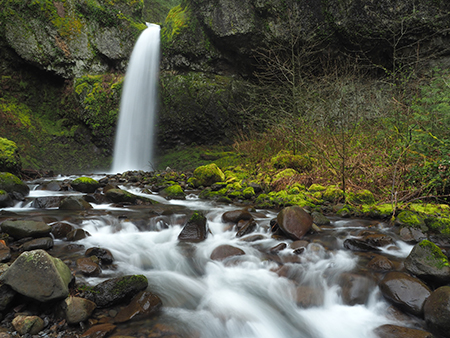
05cMoffettCreekFalls

Moffett Falls in April 2017

This photo from the State of Oregon series shows the lesser-known mid-section of Moffett Creek canyon, with Wahe Falls at the bottom of the photo:
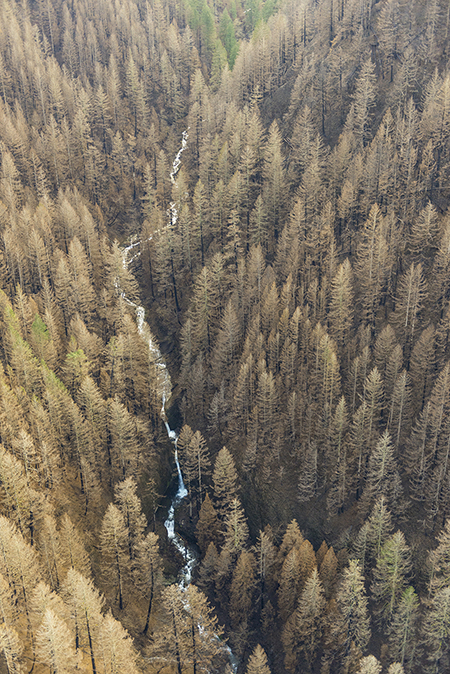
06aMoffettCreekWaheFalls

Moffett Creek canyon (State of Oregon)

[click here for a large photo]

This section of Moffett Creek canyon was heavily impacted by the fire, and most of the forest killed by the flames. The recovery here will go unnoticed by most, though the few who explored this beautiful canyon before the fire will find these images difficult to absorb.

Here’s a close-up view of Wahe Falls from the previous photo, showing that all the big conifers around the falls were killed by the fire:
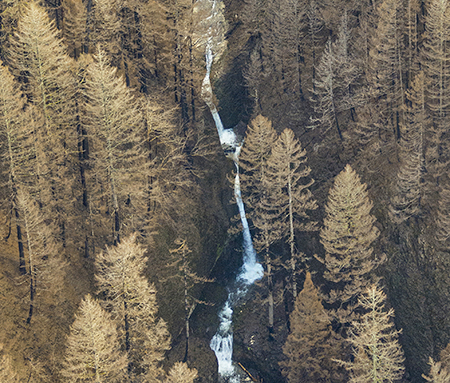
06bMoffettCreekWaheFalls

Wahe Falls after the fire (State of Oregon)

Moving upstream, the burn was less devastating in the next section of Moffett Creek canyon, where towering Kwaneesum Falls is located:
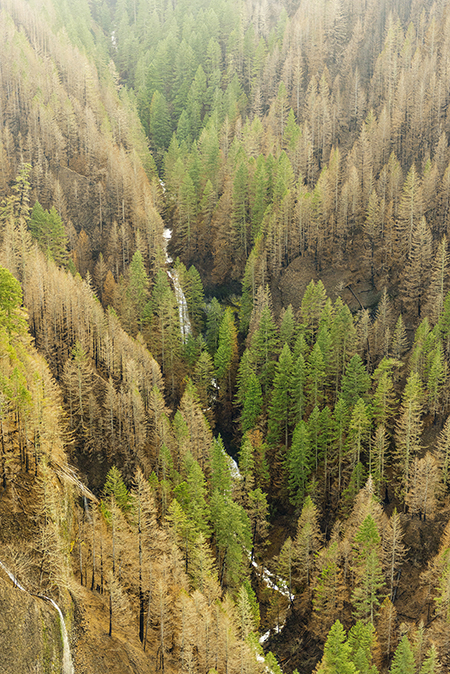
07aMoffettCreekKwanesumFalls

Upper Moffett Creek canyon and Kwaneesum Falls (State of Oregon)

[click here for a large photo]

Kwaneesum is the tallest of Moffett’s eleven waterfalls, named by local waterfall explorer Zach Forsyth with the Chinook word meaning “forever, eternity or always.” This closer look at Kwanesum Falls shows many of the big conifers below the falls surviving the fire:
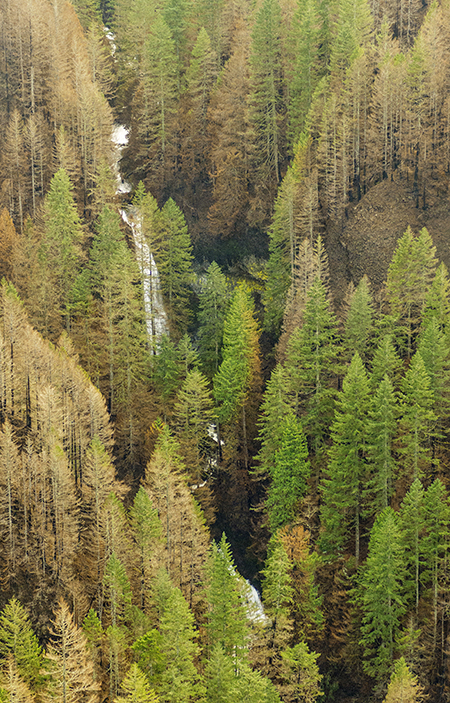
07bMoffettCreekKwanesumFalls

Kwaneesum Falls after the fire (State of Oregon)

An even closer look (below) at the forest below the falls reveals the complex burn patterns that result from the unusually steep topography of the Columbia River Gorge. Here, some trees were killed by the fire, while others survived. The Western red cedar on the left was singed on just one side, and may have enough green foliage to survive:
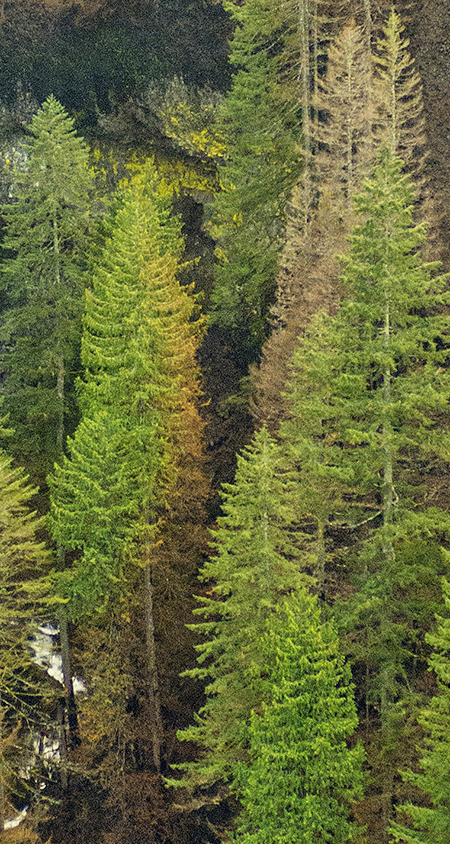
07cMoffettCreekKwanesumBurnDetail

Complex burn patterns along Moffett Creek (State of Oregon)

Few have ever seen Moffett Creek and few of us were ever destined to because of its remoteness. The canyon will also recover beyond the reach of humans, as it has many times before over the centuries. For a wonderful glimpse into some of the secrets this canyon holds, and a look at the lush beauty before the fire, you can pick up Zach Forsyth’s excellent Moffett Creek book in his “Hidden Treasures” series over here.

The next photo in the series (below) shows the lower canyon of Moffett Creek and the eastern flank of popular Munra Point, a rocky spine that towers above the Bonneville area, and forms the divide between Moffett and Tanner creeks:
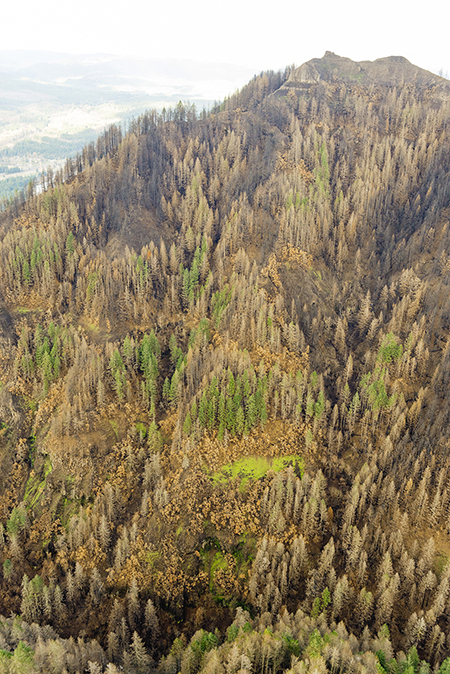
08aMunraPoint

Munra Point and Moffett Creek (State of Oregon)

[click here for a large photo]

Munra Point is perhaps the most popular “unofficial” trail in the Gorge — or Oregon, for that matter. While it was once a lightly visited secret, the growing Portland region and advent of social media has turned this steep goat path into an actual zoo on summer weekends. The Forest Service has made no attempt to manage the user trail to Munra Point, as it’s “off the system” and in recent years it has suffered serious damage and erosion as the web of steep user paths has grown here.

This closer view (below) of the trail corridor suggests that the Eagle Creek F Fire had it out for the Munra Point trail, as the worst of the burn managed to focus on the route of this unofficial trail:
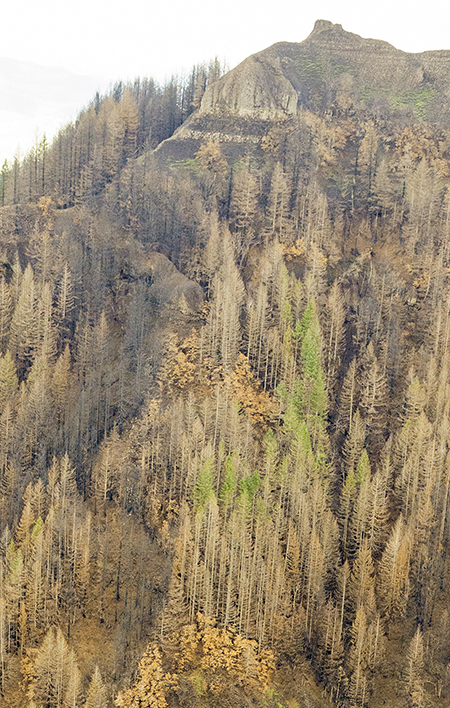
08bMunraPointDetail

The user trail to Munra Point follows the burned ridge at center-left in this view (State of Oregon)

The burned forest and subsequent erosion on these steep slopes will make it dangerous and unsustainable for hikers to continue to flock to this trail. It’s time for the Forest Service to officially close the unofficial Munra Point trail. The slopes will take decades to recover from the fire, and maybe someday a better-designed trail could be reopened, once the forest has recovered. For now, Munra Point deserves a long rest from our collective hiking boots.

Moving east, the next photo in the series (below) shows the Bonneville Fish Hatchery, the bridges of I-84, the Union Pacific Railroad bridge and (if you look closely) the old Tanner Creek Bridge on the Historic Columbia River Highway State Trail. Just beyond is the lower section of the Tanner Creek canyon, one of the most beloved places in the Gorge:
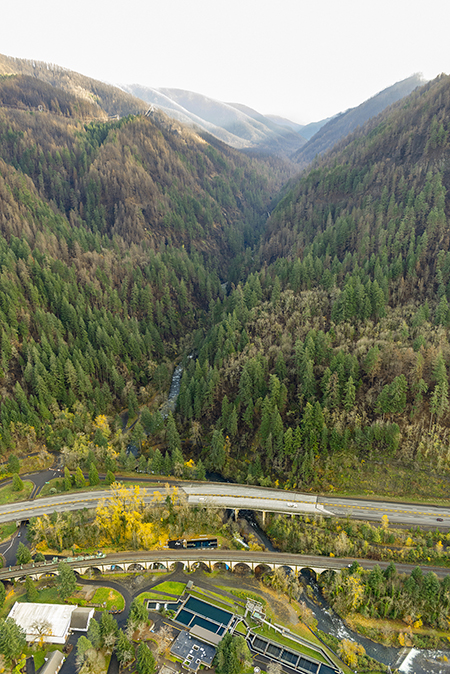
09aTannerCreekCanyonFishHatchery

Bonneville hatchery and Tanner Creek canyon (State of Oregon)

[click here for a large photo]

Despite being just one ridge away from the origin of the Eagle Creek Fire, the lower Tanner Creek canyon seems to have fared surprisingly well, as shown by this close-up view (below). Some of the largest, oldest trees in the Columbia River Gorge make their home here, and many seem to have survived the fire intact.
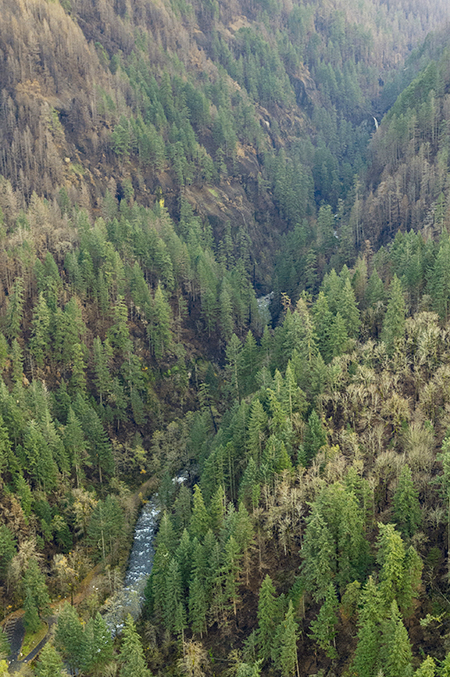
09bTannerCreekLowerCanyon

Lower Tanner Creek canyon (State of Oregon)

This photo in the series is taken from high above the lower Tanner Creek canyon, looking into the amphitheater that holds Wahclella Falls, one of the most visited and loved places in the Gorge:
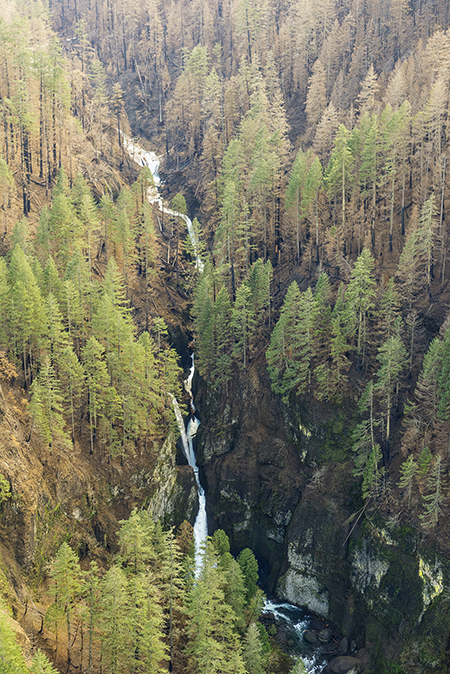
10aTannerCreekWahclellaSwawaaSundanceFalls

Tanner Creek and Wahclella Falls (State of Oregon)

[click here for a large photo]

This view also shows the narrow gorge above Wahclella Falls, where little-known Swawaa and Sundance falls are located just upstream along Tanner Creek. The wide view also shows how much more severely the upper canyon burned, above the waterfalls.

In past articles, I’ve proposed extending the Tanner Creek trail to this string of upstream waterfalls, but it’s unclear if the fire will open new opportunities for trails or slow down efforts to build them. There will be pressures in both directions within our public land agencies and among Gorge advocates. My hope is that we can build new trails while the terrain is relatively open and it’s relatively easy to survey, plan and build new routes.

While the fire clearly swept through the understory of this part of Tanner Creek canyon, much of the conifer forest immediately around iconic Wahclella Falls seems to have survived the fire, as seen in this close-up from the photo above:
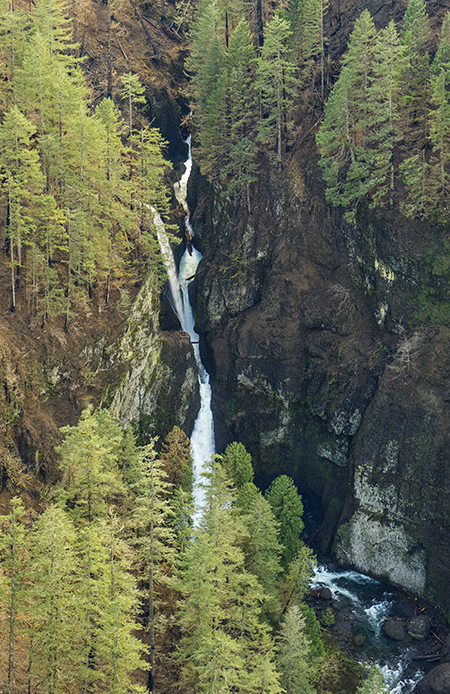
10bTannerCreekWahclellaFalls

Wahclella Falls after the fire (State of Oregon)

This will come as relief to many, though we’ll only know the long-term fate of these survivors after they have endured a couple of summer drought cycles.

The fate of the groves of Bigleaf maple and Oregon white oak (below) that also thrived here is less certain. We’ll know in spring when deciduous trees begin leafing out.
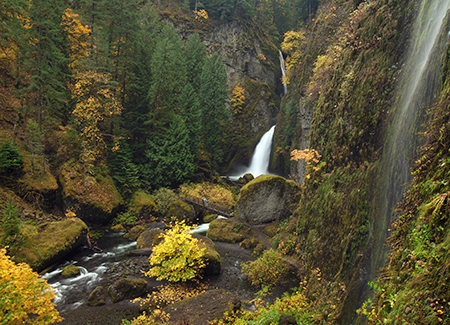
10cTannerCreekWahclellaFalls

Bigleaf maples lighting up Wahclella Falls in autumn 2012, before the fire

The next photo in the series (below) shows upper Tanner Creek canyon, with an extensive mosaic burn pattern, and many trees along the canyon floor and west canyon wall surviving. The east slope of the canyon, below Tanner Ridge and Tanner Butte, appears to have burned more severely:
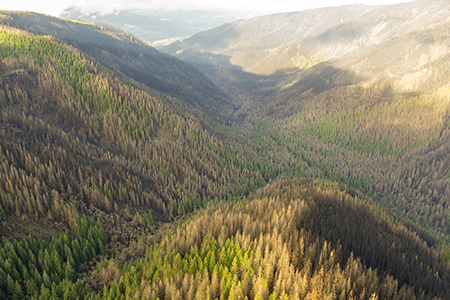
11aUpperTannerCreekValley

Upper Tanner Creek canyon (State of Oregon)

[click here for a large photo]

This close-up (below) of an unnamed rock outcrop and talus slope on the west wall of the canyon shows another potential benefit of the fire. Among the signature habitats in the Columbia River Gorge are the many remote talus slopes that support unique species, and in particular, the Pika. These tiny relatives of rabbits live exclusively in talus, and the Gorge is home to the only known low-elevation population in the world, as Pika typically live in subalpine talus.
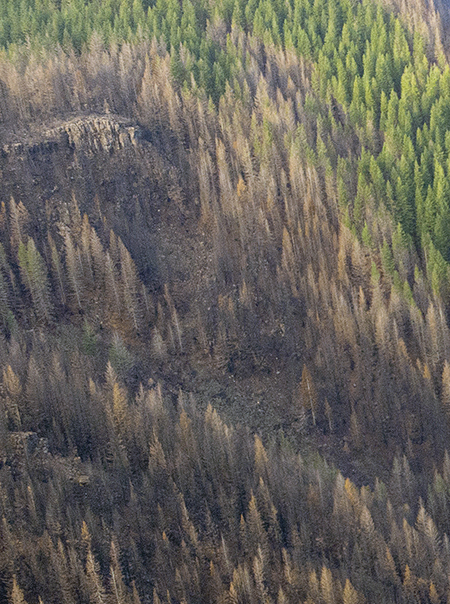
11bUpperTannerCreekValley

Cleared talus slopes above Tanner Creek (State of Oregon)

Assuming low-elevation Columbia Gorge pika living in talus slopes like these survived the fire, itself, the effect of burning off encroaching forest is a long-term benefit for these animals by preserving the open talus and promoting growth of sun-loving grasses, wildflowers and huckleberries that Pika depend on.
11cUpperTannerCreekPIka

Pika gathering huckleberry leaves (ODFW)

Another larger species that might benefit from cleared talus and ridge tops is the mountain goat — if it is reintroduced here, or migrates from where it has been re-introduced elsewhere. A 1970s effort to bring them back to the Columbia Gorge was not successful, but perhaps now is the time to try again?

This close-up view (below) of upper Tanner Creek shows the high degree of mosaic burn on the canyon floor that will not only help the forest recover, but also allow for a healthier forest of mixed, multi-aged stands to develop over coming decades:
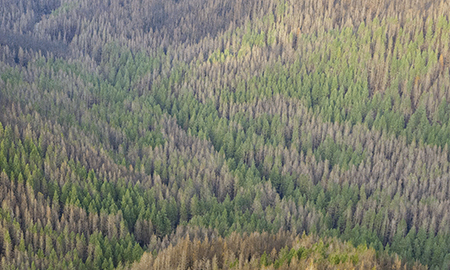
11dUpperTannerCreekValley

Mosaic burn pattern along upper Tanner Creek (State of Oregon)

The next photo in the State of Oregon series shows the impact of the Eagle Creek Fire on Tooth Rock, the legendary pinch-point for travel through the Columbia Gorge, from early railroads to modern freeways:
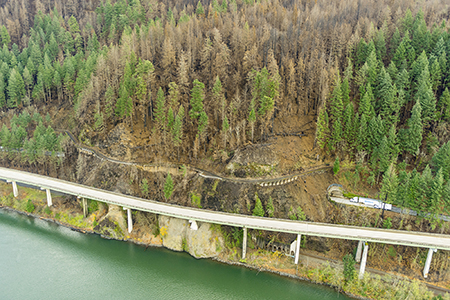
12aToothRockTunelViaduct

Tooth Rock after the fire (State of Oregon)

[click here for a large photo]

Tooth Rock is just a couple of miles from where the fire started, and one of the first places to burn, closing the highway and railroad for days. This close-up view (below) from the above photo shows a section of the Historic Columbia River Highway State Trail at Tooth Rock where erosion and landslides unleashed from the burn will be an ongoing concern until the understory recovers:
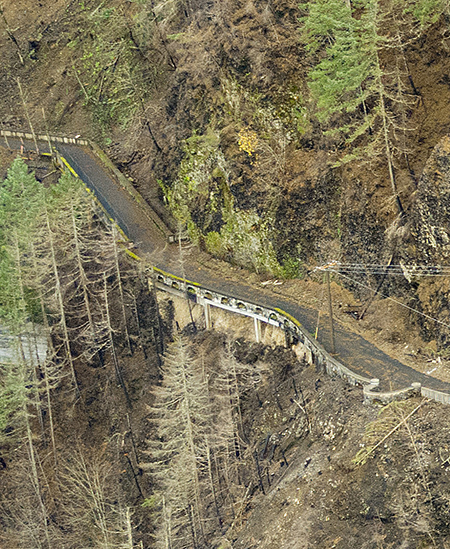
12bToothRockTunelViaduct

Historic Highway viaduct at Tooth Rock (State of Oregon)

If you’ve traveled through the Columbia Gorge since the fire, you have probably noticed the protective fencing above the Tooth Rock Tunnel and fresh stumps where burned trees were cut by the highway department to prevent them from falling onto the highway.

This close-up view (below) shows the larger concern, where active slides threaten the historic highway, as well as the portal to the Tooth Rock Tunnel and Union Pacific tunnels, located below the westbound I-84 viaduct:
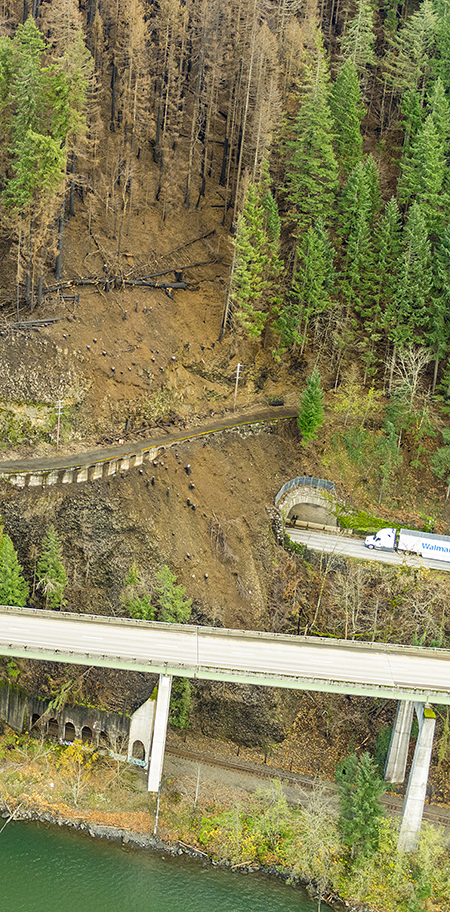
12cToothRockTunelViaduct

Stacked transportation routes threatened by slides at Tooth Rock (State of Oregon)

And so the ongoing struggle to find passage around Tooth Rock continues, as the successive roads, rails, tunnels and viaducts making their way around and through the rock over the past 150 years may all share a common fate if these landslides continue to grow.

Eagle Creek: at the Heart of the Inferno
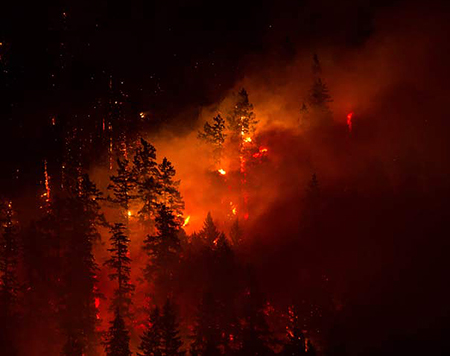
12dEagleCreekFireUSFS

Eagle Creek forest burning as the fire began to unfold last September (US Forest Service)

The intensity of the fire damage to the forests in Oneonta, McCord and Tanner creek canyons might lead you to think the Eagle Creek canyon would have fared worse, since the fire was started here. But the State of Oregon aerial photo series shows the forest canopy in many of the most treasured spots along Eagle Creek surviving the fire, with many areas having a beneficial, mosaic burn pattern.

The mosaic pattern is immediately apparent in this opening view, looking into the canyon from above the Eagle Creek fish hatchery and I-84:
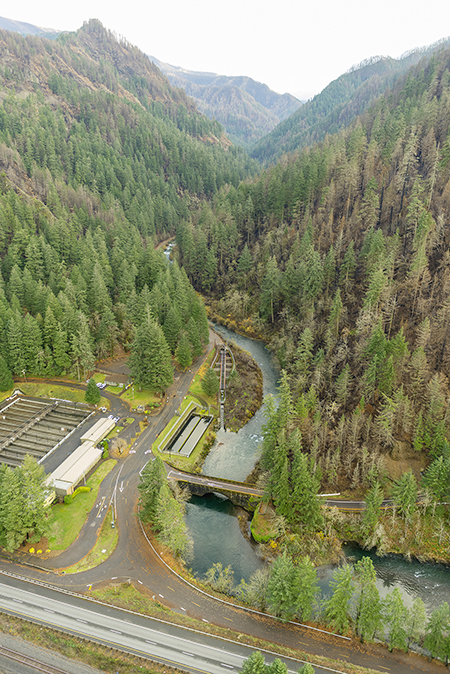
13aEagleCreekHatchery

Looking into the Eagle Creek canyon (State of Oregon)

[click here for a large photo]

A closer look (below) at this view shows that much of the forest along the lower canyon near the Eagle Creek trailhead survived. The historic Eagle Creek Campground is also located in this area:
13bEagleCreekLowerCanyon

Lower Eagle Creek canyon (State of Oregon)

A still closer look (below) shows that the understory on the west (right) side of Eagle Creek in area stretch burned, while much of the conifer overstory has survived, so far:
13cEagleCreekLowerCanyon

West side of lower Eagle Creek (State of Oregon)

The next photo in the series jumps two miles upstream along Eagle Creek to Metlako Gorge, so the extent of the burn in the intervening section of the Eagle Creek Trail is still only known to Forest Service rangers who have been busy assessing trail conditions in the burn area.

This photo (below) looking south into Metlako Gorge shows more mosaic burn pattern, with an intact forest canopy in some areas and dying trees in others. Sorenson Creek Falls (on the left) and Metlako Falls spill into the gorge at the far end:
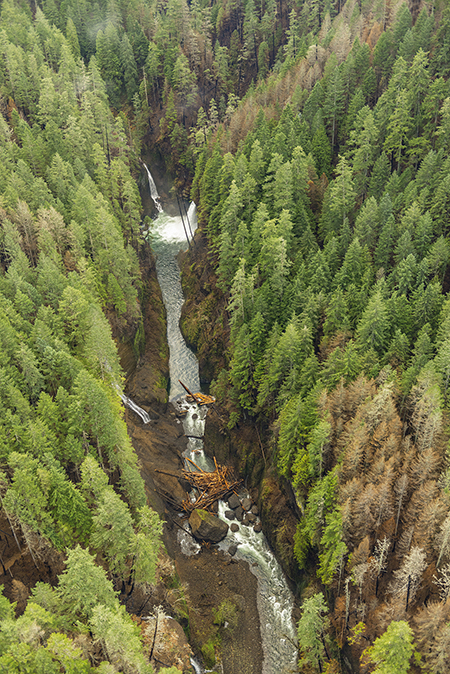
14aEagleCreekMetlakoGorge

Metlako Gorge after the fire (State of Oregon)

[click here for a large photo]

A closer look at this photo shows that the understory was cleared by the fire on the slopes below the Eagle Creek Trail, located directly above the falls. The two familiar Douglas fir trees that lean over the gorge just below Metlako Falls also seem to have been killed by the fire:
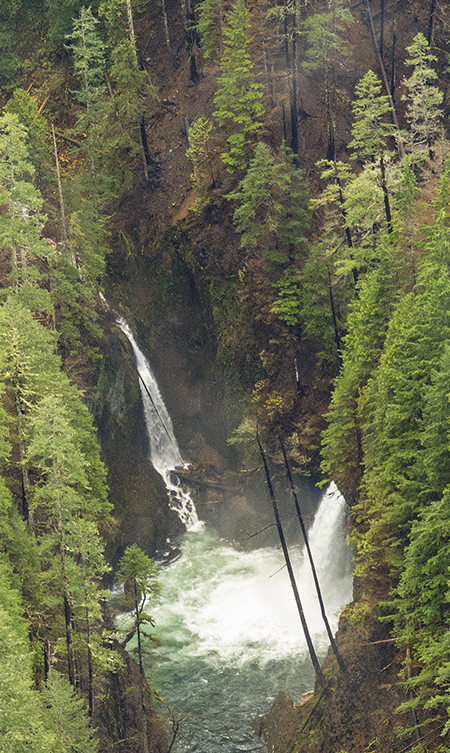
14bEagleCreekMetlakoGorge

Sorenson Creek Falls and Metlako Falls after the fire (State of Oregon)

This fascinating (below) photo from the series shows the former Metlako Falls viewpoint, once located on a short spur trail through a wooded ravine that led to a dizzying perch along the gorge rim. In late December 2016, a massive section of the basalt cliff fell away here, taking the viewpoint (and its cable railings!) with it and filling the gorge below with 30 feet of debris:
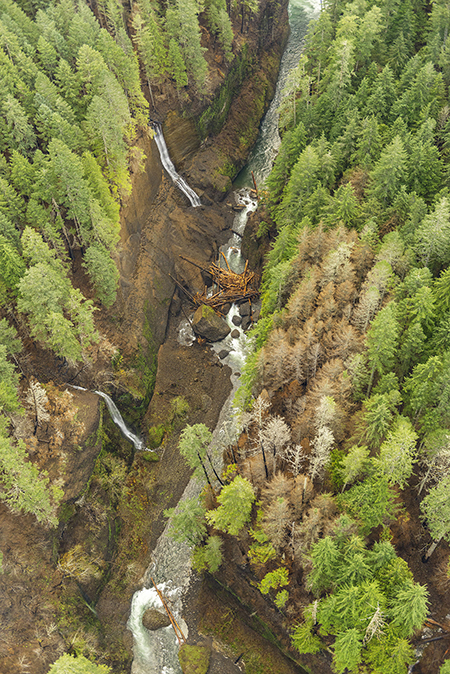
15a.EagleCreekMetlakoGorge

The 2016 Metlako Gorge landslide after the fire (State of Oregon)

[click here for a large photo]

In this earlier blog article, I covered the landslide event in detail, but the new aerial views provide a much more complete understanding of the full scope and scale of the collapse.

This closer look at the photo (below) shows the scale of the collapse, including a barn-sized chunk of solid basalt that managed to land in Eagle Creek intact. The giant, intact boulder gives a good sense of just how much of the original cliff broke away:
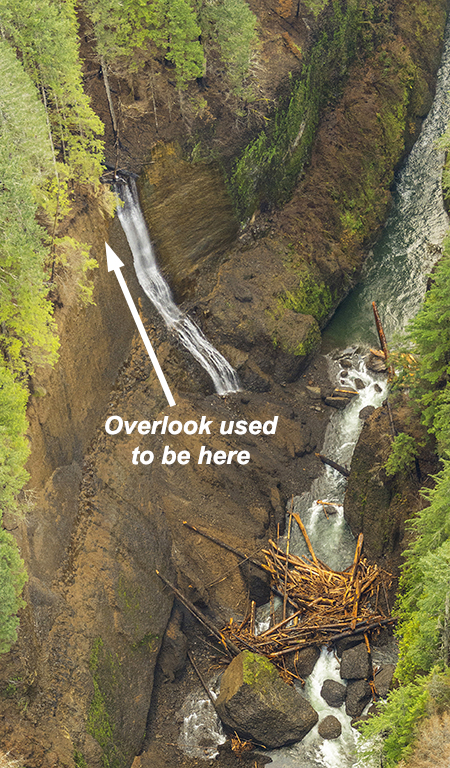
15bEagleCreekMetlakoGorge

Close-up view of the 2016 Metlako Gorge landslide (State of Oregon)

A still closer look (below) shows the impact of the collapse on Eagle Creek, with a deep bank of rock and soil debris banked against the east wall of the gorge, and huge pile of boulders in the creek trapping a log jam of whole trees behind it:
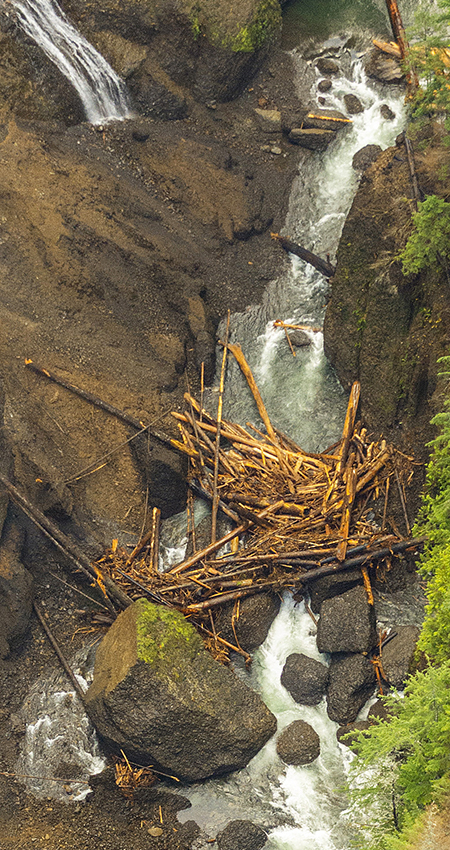
15cEagleCreekMetlakoGorge

Logjam created by the 2016 Metlako Gorge landslide (State of Oregon)

This photo from the series (below) of the newly formed Metlako Gorge cliff face helps explain why the cliff collapse happened. The waterfall cascading down the newly exposed scarp is located just upstream from where the overlook was located, and emerges from the small ravine the spur trail followed to the old overlook:
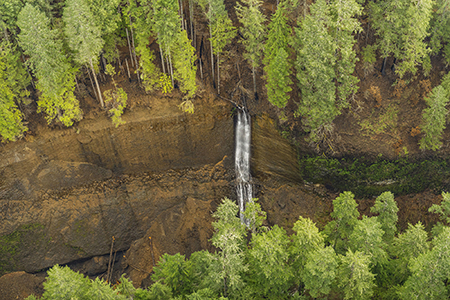
16aEagleCreekMetlakoGorge

Metlako Gorge landslide scarp after the fire (State of Oregon)

[click here for a large photo]

A closer look at this new waterfall (below) shows that the entire stream actually emerges at the brink of the falls, where groundwater flowing beneath the forest surface has reached the solid basalt layer and is forced toward the cliff.

Constant hydraulic pressure and occasional freezing where this underground water source seeped into cracks in the basalt layer and the sheer weight of the vertical cliff pulling outward created the conditions for what is a fairly regular event in the Columbia River Gorge: outer layers of exposed basalt cliffs calving off as the elements pry them loose.
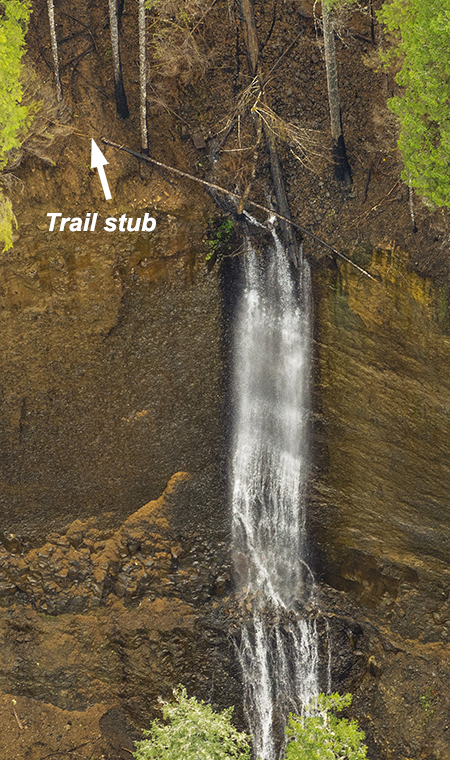
16bEagleCreekMetlakoGorge

A new waterfall where the Metlako Falls viewpoint once was (State of Oregon)

What did Metlako Gorge look like before the landslide? It was an idyllic, widely photographed scene of exceptional beauty. This image (below) is no longer possible after the cliff collapse, but the 2017 Eagle Creek fire also destroyed some of the big trees that framed the falls. This view will only live in our photos and memories:
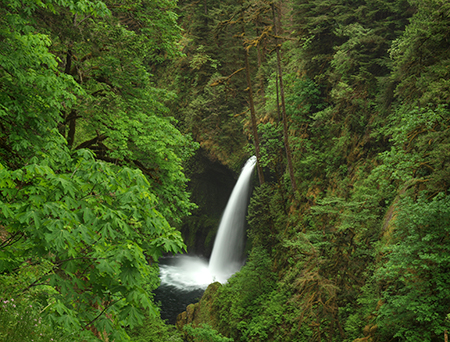
16cEagleCreekMetlakoFalls2013

Metlako Falls before the viewpoint collapse — and the Eagle Creek fire

This aerial view from the series provides a more detailed look at Metlako Falls, including a rarely seen section of Eagle Creek just above the falls and the surrounding forest:
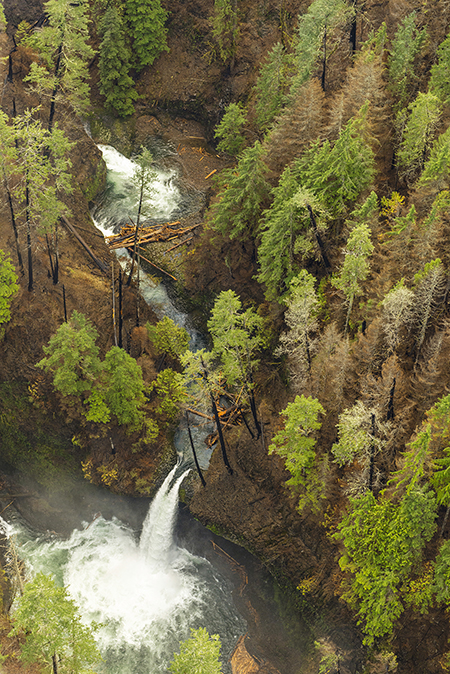
17aEagleCreekMetlakoFalls

Metlako Falls after the fire (State of Oregon)

[click here for a large photo]

A closer look (below) at this photo shows that the fire completely burned away the understory around the falls, and many of the trees here are clearly struggling to survive. Soils in the rocky Columbia Gorge canyons are thin and competition is fierce among big trees during summer droughts, so we won’t really know how trees with this degree of fire damage will fare for another year or two.
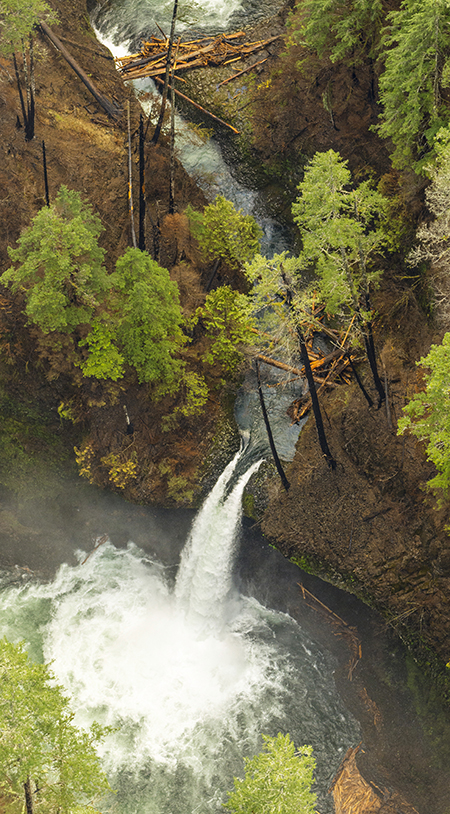
17bEagleCreekMetlakoFalls

Metlako Falls after the fire (State of Oregon)

As I worked my way through the hundreds of photos in the State of Oregon series, I expected to find a shot of Punch Bowl Falls similar to the previous view of Metlako Falls. After all, Punch Bowl is easily among most photographed spots in the Columbia Gorge (and Oregon), second only to Multnomah Falls. But after my first pass through the set, I was disappointed not to find a good view of the Punch Bowl, of all places!

However, I later came across the following image in a group of several that were more difficult to identify, and noticed the undercut cliff wall tucked among the trees in the lower left edge of the photo:
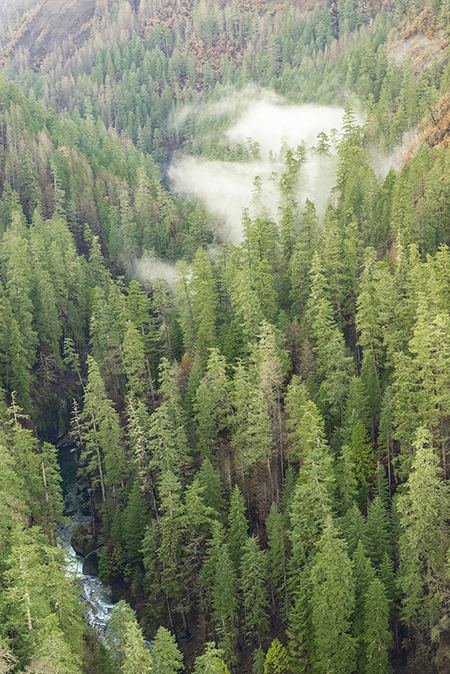
18aEagleCreekPunchBowlFalls

Is that Punch Bowl Falls down there..? (State of Oregon)

[click here for a large photo]

Looking more closely (below) at this part of the photo reveals it to be the “weeping wall” that towers above the lower Punch Bowl amphitheater, across from the cobble beach that fills with hundreds of hikers and swimmers on summer weekends. Then I noticed a bare spot that marks the “jumping” spot on the high cliff that hangs above the east side of Punch Bowl Falls — and the trail overlook, in the trees high above the falls:
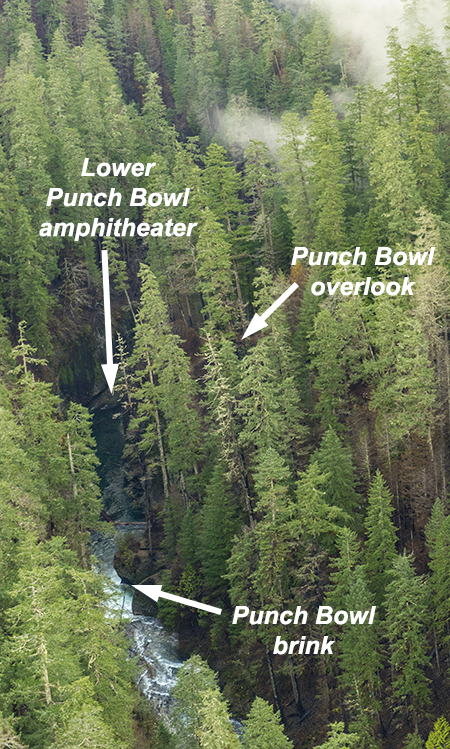
18bEagleCreekPunchBowlFalls

…that’s a downstream view of Punch Bowl Falls! (State of Oregon)

The good news from this photo is that several stands of big conifers immediately around Punch Bowl Falls not only survived the fire, but look to have completely dodged the flames. That would be good news, as these trees may now live to grow for another century or two, helping the surrounding burn recover and passing along their survivor genes in the process.

Many of the big trees around Punch Bowl Falls have survived at least one other major fire, as much of the Eagle Creek canyon burned in a fire around the turn of the 20th Century. This early 1900s view (below) shows the aftermath of that fire, with large gravel bars filling the Punch Bowl, itself. This material was released by erosion that resulted from that earlier fire, and in coming decades, we are likely to see new gravel bars like this appear in Eagle Creek, once again:
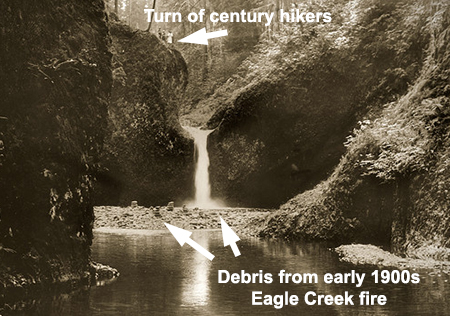
18cPunchbowlFalls1910s

Early 1900s view of Punch Bowl Falls

Most hikers on the Eagle Creek Trail know Tish Creek from its tall — and recently replaced — footbridge. But a few intrepid hikers know that a beautiful waterfall on Tish Creek is located upstream from the trail, reachable by a rough off-trail bushwhack. This little-known spot also seems to have dodged the worst of the fire, as seen in this view aerial view from the series:
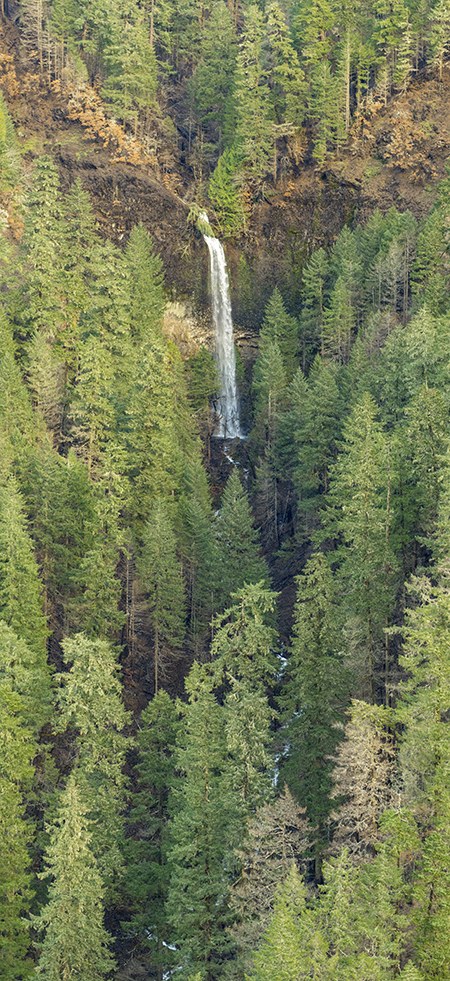
18dTishCreekFalls

Tish Creek Falls after the fire (State of Oregon)

Moving upstream from Punch Bowl Falls, the photo from the series shows Loowit Gorge, just downstream from Loowit Falls and High Bridge:
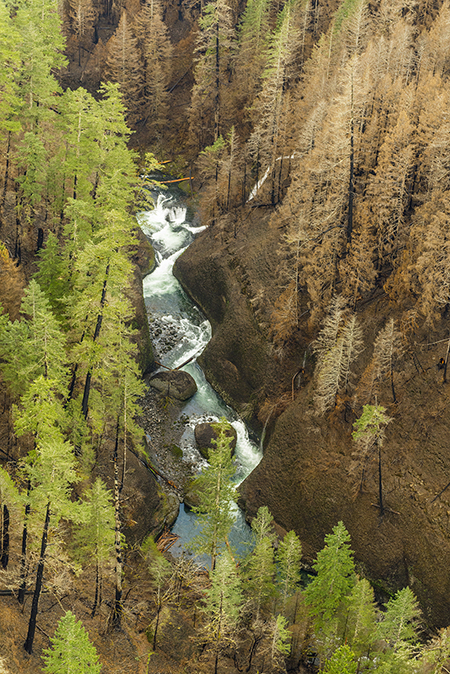
19aEagleCreekLoowitGorge

Loowit Gorge after the fire (State of Oregon)

[click here for a large photo]

Eagle Creek was clearly a barrier for the fire in this area, with the west (right) slopes near Loowit Creek completely burned, while the forest canopy on the east slope (where the Eagle Creek Trail is located) seems to have mostly survived, but with burned trunks to show for it.

This aerial view from the series shows Loowit Falls (at the bottom, where it joins Eagle Creek) and little-known Upper Loowit Falls in the distance:
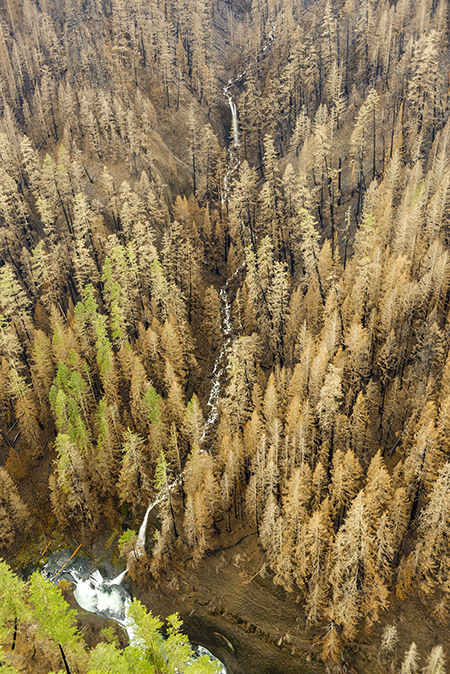
20aEagleCreekLoowitFallsUpperLoowitFalls

Loowit and Upper Loowit Falls after the fire (State of Oregon)

[click here for a large photo]

A closer look (below) at this view of Loowit Falls shows a forest that was largely killed by the fire, as even the trees with a few surviving limbs in their crowns are unlikely to survive the stress of losing so much of their canopy:
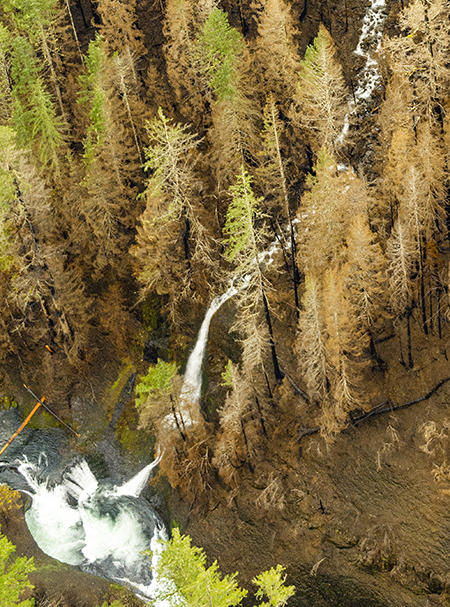
20bEagleCreekLoowitFallsUpperLoowitFalls

Loowit Falls after the fire (State of Oregon)

What did Loowit Falls look like before the fire? It was among the most graceful and photographed in the Columbia Gorge, drifting down a moss-covered basalt wall into a perfect bowl carved into solid rock over the millennia:
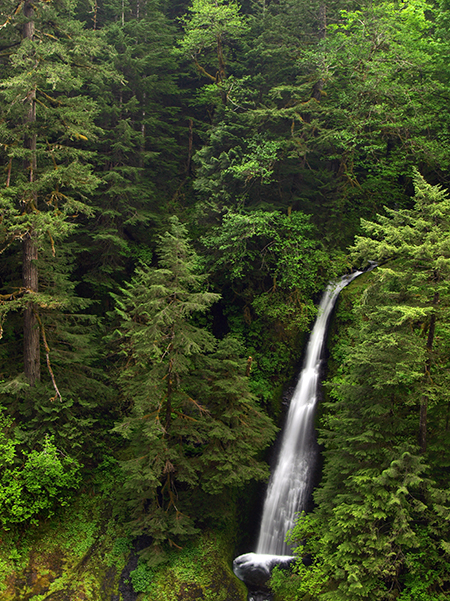
20cEagleCreekLoowitFalls

Loowit Falls before the burn, surrounded by big conifers (State of Oregon)

Upper Loowit Falls fared worse (below), with the entire forest killed by the fire. In recent years, the word has gotten out on the relatively easy off-trail route to this falls, so like Middle Oneonta Falls, this might be a good candidate for formalizing a spur trail. This could be done as part of restoring the overall trail system at Eagle Creek, when trail planners can see the terrain as never before, and have the opportunity to provide more hiking options in this popular area.
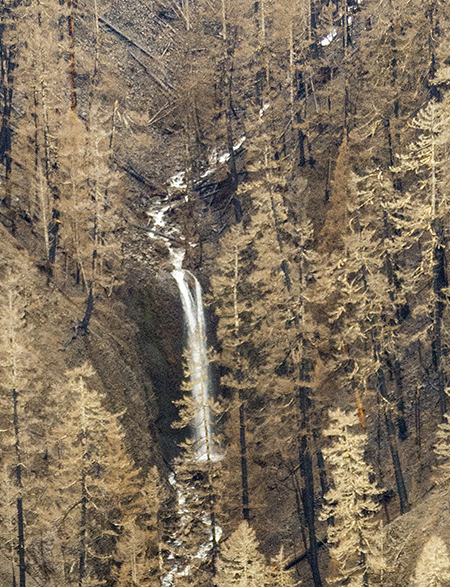
20dEagleCreekLoowitFallsUpperLoowitFalls

Upper Loowit Falls after the fire (State of Oregon)

This photo from the series looks downstream along a section of Eagle Creek above High Bridge:
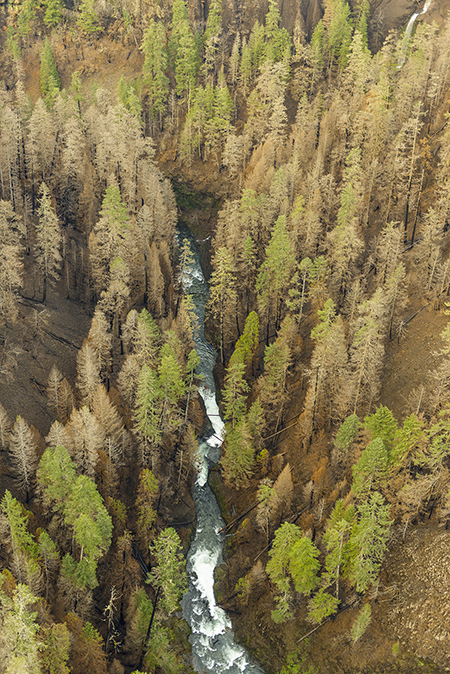
21aEagleCreekGorgeAboveHighBridge

Eagle Creek above High Bridge after the fire (State of Oregon)

[click here for a large photo]

The burn is extensive here, though a few stands of forest canopy seem to have survived. A close look at the tributary falls in the upper left corner of this view shows Benson Falls, another beautiful, lesser-known waterfall that only a few have visited:
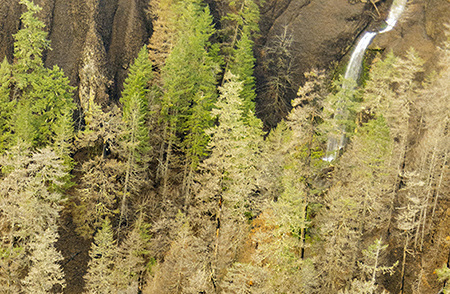
21bHighBridgeBensonFalls

Benson Falls after the fire (State of Oregon)

Graceful Benson Falls can be reached by scrambling up a side canyon from near High Bridge. This similar view from another photo in the series shows the falls more clearly, and while the burn cleared much of the understory here, many of the big conifers near the falls appear to have survived:
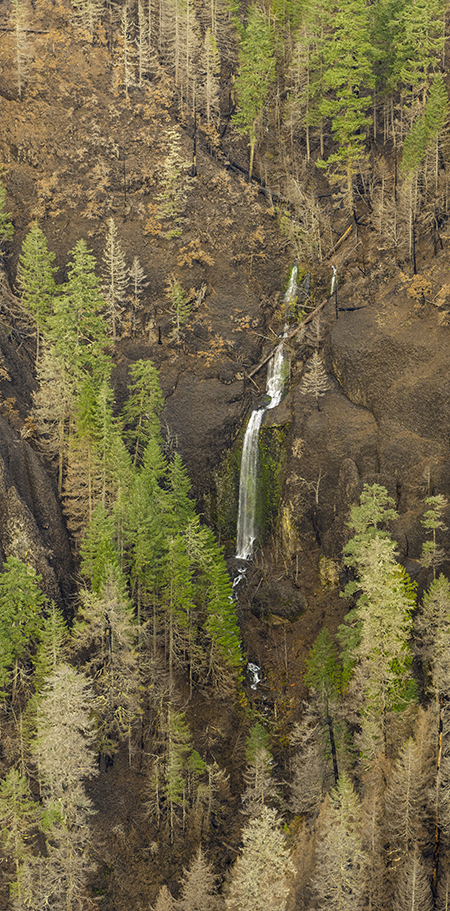
21cHighBridgeBensonFalls

Benson Falls after the fire (State of Oregon)

Benson Falls could be another candidate for a short spur trail as part of restoring the Eagle Creek Trail in the burn area and providing new trail opportunities.

Moving upstream, the next photo in the State of Oregon series shows a section of Eagle Creek located below Skoonichuk Falls, the next in the chain of waterfalls along the Eagle Creek Trail:
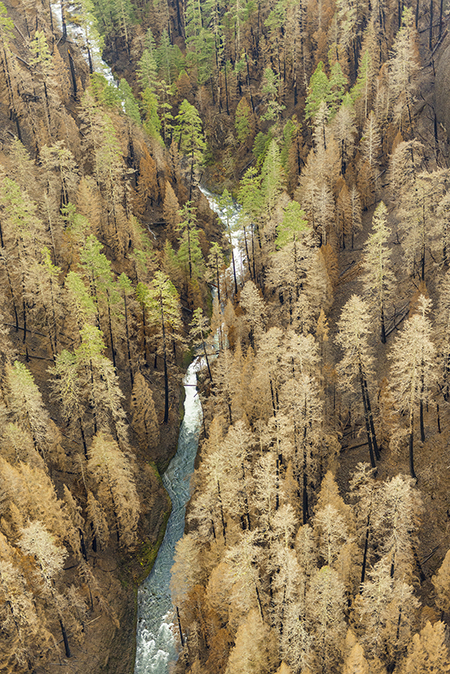
22aEagleCreekBelowSkoonichuck

Eagle Creek and Skoonichuk Falls after the fire (State of Oregon)

[click here for a large photo]

Much of the forest in this section of Eagle Creek canyon was completely killed by the fire, though a few conifers survived immediately around Skoonichuk Falls, as seen in this close-up view:
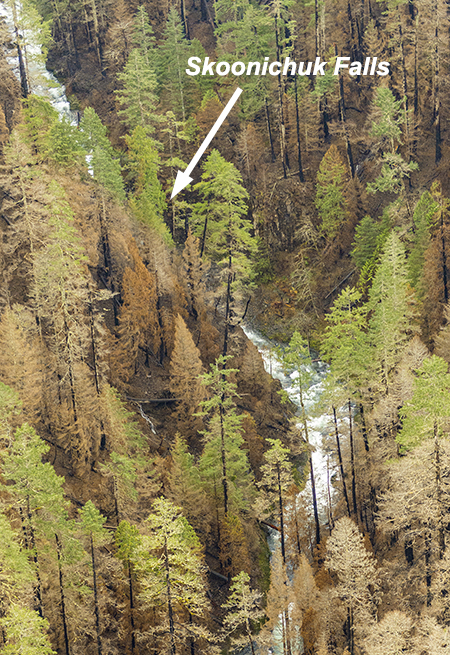
22bEagleCreekSkoonichuck

Skoonichuk Falls after the fire (State of Oregon)

Unfortunately, the aerial photo series does not include a view of Grand Union Falls and Tunnel Falls (on the East Fork), the next two major waterfalls along the Eagle Creek Trail, so only the Forest Service rangers know the extent of the fire impact there. But the photo series does include this view of Twister Falls, located on the main fork of Eagle Creek, just up the trail from Tunnel Falls:
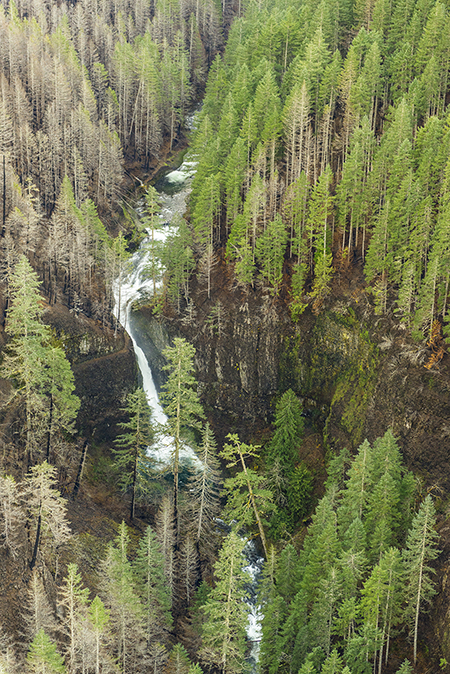
23aEagleCreekTwisterFalls

Twister Falls after the fire (State of Oregon)

[click here for a large photo]

Eagle Creek formed another firebreak here, though in the opposite direction from what previous photos showed at Loowit Gorge. Here, the forest canopy on the west (right) side of the canyon appears to have mostly survived, while the east side canopy was mostly killed by the fire.

This close-up view (below) of the photo shows the infamous “Vertigo Mile” section of the Eagle Creek Trail, where the exposed route curves around a dizzying cliff above Twister Falls. The fire damage here is readily apparent on the slopes above the trail, with only a few conifers hanging on to some of their foliage:
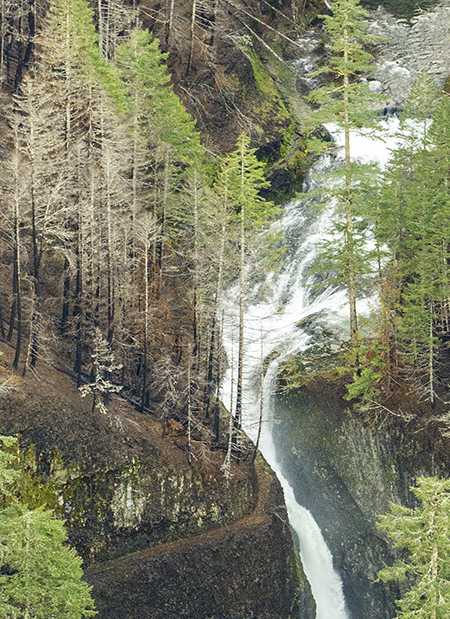
23bEagleCreekTwisterFalls

Twister Falls and the Vertigo Mile after the fire (State of Oregon)

These trees are unlikely to weather summer drought stress in coming years as they attempt to survive with only portion of their crowns intact. As will be the case throughout the burn, debris from heavily burned slopes like this will continue to slide onto adjacent trails until the forest understory has returned to stabilize the soil. This will likely play out for several years.

The groves of big conifers at the base of Twister Falls (below) seem to have fared much better, possibly untouched by the fire:
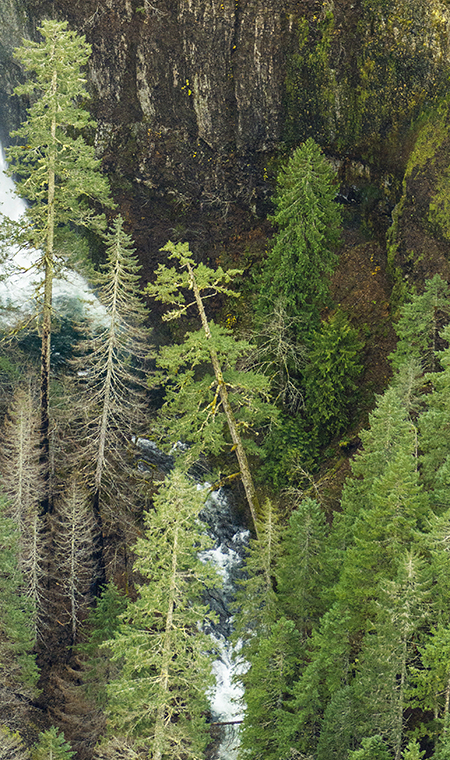
23cEagleCreekTwisterFalls

These big trees below Twister Falls survived the fire (State of Oregon)

Like the big trees that survived by Punch Bowl Falls, these giants will help the surrounding burn recover by helping to reseed burned slopes and providing shade to help keep Eagle Creek cool in summer and early fall.

This view from the brink of Twister Falls (below) from before the fire shows the narrow slot that holds this tall waterfall. In coming years, watch for logjams to form in narrow spots like this along Eagle Creek:
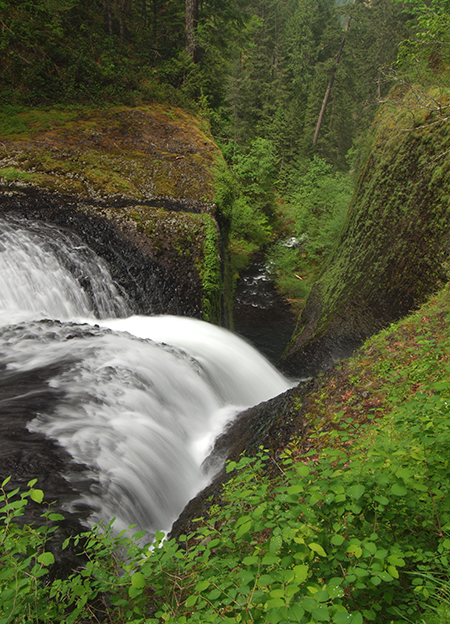
23dEagleCreekTwisterFalls

Twister Falls before the fire

This photo in the series shows Sevenmile Falls, the last in the string of major waterfalls along the Eagle Creek Trail:
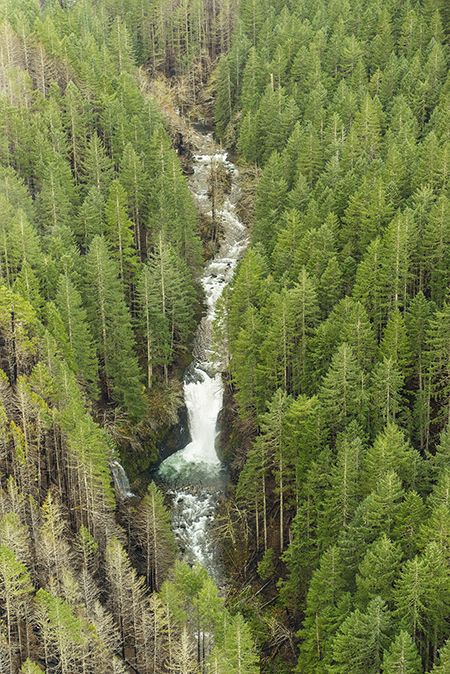
24aEagleCreekSevenmileFalls

Sevenmile Falls after the fire (State of Oregon)

[click here for a large photo]

The understory burned off in this section of forest, but the conifer overstory seems to have survived, mostly intact. This close-up view from the photo shows a more impacted section of forest where the Eagle Creek Trail passes Sevenmile Falls:
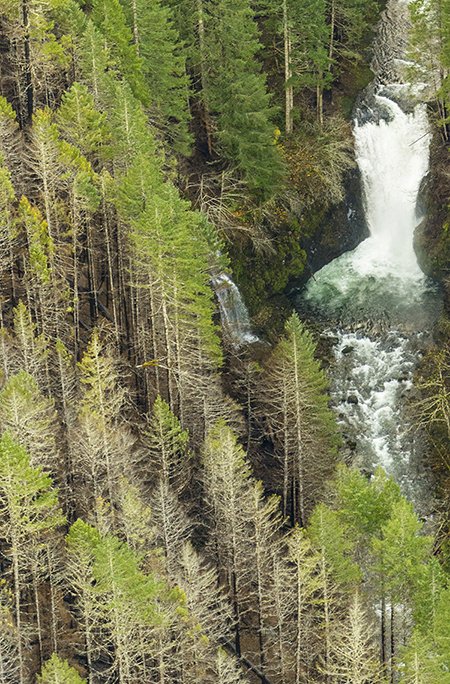
24bEagleCreekSevenmileFalls

Sevenmile Falls after the fire (State of Oregon)

This photo from the series provides a view from high above the upper Eagle Creek canyon, looking downstream (north) toward the Columbia River, and gives a sense of how the forests in the upper canyon fared:
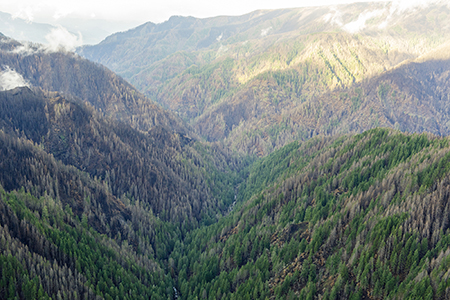
25aUpperEagleCreekCanyon

Upper Eagle Creek canyon after the fire (State of Oregon)

[click here for a large photo]

While forests along many of the ridge tops were completely killed by the fire, many of the lower slopes in this photo (below) show a beneficial mosaic burn, with wide bands of surviving forest canopy:
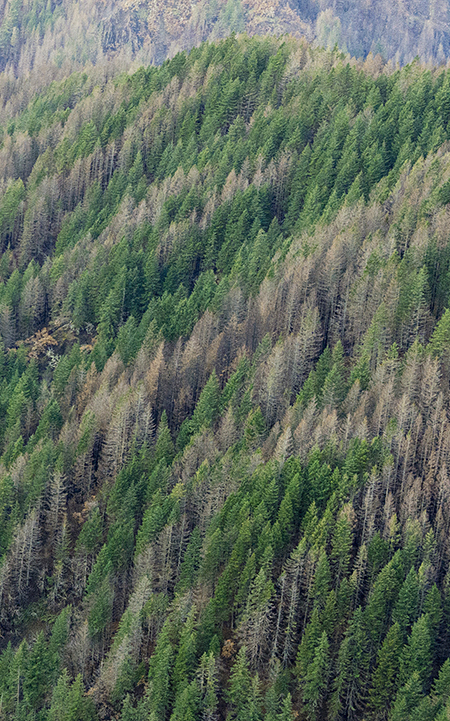
25bUpperEagleCreekCanyon

Mosaic burn pattern in the upper Eagle Creek canyon (State of Oregon)

The condition of trails in this part of the Eagle Creek network is unknown, as the Eagle Creek fire merged with the earlier Indian Creek fire in this area. The Indian Creek fire started weeks before the Eagle Creek fire, but spread less aggressively, mostly burning in relatively high elevation areas above the canyon floor.

Herman Creek and Shellrock Mountain

The State of Oregon photo series doesn’t provide much detail on the Herman Creek canyon, though the fire clearly burned significant portions of Nick Eaton Ridge (seen below, forming the east side of the canyon on the left in the photo). This photo was taken from directly above the Port of Cascade Locks, looking south:
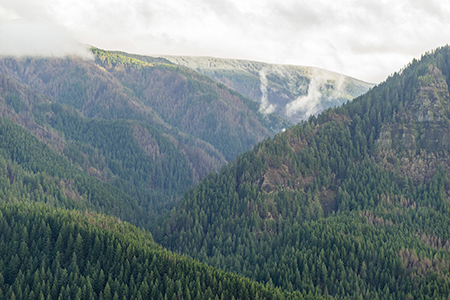
26aHermanCreekCanyon

Herman Creek canyon after the fire (State of Oregon)

[click here for a large photo]

From this limited view, the pattern seems similar to Eagle Creek: killed forests along ridge tops, mosaic burn patterns closer to the canyon floor and some of the largest conifers surviving along Herman Creek (below).
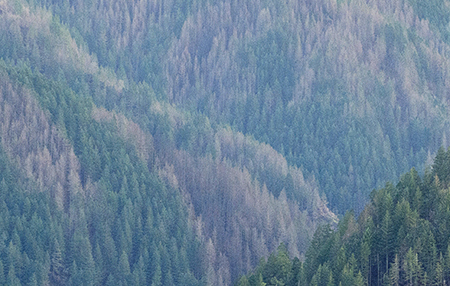
26bHermanCreekCanyon

Mosaic burn pattern at Herman Creek (State of Oregon)

The final image in this set focuses on Shellrock Mountain, the eastern extent of the State of Oregon photo survey (below):
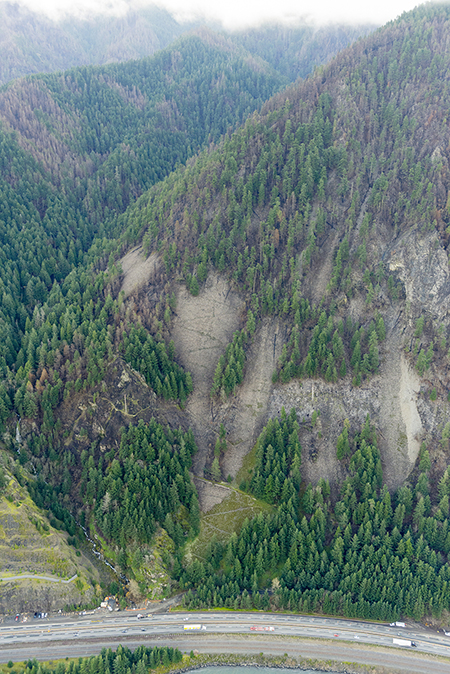
27aShellrockMountainEastSideSummitCreek

Summit Creek and Shellrock Mountain after the fire (State of Oregon)

[click here for a large photo]

A closer look at the lower left corner of the photo (below) shows little-known Camp Benson Falls, the lower of two significant waterfalls on Summit Creek, and the ongoing construction of the latest phase of the Historic Columbia River Highway State Trail:
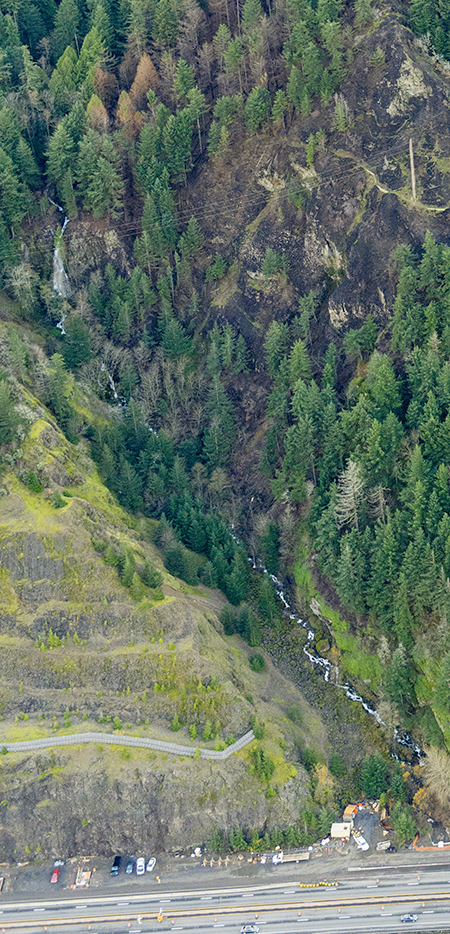
27bShellrockMountainEastSideSummitCreek

Summit Creek and Camp Benson Falls (State of Oregon)

Most of the burn here is also in a mosaic pattern, including along the steep talus slopes of Shellrock Mountain (below). Switchbacks from an old trail leading to the summit show in this view, as well:
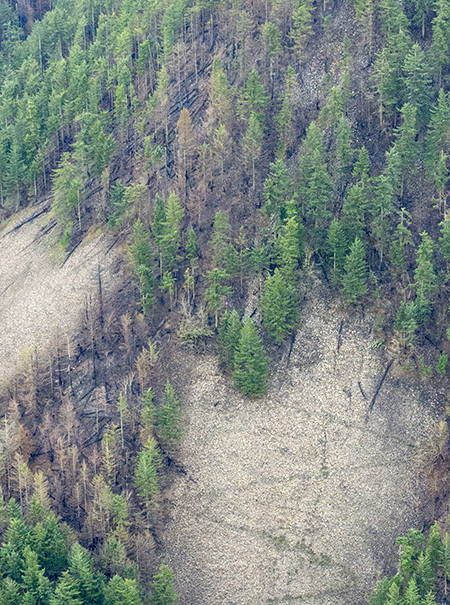
27cShellrockMountainEastSideSummitCreek

Shellrock Mountain forests after the fire (State of Oregon)

The amazing photo survey ends here, roughly coinciding with the eastern extent of the Eagle Creek Fire. Though the photos were focused on assessing potential impacts of burned slopes on highways and other infrastructure in the Gorge, they also serve as an invaluable snapshot of conditions as they existed immediately after the fire. These images will give future land managers and researchers a highly detailed benchmark for tracking the recovery of the Gorge ecosystem over coming decades.

While simply restoring the historic trail network will be a big job, the reality of growing demand in our region for new trails and experiences in the Gorge didn’t go away with the fire. These photos also provide a unique opportunity for today’s State Parks and Forest Service planners to consider new trails and trail realignments while the terrain is easy to survey and trail construction more straightforward than when the understory is intact.

The fire has created a once in a century opportunity to rethink the trails in the Gorge with our rapidly growing population in mind, and is an opportunity that should not be missed. It also provides an opportunity to link the responsible expansion of recreation opportunities to the forest recovery, itself, allowing hikers to watch and learn as a new forest grows here.

After the Fire: the Verdict
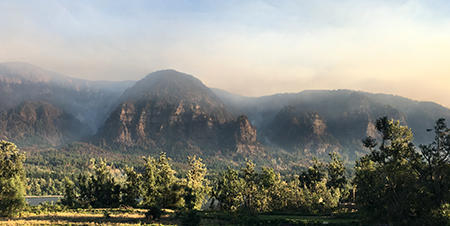
28aEagleCreekFireHighway14Views

Smoky skies in the Gorge during the 2017 Eagle Creek Fire

Those who love the Gorge already know this unfortunately sequence of events: the Eagle Creek Fire began on September 2, 2017, when a Vancouver teenager tossed illegal fireworks into the canyon from cliffs along the Eagle Creek trail. The fire quickly exploded into an inferno, burning more than 48,000 acres along the Oregon side of the Columbia River Gorge, and briefly igniting a small fire on the Washington side when embers floated over to the slopes of Aldrich Mountain.

This month, a Hood River County judge sentenced the teen to five years of probation and 1,920 hours (48 weeks) of community service with the U.S. Forest Service. That’s more volunteer time that many Americans contribute over a lifetime. Much of that work will be in the form of restoring and rebuilding trails damaged by the fire, no doubt, and hopefully this mandated service will inspire the unnamed teen to dedicate his life to protecting our public lands after this tragedy.

The public reaction to the sentence was swift: many felt it was too lenient, given the scope and devastation of the fire. Others felt it fair and forgiving, as it gives the teen a chance to potentially direct his life toward stewardship and protecting the Gorge. Here is the statement the young man made to the court as part of sentencing:
28bApologyLetter

Letter of apology from the teen who started the Eagle Creek Fire

[click here for a more readable version]

I fall into the second category in my own reaction, and don’t see a reason to destroy a young life because of a mistake that went horribly wrong. Most of us made similarly stupid decisions in our teens, and were simply fortunate enough not to have had consequences of this scale to answer to.

I also see this sequence of events as a metaphor that all who love the Gorge can learn from: today’s kids are increasingly isolated from nature and spending time on our public lands. Learning to understand, appreciate and respect nature is something that all kids should experience, and might have prevented the Eagle Creek Fire, too.

The teen who started the Eagle Creek Fire will spend nearly a year in his young life working to help with the recovery effort as part of his sentence and will surely learn these lessons. But what if all kids in our growing region simply spent a few hours working on a trail or helping to restore the burn in some other way? How would that change the way in which future generations care for the Gorge? How could we all help to bring out youth closer to nature as we work to restore the Gorge?

Epilogue: Learning to Embrace the Burn
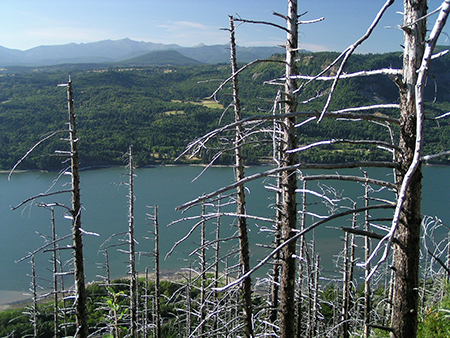
29AngelsRestFireSnags2004

Bleached snags from the 1991 Multnomah Falls fire rising from a sea of young conifers in 2004

Reactions to the first in this two-part article ranged from sadness and anger over places lost to the fire to a degree of hope and guarded optimism about the opportunity to rethink how we manage the Gorge in the future.

While the full impact of the Eagle Creek Fire is still being assessed, the best option moving forward is to embrace the reality of the burn as an opportunity to learn, grow and pitch in. That’s something we can all do, including supporting organizations like Friends of the Gorge and Trailkeepers of Oregon (TKO) who will be at the forefront of bringing volunteers to the major job of restoration.

So far, the public response has been overwhelming, with several TKO trail events filling up almost immediately this year, and long waiting lists forming for future events. That’s encouraging! Let’s hope it continues, as the recovery will take many years.

Many will continue to grieve the magnificent forests and idyllic landscapes lost to the fire, too. That’s a very human response to losing a place that is home to so many of us. But it’s also true that the recovery has already begun, and that each year in the recovery process will bring new opportunities to learn and appreciate how the Gorge ecosystem has recovered countless times from fire over the millennia.
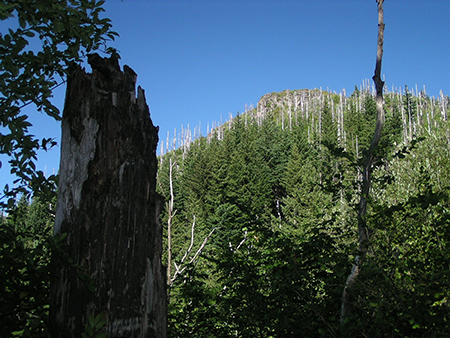
30AngelsRestSummitApproach2004

Young conifers growing among the snags from the 1991 Multnomah Falls fire in 2004

For those of us at (or past) the middle of our lives, our memories of what was will have to fill some of the void we feel. But younger visitors to the Gorge will see whole new forests grow among the bleached snags that will soon mark much of the burn area, and the very youngest visitors will live to see tall forests grow here, again.
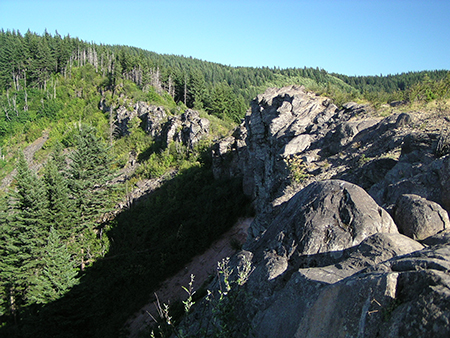
31AngelsRestSummitFormation2004

2004 view of young trees rapidly filling in the 1991 burn area above Angels Rest

What will the recovery look like? The 1991 Multnomah Falls Fire gives us the best glimpse into what to expect as the Eagle Creek recovery unfolds. For those who were around in 1991, the Multnomah Falls Fire swept from the falls west to Angels Rest, scorching much of the Gorge wall along the way. I’ve included a few photos of the burn area taken in 2004, just 13 years after the fire.

At that point in the recovery, trees killed by the 1991 fire still dominated the landscape, but a young forest seemed to be exploding from the burn area, with conifers already 10-15 feet tall and growing quickly. Today, some of these trees are twice that tall, and on the way to becoming a mature forest canopy.
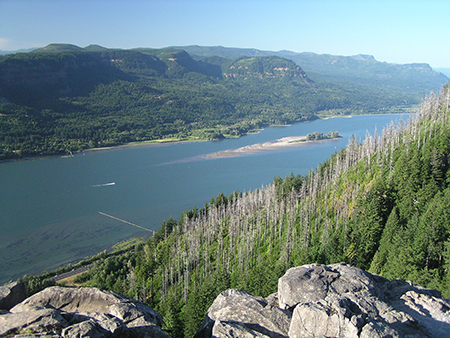
32AngelsRestSummitView2004

2004 view of the 1991 Multnomah Falls burn, with young trees rapidly overtaking the ghost forest of burned trees

It shouldn’t be a surprise to discover that the Gorge ecosystem can recover quickly and without our help. But with thousands of people living in the Gorge and millions visiting each year, we will also need to learn how to accept fire as part of the forest cycle if we hope to avoid catastrophic burns like the Eagle Creek Fire in the future.

What will that take? One essential tool will be prescribed burns. These are purposely set fires designed to burn a relatively small, controlled area with a relatively cool fire that most of the forest canopy can survive. The goal of a prescribed burn is a mosaic pattern like those found in parts of the Eagle Creek Burn where the fire intensity was less and allowed most trees to survive.
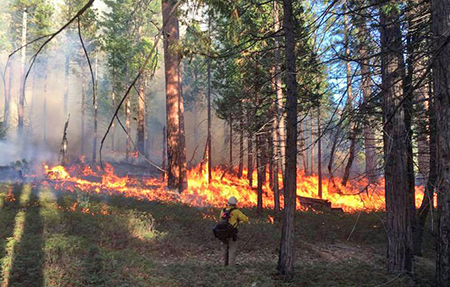
33YosemitePrescribedBurn2015

2015 prescribed burn in Yosemite National Park (National Park Service)

Prescribed burns are typically set in late fall, when humidity is high and the rainy season is near and can be counted on to completely extinguish the fire. The Eagle Creek burn occurred in late summer when humidity was low, the forests very dry after two months of drought and the first substantial fall rains were weeks away. The famous Gorge winds only added to the volatility. These conditions combined to allow the fire to burn hot and spread for weeks.

Prescribed burns are now an accepted forest practice, and increasingly used by the Forest Service and National Park Service to reverse the harm done by a century of fire suppression. But preventing future fires on the scale of the Eagle Creek Fire will also require all of us to accept limits on how we use the Gorge. This may be more difficult to accept than prescribed burning, especially given the patchwork of public agencies responsible for managing the Gorge.

What sorts of limits are needed? Restored trails in the burn area will be vulnerable for years to come, and subject to more damage if the same level of foot traffic experienced before the fire is allowed to return. The public agencies that manage the Gorge will need to define and identify reasonable carrying capacities for the most popular trails, and enforce access limits with trail-specific permits, parking management and by offering new trail options for a growing region.
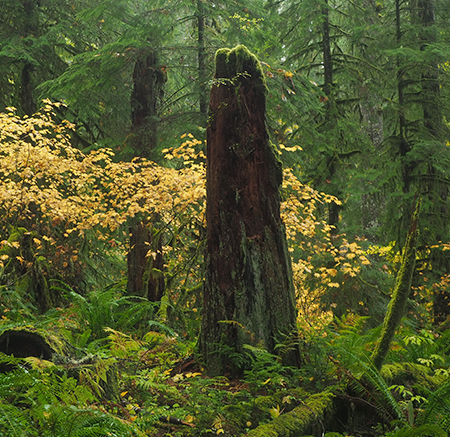
34ButteCreekBurnStump

Our children’s grandchildren will experience the Eagle Creek burn like this: scattered ghost stumps from today’s burned trees among a green rainforest of 100-year old trees

Seasonal limits may be required, too. The Gorge was a tinderbox waiting to burn last September when the Vancouver teen tossed fireworks into the Eagle Creek canyon, starting the fire. But it could have easily started from an untended campfire or careless smoker, too.

In the future, seasonal trail limits and temporary closures should also be considered when fire conditions in the Gorge are especially dangerous. This could not only help prevent overly destructive burns in the forests that still remain, but also acknowledges that thousands of Gorge residents and their homes were also threatened by the fire. Their safety should be a core consideration in deciding when to close Gorge trails because of fire risk.

Changes to current management practices will be hard to bring about with a reluctant public, but the Eagle Creek Fire might have given us the perfect moment to educate ourselves on the need to change our ways and think about how our impact on the Gorge will play out for future generations. While much was lost in the fire, we’ve also been given a unique opportunity to change course for the better. I’m optimistic that we will!
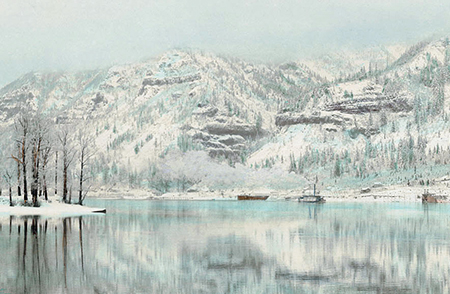
35ColumbiaYeonStateParkKiserBros1902

Back to the future: the Gorge was recovering from an earlier fire in this 1903 view (WyEast Blog)

[click here for a large image]

I chose the above, hand-colored photo to close this two-part article, as it provides needed perspective of our place in the broader cycle of life in the Columbia Gorge. This Kiser Brothers image was taken in 1903 from a spot just downstream from Beacon Rock, on the Washington side of the river. Across the still, reflective Columbia, the cliffs marking McCord Creek canyon can be seen, with the snow-covered slopes of Nesmith Ridge and Wauneka Point rising above.

In 1903, the Oregon side of the Gorge was just beginning to recover from an extensive fire that swept a good portion of what we now know as the Eagle Creek Burn. Past is prologue, and this is what the Gorge will look like in our immediate future, as another burn cycle unfolds.

While it’s very different scene than the green forests we have enjoyed, it’s also undeniably beautiful in a rugged, wild way. The fire is part of an essential cycle, and more importantly, an opportunity for all of us to rethink how we care for our Gorge.

I’ve also included a link to a large version of the Kiser Brothers photo, and encourage you to print a copy to hang on a bulletin board or your refrigerator as part of learning to embrace the Eagle Creek burn. This snapshot from the distant past has helped me begin to embrace the new reality of the Gorge, and I hope will help you, too.

Thanks for reading!

________________

Author’s note about the photos: a friend of the blog pointed me to the amazing cache of photos featured in this two-part article, and while you could probably acquire them from the State of Oregon, I would encourage you to let our public agency staff focus their time on the Gorge recovery, not chasing down photo requests.  

With this in mind, I’ve posting the very best of the photos here, and have included links to very large images for those looking to use or share them. These photos should be credited to “State of Oregon” where noted in this article, not this blog. They are in the public domain.

________________
After the Fire: A Closer Look (Part 1 of 2)

00aAinsworthTrail

Burned sign along Gorge Trail 400 in January (Tom Kloster)

 State Park and Forest Service rangers and local trail volunteers have been busy this winter assessing the impact of the Eagle Creek Fire. A few photos have been released from their trips into the still-closed burn zone, showing extensive damage to many of our favorite Gorge trails. The early glimpses are sobering and much work clearly will be needed to begin reopening trails to the public. More importantly, they gave us the first sense of just how long it will take for the Gorge to recover — and it’s going to take awhile.

In early December, a far more comprehensive set of oblique aerial photos was captured by the State of Oregon as part of assessing the risks for landslides and flooding from the bare Gorge slopes. These amazing photos provide the first detailed look at how our most treasured places in the Gorge fared after the fire. This article features some of the most stunning of these startling images.

00bMultnomahCreek

Weisendanger Falls and Multnomah Creek in better days (Tom Kloster)

My first reaction while first poring over the photos was shock and sadness. Like many of you, the Gorge was (and is) my second home, and it’s still hard to accept that the magnificent green Eden I grew up exploring has been destroyed. I’ll always long for the Gorge as it existing before the fire, even as I watch and learn from the miracle of forest recovery that will unfold in coming years. This is a paradox that we’ll all need to accept.

But moving forward, we also need to refocus our love for the Gorge of memories on the urgent work that lies ahead, not only to restore what was lost, but also set a new direction for how this amazing place can be sustainably managed in perpetuity. We owe it to future generations who will only know the old Gorge from our photos to never allow a man-made catastrophe like the Eagle Creek Fire of 2017 be repeated. The lesson from the fire is not just that it was human-caused, but that the fire and its severity resulted from our own unwillingness to set limits on how we manage and use the Gorge. This is our challenge moving forward.

____________________

This article is the first of a two-part series that features the best of the amazing new aerial photos. You can explore a large version of each photo in great detail by clicking on the “large view” link, which will open a 2000×1300 pixel version in a new window or tab. I’ve also enlarged some of the most fascinating highlights from these photos for the article.

Shepperd’s Dell to Multnomah Creek

The first half of the tour covers the west portion of the Eagle Creek Burn, beginning at Shepperd’s Dell, and moving east to the Ainsworth State Park area.

This photo is a birds-eye view looking down at the tiered waterfalls of Young Creek, in Shepperds Dell, and the iconic Historic Columbia River Highway bridge that spans the dell:

01aShepperdsDellThumb

Aerial view of Shepperd’s Dell (State of Oregon)

[click here for a large photo]

Like so many areas within the burn, it sometimes seems like the fire sought out our most treasured places. In this case, the fire wrapped around Shepperd’s Dell, proper, killing trees on top of the domed rock formation at the east (left) end known as Bishop’s Cap and on the cliffs directly above Shepperd’s Dell.

In contrast, the area to the west of Young Creek and Shepperd’s Dell experienced a beneficial burn, with the understory cleared but many of the large conifers surviving:

01bShepperdsDell

Shepperd’s Dell, including the upper tier of the falls (State of Oregon)

This view also reveals the top tier of the four-step waterfall that cascades through the Dell. Though part if the second tier can be seen from the wayside, the tall upper tier is completely hidden by walls of basalt from below.

The historic bridge at Shepperd’s Dell was unharmed by the fire, but some of the stone walls along the west approach were damaged by falling trees, as shown in this view:

02aShepperdsDellThumb

Aerial view of Shepperd’s Dell (State of Oregon)

[click here for a large photo]

The historic footpath that descends to the lower tier of waterfalls in Shepperd’s Dill is not significantly damaged, though it is vulnerable to falling rock and debris from the burned cliffs, above. Rangers have therefore closed this trail for safety reasons, for now.

This close-up view (below) shows the picturesque stand of Oregon white oak growing on a prominent basalt outcrop next to Shepperd’s Dell bridge. These trees were scorched by the fire, but still hold their browned foliage, so it’s unclear if these will survive. We’ll know if they leaf out this spring.

02bShepperdsDell

Historic Shepperd’s Dell bridge (State of Oregon)

Next up, a photo that provides a close look at the popular Angels Rest trail. This view shows the north side, where the switchbacks along the upper section of the trail are clearly visible:

03aAngelsRestThumb

Aerial view of Angels Rest (State of Oregon)

[click here for a large photo]

This part of Angels Rest burned in the 1991 Multnomah Falls Fire, and was still recovering last year when the Eagle Creek Fire swept through. A comparison of how these burns overlapped on Angels Rest is included in this earlier article on the fire.

One interesting lesson from the fire is how living trees don’t really “burn” thanks to their water content, even if a tree is killed by the heat. Instead, the wood in killed trees usually survives fully intact, becoming bleached snags as burned park peels off in the year or two following the fire. Because the unburned wood is so sound, snags from fires as far back as the early 1900s are still standing in many places around the Cascades.

Yet, many of the dried-out, bleached snags from the 1991 Gorge fire were burned to nothing but stumps of charcoal. This was true throughout the burn, where dead trees and old snags from previous fires were reduced to ashes in places while nearby living trees often survived the fire with only a blackened trunk.

03bAngelsRest

Detailed view of the Angels Rest Trail (State of Oregon)

This photo shows Angels Rest from the west, also with the upper switchbacks along the trail leading to the summit:

04aAngelsRestThumb

Aerial view of Angels Rest (State of Oregon)

[click here for a large photo]

While the north side of Angels Rest burned hot enough to char the landscape down to blackened soil, the west side fire seems to have been less intense, with much of the understory appearing to survive, and many of the old snags from the 1991 burned black, but still standing along the lower edge of this close-up view (below).

04bAngelsRest

Detailed view of Angels Rest Trail (State of Oregon)

Moving east, the next photo shows the fire’s impact on Wahkeena Falls, among the more hallowed spots in the Gorge. While the burn affected slopes on both sides of the falls, much of the forest here survived the flames.

05aWahkeenaFallsThumb

Aerial view of Wahkeena Falls (State of Oregon)

[click here for a large photo]

A closer look shows Lemmon’s Point (the overlook east of the falls) to have burned, along with the steep cliffs to the west of the falls. Other photos in the set show the Wahkeena Trail above the falls to be heavily affected by the fire, with a lot of debris and fallen trees covering this iconic trail.

05bWahkeenaFalls

Detailed view of Wahkeena Falls (State of Oregon)

News coverage has provided many views of Multnomah Falls since the fire began, but the new set of aerial views gives a much better look at the impact of the fire on the area. Like Wahkeena Falls, the fire here raged around the falls but left many of the big trees scorched, but alive.

As shown in this photo, the most heavily impacted area near the falls is along the cliffs east of Multnomah Creek, where the Larch Mountain Trail begins its many switchbacks to the top of the falls, and on the steep slopes directly above the falls:

06aMultnomahFallsThumb

Aerial view of Multnomah Falls (State of Oregon)

[click here for a large photo]

This close-up view shows the low bluff to left of the falls to have been more significantly impacted. The Larch Mountain trail passes through this section of burned forest:

06bMultnomahFalls

Close-up view of fire damage below Multnomah Falls (State of Oregon)

This photo shows a bit more of the west side of the falls and a peek into the Multnomah Creek canyon, above Multnomah Falls:

07aMultnomahFalls

Aerial view of Multnomah Falls and lodge (State of Oregon)

[click here for a large photo]

A closer look at this photo (below) shows burned trees along Multnomah Creek, just above the falls, and along the ridge to the east of the falls that marks the high point for hikers following the Larch Mountain Trail to the viewpoint at the top of the falls. The Forest Service reports that the viewing platform there was undamaged by the fire, though the spur trail to the viewpoint has been impacted by falling debris.

07bMultnomahFalls

Close-up view of the canyon just above Multnomah Falls (State of Oregon)

This photo from just east of Multnomah Falls (below) provides a better look at the slopes where the Larch Mountain Trail scales the Gorge wall. Here, a mosaic burn has left many trees standing, which bodes well for this steep slope holding together as the recovery begins, but will also mean years of falling debris from killed trees and loose slopes for trail crews to clear.

08aMultnomahFallsTrailThumb

Aerial view of the east side of Multnomah Falls (State of Oregon)

[click here for a large photo]

This close-up look at the photo reveals the upper switchbacks of the Larch Mountain Trail as it approaches the ridge crest:

08bMultnomahFallsTrail

Close-up view of the Larch Mountain Trail where it climbs to the top of the falls (State of Oregon)

One of the challenges here will be keeping hikers on the trail, as switchback cutting has been a perennial problem in the Gorge, and especially along this very popular route. The fire provides an opportunity to better educate visitors about the damage that cutting trails can cause, but will require close coordination among state and federal land managers, and help from trail advocates.

This photo (below) provides a view down Multnomah Creek canyon from (roughly) above the Wahkeena Trail junction, and gives a good sense of how the forests here fared. Though heavily burned, much of the burn pattern is still a mosaic pattern. If the living trees in this photo survive their first summer of drought stress after the fire, they should recover quickly and help the surrounding forest regenerate.

09aMiddleMultnomahCreekLarchMtnTrailThumb

Aerial view of Multnomah Creek canyon (State of Oregon)

[click here for a large photo]

This closer look at the photo (below) gives an excellent sense of how fire affects forests in a mosaic burn. While some trees were killed outright by the heat of the fire, others survived with some or all of their living canopy intact.

09bMiddleMultnomahCreekLarchMtnTrail

Close-up view of the burn along Multnomah Creek (State of Oregon)

When fires are hot enough to explode into tree canopies, fire fighters call this “crowning”, and it almost always means the tree will die. Less heat means that the cambium layer can survive under thick-barked older trees, and fires that don’t rage into the crowns of trees allow foliage to survive, as well.

If the fire burns low to the ground and with less heat, trees like Douglas fir have evolved to have thick, fire-resistant bark that can survive this stress. Even in a relatively small area, as shown in the above photo, all of these fire behaviors can play out leaving a mosaic of living and killed trees. The mosaic effect, in turn, not only allows for a faster rebound of the burned forest and less erosion, but also provides a more diverse ecosystem that benefits the most plant and animal species. Before our intervention over the past century of fire suppression, mosaics from fire were the normal state of our forests.

This is the crux of why prescribed burning — the practice of purposely setting forest fires in a controlled manner to reduce fuels and rejuvenate the understory — is the most ecologically sound path forward for the Gorge. Prescribed fires are usually set in late fall, when the approaching rainy guarantees a short burn and cooler weather encourages fires that are less hot and burn closer to the ground.

For the next photo (below), you’ll need to adopt the perspective of a dive-bombing bird, as this is a near-vertical view of Weisendanger Falls (the splash pool is at the bottom of the photo) on Multnomah Creek (which flows up in this view). This is the first big waterfall above Multnomah Falls, and though a few trees around the falls were scorched, the forest canopy here mostly survived.

10aMultnomahCreekWeisendangerFallsThumb

Aerial view of Weisendanger Falls on Multnomah Creek (State of Oregon)

[click here for a large photo]

A closer look at this photo (below) shows the Larch Mountain Trail switchbacks that climb above the creek at Weisendanger Falls. Like the switchbacks on lower parts of the trail, this area will require some diligence to keep hikers cutting the switchbacks in the absence of an understory that was burned off in the fire.

Education will be key, as there are simply too many burned switchbacks throughout the Eagle Creek Burn to protect with barriers or other physical means, and these fragile slopes will only recover if they’re left undisturbed.

10bMultnomahCreekWeisendangerFalls

Close-up view of the trail below Weisendanger Falls (State of Oregon)

To give a sense of what happened here, this is what Weisendanger Falls looked like from the first switchback along this section of trail a few years ago, before the fire. The good news is that many of the tall conifers here survived the fire, though the lush understory in this old view will take many years to recover.

10cWeisendangerPortrait2008

Stately Weisdanger Falls before the fire (Tom Kloster)

Here’s another birds-eye photo of Multnomah Creek, just upstream from the previous image. This view shows Ecola Falls at the center, the third and final large waterfall on Multnomah Creek, with the creek flowing to the left in this view:

11aMultnomahCreekEcolaFallsThumb

Aerial View of Ecola Falls on Multnomah Creek (State of Oregon)

[click here for a large photo]

A closer look at the photo (below) shows the brink of Ecola Falls more clearly (on the left side of the image), as well as the burned-off cliffs at the top of the photo, above the falls. What shows up here as a brown slope is actually a basalt wall that was once covered in green moss and ferns — you can see a surviving sliver of moss clinging to a vertical section of the cliff in the upper left corner of the photo.

11bMultnomahCreekEcolaFalls

Close-up of the top of Ecola Falls (State of Oregon)

While it won’t happen overnight, the “re-mossing” of burned cliffs and talus slopes in the Gorge will occur in the relative near term of the next decade or so. How do we know this? From recent rock falls and slides in the Gorge, where raw surfaces have been “re-greened” after just a few years of exposure to the cool, wet rainforest environment.

What did Ecola Falls look like before the fire? Most never saw the falls from stream level, as the Larch Mountain Trail passed above the brink of the falls atop a high cliff. But a steep descent into the canyon provided this stunning view for waterfall chasers:

11cMultnomahEcolaFalls2012

Beautiful Ecola Falls before the fire (Tom Kloster)

The understory burned away here, too, though many of the large conifers around Ecola Falls survived. Trees killed by the Eagle Creek fire will eventually drop into Multnomah Creek and in the future, and for many decades to come, we will see log piles accumulate below the major waterfalls.

While this may take some getting used to, log piles were a normal part of stream ecology before fire suppression and logging. This scene along a wild section of Mount Hood’s Salmon River is typical of what our waterfalls once looked like:

11dFrustrationFalls

Log-filled Frustration Falls on the Salmon River in the early 1960s (USFS)

Beyond aesthetics, in recent years stream ecologists have learned that logs and woody debris in streams are an essential ingredient to healthy fish habitat. So in this way, we’re simply returning to the way things have always been in the Gorge, and the coming wave of logs is only new to our eyes.

This photo is from below Larch Mountain, looking down Multnomah Creek toward Multnomah Basin, in the distance. Large stands of old-growth forest dodged the fire here:

12aUpperMultnomahCreekLarchMtnTrailThumb

Aerial view of upper Multnomah Basin (State of Oregon)

[click here for a large photo]

A closer look at this photo (below) shows the Larch Mountain Trail where it traverses a large talus slope along Multnomah Creek:

12bUpperMultnomahCreekLarchMtnTrail

Close-up of the Larch Mountain Trail and Multnomah Basin

In many areas, the fire seems to have skipped over talus slopes like this, hopefully allowing the unique, low elevation population of Pikas that live in these areas of the Columbia Gorge to survive the burn. We’ll know soon enough, as the Gorge Pikas are active year-round, and their distinctive “beep” is unmistakable for passing hikers.

What did upper Multnomah Creek look like before the fire? Here’s a view of the big conifers that lined much of the creek before the burn:

12cUpperMultnomahCreek2011

Upper Multnomah Creek before the fire (Tom Kloster)

In many areas, these trees seem to have survived, though many were lost to the fire. We’ll know the full impact of the fire in the next year or two, after trees that survived the burn have faced their first summer drought and subsequent winter season.

Oneonta Creek to Ainsworth State Park

The following series of images are especially tough to look at. For many, Oneonta Creek is (or was) second only to Eagle Creek for its spectacular waterfalls, famous slot gorge and — until now — magnificent forests. All of this has changed.

As the following photos show in jarring detail, the forests of the lower Oneonta Creek canyon were almost completely destroyed by the fire, with only a few scattered trees surviving. Worse, many of these surviving trees are still fire damaged and likely to die under the added stress of drought next summer.

This photo (below) looks up the canyon from the mouth of Oneonta Gorge, and tells the hard story: a few trees on the west slope of the gorge survived, but the canyon beyond is completely burned. Scorched Oneonta Falls can be seen at the head of mile-long Oneonta Gorge in this view:

13aOneontaGorgeThumb

Aerial view of the devastation at Oneonta Gorge (State of Oregon)

[click here for a large photo]

A closer look at Oneonta Gorge (below) shows the devastation more clearly. One of the obvious impacts of the fire is that the infamous logjam at the lower entrance to the gorge is about to get a LOT bigger, as burned logs begin to roll into Oneonta Creek by the hundreds over coming decades.

While the logs will benefit the ecological health of the creek, the logjam in Oneonta Gorge could prove catastrophic to the historic highway bridges downstream, as described in this earlier article on the blog. The fire may finally spur some sort of intervention by ODOT and the Forest Service to remove the logjam.

13bOneontaGorge

Close-up of Oneonta Gorge (State of Oregon)

The aftermath of the fire also provides the Forest Service with an opportunity to finally close Oneonta Gorge to swarms of teenage waders who overwhelm this place each summer. It’s time give this precious place a much needed rest from the crush of people who have “discovered” it in recent years, and in the long-term, severely restrict access with an enforced permit system.

13cOneontaGorge

The summer conga line of kids waiting to cross the logjam at Oneonta Gorge (photo: John Speth)

The fire also burned away the wood lining of the recently restored Historic Highway tunnel at Oneonta Bluff, on the left in the above photo, and shown in the photo below. This is another opportunity for a reboot of this historic feature.

13dOneontaTunnel

Oneonta waders had already destroyed the historic tunnel before it burned in last year’s fire (Tom Kloster)

ODOT should absolutely rebuild the historic wood lining, but as thousands of young people proved by thoughtlessly carving their names and messages into the soft cedar surface, the public can’t be trusted with uncontrolled access to this restored treasure.

If it is rebuilt, the tunnel must be securely gated, and only opened on weekends when visitors can be monitored by agency staff or volunteer. This is one of many examples where we have a unique opportunity to set limits on how we use the Gorge, and ensure we pass it along to future generations in better shape than what we inherited.

This photo of Oneonta Bluff, taken above the tunnel and east of Oneonta Gorge, shows a few interesting details on the behavior of the fire:

14aOneontaBluffThumb

Aerial view of Oneonta Bluff (State of Oregon)

[click here for a large photo]

This close-up view (below) from the left side of the photo shows how the fire burned away a segment of the cliff face, while leaving ferns, moss and a few trees clinging to an untouched section of cliff, just feet away. The understory at the top of the cliff was completely burned, but a stand of Douglas fir survived to help begin the recovery here. The Horsetail Creek trail passes through this stand of trees on Oneonta Bluff.

14bOneontaBluff

Close-up of burn patterns on Oneonta Bluff (State of Oregon)

A closer look at the burned crest of the bluff (below) shows trees cut several feet above the ground. These trees were removed after the fire because of their falling hazard to the highway below, not as part of the fire fighting effort:

14cOneontaBluff

Logged trees above the historic highway on Oneonta Bluff (State of Oregon)

This photo of the entrance to Oneonta Gorge (below) shows the cliff walls inside the gorge green and intact — an encouraging sign that the rare plant and animal species that live here may have survived the burn.

15aOneontaGorgeLogjamThumb

Aerial view of the logjam in Oneonta Gorge (State of Oregon)

[click here for a large photo]

A closer look at this photo (below) shows the logjam at the entrance to Oenonta Gorge already growing with new logs released by the fire:

15bOneontaGorgeLogjam

Close-up view of the logjam in Oneonta Gorge (State of Oregon)

This close-up view (below) shows good detail of trees that survived the fire on the cliffs above Oneonta Gorge, despite having their lower trunks burned black in the blaze:

15cOneontaGorgeLogjam

Trees that survived the flames on the cliffs above Oneonta Gorge (State of Oregon)

Moving upstream, this photo (below) provides startling detail of the Oneonta Trail, much of it heavily impacted by the fire. This photo also shows the lower Oneonta footbridge, located just above Oneonta Falls where it drops into the narrow slot of Oneonta Gorge:

16aOneontaLowerBridgeOneontaGorgeThumb

Aerial view of the devastation above Oneonta Gorge (State of Oregon)

[click here for a large photo]

Sadly, the forest was completely killed in this idyllic spot. In this close-up view of the photo (below), Oneonta Bridge Falls, the small cascade above the bridge, can be seen with the first of what will be many more logs filling this stream in decades to come. And while the lower Oneonta footbridge seems to have survived the fire intact, the steep, terraced switchbacks climbing the canyon east of the bridge appear to be heavily impacted by erosion that followed the fire.

16bOneontaLowerBridgeOneontaGorge

Close-up of the fire damage above Oneonta Gorge (State of Oregon)

What did this spot look like before? This is the verdant scene that existed here until last September, as viewed from the footbridge looking downstream at the brink of Oneonta Falls where drops into the narrow gorge, beyond:

16eOneontaLowerBridgeView2008

Looking over the top of Oneonta Falls and into Oneonta Gorge before the fire (Tom Kloster)

How soon will this area recover? The forests will take decades to return to Oneonta canyon, but the understory will bounce back much more quickly. In this close-up view from the aerial photos, ferns and moss on the steepest walls of the canyon near the lower Oneonta Bridge survived the fire, and will help fuel the recovery here:

16cOneontaLowerBridgeOneontaGorge

Close-up of the lower Oneonta footbridge (State of Oregon)

This close-up view (below) of the terraced switchbacks to the east of the lower Oneonta footbridge shows Licorice ferns surviving along the vertical stone walls, marking the otherwise buried trail:

16dOneontaLowerBridgeOneontaGorge

Close-up of the steep switchbacks on the east side of the bridge (State of Oregon)

Another surprising lesson from the fire is the important role of the ubiquitous Licorice fern and the moss carpets they inhabit in holding loose rock and talus slopes together in the Gorge. These tiny plants are the living glue that keep the Gorge slopes intact. Fortunately, these will also be among the first plants to return to burned areas.

This photo (below) captures Oneonta canyon from Oneonta Bridge Falls (at the bottom, marked by a log lying across the falls) to little-known Middle Oneonta Falls, in the huge basalt cavern at the top of the photo. The terraced switchbacks above the lower Oneonta footbridge can also be seen in the lower left corner of this view:

17aMiddleOneontaFallsOneontaBridgeFallsThumb

Aerial view of devastated Oneonta Creek canyon (State of Oregon)

[click here for a large photo]

This closer view (below) gives a good sense of what we can expect to see over the next few years throughout the burn zone: deep erosion where burned trees and an absence of understory vegetation leaves steep slopes exposed. This view shows a small landslide that has already toppled several burned trees into the canyon:

17bMiddleOneontaFallsOneontaBridgeFalls

Close-up view of a landslides triggered by the fire (State of Oregon)

Waterfall explorers have long visited beautiful Middle Oneonta Falls and its deep cave by following a steep, sketchy boot path on the west side of the canyon. In recent years, a major landslide not only took out the Oneonta Trail, proper, but also this little-known boot path, completely blocking the descent to the middle falls.

This photo of Oneonta canyon (below) shows what waterfall lovers have dreamed of for years: a clear route for a future trail along the east bank of the creek to Middle Oneonta Falls. While the fire has impacted the forest here for generations to come, it also brings an opportunity to enhance the trail network as part of the restoration with a once-in-a-century view of the landscape laid bare.

18aMiddleOneontaFallsThumb

Aerial view of little-known Middle Oneonta Falls (State of Oregon)

[click here for a large photo]

These close-up views (below) from the previous photo show Middle Oneonta Falls in fine detail. The forest and understory here were completely destroyed by the fire:

18bMiddleOneontaFalls

Middle Oneonta Falls (State of Oregon)

18cMiddleOneontaFalls

Middle Oneonta Falls and its huge cave (State of Oregon)

What did Middle Oneonta Falls look like before the fire? It was among the most idyllic spots in the Gorge, though rarely seen. Here’s a photo from better days, when it was a sylvan paradise:

18dMiddleOneontaFalls2006

Beautiful Middle Oneonta Falls before the fire (Tom Kloster)

The grove of Douglas fir on the left side of this image were 50-70 years old before the fire destroyed them, so while I won’t live to see this scene restored, many in today’s Millennial generation will. It’s difficult to confront the loss, but these images from before the fire will be important for younger generations as a visual reminder of what coming the Gorge restoration is working toward.

The following is perhaps the most difficult to view of the new aerial photos of Oneonta canyon. This view shows Triple Falls, the best-known scenic highlight of the Oneonta Trail and one of the most photographed, picturesque scenes anywhere. The fire killed the entire forest and completely erased the understory here:

19aOneontaCreekTripleFallsThumb

Aerial view of the devastation at Triple Falls (State of Oregon)

[click here for a large photo]

This closer look at the photo (below) shows the braided spur trails leading to the exposed viewpoint opposite the falls. The fire burned hot here, rolling into the crowns of many trees, as indicated by blackened bark extending to the tops of tree trunks:

19bOneontaCreekTripleFalls

Close-up view of Triple Falls and the viewpoint trail (State of Oregon)

What did Triple Falls look like before the fire? It was one of the most visited and iconic scenes in the Gorge. Only today’s younger Millennials will see anything like this again in their lifetimes:

19eOneontaCreekTripleFalls2015

The iconic scene at Triple Falls before the fire (Tom Kloster)

The upper Oneonta footbridge at Triple Falls was also heavily damaged by the fire, and may be completely compromised. As this close-up view (below) shows, the decking and railings are completely burned away, and the log span may also be burned beyond repair:

19cOneontaCreekTripleFalls

Burned-out upper footbridge above Triple Falls (State of Oregon)

The burned-away understory (below) also reveals lost trail segments at the Triple Falls viewpoint. A close look at this image shows an upper, abandoned trail alignment (complete with stone wall) that likely dates back to the Civilian Conservation Corps, but had been lost in the undergrowth. The modern route is the most prominent trail in the center of this trail maze:

19dOneontaCreekTripleFalls

Network of new and old trails at the viewpoint revealed by the fire (State of Oregon)

The burn gives the Forest Service an opportunity to rethink and redesign the trails at this overlook, where heavy foot traffic was already causing serious erosion and loss of vegetation, even before the fire swept through last fall.

This photo (below) of the upper Oneonta Canyon shows that it fared better than the steep lower canyon in the fire, as revealed in this view from above the confluence of Oneonta and Bell creeks:

20aUpperOneontaCanyonBellCreekThumb

Aerial view of upper Oneonta canyon at Bell Creek (State of Oregon)

[click here for a large photo]

A closer look at this photo (below) shows a mosaic burn, with large stands of ancient conifers surviving the blaze, while others were less fortunate:

20bUpperOneontaCanyonBellCreek

Close-up of ancient forests in the upper Oneonta canyon (State of Oregon)

Another close look at this photo (below) shows that the fire often killed young, recovering forests (from past fires) while older, nearby stands survived:

20cUpperOneontaCanyonBellCreek

Burn pattern detail in the upper Oneonta Canyon (State of Oregon)

While counter-intuitive at first glance, this is another important lesson from the Eagle Creek fire: part of the natural selection process in our forests is the ability for trees to grow fast, large and tall enough to survive periodic fires, thus surviving to generate the seedlings that will begin the recovery of the surrounding burn.

Moving east from the tragically scorched Oneonta canyon, the scene along nearby Horsetail Creek is somewhat less devastating, as this photo from above Horsetail Falls shows:

21aHorsetailFallsCanyonThumb

Aerial view of Horsetail Falls and canyon (State of Oregon)

[click here for a large photo]

A closer look (below) at familiar Horsetail Falls shows many of the big conifers around the falls surviving, even though the fire swept down to the edge of the Historic Columbia River Highway. The Horsetail Creek Trail can be seen climbing the slope to the left of the falls in this view, and appears to be somewhat impacted by falling trees and debris.

21bHorsetailFallsCanyon

Close-up of the fire impact on Horsetail Falls (State of Oregon)

This close-up view of the photo (below) shows the sharp contrast in the severity of the burn in the Oneonta canyon (blackened area to the right) and the Horsetail canyon (mosaic burn to the left). This detail shows how topography and wind patterns work together to determine the path and severity of forest fires:

21cHorsetailFallsCanyon

Contrasting burn patterns along the divide between Horsetail and Oneonta canyons (State of Oregon)

Fans of the informal Rock of Ages trail will find rough going in the future along this informal route that climbs above Horsetail Falls. In this close-up view (below), the entire ridge appears to be burned over. Because the trail is not officially recognized or maintained, falling debris and erosion will take a toll on this route, even if hikers work to keep the unofficial route open.

21dHorsetailFallsCanyon

Fire impact on Rock of Ages ridge (State of Oregon)

This vertical photo (below) of Horsetail Falls and Ponytail Falls from directly above shows that much of the forest canopy along the lower section of Horsetail Creek survived the fire:

22aHorsetailFallsPonytailFallsThumb

Birds-eye aerial view of Horsetail Falls and Ponytail Falls (State of Oregon)

[click here for a large photo]

A closer look (below) at this photo shows a few killed trees near Ponytail Falls, but mostly a green canopy sufficient to carry most of these trees through next summer’s drought and to long lives ahead:

22bHorsetailFallsPonytailFalls

Close-up of Ponytail Falls showing the scope of the burn (State of Oregon)

22cHorsetailFallsPonytailFalls

What did Ponytail Falls look like before the fire? It was yet another green grotto in the Gorge, framed by graceful stands of Vine Maple. It’s unknown if these small understory trees survived the fire:

22dPonytailFalls2015

Graceful Ponytail Falls on Horsetail Creek in better days (Tom Kloster)

Like the upper Oneonta canyon, the upper Horsetail Creek drainage is largely a mosaic burn. This photo (below) shows large sections of surviving trees that will greatly benefit forest recovery here:

23aHorsetailCreekCanyonThumb

Aerial view of Horsetail canyon, above the waterfalls (State of Oregon)

[click here for a large photo]

A close look at this photo (below) shows Archer Mountain on the Washington side of the Gorge. This view gives a good sense of just how massive the Eagle Creek fire really was, as embers from the fire were carried more than a mile across the Columbia River where they ignited a small fire on the slopes of Archer Mountain.

23bHorsetailCreekCanyon

Closer view of Horsetail Canyon and Archer Mountain, across the Columbia River (State of Oregon)

Firefighters were briefly concerned with the possibility of the fire spreading broadly across the Washington side of the Gorge, but managed to contain the fire to a few acres on Archer Mountain.

The final photo (below) in the first part of this series shows Yeon Mountain and Katanai Rock in the Ainsworth State Park area. The small community of Dodson spreads out at the base of the 3000-foot high Gorge wall in this area:

24aDodsonKatanaiRockYeonMountainThumb

Aerial view of Yeon Mountain and Katanai Rock (State of Oregon)

[click here for a large photo]

The fire was surprisingly agile here, burning ancient trees perched on remote ledges across the 3-mile long cliff face here (below). The vertical topography protected many old trees, too, where many isolated giants remained out of reach from the flames. The geology of this area is notoriously unstable, with frequent rock falls and mudflows. The loss of forests to fire here is expected to accelerate erosion for decades to come.

24bDodsonKatanaiRockYeonMountain

Close-up view of burn pattern on Katanai Rock (State of Oregon)

One such mudflow spilled down these slopes in the 1990s, burying a farmhouse to the second story and spreading across Interstate-84, closing the freeway for days. This mudflow had since grown a dense stand of Cottonwood and Red Alder trees (below), obscuring the abandoned, buried farmhouse over the past quarter century.

24cDodsonKatanaiRockYeonMountain

Detailed view of the 1990s landslide near Dodson, now burned over by the Eagle Creek Fire (State of Oregon)

Surprisingly, the Eagle Creek Fire seemed to seek out this young stand of trees, burning it entirely, and finally destroying what was left of the old farmhouse, which can be seen as a rectangle of white ashes in the close-up view, above. Older conifer forests (on the right) bordering the mudflow survived the flames, as did irrigated fields where fence lines served as firebreaks. Scenes like this help us better understand how fires shape the evolution of our forests over time.

Looking ahead…

These photos are hard to look at. For so many of us, the Gorge is a sacred place where we go to escape the stress of urban life and ground ourselves in the perfection and serenity of nature at its most sublime. Seeing the once lush, green landscape reduced to blackened tree skeletons and ashes is shocking, to say the least.

But moving forward, every year will mark what is expected to be a rapid recovery. It also offers us a chance to be part of the recovery. If the 1991 Multnomah Falls Fire is our guide, we’ll see young trees established within a decade and new forests well on their way to maturity by the time today’s Millennials begin receiving their Social Security checks.

That’s reassuring, as learning to understand our place in the natural landscape begins with accepting that we are just passing through ecosystems that existed long before us, and will thrive long after we are gone. Our role is to ensure that future generations inherit healthy, thriving ecosystems that are enhanced by our actions, not harmed by them.

25SwordFernSprouting

Sword fern front sprouting from its roots after being scorched by the fire (Tom Kloster)

In the meantime, you can do something about the Gorge recovery right now! How? Sign up for a Trailkeepers of Oregon (TKO) trail project. TKO already has several events lined up beginning in February, and there will be many more events to coming for years to come.

This is a great way to give back and be part of restoring our Gorge trails, and no experience is required — just an able body and passion for the Gorge! If you can dig in your garden or rake leaves, you can be a volunteer on a trail crew. You can also support TKO with a donation through their website.

Next up in Part 2 of this article: McCord Creek, Moffett Creek, Tanner Creek, Eagle Creek and Shellrock Mountain.

________________

Author’s note about the photos: a friend of the blog pointed me to the amazing cache of photos featured in this article, and while you could probably acquire them from the State of Oregon, I would encourage you to let our public agency staff focus their time on the Gorge recovery, not chasing down photo requests.  

With this in mind, I’ve posting the very best of the photos here, and have included very large images for those looking to use or share them. These photos should be credited to “State of Oregon” where noted in this article, not this blog. They are in the public domain.

________________
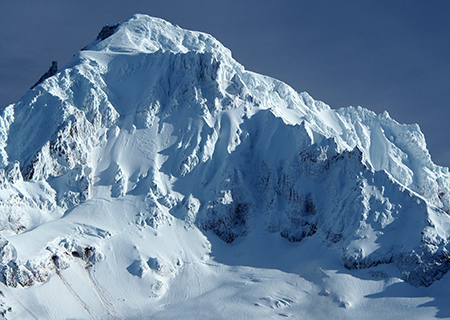
 

2018 Mount Hood National Park Calendar!

00aCoverHoodLoloPassEvening

Mount Hood’s imposing west face is featured on the cover

[click here for a large image]

Each year since the Mount Hood National Park Campaign began in 2004, I’ve published a wall calendar to celebrate the many reasons why Mount Hood and the Columbia River Gorge should be our next national park. You can pick up this year’s calendar here:

2018 Mount Hood National Park Campaign Calendar

The monthly layout remains the same as last year, with a classic “grid” design that serves nicely as a working calendar for kitchens or offices. The finished calendar hangs 14 inches wide by 22 inches tall, with a white wire binding, and the print quality of the photos is excellent!

00bSamplePage

In the past I’ve used calendar sales help cover some of the modest costs of keeping the campaign website and WyEast blog up and running, but beginning this year I will shift to sending all proceeds to Trailkeepers of Oregon, and in turn, TKO’s coming efforts to help recover our Columbia River Gorge trails from the impacts of the 2017 Eagle Creek Fire.

The great thing about putting these calendars together is that it ensures I continue exploring new places in the gorge and on the mountain, as each calendar consists exclusively of photos I’ve taken over the previous year. In this year’s calendar article, I’ll provide some of the stories behind the photos in the new Mount Hood National Park Campaign Calendar — sort of a visual year-in-review!

The WyEast Year in Images

The following is a rundown of the 12 images inside the calendar by month, with a link to a large version of each image, too (you can see them by clicking the link beneath each preview image).

The 2018 calendar begins with the cover image (at the top of the article), featuring the steep Sandy Headwall on Mount Hood’s imposing west face. This is the view Portlanders have of their mountain from afar, but a close-up look from along the Timberline Trail reveals the crevassed Sandy and Reid glaciers tumbling down the slopes and the deep Muddy Fork canyon, almost directly below. This is Mount Hood’s “tallest” side, with a vertical rise of more than 7,000 feet from the Muddy Fork valley floor to the 11,250-foot summit.

The January image in the new calendar features a chilly Cold Spring Creek on Mount Hood’s east slope:

01aColdSpringCreekScene

Cold Spring Creek in Winter

[click here for a large image]

Only a few years ago, the snowshoe hike along Cold Spring Creek to Tamanawas Falls was completely off the radar for most, but in recent years its popularity has soared, and the trailhead is now packed on winter weekends.

One twist this year was a Forest Service noticed tacked up at the trailhead:

01bColdSpringCreekScene

Hmm…

As it turned out, what apparently was a difficult rock fall to negotiate over the summer was much easier to travel with a couple feet of snow covering the debris. The rocks fell in a section of canyon just below the falls that experienced an enormous cliff collapse in the early 2000s, and continues to be active.

For February, I selected a photo from a near-perfect winter day in the upper White River Canyon, along the popular Boy Scout Ridge snowshoe route:

02aWhiteRiverCanyon

Upper White River Canyon

[click here for a large image]

The day began with clear blue skies, which is glorious, of course, but not so great for photography. After reaching a favorite viewpoint in the upper canyon, though, bands of clouds began floating in, making for some memorable scenes of a cloud-framed mountain. The photo below was taken on the way out that day, as evening shadows began to stretch across the lower canyon.

02bWhiteRiverCanyon

White River and Mount Hood

[click here for a large image]

As covered in previous articles, fire in the Columbia River Gorge is as much a part of the ecology as the trees, themselves. But if you had told me the extent of the Eagle Creek Fire last spring, I wouldn’t have believed you.

For hikers, it’s almost like the Eagle Creek Fire was connecting dots among favorite Columbia River Gorge beauty spots, with only a few of the iconic waterfalls that make the Oregon side of the Gorge famous escaping the flames. So, even knowing and accepting that fire is a necessary and beneficial part of the ecosystem still doesn’t blunt the harsh reality that this fire felt personal. And it’s going to take awhile to heal.

As the fire raged west toward Portland last September, my immediate thought was Tanner Creek, the next drainage to the west of Eagle Creek and directly in the path of the inferno. If I had to pick a spot that embodies almost everything that defines the Columbia River Gorge, Tanner Creek’s lower canyon is it, culminating with spectacular Wahclella Falls.

This canyon is as fine a temple as nature can create, and it’s a sanctuary I visit many times each year. This is my most treasured place in the Gorge… and now I wondered “Would it burn?”

03aWahclellaFallsWide

Wahclella Falls on Tanner Creek

[click here for a large image]

03bWahclellaFallsWide

Waterfall enthusiasts visiting the altar at Wahclella Falls last spring

I didn’t know the answer to that question until a week or two ago, when I came upon some aerial photos of the Gorge taken sometime this fall. My scientific acceptance — embrace, in fact — of fire in our forests aside, I was selfishly relieved to see that the deep gorge surrounding Wahclella Falls had somehow been missed by the fire. Or had simply resisted it.

This photo shows Wahclella Falls and its iconic grove of Western Red Cedar mostly intact, though much of the surrounding Tanner Creek canyon was severely burned:

03cWahclellaFallsWide

Wahclella Falls after the fire

Wahclella Falls is at the bottom of the photo, and Tanner Creek’s lesser-known upper gorge and the string of waterfalls that continue above Wahclella Falls can also be seen in this view. This is a place where I hope to see a trail, someday. Maybe in the destruction of the forest we’ll see new trails to places like this, where we take in new sights while also watching our Gorge recover?

For the March image, I selected another Gorge waterfall. This is the last in a string of waterfalls on Moffett Creek, located immediately to the west of Tanner, Creek. This falls is generally known as Moffett Creek Falls or simply Moffett Falls:

04aMoffettFalls

Moffett Falls

 [click here for a large image]

This waterfall is off-trail, and requires walking a mile or so up the streambed of Moffett Creek to reach it. I first visited this falls in the early 1980s, and have returned several times over the years. Sometime in the late 1980s or early 1990s, a massive rock fall occurred here, and completely changed the landscape below the falls and the canyon slopes to the west.

Before the fire, the scene was already one of recovering forests, with young groves of Red Alder flanking the falls and lining the rearranged creek for 100 yards downstream. The Eagle Creek fire was just the most recent calamity to sweep through this spot, and such is the dynamic, often cataclysmic nature of the Columbia River Gorge.

04bMoffettFalls

Snowdrifts on Moffett Creek in mid-April!

Our trip last April was complicated by an extremely late snowpack, following a very wet and snowy winter in the Gorge. The canyon, itself, was a tangle of downfall from the harsh winter, making it a rough trip compared to previous years.

How did the fire affect Moffett Falls? Much more significantly than Wahclella Falls, on nearby Tanner Creek. Like Tanner Creek, Moffett Creek is located just west of Eagle Creek and was in the direct path of the fire during its most explosive, early phase. As this aerial photo taken sometime this fall shows, the entire forest around Moffett Falls appears to have been killed by the flames:

04cMoffettFalls

Someday, I hope to see a trail to Moffett Creek’s waterfalls, too. Who knows, maybe the changes wrought by the fire will allow the Forest Service to consider that possibility? It turns out this idea isn’t new, at all. In fact, it was proposed in January 1916, when the brand new (now historic) Columbia River Highway was about to open:

04dMoffettFalls

Excerpt from The Oregonian (January 30, 1916)

04eMoffettFalls

Map excerpt from The Oregonian showing the proposed Moffett Creek Trail (January 30, 1916)

More about that trail concept, and the need for a long-term trail plan for the Gorge in a future article…!

Did you know that today’s Silver Creek State Park has been proposed to become a national monument or park at least a couple of times in the past? It makes sense, given the spectacular concentration of waterfalls within this beautiful preserve, and especially with the legacy of trails and lodges left by the Civilian Conservation Corps (CCC) during their 1930s heyday. Many believe it to be a national park or monument today!

With this in mind, I selected a scene from a May visit to Silver Creek’s North Fork as a reminder that there are more than simply the show-stopper waterfalls to this amazing place:

05aSilverCreekBoulderScene

North Fork Silver Creek

[click here for a large image]

While our current regime in Washington D.C. is more focused on tearing away protections from our public in order to sell our resources off to corporate interests at bargain prices, it’s also true that the exploitation/conservation pendulum in our country swings both ways.

In some ways, the outrageous anti-environment, anti-science and anti-public lands extremism we’re seeing with the Trump administration has already kicked off a counter-movement. It can’t come soon enough, and hopefully you’ve joined in the opposition, too.

05bSilverCreekBoulderScene

Misty Silver Creek Forest

Someday, when the pendulum does swing, Silver Creek would make an excellent unit of a future Mount Hood National Park. Why? Because the current park contains just a small slice of Silver Creek’s larger ecosystem, and today’s beautiful scenes of waterfalls and mossy glades are increasingly threatened by upstream development and industrial-scale logging. Watch for a future article on this topic, too!

While on the subject of threatened places, the June image in the 2018 calendar captures another such spot on the other side of Mount Hood: Bald Butte, located along the east wall of the Hood River Valley:

06aBaldButteSouthSlopeHood

Mount Hood in late May from Bald Butte’s sprawling meadows

[click here for a large image]

This lovely butte rises directly above the Hood River Ranger Station, so close that Forest Service workers can enjoy the expansive wildflower spectacle from their offices, about a mile-and-a-half away as the crow flies, and some 2,200 vertical feet below.

You’d think being at the Forest Service’s front door would give pause to those who view our public lands as their personal playground to destroy. But Hood River County has a lot of off-highway vehicle (OHV) enthusiasts, and some in that community make a point of illegally driving their jeeps, quads and dirt bikes up the fragile slopes of Bald Butte — despite prominent signage prohibiting their use and periodic efforts to block them.

This is an ongoing battle with rogues that will someday be won, but it will take the OHV community policing itself to make the change happen. There will never be enough Forest Service crews to fill that void.

06bBaldButteSouthSlopeHood

Growing OHV damage to Bald Butte

How bad it is? Well, the old lookout track that serves as the hikers trail to the summit has become deeply rutted by illegal jeep and motorcycle users, which in turn, has inspired them to form parallel tracks on the open wildflower slopes (above). It will take decades for the damage to recover, even if the law breakers were stopped today.

Meanwhile, dirt bikers have hauled in chainsaws in order to carve new trails through the forests on the east slopes of Bald Butte. It’s not a pretty picture, and so far, nobody in the OHV community seems to be stepping up to confront the lawlessness.

06cBaldButteSouthSlopeHood

Dirt bike tracks don’t lie…

The Forest Service has indicated an interest to work with trail organizations (like TKO) to step up the efforts to keep OHV vandals out of Bald Butte, but in the meantime, they’re doing a lot of damage — which, in turn, is a black eye for anyone who enjoys using OHVs responsibly. Let’s hope they will join in the effort to protect Bald Butte, too.

For more about Bald Butte, and comparison photos that show the rapid progression of the OHV damage there, please see this earlier article on the blog – you can read it here.

For the July calendar image, I picked this 3-part composite of the Muddy Fork and Mount Hood. Look closely and you can see the series of towering waterfalls that drop from the hanging valleys on Yocum Ridge, in upper right. This is one of Mount Hood’s most rugged and untamed spots:

07aMuddyForkPanorama

Mount Hood’s Muddy Fork canyon

[click here for a large image]

Though we had a decent snowpack in the Cascades in 2017, it melted fast when summer arrived, and many trails on Mount Hood’s west slopes were opening by late June. So, when college friends David and Robin, from Colorado, called to say they would be in Portland and wanted to spend a day on the mountain, the hike to the Muddy Fork Crossing was the perfect choice!

07bMuddyForkPanorama

Old friends and The Mountain

It turned out to be a bluebird day, but what I found most interesting as we caught up on our parallel lives was their reaction to being in Pacific Northwest alpine country, again. Though David grew up here, he still marveled at the magnificence of our forests, especially the huge Noble fir groves we passed through, and Robin was especially taken with the amount of water, everywhere!

It was a timely reminder for me to never take our unique ecosystems for granted. Colorado has more big peaks than most any state of the country, but we are unique in our abundance or water and the verdant landscape it brings, from our rainforests, streams and lakes to the glaciers that hang from our peaks.

As we head into the uncertainty of climate change in coming decades, we’ll need to learn to view these seemingly abundant resources as precious and threatened, and no longer something to take for granted.

07cMuddyForkPanorama

Finally!

Another surprise along the hike was a new sign — finally! — marking the well-trod “cut off” that shortcuts the Timberline Trail where Bald Mountain (not to be confused with Bald Butte) meets McGee Ridge. I’m sure there was some official slight-of-hand required for the Forest Service to post this junction, as it is simply a user trail, and thus unsanctioned. But it’s a good call that will help hikers better negotiate the maze of trails in this area.

For August, I selected a photo from a favorite meadow perched along a ridge I call the White River Rim. A fragile island of Whitebark Pine, Mountain Hemlock and Subalpine Fir groves grow here, hemmed in on both sides by deep, perpetually eroding canyons of loose sand and boulder.

08aHoodWhiteRiverRimLowerMeadow

Lupine fields on the White River Rim

[click here for a large image]

To the east of the rim is a maze of deep ravines that make up the White River Canyon. As the White River continues to cut into the loose volcanic slopes, here, whole sections of the ridge-top forests and wildflower meadows perched on the rim slide into the canyon.

The Salmon River is gradually eroding the rim from the west, as well, though less voraciously than the White River. In some spots, the flat ridge top is just a few feet wide, and losing ground fast. This is one of the most dynamic areas on the mountain.

The image below is also from along the rim above the White River, looking south and away from the mountain. This view captures the skeleton of a magnificent Mountain Hemlock and its still-surviving grove companions:

08bHoodWhiteRiverRimLowerMeadow

Sentinel Whitepark Pine on the White River Rim

[click here for a large image]

Mountain Hemlock often growth in tight, circular groves, and I suspect botanists will someday discover that these groves communicate in some way as part of their collective strategy for survival, just as Douglas Fir are now known to communicate. Forest ecologist Suzanne Simard summed it us this way:

“I wondered, could Douglas fir recognize its own kin, like mama grizzly and her cub? So we set about an experiment, and we grew mother trees with kin and stranger’s seedlings. And it turns out they do recognize their kin. 

“Mother trees colonize their kin with bigger mycorrhizal networks. They send them more carbon below ground. They even reduce their own root competition to make elbow room for their kids. When mother trees are injured or dying, they also send messages of wisdom on to the next generation of seedlings.

“So we’ve used isotope tracing to trace carbon moving from an injured mother tree down her trunk into the mycorrhizal network and into her neighboring seedlings, not only carbon but also defense signals. And these two compounds have increased the resistance of those seedlings to future stresses. So trees talk.”

Botanists once viewed a dying or dead tree in a grove like this as one whose biomass had grown too large to support in drought periods, but could another explanation be that the larger tree simply opted to turn over the future of the grove to its younger siblings? We still have so much to learn from our forests…

The September image in the new calendar captures an intersection of three threads of good fortune: an afternoon away form work to visit the mountain, clear weather after an early autumn snowstorm and moonrise over Illumination Saddle, the narrow ridge that connect Illumination Rock to the main summit ridges of Mount Hood.

09aHoodWestFaceMoonrise

Moonrise over Illumination Saddle

[click here for a large image]

Time off from work on a clear autumn day was by design, but the moonrise was pure luck. While there are web tools for figuring out celestial paths from any point on the ground, I do confess that I’m not likely to use them. I simply sat at a favorite spot on the summit of Bald Mountain (not Bald Butte!) for an hour or so, waiting for the sunset, and was suddenly treated to the moon emerging over the saddle as an unexpected surprise!

So, why not use the modern tools? Partly, it just seems like a chore in what should be an enjoyable hobby. But I’d also be turning what was a wonderful surprise into one more thing to worry about — and that’s not why I head into the woods, after all. There’s something to be said for turning over the keys to Mother Nature, right?

And on that point, perhaps the best memory from that cold evening on Bald Mountain last fall was watching the sun set through the trees on the hike back down through the ancient Noble Fir forest.

09bHoodWestFaceMoonrise

Winter sunset in the Noble forest

This grove of 300-year old giants somehow escaped the chainsaws when the Clear Fork valley, below, was logged in the 1960s, 70s and 80s. It remains as a rare reminder of what used to be — and what will be again, if we allow it.

For the October image, fall colors were in order, and with the Gorge trails mostly closed by the Eagle Creek Fire, I headed south to Butte Creek, located just north of Silver Falls State Park in the Santiam State Forest. I picked a serene scene along the creek…

10aButteCreekScene

Butte Creek in autumn

[click here for a large image]

…though this peaceful spot is just 100 yards or so above Butte Creek Falls, which was raging that day, after a series of Pacific fronts had rolled through.

Butte Creek Falls is among my favorites, anywhere, and I’ve included it in past calendars. So, thus the quieter stream scene for 2018, but here’s a look at the high water at the falls that day:

10bButteCreekScene

Butte Creek Falls

[click here for a large image]

Even more than nearby Silver Falls State Park, the Butte Creek canyon (and its twin, Abiqua Creek, just over the ridge) is in desperate need of a better management vision, and would make for an excellent extension of a future Mount Hood National Park. More about that in a future article, as well..!

Though I’ve hiked the short loop trail at Butte Creek many times, the fire in the Gorge had forest ecology and the role of fire in my mind on this visit, and noticed a small army of “legacy trees” throughout the rainforest here.

10cButteCreekScene

The skeletons of Butte Creek’s “legacy trees” are hiding in plain sight

These ancient stumps and snags are from the last big fire to come through the area are called “legacy trees” for the benefits they bring from the old forest to the new. This area likely burned more than a century ago, yet the skeletons of the old forest still serve a crucial role in the health of the new forest.

As they slowly decay, old snags and stumps provide habitat for birds and other wildlife, and once fallen, they become “nurse logs”, upon which new trees grow. They also provide nutrients to the precious mountain soil as they decay — something a log hauled off to become lumber or cardboard can never do.

For November in the new calendar, I selected an image from the upper Hood River Valley, with Mount Hood rising above fields owned by a family that has continuously farmed the valley since the 1800s. On this day in late October, the Cottonwood grove at the center of the photo was in peak form, and the fresh coat of snow on the mountain was softened by a light haze in the air from farmers burning orchard trimmings.

11aClearCreekFieldsHood

Upper Hood River Valley in autumn

[click here for a large image]

But this wasn’t my first attempt at the photo! As shown below, I’d stopped here a couple of weeks earlier, after another early snowfall had blanketed the mountain. At that point, the Cottonwoods were still in their summer green, but what a different two weeks makes! I’ve cropped images from both visits identically for comparison:

11bClearCreekFieldsHood

Hood River Valley scene in mid-October…

11cClearCreekFieldsHood

…and two weeks later!

Notice how much sharper the mountain was on the earlier visit? It could have been wind conditions sweeping away smoke from orchard fires that day, or perhaps the burning season hadn’t begun, yet? Nonetheless, I liked the depth created by the haze in the second view, too.

For the December image, I picked this view of Tamanawas Falls on Cold Spring Creek, captured the same day as the opening photo of the creek in the January image. This is always a magical spot, but I’ll share a couple of details about the trip that made the day memorable.

12aTamanawasStreamWide

Tamanawas Falls on Cold Spring Creek

[click here for a large image]

First, it’s always an icebox in Cold Spring Canyon in winter. Why? Because the low sun angle in winter months can’t reach the canyon floor due to the steep terrain in all directions. So, while the above image looks like it was taken on an overcast day, the view straight up was of a bright blue sky.

The image below shows the cliff section where the recent rock fall occurred, and you can see that the trees on the canyon rim are basking in sun and have shed much of their snow.

12bTamanawasStreamWide

Sunshine above, icebox below…

For slow shutter speed waterfall photographers (like me), this icebox canyon effect means a perpetually cold canyon in winter, but also very good photo conditions. There is one exception to the shady icebox, and that’s when the sun very briefly finds its way through the upper canyon of Cold Spring Creek and lights up the top of the falls for a few minutes. Here’s what that looked like on a trip in 2015:

12dTamanawasStreamWide

Patience pays if you want to catch the winter sunburst at Tamanawas Falls!

The other story behind this photo is found in the following image. The black metal wand is actually part of a tripod leg (and possibly a piece of my pride, too) that snapped off when I took a fairly long, unscheduled slide down the ice-covered slopes near the falls that day.

12cTamanawasStreamWide

Winter gear, somewhat intact…

My mistake was trying to get a little too close for a different angle on the falls, and my humility was only magnified by the fact that a young snowshoeing family watched the whole thing unfold in front of them. As I pretended to calmly fold up my mangled tripod as if it were all a planned event, I overheard their young son say to his parents “Woah! Did you see that man crash and burn??” Yes, I’m afraid everyone did..!

The Zazzle calendar format I’ve been using for the past couple of years also offer a back page, so I’ve continued to use that for wildflower photos that otherwise wouldn’t make it into the calendar.

From the top left for the 2018 calendar, reading right, they are Arrowleaf Balsamroot, Mariposa Lily, Oregon Sunshine, Bicolor Triteleia, Paintbrush, Lupine, Tiger Lily, Larkspur and Bleeding Heart:

13BackCover2018

[click here for a large image]

That’s it for the 2018 calendar, but what about the photos I couldn’t fit in..?

One that didn’t make it…

14aElkCoveHood

Elk Cove on Mount Hood’s north side

[click here for a large image]

I’ve made at least one trip to Elk Cove every summer for as long as I can remember, and have a particular spot that I always shoot from (though I also try new spots each year, too!). It’s a favorite scene, but has also been in many calendars in past years, so Elk Cove is taking the year off from the 2018 calendar.

But worse, it seemed like bad luck to use this photo, given the somewhat scary tumble I took on the way back to the trailhead later that day.

It began with staying too late on the mountain for that gorgeous early evening light, then getting waylaid on the way down the Vista Ridge Trail trail by (more!) plump huckleberries. I filled another water bottle, then hoofed it at high speed in the growing darkness, hoping to avoid digging that annoying headlamp out of my pack.

That was my final error. Just 3/4 mile from the trailhead, where the Vista Ridge Trail crosses a rocky, dusty section in the Dollar Lake Burn, I tripped on a particularly sneaky rock and went airborne, crashing into the base of a bleached snag. Fortunately for my head, I had put my arm out ahead of me in the fall. Unfortunately for my arm, it took the brunt of the blow.

It hurt a LOT, and I just laid there for a moment, trying to figure out if I was seriously hurt. Nope, all parts seemed to be functioning… except better my better judgment, of course!

14bElkCoveHood

Ridiculous… but functional!

What followed was a frantic search, first for my tripod (which I had hurled into the ravine below the trail during the fall), then in my pack for my headlamp (where WAS it?) as my right forearm ballooned up to alarming dimensions. Then came a very long 3/4 mile down the trail to the car.

Once there, I was further chagrined to see that I was, in fact, the last person on the trail that day… more humble pie on the menu! Fortunately, I wasn’t more seriously injured in the fall, or worse, knocked unconscious. Gulp. I ran through a list of the emergency supplies I keep in my pack in my mind…

Meanwhile, my bloated arm was now turning purple, so I turned an extra boot sock into a makeshift wrap and packed a couple of ice bricks from the cooler. I feared a broken arm — after all, I’d broken this arm twice as a kid (don’t ask). The long drive down the mountain was “interesting” without the benefit of an opposing thumb on my sore arm, and I let out a big sigh of relief when I finally arrived at home later that night.

14cElkCoveHood

The radiologist remarked on my unusually curvy bones, courtesy a pair of childhood breaks… but no break this time!

X-rays a few days later confirmed that I just had a very deep bruise (to both forearm AND pride, it turns out), and several weeks of alternating hot and cold packs followed as things gradually got back to normal.

But MORE importantly, I was able to return to the scene of the crash a couple weeks after the event and recover my tripod — yes, the tripod I purchased to replace the one I smashed at Tamanawas Falls!

Here are a couple of schematics that tell the embarrassing story:

14dElkCoveHood

The scene of the crash…

14eElkCoveHood

…and my poor tripod!

The Elk Cove trip was my most painful fiasco of 2017, but not the only one over the past summer. The other would belong to…

…an epic eclipse fiasco!

15aEclipe

Recon data for the eclipse!

You may have heard: we experience a total eclipse in WyEast Country last August! I thought long and hard about setting up camp somewhere south of Mount Hood, in the path of totality, but having taken just one day off work, decided to avoid the predicted crowds and traffic jams (which did happen!)

Instead, I set up at my beloved Owl Point, on the north edge of the Mount Hood wilderness, and just outside the path of totality (as shown in the map, above). I’m not sure what I expected, but I came prepared with two cameras and two tripods (below) to document the scene at five-minute intervals. I left home at 5 AM and was on the trail by 7:30, anticipating great things!

15bEclipe

Dual camera setup, weird light underway

It did turn out to be a memorable experience, but certainly not the beautiful spectacle I had imagined.

First, the strange light during the eclipse was not really pleasant — more just weird and eerie. It made sense to me later, that simply blocking out the sun mid-day would create a cast more like what we see when there’s heavy forest fire smoke in the atmosphere — harsh reddish-yellow — as opposed to the soft colors we see at sunset, when the sun’s rays are filtered through a lot more atmosphere.

I also learned what the scientists had been telling us: that even with near totality, the sun is blindingly powerful, so from this point just outside the path of totality, it was more “dimmed” than “dark” outside. That said, the birds did go quiet, as advertised. That part was surprisingly creepy.

While I plunked away at intervals with my big cameras, I also captured a few with my phone — including this panorama as totality approached. An eerie scene, yes, but what really jumped out is that I also captured the image of the sun in the lens reflections. I’ve enlarged a section, below:

15cEclipe

Just short of totality… note the blue dots!

15dEclipe

Close-up of blue dots reveals the to be reflections of the eclipse in the camera lens!

The following views capture the scene just before and during totality from Owl Point:

15eEclipe

The view from Owl Point just before totality… weird!

15fEclipe

The view from Owl Point at totality… kinda creepy!

What I found most interesting (beyond the weird colors) is that I could see the far side of the path of totality over the west shoulder of the mountain during totality. That gave me the best sense of what the event was all about, and I was glad to have experienced it, though it was definitely not what I was expecting. Just a very interesting experience.

On the way out that day in August, I took the opportunity to pick a water bottle full of plump huckleberries, and also some time to reflect on my place in the universe. I had lost a close family member in July, and a day alone on the mountain was just what I needed to sort out my feelings and replay some good memories in my mind.

15gEclipe

Tasty consolation prize!

The mountains are great for that sort of thing, and we’re so lucky to live in a place where we have that luxury right in our backyard.

And the huckleberries? They were converted into tasty muffins the next day!

Looking ahead to 2018

I’m looking forward to posting a few more articles in the coming year than has been my recent pace. There’s a lot to cover on the WyEast beat, and I’ll be refocusing my volunteer efforts a bit more on advocacy this year, including this blog.

The Eagle Creek recovery effort will be a recurring theme, of course. There is so much to learn from the fire, and there are many crucial choices ahead for land management, too. In particular, I’ll be weighing in on a few topics that I think our non-profit advocates have a blind spot for, or perhaps are shying away from.

16AbiquaFallsTom

The author at Abiqua Falls a week or so ago…

Most importantly, I’ll spend as much time as I can out in WyEast Country, exploring, documenting and celebrating our precious public lands. As always, thanks for reading the blog, and I hope to see you out there, too!

See you on the trail in 2018!

Tom Kloster

WyEast Blog

Fire in WyEast Country

01MirrorLakeHood1920s

Scorched Mirror Lake just beginning to recover from the Sherar Burn in early 1900s

Oh, if only our lives spanned 800 years instead of 80! No doubt we would see (and zealously protect) our world differently with the benefit of that long perspective. And it turns out that Bowhead whales, Greenland sharks and even pond Koi can live well beyond two centuries. Heck, the lowly Icelandic clam can live up to 500 years! The advantage these creatures have over humanity is the ability to see the cycles of life as a perpetual rhythm, not simply discrete events.

Which brings us to the deep sadness that so many of us are experiencing with Eagle Creek Fire of 2017 in the Columbia River Gorge. To so many of us, losing the lush green forests that framed the waterfalls and cliff-top vistas in the Gorge is like losing an old friend.

Yet, with a bit more longevity, we’d be able to see the cycles of fire and recovery repeat in succession, and we could even look forward to walking again among 200 year old forest giants along today’s scorched trails in the Gorge. Oh, to be an Icelandic clam…

02YocumFallsTomDickMountain1936

Yocum Falls and Tom Dick and Harry Mountain as they appeared after the Sherar Burn in the early 1900s

[click here for a larger view]

For many of us, the Eagle Creek Fire of 2017 feels like a redux of 2008 and 2011, when the Gnarl Ridge and Dollar Lake fires burned off forests on the east and north sides of Mount Hood, respectively. Just as fire crews worked this month to protect Multnomah Falls Lodge and the Vista House at Crown Point from fire in the Gorge, crews in 2008 and 2011 scrambled to protect iconic Cloud Cap Inn, the nearby Snowshoe Lodge and the many historic CCC structures at Tilly Jane from the fires.

For those of a certain age, the hike to Mirror Lake on Mount Hood once involved walking beneath hundreds of bleached snags reaching to the sky. These were the remnants of the Sherar Burn that scorched the entirety of Tom Dick and Harry Mountain, along with the upper Still Creek valley and points south in the early 1900s. The visible traces of this fire lasted prominently well into the 1980s, though the forest has largely recovered today.

03PunchbowlFalls1920s

The prominent gravel bar at the base of Punch Bowl Falls on Eagle Creek in the early 1900s resulted from erosion from a nineteenth century fire.

The Eagle Creek Fire of 2017 in the Columbia Gorge will also follow this timeless sequence of destruction and renewal. There’s also some comfort to be gained from knowing that we’ve had a steady stream of fires in the Gorge, even in the very short timeframe of white settlement:

1902 – Yacolt Fire (238,000 acres)

1910 – Carson Fire (2,716 acres)

1917 – Stevenson Fire (7,606 acres)

1927 – Rock Creek Fire (52,500 acres)

1929 – Dole Valley Fire (202,500 acres)

1936 – Born Fire (7,897 acres)

1949 – Beacon Rock Fire (3,658 acres)

1952 – Skamania Fire (1,057 acres)

1991 – Wauna Point (375 acres)

1991 – Multnomah Falls Fire (1,200 acres)

1997 – Eagle Creek Fire (7 acres)

2000 – Oneonta Fire (5 acres)

2003 – Herman Creek Fire (375 acres)

2017 – Eagle Creek Fire (33,000+ acres)

The Forest Service reports that nearly all of the reported Gorge fires in recent decades (98%) have been human caused, but that certainly doesn’t mean the Gorge wouldn’t have burned without human behavior. The Forest Service describes the uniquely explosive fire conditions in the Gorge as follows:

“From early September through mid-October the west end of the gorge offers the best of all worlds from a fire’s perspective. The tremendous fuel loading of a west side forest coupled with hot and dry wind and incredibly steep terrain make for some of the most spectacular burning conditions the Pacific Northwest has to offer.”

Early white settlers to the Gorge called this “the Devil Wind” after the inferno that was the Yacolt Fire burned a quarter million acres on the north side of the river in less than 36 hours.

1991 Gorge Fires

04WaunaFire1991

Wauna Fire burning above Eagle Creek in 1991

Few remember it today, but in 1991 a pair of fires burned a sizeable stretch of the Oregon side of the Columbia River Gorge. The Multnomah Falls fire was a spectacular event, burning 1,200 acres along the Gorge wall from Multnomah Falls to Angels Rest, and nearly burning the historic Multnomah Falls Lodge. Sound familiar?

05MultnomahFallsFire1991

Multnomah Falls fire in 1991

The Multnomah Falls burn of 1991 has recovered quickly, and few hikers realize that the young forests along the popular Angels Rest trail were the direct result of the burn, though bleached snags still stand to tell the story. Visitors to Multnomah Falls still walk along the jumbo-size debris nets installed below the Benson Bridge to catch debris from the burned slopes of the 1991 fire, above. A major casualty of the 1991 fire was the beloved Perdition Trail that once connected Multnomah Falls to Wahkeena Falls on a route etched into the Gorge cliffs.

In 1991, the smaller Wauna Fire also burned 375 acres on the slopes directly above the west bank of Eagle Creek, below Wauna Point. This area has also largely recovered in the years since.

Early Fires in the Gorge

06TripleFallsOneonta1890s

This unusual photo of Triple Falls from the 1890s shows snags from an earlier fire in Oneonta canyon in the background.

Early photos show that fire has been a routine part of the Columbia River Gorge ecology. That pattern changed with fire suppression efforts in the 20th century, which in turn, set the conditions for the catastrophic Eagle Creek Fire of 2017. Photos from Oneonta canyon (above) in the 1890s show slopes covered in bleached snags, suggesting a major fire sometime in the 1800s.

07ShellrockMountain1950s

Shellrock Mountain’s east and south slopes were still recovering from fire in this 1940s view from the old Columbia River Highway.

Further east, places like the east slopes of Shellrock Mountain (above) were much less forested than today, thanks to repeated fires in the Gorge.

08BridgeOfGodsWaunekaPoint1930s

Snow covers the burned east slopes of Wauneka Point, the ridge that divides McCord and Moffett Creeks, in this 1930s view from Bridge of the Gods. This ridge burned again in the 2017 Eagle Creek Fire.

[click here for a larger view]

The above photo of the (then) new Bridge of the Gods in the early 1930s also shows large open slopes on Wauneka Point in the background, marked by winter snow. These slopes had largely reforested in subsequent years, but burned again in the Eagle Creek Fire of 2017, repeating a timeless cycle.

09BonnevilleAldrichHamilton1936

Burned over Aldrich Mountain and Hamilton Mountain in 1936.

[click here for a larger view]

Construction-era photos of Bonneville Dam in the late 1930s also provide detail on the state of the forests in Gorge at that time. The view north (above) shows burned-over Aldrich and Hamilton Mountains, both completely burned in the catastrophic Yacolt Burn.

10BonnevilleConstruction1935

Burned over Ruckel Ridge and Benson Plateau in 1937.

[click here for a larger view]

Looking to the southwest from the dam site, Ruckel Ridge and Benson Plateau (above) were also largely burned over in the late 1930s. These areas burned again in the Eagle Creek Fire of 2017.

1931-34 Lookout Survey: A History of Fires

Given that we’re stuck with relatively short stints on this planet, we humans do have the unique ability to record history for the benefit of our descendants. And it turns out that in the 1930s and early 1940s, early forest rangers in WyEast country did just that with a series of lookout tower panoramas.

This rich photographic resource was mostly forgotten until just a few years ago, when caches of these images archived in university photo collections were scanned and uploaded to the web in high resolution. They provide an astonishing, invaluable amount of detail, most from the years 1930-36.

Ironically, these panoramic images were captured as part of the massive U.S. Forest Service effort to prevent fires, with each set providing a 360-degree survey from the hundreds of lookout sites that were developed on public lands across the country.

In the Pacific Northwest, the panoramic photos provide an excellent glimpse into the way our forests had evolved for millennia, and before fire suppression took hold. The following are a few clips from this archive for places through the Mount Hood country and in the Columbia River Gorge.

Basin Point (1933)

11BasinPointNorth1933

Mount Hood from obscure Basin Point, now overgrown with trees.

[click here for a larger view]

Basin Point is largely forgotten today, but at one time this high spot north of today’s Timothy Lake provided a lookout location for the upper Oak Grove Fork basin. This lookout site probably wouldn’t have been used had it not been for a fire that had fairly recently swept over the butte, burning away a young forest that was still getting established here. The view is from the south edge of the Sherar Burn, a fire that swept across a large area south of Government Camp sometime in the late 1800s or early 1900s.

Buck Peak (1933)

12BuckPeakNorth1933

This view is from Buck Peak toward the burned-over Eagle Creek and Tanner Creek Valleys.

[click here for a larger view]

Today, Buck Peak is known for its sweeping views of Mount Hood and Lost Lake, but view (above) to the north from the former lookout site also shows the burned over Eagle Creek and Tanner Creek Valleys, with burned Tanner Butte as the prominent peak left of center. The upper slopes of the mostly unburned Lake Branch valley, to the right, also show signs of fire.

Bull of the Woods (1934)

13BullofWoodsEast1934

The view looking southeast to Mount Jefferson from Bull of the Woods lookout shows a healthy mosaic of recent burns and recovering forest in the 1930s.

[click here for a larger view]

Fires have returned in recent years to Bull of the Woods, thanks in part to its wilderness protection that puts the land off-limits to timber harvesting (and thus “okay to burn” from a fire suppression perspective). This view looking toward Mount Jefferson shows a mosaic of recent burns and recovering forest, a healthy pattern that is returning with new fires in recent years.

Chinidere Mountain – North (1934)

14ChinidereNorth1934

This view looking north from Chinidere Mountain into the Herman Creek valley shows much of the drainage burned in the 1930s.

[click here for a larger view]

Today, the view to the north from popular Chinidere Mountain is gradually being obscured by recovering forests. This 1934 view shows the large burn that extended across the Herman Creek drainage at the time, from Benson Plateau (left of center) over Tomlike Mountain (right of center) toward Green Point Mountain (left edge of this photo). Though the forest here had almost completely recovered, much of the area in this view was burned again in the Eagle Creek fire of 2017.

Chinidere Mountain – West (1934)

15ChinidereWest1934

This view west from Chinidere Mountain shows recovering forests in the Eagle Creek drainage.

[click here for a larger view]

This view looking west from Chinidere Mountain into the Eagle Creek drainage shows a recovering forest in the upper valley and on the adjacent slopes of Indian Mountain (to the left) and Tanner Butte (right of center).

This area was at the heart of the Eagle Creek and Indian fires in 2017, and much of the area shown in this view burned.

Devils Peak (1933)

16DevilsPeakNorth1933

This 1930s view from Devils Peak shows an extensive burn on Zigzag Mountain and lower slopes of Devils Peak.

[click here for a larger view]

The old lookout tower still survives on Devils Peak, located within the Salmon-Huckleberry Wilderness, but the view of Mount Hood has nearly disappeared behind the recovering forest. This 1930s view shows the extensive burn that encompassed the long ridge of Zigzag Mountain (center, in the distance) and lower slopes of Devils peak, in the foreground. Both areas have since mostly reforested in the era of fire suppression.

The west end of Tom Dick and Harry Mountain is the burned-over ridge extending below Mount Hood in this photo, part of the late 1800s Sherar Burn. The burned lower slopes of Devils Peak and upper Still Creek valley were also burned in this historic fire.

Green Point Mountain (1934)

17GreenPointWest1934

This view from Green Point Mountain shows an extensive pattern of fires in the upper Herman Creek Valley.

[click here for a larger view]

In this view from Green Point Mountain, evidence of a mosaic burn stands out, with completely burned forest near the summit and surviving forest just below. The heavily burned slopes of Tomlike Mountain (center) and Chinidere Mountain (left of center) are in the distance are part of a wide mosaic of burns in the upper Herman Creek valley.

Old growth trees along Herman Creek today are proof that even large fires here didn’t completely burn the drainage. The Eagle Creek fire of 2017 burned a significant part of the Herman Creek drainage, and it is unknown how the old growth stands fared in the face of this recent fire.

High Rock (1933)

18HighRockNorth1933

The Abbott Burn encompassed the area surrounding High Rock, including the upper Roaring River drainage.

[click here for a larger view]

The view from High Rock looking north to Mount Hood was once surrounded by the extensive Abbott Burn, which engulfed much of the Roaring River watershed and part of the Salmon River backcountry sometime in the 1800s or early 20th century.

In the 1930s, a Civilian Conservation Corps (CCC) camp was established on the shoulder of High Rock, and a small army of CCC workers planted thousands of trees across the Abbott Burn. Many survived, and much of the reforestation in the Roaring River valley resulted from this forest intervention effort. But the rocky high country of Signal Buttes and other nearby ridges are still largely open and covered in fields of huckleberries, with the forest recovery advancing much more slowly.

This pattern of open, regularly burned peaks and ridge alternating with lush canyon floors is the natural state of our forests. Lightning-caused fires regularly burn away forests surviving on the thin, dry soils found higher slopes and ridges, and larger trees in moist soils on lower slopes and canyon bottoms are better able to survive natural fires.

Lost Lake Butte (1933)

19LostLakeButteWest1933

The burned upper slopes of Lost Lake Butte as they appeared in the 1930s, with Lost Lake in shimmering the distance.

[click here for a larger view]

Though the old-growth giants on the shores of Lost Lake have dodged or resisted fire for centuries, the forests on the dry, upper slopes of Lost Lake Butte were burned sometime in the late 1800s in a classic mosaic pattern that can be seen in the 1930s panoramic photos.

In the photo above, strips of larger, surviving trees can be seen within the burn, and a distinct line between the young,recovering forest in the burn area and larger trees that survived the fire is clearly visible along the near shore of Lost Lake. Raker Point (featured in the next photo) is visible as the open spur at the far right edge of the Lost Lake Butte panorama.

Raker Point (1933)

20RakerPointWest1933

Hundreds of snags along the crest of Sawtooth Ridge and Raker Point (in the distance) show the extent of fire on the north side of Lost Lake, sometime in the late 1800s or early 1900s.

[click here for a larger view]

Raker Point is a little known peak located just north of Lost Lake, on the west end of Sawtooth Ridge (Raker Point is the distant open spur right of center in this photo). The ridge and Raker Point were burned sometime in the late 1800s or early 1900s, possibly in the same fire that scorched Lost Lake Butte. The recovery on Raker Point was well under way in the 1930s photos, with 10-20 year old seedlings rising up among the hundreds of bleached snags left from the fire.

Lost Lake was one of the earliest recreation destinations in WyEast country, with hardy visitors from the Hood River Valley making their way to campsites along the lake shore as early as the 1890s. In the 1920s, a “modern” dirt road was finally completed to Lost Lake, roughly along the same route as today’s paved highway.

Signal Buttes (1933)

21SignalButtesNorth1933

Located west of High Rock, the Signal Buttes were completely burned in the Abbott fire of the early 1900s, and are still recovering today.

[click here for a larger view]

Today, the Signal Buttes are at the heart of the Roaring River Wilderness, and as described above, are still slowly recovering from the Abbott Burn fire that swept the area, despite efforts by the CCC in the 1930s to replant the forest here. The patch of unburned forest on the floor of the Roaring River valley (in the low area of the photo, below Mount Hood) are old growth Douglas fir and Western red cedar that survived the Abbot Burn — and likely many fires before that, as trees more than 1,000 years old are found here.

It’s also likely that the Signal Buttes will continue to be an open expanse of Beargrass meadows and Huckleberry fields if fires are allowed to burn here, once again. In this way, the Roaring River Wilderness is well on its way to a more natural condition of open ridges and a mosaic of old and recovering forests on the canyon floor and walls. Because the area was permanently protected as wilderness in 2009, future generations will have an opportunity to watch the forest here continue to evolve with fire, once again.

The rugged ridges and peaks just beyond Signal Buttes in this panorama are the high country of today’s Salmon-Huckleberry Wilderness. In contrast to the Signal Buttes, this northern extent of the Abbott Burn has largely recovered, with just a few peaks and ridgetops remaining as open Beargrass and Huckleberry fields.

Tumala Mountain (1933)

22SquawMtnEast1933

This view looking east from Tumala Mountain shows the burned ridges of the Salmon River and Roaring River high country in the 1930s. Mount Hood is on the extreme left.

[click here for a larger view]

This remarkable panorama from Tumala Mountain shows a burned-over landscape in much of what are today’s Salmon-Huckleberry (areas to the left) and Roaring River (areas to the right) wilderness areas. Most of this landscape is now heavily forested, with the exception of a few ridge tops and the crest of the Signal Buttes, described earlier and visible as the completely burned ridges in the upper right of this photo.

This photo also shows a healthy mosaic burn pattern on the nearby mountains immediate slopes, with bands of trees surviving between burned strips. This more natural fire pattern creates a rich habitat that, in combination with the series of lakes in the glacial valley at the foot of the peak, makes for an ideal landscape for wildlife.

You may notice that the photo markings on the left identify this as “Squaw Mountain”. In 2007, the Oregon Geographic Names Board renamed this peak out of respect for indigenous peoples, as the term “squaw” is considered derogatory. This change is part of a larger effort to rename other landmarks using “squaw” across the state. The word Tumala means “tomorrow” or “afterlife” in Chinook jargon, and is an apt name for this idyllic spot in WyEast country.

Summit Meadows (1930)

23SummitMeadowsNorth1930

This 1930 view of Summit Meadows shows signs of an extensive fire along the south slopes of Mount Hood in the vicinity of Government Camp.

[click here for a larger view]

Early photos of Government Camp and Summit Meadows on Mount Hood’s south side show thousands of bleached snags marking a fairly recent fire in the area. These could mark a series of discrete fires or could be related to the larger Sherar Burn or the fires that swept Zigzag Mountain in roughly the late 1800s.

23aGovernmentCamp1915

Extensive burns on Mount Hood above Government Camp in 1915 (Courtesy: History Museum of Hood River County)

The extent of the historic fires on Mount Hood’s south side is especially interesting given the degree of resort development here in the century since fire suppression began. The volcanic soils on Mount Hood’s south shoulder are among the youngest on the mountain, as much of the area was buried in fresh volcanic debris from eruptions that occurred in the late 1700s.

This makes the forests here especially vulnerable to fire because of the poorly developed soils, southern exposure and late summer stress from seasonal drought. Yet, the degree of development on this side of Mount Hood also makes it unlikely that forest fires will ever be allowed to burn naturally. Instead, these forests are good candidates for prescribed, controlled burns that could restore the forests to a more natural state while also protecting the hundreds of structures located here.

Tanner Butte (1930)

24TannerButteWest1930

This 1930 view from massive Tanner Butte looks west through charred forests toward Tanner Creek canyon, the Bull Run Watershed (on the left) and Larch Mountain (on the right horizon).

[click here for a larger view]

Tanner Butte and its long northern ridge is a prominent landmark in the backcountry of the Columbia River Gorge, dividing the Eagle Creek and Tanner Creek drainages. The panoramic photos from 1930 show a heavily burned landscape in this area, and longtime hikers can still remember when the ridges around Tanner Butte were still covered with open meadows, as recently as the 1970s.

More recently, the forests had recovered across almost all of the burned areas shown in this panorama, but the Eagle Creek Fire of 2017 appears to have hit the Tanner Creek basin especially hard. This could be a result of the relatively young, even-aged forest here, but fire suppression almost certainly played a role in this fire becoming catastrophic.

Much of the area visible here is within the Mark O. Hatfield Wilderness, and will provide yet another laboratory for future generations to watch and learn from as the forest recovers.

Wildcat Mountain (1933)

25WildcatMtnNorth1933

The view from Wildcat Mountain toward McIntyre Ridge and Portland in the far distance.

[click here for a larger view]

Wildcat Mountain lies at the western edge of the Salmon-Huckleberry Wilderness, and Portland’s downtown high-rises are visible from its summit. Or, at least they were a couple of decades ago, before the recovering forests here enveloped the summit with a stand of Noble fir and Mountain hemlock.

Broad McIntyre Ridge (pictured in the distance in this photo) still has a few open Beargrass meadows with sweeping views of Mount Hood, but even here the forest is advancing rapidly.

The 1930s panoramic view shows a completely different landscape, with mixed stands of forests in the valleys below the Wildcat Mountain and its ridges that suggest a long history of mosaic burns. Without fire suppression, McIntyre Ridge and Wildcat Mountain would likely have burned again since the 1930s.

Since 1984, this area has been protected as wilderness, so future fires will likely be allowed to burn. If the recent Eagle Creek fire in the Gorge is any indication, the young forests that have grown since this panorama was taken are likely to be the first to burn, as we saw in the Tanner Creek and Eagle Creek areas.

Wolf Camp Butte (1933)

26WolfCampButteEast

This view doesn’t exist anymore, thanks to a completely recovered forest on Wolf Camp Butte.

[click here for a larger view]

Wolf Camp Butte is another lookout site made obscure by the recovering forest that has completely covered the summit. More of a high spot than a peak, this 1933 view from the former lookout site provides us with an excellent look at the extent of the Sherar Burn. The canyon in on the right holds the Salmon River, descending from the Palmer Glacier on Mount Hood (just out of view to the left).

This fire burned north to present-day Government Camp and south to at least the Salmon River, encompassing a very large area. Parts of the Sherar Burn may have been replanted by the CCC in the 1930s, and the area is almost completely reforested today.

Wauna Point (1936)

27WaunaPointNorth1936

This view is from Wauna Point on the Oregon side of the Gorge, looking toward Table Mountain on the Washington side.

[click here for a larger view]

This view from Wauna Point, directly above Eagle Creek, shows a long history of fire in the Gorge, with a mosaic forest pattern on the slopes of Table Mountain on the far side of the river that extends eastward toward Wind Mountain. The big trees on the Oregon side mark the Eagle Creek campground, a section of forest that also survived the recent catastrophic fire. The spot where this panorama was taken burned in the small 1991 Wauna Fire, and has since largely recovered.

1940s Gorge Lookout Surveys

In the years following completion of Bonneville Dam in 1937, a series of panoramic lookout photos were made from spots around the dam. Like the earlier 1930s panoramas, these photos provide a valuable snapshot of the state of forests in the Gorge at a time when fire suppression had just begun. They’re also nicely annotated with major landmarks identified!

Aldrich Butte – North (1941)

28AldrichButteNorth1941

[click here for a larger view]

Like the view from Wauna Point on the Oregon side, this view toward Table Mountain shows a healthy blend of big trees that have survived periodic fires and more recently burned slopes covered on meadows and recovering forest.

Aldrich Butte nearly burned again in 2017, when embers from the Eagle Creek Fire floated more than a mile across the Columbia River and ignited a small fire here.

Aldrich Butte – South (1941)

29AldrichButteSouth1941

The view south from Aldrich Butte toward Bonneville Dam and Oregon side of the Gorge.

[click here for a larger view]

This expansive view from Aldrich Butte shows the complex mosaic forest patterns created by repeated fires on Benson Plateau and “County Line Ridge”, which is now more commonly known as Wauna Ridge or Tanner Ridge.

This amazing photo not only shows how fire has shaped the forests on the upper slopes and ridges of the Gorge, but also how big trees in the canyons and at river level have often dodged or resisted fire.

Aldrich Butte – West (1941)

30AldrichButteWest1941

The view west from Aldrich Butte shows Hamilton Mountain (in Washington) and the steep wall of the Oregon side of the Gorge in the distance.

[click here for a larger view]

Like the view of Benson Plateau on the Oregon side, this view of Hamilton Mountain from Aldrich Butte shows a complex mosaic of forest types and ages that resulted from fire. On the far side of the river, the burned slopes of Wauneka Point can also be seen on the far left. Wauneka Point and the steep face of the Oregon side of the Gorge was heavily burned in the Eagle Creek fire of 2017.

Our Next Century with Fire?

There are so many variables at work in how we move from a century of forest fire suppression to — hopefully — an era where we learn to live with and appreciate the role of fire.

Will the public accept the inevitability of forest fires, and the implicit need to rethink building vacation homes and resorts in our forests? Will a return to sustainable, beneficial fires resume quickly, or will the catastrophic fires that suppression has set the stage for continue for decades or even centuries?

An even larger question is whether climate change will significantly accelerate the number of catastrophic fires? And how will climate change affect the ability for forests to regenerate in burned areas?

These are the difficult questions that future generations will be grappling with for decades to come.

31DollarLakeMosaicPattern

Parts of the 2011 Dollar Lake Fire in the Mount Hood Wilderness burned in a beneficial mosaic pattern, as seen here at Eden Park. This is the goal of restoring the role of fire in our forests.

But signs of a shift in thinking are encouraging, starting with a broad consensus among forest scientists that fire suppression has been disastrous over the long term. Good public lands policy is always rooted in good science, and some of our scientists have also emerged to become influential leaders of agencies like the U.S. Forest Service and National Park Service, too. Let’s hope that continues.

Events like the Eagle Creek Fire of 2017 are also important learning opportunities for the general public. Over the next several decades, the millions who treasure the Columbia Gorge as their own “backyard” will have an unprecedented opportunity to better understand the role of fire in the Gorge ecosystem. Gorge land managers and advocates are already telling this story, as are local media outlets. That’s encouraging.

32DollarLakeFireProgressionMap

New mapping tools allowed land managers to document the daily progression of the 2011 Dollar Lake Fire with unprecedented detail. This information will be a gift to future generations of scientists and land managers.

New mapping tools that allow us to document fires in astonishing detail are also helping scientists better understand the dynamics of fires and forest recovery. This new level of documentation will help us move back to a sustainable relationship.

Even better, the flood of new fire mapping and data will be our gift to the future, helping future generations continue to better understand our forests, just as the lookout panoramas from the 1930s are helping us today. Hopefully, our actions now will ensure that future generations inherit forests that look more like those 1930s panoramas, as well.

33DollarFireRecovery

From death comes renewal: huckleberry seedling growing from the bark of a tree in the burn area of the 2011 Dollar Lake Fire.

There’s good news on that front, too. Our youngest generations who had their first outdoor experiences on Mount Hood and in the Gorge will also be the scientists and policy makers of the future, and will steer public lands policy.

Their close-up experiences with fire in their formative years will surely drive their passion to move our forests back toward a health relationship with fire, so long as we all continue to learn and appreciate the essential role of fire in WyEast country.

First Look at the Gorge Fire

GorgeFire01

Eagle Creek Fire during the initial, explosive phase (US Forest Service)

Officially the Eagle Creek Fire in the Columbia River Gorge is still fully involved, now at 35,000 acres and just 10 percent contained by firefighters. Rain in the forecast for the coming week suggests that the fire will continue to slow as October approaches, and our attention will turn toward the changes that fire has once again brought to the Gorge.

The Gorge is a second home for many of us, and in some ways the fire was akin to watching our “home” burn. But that’s a human perspective that we should resist over the long term if we care about the ecological health of the Gorge. Fire is as natural and necessary as the rain in this amazing place, though that’s a truth that we have been conditioned to resist. I’ll post more on that subject in a subsequent article.

GorgeFire02

Surreal Gorge landscape under smoky skies from the Eagle Creek Fire (US Forest Service)

For now, we’re just beginning to learn about the impact of the fire, even as it continues to burn. Thankfully, no lives have been lost, no serious injuries reported and very few structures have been lost. That’s a testament to our brave emergency responders (many of them volunteers) and the willingness of most Gorge residents to abide by evacuation orders. It has surely been a frightening and stressful time for those who call the Gorge home.

The impact on public lands is still largely unknown, but the Oregon side of the Columbia River Gorge has one of the most concentrated, most heavily used trail systems in the world, and the damage to trails is likely to be significant. The Forest Service is likely to close affected trails for months or even years in order to assess the damage and determine how best to restore them.

GorgeFire03

1930s hiker at a viewpoint along the Perdition Trail (with Multnomah Falls beyond)

If you’ve lived here for awhile, you’ll also recall that we lost the Perdition Trail, an iconic, prized connection between Wahkeena Falls and Multnomah Falls, to the 1991 Multnomah Falls Fire. The reasons were complex, and it will tempting for the Forest Service to let some trails go, given their shrinking trail crews. We should not allow this to happen again.

Every trail should be restored or re-routed, and new trails are also needed to spread out the intense recreation in the Gorge. Trails advocates will need to work together to ensure this. Trailkeepers of Oregon (TKO) has set up a mailing list dedicated to Gorge trail restoration, if you’re interested in working on future volunteer projects. You can sign up for periodic updates and events here.

______________________
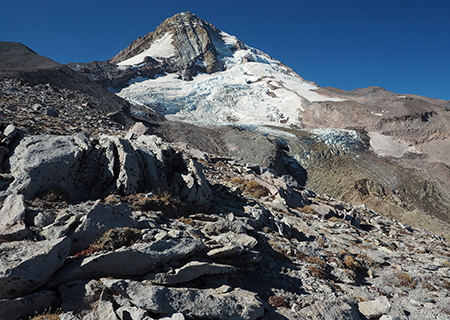
On September 10, I drove SR 14 on the Washington side of the Gorge for my first look at the fire, starting in Hood River. Below each of the following annotated photos, I’ve linked to much larger versions that I encourage you to view if you’re reading this on a large monitor, as they provide a better sense of the fire’s impact.

As hoped, much of the burn is in a patchy “mosaic” pattern, a healthy and desirable outcome for the ecosystem. This is how fires used to occur in our forests, before a century of suppression began in the early 1900s. Mosaic burns allow for mixed forest stands and exceptional wildlife habitat to evolve, even as we might mourn the loss of familiar green forests.

The wind pattern on Sunday had shifted from westerly to a northwesterly direction, producing a bizarre effect: smoke from the fire hugged the vertical wall that is the Oregon side of the Gorge, while the Washington side was cleared of smoke and under a bright blue sky. The view, below, shows this split-screen effect from near Wind Mountain.

GorgeFire04

(Click here for a large view)

Moving west, the combination of ongoing wildfire and back-burning by firefighters was producing a continuous plume along the base of the Oregon cliffs, from Herman Creek east to Shellrock Mountain, as seen below. The Pacific Crest Trail traverses this section, and is undoubtedly affected by the fire.

GorgeFire05

(Click here for a large view)

From the Bridge of the Gods wayside, opposite Cascade Locks, the impact of the fire on the canyons that fan out from Benson Plateau is visible. Some areas (below) show a healthy mosaic burn, while some of the upper slopes show wider swaths of forest impacted. The alarming proximity of the fire to the town of Cascade Locks is also evident in the scorched trees visible just above the bridge in this view. This was a close call for those who live here.

GorgeFire06

(Click here for a large view)

Turning further to the east from the Bridge of the Gods wayside (below), the ongoing wildfire and back-burning shown in the previous photos can be seen in the distance, beyond the town of Cascade Locks.

GorgeFire07

(Click here for a large view)

The scene at the Bridge of the Gods bridgehead (below) is an ongoing reminder that we’re a long way from life returning to normal for Cascade Locks residents. For now, I-84 remains closed and this is the only route into town, and only open to those with proof of residency.

GorgeFire08

(Click here for a large view)

Moving further west, the 2000-foot wall of cliffs in the St. Peters Dome area that stretches from McCord Creek to Horsetail Creek (below) come into view.

Here, the fire has also burned in mosaic pattern, with many patches of green forest surviving. But the frightening effects of the firestorm that occurred in the first days of the fire is also evident, with isolated trees on cliffs hundreds of feet above the valley floor ignited by the rolling waves of burning debris that were carried airborne in the strong winds that initially swept the fire through the Gorge.

GorgeFire09

(Click here for a large view)

A second view (below) of the St. Peters Dome area shows the burn extending toward Nesmith Point, nearly 4,000 vertical feet above the Gorge floor.

GorgeFire10

(Click here for a large view)

Moving west along SR 14 to the viewpoint at Cape Horn, the impact of the fire on areas west of Horsetail Falls comes into view (below), along with a better sense of the mosaic pattern of the burn. This view shows the Horsetail Creek trail to be affected by the first, as well as the slopes on both sides of Oneonta Gorge.

In this earlier piece on Oneonta Gorge, I described the dangerous combination of completely unmanaged visitor access and an increasingly dangerous logjam at the mouth of the Gorge. The fire will almost certainly trigger a steady stream of new logs rolling into Oneonta Gorge and adding to the massive logjam in coming years.

GorgeFire11

(Click here for a large view)

Moving further west, the area surrounding iconic Multnomah Falls and Wahkeena Falls comes into view (below). As with other areas, the fire burned in vertical swaths along the Gorge face, leaving more mosaic patterns in the burned forest. From this view, trees along the popular 1-mile trail from Multnomah Falls Lodge to the top of the falls looks to be affected by the fire, as are forests above Wahkeena Falls.

GorgeFire12

(Click here for a large view)

This wide view looking east from above Cape Horn (below) shows most of the western extent of the fire, with the north-facing slopes of Angels Rest heavily burned, while the west and south-facing slopes were less affected.

GorgeFire13

(Click here for a large view)

A closer look at Angels Rest shows that the burned area in the current fire closely matches the area that burned in the 1991 (below), along with slopes on the opposite side of Coopey Falls. The Angels Rest Trail was heavily impacted by the 1991 fire, and will clearly need to be restored after this fire, as well.

GorgeFire14

(Click here for a large view)

I’ve marked an approximation of the 1991 fire extent at Angels Rest in this closer look (below) at the summit of Angels Rest, based on tree size. Tall conifers burned in today’s Eagle Creek fire survived the 1991 fire, and mark the general margins of that earlier fire.

Areas within the 1991 burn were still recovering and consisted largely of broadleaf trees, like Bigleaf and Vine maple. Depending on the heat of the fire and whether their roots survived, these broadleaf trees may be quick to recover, sprouting from the base of their killed tops as early as next spring.

The recurring fires at Angels Rest offer an excellent case study for researchers working to understand how natural wildfires behave in successive waves over time. This, in turn, could help Gorge land managers and those living in the Gorge better plan for future fires.

GorgeFire15

(Click here for a large view)

Finally, a look (below) at the western extent of the fire shows a few scorched areas in Bridal Veil State Park, including the forest around the Pillars of Hercules. Bridal Veil Canyon appears to have escaped the burn, though some trees near Bridal Veil Falls may have burned.

GorgeFire16

(Click here for a large view)

I’ve titled this article as my “first look” because the story of the Eagle Creek fire is still being written. Only after the fall rains arrive in earnest will we have a full sense of the scale of the fire.

As new chapters in the Eagle Creek saga unfold, I’ll continue to post updates and share perspectives on this fire and our broader relationship with fire as part of the natural systems that govern our public lands. With each new fire in close proximity to Portland, we have the opportunity to expand and evolve how we think about fire, and hopefully how we manage our public lands in the future.

More to come…

Owl Point Sentinel Tree

2006OwlPointSentinelTree

Mount Hood from Owl Point in October 2006

Just over a decade has passed since I first visited Owl Point, a spectacular rocky viewpoint along the Old Vista Ridge Trail, on Mount Hood’s north side. At the time, the trail had fallen into disrepair after years of neglect, but it has since rebounded thanks to volunteers pitching in.

Since that first visit, I’ve been to Owl Point every year to admire and photograph the dramatic view of Mount Hood and enjoy the relative solitude, compared to many other places on the mountain. I’ve watched the landscape change, sometimes dramatically, as was the case with the 2011 Dollar Lake Fire that swept the north side of Mount Hood. But I’ve also watched more subtle changes as the details of this beautiful spot become ever more familiar.

2008OwlPointSentinelTree

The author at Owl Point in 2008 (Photo: Andy Prahl)

One of those more subtle features is a craggy Noble Fir perched among the boulders on the exposed south flank of Owl Point. This old survivor can be seen in the far left of one of the first photos I shot in 2006 (at the top of the article) and in the photo, above, taken in 2008 by trail volunteer Andy Prahl.

If you’ve followed this blog over the years, you’ve seen earlier articles about “sentinel trees”. These are trees that seem to defy the odds and elements in their size, grandeur or simple tenacity in finding a way to survive. This tree certainly qualifies.

From an aesthetic perspective, the old Noble Fir at Owl Point is a gift for photographers, adding testimony to the rugged, often harsh conditions found there. The old tree also adds a nice visual balance and interest to the scene. So, in this way the Owl Point sentinel tree has become an old friend to this photographer.

2011OwlPointSentinelTree01

Owl Point in July 2011, with the old Noble Fir on the left – just days before the Dollar Lake Fire

In 2011, I visited Owl Point just a few days before the catastrophic Dollar Lake Fire swept across the north slopes of Mount Hood, burning 6,300 acres of subalpine wilderness. The photo above is among the last that I captured of the once-green forests on the mountain before the fire changed the landscape.

Though the fire burned for more than two months that summer, Owl Point and the Old Vista Ridge Trail were somehow spared and the craggy old Noble Fir sentinel tree at Old Point lived on.

2011OwlPointSentinelTree02

The Dollar Lake Fire in 2011

After the fire, Owl Point served as one of the best places to absorb the full scope of the Dollar Lake Fire, with nearly the entire extent of the burn visible from there. While the brown swath of scorched trees was jarring to look at, it was also a reminder that fire is a regular and necessary visitor to our forests.

The forests we lost to the fire have since given us a new window into how new forests emerge from the ashes, a process as old as the forests, themselves.

2012OwlPointSentinelTree01

Browned slopes of Mount Hood one year after the fire in 2012

The old Noble Fir sentinel tree at Owl Point had witnessed fire before the Dollar Lake Fire, and from a much closer vantage point. Sometime in the early 1900s, a similarly large fire swept across the high country north of Mount Hood, scorching Owl Point and thousands of acres in the surrounding area.

This 1952 photo (below) shows the forest recovery from this earlier fire at Owl Point just getting underway, decades after the burn. In fact, the area is still in recovery today, a century after the fire.

2012OwlPointSentinelTree02

Early 1900s burn that swept across Owl Point (Courtesy: Hood River History Museum)

The view from 1952 is an inverse scene from what we see today, with a scorched foreground and lush, green slopes on Mount Hood. These contrasting images over time area a reminder of the fire cycles that are as natural to the area as rain and wind.

A closer look at the 1952 photo reveals several trees that survived the older fire, thanks to their isolation in the open talus fields below Owl Point:

2012OwlPointSentinelTree02a

These trees on the talus slopes of Owl Point survived the earlier fire

One of these fortunate survivors is the sentinel tree at Owl Point that we know today. Though only 30-40 feet tall, it could easily be a century or more old, stunted by the harsh conditions on the talus slope.

While the old Noble Fir at Owl Point appears to have dodged a couple of forest fires in its lifetime, the tree began to show signs of stress in 2012, the year after the Dollar Lake Fire. Foliage (below) from some of its lower limbs began to drop, suggesting the beginning of its decline.

2012OwlPointSentinelTree04

Owl Point sentinel tree in 2012, one year after the Dollar Lake Fire

By 2014 (below), the signs of stress were more ominous, and it was clear that the old sentinel tree was losing its battle to survive the elements at Owl Point.

2014OwlPointSentinelTree01

Owl Point sentinel tree in 2014

After the snowpack melted off in 2016, the situation for the old tree had become dire as it struggled to maintain the remaining foliage in its crown (below), a sign that the tree might not survive the season.

2016OwlPointSentinelTree01

Stress claims the crown of the Owl Point sentinel tree in 2016

But a closer look (below) this summer at the dying tree tells a different story. While the exposed upper portion of the tree has clearly lost its battle, a fringe of healthy new foliage is thriving around the base of the tree. It turns out that while the Owl Point Noble Fir has lost its main trunk, it is still very much alive.

2017OwlPointSentinelTree01

Owl Point sentinel tree finally succumbs to the elements in 2017

An even closer look at the base of the old tree (below) shows the secret of “krummholz”, the name for stunted trees that survive in harsh alpine environments. Trees like this Noble Fir adapt to their conditions by producing new leaders from their lowest branches to replace dying or broken tops.

These new leaders on Noble Fir growing as krummholz often form dense mats of foliage at the base of a tree, low enough to be protected by winter snowpack from the harshest weather conditions. This is clearly the case for the Owl Point sentinel tree.

2017OwlPointSentinelTree02

A new beginning for the Owl Point Noble Fir…

The classic example of a krummholz in Mount Hood country is the Whitebark Pine, a tree that thrives above 5,000 feet, often gnarled beyond imagination by the elements. The example below shows the skeleton of an ancient Whitebark Pine (on Lookout Mountain), surrounded by new leaders that have merged from limbs flattened to the ground by winter snowpack.

2017WhitebarkKrummholz

Ancient Whitebark Pine krummholz on Lookout Mountain

While winter conditions regularly shear off new growth that pokes above the snowpack on a krummholz, a rapidly growing new trunk like the one emerging at the base of the Owl Point sentinel tree can eventually survive and grow to replace the older tree. This is clearly a slow process, and one that I won’t likely be around to witness!

But in the near-term, photographers like me will be able to watch the dying trunk of the Owl Point sentinel tree gradually weathering to become a dramatic sun-bleached snag that will be photogenic in its own right. And, as the new leader continues to rise from the base of the old trunk, this striking old tree will continue tell a powerful story of survival.

_____________

You can visit Owl Point and see its sentinel Noble Fir by following the 4-mile round trip Old Vista Ridge hike from the Vista Ridge Trailhead. The hike is described here in the Oregon Hikers Field Guide.


Proposal: Raker Point Trail

01RakerPointPostcard1940s

The view from Raker Point in a 1930s postcard

Each year, thousands visit beautiful Lost Lake, one of the most beautiful and iconic places in Mount Hood country. The view of Mount Hood mirrored in the lake has been photographed countless times and has graced hundreds of postcards, calendars and scenic books. Some visitors to the lake climb the old lookout trail to Lost Lake Butte, which provides a sweeping view of the mountain, but only glimpses of the lake as once-burned forests continue to recover there.

Yet, not long ago, another dramatic view was possible: Lost Lake nestled in the forests beneath Mount Hood, framed with blooming Pacific Rhododendrons. This scene was captured from the crest of Raker Point, a rocky spur due north of Lost Lake, and briefly a forest lookout site in the early 1930s.

02RakerPointPostcardLarge1950s

The view from Raker Point as captured in a Ray Atkeson postcard in the late 1940s

The view from Raker Point appeared in early postcards, and was later captured by Oregon’s famed photographer Ray Atkeson (above) in images that appeared widely in calendars, postcards and even automobile ads (below) in the 1950s.

03RakerPointLincolnAd1951

1951 Lincoln ad featuring the view from Raker Point

Ironically, the famous images captured by Atkeson were made possible by the industrial logging that began sweeping our national forests in the decades following World War II. By the late 1940s, a logging spur pushed over the saddle between Sawtooth Ridge and Raker Point, providing easy access to the spectacular view, even as it enabled the destruction of old growth forests that once grew there.

Today, the old logging road to Raker Point has been decommissioned by the Forest Service and the clearcut slopes are slowly recovering. Now, Raker Point has become all but forgotten.

Where is Raker Point?

04RakerPointFromLostLake2001

Raker Point isn’t the tallest or most impressive among the Cascade peaks that rise up around Lost Lake, but it is the best positioned for a grand view of the lake and Mount Hood. Raker Point can be seen from the Lakeshore Trail, where it rounds the south end of the lake, as shown above.

When the Forest Service first brought a road to Lost Lake and lookout towers to the Lost Lake area in the 1920s and early 1930s, Raker Point was much more prominent, thanks to wildfires in the early 1900s that had cleared both Raker Point and Lost Lake Butte. Their open summits made ideal forest lookout sites.

This early 1930s view shows Raker Point and other nearby peaks from Hiyu Mountain, another lookout site located several miles to the south, and Raker Point’s bald summit clearly stands out:

05HiyuMountainView1930s

[click here for a larger image]

A closer 1933 view from nearby Lost Lake Butte in 1933 shows the scorched summit of Raker Point much more clearly. The impressive old growth forests of the Lost Lake Basin are also on display in this view:

06LostLakeButteWest1933

Scorched Raker Point from Lost Lake Butte in the early 1930s

This rare 1933 perspective of Raker Point and Lost Lake is from Sawtooth Ridge, where a temporary (and misnamed) “Raker Point” lookout was briefly located:

07RakerPointWest1933

[click here for a larger panorama]

The origin of Raker Point’s name is unclear, but it’s likely that an early Forest Service ranger or surveyor named the peak — and perhaps was the namesake, too?

Today, forests have returned to all but the rocky summit and surrounding talus slopes on Raker Point. This view (below) from the Lake Branch Road shows the now green slopes, with just a small opening near the top of the butte. Does this mean the classic view of Lost Lake and Mount Hood captured by Ray Atkeson in the 1940s has been lost?

08RakerPoint03

Raker Point rises above the talus fields along the Lake Branch Road

The answer can be found on the opposite side of Raker Point. This view from Indian Mountain, located a few miles north and across the Lake Branch Valley from Raker Point, shows the still open, rocky crest framed in talus slopes and groves of Noble Fir:

09RakerPointFromIndianMountain2011

The rocky crest of Raker Point from the north, as viewed from Indian Mountain

While rhododendrons may not thrive on the summit, the views of Mount Hood and Lost Lake are clearly still intact, though probably framed in Noble fir boughs and drifts of huckleberries.

The Proposal

The Lost Lake area already has a fine network of trails, but a new route to Raker Point would bring needed opportunities to this popular recreation area.

First, the classic view from Raker Point is reason enough to warrant trail access to the summit. But a trail to Raker Point would also serve as a more attainable challenge for families visiting Lost Lake.

Today, hikers can make the 2-mile trek to the summit of Lost Lake Butte. Yet, while the view from there is excellent, it pales in comparison to Raker Point. More importantly, a trail to Raker Point would shave 400 feet of elevation gain in half the distance compared to the Lost Lake Butte hike, making it much more accessible to casual hikers and families with young children.

10RakerPointProposal

[click here for a large map]

The proposed trail is simple: it would begin along a segment of the Old Skyline Trail that traverses the base of the Raker Point, and connects to the nearby campground, resort cabins and lodge at Lost Lake.

Trail building would be straightforward, as well. The area is outside protected wilderness, so would not present limitations on the use of power saws and or other heavy equipment in the construction. The modest 1-mile length of the proposed new trail also puts it within financial reach in this era of cash-strapped federal land agencies.

11LostLakeButteWestPanorama1933

[click here for a large panorama]

The new trail would also be accessible from trailheads along the Lake Branch Road, allowing hikers to visit the trail without adding to the crowds and congestion at Lost Lake, proper.

What would it take to make this happen? Interest from Forest Service officials, for sure, but support from the Lost Lake Resort operators, in particular, could put this new trail on a fast track. The resort would clearly benefit from a new family-friendly trail option near the lodge, and would be powerful advocates if they were to bring this argument to the Forest Service.

So, consider mentioning the idea if you happen to visit the resort this summer..!

__________________________
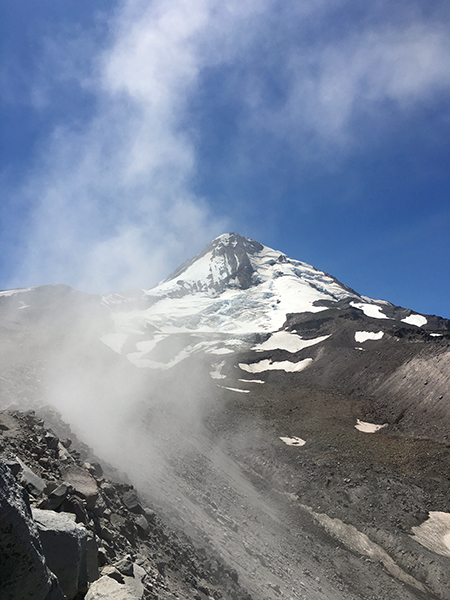
Postscript: at about the time I was writing this article, uber-adventurer Paul Turner was exploring Raker Point and nearby Sawtooth Ridge. He posted some excellent photos from his trip over here on the Oregon Hikers forum. Thanks, Paul!

Punchbowl Park is (mostly) open for Business!

PunchbowlParkUpdate01

Punchbowl Falls

Spring is a wonderful time to visit the new Punchbowl Falls County Park, located on the West Fork of the Hood River, near Dee. This article is offered an update on the new trails that area gradually being constructed in the park and a guide to visiting this beautiful area for a sneak preview while the trails are being completed.

Punchbowl Falls Park was acquired from a private timber company by the Western Rivers Conservancy just a few years ago, and finally came into public ownership in 2015 when Hood River County received a state grant to transfer the land from the conservancy. Trailkeepers of Oregon (TKO) has since been busy constructing a new loop trail geared toward families and casual hikers looking for an easy stroll with a lot of scenery.

PunchbowlParkUpdate02

New entry sign at Punchbowl Falls Park

In 2016, TKO volunteers completed most of the West Fork Trail, a scenic route that traverses the open bluffs above the Punchbowl Gorge before arriving at a spectacular cliff-top viewpoint above Punchbowl Falls. The remaining segment of the West Fork Trail is expected to be completed by early summer, and will include a short spur to a viewpoint of beautiful Dead Point Falls, where a boisterous Dead Point Creek cascades into the West Fork.

PunchbowlParkUpdate03

Punchbowl Falls Park Trails

(Click here for a large, printable trail map)

Over the summer and fall, TKO also expects to complete the Dogwood Trail, a short forest hike that will create a loop back to the trailhead. The completed loop will be just 0.8 miles in length, making it ideal for families and casual hikers. While the West Fork portion features views and rugged terrain, the Dogwood Trail offers a quiet forest and vibrant fall colors from vine maple and dogwoods that thrive under the Douglas fir and Ponderosa pine canopy.

The West Fork Trail

You can hike most of the new West Fork Trail now. Just look for an obvious new path heading off to the left about 100 feet down the park service road from the gate at the trailhead. The new trail descends briefly through forest before providing the first of many views into the Punchbowl Gorge.

As you travel this section, you’ll pass through several groves of gnarled Oregon White Oak that thrive along the rocky bluffs. Watch for the collapsing remains of an old stairwell making its way down the cliffs on the far side of the Gorge, too. These stairs were built in the 1950s, when the concrete fish ladder was constructed along the west side of the falls. While the ladder mars the natural beauty of the area, it does provide passage to extensive upstream fish habitat for salmon and steelhead.

PunchbowlParkUpdate04

The old stairway to the fish ladder has seen better days…

You will also pass a series of faint trails that cross the new hikers route. While these informal paths are often used by kayakers to portage the falls, they were originally travelled by tribal fishermen visiting the falls. The area below the falls is still reserved for tribal fishing, and you may see local Native Americans fishing for salmon and steelhead from the cliffs inside the Punchbowl, just as their ancestors have for centuries.

The new trail soon descends through more Oregon White Oak groves to the spectacular viewpoint of Punchbowl Falls. Plan to spend some time here watching the mesmerizing churn of the falls into the huge pool below. Keep an eye on kids and pets, here — there are no railings along the abrupt cliff edge.

PunchbowlParkUpdate05

The massive amphitheater at Punchbowl Falls

On clear days the viewpoint above Punchbowl Falls has an added surprise: Mount Hood rising in the distance, above the Punchbowl Gorge. From this viewpoint, you may also see tribal fishermen on the rocks below — while it is fine to watch them work from above, please be courteous.

The fish ladder to the right of the falls was completed in 1959. Here’s what Punchbowl Falls looked like before the ladder was constructed:

PunchbowlParkUpdate06

Punchbowl Falls before the fish ladder was constructed in 1959

Hopefully, the ladder can someday be rebuilt in a way that restores some of the beauty of this spot, as it surely could not have been built in this manner under today’s environmental protections. This amazing place has deep significance to Native Americans, and it seems appropriate to undo some of the impacts of our modern age on a place so valued by the tribes.

From the Punchbowl overlook, the route climbs back into forest for a few hundred yards. TKO crews are still completing the groomed tread, but the rough path is easy to follow. Watch for a faint side trail heading off to the left a few yards before the West Fork Trail ends at the service road. This spur path leads to a terrific view of Dead Point Falls, where Dead Point Creek cascades into the West Fork. Watch kids and pets here, too, as the viewpoint is unprotected.

PunchbowlParkUpdate07

Deadpoint Falls

While the West Fork Trail currently ends at the park service road, the Dogwood Trail will soon begin on the opposite side of the road and provide a loop trail back to the trailhead. In the meantime, read on for other places to explore…

Exploring the Confluence

PunchbowlParkUpdate08

The Confluence

It’s easy to explore the northern section of Punchbowl Falls Park using the park service road and some of the fishing trails that crisscross the area. One of the most dramatic places to visit is the confluence of the West and East forks of the Hood River.

To reach the confluence, turn left on the service road from the end of the West Fork Trail and follow it to an obvious turnaround, where the road makes a sharp turn to the right, around the nose of a ridge. Look for a fisherman’s path on the left, heading steeply downhill hill to the confluence.

PunchbowlParkUpdate09

Rowdy East Fork Hood River at the Confluence

The two rivers area study in contrasts. The East Fork is unruly and filled with glacial till, and has built a huge pile of cobbles were it meets the West Fork at the confluence. The West Fork is cold and clear, with a large eddy that makes for good fishing and safe place for kids to wade in summer.

Wildflowers and Fall Colors

PunchbowlParkUpdate10

Grass Widow above the Punchbowl Gorge

Spring and fall are the best times to visit Punchbowl Falls Park. In spring the waterfalls are at their best, and there are wildflowers blooming throughout the park. In fall, the park lights up with autumn colors that only the east side forests can offer. Both seasons are quiet compared to the summer months, when the park can be quite busy with swimmers and floaters on weekends.

Wildflowers at the park are a unique blend of east and west. In April, the bluffs above Punchbowl Gorge are blanketed with Grass Widow (above), a desert flower common in the Columbia Gorge east of Rowena. The same meadows of grass widow are shared by Larkspur (below), more common in the wet west end of the Gorge.

PunchbowlParkUpdate11

Larkspur along the West Fork Trail

In forested areas, you’re likely to see Trillium (below), a hallmark of the rainforests of the western Gorge, and in early spring you’ll find Glacier Lily (below) where the trail passes through Oregon White Oak groves.

PunchbowlParkUpdate12

Trillium along the Dogwood Trail

PunchbowlParkUpdate13

Glacier Lily near the Punchbowl Falls overlook

Watch closely and you might spot Calypso Orchid (below). This is another native more common in the wet forests of the west Gorge, but makes its home in the transitional forests of Punchbowl Falls Park.

PunchbowlParkUpdate14

Calypso Orchid along the Dogwood Trail

In autumn, Pacific Dogwood (below) brings brilliant color to the forest understory throughout the park. In western Oregon, dogwood generally fade to pale yellow or pink in the fall, but on the east side of the Cascades, these graceful trees take on brilliant shades of coral, crimson and burgundy. In spring, Pacific Dogwood also blooms with handsome white flowers. When completed, the new Dogwood Trail will pass through several groves of these beautiful trees.

PunchbowlParkUpdate15

Dogwood in Autumn at Punchbowl Falls Park

Vine Maple is everywhere in the forests of Punchbowl Falls Park, and like the native dogwood, these graceful trees light up in autumn, providing shades of crimson, orange and bright yellow. Vine Maple crowd the route of the new Dogwood Trail, and will combine with the dogwoods to make this an exceptionally beautiful autumn hike.

PunchbowlParkUpdate16

Vine Maple in Autumn

Fall colors in Punchbowl Park peak in mid-October and spring wildflowers are at their best from mid-April through early June.

A View into the Gorge

PunchbowlParkUpdate17

West Fork entering Punchbowl Gorge

If you still have time after visiting the West Fork Trail and the confluence, once last corner of Punchbowl Falls Park you might want to explore is the dizzying view from the bridge located just beyond the trailhead parking area. Simply walk about 200 yards to the soaring bridge for a spectacular look into Punchbowl Gorge, but use care — the railings are uncomfortably low!

PunchbowlParkUpdate18

The Narrows in Punchbowl Gorge

The view upstream from the bridge encompasses the West Fork roaring into the narrow mouth of the Gorge, framed by towering walls of columnar basalt. The small structure just upstream is a river gauge used to monitor stream flows on the West Fork. The view downstream from the bridge peers into the narrows section of the gorge, with the West fork carving stunning curves and pools into the basalt walls.

These scenes, and the massive basalt amphitheater of Punchbowl Falls area among the best Columbia River basalt formations found anywhere in the region. It’s mind-boggling that this spectacular canyon was in the hands of a private timber company for more than a century! Thankfully, it is now protected in perpetuity as a nature park.

What’s Ahead?

PunchbowlParkUpdate19

The author with TKO volunteers and county officials at a recent scouting trip at Punchbowl Park

Much work lies ahead for Punchbowl Falls Park this year. TKO has several volunteer work parties planned (you can learn more about them here), and Hood River County will begin improving the parking area at the trailhead to be a more accessible.

By fall of 2017, the new Dogwood Trail should be completed, and TKO volunteers will install trail signs on both the West Fork and Dogwood trails, officially opening the new loop to visitors. Over the long term, Hood River County and TKO are also planning an extension of the West Fork trail to the confluence and other trails in the new park.

Where to Find Punchbowl Falls Park?

PunchbowlParkUpdate20

Punchbowl Gorge and bridge from the West Fork Trail

It’s easy to get to the new park! From Hood River, take 12th Avenue south where it soon becomes Tucker Road (aka Route 281). Follow Tucker Road and signs pointing to Lost Lake. After crossing the Hood River at Tucker Bridge, watch for the Dee Highway immediately veering off to the right.

Follow Dee Highway (also part of Route 281) to the rusty, dusty remains of the old mill town of Dee. Veer right again, crossing railroad tracks and then the East Fork Hood River, then turn right again onto Punchbowl Road just beyond the bridge. Stay straight on Punchbowl Road at a 3-way junction, then enter forest at a hairpin turn. Watch for the parking area on the right, just short of the high bridge over the West Fork Hood River.

The new trail begins just beyond the metal gate that marks the park service road.

Enjoy!


Bierstadt in Oregon

Bierstadt01

Albert Bierstadt’s magical 1869 vision of Mount Hood

Long before white settlement had reshaped the American West, artists were traveling with early explorers to capture scenes of the stunning landscape and native peoples. This was the first view most Easterners in our young country had of places like Yellowstone, the Grand Canyon and Yosemite — places that would eventually become the crown jewels of our national park system.

And just as Mount Hood and the Columbia River Gorge are still believed by many to be part of the national park system, the painters and photographers of the mid-1800s captured them in their untouched state along with the other great places in the West. This article tells the story of how Albert Bierstadt and other artists of the era came to Oregon to capture the beauty of our mountain and the Columbia River, how their art helped inspire the original national parks movement and how their work still resonates with us today.

Longing for Nature

In the mid-1800s, the Industrial Revolution was in full swing in the cities along America’s east coast, and the public was beginning suffer from its effects. In booming New York, massive tenements were constructed to house factory workers in apartments that were often without daylight and access to fresh air or plumbing.

Bierstadt02

Crowded life in New York’s tenements of the mid-1800s led to a public yearning for a greener world

Coal burning was creating stagnant clouds of pollution that coated our eastern cities in soot, and there was a growing yearning for the greener, simpler world of our agrarian past. The carnage of the America Civil War in the 1860s only compounded the nostalgia. Thus, the Romantic period of the 19th Century was a movement that responded to pressures of the Industrial Revolution, glorifying a past rooted in nature.

Bierstadt03

Simple access to light and fresh air was a luxury in New York’s mid-1800s tenements

The Romantic movement emphasized the sublimity and beauty of nature, and dominated American art during this period, especially the untamed American West that was glorified in monumental landscapes by artists of the Hudson River School.

Bierstadt04

Thomas Cole’s 1847 “Home in the Woods” envisioned an idyllic green world in stark contrast to life in the big cities of the Industrial Revolution

The Hudson River School was a mid-19th century American art movement embodied by a group of landscape painters whose aesthetic vision came to define romanticism in this country. The paintings for which the movement is named originally depicted the Hudson River Valley and its founding is generally credited to Thomas Cole, who painted until his early death in 1848.

The Second Wave

Cole was followed by a second wave of Hudson River artists who grew to become celebrities in their time, including Frederic Edwin Church, Albert Bierstadt, and later, Thomas Moran.

Bierstadt and Moran became best known for their epic paintings of the untamed American West in the last half of the 1800s. Their paintings were the popular equivalent of movie blockbusters today, with huge canvases dramatically unveiled in sensational public events.

Bierstadt05

Thomas Moran’s dramatic scene of a storm over the Grand Canyon still wows viewers today

While the Hudson River School artists often glorified nature, they also brought people into their scenes in an idealized way, as part of the epic landscape. Native Americans were portrayed as nobly beautiful in these romanticized landscapes, and conversely, Bierstadt also created similarly noble scenes of white settlers migrating west in his Oregon Trail paintings, on their way to claim lands belonging to Native Americans.

The two ideas are a strange contradiction, given the de facto genocide that was unfolding upon Native Americans in the West when Cole and Bierstadt were creating these masterpieces. But the Hudson River artists were glorifying nature (and American Indians) as a divine creation of their Christian God, and so it makes sense that their paintings also fit the “manifest destiny” justification for westward migration of white settlers, however contradictory.

Bierstadt06

Just as Bierstadt’s “Last of the Buffalo” (1889) brought the reality of the slaughter of America’s bison herds to Easterners in the 1800s, it now provides a window into the past for new generations of Americans learning about the western migration. It was the last of his monumental paintings, and directly triggered the first bison census, leading to protections for the species.

While Hudson River artists worked in dramatic realism, their romanticized scenes were often an idealized hybrid of multiple locations captured by the artists in their field studies in the West. Both Cole and Bierstadt made regular trips to what were often very remote, rugged locations for their studies, then returned to their studios to create the massive masterpieces that evoked the overall sense of wonder they had experienced in the West.

Bierstadt07

Bierstadt’s “Oregon Trail” (1869) helped establish the enduring mythology of westward migration.

This is often a point of criticism for these painters, as the country was also experiencing the invention of photography, and realism in painting was increasingly being held up against tintype photos by early photographers to gauge their accuracy. Yet, just as photographers attempt to capture light and subject in a way that captures the drama and feeling of a place, Hudson River artists were similarly compiling scenes that captured their own memories and experiences in a West.

Bierstadt08

The author on a recent pilgrimage to view Bierstadt’s “Among the Sierra” (1868), on permanent display in the Smithsonian American Art Museum.

The Hudson River artists also influenced the creation of our first national parks, with masterpieces of Yellowstone and Yosemite that persuaded Congress to establish the very first protections for our most spectacular wild places. Albert Bierstadt painted many scenes in Yosemite over the years, along with many other wild places across the West that would ultimately be protected from exploitation.

Bierstadt in Oregon

Albert Bierstadt was born in Solingen, Germany, in 1832, but soon immigrated with his parents to New Bedford, Massachusetts at the age of two. He began drawing as a child, and by his early twenties was painting with oils as part of the Hudson River School movement. He would paint over 500 paintings over the course of his remarkable life.

In 1859, he traveled west with a U.S. Government survey crew, sketching scenes that he would later turn into his epic masterpieces in his studios in New York and Rome. This was one of many trips west for Bierstadt over his long painting career. One of these paintings, “Landers Peak, Rocky Mountains”, sold for $25,000 after it was completed in 1863, an astronomical figure for that time (Bierstadt later purchased this painting from the buyer to give to his brother).

Bierstadt09a

Albert Bierstadt “Landers Peak, Rocky Mountains” (1863)

 [click here for a large view]

Bierstadt’s huge, panoramic paintings were an immediate sensation with the public, and he quickly became the preeminent painter of the American West during the mid-1800s.

Bierstadt first came to Oregon beginning in the early 1860s, and painted Mount Hood at least four times — the most of any Pacific Northwest scene. He made at least three extended trips to Oregon, twice in the 1860s and later in the 1890s, as his career was winding down.

Bierstadt09b

Albert Bierstadt in the mid-1800s

This undated, possibly earliest Bierstadt work shows a scene on the Columbia River, with trio of canoes and a towering version of Mount Hood, basking in alpenglow. At first, the peak looks more like Mount Rainier, but a closer look shows a reasonably accurate rendering of the Sandy Headwall and other west face features, albeit with a healthy dose of artistic license:

Bierstadt10

One of Albert Bierstadt early paintings of Mount Hood (date unknown)

Another early Bierstadt work from the same lower Columbia River perspective shows alpenglow lighting up the mist along the river and, notably, what appears to be Barrett Spur on the mountain’s north flank, makes this a somewhat more literal image:

Bierstadt11

Albert Bierstadt “Morning Thirst – Mount Hood” (date unknown)

In the fall of 1863, Bierstadt made his second trip west and painted a pastoral scene on the north side of the mountain, as viewed from the Hood River Valley. This spare, relatively small portrayal (just 20 inches wide) is much more literal, with many familiar north face features captured, along with Lookout Mountain, to the east. Bierstadt also used artistic license to include Mount Jefferson peeking over the west shoulder of Mount Hood:

Bierstadt12

Albert Bierstadt’s 1863 view of Mount Hood from the Hood River Valley

This painting is thought to have been in preparation for the much larger paintings of Mount Hood that would follow. His companion on the 1863 trip, Fritz Hugh Ludlow, recalled the visit in a published account that followed:

“After a night’s rest, Bierstadt spent nearly the entire morning making studies of Hood from an admirable post of observation at the top of one of the highest foothills — a point several miles southeast of town, which he reached under the guidance of an old Indian interpreter and trapper” (Atlantic Monthly. December 1864)

In 1865, Bierstadt completed a very large piece that pictures an idealized, but much more literal Mount Hood towering over the Columbia Gorge. Multnomah Falls and even Larch Mountain are included in the artist’s blend of iconic features. Mount Jefferson and the Three Sisters float on the distant horizon:

Bierstadt13a

Albert Bierstadt’s massive 1865 painting of Mount Hood created a public sensation

[click here for a large version]

This massive painting measures ten feet wide by six feet tall, and created a sensation with the American public when it was unveiled. In 1876, it was one of six monumental paintings selected by Bierstadt for display at the Paris World’s Fair, bringing Mount Hood to international fame.

The painting was one of many portraits of Mount Hood that become part of the public’s imagination of the West, finally putting a face on the towering icon that settler accounts had described at the end of the Oregon Trail. Today, this painting can be viewed at Gerald Peters Gallery in Santa Fe, New Mexico.

This stunning work shows the mountain and Gorge in much more detail than his earlier studies. Mount Hood’s most familiar features — Barrett Spur, Yocum Ridge and Illumination Rock — are detailed, along with Multnomah Falls, Latourell Falls, Phoca Rock and Sherrard Point atop Larch Mountain.

Bierstadt13b

Detail from Bierstadt’s “Mount Hood” (1865)

The Gorge peaks are oddly deforested in this view. While logging in the Gorge cleared most of the slopes around Larch Mountain by the end of the 1800s, the forests probably would have been much more intact in 1865, when access to the Gorge was still extremely limited, so the barren slopes are more likely artistic license. Yet, Bierstadt did include trees in the foreground that are true to the Gorge, with rugged conifers typical of ancient Douglas fir that have survived the extreme Gorge elements, twisted white oaks and a billowy group of bigleaf maple in the right foreground.

In 1869, Bierstadt completed what to many is his ultimate masterpiece of Mount Hood: a smaller (five feet wide by just over four feet tall), more refined version of his 1865 work that brings all of the elements of the earlier painting with much more dramatic, evening light.

Bierstadt14a

Albert Bierstadt 1869 refinement of his more famous 1865 Mount Hood portrait

[click here for a large version]

This final piece is housed right here our very own Portland Art Museum, and worth the price of admission, alone. Bierstadt’s final take on our mountain remains the most glorious of the Romantic period paintings of Mount Hood.

While it’s easy to critique Bierstadt’s creative rearranging of geography, it’s also understandable: visitors today still seek that “perfect spot” where all of the pieces of the tableau that make up the Gorge and Mount Hood experience.

The view from Sherrard Point on Larch Mountain comes close, for example, with its 360-degree view encompassing the Gorge, Columbia Delta, Mount Hood, the string of big Cascade volcanoes in the distance and the craggy top of Larch Mountain and its magnificent stand of Noble fir filling the foreground. A mind’s eye recollection of the view of being there brings all of these pieces together as part of the memory, just as Bierstadt combined elements in his paintings that were about the experience of being there, not simply documentation of the elements.

Bierstadt14b

A closer look at Bierstadt’s 1869 masterpiece shows Multnomah Falls (left), Latourell Falls (center), Larch Mountain and Sherrard Point (center right) and Mount Jefferson in the distance

Mid-1900s Mount Hood Loop Highway visitors picked up postcard folios at souvenir stands and roadhouses along the loop looking to capture their memory in a similar way. These little booklets contained a series of cards showing off the most iconic spots in the Gorge and on the mountain that a visitor might have seen in a day spent driving the loop, but just as Bierstadt rearranged scenic elements, the folio covers of these postcard collections often blended the images to create a mosaic that pulled all of the pieces together.

Bierstadt15

1940s Loop Highway Postcard Folio

More recently, cartographic artist Jim Niehues created a magnificent, modern-day mental map of the area with just enough cartographic license to capture the feeling of being there, while still preserving the basic geography of the Gorge and mountain.

Bierstadt16

Like Bierstadt before him, Jim Niehues brought a mind’s eye view of Mount Hood and the Gorge together in this stunning piece of cartographic art

Bierstadt visited the region long before the south side of Mount Hood had become the focus of tourism in the 1920s, with the arrival of the loop highway. Instead, his visits took him to the north side of the mountain to points along the Columbia River and in the Hood River Valley that were accessible by rail.

It’s unknown if he actually visited the slopes of the mountain on his visits in the 1860s and 70s, when his famous works of Mount Hood were created, but Jack Grauer’s “A Complete History of Mount Hood” shows Bierstadt visiting Cloud Cap Inn in 1890. According to Grauer, Bierstadt is third from the right in this rare photo, wearing a light hat:

Bierstadt17a

Closer views suggest and older and grayer Bierstadt:

Bierstadt17b

Bierstadt17c

Albert Bierstadt would have been 60 years old at the time of this visit. Clearly, this trip shows that he remained an intrepid explorer in his later years. The trip to Cloud Cap Inn, which had opened just one year prior, entailed a train ride from Portland to Hood River, where the horse-drawn Cloud Cap Stage was waiting to take visitors on a rugged, five-hour ride up the mountain to the lodge that was not for the faint-of-heart.

Bierstadt17d

Albert Bierstadt stood here!

Today, you can still see the ruts of the original stage road that led to the inn at grades in excess of 20 percent. Since the 1940s, a new road has criss-crossed the original stage route in a graded series of switchbacks, allowing modern-day visitors to marvel at the ordeal that earlier visitors like Bierstadt endured on the way to Cloud Cap!

Bierstadt’s Other Works in the Region

While Bierstadt’s epic paintings of Mount Hood were widely known and celebrated, his rendering of Multnomah Falls is less known, possibly because it came later in his career, and at just 3 by 5 feet, was relative “small” compared to his huge panoramic scenes. Bierstadt captures Multnomah Falls with much literal accuracy on a typically misty autumn day:

Bierstadt18a

Bierstadt’s “Multnomah Falls” (late 1800s)

[Click here for a large version]

Today, Bigleaf maples still frame the falls in gold in autumn, but Bierstadt did add a rocky bluff beyond the falls to add depth to the painting:

Bierstadt18b

Though this painting is undated, Bierstadt likely created it before a log bridge spanning the lower falls was built in the early 1880s:

Bierstadt18c

The stream detail in the foreground gives a sense of what it must have been like to approach our tallest waterfall in its truly wild state, before today’s developed paths and viewpoints were built:

Bierstadt18d

Bierstadt painted the Columbia River as a foreground for most of his Mount Hood scenes, but surprisingly, a view down the Columbia Gorge from near Crown Point was not one of his subjects. This undated Bierstadt painting of the Columbia captures a scene that may be on the east side of the Cascades in desert country, perhaps in the vicinity of today’s Horsethief Butte State Park, looking west:

Bierstadt19

Albert Bierstadt’s Columbia River scene

If Bierstadt did make it to the mid-Columbia region, it’s unclear whether he visited Celilo Falls. It surely would have provided all of the elements for one of his panoramic paintings, complete with a Native American villages and fisherman working the salmon runs, yet there are no paintings of Celilo among his works.

Instead, we can only wonder what his take might have been, perhaps alogn the lines of Thomas Moran’s stunning portrayal of “Shoshone Falls” (1900) on the Snake River:

Bierstadt20

Thomas Moran’s “Shoshone Falls” (1900)

Bierstadt painted several of the big Cascade Mountain volcanoes, including this view of Mount Adams, perhaps inspired by alpine meadows above Takhlakh Lake the mountain’s west side:

Bierstadt21

Albert Bierstadt’s “Mount Adams” (1875)

He made a few paintings of Mount St. Helens, all from the shore of the lower Columbia River. This scene shows Mount Adams (or possibly Mount Rainier) peeking over the shoulder of St. Helens:

Bierstadt22

Albert Bierstadt’s “Mount St. Helens” (date unknown)

Bierstadt painted mighty Mount Rainer from the tidal flats of Puget Sound, near Tacoma, in a scene that includes our native Madrona trees (on the left), a nice touch of literal accuracy:

Bierstadt23

Albert Bierstadt’s “Mount Rainier” (date unknown)

Finally, for avid hikers this small, untitled Bierstadt piece sure looks like Mount Jefferson as viewed from northwest of Jefferson Park, above the Whitewater trail:

Bierstadt24

Untitled Bierstadt piece — is this Mount Jefferson?

At the time Bierstadt was in Oregon, this would have been a remarkably rugged, remote area for anyone reach, so it’s probably more likely coincidence that this so closely resembles Jefferson, but who knows? Maybe we will discover another undocumented chapter in his travels in the future.

The Other Painters

There were many fine paintings of Mount Hood made by other artists during the 1800s, when Bierstadt was visiting the region. Explorer and self-taught artist Paul Kane is best known for his early portraits of native people in the West. Kane was among the earliest to arrive in Mount Hood country and paint the mountain while spending the winter of 1846 at Fort Vancouver.

Bierstadt25a

Paul Kane in the 1840s

Among Kane’s best known work is a scene depicting Chinook people living along the lower Columbia River in the early 1850s, with Mount Hood as the backdrop:

Bierstadt25b

Paul Kane’s “Chinook Indians in front of Mount Hood” (1850s)

John Mix Stanley was another prominent explorer and self-taught painter who visited the region. Stanley first came west in 1842, and was known for his portraits of Native American life captured during the first half of the 1800s.

Bierstadt26a

John Mix Stanley

His 1855 lithograph of Mount Hood shows tribal life along the Columbia, as viewed from near The Dalles:

Bierstadt26b

In 1865, a fire at the Smithsonian destroyed much of his work, and Stanley set about recreating some of the most memorable scenes from his travels in the West from sketches and memory.

His trip through the Columbia Gorge by boat in 1853 apparently made a special impact on Stanley, and his 1870 “Mountain Landscape with Indians”, captured these memories in composite. This painting was also likely inspired by the success of Bierstadt’s panoramic 1865 view of Mount Hood, as well:

Bierstadt26c

Stanley’s first rendition of Mount Hood from the Columbia River (1870)

In 1871, Stanley created a much larger (five by eight feet!) version of the same scene with a more stylized Mount Hood. This masterpiece blends the west face of Mount Hood, familiar as the view on Portland’s skyline, and elements from throughout the Gorge, including a Native American village:

Bierstadt26d

Stanley’s panoramic 1871 masterpiece of Mount Hood and the Columbia River

[click here for a large version]

Boston artist Robert Swain Gifford created a somewhat bizarre version of Mount Hood in 1874 that continues to circulate widely today as a collectable print:

Bierstadt27a

R.S. Gifford’s stylized 1874 take on Mount Hood

This exaggerated view attempts to capture the mountain from the north side, in the vicinity of Hood River, but is oddly cartoonish in comparison to other, more realistic works that were being created at that time.

In the 1880s, Gifford created this much more accurate etching of Mount Hood from the Columbia River narrows at The Dalles:

Bierstadt27b

R.S. Gifford’s 1880s engraving of Mount Hood from The Dalles

Though he was not known for his western art, Gifford’s 1880s rendering of Mount Hood has been widely published and remains popular with print collectors today.

Another painter by the name of Gifford (though unrelated) was Sanford Robinson Gifford, another Hudson River School artist. Sanford Gifford created this dreamlike view of Mount Hood and the Columbia River in 1875:

Bierstadt28

Sanford Robinson Gifford’s “Mount Hood” (1875)

Sanford Gifford’s scene is not too far from reality, with elements that nearly exist in reality as viewed from the north side of the river near today’s Washougal.

Artist Frederick Ferdinand Schafer was a German immigrant with a studio in San Francisco. He painted scenes from throughout the West, including this view of Mount Hood described as being from The Dalles:

Bierstadt29

Ferdinand Schafer’s “Mount Hood” (date unknown)

Schafer worked from field notes and sketches, which might explain why this scene “from The Dalles” looks nothing like the area. Instead, this perspective of the mountain could be from the upper Hood River Valley, possibly merging the canyon of the East Fork Hood River with the mountain as it appears from the valley. The trees on the right look a lot like mountain hemlock, though they might be inspired by Ponderosa pine that are found through the east Gorge.

Connecticut painter Gilbert Munger was another student of the Hudson River School, and a friend of John Mix Stanley. Munger served as an engineer in the Civil War, and traveled west after the war as part of an emerging movement of more literal, grounded landscape painting that adhered to geographic accuracy.

Bierstadt30a

Gilbert Munger in the 1870s

Munger painted at least two versions of Mount Hood in the 1870s that show his characteristic attention to accuracy, both from the Hood River area:

Bierstadt30b

Bierstadt30c

Both of Munger’s pieces faithfully show the iconic, open foothills that define the east Gorge today from Hood River eastward. His paintings have enough detail to show the Eliot Glacier on Mount Hood’s northeast slope with surprising accuracy for the time.

San Francisco artist Julian Walbridge Rix created one of my favorite early paintings of Mount Hood, an 1888 scene from the Hood River area that faithfully captures both the geography of the mountain and the local geology and ecology of the east side forests:

Bierstadt35

“Mount Hood” (1888) by Julian Rix

Rix was a member of San Francisco’s Bohemian Club and may have been encouraged by Albert Bierstadt as he began his landscape painting career in the 1870s.

A truly pioneering painter who should be more celebrated here in Mount Hood country is Grafton Tyler Brown. He painted in the late 1800s, and was notable as the first African American painter to work in the Pacific Northwest and California. Brown was born in Philadelphia, where his father was a freeman and abolitionist.

Bierstadt36a

Grafton Tyler Brown in his studio

Brown moved to San Francisco while in his twenties and working as a lithographer. He later lived in Portland and Victoria, British Columbia during his painting career. Brown painted at least two surviving paintings depicting Mount Hood. The first was completed in 1884 and shows a bright scene along the Hood River, near the town of Hood River:

Bierstadt36b

Brown’s “Mount Hood” (1884)

The detail on this piece looks almost like it was painted with modern acrylics.

A later piece completed by Brown in 1889 shows a classic Columbia River scene near The Dalles with Mount Hood reflecting in the river:

Bierstadt36c

John Englehart arrived later on the scene, painting western landscapes in the 1890s and early 1900s. In 1902, Englehart moved his studio from San Francisco to Portland, where he exhibited in the Lewis and Clark Centennial Exposition in 1905.

Englehart’s Mount Hood paintings follow the Hudson River School style, but the art world had moved on to European impressionism by the time he was creating these scenes, and he never attained the acclaim of earlier Hudson River artists.

This Englehart scene shows Barrett Spur on the left, suggesting a view from the west or northwest, perhaps along the Sandy River:

Bierstadt37a

Mount Hood scene by John Englehart

This Englehart painting is a different take on the mountain, with a river scene that seems too small to be the Columbia River, though there’s no reason to assume that the artist didn’t simply stylize that detail for the purpose of his composition:

Bierstadt37b

Englehart’s vision of Mount Hood… and the Columbia River?

These Englehart pieces appear to be from the 1890s.

Eliza Barchus was another pioneering artist based in Portland who made her name at the 1905 Lewis & Clark Exposition, where she won a gold medal for her landscapes. Barchus was widowed at the age of 35, and her artwork became the sole source of income for her family at a time when very few women were working artists. She ran a downtown studio in Portland and later expanded her business to include construction and homebuilding.

Bierstadt38a

Eliza Barchus in the 1890s

Bierstadt39b

Eliza Barchus in her Portland studio in the early 1900s

Barchus painted romantic scenes of Mount Hood, the Columbia Gorge, Multnomah Falls and many other familiar scenes here in Mount Hood country during her long life (she lived to be 102 years old).

Bierstadt39c

“Mount Hood” (early 1900s) by Eliza Barchus

William Samuel Parrott also had a studio in downtown Portland in the late 1800s, and specialized in Pacific Northwest landscapes. Like Munger, his paintings were geographically accurate, yet also captured the romantic sensibility of the Hudson River School. This Mount Hood scene by Parrott is in the Portland Art Museum collection, though not currently on public display:

Bierstadt40

William Parrott’s rendering of Mount Hood (late 1800s)

There were other landscape artists working the Pacific Northwest during the late 1800s, but the public was moving on toward new trends in art. The popularity of the Hudson River style had faded from public favor by the turn of the 20th Century, replaced by interest in impressionism and other more modern artistic movements.

It’s not coincidental that the romantic landscape era of painting faded with end of the Western frontier, as the two were intertwined in the American imagination. But art from the era still offers a lasting sense of this remarkable period in our history in way that early photography or writing from the period don’t fully capture. Thanks to the vision and audacity of artists like Bierstadt, we can still experience what it felt like to live in that time of wonder and exploration.

Bierstadt is still inspiring our imagination…

Bierstadt died in 1902, twelve years after his last visit to Mount Hood. For many decades during the era of modern art, his work was dismissed and ignored as out of fashion, but he was rediscovered in the 1970s. His legacy has since been celebrated in popular art, including a couple of U.S. postage stamps in recent years.

Bierstadt41

Bierstadt’s “Last of the Buffalo” celebrated by the U.S. Postal Service in 1998

Why the resurgence in interest? While Bierstadt’s work in the 1800s served to capture the pristine spectacle of the American West, today it serves as a reminder of what once what, and what might be — what should be — as we move into an new era of restoration in our country’s evolution.

There’s an ironic tragedy in the fact that Bierstadt’s career centered on celebrating the wild, unspoiled beauty of the west, yet culminated with “The Last of the Buffalo” a stark warning of what we had already lost — and what he had witnessed in the half-century he spent documenting the American West. We’ll never know if Bierstadt had misgivings about the effect his paintings had in spurring western migration, but he was clearly aware of the effects that white settlement of the West had wrought.

Bierstadt42

One of Bierstadt’s many stunning takes on Yosemite appeared on this stamp in 2008

It’s also no accident that I’ve used Bierstadt’s Mount Hood masterpiece as the backdrop for the Mount Hood National Park Campaign website. In this magical piece, Bierstadt brought together the essential elements of what makes the Mount Hood area so unique, and so worthy of Park Service protection as a national shrine.

It’s true, much restoration is needed and a completely different management mindset is in order to bring Mount Hood and the Gorge back to their former ecological state. But Bierstadt’s dreamlike portrayal provides the perfect inspiration to aim for that lofty vision, and break away from our current, unsustainable path of incremental over-development and exploitation.

Postscript

A disclaimer from the author upon posting this article: while I’m an avid fan of the Hudson River School artists who traveled to the American West in the 1800s, I’m certainly no scholar on the subject! I welcome any corrections or additions that more knowledgeable readers might provide.

Bierstadt43

The author on a recent visit to see the great western landscape paintings at the Smithsonian American Art Museum

This article has been in the works for about five years, as I’ve not only had to learn the subject matter, but was also surprised to discover that the life of Albert Bierstadt is poorly covered by historians. This may be due to his art falling out of favor by the time of his death in 1902, but hopefully the future will bring a more thorough look at this remarkable American.

Bierstadt44

Bierstadt’s “Mount Hood” (1869) is on permanent display at the Portland Art Museum (courtesy Portland Art Museum)

In the meantime, make your own pilgrimage to the Portland Art Museum to see our very own Bierstadt Mount Hood masterpiece in person. You will surely be inspired by his timeless vision of our mountain!

Metlako Landslide!

metlakocollapse01

Metlako Falls from the viewpoint that is no more…

The buzz in hiking circles over the past few weeks has been the massive cliff collapse at iconic Metlako Falls on Eagle Creek. While the falls, itself (and the gorgeous surrounding amphitheater that also includes 100-foot Sorenson Creek Falls) was not affected by the collapse, the cliff-edge viewpoint that countless hikers have visited over the decades is now only a memory.

It started with a crack in the ground…

In late November, local hiker Karl Peterson posted a report with images of a deep, ominous crack in the forest floor above the Metlako viewpoint at his Portland Hikers Facebook group. Karl correctly predicted that some sort of collapse or landslide was imminent, though few expected something of this scale.

metlakocollapse02kep

The foreboding crack that formed in November (photo: Karl E. Peterson)

metlakocollapse03kep

Another view of the crack in late November (photo: Karl E. Peterson)

While major landslides and cliff collapses are regular events that continue to shape the Gorge as we know it, Karl’s discovery of the crack appears to be the first time an imminent collapse was observed and predicted in this way. Karl also reported trees leaning toward the 200-foot abyss, a more common predictor of landslides.

Roughly a month after Karl’s discovery, a massive 300-400 foot long section of the east wall of the gorge below Metlako Falls dropped 200 feet into Eagle Creek. The collapse occurred sometime between December 17 (currently, the date of the last known photo taken from the overlook) and 26 (when the first known photos of the collapse were taken), but was apparently not witnessed by anyone – and thankfully, nobody was injured or killed by the event.

metlakocollapse04nz

Metlako Falls from above the old viewpoint – for reference, the arching maple in front of the falls is the same as the one to the left of the falls in the opening photo in this article (photo: Nathan Zaremskiy)

Given the year-round crowds on the Eagle Creek trail, the lack of eyewitnesses suggests the collapse occurred at night, or perhaps on a day when travel was especially light due to winter weather in the Gorge that week.

The sheer volume of debris in the creek was enough to temporarily block the stream, and a deep pool is still backed up behind the jumble of automobile-sized boulders and smaller material, as shown in these amazing photos by Karl, and fellow photographers Don Nelsen and Nathan Zaremskiy:

metlakocollapse05dn

A view of the sheer escarpment where the cliff split off and the large pool created by the debris in the creek below (photo: Don Nelsen)

metlakocollapse06dn

A wider view of the new escarpment and debris at the base of the cliff, with Metlako Falls in the distance (photo: Don Nelsen)

metlakocollapse07nz

This dizzying view looks straight down from the brink at Eagle Creek, pushed against the west cliff wall by the debris pile (photo: Nathan Zaremskiy)

The escarpment left by the collapse is sheer and still unstable, with trees and remnants of forest floor still dangling on the edge, as shown in these photos taken after the event:

metlakocollapse08dn

This view looks downstream toward the old viewpoint location and the full extent of the collapse (photo: Don Nelsen)

metlakocollapse09nz

Another view looking downstream from just below the old viewpoint, and toward the bend in Eagle Creek at the north end of the Metlako gorge (photo: Nathan Zaremskiy)

A portion of the short spur trail to the old Metlako viewpoint still exists… until it ends at this scary abyss:

metlakocollapse10kep

The old spur trail ends abruptly at the edge of the new escarpment… yikes! (photo: Karl E. Peterson)

Nathan Zaremskiy also created this stunning YouTube video of the scene after the collapse:

Just the Gorge doing its thing?

It turns out that the collapse at Metlako is as routine to the evolution of the Gorge landscape as rain, waterfalls and basalt cliffs, albeit measured over decades and centuries.

Several collapses have occurred over the past few decades, and are fairly well documented. One of the most dramatic occurred on September 6, 1995 when a massive, bus-sized slab of basalt dislodged from the vertical cliff behind Multnomah Falls.

Even in the era before ubiquitous cell phone cameras, one visitor managed to capture this startling image of the of the rockfall exploding into the splash pool at the base of the falls, completely inundating Benson Bridge (you can see it if you look closely) with water and debris:

metlakocollapse11multnomah1995

The astonishing photo capturing the rockfall at Multnomah Falls in 1995 (USFS)

One person on the bridge was slightly injured with flying rock debris, but amazingly, no deaths or other injuries were reported.

In 1973, a massive cliff collapse along Tanner Creek below Wahclella Falls was so large that it temporarily stopped the flow of the creek, cutting off the water supply downstream to the Bonneville Hatchery. The landslide created a lake on Tanner Creek that persisted until the late 1970s, long enough to show up on USGS topo maps:

metlakocollapse12tannermap

The lake formed by the Tanner Creek cliff collapse in 1973 lasted just long enough to appear on USGS maps.

Today, this slide is still recovering, and remains one of the most visible and fascinating places to witness the power of nature at work. The trail to Wahclella Falls was rebuilt as a loop in the late 1980s, with the western leg traveling over the toe of the landslide, among the giant boulders left in its wake.

metlakocollapse13tannercreek01

The view downstream toward the Tanner Creek landslide debris field (and west leg of the loop trail).

metlakocollapse14tannercreek02

The giant boulders in this downstream view are at the toe of the Tanner Creek landslide, and initially dammed the creek here to form a small lake.

The east leg of the loop trail climbs high above the creek, providing a birds-eye view of the scene, and true sense of scale of the event:

metlakocollapse15tannercreek03

This view across Tanner Creek canyon shows hikers along the trail section that crosses the debris field below one of several house-sized boulders scattered in the rubble.

Though we don’t know exactly how or when the jumble of house-sized boulders scattered below Wahclella Falls arrived there, they each bring their own story of a catastrophic wall collapse that is part of a continuum as the Gorge streams continue to etch their canyons into the underlying basalt.

metlakocollapse16tannercreek04

Each of the giant boulders scattered below Wahcella Falls has its own story of a major cliff collapse.

A less-traveled canyon just over the ridge from Tanner Creek also experienced a major wall collapse sometime in the recent past. Moffett Creek cascades over its own spectacular series of wateralls, but no trails lead into this remote canyon. Instead, explorers follow the stream, where massive boulders are scattered along the way. In one section, they form a beautiful moss-covered garden, with glacier lilies blooming on top of the boulders in early spring:

metlakocollapse17moffettcreek01

Giant boulders scattered along Moffett Creek

At Moffett Falls, the first waterfall on the stream, a major rockfall dropped the garage-sized boulders in front of the cascade sometime in the late 1980s or 1990s:

metlakocollapse18moffettcreek02

The huge boulders below Moffett Creek Falls are relatively new arrivals to the scene.

This event also obliterated an alder forest that extended along the canyon floor below the falls, perhaps as the debris dam abruptly collapsed under the pressure of Moffett Creek backing up behind it.

What’s next for Metlako?

Eagle Creek is perhaps the most visited trail in the Gorge, with hikers crowding the area since the trail first opened nearly a century ago, but the history of the old spur trail and viewpoint at Metlako Falls is unclear.

Because of the early popularity of the trail, it’s odd that old photos of the falls don’t seem to exist, compared to the many photos and postcards from the 1920s and 1930s of other waterfalls and overlooks along the trail. This suggests that the viewpoint at Metlako Falls was developed later.

metlakocollapse19eaglecreek01

Overflowing parking at Eagle Creek is not new..!

metlakocollapse20eaglecreek02

Early photos of Punchbowl Falls and other sights along the Eagle Creek trail are common… so why not Metlako Falls?

The galvanized steel posts and cable railings at the old viewpoint were newer than the original hand cables that famously line several of the exposed cliff sections along the trail, so it seems likely they were added later – perhaps with the spur trail, itself.

One possibility could be that Civilian Conservation Corps (CCC) workers built the spur and overlook in the 1930s, when other trails were being added throughout the Gorge. The railing design also matches that of other trails built in the 1930s and 1940s in the Gorge.

metlakocollapse21eaglecreek03

Panoramic view of the old viewpoint at Metlako, now lost to the ages.

(click here for a large view of the old Metlako viewpoint)

metlakocollapse22eaglecreek04

The steel railings at Metlako seemed newer than the original trail (and the tagging still newer)

For now, the Forest Service has roped off the short spur trail that once led to Metlako Falls, warning hikers to stay away from the still-unstable area. But the agency is also reported to be exploring the possibility of a new viewpoint of the falls.

Such a viewpoint seems unlikely, based on early reports by hikers. The collapse took away an enormous amount of cliff, yet left a section near the falls that now blocks the view from the new cliff wall downstream. If so, Metlako may live on mostly as a memory for most, though photographers with drones will no doubt attempt to recreate the iconic view that once was!

Like losing an old friend…

…and on a personal note, the news of the Metlako viewpoint collapse came hard, as I had been doing periodic maintenance of the overlook several years ago as a volunteer for Trailkeepers of Oregon to preserve the view.

metlakocollapse23eaglecreek05

Improving the view at Metlako Falls

The work consisted of carrying an 18-foot pole pruner to the site and trimming the thicket of bigleaf maple shoots, ocean spray and snowberry that blocked the view and encouraged visitors to climb over the railing (!) for a look at the falls.

It was fun and rewarding work, albeit unnerving to watch the trimmings float over the vertical brink of the 200-foot cliff and into the creek, below. I worked with the sure safety of a the cable fence, but always thought about the rugged early trail builders who worked along these cliffs to create the original Eagle Creek trail – brave souls!

So, to close out this article, I’ll post one of the last photos I took from the old viewpoint in June 2016…

metlakocollapse24eaglecreek06

Metlako Falls as it will live on in photographs and memories.

…and along with so many other hikers and waterfall lovers, say goodbye to this wonderful spot…

2017 Campaign Calendar!

mhnp_calendar01

[click here for a large image]

Each year since the Mount Hood National Park Campaign began in 2004, I’ve published a wall calendar to celebrate the many reasons why Mount Hood and the Columbia River Gorge should be our next national park. You can pick up a calendar here:

 2017 Mount Hood National Park Campaign Calendar

The calendar sales help cover some of the costs of keeping the campaign website and WyEast blog up and running. More importantly, they ensure that I continue to explore new places in the gorge and on the mountain, as each calendar consists exclusively of photos I’ve taken in the previous year. In this article, I’ll provide some of the stories behind the photos in the new Mount Hood National Park Campaign Calendar.

 The Calendar

Beginning in 2016, I’ve published the calendar at Zazzle, where the quality of printing and binding is much better than my former printer. The excellent print quality shows in the front cover (above), a view of the northwest face of Mount Hood from Cathedral Ridge where the color accuracy does justice to the vibrant cliffs on this side of the mountain.

An added bonus with Zazzle is the ability to include a full-color spread on the back of the calendar. As with the 2016 calendar, I’ve used this space to show off some of the flora I’ve photographed over the past year – and this year, I added berries and a butterfly to the mix, too:

mhnp_calendar02

[click here for a large image]

The monthly layout remains the same as last year, with a classic design that serves nicely as a working calendar for kitchens or offices:

 mhnp_calendar03

The finished calendar hangs 14 inches wide by 22 inches tall, with a white wire binding.

 The Images

The following is a rundown of the 12 images inside the calendar by month, with a link to a large version of each image, too. This year, I’ve posted especially large versions to allow for a closer look at these scenes (in a new window), and you can see them by clicking the link beneath each preview image.

The 2017 calendar begins with a chilly Tamanawas Falls for the January image. This impressive waterfall is located on Cold Spring Creek on Mount Hood’s east slope:

mhnp_calendar04

Tamanawas Falls in winter clothes

 [click here for a large image]

This popularity of this trail in winter has ballooned in recent years, from almost no visitors just a decade ago to traffic jams on winter weekends today.

The scenery explains the popularity. While the trail is lovely in the snow-free seasons, it’s downright magical after the first heavy snows in winter. The scene below is typical of the many breathtaking vistas along the hike during the snow season.

mhnp_calendar05

Cold Spring Creek gets just a little bit colder

It’s still possible to have the place to yourself, however. Go on a weekday, and you’re likely to find just a few hikers and snowshoers on the trail. Thus far, no Snow Park pass is required here – though that will surely come if the weekend crowds continue!

For February, I picked an image of Mount Hood’s steep north face, featuring the icefalls of the Coe and Ladd glaciers:

mhnp_calendar06

Mount Hood’s mighty north face from Owl Point

[click here for a large image]

This view is unique to the extent that it was taken from the Old Vista Ridge trail to Owl Point – a route that was reopened in 2007 by volunteers and provides a perspective of the mountain rarely seen by most visitors.

 For March, I selected an image of Upper Butte Creek Falls:

mhnp_calendar07

Lovely Upper Butte Creek Falls in spring

[click here for a large image]

This is on the margins of Mount Hood country, but deserves better protections than the Oregon Department of Forestry (ODF) can ever provide, given their constitutional obligation to log state forests to provide state revenue.

While ODF has done a very good job with the short trails that reach the waterfalls of Butte Creek, the bulk of the watershed is still heavily managed for timber harvests. Who knows, someday maybe it will be part of a Mount Hood National Park? It’s certainly worthy.

On this particular trip last spring, I returned to the trailhead to find these notes on my windshield:

mhnp_calendar08

Our future is in good hands!

Not much damage to the car, and the note more than made up for it! I did contact Jesse, and ended up speaking to his dad. I thanked him for being an excellent parent. With dads (and moms) like this, our future is in good hands!

For April, I picked this scene from Rowena Crest at the height of the Balsamroot and Lupine bloom season:

mhnp_calendar09

Rowena Crest in April splendor

[click here for a large image]

Just me and a few hundred other photographers up there to enjoy the wildflowers on that busy, sunny Sunday afternoon! Look closely, and you can see a freight train heading west on the Union Pacific tracks in the distance, lending scale to the enormity of the Gorge.

For the May image, I chose the classic scene of Punch Bowl Falls along the popular Eagle Creek Trail in the Gorge:

mhnp_calendar10

Punch Bowl Falls in spring

 [click here for a large image]

The spring rains faded quickly this year, resulting in much lower flows along Eagle Creek by the time spring greenery was emerging, making it less chilly to wade out to the view of the falls. To the right of the falls you can also see the latest downfall to land in front of the falls. To my eye, this adds to the scene, so I see it as a plus.

This isn’t the first big tree to drop into the Punch Bowl in recent years. In the mid-2000s, another large tree fell directly in front of the falls, much to the frustration of photographers:

mhnp_calendar11

Punch Bowl Falls in 2006 with an earlier fallen tree in front of the falls

 That earlier tree was flushed out a few years ago, only to be replaced by the current, somewhat less obtrusive downfall a couple of years ago. Here’s a wider view showing this most recent addition, including the giant root ball:

mhnp_calendar13

Gravity at work once again at Punch Bowl Falls

This pattern will continue as it has for millennia, as other large Douglas fir trees are leaning badly along the rim of the Punch Bowl. They eventually will drop into the bowl, too, frustrating future generations of photographers!

 The Punch Bowl, itself, changes over time. This early view from the 1920s shows a lot more debris inside the bowl compared to recent decades, possibly from erosion that followed an early 1900s forest fire in the Eagle Creek canyon:

mhnp_calendar12

Punch Bowl Falls in the 1920s

Look closely and you can see flapper-era hikers on the rim of the bowl and several rock stacks left by visitors on the gravel bar – some things never change!

The June image in the new calendar is the opposite of Punch Bowl Falls. While thousands visit Eagle Creek each year, the remote spot pictured below is rarely visited by anyone, despite being less than a mile from Wahtum Lake and the headwaters of Eagle Creek. This view is from a rugged, unnamed peak along Waucoma Ridge, looking toward another unnamed butte and snowy Mount Adams, in the distance:

mhnp_calendar14

A place of ancient significance, yet lost in our modern time

[click here for a large image]

For the purpose of keeping track of unnamed places, I’ve called the talus-covered butte in the photo “Pika Butte”, in honor of its numerous Pika residents. The peak from which the photo is taken is an extension of Blowdown Ridge, a much-abused, heavily logged and mostly forgotten beauty spot that deserves to be restored and placed under the care of the National Park Service.

The view of “Pika Butte” was taken while exploring several off-trail rock knobs and outcrops along Blowdown Ridge, but what made this spot really special was stumbling acxross a cluster of Indian pits (sometimes called vision quest pits). One pit is visible in the lower left corner of the wide view (above) and you can see three in this close-up view from the same spot:

mhnp_calendar15

If only these stones could tell us the story behind the mystery!

Nobody really knows why ancient people in the region made these pits, but it’s always a powerful experience to find them, and imagine the lives of indigenous peoples unfolding in the shadow of Mount Hood. These pits had a clear view of the Hood River Valley, with the Columbia River and Mount Adams in the distance. Indian pits often feature a sweeping mountain or river view, adding to the theory that they were built with a spiritual purpose.

For July, another photo from Owl Point along the Old Vista Ridge trail. This wide view shows some of the beargrass in bloom on the slopes of Owl Point on a sunny afternoon in July:

mhnp_calendar16

Mount Hood fills the skyline from Owl Point

[click here for a large image]

Since this historic trail was adopted by volunteers in 2007, it has become increasingly popular with hikers. Several geocaches are located along the way, as well as a summit register at Owl Point with notes from hikers from all over the world. A few recent entries among hundreds in the register show the impact that this amazing “new” view of Mount Hood has on visitors to Old Vista Ridge:

mhnp_calendar17

mhnp_calendar18

mhnp_calendar19

In a few months I’ll share some exciting news about the Old Vista Ridge Trail, Owl Point and the surrounding areas on Mount Hood’s north slope. Stay tuned!

For August, I picked another scene on the north side of the mountain, this time at iconic Elk Cove along the Timberline Trail:

mhnp_calendar20

Swale along Cove Creek in Elk Cove

[click here for a large image]

The hiker (and his dog) approaching me in this photo stopped to chat, and I was surprised to learn that he was a regular reader of this blog!

As we talked about the changes to the cove that came with the 2011 Dollar Lake Fire (that burned the north and west margins of the cove), he mentioned finding the foundation from the original Civilian Conservation Corps (CCC) shelter in the brush near Cove Creek! We crossed the creek and in a short distance, came to the unmistakable outline of the shelter:

mhnp_calendar21

The old Elk Cove shelter foundation is surprisingly intact – but hidden

This structure was once one of several along the Timberline Trail, but fell into disrepair following avalanche damage sometime in the 1950s or early 1960s. This image is apparently from the mid-1960s, showing the still somewhat intact ruins of the shelter:

mhnp_calendar22

The beginning of the end for the Elk Cove shelter in the 1960s

The location of the shelter was a surprise to me, as I had long thought the building was located near a prominent clearing and campsite near the middle of Elk Cove. Now that I know the exact location, I plan to reproduce the 1960s image on my next trip to the cove, for comparison.

For September, I chose a quiet autumn scene along Gorton Creek, near the Wyeth Campground in the Columbia Gorge (below). This is a spot I’ve photographed many times, just downstream from popular Emerald Falls:

mhnp_calendar23

Pretty Gorton Creek in the Wyeth area of the Gorge

[click here for a large image]

This area has a fascinating history, as today’s Wyeth Campground is located on the grounds of Civilian Public Service Camp No. 1, a World War II work camp for conscientious objectors. The men serving at this camp built roads and trails throughout the Gorge, in addition to many other public works projects. The camp operated from 1941-1946. You can learn more about the Wyeth work camp here.

The October scene is familiar to anyone who has visited the Gorge. It’s Multnomah falls, of course, dressed in autumn colors:

mhnp_calendar24

A bugs-eye view of Multnomah Falls?

[click here for a large image]

If the photo looks different than your typical Multnomah Falls view, that’s because I blended a total of eight images to create a horizontal format of this very vertical falls to better fit the calendar. Here’s what the composite looked like before blending the images:

mhnp_calendar25

To young photographers of the digital age, blending photos is routine. But for those of us who started out in the age of film photography and darkrooms, the ability to blend and stack images is nothing short of magical – and fun! While younger photographers are increasingly exploring film photography as a retro art, the digital age is infinitely more enjoyable than the days of dark rooms, chemicals and expensive film and print paper for this photographer.

I paused before including a winter-season photo of Wahclella Falls for the November calendar image (below). Why? Because I’ve used a photo from this area in nearly every calendar since I started assembling these more than a decade ago. It’s my favorite Gorge hike – I visited Tanner Creek and Wahclella Falls five times in 2016 – and have photographed this magnificent scene dozens of times, and yet it never gets old.

mhnp_calendar26

Wahclella Falls is a winter spectacle!

[click here for a large image]

I decided to include this Wahclella Falls scene because it captured a particularly wild day on Tanner Creek last winter. The stream was running high, filling the canyon with mist and seasonal waterfalls drifted down the walls of the gorge on all sides.

The huge splash pool at the base of the falls was especially wild – more like ocean surf than a Cascade stream, and if you look closely, you can also see a hiker braving the rain and cold to take in this view:

mhnp_calendar27

Roaring falls, big boulder… and tiny hiker

I also liked the turbulent stream below the falls, which also boiled more like ocean surf than a mountain stream:

mhnp_calendar28

Tanner Creek comes alive in winter

 So, another calendar featuring Wahclella Falls? Yes, and it certainly won’t be the last. This is among the most magical places in the Gorge – or anywhere!

 Finally, for the December image I selected a photo from my first official attempt at capturing the Milky Way over Mount Hood. This view is across Laurance Lake, on the north side of the mountain:

mhnp_calendar29

Milky Way rising over Laurance Lake and Mount Hood

[click here for a large image]

The glow on the opposite side of the lake is a campfire at the Kinnikinnick Campground, and was just a lucky addition to the scene. While we waited for the Milky Way to appear, there were several campers arriving, making for some interesting photo captures. With a 30-second exposure set for stars, this image also captures the path of a car driving along the south side of the lake to the campground:

mhnp_calendar30

Headlights and campfires in a Laurance Lake time exposure

My tour guide and instructor that evening was Hood River Photographer Brian Chambers, who I profiled in this WyEast Blog article in June. Thanks for a great trip, Brian!

mhnp_calendar31

The author with Brian Chambers somewhere under the Milky Way

So, if you’re looking to support the blog and Mount Hood National Park campaign or just have an ugly fridge to cover, you can order the new calendar on Zazzle.

_________________

…and finally, given the unusual events in our recent national election, some reflections on what it might mean for Mount Hood and the Gorge…

Post-election deju vu: back to the future..?

mhnp_calendar32

Viewed through the lens of protecting public lands and the environment, the presidential election results on November 8 are discouraging, at best. For those of us who have voted in a few elections, it feels a lot like the Reagan Revolution of 1980.

So, the following is a bit of speculation on what lies ahead based upon what we’ve been through before, but with the caveat that unlike that earlier populist surge against government, the environmental agenda of the coming Trump administration is somewhat less clear and appears less ideologically driven.

Ronald Reagan’s vision for government brought a very specific mission to dismantle environmental regulations and open up public lands to commercial interests. To carry out the mission, President Reagan appointed the highly controversial James Watt to head the Department of Interior, and the nearly as controversial Anne Gorsuch to run the EPA. John Block was tapped to head of the Department of Agriculture (which oversees the U.S. Forest Service). Watt and Gorsuch were attorneys, Block a farmer who had entered politics as an agriculture administrator in the State of Illinois.

mhnp_calendar33

James Watt’s radical vision for our public lands threatened to derail Ronald Reagan in his first term

Watt and Gorsuch became infamous for their open disdain for conservationists and the agencies they were appointed to administer. Watt was the Reagan administration’s sympathetic gesture to the original Sagebrush Rebellion. Block focused primarily on an ideological rollback of farm subsidies and programs that dated to the Dust Bowl, and that would eventually be his downfall.

The important lesson is that all three rode in with a “revolution” mandate, and over-reached in their zeal to rewrite American policy overnight. The blowback was instant, and though they did harm our conservation legacy during their embattled tenures, they didn’t have the lasting impact many had feared. Both Watt and Gorsuch were forced to resign before the end of President Reagan’s first term, and Block resigned in the first year of Reagan’s second term.

mhnp_calendar34

Even Readers Digest covered the EPA Superfund scandal that drove Anne Gorsuch out of office!

Gorsuch was eventually pushed out by Reagan for attempting to conceal EPA Superfund files from Congress as part of an unfolding scandal, becoming the first agency head to be cited for contempt of Congress. Before the scandal drove her from office, Gorsuch became Anne Gorsuch Burford when she married James Burford, Reagan’s Bureau of Land Management (BLM) chief, further fueling concern about whether environmental protections could be objectively enforced on BLM lands.

John Block lasted five years, but was pushed out in early 1986 as the worst farm crisis since the Great Depression unfolded under his tenure. Watt left in more spectacular fashion after stating (apparently a joke) that an ideally balanced advisory panel would include ”a black, a woman, two Jews and a cripple.” (and in the age of Google, he has been deservedly forgotten, with the more consequential James Watt – inventor of the steam engine – reclaiming his name in history).

mhnp_calendar35

Bloom County has some fun with Oregon’s Rajneeshee saga… and Ronald Reagan’s failed cabinet appointees

Will history repeat itself? We’ll see, but there is no reason to assume that the conservation community – and, importantly, the American public – will be any less motivated to speak out if the Trump administration attempts a similar rollback on public land and environmental protections to what the Reagan Administration attempted.

Yes, there will be lost ground, but there will also be unexpected gains. That’s our system. Recall that the same President Reagan who brought James Watt to the national stage also signed the Columbia River Gorge Scenic Area Act into law thirty years ago, on November 17, 1986 (famously “holding his nose”, in his words). In his first term, President Reagan signed the Oregon Wilderness Act into law on June 26, 1984, creating 22 new wilderness areas covering more than 800,000 acres.

As President Obama said in his reflection on the election, “democracy is messy”. He also reminded the president-elect that our system of governance is more cruise ship than canoe, and that turning it around is a slow and difficult process, no matter what “mandate” you might claim. That is by design, of course.

…and the WyEast Blog in 2017..?

Looking ahead toward 2017, I hope to keep up my current pace of WyEast Blog articles as I also continue my efforts as board president for Trailkeepers of Oregon, among other pursuits. And spend time on the trail, of course!

mhnp_calendar36

The author somewhere in Oregon’s next national park…

As always, thanks for reading the blog, and especially for the kind and thoughtful comments many of you have posted over the years. The blog is more magazine than forum, but I do enjoy hearing different perspectives and reactions to the articles.

Despite the election shocker this year, I’ve never felt better about Mount Hood and the Gorge someday getting the recognition (and Park Service stewardship) they deserve! That’s because of a passionate new generation of conservations are becoming more involved in the direction of our nation and our public land legacy. The 2016 election seems to have accelerated the passion this new generation of stewards brings to the fight.

Our future is in very good hands, indeed.

 See you on the trail in 2017!

 Tom Kloster | Wy’East Blog