To leash… or not to leash? (hiking with dogs)

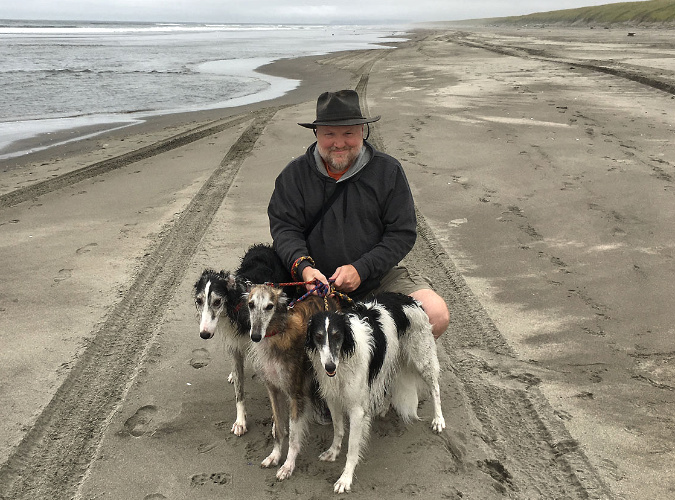
The author with our current pack — Shasta, Whiskey and Weston

There probably isn’t a more divisive topic among hikers than whether dogs should be leashed on trails. To qualify myself, I’ve included a few images of me with the beautiful pack of dogs that pretty much run our lives. We love dogs (and cats). My wife and I have owned 11 in our nearly 41 years together, with plenty of time spent in the outdoors with them. For what they are worth, those are my bona fides for posting this opinion piece!

My own experience as a longtime dog owner informs me on a couple fronts in the debate over leashes. First, owning a dog is an ongoing learning experience where the humans become increasingly aware of what is (and isn’t) in their control when hard-wired canine behavior simply takes over, no matter how well a dog has been trained. Second, nobody can love your dog as much as you do, and — can it be true? — sometimes people might really dislike your dog! What is  wrong with these people?
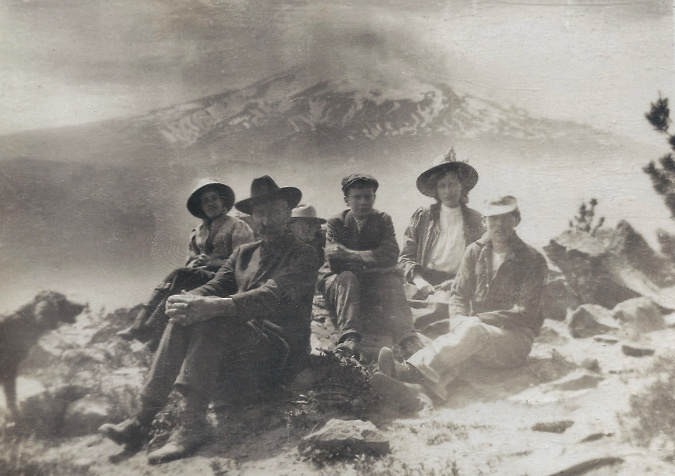
Dogs and exploring have gone hand-in-hand since the evolution of domestic canines. This rare trail scene is from around 1900 on the west summit of Lookout Mountain, with Mount Hood in the distance. Rover is even caught barking in this unusual image (head sticking in on the far left)

And thus the ongoing debate over leashes and trails. It really shouldn’t be a debate, because dogs should ALWAYS be in a leash on hiking trails. If they need a space to play unleashed, and don’t have room at home or a fenced backyard, then a dog park is semi-safest bet. Otherwise, when dogs are outside the home, they should be on a leash – especially on hiking trails.

Why? Aren’t trails meant to be a place where both you and your dog can escape the stresses of urban life and become immersed in nature? Absolutely. But as a physical space, trails are narrow, confined spaces, often in steep terrain with little room to navigate approaching hikers – or for other hikers to navigate you and your dog. This is especially true for our most popular trails, where you likely to encounter many other hikers, often with their own dogs. Keeping your dog on leash is as basic a gesture of mutual respect for others in sharing the trail. And while we humans find roaming a tree to be a stress-buster, dogs are usually more stressed off-leash than on one. They’re pack animals and leashes (with the pack leader at the other end) help maintain the pack order they crave.
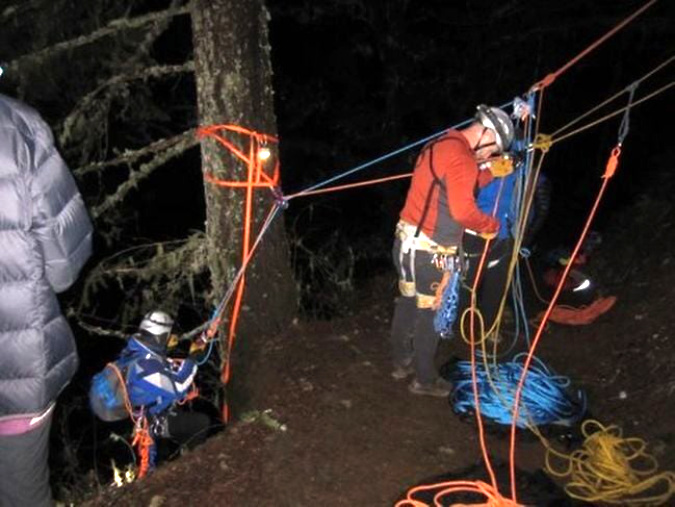
Oregon Humane Society Technical Animal Rescue Team (OHSTAR) volunteers in 2014 rescuing an off-leash dog that had fallen over a 150-foot cliff in the Columbia River Gorge. Most don’t survive these falls (photo: OHS)

Leashing your dog also protects it from harm, especially from other dogs. Dogs on trails behave differently than they might at home, including how they interact with other dogs they may perceive as a threat in an unfamiliar place. Unleashed dogs in WyEast Country also fall from cliffs in the Columbia River Gorge with regularity, and usually don’t survive. Rescuing those that survive the fall often involves putting volunteer crews at risk. This is why the Oregon Humane Society (OHS) recommends always keeping your dog on a leash when on the trail.

Perhaps most compellingly, leashing your dog helps avoid traumatizing other people who may have a deep fear of dogs, especially large dogs. This includes young children inexperienced with dogs, and whose lifetime perspective comes from their earliest encounters with animals, especially big dogs. 

When leashes are required… should you say something?

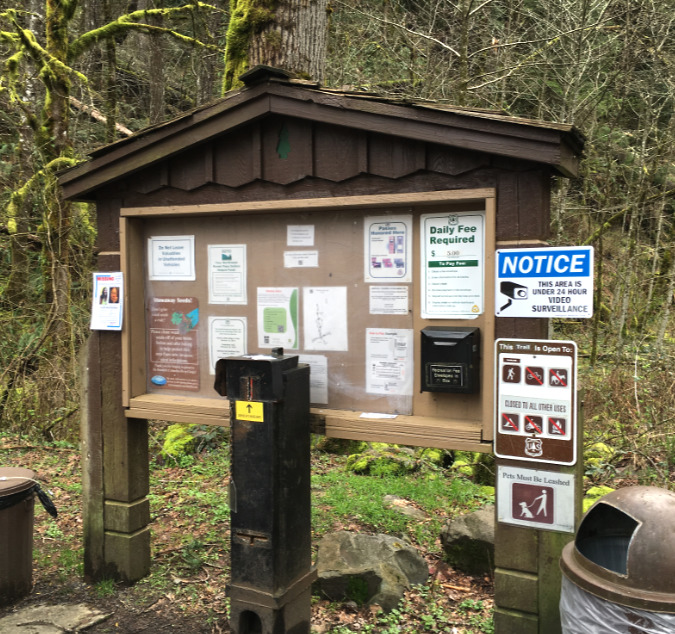
I hiked the Labyrinth Trail in the east Columbia River Gorge a few weeks ago, and noted the obvious sign at the trailhead: leashes required from December 1 through June 30. Winter and early spring are my preferred seasons for this trail, so it has been an ongoing frustration of mine to see so many people flouting this simple rule. After all, it’s intended to protect wildlife during a vulnerable season, who could disagree with that? Normally, I just grit my teeth and greet folks in a friendly way, but with a thought bubble that says “didn’t you SEE the sign?”
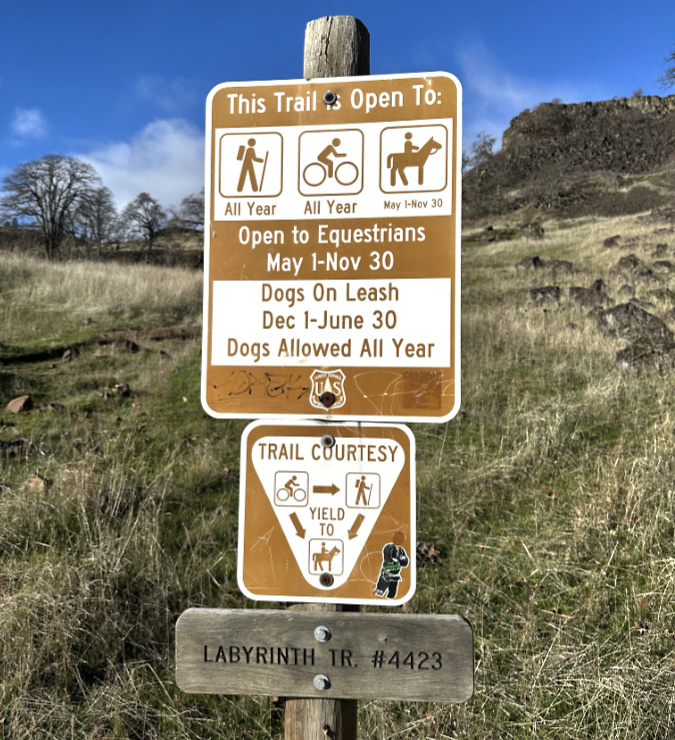
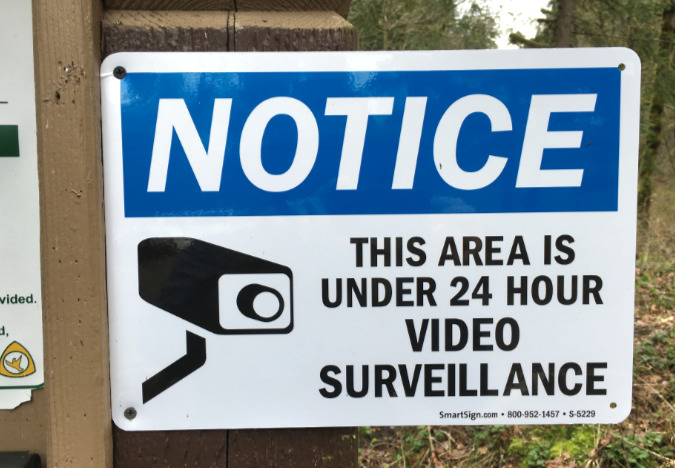
Yes, this signpost at the Labyrinth Trail is busy and somewhat confusing….
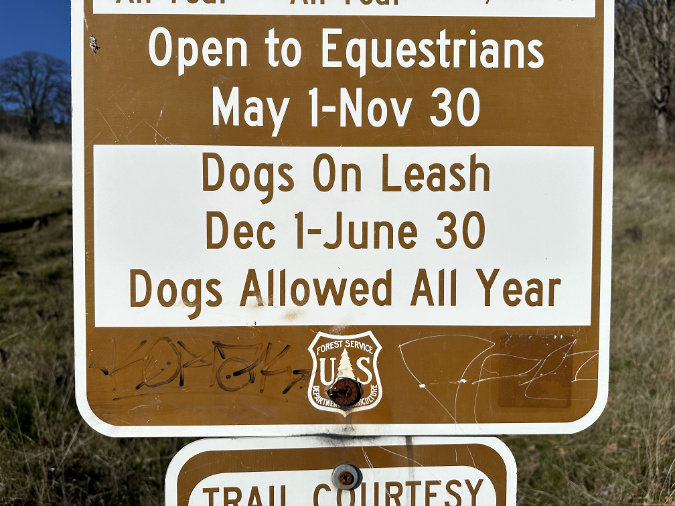
…but the leash requirement is quite clear!

Within a minute of taking the above photos, two hikers came from behind me with a pair of dogs off-leash, glanced at the sign, and walked right by without pausing to leash their pups. Emboldened by my recent high-speed chase for my stolen backpack, I decided to self-deputize as a ranger for some enforcement of my own that day, and speak up to people who had their dogs off-leash. I made the trip an experiment in “reminding” folks of the seasonal leash requirement. The response was not what I expected!

Over the course of that cool, clear Sunday afternoon, I encountered eight separate groups of hikers with dogs. Seven groups were on the main trail, and of these, only two had their dogs on-leash. The eighth group was walking along the abandoned section of highway that leads to the signed trailhead, and had two dogs on leash. Of the five groups who had dogs unleashed, the degree of roaming ahead of their owners varied largely based on size, with big dogs much more likely to roam. 

How did people respond when some greybeard stranger confronted them about their off-leash-dog? There were a variety of reactions, though I’m pleased to say that I gradually perfected a non-threatening (I think) approach to my newly self-deputized role of The Enforcer.
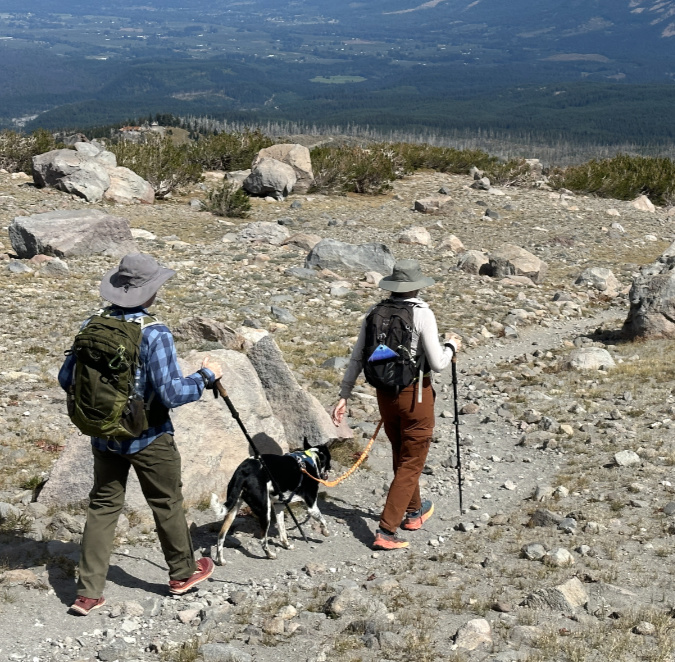
This pup is properly leashed on the high slopes of Mount Hood, protecting alpine wildlife who have little cover at this elevation

On my first encounter, the owner seemed startled and surprised that anybody would say something about their off-leash dog. I opened the conversation with “Hi, just FYI this trail is on leash-only this time of year.” They broke eye contact and muttered something that sounded like “oh, okay…”. I responded with a cheerful “have a nice hike!”. 

It felt very awkward. While I always greet people I see on the trail, it’s usually just to wish them a nice hike. Commenting on their off-leash dog came across as a scold, something I wouldn’t want to be on the receiving end of, nor is my nature to do. I don’t know even how effective the “scold” was on this firsts encounter, as the person certainly didn’t pause to leash their dog as they scooted down the trail in the opposite direction.

The next encounter is one I rehearsed when I saw a pair of big dogs running wild in the short video clip that I captured, below. I really wanted to talk to this group because these dogs were roaming well beyond sight of the owners. This is clearly the impact on wildlife that leash rules are intended to minimize, let alone the impact on other hikers — especially those with their own dogs. Alas, I never did catch up with this group, though I did hear much whistling and loud calling as they attempted to keep their unruly dogs within sight. I wondered how many other hikers might have had their day on the Labyrinth Trail spoiled by unwelcome encounters with this group? Or wildlife that had been terrorized or even harmed?

Dogs gone wild on the Labyrinth Trail…

Next, the pair of hikers with three dogs in the second part of the video approached me. This was the same pair that had walked right past the trailhead sign. I attempted a smoother, more sympathetic delivery on this encounter: “Hi, how are you? Hey, you might not know, but this trail requires a leash this time of year. It’s sort of hidden on the trailhead sign.” That’s not remotely true, of course, but I wanted to try something less threatening in this round. 

One of the hikers said in a rather surly reply “well WE didn’t see any sign“ and the other simply looked quite annoyed that I had dared to say anything at all. Thud. Clearly, my smooth, low-key delivery hadn’t worked. So, I replied “no worries, not trying to be a jerk, I just thought you would want to know. Have a great hike!” Silence. 

I’m not sure how that last part landed with this pair, but there is zero chance they had not seen the sign at the trailhead, nor did they bother to leash up their dogs as they headed off from our exchange on the trail. Did they actually read the sign on some earlier visit? Hard to know, but from my vantage point they walked right past it, as if they had hiked the trail many times. Most of us stop to read directional signs, after all, especially if we’re not familiar with the trail.

While I’d like to give them the benefit of the doubt, more likely they just decided the rules do not apply to them. That was the vibe I got from our brief exchange, and therein lies one of the great obstacles to posting leash requirements on trails without any enforcement. Some people really just don’t care, unfortunately.
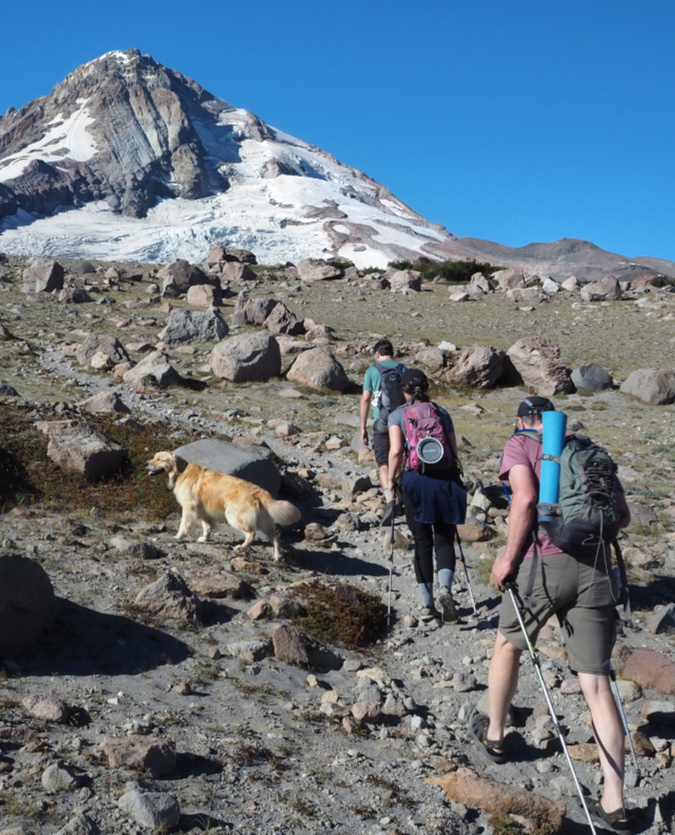
This dog on the Cooper Spur Trail should be on a leash. Big dogs can terrorize a lot of wildlife in open terrain. On Mount Hood, unleashed dogs also regularly chase wildlife onto loose glacial canyon slopes, sometimes becoming stranded and requiring rescue

The next two sets of hikers had their dogs on-leash, so I decided to complement my self-appointed policing with some unsolicited praise. The first was an older hiker with an adorable dog that looks like it might have been an unlikely Corgi – German Shepherd mix. I greeted them with “Hi! Thank you for keeping your dog on leash!” 

The hiker smiled (I think the dog did, too) and replied that it was the only way they could really keep track of where their low-to-the-ground dog was, and that they worried about it tangling with a rattlesnake or other hazards off trail. That’s a responsible dog owner! I’ll return to those potential hazards later in this article. I wished them a good hike and moved on.
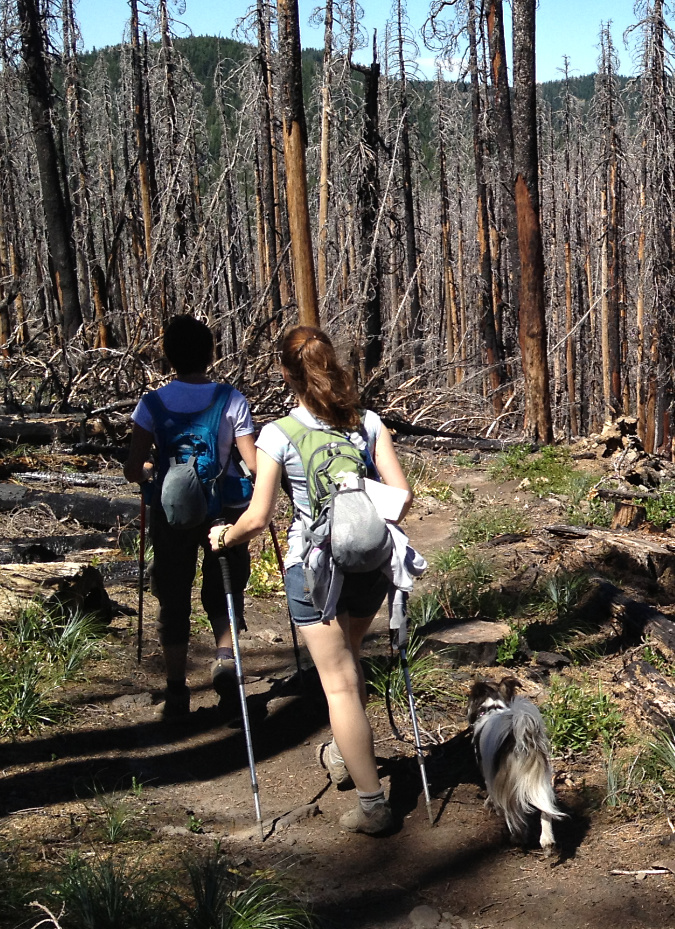
Even little dogs should be leashed. Though they may not be scary, even when they approach grownups aggressively or barking, they can be terrifying to youngsters. This hiker is setting a great example by leashing their small dog in the Mount Hood Wilderness

The second group with their dog on-leash was a young couple with a roughly six-year-old kid and a very friendly golden retriever. I said “Hi! Thank you for leashing your dog, not many people are today!” Then, thinking about impressionable young ears, I added “I think the leash requirement is to protect wildlife this time of year.“ 

The couple beamed and were very receptive. I’m going to guess they spent some time talking to their youngster about this as they headed up the trail – hopefully, anyway. They were setting a really good example, and what kid doesn’t want to watch out for wildlife?
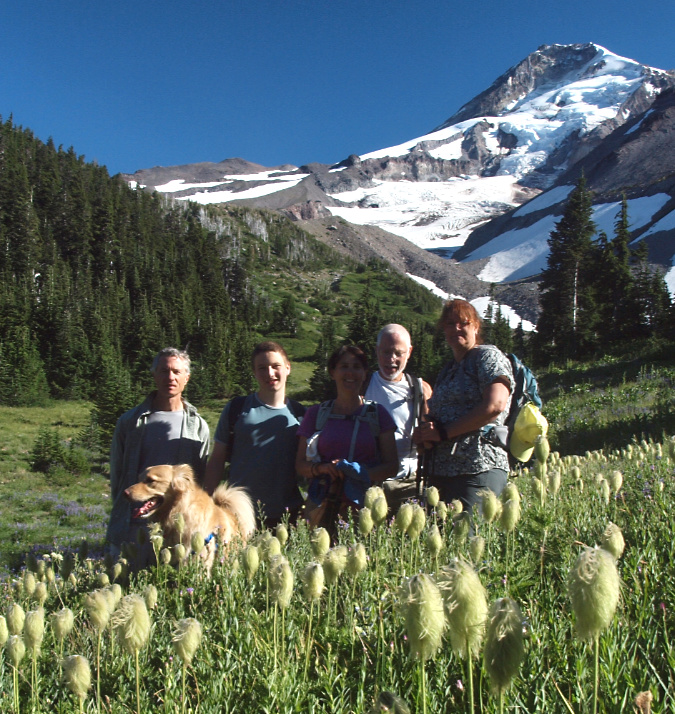
Family outing to Elk Cove with their beautiful, big dog properly leashed — and they even posed for me!

I continued to fine-tune my comments as I encountered still more hikers with off-leash dogs. 

“Hi! Beautiful day up here! Hey, just letting you know that this trail requires a leash this time of year. Your dogs are beautiful! Have a good hike.” 

“You, too!” they called back to me with smiles.

Bing! Bing! Bing! It turns out that dog platitudes are the secret sauce – of course! In both cases where I tried this approach, they even thanked me for giving them a heads-up. Truthfully, a couple of these dogs were downright homely, but they were beautiful to their owners, and that’s all that matters — as any dog owner knows.
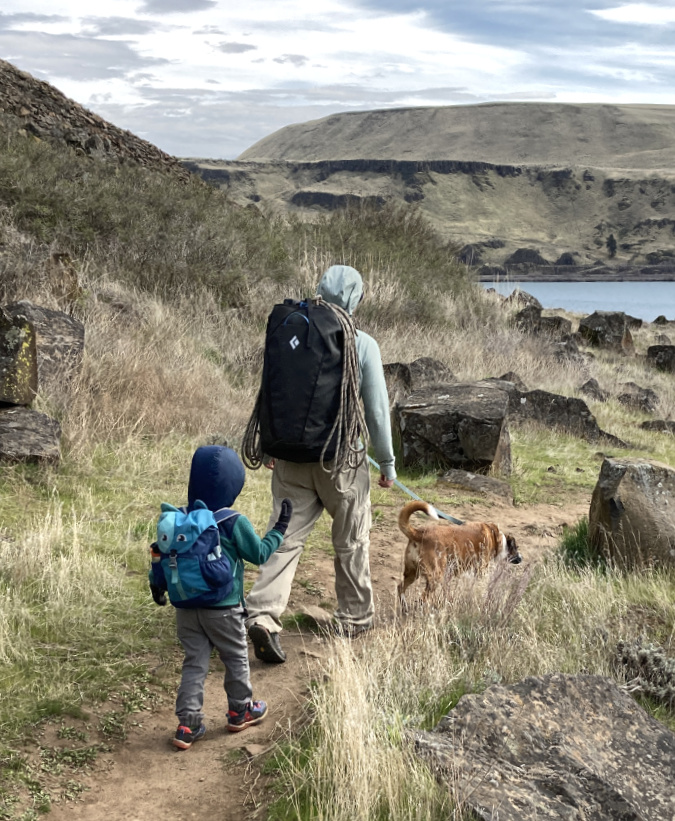
This dad is setting a good example for his son at Horsethief Butte. Leashing your dog on trails is a great way to help youngsters understand the importance of protecting wildlife and respecting other hikers

Take-aways from my self-deputized stint as leash-enforcer? Most people follow the rules, or are at least open to following the rules. Yes, there will always be those who knowingly exempt themselves from the rules the rest of us choose to live by (and yes, people with that mindset are having a bit of a moment in our society right now), but most people appreciate the concept of The Commons — and our responsibility as individuals to protect it from tragedy.

Better signage where leashes are required could build on these generally good intentions. At the Labyrinth Trail, the signage is a part of the problem. While simply stating regulations in rather dry fashion at trailheads is the default on our public lands, here’s another way this could be conveyed both firmly, and in a more explanatory way at the Labyrinth:
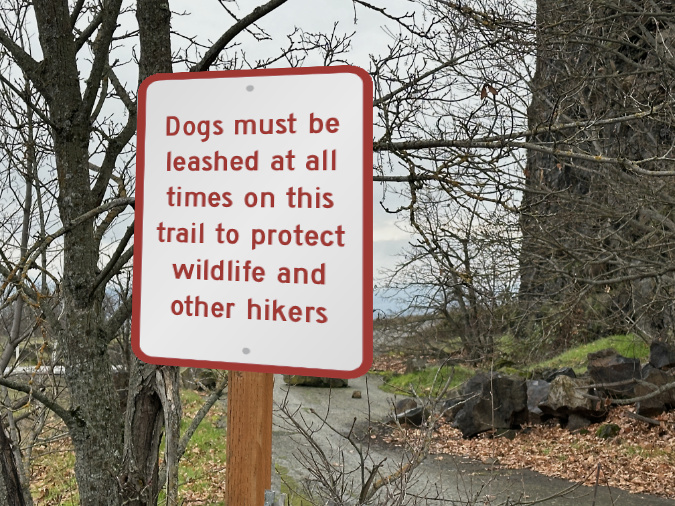
Clear, concise and visible…

Too pollyannish? Okay, here’s an alternative version for the more self-centered hiker with dogs:

When altruism doesn’t work, try fear…

These examples are also important in their location. By the time most people get to the Labyrinth trailhead, they have already hiked a fair distance an abandoned highway section that functions as the access trail from Rowland Lake. Before my creative license was applied, here’s the actual sign that greets hundreds of hikers who park here every week to hike the Labyrinth Trail:
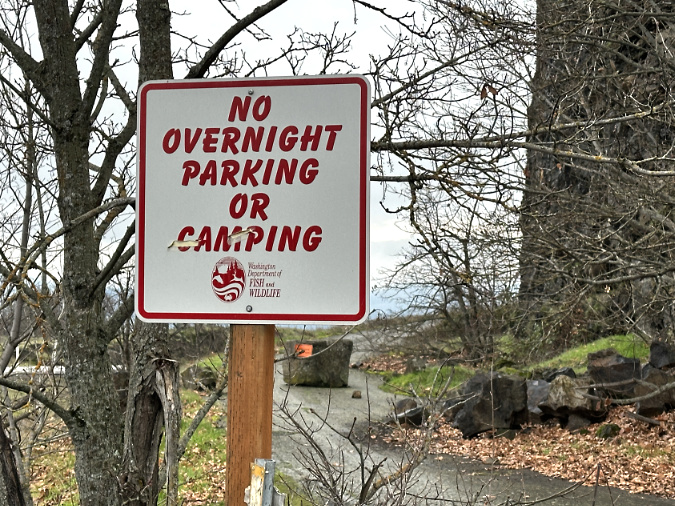
The existing signpost could use an upgrade!

Fair enough, but this would be a great spot to post the leash rules where dog owners can still fetch (ahem) a leash from the car, or perhaps even decide to pick another trail. The existing sign post was installed by the Washington Department of Fish and Wildlife, so it would require some agency coordination, as the Labyrinth Trail is on U.S. Forest Service land, but I suspect the two could agree in the interest of protecting wildlife.

Just beyond the “no overnight parking” signpost is one of the more obscure signs in the Columbia Gorge:
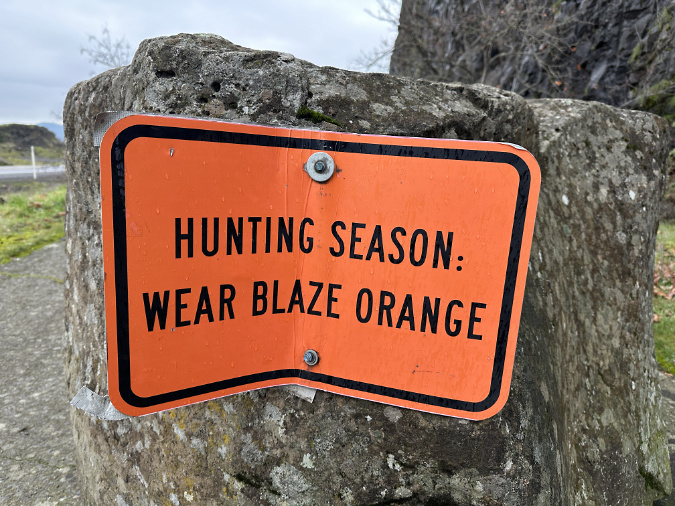
This is one solution to wood signposts that rot off at the base…

Whoever installed this hunting sign meant business: it’s bolted to a basalt boulder… which also means that hunting season is every season? Maybe this could also be a spot to talk about the on-leash season and its purpose?

Another problem with the Labyrinth leash rule is that it’s way too complicated for most to remember. On-leash season starts on December 1? Or was it December 30? And it ends on June 30 …? Or was it June 1? Or May 30? Add in the May 1 to November 30 equestrian season, and this is the sort of trailhead word salad that people begin to tune out. 

Meanwhile, just a few miles to the east (below) at the Catherine Creek trailhead, leashes are required year-round on trails that are inter-connected to the Labyrinth trial network (below).
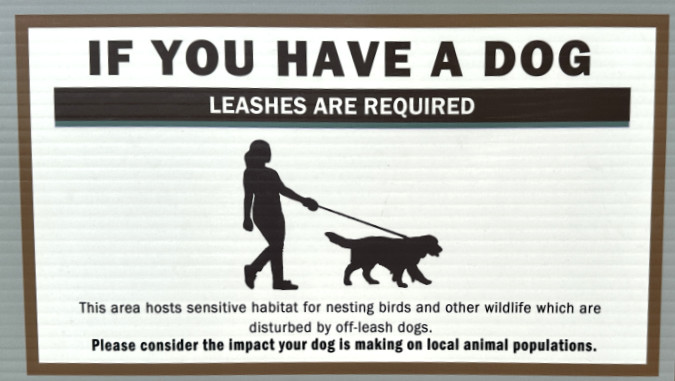
The Forest Service has a tighter leash on its dog policies at nearby Catherine Creek, including a bit of explanation to educate pet owners

Though the conflicting policy is confusing, this is much better, and  kudos to the Forest Service for drawing a bright line with leashes on the Catherine Creek end of the trail system. More leash-rule signs should follow the Catherine Creek model. Protecting wildlife and other hikers is important, and making this point clearly and prominently where people park, before they head up the trail, is as important at the message, itself. 

The Catherine Creek policy also gets it right on leashes, overall. Given the many good reasons for alwayskeeping dogs on leash, complicated seasonal requirements don’t make much sense, and only serve undermine the main goal of protecting wildlife if hikers are confused.

Kids and wildlife are the best arguments for leashes

I have been charged many times by loose dogs whose owners are far behind or out of sight. Fortunately, I have never had to harm one by defending myself with a hiking pole, but I’ve come close on a couple occasions with a couple of big, snarling dogs. Inevitably, the owners catch up, and — usually embarrassed — apologize that “Fido is never like that at home!” 
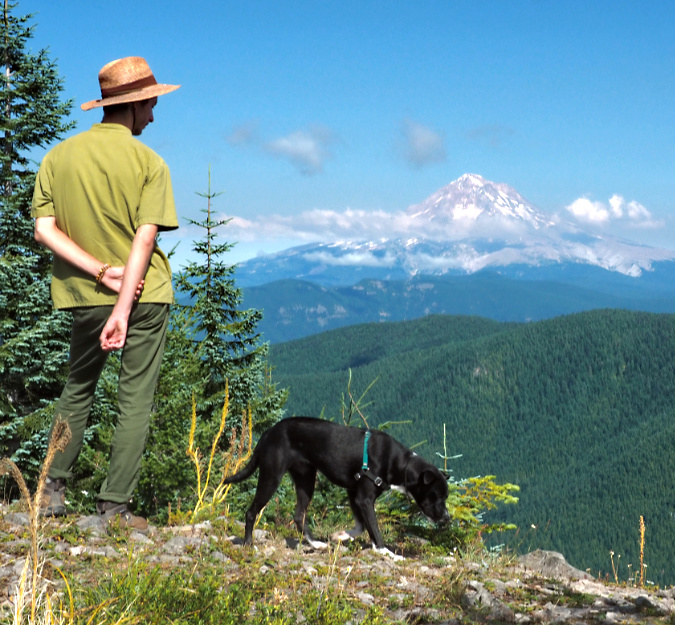
Think your dog is under “voice control”? That’s a fallacy – especially with a puppy like this one seen on the McIntyre Ridge trail. Were it to wander off and become lost, the chances of this young dog surviving in a wilderness would be slim

In these moments, I’m usually irritated enough that I don’t say anything at all, but in my new, more forward mindset, I already have a response: “But Fido isn’t home, is he? And neither are you. So unless he’s on a leash with you at the other end, this is how you should expect him to respond to a stranger. He’s a dog.” 

Well, I’ll say that in my unspoken thought bubble, at least — but it’s quite true, and any dog owner should know this. Most dogs are not themselves when they’re out on a trail, away from home.

I’ve also watched several off-leash dogs chase down wildlife, from tiny pikas to rabbits and deer. I was hiking on Mount Hood with a friend once and they commented on the lack of marmots compared to Mount Rainier – a national park where dogs are simply not allowed on trails. I knew the reason, but a few years ago I was able to catch a canine culprit in the act just west of Timberline Lodge. These hikers (below) had climbed past me, and they were just beyond this section of trail when their roaming dog took off in a sprint.
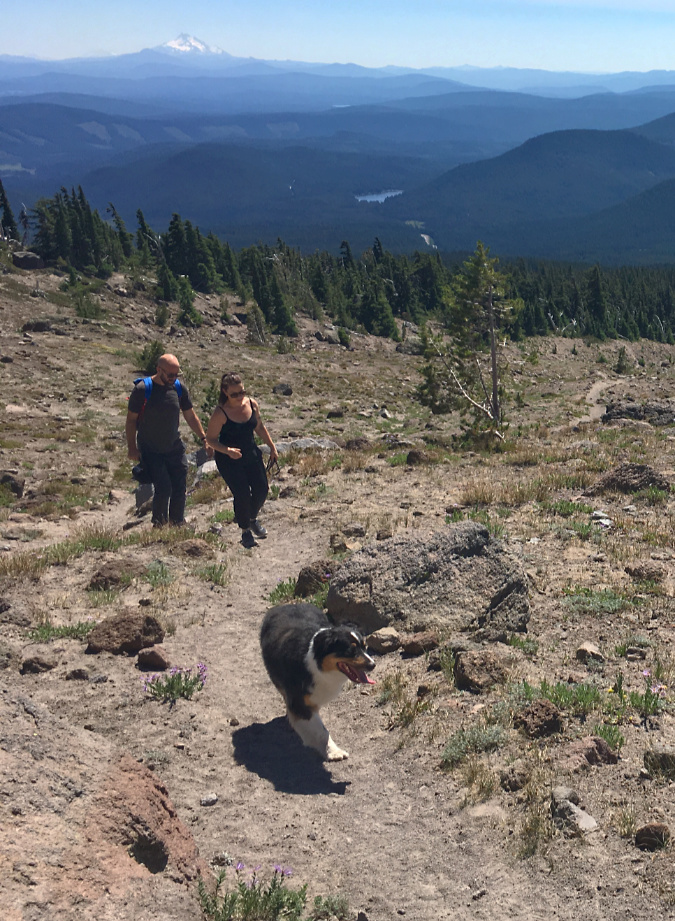
Fido way out ahead, looking for wildlife to chase down..

I already had my camera out, and photographed the dog as it chased a terrorized marmot down the rocky slope on the right (see below), across the snowfield and up to the marmot’s den, under some boulders on the left side of the snowfield. The owners were yelling helplessly as the dog attempted to dig into the marmot’s den at least 100 yards away from them. For its part, the marmot climbed up on the boulder and tried frantically to distract the dog. Why? Probably because this was in late spring and it may have had a litter of pups in its den. Marmots give birth to litters of just 3-8 young every other year, so they’re highly vulnerable to natural predation, never mind unruly dogs. 
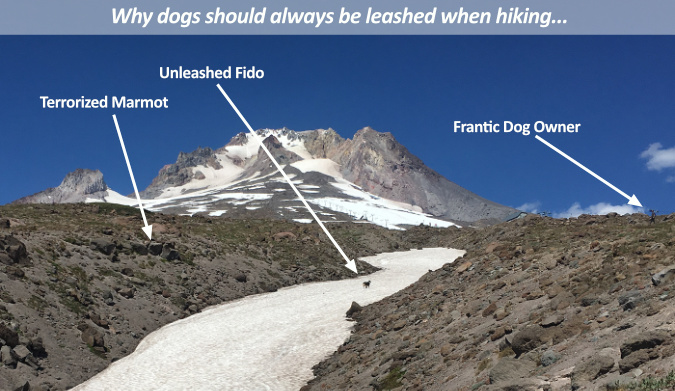
[click here for a larger view]

None of this incident was the fault of the dog: it was just being a dog. The owners? They were just being thoughtless. Did they leash their dog after this incident? Nope. Why would they? The official pet policy for Mount Hood National Forest requires leashes “in developed areas” (that legal definition is left to visitors to figure that out). Otherwise, the Forest Service simply requires that “all dogs must be within sight of the owner and in complete voice control.” 

That last part is the real misnomer. There is no such thing as “complete voice control” of a dog, especially out in nature. The illusion that this level of discipline even exists results in lots of sad signs posted at trailheads where an off-leash dog has been lost in the woods. The cruel reality is that most these lost dogs will likely die from exposure to the elements, injury or even predation — not something any dog owner would wish for their pet.
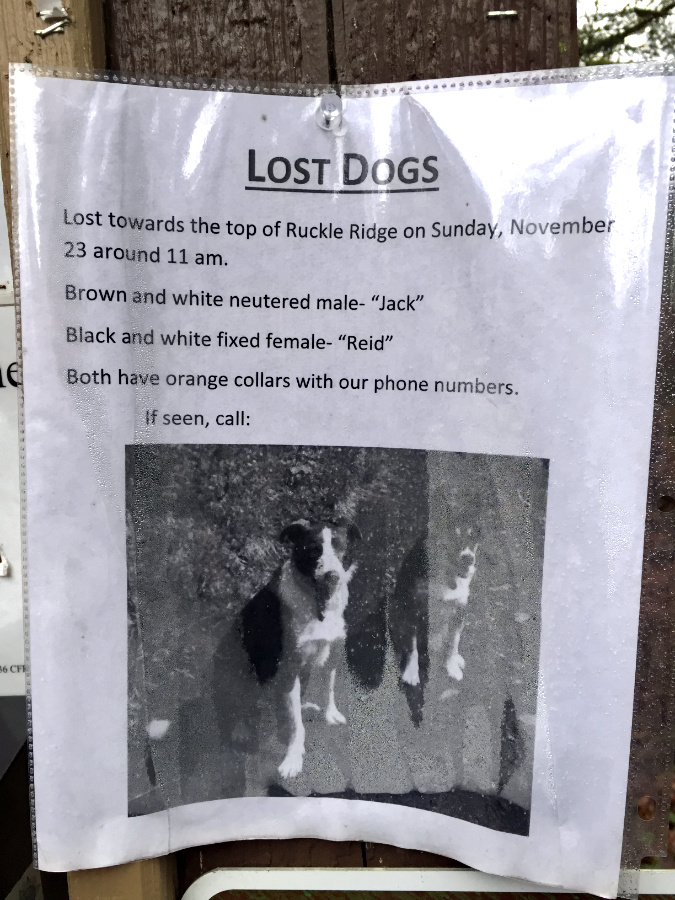
Posters like this get me every time, and I see them all the time at trailheads. Losing one pup in a rugged area like the Hatfield Wilderness is heartbreaking, but two? I don’t know if these dogs were ever found, but the risks of falling or getting stranded on a cliff in the Gorge have needlessly claimed many dogs over the years

While impacts on wildlife can seem a bit abstract when drawing the line on leashes, a more compelling argument comes when off-leash dogs terrorize young children on trails. It’s more common that most of us would like to believe, and usually only reported when a child is injured (or worse) by an off-leash dog. Young kids are disproportionally attacked by dogs compared to adults, accounting for more than half of all dog bite victims. Kids four years and under are also the most likely to be fatally attacked, a horrific outcome to consider.

A more far-reaching impact is on the untold number of young kids who are traumatized by an off-leash, out-of-control dog on a trail. This isn’t even a factor in most land agency leash rules, but for our broader society, it could be the most lasting. It’s so widespread, it has a name: cynophobia, or the fear of dogs, with most adults reporting that this condition began with a terrifying childhood experience. An off-leash dog aggressively rushing a youngster on the trail might not result in a dog bite, but it could needlessly be cheating that child of a lifetime of the joy that having a pet offers by instilling deep fear from an early, scary encounter.
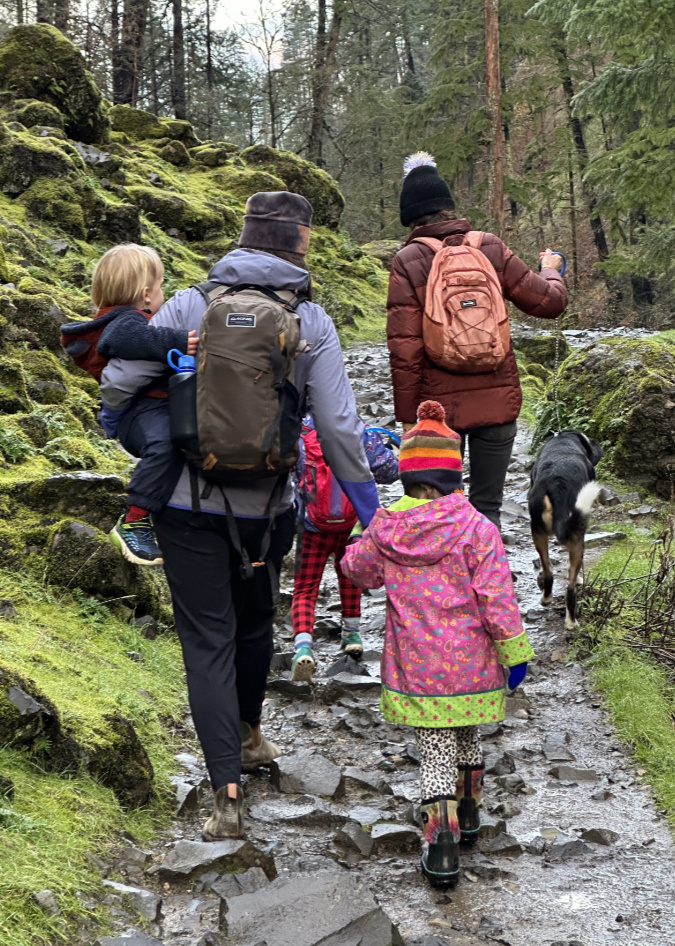
Young kids and off-leash dogs — especially big dogs — don’t mix on trails. These moms are setting a great example on the Wahclella Falls trail by leashing the family dog on this popular path

With a crazy quilt of uneven, confusing and mostly ineffective public land leash rules, most trail users are poorly informed on the true risks and impacts of having their dogs off-leash, while some folks are just plain defiant their perceived right to let their dog run loose. 

Only in our national parks (and a few local parks, like Metro’s in the Portland region) is there a serious effort to manage dogs, and usually with a fair amount of grousing from dog owners. While the National Park Service has been especially fearless in how they manage dogs, other state and federal land agencies continue to be wary of confronting the issue. So, is this a problem that can even be fixed?

It’s on us…

Unfortunately, the public agency reluctance won’t be solved anytime soon, as the lack of continuity in leash rules simply reflects the lack of consensus – and knowledge — among dog owners. Therefore, it’s really up to us as hikers and dog owners to change the culture of off-leash dogs. The days when dogs could run free on our trails on public lands are long over, both because of the sheer number of people using our trails, but also because we now know of the impact it has on wildlife, the environment and our dogs.
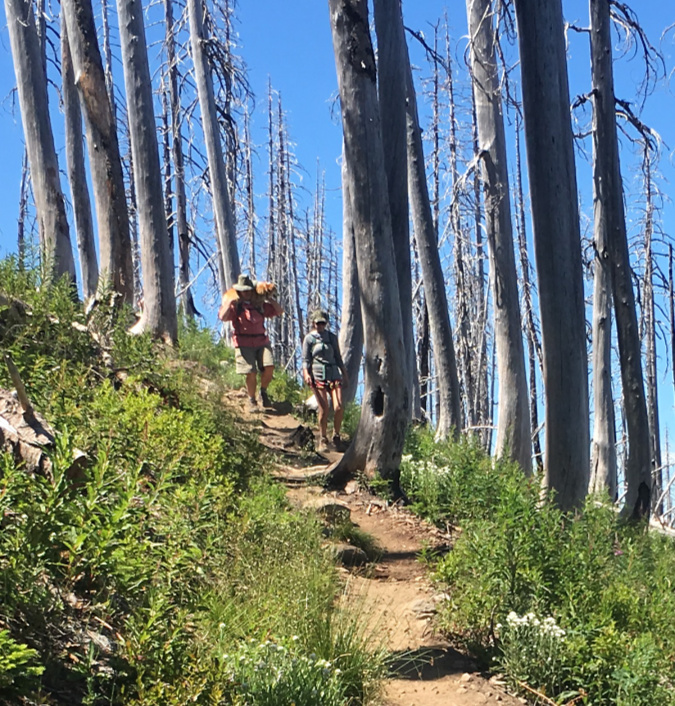
That’s not a pack on the hiker in the back — it’s their injured 30-lb dog that they were carrying out of the Mount Hood Wilderness. Keeping a dog on-leash is the best way to keep it safe from injury on the trail – though in this case, the trail proved too much for the dog, and it would have been a safer call to simply leave Fido at home for this hike

Is it possible to foster a new, grassroots leash ethic for dogs? Of course! After all, not many people toss garbage out the window when driving these days, though this was common practice until the anti-litter campaigns of the 1960s and early 70s. Those efforts grew from local, grassroots efforts that changed both our ethics and laws. Recycling began in the same way in the 1970s, first as a grassroots movement, and eventually transforming how governments manage waste collection.

Hikers with dogs began their own ethics conversion in the late 1990s with poop bags, an outgrowth of the Leave No Trace movement that has now become mainstream. Yes, people forget to pick up their poop bags on the way out (pro tip: tie them to your pack — yes, you read that correctly), but only a few leave them behind when you consider how many dogs and hikers are using our most popular trails. The overall benefit is still very good.
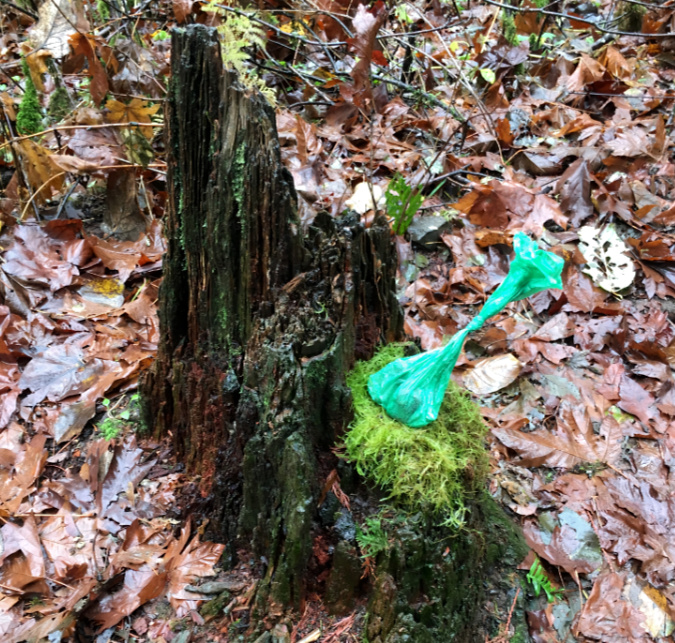
This hiker set their poop bag on a stump, presumably to help remember it on the way out? 
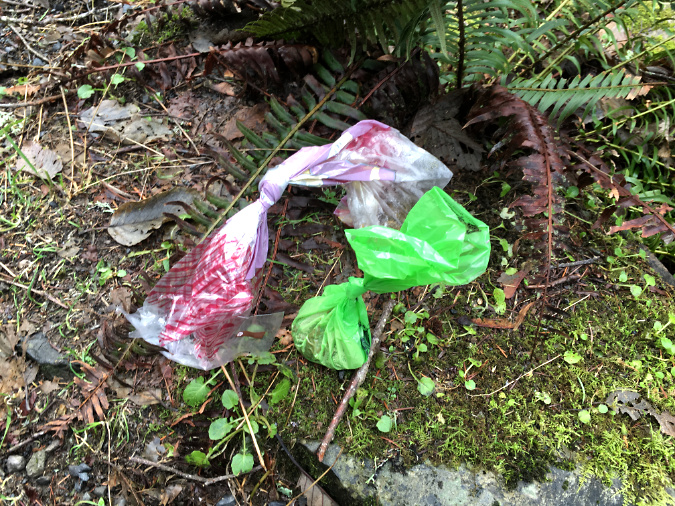
These hikers went for strength in numbers, but the best plan is to tie it to your pack. Nobody wants to see forgotten poop bags on the trail!

How do we start a new on-leash ethics movement? Why not online? I probably don’t have the pull with Mark Zuckerberg to add a trending “My dog is leashed!” badge to Facebook or Instagram, but short of that… why, I can at least post some handy (and somewhat facetious) clip ‘n save wallet cards on my obscure blog to download and share! 

I’ve provided two versions to reflect our divisive times. The first appeals to the recent lurch toward self-involvement and me-ism that is reigning in our current political climate. This clip-n-save card speaks to the self-interest in all of us – like it or not:
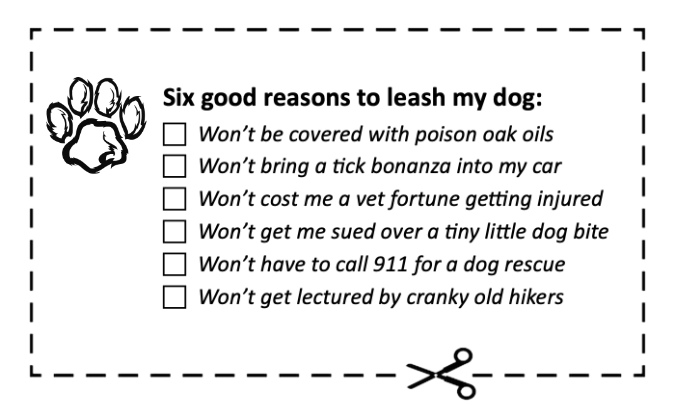
Card for the times..?

But for those who seek a higher philosophical plane — and perhaps defying the current political zeitgeist — please join me in carrying this more altruistic version:
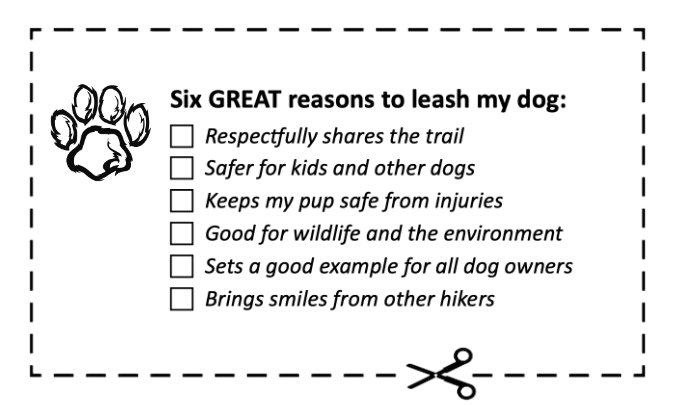
Card for the caring!

Conflicted? You can carry both! Better yet, we can all simply adopt these principles in our everyday trail ethics. Whatever our motivation, the facts argue for keeping dogs leashed on trails, simple as that. The first step is knowing the facts — clip those cards — and especially the risks of letting Fido run wild. Who knows, we might just change our little corner of the world?
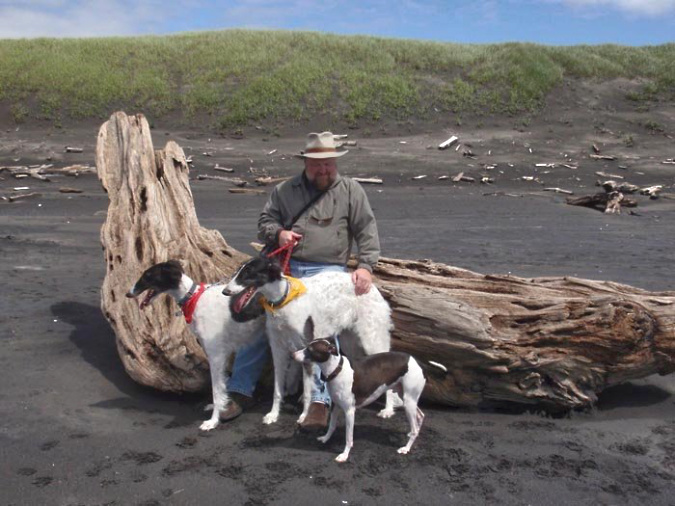
The author back in 2009 with our big (and little) dog pack — Borzoi sisters Joker and Jester and our little rescue Whippet Jinx. He thought he was a borzoi, too… and so did the girls!

Thanks for reading this far, and for caring about our public lands in WyEast Country. I hope to see you and your (lovingly leashed) dogs on the trail, sometime!
___________

Postscript: I’ll close this article with another acknowledgment that our federal lands workforce are under unprecedented, highly personal attack by a new administration stacked with political appointees chosen for their radical, fringe views toward the environment, and who are openly hostile to the very concept of public lands that belong to everyone. The attacks are reckless, cruel and purposely vindictive to the perceived “enemies” of the regime. 

In just the past two weeks, thousands of Forest Service, Bureau of Land Management and National Park Service workers have been fired for the crime of being recently hired, or having accepted a promotion or new position. It’s outrageous, illogical and probably illegal, but that doesn’t make it any easier for the public servants who have been targeted.
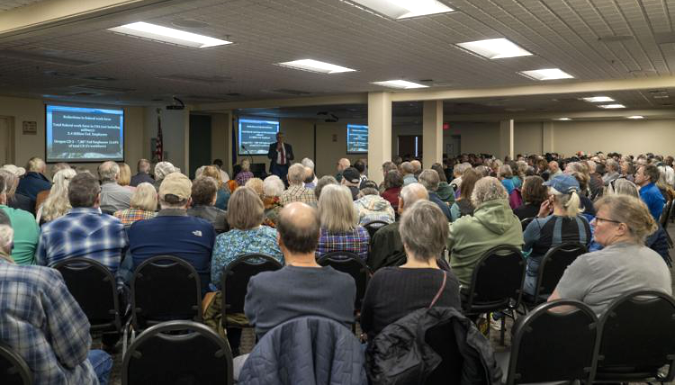
U.S. Representative Cliff Bentz answering to a one of four overflow town hall crowds last week across Eastern Oregon that confronted him over the attack on the federal workforce last week

We’ll be on defense on this front for the next few years, unfortunately. So, at this moment, it’s especially important to share our unequivocal support for the federal workers who have devoted their careers to caring for our public lands. We can all do that with kind words when we see them working in the field, by helping them care for the land, and by pushing back on disinformation wherever we see it. 
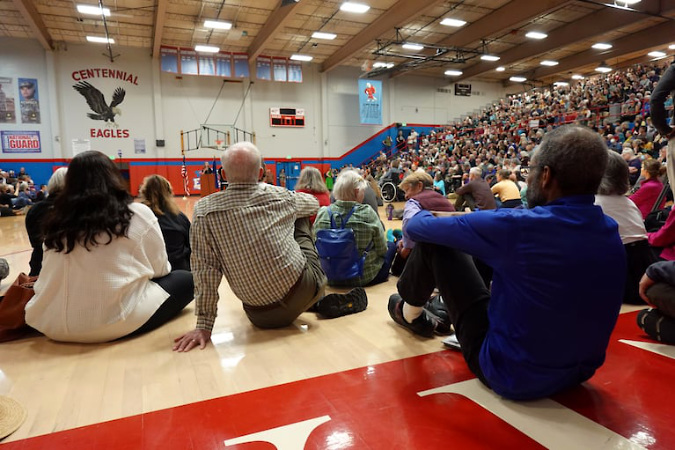
Hundreds turnout out in Gresham last weekend to press freshman U.S. Representative Maxine Dexter to do more to push back on the attack on federal agencies (photo: OPB News)

We can also act by voicing our support for public lands and federal workers to our congressional representatives and senators. It really does work. Oregon’s lone Republican in Congress recently got a loud taste of it when he ventured home to what he thought would be a just another series of safe, sleepy town halls in his Eastern Oregon district. Instead, he faced overflow crowds of angry, deeply concerned constituents. 

Other Oregon representatives have seen similar town hall turnouts and are reporting thousands of phone calls from concerned constituents, and they are scrambling for ways to be accountable. This is already having an impact! More to come, of course, but the tide does seem to be turning…

_________________

Tom Kloster • March 2025

Incident at Starvation Creek

Foggy day at Starvation Creek…

What’s wrong with this photo? Okay, plenty from a photographer’s perspective – starting with the water spot on the lens and a picnic table sticking into the photo. But it turns out the REAL problem that foggy day last December at Starvation Creek Falls was happening BEHIND me. This is the story of how my backpack was stolen by a bold theft ring… and how I got it back! 

__________________

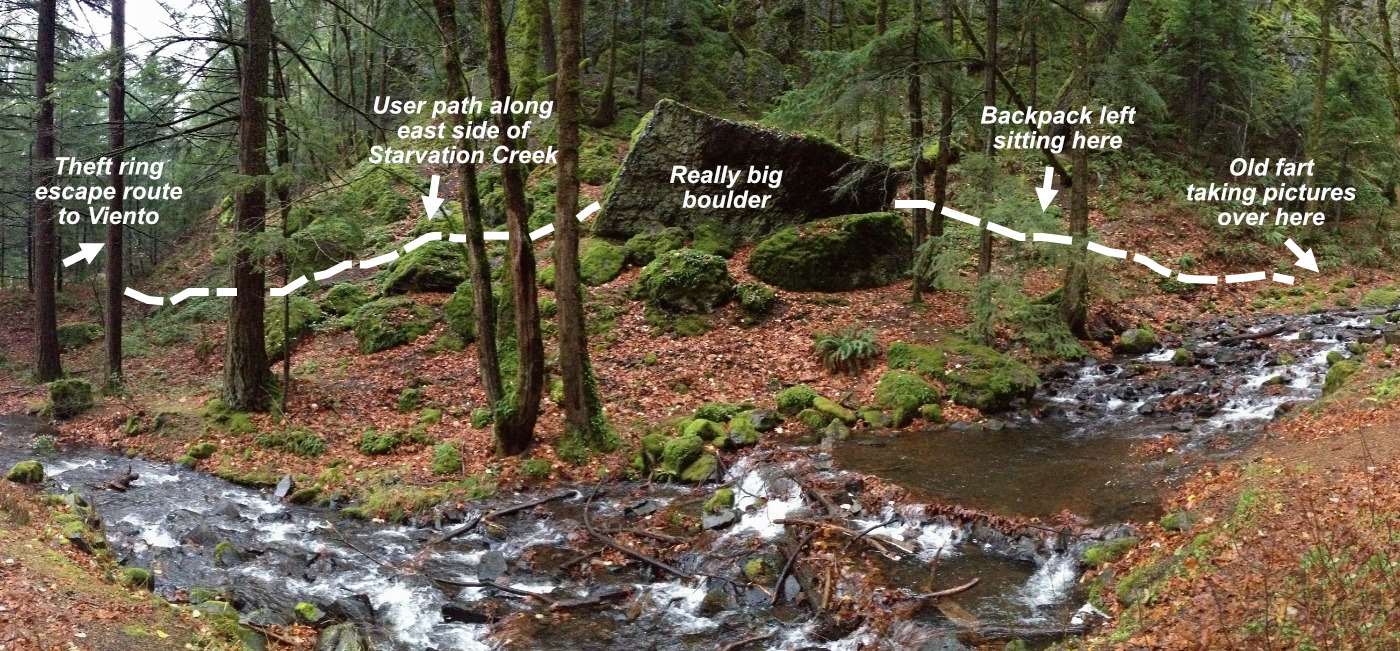
I was standing out in the middle of Starvation Creek on Christmas Eve last month with my camera on a tripod for long exposures. The Gorge streams were running high after weeks of steady rainfall, and I was mostly trying to keep spray off the lens that day. My embarrassingly large, overly stuffed winter backpack was sitting maybe 20 feet above me on the short user trail that follows the east side of the creek in this popular rest stop – just out of earshot. That’s where things went very wrong.

At some point, a woman across the creek on the paved “official” trail was waving to me. The falls and creek were very noisy with all the extra runoff, so I couldn’t hear her at all. I thought she was asking if she was stepping into my photo, so I yelled “no” and gave her a thumbs up. Well, it turns out she was asking if the two “kids” behind me were with me – I didn’t even know they were there! I learned this unfortunate reality a few minutes later when I turned around to discover that my pack had disappeared.

The scene of the pack heist at Starvation Creek…

[click here for a large version]

It was so brazen that at first I was stunned, thinking it must have rolled into the creek, instead. But when it was clear it had been stolen, I realized I might catch up the thieves at the Starvation Creek parking area. 

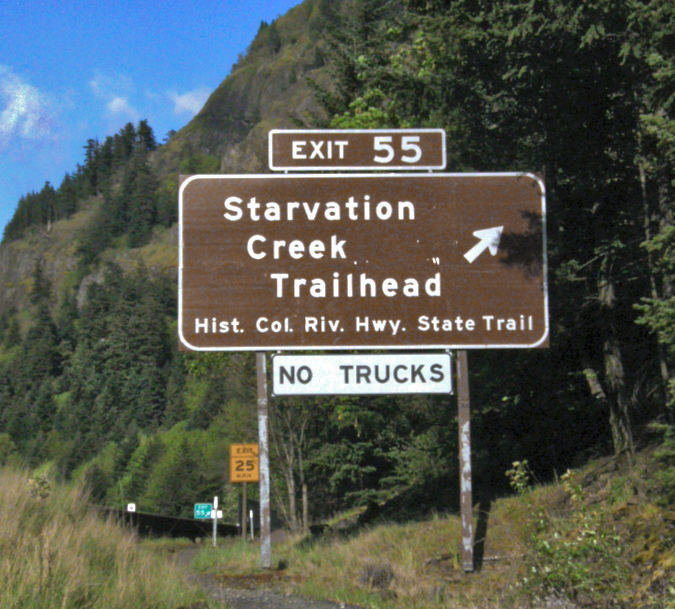
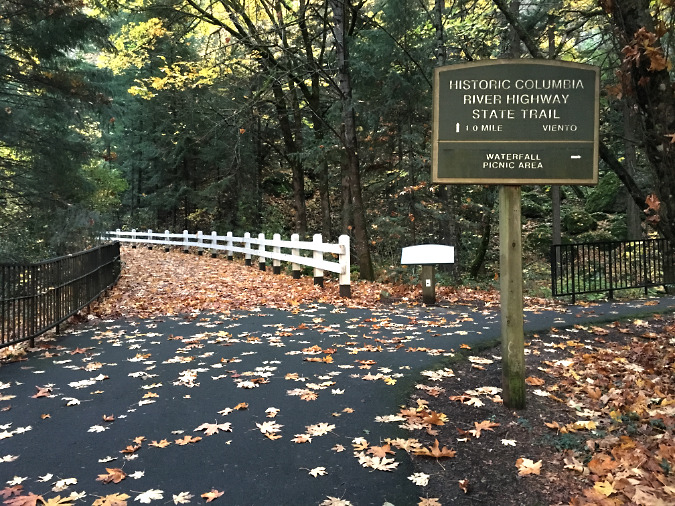
So, I sprinted back to the trailhead and, once again, met the woman who had called to me from across the creek. This is when I learned what she had been shouting to me about. She was very helpful and able to describe “two teenagers, one with bushy dark hair”. Critically, she also said they had gone east on the paved trail Historic Highway State Trail – away from the Starvation Creek trailhead that was just a few hundred feet away, and toward the next trailhead to the east, at Viento State Park, about one mile away.

Determined to head them off at the pass, I thanked her and jumped in the car, roaring east to Viento State Park. Along the way, I did a mental inventory of all that was in my pack: pretty much EVERYTHING but my camera, tripod and a car key that I always keep in a zipped pants pocket. My phone, wallet, house keys, camera lenses and a bunch of other gear — along with a fairly new winter pack that I loved were all gone. PRIMAL SCREAM MOMENT! (…and boy, did it feel good!)

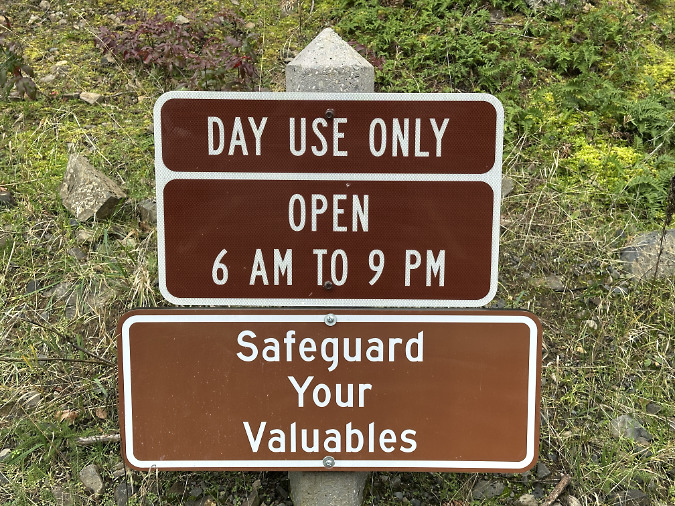
Sign at the Viento trailhead. Safeguard your valuables, indeed..!

Within a couple minutes, I pulled into the Viento trailhead, and — no cars! Weird. But knowing there was no way they could have made it this far on foot so quickly, I then circled under the highway to the north Viento Campground, located on the opposite side, to see if their getaway car was parked there.

As I approached the north campground entrance, an older, black sedan was heading toward me along the main access road. I waved my arm out the window to flag them down to see if they’d seen a couple teenagers with my large grey pack in tow. I could tell the driver wasn’t going to stop for me – frustrating — so I crowded over the center line, partly blocking the road, and held my hand up for him to stop. After all, who doesn’t stop when someone is waving for help?

North Viento campground… where I encountered a sketchy dude…

The driver finally stopped, rolled down his window and responded with deadpan “no, I didn’t see any kids.” He was a sketchy guy and his car was trashed inside, so, a few alarms went off in my head. He also clearly just wanted to leave. However, there was no way he could have gotten this far on foot in the amount of time that had elapsed since my pack was snatched, and he was more like 30-something — not remotely a teenager. So, I said “thanks” and circled back to Starvation Creek to see if I could trap the teen thieves on the other end! 

This entailed backtracking five miles west on the freeway to the Wyeth exit, then doubling back four miles east to return to Starvation Creek State Park, which is only accessible eastbound. This turned out to be a VERY roundabout route when attempting to break up a backpack-stealing ring. I thus “may” have exceeded the speed limit slightly en route — and also let of a few more Chewbacca-esque PRIMAL SCREAMS! (…they did seem to help!)

Whew… finally back to Starvation Creek!

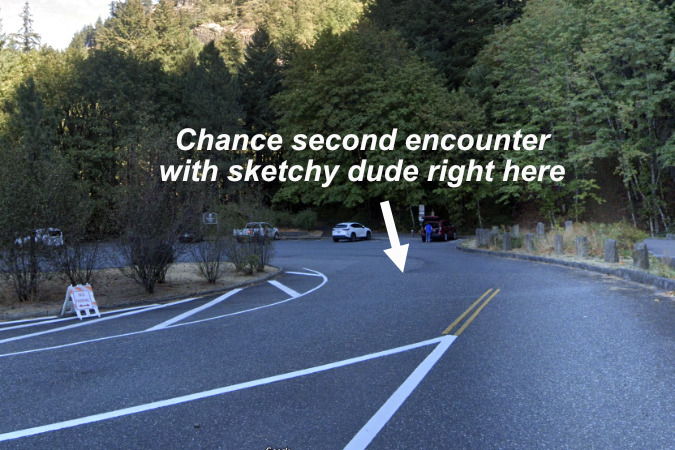
Then came the serendipitous part of this saga: when I finally reached the Starvation Creek exit and was pulling in, the SAME SKETCHY DUDE in the black BMW from Viento was leaving! He was pulling out at exactly the moment I pulled in! My window was down, and we locked eyes as we passed each other. He then floored it onto the freeway ramp and I did a Dukes-of-Hazard-esque U-turn in the middle of the entrance road (okay, that’s how it was in my imagination, at least) and sped after him (that part is very true)!

The scene of the chance re-encounter at Starvation Creek

The guy had barely merged onto the freeway when I saw something roll out of his passenger door and onto the shoulder… MY PACK!! I skidded off to grab it, threw it on the passenger seat, and jumped back in the car to resume the chase. I really had no idea what had been taken from it at that point in the saga and I was determined to at least get the license plate number on the getaway car.

Heading east in pursuit, I will admit to autobahn-like speeds, yet I never did catch up with the guy. However, to my great relief, my pack had held together despite being dumped from speeding vehicle, and I had already found my house key and iPhone in the top of my pack. Before dumping it with the pack, the thieves had clearly tried to disable my phone by smashing it against something (the dash of their car?), but didn’t even make dent (…thank you, Apple and polycarbonate screen protectors!). 

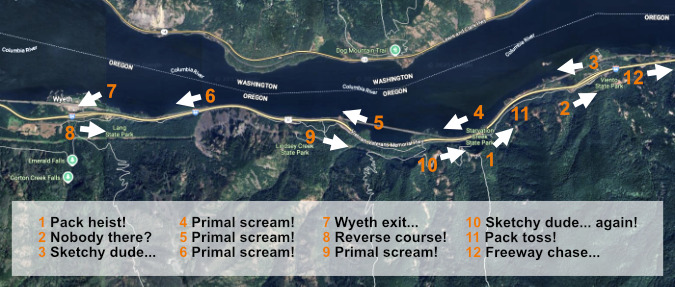
Forensic map of the great pack heist and subsequent perp chase…

[click here for a large version]

When I finally gave up the chase and pulled off the freeway at the west end of Hood River, I was able to do a better inventory. ALL of my camera great was still in there and intact, despite the pack being tossed out of a moving car at freeway speeds, unzipped! Only my wallet was gone, along with a few hundred bucks in cash, my driver ID, a couple blank checks and some credit cards. I can handle that! 

I then spent some quality time on my newly recovered phone with my wife, who was a complete ROCK STAR in getting credit cards frozen while I was still driving home. She was still on the phone trudging through that thankless task when I pulled in later that afternoon. Even better? She had homemade clam chowder in sourdough bread bowls waiting for me! That definitely took the sting out of an otherwise crappy Christmas Eve..!

A reasonable facsimile of my calming, much-appreciated Christmas Eve dinner… (photo: QVC)

On my trip back to Portland I also called the Hood River County Sheriff to report the theft, and this is where it got really interesting. After my initial call, a deputy called me back within 20 minutes to get a more detailed account. I described the sketchy guy in what I remembered to be a black, older BMW with Washington plates. This is also when I described the contents of my wallet and remembered the two blank checks (side note: if you’ve read this far, don’t carry blank checks with you, as that mistake meant racing back to Portland to reach the bank before early closing – it was Christmas Eve, after all – to completely close our checking account and open a new one). 

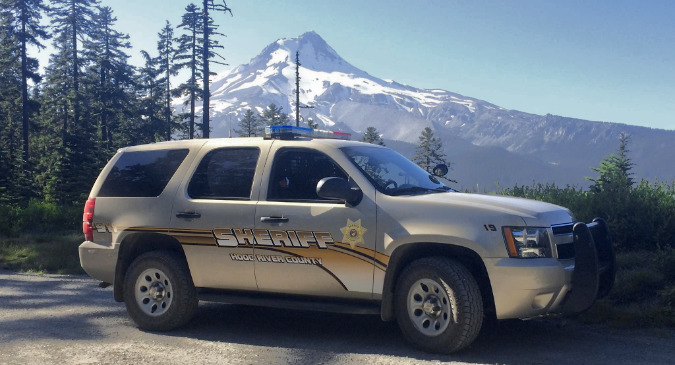
My new heroes! I took this photo of a Hood River County deputy near Bennett Pass several years ago, patrolling the old Bennett Pass Road.

Not long after the phone call, the deputy texted me two suspect photos! One guy was a clear match, with long, greasy black hair, where the other had sort of a buzz cut. I texted the deputy that, to my eye, they were the same guy, but slightly different angles and with radically different hair. Bingo! The deputy replied “I thought you might notice that. Yes, this is the same man. Do you think you could identify the vehicle you saw in a photo?” I replied “HELLLL YESSSSS, DEP-YOO-TEEEEE!!!” (Okay, so really, I just texted “Yes, happy to!”).

That’s where it stands. I’ve since sent documentation from a couple attempts to use the now-useless credit cards to the Hood River County Sherriff, but no word on a car to identify. That said, the mere fact that I talked to an actual police officer and that the ringleader in this theft was already on their radar was all I really needed to hear.

Lessons learned?

Takeaways from this saga? I don’t think this episode changes my practice of keeping my valuables in my pack when I’m on a trail vs. carrying them on me when I traveling to and from a trailhead. The exception on the trail is my car key, which I keep in a zipped pants pocket. Always. I shudder to think how things would have played out had I not had my car key! I also learned the hard way not to carry any checks with me. Nobody uses them much anymore, and they completely expose you if they are stolen along with ID. Lesson learned!

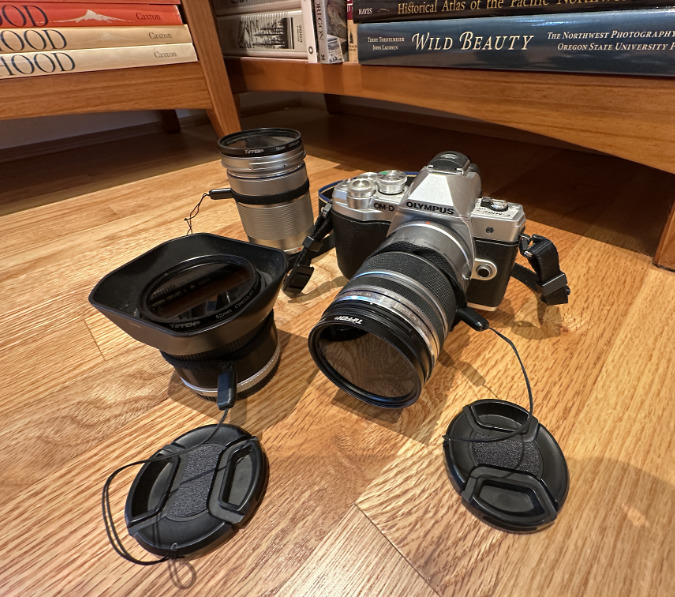
Reunited gear! This camera kit has traveled a lot of miles on my back, great that I was able to recover it!

It was also a pretty weird set of circumstances that day, so I’ve been careful not to overthink any takeaways going forward. I usually keep my pack a few feet away when it’s not on my back – and it’s almost always on my back when I’m hiking. That said, it is kind of creepy that the BMW dude’s accomplices seems to have followed me up that side trail with the intent of stealing my pack. This unfolded within a couple hundred yards of a freeway rest stop at Starvation Creek, so that’s a driving factor compared to being off on some trail, far from thieves and their getaway drivers.

The other twist is that the BMW guy and his accomplices seem to have been using the paved trail linking Starvation Creek State Park to Viento State Park as a getaway route. Now that I know it was the same sketchy dude I had originally questioned at Viento all along, my guess is that after encountering me, he called his accomplices while they were still on their escape route and told them to turn back to Starvation Creek, where he would pick them up. If so, he likely saw ME following him onto the freeway, backtracking the same route he was taking to pick them up! That might explain why they were able to toss the pack so quickly, including the bashed-up phone.

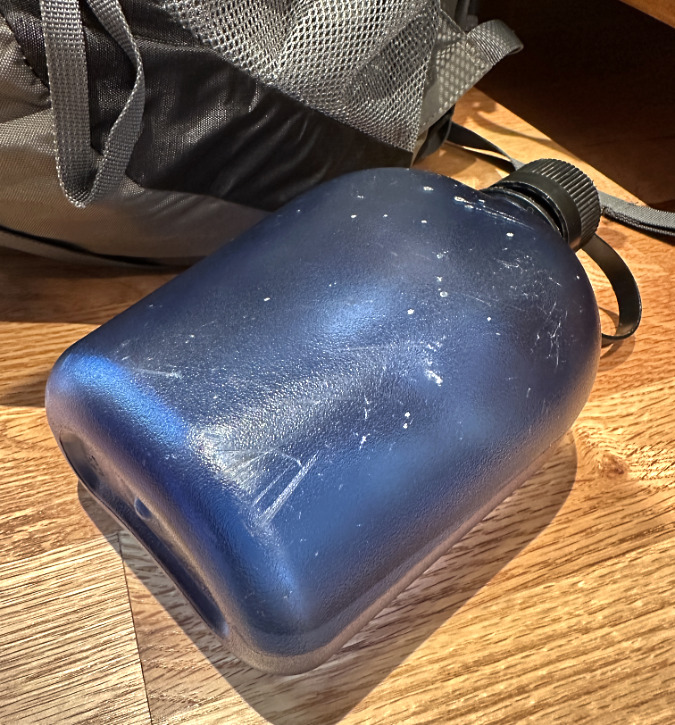
My main lasting souvenir from the episode is this water bottle that took a hard hit when my pack hit pavement on the shoulder of I-84. It survived with a few deep scratches to join me on many more adventures.

If this is all true, another theory I have is that they might have been using that side path along Starvation Creek as simply as a place to dump stolen items looted from cars parked at the rest stop to retrieve later. The side path is rarely used this time of year, and there are some truck-sized boulders with dry “caves” underneath them that could be used for precisely this purpose. 

If this theory proves true, it could explain how they stumbled upon me and my pack, and then realized that I had my back to them and couldn’t hear anything – sort of a chance opportunity compared to the much more common smash-and-grab theft from cars that continues to be a real problem in the Columbia River Gorge.

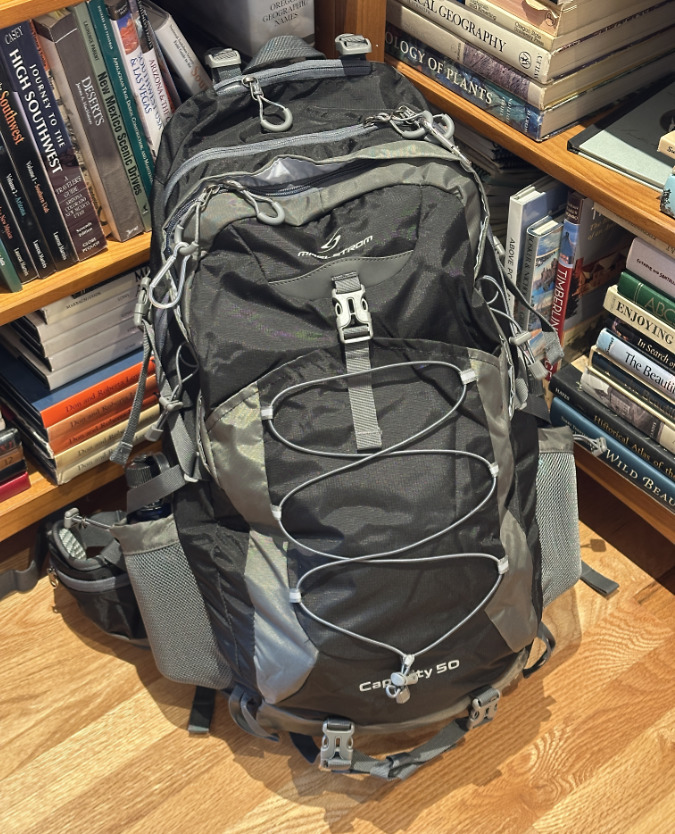
My original winter pack didn’t fare so well from being tossed from the getaway car, so it has since been honorably retired and replaced with this identical edition. Looking forward to many more adventures with this new friend!

I’ve shared this strange story with friends and family since the event, and chided by a few for taking chase in the way I did – that I was taking great risk in doing so. That’s a personal choice we all make, of course, but I have a good sense of situational safety and my mission wasn’t to confront the thieves, it was to identify them via the plates on their getaway car. The only face-to-face exchange I had was with the ringleader, and at that point I had no idea he was part of the theft, nor did he have reason to suspect that I did. Instead, he simply seemed very nervous and eager to get away both times that I made eye contact, not to engage me. I have no regrets, all things considered.

So, is a pain in the ass to lose your wallet on a supposed Christmas Eve escape to nature? Absolutely. But it could have been much worse, AND I’m also ridiculously, infinitely and disproportionately fortunate in this often very unfair world. Episodes like this only serve drive that point home more profoundly. In the larger picture of what really matters, I will take this bit of Christmas Eve coal and relish it with all that is good in my life. 

Making our Trailheads More Secure?

The lovely gateway to the Historic Columbia River Trail at Starvation Creek Falls. Should anyone have to fear being a theft victim by simply stopping here to enjoy this public space?

I’ll end this article with some broader takeaways on the theft problem that continues to plague visitors to the Columbia River Gorge. Yes, there are break-ins on some of the more popular trailheads on Mount Hood and elsewhere, but the Gorge has become notorious for the number of smash-and-grab thefts that occur every year.

Why the Gorge? Part of the answer lies in the sheer number of visitors and proximity to Portland and booming Gorge towns like Hood River. Quick access to I-84 makes it especially easy for smash-and-grab thieves to exit the crime scene and disappear into nearby towns within a few minutes. Over the years, Multnomah County, Hood River County and the Oregon State Police have periodically stepped-up their patrols, but all three law enforcement agencies face budget realities that make it hard to maintain steady patrols at Gorge recreation sites. Break-ins happen in a matter of a minute or two, and there’s really no way that current law enforcement can provide enough presence to deter that.

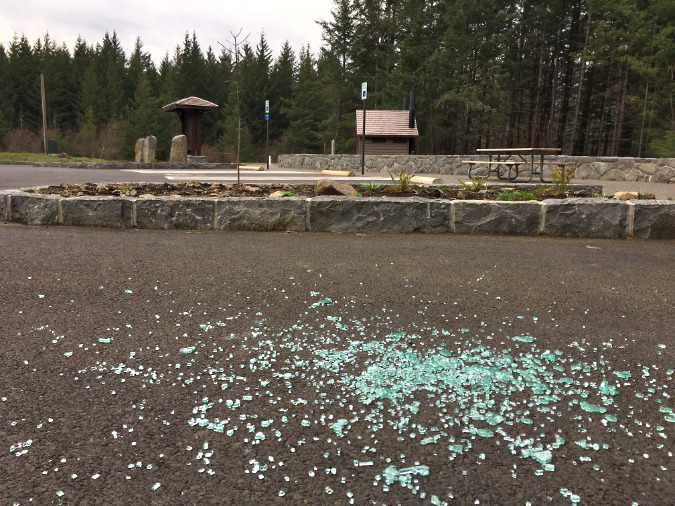
The beautiful new trailhead at Wyeth had barely opened when broken car window glass began to appear in 2020

While it’s true that property crimes are petty and mostly a nuisance, they do have an impact on the tourism economy of the Gorge communities that is concerning. This is especially true for high-dollar visitors from out of state or abroad who come here only to have their travel belongings stolen by local thieves. That’s the kind of experience that makes a return visit less likely, and is also likely to be shared in our modern world of social media and online travel reviews.

One option for expanding traditional law enforcement is a special patrol dedicated to the Gorge and independently funded through a lodging tax within the Gorge cities. Nobody likes raising taxes and policy makers fear even asking the voters the question, but many tourism-based communities have long enacted lodging taxes as a way to provide services that are especially connected to tourism. Perhaps this could fund special units based within the two county Sheriff departments dedicated to the theft problem?

Another approach that hikers have talked about for many years are trailhead cameras. Simply the existence of cameras could have an effect, just as photo radar cameras on our urban roads slow travel speeds and red light-running, whether they’re on or not. Cameras are gradually starting to show up in recreation areas around the country, too, so the idea does seem to be catching on – if only through necessity.

The blue sign on the right appeared at the Wahclella Falls trailhead in 2016,

The surveillance (or at least the sign) at Wahclella Falls has since disappeared. It wasn’t there when my own car was broken into at this trailhead in April 2021.

The Forest Service placed the above camera notice at the Wahclella Falls trailhead in 2016, though I don’t know if the signs (or cameras?) have since been maintained. My own car was broken into at this trailhead on a beautiful Sunday morning in April 2021, and the signs (and cameras?) had been pulled at that time. I mostly suffered a smashed window in that incident, as I think the thieves were likely spooked by arriving hikers before they could do much looting. The story might have been quite different on a quiet weekday morning.

The 2016 sign at Wahclella Falls (and any other site) could also have been more effective in deterring thieves had it been posted prominently along the entrance road, and not lost in this blizzard of trail notices that even law-abiding visitors rarely stop to read. I suspect land managers are wary about making these too prominent, as placing surveillance cameras in public spaces of any kind remains controversial, whether for privacy or other concerns. 

I do share the concern that stepped-up policing and surveillance might prevent law-abiding visitors from going to the Gorge, given our current state of fear of law enforcement in this country and an openly racist, vindictive regime in power in Washington. As with all law enforcement, it’s a trade-off, but one that I think ought to be considered in the Gorge, and soon.

Despite the current political environment, I remain optimistic that we’ll figure this out, eventually. The Gorge means too much to us and we have a long tradition in Oregon of finding our own creative path to solutions. In the meantime, carry what you can’t afford to lose with you when you’re in the Gorge… and you might also consider investing in a Trunk Monkey until better solutions to the theft problem are found. 😊

________________

Tom Kloster • February 2025 

Breakfast with Paul Gerald

PaulGerald01

If you’re a hiker, you’ve probably seen (or own) one of Paul Gerald’s guides: 60 Hikes within 60 Miles of Portland, Day Hikes & Sections: Oregon PCT and The Best Tent Camping in Oregon. If you’re a breakfast adventurer, then you’ve surely seen (or own) his instant classic Breakfast in Bridgetown, now in its second edition.

Paul is in the process of publishing new editions of his Breakfast in Bridgetown and 60 Hikes books, and this time he’s trying something a bit different: instead of the usual publishing house, he’s trying out a crowdfunding campaign.

Why does this matter to WyEast Blog readers? Well, partly because it’s important to support local authors who write about our favorite places with a level of knowledge and attention to detail that only we locals can really appreciate. But more importantly, crowdfunding has the potential to unlock a lot more in the way of local publishing, so it’s something that hopeless field guide junkies (like the author!) and casual hikers should get behind in a big way.

You can learn more about Paul’s campaign from this short video — and please consider supporting the campaign before it ends on April 4!

…more about the campaign at the end of this article. First, let’s meet Paul Gerald!

About Paul Gerald

Paul is a freelance writer, author, and publisher. He’s written for The Oregonian and Willamette Week while in Oregon, and for the Memphis Flyer before he migrated to the Great Northwest.

Paul has written hiking and camping guidebooks for Menasha Ridge Press and the Wilderness Press, and with his Breakfast in Bridgetown book, entered the world of self-publishing (also known as “the future of publishing!”) as the owner et al of Bacon and Eggs Press, an assumed business name of Second Cup Productions LLC.

Paul also leads hikes for the Mazamas (including trips to Italy!) and works for Embark Adventures when he’s not researching trails for his own guides. He has also been a supporter of the Portland Hikers community from the very beginning. In Paul’s words, his goal as an author is to “go to interesting places, do interesting things, meet interesting people, and then tell the story.”

The following is a recent WyEast Blog interview with Paul Gerald about his dual passions of hiking and eating breakfast:
___________________

WyEast: Hello Paul! You’ve authored guidebooks to hiking trails and breakfast spots – do you generally start off a hiking day with a big breakfast?

Paul Gerald: Not generally a big one, but if I’m hiking I’ll at least scramble up some eggs at home, get a muffin and coffee on the way, then bring a banana for a little trailhead ritual. After that it’s all about bars and a nice sandwich, then Kettle chips for after. I’m something of a creature of habit. Oh, and I’m carrying about 20 extra pounds these days.

WyEast: Doesn’t that sort of slow you down on the trail?

Paul Gerald: It does, which is part of the reason I don’t do it often. But there is something really nice and Portland-y to go have a nice brunch in town, then drive out to the hills and walk it off. It’s also nice to not have to carry food on the hike. And to really do the Full Portland, I’ll stop at Edgefield on the way back and get a burger and basket of fries. Did I mention the extra 20 pounds?

WyEast: Tell us about your new restaurant guide: does the geography “Bridgetown” cover some of the small burgs that are along the way to favorite trailheads?

Paul Gerald: Breakfast in Bridgetown is what I call “the definitive guide to Portland’s favorite meal.” It’s not a book of reviews and ratings, but rather a series of sketches telling you what a place is like, what they serve, who eats there, and maybe a few funny stories thrown in for your entertainment. I’m not a food critic, I’m a travel writer at heart.

The new (third) edition will cover 120 restaurants, 17 food carts, 11 downtown hotels, and – yes – a lot of places out-of-town.

It also has helpful lists like outdoor seating, early morning and late night breakfasts, vegan/vegetarian options, and this time a whole section on gluten-free breakfasts.

WyEast: What are a couple of your favorites, say, for a hike in the Gorge or up on Mount Hood?

Paul Gerald: I love (and describe in the book) the Otis Cafe (for Cascade Head), Joe’s Donuts and the Huckleberry Inn (for Mount Hood), Camp 18 (for Saddle Mountain), and Skamania Lodge (for the Gorge). I should say, though, that the best way to approach Camp 18 and Skamania would be to hit the buffet after your hike.

Paul exploring the PCT in the Three Sisters Wilderness

Paul exploring the PCT in the Mount Jefferson Wilderness

WyEast: Okay, I’ll definitely try that! So, tell us about your new edition of “60 Hikes….” – what are some new hikes that we can look forward to?

Paul Gerald: The biggest change, other than just getting things up to date, is that the maps and elevation profiles have been upgraded. They have more detail, more helpful information, and they just look better. There is also now a really helpful chart in the beginning of the book, showing which hikes are good for kids, backpacking, seeing waterfalls, wheelchair access, swimming (that’s a new category), great views, the best time to go, etc. It replaces the lists in the front of the current edition, and adds more info, as well.

As for new hikes, I am bringing back two old favorites, both of which had to miss a couple editions because of access issues. One is the Salmonberry River, where you walk down the abandoned railroad through a beautiful Coast Range canyon. They are looking at this as a “rail to trail” project, and I hope to get people out there to see it in its “wild” condition.

I’m also bringing back one of my all-time favorites, which I call South Fork Toutle River. Some folks call it the Sheep Canyon hike, but it’s a section of the Loowit Trail on the west side of Mount Saint Helens. You start in a huge mudslide, walk through ancient forest, then climb into alpine splendor and wind up on the very edge of the 1980 blast zone.

I’m also adding the Cape Horn Trail (I was waiting for all the trails to get worked out) and bringing back the Willamette River Greenway in the middle of Portland.

Mostly, though, it’s about expanding and improving the book. For example, now that the trails in the Coyote Wall and Catherine Creek areas and getting sorted out and signed, I am offering a lot more detail there. I just try to keep making the book better and better.

WyEast: You probably have to focus on covering new trails as a field guide author – but are there any trails that you just go back to over and over because they’re your favorites?

Paul Gerald: Absolutely, and in fact, in the Foreword to the book I describe my personal hiking calendar. For me, “favorite” is all about the time of year. In a nutshell, it’s Eagle Creek in March, eastern Gorge flower hikes in April (especially the “big loop” from Coyote to Catherine and back), Dog Mountain in May, Salmon River and Saddle Mountain in June, all the Hood stuff in July/August (McNeil, Vista Ridge, Timberline), then the old-growth forests in fall, especially Opal Creek and Trapper Creek.

WyEast: What’s the most overlooked gem in your guide? And why is that, exactly?

Paul Gerald: I think I’d have to say Ape Canyon here. Every time I lead that hike for the Mazamas or some friends, people are just blown away. It’s a paved access road, gentle grade, amazing forest and views, fascinating geology, and it winds up at the foot of Mount Saint Helens on this incredible moon-like plateau of rocks and flowers and open space. And all of this in about 11 miles without a steep hill in it!

WyEast: I’ll end with a tough question to put you on the spot: in recent years, hikers have noticed little blue bags of dog poop along hiking trails, apparently left by hikers (hopefully) for picking up on their return trip, but often forgotten and left to annoy other hikers. What’s your stance on bagging dog poop out in the forest? Isn’t it okay to simply kick your dog’s offerings off the trail, especially given the number of plastic bags left behind?

Paul Gerald: Well, even though I suspect this is a “loaded” question, I’ll tell you what I’ve done when I took dogs hiking (I don’t have one myself): I kick it off the trail! My theory is that millions of animals poop in the woods, so why not a dog? Maybe there’s something about dog poop that isn’t good for the environment, and I always make sure to kick it in an area where people aren’t going to picnic or whatever, but that’s my policy.

I’m okay with the bag option, but only if people actually pick them up on the way out. Maybe somebody could start a business making bio-degradable poop bags?

WyEast: So, have you ever carried out someone else’s dog’s poop…? In a bag, of course!

Paul Gerald: I have not. Maybe I will now — if it’s close to the trailhead, of course!
__________________________

You can find more information on Paul’s crowdfunding campaign here – and remember, the campaign ends on Friday, April 4!

Breakfast in Bridgetown Campaign

And you can find his previously published books at local bookstores or online at Paul’s website: PaulGerald.com

Thanks for the great guides, Paul!

Ticks! Ticks! (10 Common Myths)

Ticks00

Spring has arrived in the Columbia River Gorge, and as we explore among the unfurling fern fronds and explosion of wildflowers, we will also be keeping a wary eye out for a pair of nemeses who also make the Gorge their home: poison oak and ticks! Sure, there are other natural hazards out there, but poison oak wins the prize for quiet ubiquity while ticks are actually OUT TO GET YOU!

Naturally, a lot of mythology exists on both fronts, and I’ve previously debunked poison oak myths. In this article, I’ll tackle the kitchen remedies and common folklore that abound for ticks. The Centers for Disease Control is my primary source for information on the subject, and their tick resource pages are worth a visit for anyone who spends time in tick country. I’ve also relied on the Companion Animal Parasite Council (CAPC) for the best advice on managing ticks on our pets.

The one to watch for: Western Black-Legged Tick (Source: Public Health Image Library)

The one to watch for: Western Black-Legged Tick (Source: Public Health Image Library)

While poison oak can trigger a miserable rash, it’s rarely a serious health risk. Ticks are different. While their bites aren’t usually painful, these tiny members of the arachnid family (they’ve got eight legs – count ‘em!) can also transmit several blood-borne diseases, most notably the bacterium that can cause Lyme disease in humans and animals.

Western Black-Legged Ticks (from left) in nymph stage, adult male and adult female  (Source: California Health Dept.)

Western Black-Legged Ticks (from left) in nymph stage, adult male and adult female (Source: California Health Dept.)

While the potential for Lyme disease exists in just two tick species, all ticks have the potential to carry disease, and should be treated with equal caution. So, with that creepy-crawly introduction, here are ten common tick myths, debunked:

Myth 1: Ticks only occur in the Eastern Gorge

False. While it’s true that ticks are VERY common in oak and pine savannah of the Eastern Gorge, they have been reported throughout the Gorge, though in decreasing numbers as you head west. Based on my own experience, the tick population grows steadily as you head east of Bonneville.

The CAPC forecast for tick exposure in 2013, with hot spots Hood River and Clackamas counties and Southern Oregon (Source: CAPC)

The CAPC forecast for tick exposure in 2013, with hot spots Hood River and Clackamas counties and Southern Oregon (Source: CAPC)

Ticks are found throughout much of Oregon, as it turns out, but generally not in the prolific numbers as we find the Gorge. The CAPC map (above) shows the 2013 tick exposure forecast by Oregon county, with Hood River and Clackamas counties as a expected hot spots in northern Oregon and Jackson and Josephine counties showing higher risk in southern Oregon.

So, while you may have hiked in the “safer” areas of Gorge, it’s always good idea to do a tick check when you get home, no matter where you hiked. But if you’re hiking east of Bonneville, then it’s a good idea to expect ticks and take some precautions.

Myth 2: Ticks die in winter

False. Though tick populations generally decline in winter, in mild winters (such as the past one) ticks in the Gorge can continue to grow and thrive in the outdoors. When the temperature drops below freezing, ticks simply become inactive and burrow into leaf litter, emerging when conditions improve.

Year-round tick country: the Columbia River from the terraced slopes above Rowena Crest

Year-round tick country: the Columbia River from the terraced slopes above Rowena Crest

Tick research in the Northeast suggests a threshold temperature of 38º F and above for ticks to become active, though no research is available for the Pacific Northwest. But it’s safe to assume that you can encounter active ticks year-round in the Gorge in all but the coldest weather.

Myth 3: Ticks should be removed using a lit match

“Just light a match, blow it out, and put the hot tip on the tick to make it angry, and it will back right out!”

“I just used WD40 on a cotton swab to remove a tick from my 3 lb Chihauhau.”

(advice from the internet)

..or… paint thinner, dish soap, kerosene, nail polish remover and Vaseline. All of these folklore solutions have spread far and wide in the age of the internet, along with cult-like followings to defend them!

Ticks05
The idea that Vaseline or WD-40 will suffocate the tick and nail polish will kill it with toxins or cause it to detach on its own is sketchy, at best. Worse, these folk remedies could cause the tick to disgorge its contents into your bloodstream — exactly what you’re trying to avoid!

Instead, ticks should be gently pulled from the skin with tweezers or a custom tool for removing ticks (more on that later).

Myth 4: If parts of the tick break off when removing it, you have to dig them out to prevent Lyme Disease

Advice on this one varies: some sources recommend removing all parts of the tick to prevent a secondary infection, while others argue that you’ll do yourself more harm trying to dig them from your skin. But if you remove the living tick within 24 hours, you’ve likely removed any risk of infection with a tick-borne disease, even if you didn’t get the entire tick.

The safest bet is to check with your doctor if you find yourself in this situation. Even better, be sure to remove the tick properly, and you will be much less likely to break off any tick parts (again, more on that later).

Myth 5: Ticks can re-grow their bodies if the head is still intact

Headless is dead… even for the mighty tick!

Headless is dead… even for the mighty tick!

False. This bit of folklore probably comes the (admittedly creepy) fact that the abdomen of a tick that has become engorged after several days of being attached to a host can become alarmingly large. Or maybe that some snakes and lizards can re-grow their tail? But a beheaded tick is just that, and can’t survive.

Myth 6: A hot, soapy shower will remove any ticks

Partly true. Ticks can survive a shower – or even a bath — and happily stay attached to your skin, but a shower can wash away ticks that haven’t attached yet. If you’ve done a visual tick check before jumping in the shower, it’s not a bad idea to do another fingertip check with the aid of soap and water, feeling for small bumps along the skin.

A fingertip check is especially helpful in finding small, immature ticks in the nymph stage, when they are about the size of the head of a pin. They often go unnoticed until fully engorged, and are therefore responsible for nearly all of human Lyme disease cases, according to the American Lyme Disease Foundation.

Myth 7: Ticks in Oregon don’t carry Lyme disease

Partly true. While not common in Oregon (yet), Lyme disease is here, with Oregon falling in the “moderate” range for disease risk in 2013, according to the CAPC (see map, below). However, in the Western states, Lyme disease is only transmitted through the Western Black-Legged Tick, just one of several tick species found here.

The 2013 Lyme Disease forecast by the Companion Animal Parasite Council puts Northwest Oregon in the moderate risk range (Source: CAPC)

The 2013 Lyme Disease forecast by the Companion Animal Parasite Council puts Northwest Oregon in the moderate risk range (Source: CAPC)

Though small, Oregon’s Lyme-carrying ticks are noticeably larger than the only other species known to the disease (found in eastern states), so they are easier to spot and remove. Small comfort, to be sure, but it does make coping with ticks a bit less troublesome in this part of the country.

A caveat to that size difference is that our Lyme-carrying ticks in the immature phase — known as a “nymph” are still very small, so warrant extra care during the spring and early summer and nymphs are most common. Nymphs spend most of their time on the ground, and generally feed on small animals as a result, but it’s still a good idea to look closely for nymphs when you check for ticks.

Myth 8: Only people can get Lyme disease

False. Lyme disease was first identified as a tick-borne illness for humans in 1978, and the actual cause (a bacterium) of the illness wasn’t discovered until 1981. By 1984, Lyme disease had been discovered in dogs, and soon after, in other domestic animals, including horses and cats.

In the Northeast, dogs with Lyme disease have become commonplace, to the point that some states have stopped tracking the infectious because of the flood of reports to veterinary clinics.

Oh, the injustice! The sleepy villages of Lyme and Old Lyme, Connecticut have the unfortunate distinction of having a tick-borne disease named for them..!

Oh, the injustice! The sleepy villages of Lyme and Old Lyme, Connecticut have the unfortunate distinction of having a tick-borne disease named for them..!

The test for Lyme disease in dogs takes just a few minutes, and dogs testing positive are generally treated with a 30-day regiment of antibiotics. For most dogs, visible symptoms of the disease are the same as for humans: swollen joints, lethargy, and in a small percentage, kidney failure. Veterinary clinics in the Northeast are now offering a Lyme disease vaccination for dogs in response to the increased rate of infection.

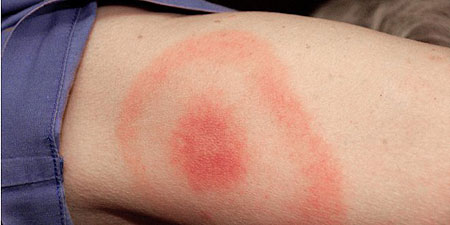
Myth 9: Lyme disease is always marked by a bullseye rash

False. While Lyme disease in humans typically causes a red rash to expand from the site of the tick bite, creating a “bullseye”, this distinctive rash only occurs in 70-80 percent of cases, according to CDC.

The classic Lyme disease bullseye (Wikimedia)

The classic Lyme disease bullseye (Wikimedia)

Usually, a tick must remain attached for a minimum of 24 hours to transmit Lyme disease, so if you remove a tick promptly, it’s soon enough to avoid an infection risk. If you’re not sure, or know that a tick was been embedded for more than 24 (even without the bullseye rash), it’s probably a good idea to check with a doctor about starting antibiotics as a precaution.

Myth 10: Every tick bite carries the possibility of Lyme disease

False. Most tick species do not carry Lyme disease. Only ticks in the genus Ixodes carry the bacteria B. burgdorferi which causes the disease. This includes the Deer tick (Ixodes scapularis) in the Northeastern states and the Western Black-Legged tick (Ixodes pacificus) in the West.

In Oregon, the adult Black-Legged tick measures about two-thirds the size of the more common Wood (or “dog”) tick (Dermacentor variabilis), which frequent similar habitat. However, while the Wood tick doesn’t transmit the Lyme bacteria, it does carry other diseases (including Rocky Mountain Spotted Fever), so the same care in managing ticks applies, no matter the species.

Black-Legged tick (left) compared to common Wood tick (right)

Black-Legged tick (left) compared to common Wood tick (right)

The risk of Lyme infection from a tick bite is estimated at 1-3 percent, so very low — but still cause for caution. Why? Because left untreated, Lyme disease symptoms may progressively affect joint, heart and central nervous system health. In most cases, the infection and symptoms are eliminated with prompt use of antibiotics. Delayed diagnosis and treatment can make the disease more difficult to treat and risk lasting disability, so it’s a serious concern.
_______________________________

When you’re in tick country…

Ticks are found where they can reliably attach to deer, livestock, other mammals, ground-dwelling birds and even lizards. Some of the most productive tick habitats in the Columbia Gorge are oak woodlands and areas of vegetation at the edge of forests, along forest hiking trails and game trails and in grassy meadows. They are also common in power line corridors that cut through forests, around campgrounds and in tall grass along roadways.

While ticks are definitely stalking YOU, it’s not an active pursuit. Instead, they wait on vegetation for passing hosts to come along. Ticks can detect hosts by sensing carbon dioxide, scents and vibrations from movement of their hosts. They can sometimes be seen at the tips of grass blades or plant leaves “questing.” This is a behavior in which the tick extends waving front legs ahead of an approaching host, looking to catch a ride!

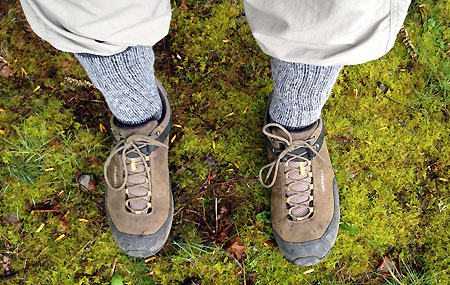
Sure, it looks funny! But it’s a proven practice for tick prevention

Sure, it looks funny! But it’s a proven practice for tick prevention

When you’re in tick country, wear light colored long pants and long-sleeved shirts. Tuck pant legs into socks (see photo, above) and shirts into pants to close off points easy of entry at tick-level. This not only makes it harder for a tick to make its way to your skin, it also allows you to better spot ticks on your clothing, and simply brush them off.

Walk in the center of trails, and avoid brushing against tall grass or undergrowth along the trail. If you stop, sit on rocks or logs, not in grassy areas, and periodically brush your legs and sleeps to feel for ticks on your clothing. These simply practices not only help prevent ticks from going for a ride, they also help you avoid poison oak, so you get a twofer for these prevention basics!

Materials treated with DEET or permethrin are proven to repel and eventually kill ticks. Of the two, permethrin is the most effective and long lasting. This pesticide can be used to treat boots, clothing and camping gear and remain protective through several washings. It is toxic to cats, however — even from contact with recently treated clothing — so must be used with care!

DEET (left) is easier to use but Permethrin (right) is more effective for ticks

DEET (left) is easier to use but Permethrin (right) is more effective for ticks

DEET products are also widely available, and can be applied to both your skin and clothes (with some fabric limitations). Deet might be a good option if you’re hiking in warm weather and less inclined to cover up with clothing.

After your hike…

After you’ve been hiking in tick country, here’s an easy checklist to follow:

1. Check clothing for ticks when you return to the trailhead. Ticks may be carried home and into the house on clothing, so check before you get into the car. When you get home, be sure to immediately put clothing in the wash, then the dryer to take care of any stowaways you might have missed. Clothing that can’t be washed can go directly into the dryer, where an hour on high heat will kill any ticks.

2. Do a full body check. Before you get in the shower, use a hand-held or full-length mirror to view all parts of your body including your scalp, behind your ears and… gulp… around your privates! A thorough check should take about 30-45 seconds. Kids should be checked by parents!

3. Shower right away. Showering washes away un-attached ticks that you might not have spotted, and has been shown to reduce your risk of getting Lyme disease as a result. It also gives you an opportunity for a thorough fingertip tick check with soapy fingers.

4. Do another full body check. After a shower, repeat the full body check with a mirror.

You should continue to watch for ticks for a couple days after spending time in tick country, to ensure that you haven’t missed a tick.

What to Do if You Find an Attached Tick

Ticks13

Remove an attached tick as soon as you notice it with tweezers or a special tick removal tool. Grasp a tick as close to your skin as possible, pulling it straight out — and don’t “unscrew” the tick, as suggested in many folk remedies, as you’ll likely pull the head off the tick!

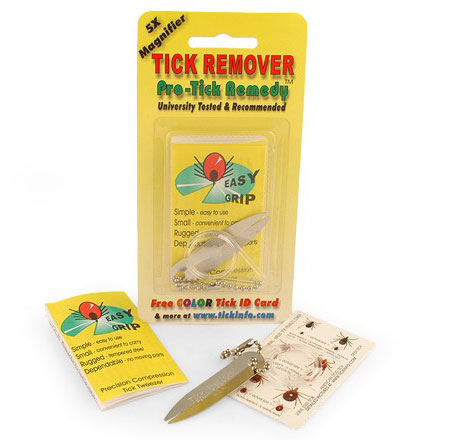
The tick remover kit shown below is one of the best available, and far superior to tweezers, as it involves no squeezing when pulling a tick — thus lessening the chance of infection or breaking off the head. This kit consists of a simple, forked spoon for lifting the tick out and a tiny magnifier for use in the field. I carry this kit in every one of my packs — it’s inexpensive, and easily found in outdoor stores or online.

The excellent Pro-Tick Remedy system makes pulling ticks a breeze!

The excellent Pro-Tick Remedy system makes pulling ticks a breeze!

Once a tick is out, wash the wound with soap or alcohol and monitor it for a day or two for signs of infection. Most tick wounds will heal up quickly, with no sign of the bite after a couple days.

It’s always safe to watch for any signs of tick-borne illness after you’ve been bitten, such as rash or fever in the days and weeks following the bite. If you suspect you have symptoms, see your doctor.

Ticks and your dog…

Dogs are very susceptible to tick bites and diseases, and of course, hikers love to take their dogs into the Gorge. While vaccines protect dogs from some tick borne diseases, they don’t keep your dog from bringing ticks into your home.

There are several things you can do to protect your dog from ticks. Most obvious is to simply leave your dog home when venturing into areas known for ticks — and that includes areas in the Eastern Gorge. But if you do take your dog into tick country, there are some preventative steps that will greatly reduce the chance of a tick attaching to Rover.

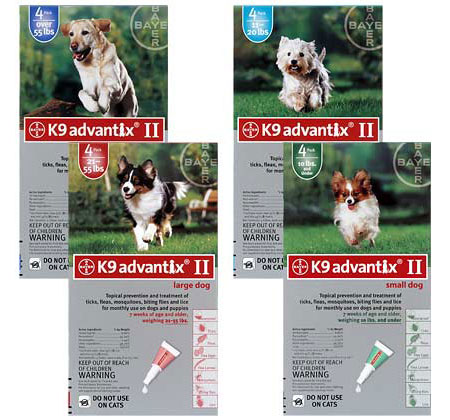
The most common (and simplest) solution for preventing ticks on your dog is a once-per month, non-prescription insecticide treatments available from most veterinarians, online or from pet stores. The best-known options are Frontline Plus™ and Advantix™.

Frontline Plus comes in doses adjusted for the weight of your dog, and is applied from a hard-to-open, somewhat awkward-to-use dropper that can spill onto your hands

Frontline Plus comes in doses adjusted for the weight of your dog, and is applied from a hard-to-open, somewhat awkward-to-use dropper that can spill onto your hands

The key ingredient that makes both Frontline Plus™ and Advantix™ effective on ticks is premethrin, the same common, widely-used pesticide used to treat clothing for ticks. Be very careful if you have cats in your home, however, as premethrin can be fatal to cats, whether inadvertently administered or even by exposure to a recently treated family dog. Both treatments are applied along the spine, beginning at the back of the neck and moving toward the tail, and are effective for up to one month.

These products should prevent ticks from attaching to your dog — and even if one does, the premethrin ingredient would likely kill the tick, eventually. But these products don’t prevent ticks from going for a ride in your dog’s fur, so it’s always a good idea to inspect your dog at the trailhead, using a brush, before loading up and driving home.

Advantix has the same premethrin ingredient as Frontline Plus, but is easier to administer with well-designed tubes that keep the product off your hands

Advantix has the same premethrin ingredient as Frontline Plus, but is easier to administer with well-designed tubes that keep the product off your hands

Tick bites on dogs can be hard to detect, as tick borne disease symptoms may not appear for up to three weeks after a tick bite. Call your veterinarian if you notice changes in behavior or appetite in you think your dog might have been bitten by a tick.

Tick! Tick! (…but don’t panic…)

Okay, so this article might have you nervously scratching your legs on your next hike and seeing every black speck on your boots as a TICK! But don’t let these little blood suckers get you down! Sure, they’re annoying… and kind of creepy. But the basic precautions outlined above are easy to build into your hiking routine, and more than enough to give you peace of mind when you’re out on the trail.

Ticks17

If you DO find a tick that has managed to attach to you, and you’re creeped out by the thought of pulling it — or can’t reach the tick yourself — simply head for the doctor’s office. They will take care of it for you, and the chances of any complications are extremely small. Even if you have pulled the tick, and are feeling sort of queasy about it, go to the doctor (with the tick). It will be worth the peace of mind.

For a lot more information on ticks (if you aren’t adequately freaked out by now), check out the Centers for Disease Control tick resources.

Then, by all means, get back out on the trail, ticks (and poison oak) be damned!

Let’s Fix the Cooper Spur Trail

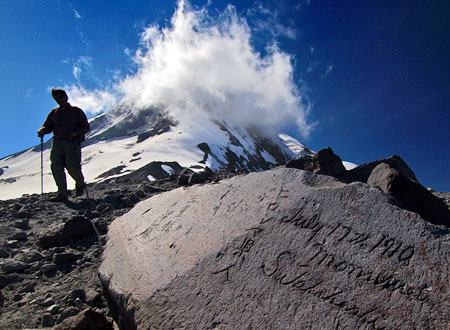
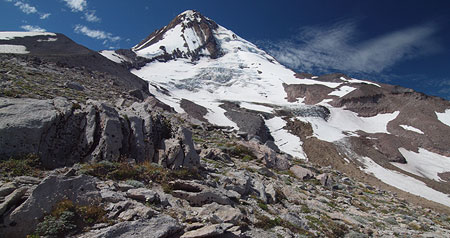
The first hiking trails on Mount Hood were built in the late 1890s, radiating from the newly constructed Cloud Cap Inn on the mountain’s north side. The steep hike up the south Eliot Glacier moraine to Cooper Spur was perhaps the first trail, as it was part of the still-popular Cooper Spur route to the summit. The original climber’s trail is still used, though a much gentler route built in the 1960s now ascends the spur in a series of well-graded switchbacks.

The new, graded trail carries thousands of hikers to the top of Cooper Spur each summer. It is among the most spectacular alpine hikes in the country, with jaw-dropping views of the sheer north face of Mount Hood and a close-up look at the massive jumble of flowing ice that makes up the Eliot Glacier.

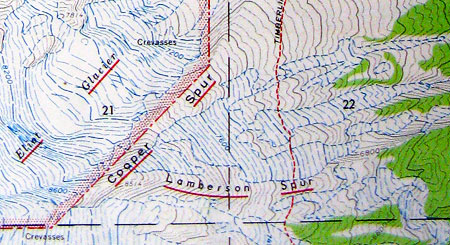
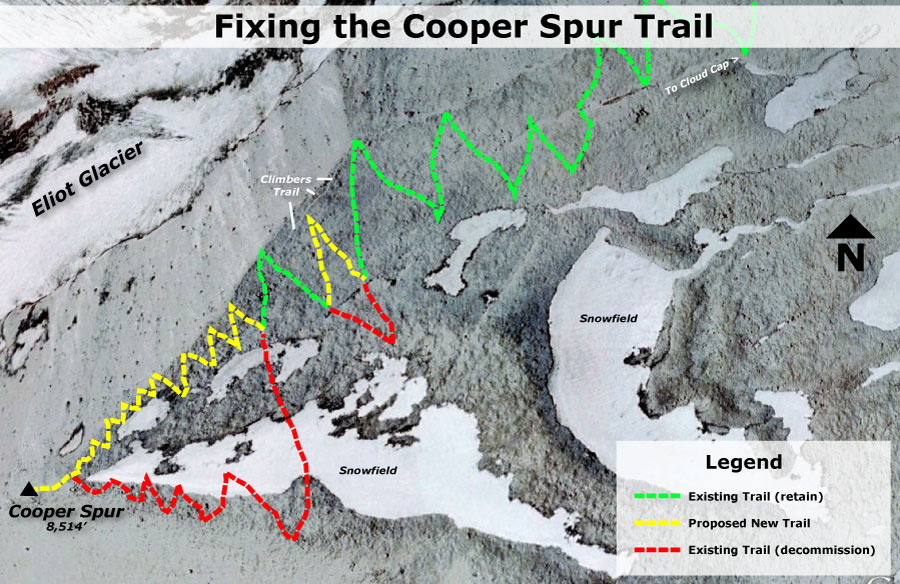
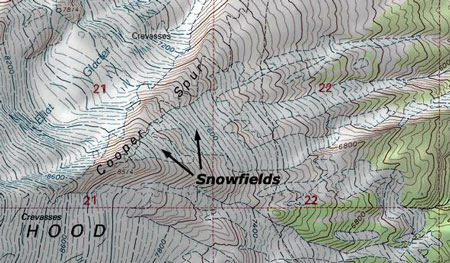
The snowfields in question on Cooper Spur are permanent enough to be mapped.

It’s hard to know exactly why the newer, graded trail was routed over a set of mostly permanent snowfields when it was built, but this design flaw continues to be a problem for this otherwise exceptional trail. The newer trail initially follows the climber’s route fairly closely, sticking to the rim of the Eliot Glacier where the snow melts early and reliably each summer.

But near the crest of Cooper Spur, the newer route suddenly crosses the face of the spur, traversing to the south shoulder and overlooking the Newton Clark Glacier. It is in this section where the route crosses a set of persistent snowfields that are nearly permanent in all but the driest years.

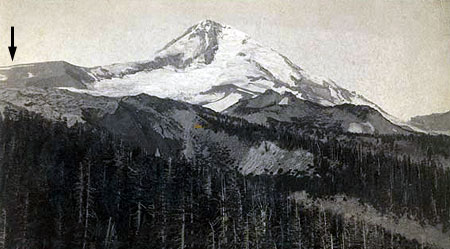
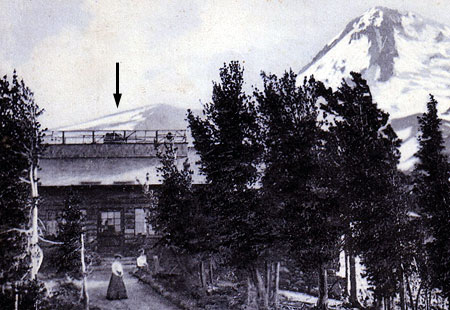
The snowfields clearly show up in this 1890s view of Mount Hood in late summer.

This flaw in the newer route is confusing and potentially dangerous to the many hikers who venture to the top of the spur each summer. At 8,514 feet, the summit of Cooper Spur is truly alpine, so one of the benefits of the modern trail is to provide a relatively manageable hike to the top of the spur for the average visitor, despite the high elevation.

But when the trail disappears into the snow in this final pitch, hikers often resort to climbing directly up the snowfield — a dangerous choice — or scrambling up the steep climber’s trail, with its loose rock and cinders creating a potentially dangerous option for many hikers.

The snowfields as viewed from Cloud Cap Inn in the late 1890s.

The design flaw in the newer route may also have environmental impacts: the climber’s trail isn’t really a “trail”, but rather, a braided confusion of boot paths made less stable and more extensive each year as the popularity of the Cooper Spur hike continues to grow.

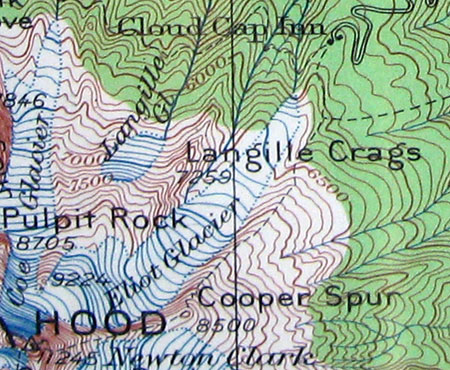
Early 1900s maps don’t show the snowfields, but they do show the climber’s trail on Cooper Spur.

While the ecological impact might seem inconsequential at this elevation, where few plants can even survive, the physical scars left on the rocky slopes are real and warrant better management of recreation travel in the area.

The high tundra landscape on the slopes of Mount Hood represents one of the most unusual and sensitive in the region, and a stray boot print can last for years. The ever-increasing variations on the climber’s trail that form each summer can take years to recover, even if given the chance.

The USGS 7.5 minute maps of the 1960s were the first to map the snowfields as permanent features. This 1962 map pre-dates the modern Cooper Spur Trail.

This article makes the case for addressing this problem in a couple of steps:

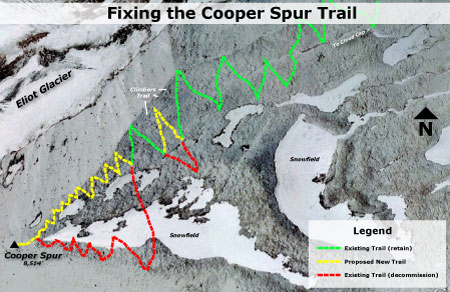
1. Realign the upper portion of the Cooper Spur Trail with a series of designed, graded switchbacks that roughly follow the climber’s trail, along the Eliot Glacier rim.

2. Decommission the problem sections that are usually snow-covered.

This proposal would not only corral the hiking hordes onto a more manageable, new path near the climber’s route, it would also leaves the bulk of the east slope of Cooper Spur untouched by hikers by decommissioning the old trail. This could greatly reduce the impact of the trail on the alpine ecosystem that exists on the slopes of Cooper Spur.

[Click here for a larger version of this map]

One of the most attractive aspects of this proposal is that it would be so easy to build. Building trails at this elevation, with the absence of soils and vegetation, is straightforward and very simple. The new route would simply need to be designed and surveyed, with construction done by volunteers or youth crews like the Northwest Youth Corps.

Looking up the climber’s trail to Cooper Spur and Mount Hood.

Trail construction would consists of rolling loose boulders and rocks to form a trail bench, and smoothing the surface of the new bench into a hiking tread with the abundant volcanic ash and glacial till that makes up most of the terrain at this elevation. This work is relatively easy, and surprisingly fast (I know this firsthand because I’ve adopted a couple of nearby trails in the area, and regularly rebuild worn trail segments in this high-elevation environment of rock and ice).

How to Help

If you’ve experienced the same frustration coping with the trail to Cooper Spur, your comments to the U.S. Forest Service can have an impact. This proposal represents a fairly simple effort, and there’s a good chance the Forest Service will respond if enough hikers weigh in on the hazards of the current trail alignment.

The best way to be heard is to go to the Mount Hood National Forest contact page and speak your mind — it’s easy, and you might just help get this trail fixed for generations to come!