Fire in WyEast Country

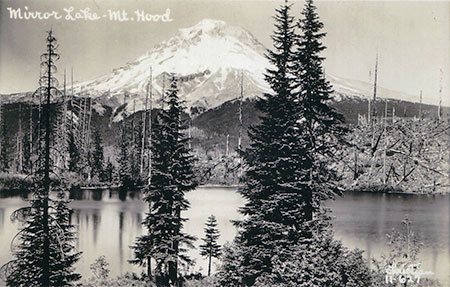
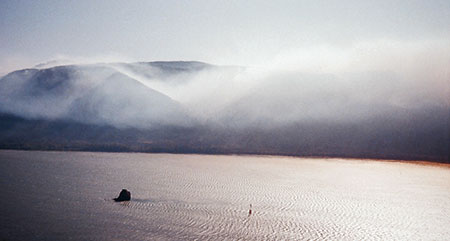
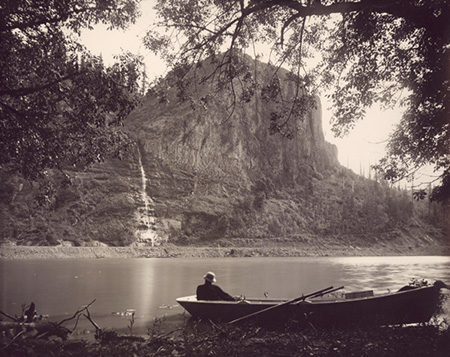
01MirrorLakeHood1920s

Scorched Mirror Lake just beginning to recover from the Sherar Burn in early 1900s

Oh, if only our lives spanned 800 years instead of 80! No doubt we would see (and zealously protect) our world differently with the benefit of that long perspective. And it turns out that Bowhead whales, Greenland sharks and even pond Koi can live well beyond two centuries. Heck, the lowly Icelandic clam can live up to 500 years! The advantage these creatures have over humanity is the ability to see the cycles of life as a perpetual rhythm, not simply discrete events.

Which brings us to the deep sadness that so many of us are experiencing with Eagle Creek Fire of 2017 in the Columbia River Gorge. To so many of us, losing the lush green forests that framed the waterfalls and cliff-top vistas in the Gorge is like losing an old friend.

Yet, with a bit more longevity, we’d be able to see the cycles of fire and recovery repeat in succession, and we could even look forward to walking again among 200 year old forest giants along today’s scorched trails in the Gorge. Oh, to be an Icelandic clam…

02YocumFallsTomDickMountain1936

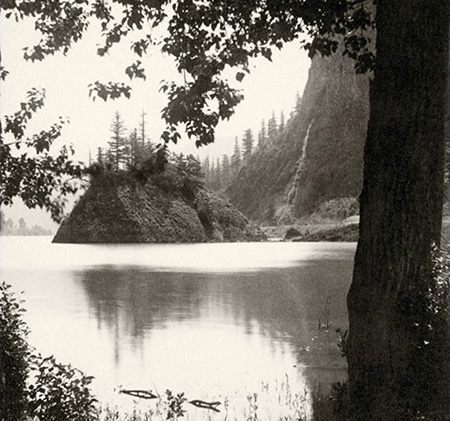
Yocum Falls and Tom Dick and Harry Mountain as they appeared after the Sherar Burn in the early 1900s

[click here for a larger view]

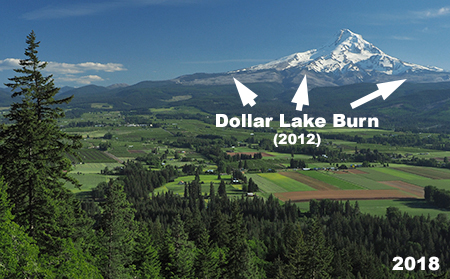
For many of us, the Eagle Creek Fire of 2017 feels like a redux of 2008 and 2011, when the Gnarl Ridge and Dollar Lake fires burned off forests on the east and north sides of Mount Hood, respectively. Just as fire crews worked this month to protect Multnomah Falls Lodge and the Vista House at Crown Point from fire in the Gorge, crews in 2008 and 2011 scrambled to protect iconic Cloud Cap Inn, the nearby Snowshoe Lodge and the many historic CCC structures at Tilly Jane from the fires.

For those of a certain age, the hike to Mirror Lake on Mount Hood once involved walking beneath hundreds of bleached snags reaching to the sky. These were the remnants of the Sherar Burn that scorched the entirety of Tom Dick and Harry Mountain, along with the upper Still Creek valley and points south in the early 1900s. The visible traces of this fire lasted prominently well into the 1980s, though the forest has largely recovered today.

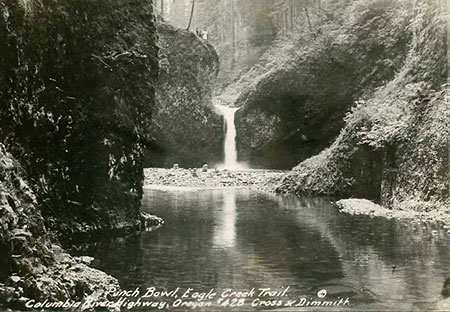
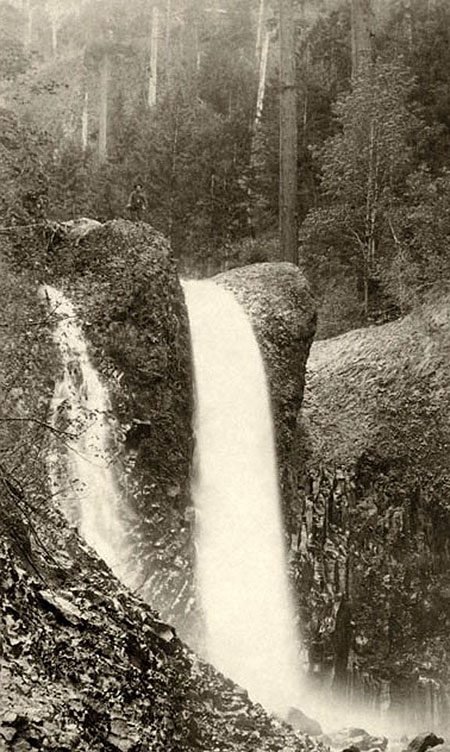
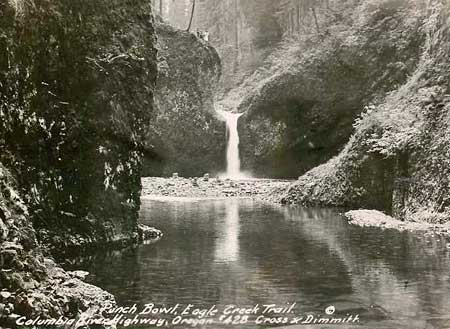
03PunchbowlFalls1920s

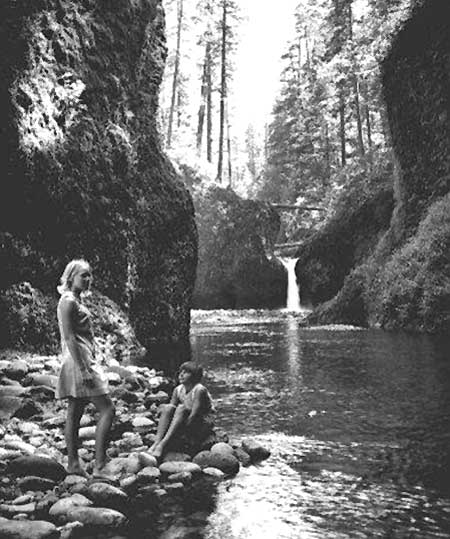
The prominent gravel bar at the base of Punch Bowl Falls on Eagle Creek in the early 1900s resulted from erosion from a nineteenth century fire.

The Eagle Creek Fire of 2017 in the Columbia Gorge will also follow this timeless sequence of destruction and renewal. There’s also some comfort to be gained from knowing that we’ve had a steady stream of fires in the Gorge, even in the very short timeframe of white settlement:

1902 – Yacolt Fire (238,000 acres)

1910 – Carson Fire (2,716 acres)

1917 – Stevenson Fire (7,606 acres)

1927 – Rock Creek Fire (52,500 acres)

1929 – Dole Valley Fire (202,500 acres)

1936 – Born Fire (7,897 acres)

1949 – Beacon Rock Fire (3,658 acres)

1952 – Skamania Fire (1,057 acres)

1991 – Wauna Point (375 acres)

1991 – Multnomah Falls Fire (1,200 acres)

1997 – Eagle Creek Fire (7 acres)

2000 – Oneonta Fire (5 acres)

2003 – Herman Creek Fire (375 acres)

2017 – Eagle Creek Fire (33,000+ acres)

The Forest Service reports that nearly all of the reported Gorge fires in recent decades (98%) have been human caused, but that certainly doesn’t mean the Gorge wouldn’t have burned without human behavior. The Forest Service describes the uniquely explosive fire conditions in the Gorge as follows:

“From early September through mid-October the west end of the gorge offers the best of all worlds from a fire’s perspective. The tremendous fuel loading of a west side forest coupled with hot and dry wind and incredibly steep terrain make for some of the most spectacular burning conditions the Pacific Northwest has to offer.”

Early white settlers to the Gorge called this “the Devil Wind” after the inferno that was the Yacolt Fire burned a quarter million acres on the north side of the river in less than 36 hours.

1991 Gorge Fires

04WaunaFire1991

Wauna Fire burning above Eagle Creek in 1991

Few remember it today, but in 1991 a pair of fires burned a sizeable stretch of the Oregon side of the Columbia River Gorge. The Multnomah Falls fire was a spectacular event, burning 1,200 acres along the Gorge wall from Multnomah Falls to Angels Rest, and nearly burning the historic Multnomah Falls Lodge. Sound familiar?

05MultnomahFallsFire1991

Multnomah Falls fire in 1991

The Multnomah Falls burn of 1991 has recovered quickly, and few hikers realize that the young forests along the popular Angels Rest trail were the direct result of the burn, though bleached snags still stand to tell the story. Visitors to Multnomah Falls still walk along the jumbo-size debris nets installed below the Benson Bridge to catch debris from the burned slopes of the 1991 fire, above. A major casualty of the 1991 fire was the beloved Perdition Trail that once connected Multnomah Falls to Wahkeena Falls on a route etched into the Gorge cliffs.

In 1991, the smaller Wauna Fire also burned 375 acres on the slopes directly above the west bank of Eagle Creek, below Wauna Point. This area has also largely recovered in the years since.

Early Fires in the Gorge

06TripleFallsOneonta1890s

This unusual photo of Triple Falls from the 1890s shows snags from an earlier fire in Oneonta canyon in the background.

Early photos show that fire has been a routine part of the Columbia River Gorge ecology. That pattern changed with fire suppression efforts in the 20th century, which in turn, set the conditions for the catastrophic Eagle Creek Fire of 2017. Photos from Oneonta canyon (above) in the 1890s show slopes covered in bleached snags, suggesting a major fire sometime in the 1800s.

07ShellrockMountain1950s

Shellrock Mountain’s east and south slopes were still recovering from fire in this 1940s view from the old Columbia River Highway.

Further east, places like the east slopes of Shellrock Mountain (above) were much less forested than today, thanks to repeated fires in the Gorge.

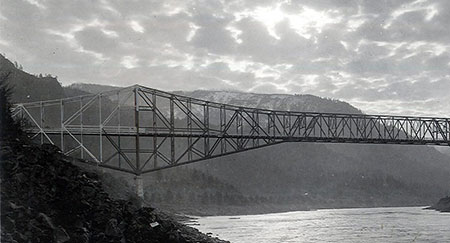
08BridgeOfGodsWaunekaPoint1930s

Snow covers the burned east slopes of Wauneka Point, the ridge that divides McCord and Moffett Creeks, in this 1930s view from Bridge of the Gods. This ridge burned again in the 2017 Eagle Creek Fire.

[click here for a larger view]

The above photo of the (then) new Bridge of the Gods in the early 1930s also shows large open slopes on Wauneka Point in the background, marked by winter snow. These slopes had largely reforested in subsequent years, but burned again in the Eagle Creek Fire of 2017, repeating a timeless cycle.

09BonnevilleAldrichHamilton1936

Burned over Aldrich Mountain and Hamilton Mountain in 1936.

[click here for a larger view]

Construction-era photos of Bonneville Dam in the late 1930s also provide detail on the state of the forests in Gorge at that time. The view north (above) shows burned-over Aldrich and Hamilton Mountains, both completely burned in the catastrophic Yacolt Burn.

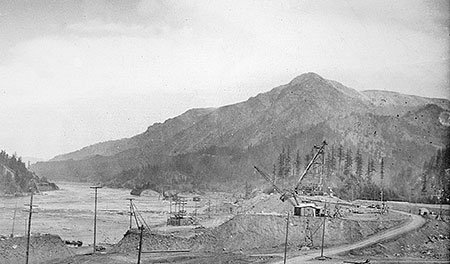
10BonnevilleConstruction1935

Burned over Ruckel Ridge and Benson Plateau in 1937.

[click here for a larger view]

Looking to the southwest from the dam site, Ruckel Ridge and Benson Plateau (above) were also largely burned over in the late 1930s. These areas burned again in the Eagle Creek Fire of 2017.

1931-34 Lookout Survey: A History of Fires

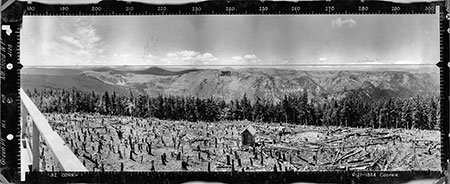
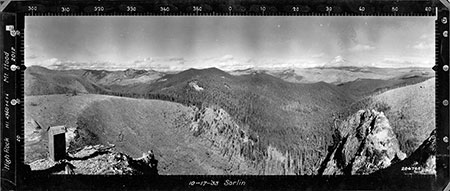
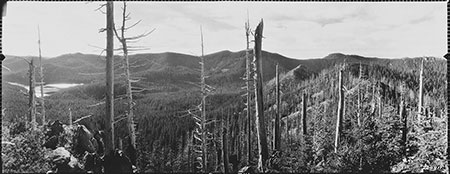
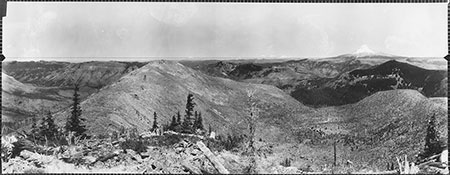
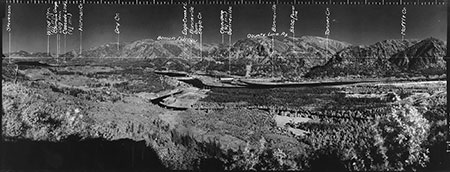
Given that we’re stuck with relatively short stints on this planet, we humans do have the unique ability to record history for the benefit of our descendants. And it turns out that in the 1930s and early 1940s, early forest rangers in WyEast country did just that with a series of lookout tower panoramas.

This rich photographic resource was mostly forgotten until just a few years ago, when caches of these images archived in university photo collections were scanned and uploaded to the web in high resolution. They provide an astonishing, invaluable amount of detail, most from the years 1930-36.

Ironically, these panoramic images were captured as part of the massive U.S. Forest Service effort to prevent fires, with each set providing a 360-degree survey from the hundreds of lookout sites that were developed on public lands across the country.

In the Pacific Northwest, the panoramic photos provide an excellent glimpse into the way our forests had evolved for millennia, and before fire suppression took hold. The following are a few clips from this archive for places through the Mount Hood country and in the Columbia River Gorge.

Basin Point (1933)

11BasinPointNorth1933

Mount Hood from obscure Basin Point, now overgrown with trees.

[click here for a larger view]

Basin Point is largely forgotten today, but at one time this high spot north of today’s Timothy Lake provided a lookout location for the upper Oak Grove Fork basin. This lookout site probably wouldn’t have been used had it not been for a fire that had fairly recently swept over the butte, burning away a young forest that was still getting established here. The view is from the south edge of the Sherar Burn, a fire that swept across a large area south of Government Camp sometime in the late 1800s or early 1900s.

Buck Peak (1933)

12BuckPeakNorth1933

This view is from Buck Peak toward the burned-over Eagle Creek and Tanner Creek Valleys.

[click here for a larger view]

Today, Buck Peak is known for its sweeping views of Mount Hood and Lost Lake, but view (above) to the north from the former lookout site also shows the burned over Eagle Creek and Tanner Creek Valleys, with burned Tanner Butte as the prominent peak left of center. The upper slopes of the mostly unburned Lake Branch valley, to the right, also show signs of fire.

Bull of the Woods (1934)

13BullofWoodsEast1934

The view looking southeast to Mount Jefferson from Bull of the Woods lookout shows a healthy mosaic of recent burns and recovering forest in the 1930s.

[click here for a larger view]

Fires have returned in recent years to Bull of the Woods, thanks in part to its wilderness protection that puts the land off-limits to timber harvesting (and thus “okay to burn” from a fire suppression perspective). This view looking toward Mount Jefferson shows a mosaic of recent burns and recovering forest, a healthy pattern that is returning with new fires in recent years.

Chinidere Mountain – North (1934)

14ChinidereNorth1934

This view looking north from Chinidere Mountain into the Herman Creek valley shows much of the drainage burned in the 1930s.

[click here for a larger view]

Today, the view to the north from popular Chinidere Mountain is gradually being obscured by recovering forests. This 1934 view shows the large burn that extended across the Herman Creek drainage at the time, from Benson Plateau (left of center) over Tomlike Mountain (right of center) toward Green Point Mountain (left edge of this photo). Though the forest here had almost completely recovered, much of the area in this view was burned again in the Eagle Creek fire of 2017.

Chinidere Mountain – West (1934)

15ChinidereWest1934

This view west from Chinidere Mountain shows recovering forests in the Eagle Creek drainage.

[click here for a larger view]

This view looking west from Chinidere Mountain into the Eagle Creek drainage shows a recovering forest in the upper valley and on the adjacent slopes of Indian Mountain (to the left) and Tanner Butte (right of center).

This area was at the heart of the Eagle Creek and Indian fires in 2017, and much of the area shown in this view burned.

Devils Peak (1933)

16DevilsPeakNorth1933

This 1930s view from Devils Peak shows an extensive burn on Zigzag Mountain and lower slopes of Devils Peak.

[click here for a larger view]

The old lookout tower still survives on Devils Peak, located within the Salmon-Huckleberry Wilderness, but the view of Mount Hood has nearly disappeared behind the recovering forest. This 1930s view shows the extensive burn that encompassed the long ridge of Zigzag Mountain (center, in the distance) and lower slopes of Devils peak, in the foreground. Both areas have since mostly reforested in the era of fire suppression.

The west end of Tom Dick and Harry Mountain is the burned-over ridge extending below Mount Hood in this photo, part of the late 1800s Sherar Burn. The burned lower slopes of Devils Peak and upper Still Creek valley were also burned in this historic fire.

Green Point Mountain (1934)

17GreenPointWest1934

This view from Green Point Mountain shows an extensive pattern of fires in the upper Herman Creek Valley.

[click here for a larger view]

In this view from Green Point Mountain, evidence of a mosaic burn stands out, with completely burned forest near the summit and surviving forest just below. The heavily burned slopes of Tomlike Mountain (center) and Chinidere Mountain (left of center) are in the distance are part of a wide mosaic of burns in the upper Herman Creek valley.

Old growth trees along Herman Creek today are proof that even large fires here didn’t completely burn the drainage. The Eagle Creek fire of 2017 burned a significant part of the Herman Creek drainage, and it is unknown how the old growth stands fared in the face of this recent fire.

High Rock (1933)

18HighRockNorth1933

The Abbott Burn encompassed the area surrounding High Rock, including the upper Roaring River drainage.

[click here for a larger view]

The view from High Rock looking north to Mount Hood was once surrounded by the extensive Abbott Burn, which engulfed much of the Roaring River watershed and part of the Salmon River backcountry sometime in the 1800s or early 20th century.

In the 1930s, a Civilian Conservation Corps (CCC) camp was established on the shoulder of High Rock, and a small army of CCC workers planted thousands of trees across the Abbott Burn. Many survived, and much of the reforestation in the Roaring River valley resulted from this forest intervention effort. But the rocky high country of Signal Buttes and other nearby ridges are still largely open and covered in fields of huckleberries, with the forest recovery advancing much more slowly.

This pattern of open, regularly burned peaks and ridge alternating with lush canyon floors is the natural state of our forests. Lightning-caused fires regularly burn away forests surviving on the thin, dry soils found higher slopes and ridges, and larger trees in moist soils on lower slopes and canyon bottoms are better able to survive natural fires.

Lost Lake Butte (1933)

19LostLakeButteWest1933

The burned upper slopes of Lost Lake Butte as they appeared in the 1930s, with Lost Lake in shimmering the distance.

[click here for a larger view]

Though the old-growth giants on the shores of Lost Lake have dodged or resisted fire for centuries, the forests on the dry, upper slopes of Lost Lake Butte were burned sometime in the late 1800s in a classic mosaic pattern that can be seen in the 1930s panoramic photos.

In the photo above, strips of larger, surviving trees can be seen within the burn, and a distinct line between the young,recovering forest in the burn area and larger trees that survived the fire is clearly visible along the near shore of Lost Lake. Raker Point (featured in the next photo) is visible as the open spur at the far right edge of the Lost Lake Butte panorama.

Raker Point (1933)

20RakerPointWest1933

Hundreds of snags along the crest of Sawtooth Ridge and Raker Point (in the distance) show the extent of fire on the north side of Lost Lake, sometime in the late 1800s or early 1900s.

[click here for a larger view]

Raker Point is a little known peak located just north of Lost Lake, on the west end of Sawtooth Ridge (Raker Point is the distant open spur right of center in this photo). The ridge and Raker Point were burned sometime in the late 1800s or early 1900s, possibly in the same fire that scorched Lost Lake Butte. The recovery on Raker Point was well under way in the 1930s photos, with 10-20 year old seedlings rising up among the hundreds of bleached snags left from the fire.

Lost Lake was one of the earliest recreation destinations in WyEast country, with hardy visitors from the Hood River Valley making their way to campsites along the lake shore as early as the 1890s. In the 1920s, a “modern” dirt road was finally completed to Lost Lake, roughly along the same route as today’s paved highway.

Signal Buttes (1933)

21SignalButtesNorth1933

Located west of High Rock, the Signal Buttes were completely burned in the Abbott fire of the early 1900s, and are still recovering today.

[click here for a larger view]

Today, the Signal Buttes are at the heart of the Roaring River Wilderness, and as described above, are still slowly recovering from the Abbott Burn fire that swept the area, despite efforts by the CCC in the 1930s to replant the forest here. The patch of unburned forest on the floor of the Roaring River valley (in the low area of the photo, below Mount Hood) are old growth Douglas fir and Western red cedar that survived the Abbot Burn — and likely many fires before that, as trees more than 1,000 years old are found here.

It’s also likely that the Signal Buttes will continue to be an open expanse of Beargrass meadows and Huckleberry fields if fires are allowed to burn here, once again. In this way, the Roaring River Wilderness is well on its way to a more natural condition of open ridges and a mosaic of old and recovering forests on the canyon floor and walls. Because the area was permanently protected as wilderness in 2009, future generations will have an opportunity to watch the forest here continue to evolve with fire, once again.

The rugged ridges and peaks just beyond Signal Buttes in this panorama are the high country of today’s Salmon-Huckleberry Wilderness. In contrast to the Signal Buttes, this northern extent of the Abbott Burn has largely recovered, with just a few peaks and ridgetops remaining as open Beargrass and Huckleberry fields.

Tumala Mountain (1933)

22SquawMtnEast1933

This view looking east from Tumala Mountain shows the burned ridges of the Salmon River and Roaring River high country in the 1930s. Mount Hood is on the extreme left.

[click here for a larger view]

This remarkable panorama from Tumala Mountain shows a burned-over landscape in much of what are today’s Salmon-Huckleberry (areas to the left) and Roaring River (areas to the right) wilderness areas. Most of this landscape is now heavily forested, with the exception of a few ridge tops and the crest of the Signal Buttes, described earlier and visible as the completely burned ridges in the upper right of this photo.

This photo also shows a healthy mosaic burn pattern on the nearby mountains immediate slopes, with bands of trees surviving between burned strips. This more natural fire pattern creates a rich habitat that, in combination with the series of lakes in the glacial valley at the foot of the peak, makes for an ideal landscape for wildlife.

You may notice that the photo markings on the left identify this as “Squaw Mountain”. In 2007, the Oregon Geographic Names Board renamed this peak out of respect for indigenous peoples, as the term “squaw” is considered derogatory. This change is part of a larger effort to rename other landmarks using “squaw” across the state. The word Tumala means “tomorrow” or “afterlife” in Chinook jargon, and is an apt name for this idyllic spot in WyEast country.

Summit Meadows (1930)

23SummitMeadowsNorth1930

This 1930 view of Summit Meadows shows signs of an extensive fire along the south slopes of Mount Hood in the vicinity of Government Camp.

[click here for a larger view]

Early photos of Government Camp and Summit Meadows on Mount Hood’s south side show thousands of bleached snags marking a fairly recent fire in the area. These could mark a series of discrete fires or could be related to the larger Sherar Burn or the fires that swept Zigzag Mountain in roughly the late 1800s.

23aGovernmentCamp1915

Extensive burns on Mount Hood above Government Camp in 1915 (Courtesy: History Museum of Hood River County)

The extent of the historic fires on Mount Hood’s south side is especially interesting given the degree of resort development here in the century since fire suppression began. The volcanic soils on Mount Hood’s south shoulder are among the youngest on the mountain, as much of the area was buried in fresh volcanic debris from eruptions that occurred in the late 1700s.

This makes the forests here especially vulnerable to fire because of the poorly developed soils, southern exposure and late summer stress from seasonal drought. Yet, the degree of development on this side of Mount Hood also makes it unlikely that forest fires will ever be allowed to burn naturally. Instead, these forests are good candidates for prescribed, controlled burns that could restore the forests to a more natural state while also protecting the hundreds of structures located here.

Tanner Butte (1930)

24TannerButteWest1930

This 1930 view from massive Tanner Butte looks west through charred forests toward Tanner Creek canyon, the Bull Run Watershed (on the left) and Larch Mountain (on the right horizon).

[click here for a larger view]

Tanner Butte and its long northern ridge is a prominent landmark in the backcountry of the Columbia River Gorge, dividing the Eagle Creek and Tanner Creek drainages. The panoramic photos from 1930 show a heavily burned landscape in this area, and longtime hikers can still remember when the ridges around Tanner Butte were still covered with open meadows, as recently as the 1970s.

More recently, the forests had recovered across almost all of the burned areas shown in this panorama, but the Eagle Creek Fire of 2017 appears to have hit the Tanner Creek basin especially hard. This could be a result of the relatively young, even-aged forest here, but fire suppression almost certainly played a role in this fire becoming catastrophic.

Much of the area visible here is within the Mark O. Hatfield Wilderness, and will provide yet another laboratory for future generations to watch and learn from as the forest recovers.

Wildcat Mountain (1933)

25WildcatMtnNorth1933

The view from Wildcat Mountain toward McIntyre Ridge and Portland in the far distance.

[click here for a larger view]

Wildcat Mountain lies at the western edge of the Salmon-Huckleberry Wilderness, and Portland’s downtown high-rises are visible from its summit. Or, at least they were a couple of decades ago, before the recovering forests here enveloped the summit with a stand of Noble fir and Mountain hemlock.

Broad McIntyre Ridge (pictured in the distance in this photo) still has a few open Beargrass meadows with sweeping views of Mount Hood, but even here the forest is advancing rapidly.

The 1930s panoramic view shows a completely different landscape, with mixed stands of forests in the valleys below the Wildcat Mountain and its ridges that suggest a long history of mosaic burns. Without fire suppression, McIntyre Ridge and Wildcat Mountain would likely have burned again since the 1930s.

Since 1984, this area has been protected as wilderness, so future fires will likely be allowed to burn. If the recent Eagle Creek fire in the Gorge is any indication, the young forests that have grown since this panorama was taken are likely to be the first to burn, as we saw in the Tanner Creek and Eagle Creek areas.

Wolf Camp Butte (1933)

26WolfCampButteEast

This view doesn’t exist anymore, thanks to a completely recovered forest on Wolf Camp Butte.

[click here for a larger view]

Wolf Camp Butte is another lookout site made obscure by the recovering forest that has completely covered the summit. More of a high spot than a peak, this 1933 view from the former lookout site provides us with an excellent look at the extent of the Sherar Burn. The canyon in on the right holds the Salmon River, descending from the Palmer Glacier on Mount Hood (just out of view to the left).

This fire burned north to present-day Government Camp and south to at least the Salmon River, encompassing a very large area. Parts of the Sherar Burn may have been replanted by the CCC in the 1930s, and the area is almost completely reforested today.

Wauna Point (1936)

27WaunaPointNorth1936

This view is from Wauna Point on the Oregon side of the Gorge, looking toward Table Mountain on the Washington side.

[click here for a larger view]

This view from Wauna Point, directly above Eagle Creek, shows a long history of fire in the Gorge, with a mosaic forest pattern on the slopes of Table Mountain on the far side of the river that extends eastward toward Wind Mountain. The big trees on the Oregon side mark the Eagle Creek campground, a section of forest that also survived the recent catastrophic fire. The spot where this panorama was taken burned in the small 1991 Wauna Fire, and has since largely recovered.

1940s Gorge Lookout Surveys

In the years following completion of Bonneville Dam in 1937, a series of panoramic lookout photos were made from spots around the dam. Like the earlier 1930s panoramas, these photos provide a valuable snapshot of the state of forests in the Gorge at a time when fire suppression had just begun. They’re also nicely annotated with major landmarks identified!

Aldrich Butte – North (1941)

28AldrichButteNorth1941

[click here for a larger view]

Like the view from Wauna Point on the Oregon side, this view toward Table Mountain shows a healthy blend of big trees that have survived periodic fires and more recently burned slopes covered on meadows and recovering forest.

Aldrich Butte nearly burned again in 2017, when embers from the Eagle Creek Fire floated more than a mile across the Columbia River and ignited a small fire here.

Aldrich Butte – South (1941)

29AldrichButteSouth1941

The view south from Aldrich Butte toward Bonneville Dam and Oregon side of the Gorge.

[click here for a larger view]

This expansive view from Aldrich Butte shows the complex mosaic forest patterns created by repeated fires on Benson Plateau and “County Line Ridge”, which is now more commonly known as Wauna Ridge or Tanner Ridge.

This amazing photo not only shows how fire has shaped the forests on the upper slopes and ridges of the Gorge, but also how big trees in the canyons and at river level have often dodged or resisted fire.

Aldrich Butte – West (1941)

30AldrichButteWest1941

The view west from Aldrich Butte shows Hamilton Mountain (in Washington) and the steep wall of the Oregon side of the Gorge in the distance.

[click here for a larger view]

Like the view of Benson Plateau on the Oregon side, this view of Hamilton Mountain from Aldrich Butte shows a complex mosaic of forest types and ages that resulted from fire. On the far side of the river, the burned slopes of Wauneka Point can also be seen on the far left. Wauneka Point and the steep face of the Oregon side of the Gorge was heavily burned in the Eagle Creek fire of 2017.

Our Next Century with Fire?

There are so many variables at work in how we move from a century of forest fire suppression to — hopefully — an era where we learn to live with and appreciate the role of fire.

Will the public accept the inevitability of forest fires, and the implicit need to rethink building vacation homes and resorts in our forests? Will a return to sustainable, beneficial fires resume quickly, or will the catastrophic fires that suppression has set the stage for continue for decades or even centuries?

An even larger question is whether climate change will significantly accelerate the number of catastrophic fires? And how will climate change affect the ability for forests to regenerate in burned areas?

These are the difficult questions that future generations will be grappling with for decades to come.

31DollarLakeMosaicPattern

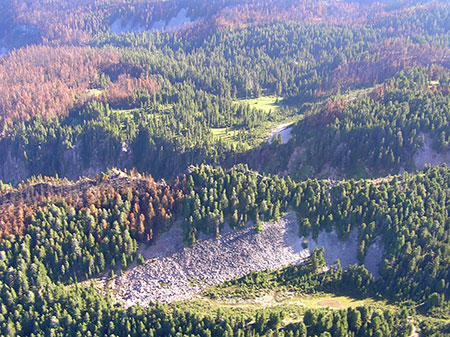
Parts of the 2011 Dollar Lake Fire in the Mount Hood Wilderness burned in a beneficial mosaic pattern, as seen here at Eden Park. This is the goal of restoring the role of fire in our forests.

But signs of a shift in thinking are encouraging, starting with a broad consensus among forest scientists that fire suppression has been disastrous over the long term. Good public lands policy is always rooted in good science, and some of our scientists have also emerged to become influential leaders of agencies like the U.S. Forest Service and National Park Service, too. Let’s hope that continues.

Events like the Eagle Creek Fire of 2017 are also important learning opportunities for the general public. Over the next several decades, the millions who treasure the Columbia Gorge as their own “backyard” will have an unprecedented opportunity to better understand the role of fire in the Gorge ecosystem. Gorge land managers and advocates are already telling this story, as are local media outlets. That’s encouraging.

32DollarLakeFireProgressionMap

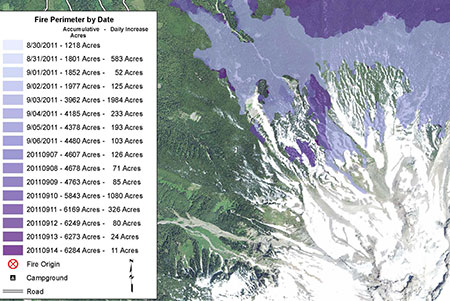
New mapping tools allowed land managers to document the daily progression of the 2011 Dollar Lake Fire with unprecedented detail. This information will be a gift to future generations of scientists and land managers.

New mapping tools that allow us to document fires in astonishing detail are also helping scientists better understand the dynamics of fires and forest recovery. This new level of documentation will help us move back to a sustainable relationship.

Even better, the flood of new fire mapping and data will be our gift to the future, helping future generations continue to better understand our forests, just as the lookout panoramas from the 1930s are helping us today. Hopefully, our actions now will ensure that future generations inherit forests that look more like those 1930s panoramas, as well.

33DollarFireRecovery

From death comes renewal: huckleberry seedling growing from the bark of a tree in the burn area of the 2011 Dollar Lake Fire.

There’s good news on that front, too. Our youngest generations who had their first outdoor experiences on Mount Hood and in the Gorge will also be the scientists and policy makers of the future, and will steer public lands policy.

Their close-up experiences with fire in their formative years will surely drive their passion to move our forests back toward a health relationship with fire, so long as we all continue to learn and appreciate the essential role of fire in WyEast country.

First Look at the Gorge Fire

GorgeFire01

Eagle Creek Fire during the initial, explosive phase (US Forest Service)

Officially the Eagle Creek Fire in the Columbia River Gorge is still fully involved, now at 35,000 acres and just 10 percent contained by firefighters. Rain in the forecast for the coming week suggests that the fire will continue to slow as October approaches, and our attention will turn toward the changes that fire has once again brought to the Gorge.

The Gorge is a second home for many of us, and in some ways the fire was akin to watching our “home” burn. But that’s a human perspective that we should resist over the long term if we care about the ecological health of the Gorge. Fire is as natural and necessary as the rain in this amazing place, though that’s a truth that we have been conditioned to resist. I’ll post more on that subject in a subsequent article.

GorgeFire02

Surreal Gorge landscape under smoky skies from the Eagle Creek Fire (US Forest Service)

For now, we’re just beginning to learn about the impact of the fire, even as it continues to burn. Thankfully, no lives have been lost, no serious injuries reported and very few structures have been lost. That’s a testament to our brave emergency responders (many of them volunteers) and the willingness of most Gorge residents to abide by evacuation orders. It has surely been a frightening and stressful time for those who call the Gorge home.

The impact on public lands is still largely unknown, but the Oregon side of the Columbia River Gorge has one of the most concentrated, most heavily used trail systems in the world, and the damage to trails is likely to be significant. The Forest Service is likely to close affected trails for months or even years in order to assess the damage and determine how best to restore them.

GorgeFire03

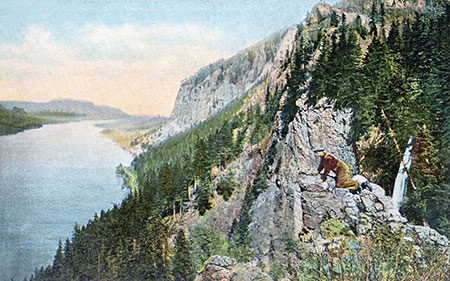
1930s hiker at a viewpoint along the Perdition Trail (with Multnomah Falls beyond)

If you’ve lived here for awhile, you’ll also recall that we lost the Perdition Trail, an iconic, prized connection between Wahkeena Falls and Multnomah Falls, to the 1991 Multnomah Falls Fire. The reasons were complex, and it will tempting for the Forest Service to let some trails go, given their shrinking trail crews. We should not allow this to happen again.

Every trail should be restored or re-routed, and new trails are also needed to spread out the intense recreation in the Gorge. Trails advocates will need to work together to ensure this. Trailkeepers of Oregon (TKO) has set up a mailing list dedicated to Gorge trail restoration, if you’re interested in working on future volunteer projects. You can sign up for periodic updates and events here.

______________________

On September 10, I drove SR 14 on the Washington side of the Gorge for my first look at the fire, starting in Hood River. Below each of the following annotated photos, I’ve linked to much larger versions that I encourage you to view if you’re reading this on a large monitor, as they provide a better sense of the fire’s impact.

As hoped, much of the burn is in a patchy “mosaic” pattern, a healthy and desirable outcome for the ecosystem. This is how fires used to occur in our forests, before a century of suppression began in the early 1900s. Mosaic burns allow for mixed forest stands and exceptional wildlife habitat to evolve, even as we might mourn the loss of familiar green forests.

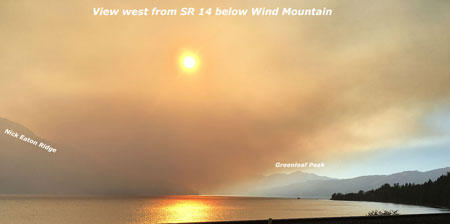
The wind pattern on Sunday had shifted from westerly to a northwesterly direction, producing a bizarre effect: smoke from the fire hugged the vertical wall that is the Oregon side of the Gorge, while the Washington side was cleared of smoke and under a bright blue sky. The view, below, shows this split-screen effect from near Wind Mountain.

GorgeFire04

(Click here for a large view)

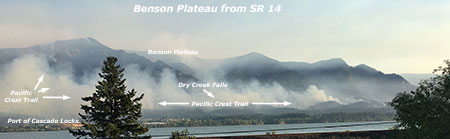
Moving west, the combination of ongoing wildfire and back-burning by firefighters was producing a continuous plume along the base of the Oregon cliffs, from Herman Creek east to Shellrock Mountain, as seen below. The Pacific Crest Trail traverses this section, and is undoubtedly affected by the fire.

GorgeFire05

(Click here for a large view)

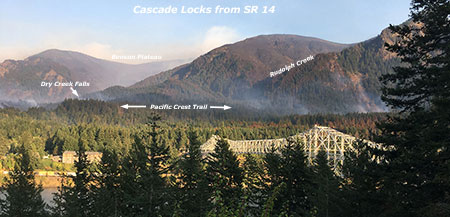
From the Bridge of the Gods wayside, opposite Cascade Locks, the impact of the fire on the canyons that fan out from Benson Plateau is visible. Some areas (below) show a healthy mosaic burn, while some of the upper slopes show wider swaths of forest impacted. The alarming proximity of the fire to the town of Cascade Locks is also evident in the scorched trees visible just above the bridge in this view. This was a close call for those who live here.

GorgeFire06

(Click here for a large view)

Turning further to the east from the Bridge of the Gods wayside (below), the ongoing wildfire and back-burning shown in the previous photos can be seen in the distance, beyond the town of Cascade Locks.

GorgeFire07

(Click here for a large view)

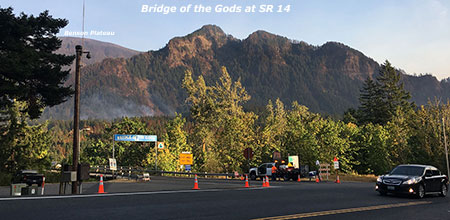
The scene at the Bridge of the Gods bridgehead (below) is an ongoing reminder that we’re a long way from life returning to normal for Cascade Locks residents. For now, I-84 remains closed and this is the only route into town, and only open to those with proof of residency.

GorgeFire08

(Click here for a large view)

Moving further west, the 2000-foot wall of cliffs in the St. Peters Dome area that stretches from McCord Creek to Horsetail Creek (below) come into view.

Here, the fire has also burned in mosaic pattern, with many patches of green forest surviving. But the frightening effects of the firestorm that occurred in the first days of the fire is also evident, with isolated trees on cliffs hundreds of feet above the valley floor ignited by the rolling waves of burning debris that were carried airborne in the strong winds that initially swept the fire through the Gorge.

GorgeFire09

(Click here for a large view)

A second view (below) of the St. Peters Dome area shows the burn extending toward Nesmith Point, nearly 4,000 vertical feet above the Gorge floor.

GorgeFire10

(Click here for a large view)

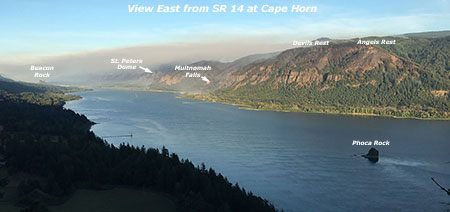
Moving west along SR 14 to the viewpoint at Cape Horn, the impact of the fire on areas west of Horsetail Falls comes into view (below), along with a better sense of the mosaic pattern of the burn. This view shows the Horsetail Creek trail to be affected by the first, as well as the slopes on both sides of Oneonta Gorge.

In this earlier piece on Oneonta Gorge, I described the dangerous combination of completely unmanaged visitor access and an increasingly dangerous logjam at the mouth of the Gorge. The fire will almost certainly trigger a steady stream of new logs rolling into Oneonta Gorge and adding to the massive logjam in coming years.

GorgeFire11

(Click here for a large view)

Moving further west, the area surrounding iconic Multnomah Falls and Wahkeena Falls comes into view (below). As with other areas, the fire burned in vertical swaths along the Gorge face, leaving more mosaic patterns in the burned forest. From this view, trees along the popular 1-mile trail from Multnomah Falls Lodge to the top of the falls looks to be affected by the fire, as are forests above Wahkeena Falls.

GorgeFire12

(Click here for a large view)

This wide view looking east from above Cape Horn (below) shows most of the western extent of the fire, with the north-facing slopes of Angels Rest heavily burned, while the west and south-facing slopes were less affected.

GorgeFire13

(Click here for a large view)

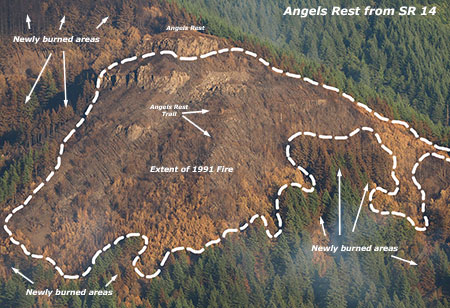
A closer look at Angels Rest shows that the burned area in the current fire closely matches the area that burned in the 1991 (below), along with slopes on the opposite side of Coopey Falls. The Angels Rest Trail was heavily impacted by the 1991 fire, and will clearly need to be restored after this fire, as well.

GorgeFire14

(Click here for a large view)

I’ve marked an approximation of the 1991 fire extent at Angels Rest in this closer look (below) at the summit of Angels Rest, based on tree size. Tall conifers burned in today’s Eagle Creek fire survived the 1991 fire, and mark the general margins of that earlier fire.

Areas within the 1991 burn were still recovering and consisted largely of broadleaf trees, like Bigleaf and Vine maple. Depending on the heat of the fire and whether their roots survived, these broadleaf trees may be quick to recover, sprouting from the base of their killed tops as early as next spring.

The recurring fires at Angels Rest offer an excellent case study for researchers working to understand how natural wildfires behave in successive waves over time. This, in turn, could help Gorge land managers and those living in the Gorge better plan for future fires.

GorgeFire15

(Click here for a large view)

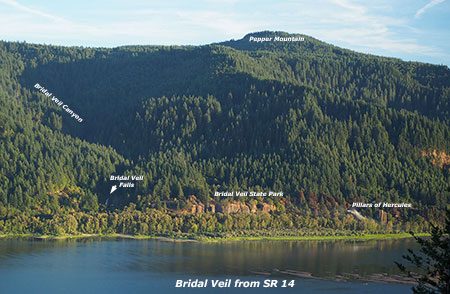
Finally, a look (below) at the western extent of the fire shows a few scorched areas in Bridal Veil State Park, including the forest around the Pillars of Hercules. Bridal Veil Canyon appears to have escaped the burn, though some trees near Bridal Veil Falls may have burned.

GorgeFire16

(Click here for a large view)

I’ve titled this article as my “first look” because the story of the Eagle Creek fire is still being written. Only after the fall rains arrive in earnest will we have a full sense of the scale of the fire.

As new chapters in the Eagle Creek saga unfold, I’ll continue to post updates and share perspectives on this fire and our broader relationship with fire as part of the natural systems that govern our public lands. With each new fire in close proximity to Portland, we have the opportunity to expand and evolve how we think about fire, and hopefully how we manage our public lands in the future.

More to come…

2017 Campaign Calendar!

mhnp_calendar01

[click here for a large image]

Each year since the Mount Hood National Park Campaign began in 2004, I’ve published a wall calendar to celebrate the many reasons why Mount Hood and the Columbia River Gorge should be our next national park. You can pick up a calendar here:

 2017 Mount Hood National Park Campaign Calendar

The calendar sales help cover some of the costs of keeping the campaign website and WyEast blog up and running. More importantly, they ensure that I continue to explore new places in the gorge and on the mountain, as each calendar consists exclusively of photos I’ve taken in the previous year. In this article, I’ll provide some of the stories behind the photos in the new Mount Hood National Park Campaign Calendar.

 The Calendar

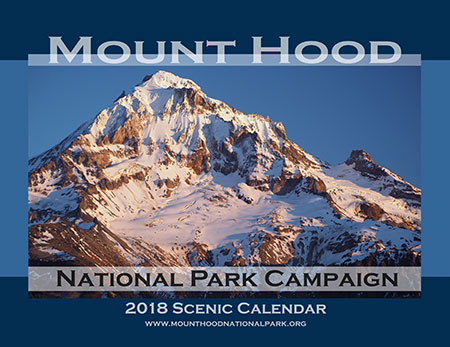
Beginning in 2016, I’ve published the calendar at Zazzle, where the quality of printing and binding is much better than my former printer. The excellent print quality shows in the front cover (above), a view of the northwest face of Mount Hood from Cathedral Ridge where the color accuracy does justice to the vibrant cliffs on this side of the mountain.

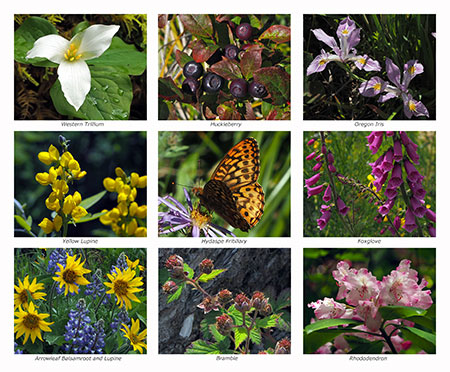
An added bonus with Zazzle is the ability to include a full-color spread on the back of the calendar. As with the 2016 calendar, I’ve used this space to show off some of the flora I’ve photographed over the past year – and this year, I added berries and a butterfly to the mix, too:

mhnp_calendar02

[click here for a large image]

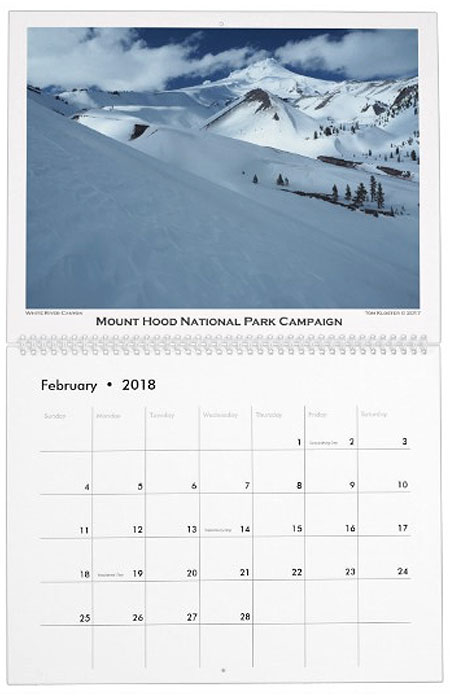
The monthly layout remains the same as last year, with a classic design that serves nicely as a working calendar for kitchens or offices:

 mhnp_calendar03

The finished calendar hangs 14 inches wide by 22 inches tall, with a white wire binding.

 The Images

The following is a rundown of the 12 images inside the calendar by month, with a link to a large version of each image, too. This year, I’ve posted especially large versions to allow for a closer look at these scenes (in a new window), and you can see them by clicking the link beneath each preview image.

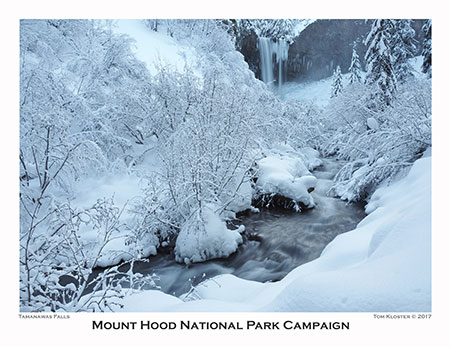
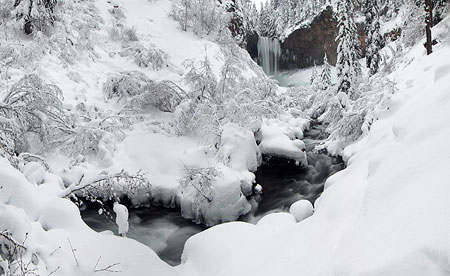
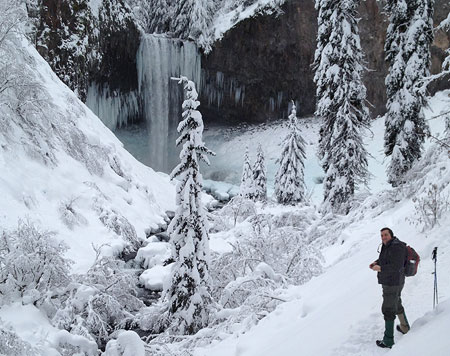
The 2017 calendar begins with a chilly Tamanawas Falls for the January image. This impressive waterfall is located on Cold Spring Creek on Mount Hood’s east slope:

mhnp_calendar04

Tamanawas Falls in winter clothes

 [click here for a large image]

This popularity of this trail in winter has ballooned in recent years, from almost no visitors just a decade ago to traffic jams on winter weekends today.

The scenery explains the popularity. While the trail is lovely in the snow-free seasons, it’s downright magical after the first heavy snows in winter. The scene below is typical of the many breathtaking vistas along the hike during the snow season.

mhnp_calendar05

Cold Spring Creek gets just a little bit colder

It’s still possible to have the place to yourself, however. Go on a weekday, and you’re likely to find just a few hikers and snowshoers on the trail. Thus far, no Snow Park pass is required here – though that will surely come if the weekend crowds continue!

For February, I picked an image of Mount Hood’s steep north face, featuring the icefalls of the Coe and Ladd glaciers:

mhnp_calendar06

Mount Hood’s mighty north face from Owl Point

[click here for a large image]

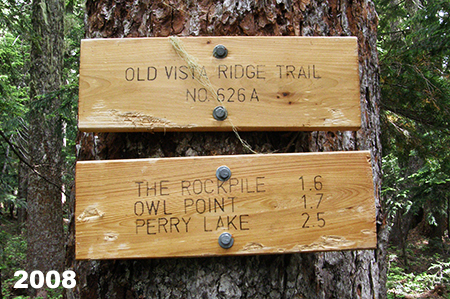
This view is unique to the extent that it was taken from the Old Vista Ridge trail to Owl Point – a route that was reopened in 2007 by volunteers and provides a perspective of the mountain rarely seen by most visitors.

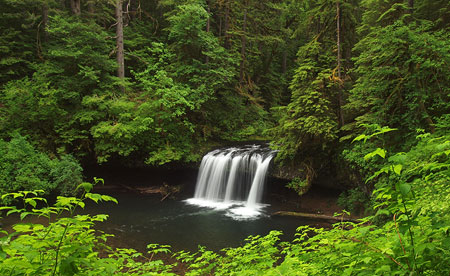
 For March, I selected an image of Upper Butte Creek Falls:

mhnp_calendar07

Lovely Upper Butte Creek Falls in spring

[click here for a large image]

This is on the margins of Mount Hood country, but deserves better protections than the Oregon Department of Forestry (ODF) can ever provide, given their constitutional obligation to log state forests to provide state revenue.

While ODF has done a very good job with the short trails that reach the waterfalls of Butte Creek, the bulk of the watershed is still heavily managed for timber harvests. Who knows, someday maybe it will be part of a Mount Hood National Park? It’s certainly worthy.

On this particular trip last spring, I returned to the trailhead to find these notes on my windshield:

mhnp_calendar08

Our future is in good hands!

Not much damage to the car, and the note more than made up for it! I did contact Jesse, and ended up speaking to his dad. I thanked him for being an excellent parent. With dads (and moms) like this, our future is in good hands!

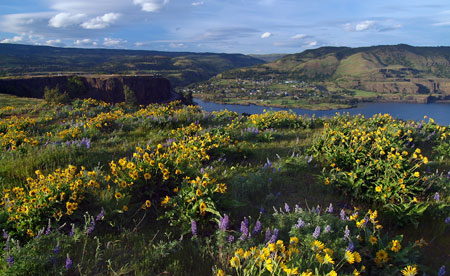
For April, I picked this scene from Rowena Crest at the height of the Balsamroot and Lupine bloom season:

mhnp_calendar09

Rowena Crest in April splendor

[click here for a large image]

Just me and a few hundred other photographers up there to enjoy the wildflowers on that busy, sunny Sunday afternoon! Look closely, and you can see a freight train heading west on the Union Pacific tracks in the distance, lending scale to the enormity of the Gorge.

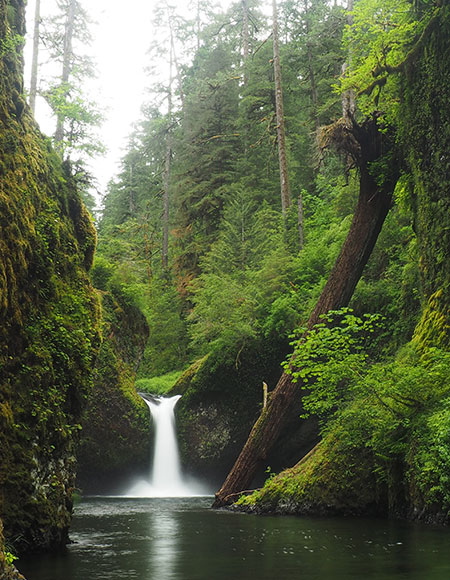
For the May image, I chose the classic scene of Punch Bowl Falls along the popular Eagle Creek Trail in the Gorge:

mhnp_calendar10

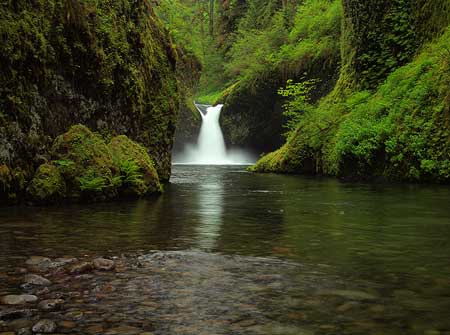
Punch Bowl Falls in spring

 [click here for a large image]

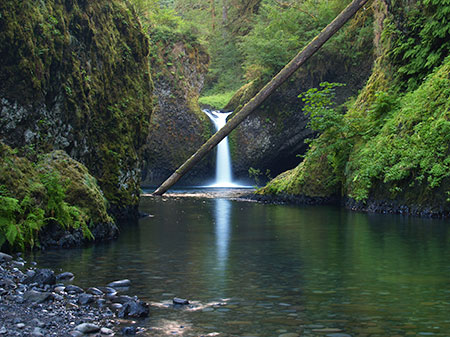
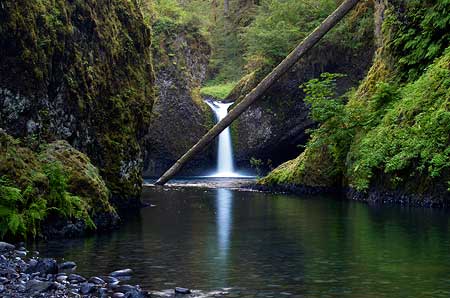
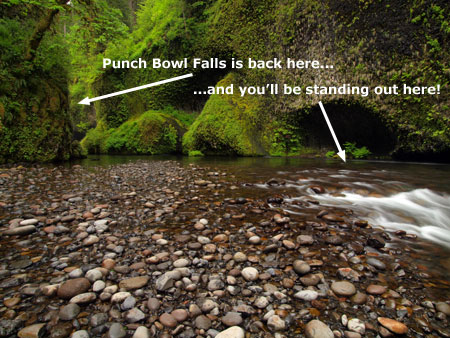
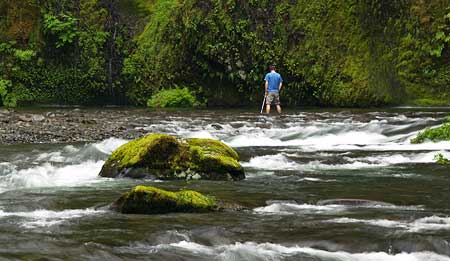
The spring rains faded quickly this year, resulting in much lower flows along Eagle Creek by the time spring greenery was emerging, making it less chilly to wade out to the view of the falls. To the right of the falls you can also see the latest downfall to land in front of the falls. To my eye, this adds to the scene, so I see it as a plus.

This isn’t the first big tree to drop into the Punch Bowl in recent years. In the mid-2000s, another large tree fell directly in front of the falls, much to the frustration of photographers:

mhnp_calendar11

Punch Bowl Falls in 2006 with an earlier fallen tree in front of the falls

 That earlier tree was flushed out a few years ago, only to be replaced by the current, somewhat less obtrusive downfall a couple of years ago. Here’s a wider view showing this most recent addition, including the giant root ball:

mhnp_calendar13

Gravity at work once again at Punch Bowl Falls

This pattern will continue as it has for millennia, as other large Douglas fir trees are leaning badly along the rim of the Punch Bowl. They eventually will drop into the bowl, too, frustrating future generations of photographers!

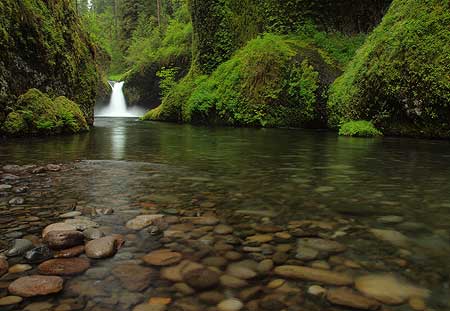
 The Punch Bowl, itself, changes over time. This early view from the 1920s shows a lot more debris inside the bowl compared to recent decades, possibly from erosion that followed an early 1900s forest fire in the Eagle Creek canyon:

mhnp_calendar12

Punch Bowl Falls in the 1920s

Look closely and you can see flapper-era hikers on the rim of the bowl and several rock stacks left by visitors on the gravel bar – some things never change!

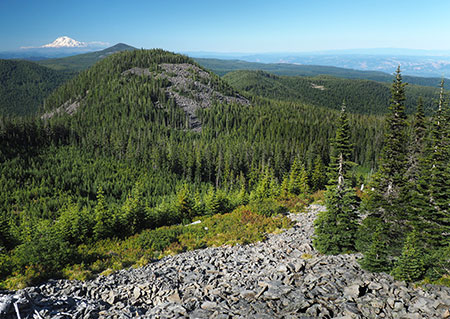
The June image in the new calendar is the opposite of Punch Bowl Falls. While thousands visit Eagle Creek each year, the remote spot pictured below is rarely visited by anyone, despite being less than a mile from Wahtum Lake and the headwaters of Eagle Creek. This view is from a rugged, unnamed peak along Waucoma Ridge, looking toward another unnamed butte and snowy Mount Adams, in the distance:

mhnp_calendar14

A place of ancient significance, yet lost in our modern time

[click here for a large image]

For the purpose of keeping track of unnamed places, I’ve called the talus-covered butte in the photo “Pika Butte”, in honor of its numerous Pika residents. The peak from which the photo is taken is an extension of Blowdown Ridge, a much-abused, heavily logged and mostly forgotten beauty spot that deserves to be restored and placed under the care of the National Park Service.

The view of “Pika Butte” was taken while exploring several off-trail rock knobs and outcrops along Blowdown Ridge, but what made this spot really special was stumbling acxross a cluster of Indian pits (sometimes called vision quest pits). One pit is visible in the lower left corner of the wide view (above) and you can see three in this close-up view from the same spot:

mhnp_calendar15

If only these stones could tell us the story behind the mystery!

Nobody really knows why ancient people in the region made these pits, but it’s always a powerful experience to find them, and imagine the lives of indigenous peoples unfolding in the shadow of Mount Hood. These pits had a clear view of the Hood River Valley, with the Columbia River and Mount Adams in the distance. Indian pits often feature a sweeping mountain or river view, adding to the theory that they were built with a spiritual purpose.

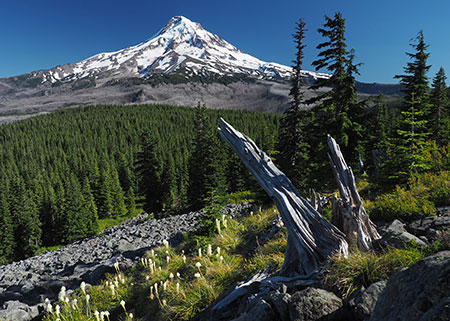
For July, another photo from Owl Point along the Old Vista Ridge trail. This wide view shows some of the beargrass in bloom on the slopes of Owl Point on a sunny afternoon in July:

mhnp_calendar16

Mount Hood fills the skyline from Owl Point

[click here for a large image]

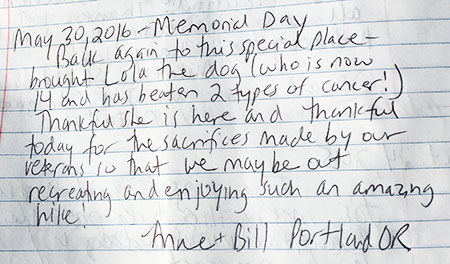
Since this historic trail was adopted by volunteers in 2007, it has become increasingly popular with hikers. Several geocaches are located along the way, as well as a summit register at Owl Point with notes from hikers from all over the world. A few recent entries among hundreds in the register show the impact that this amazing “new” view of Mount Hood has on visitors to Old Vista Ridge:

mhnp_calendar17

mhnp_calendar18

mhnp_calendar19

In a few months I’ll share some exciting news about the Old Vista Ridge Trail, Owl Point and the surrounding areas on Mount Hood’s north slope. Stay tuned!

For August, I picked another scene on the north side of the mountain, this time at iconic Elk Cove along the Timberline Trail:

mhnp_calendar20

Swale along Cove Creek in Elk Cove

[click here for a large image]

The hiker (and his dog) approaching me in this photo stopped to chat, and I was surprised to learn that he was a regular reader of this blog!

As we talked about the changes to the cove that came with the 2011 Dollar Lake Fire (that burned the north and west margins of the cove), he mentioned finding the foundation from the original Civilian Conservation Corps (CCC) shelter in the brush near Cove Creek! We crossed the creek and in a short distance, came to the unmistakable outline of the shelter:

mhnp_calendar21

The old Elk Cove shelter foundation is surprisingly intact – but hidden

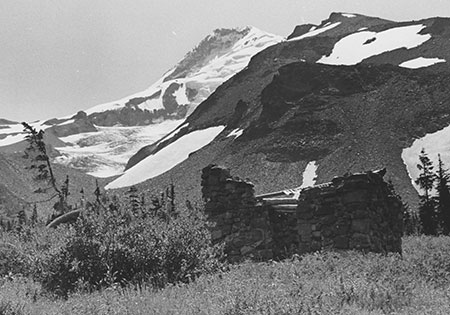
This structure was once one of several along the Timberline Trail, but fell into disrepair following avalanche damage sometime in the 1950s or early 1960s. This image is apparently from the mid-1960s, showing the still somewhat intact ruins of the shelter:

mhnp_calendar22

The beginning of the end for the Elk Cove shelter in the 1960s

The location of the shelter was a surprise to me, as I had long thought the building was located near a prominent clearing and campsite near the middle of Elk Cove. Now that I know the exact location, I plan to reproduce the 1960s image on my next trip to the cove, for comparison.

For September, I chose a quiet autumn scene along Gorton Creek, near the Wyeth Campground in the Columbia Gorge (below). This is a spot I’ve photographed many times, just downstream from popular Emerald Falls:

mhnp_calendar23

Pretty Gorton Creek in the Wyeth area of the Gorge

[click here for a large image]

This area has a fascinating history, as today’s Wyeth Campground is located on the grounds of Civilian Public Service Camp No. 1, a World War II work camp for conscientious objectors. The men serving at this camp built roads and trails throughout the Gorge, in addition to many other public works projects. The camp operated from 1941-1946. You can learn more about the Wyeth work camp here.

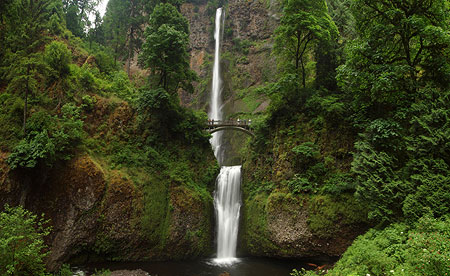
The October scene is familiar to anyone who has visited the Gorge. It’s Multnomah falls, of course, dressed in autumn colors:

mhnp_calendar24

A bugs-eye view of Multnomah Falls?

[click here for a large image]

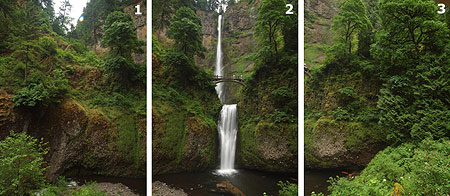
If the photo looks different than your typical Multnomah Falls view, that’s because I blended a total of eight images to create a horizontal format of this very vertical falls to better fit the calendar. Here’s what the composite looked like before blending the images:

mhnp_calendar25

To young photographers of the digital age, blending photos is routine. But for those of us who started out in the age of film photography and darkrooms, the ability to blend and stack images is nothing short of magical – and fun! While younger photographers are increasingly exploring film photography as a retro art, the digital age is infinitely more enjoyable than the days of dark rooms, chemicals and expensive film and print paper for this photographer.

I paused before including a winter-season photo of Wahclella Falls for the November calendar image (below). Why? Because I’ve used a photo from this area in nearly every calendar since I started assembling these more than a decade ago. It’s my favorite Gorge hike – I visited Tanner Creek and Wahclella Falls five times in 2016 – and have photographed this magnificent scene dozens of times, and yet it never gets old.

mhnp_calendar26

Wahclella Falls is a winter spectacle!

[click here for a large image]

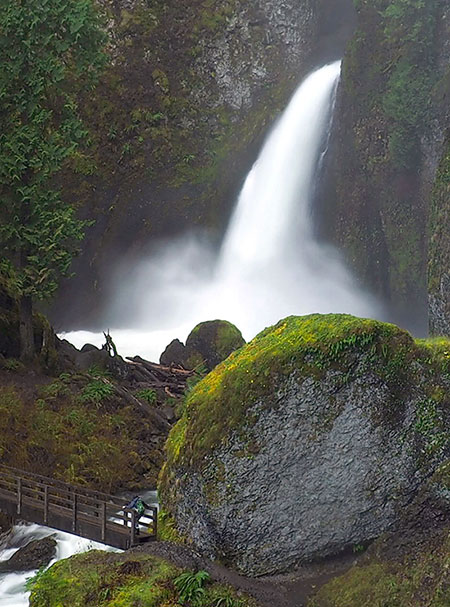
I decided to include this Wahclella Falls scene because it captured a particularly wild day on Tanner Creek last winter. The stream was running high, filling the canyon with mist and seasonal waterfalls drifted down the walls of the gorge on all sides.

The huge splash pool at the base of the falls was especially wild – more like ocean surf than a Cascade stream, and if you look closely, you can also see a hiker braving the rain and cold to take in this view:

mhnp_calendar27

Roaring falls, big boulder… and tiny hiker

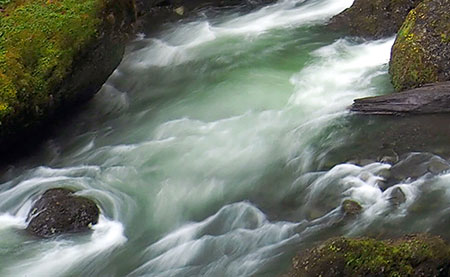
I also liked the turbulent stream below the falls, which also boiled more like ocean surf than a mountain stream:

mhnp_calendar28

Tanner Creek comes alive in winter

 So, another calendar featuring Wahclella Falls? Yes, and it certainly won’t be the last. This is among the most magical places in the Gorge – or anywhere!

 Finally, for the December image I selected a photo from my first official attempt at capturing the Milky Way over Mount Hood. This view is across Laurance Lake, on the north side of the mountain:

mhnp_calendar29

Milky Way rising over Laurance Lake and Mount Hood

[click here for a large image]

The glow on the opposite side of the lake is a campfire at the Kinnikinnick Campground, and was just a lucky addition to the scene. While we waited for the Milky Way to appear, there were several campers arriving, making for some interesting photo captures. With a 30-second exposure set for stars, this image also captures the path of a car driving along the south side of the lake to the campground:

mhnp_calendar30

Headlights and campfires in a Laurance Lake time exposure

My tour guide and instructor that evening was Hood River Photographer Brian Chambers, who I profiled in this WyEast Blog article in June. Thanks for a great trip, Brian!

mhnp_calendar31

The author with Brian Chambers somewhere under the Milky Way

So, if you’re looking to support the blog and Mount Hood National Park campaign or just have an ugly fridge to cover, you can order the new calendar on Zazzle.

_________________

…and finally, given the unusual events in our recent national election, some reflections on what it might mean for Mount Hood and the Gorge…

Post-election deju vu: back to the future..?

mhnp_calendar32

Viewed through the lens of protecting public lands and the environment, the presidential election results on November 8 are discouraging, at best. For those of us who have voted in a few elections, it feels a lot like the Reagan Revolution of 1980.

So, the following is a bit of speculation on what lies ahead based upon what we’ve been through before, but with the caveat that unlike that earlier populist surge against government, the environmental agenda of the coming Trump administration is somewhat less clear and appears less ideologically driven.

Ronald Reagan’s vision for government brought a very specific mission to dismantle environmental regulations and open up public lands to commercial interests. To carry out the mission, President Reagan appointed the highly controversial James Watt to head the Department of Interior, and the nearly as controversial Anne Gorsuch to run the EPA. John Block was tapped to head of the Department of Agriculture (which oversees the U.S. Forest Service). Watt and Gorsuch were attorneys, Block a farmer who had entered politics as an agriculture administrator in the State of Illinois.

mhnp_calendar33

James Watt’s radical vision for our public lands threatened to derail Ronald Reagan in his first term

Watt and Gorsuch became infamous for their open disdain for conservationists and the agencies they were appointed to administer. Watt was the Reagan administration’s sympathetic gesture to the original Sagebrush Rebellion. Block focused primarily on an ideological rollback of farm subsidies and programs that dated to the Dust Bowl, and that would eventually be his downfall.

The important lesson is that all three rode in with a “revolution” mandate, and over-reached in their zeal to rewrite American policy overnight. The blowback was instant, and though they did harm our conservation legacy during their embattled tenures, they didn’t have the lasting impact many had feared. Both Watt and Gorsuch were forced to resign before the end of President Reagan’s first term, and Block resigned in the first year of Reagan’s second term.

mhnp_calendar34

Even Readers Digest covered the EPA Superfund scandal that drove Anne Gorsuch out of office!

Gorsuch was eventually pushed out by Reagan for attempting to conceal EPA Superfund files from Congress as part of an unfolding scandal, becoming the first agency head to be cited for contempt of Congress. Before the scandal drove her from office, Gorsuch became Anne Gorsuch Burford when she married James Burford, Reagan’s Bureau of Land Management (BLM) chief, further fueling concern about whether environmental protections could be objectively enforced on BLM lands.

John Block lasted five years, but was pushed out in early 1986 as the worst farm crisis since the Great Depression unfolded under his tenure. Watt left in more spectacular fashion after stating (apparently a joke) that an ideally balanced advisory panel would include ”a black, a woman, two Jews and a cripple.” (and in the age of Google, he has been deservedly forgotten, with the more consequential James Watt – inventor of the steam engine – reclaiming his name in history).

mhnp_calendar35

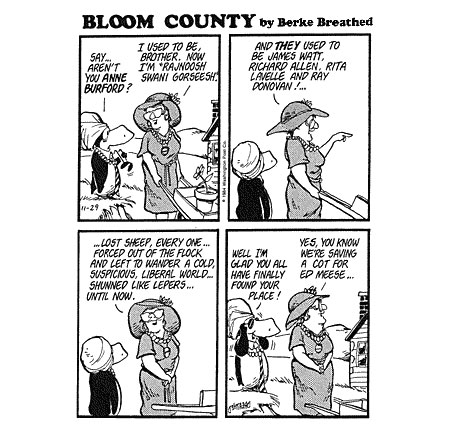
Bloom County has some fun with Oregon’s Rajneeshee saga… and Ronald Reagan’s failed cabinet appointees

Will history repeat itself? We’ll see, but there is no reason to assume that the conservation community – and, importantly, the American public – will be any less motivated to speak out if the Trump administration attempts a similar rollback on public land and environmental protections to what the Reagan Administration attempted.

Yes, there will be lost ground, but there will also be unexpected gains. That’s our system. Recall that the same President Reagan who brought James Watt to the national stage also signed the Columbia River Gorge Scenic Area Act into law thirty years ago, on November 17, 1986 (famously “holding his nose”, in his words). In his first term, President Reagan signed the Oregon Wilderness Act into law on June 26, 1984, creating 22 new wilderness areas covering more than 800,000 acres.

As President Obama said in his reflection on the election, “democracy is messy”. He also reminded the president-elect that our system of governance is more cruise ship than canoe, and that turning it around is a slow and difficult process, no matter what “mandate” you might claim. That is by design, of course.

…and the WyEast Blog in 2017..?

Looking ahead toward 2017, I hope to keep up my current pace of WyEast Blog articles as I also continue my efforts as board president for Trailkeepers of Oregon, among other pursuits. And spend time on the trail, of course!

mhnp_calendar36

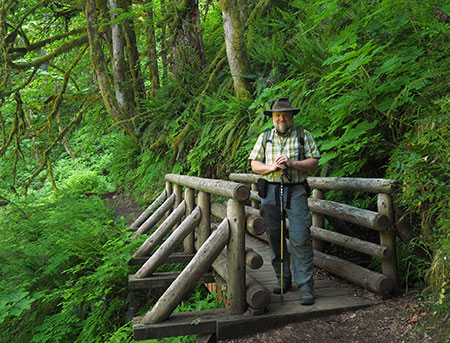
The author somewhere in Oregon’s next national park…

As always, thanks for reading the blog, and especially for the kind and thoughtful comments many of you have posted over the years. The blog is more magazine than forum, but I do enjoy hearing different perspectives and reactions to the articles.

Despite the election shocker this year, I’ve never felt better about Mount Hood and the Gorge someday getting the recognition (and Park Service stewardship) they deserve! That’s because of a passionate new generation of conservations are becoming more involved in the direction of our nation and our public land legacy. The 2016 election seems to have accelerated the passion this new generation of stewards brings to the fight.

Our future is in very good hands, indeed.

 See you on the trail in 2017!

 Tom Kloster | Wy’East Blog


Warren Falls: A Postscript (Part 2 of 2)

hcrh_review01a

The first part of this article focused on the missed opportunity to restore Warren Falls as part of construction of the most recent phase of the Historic Columbia River Highway (HCRH) State Trail. This article takes a look at this newly completed section of trail.

_________________

hcrh_review01b

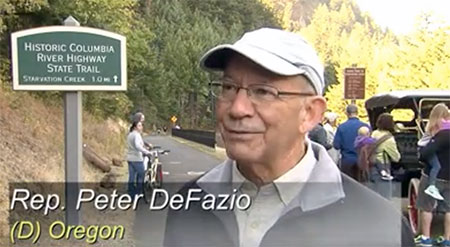
Congressman Peter DeFazio at the grand opening of the new HCRH segment in October (ODOT)

In October, the Oregon Department of Transportation (ODOT) opened the latest section of the HCRH State Trail, a segment stretching from the trailhead at the Starvation Creek wayside west to Lindsey Creek. A portion of this newest section follows the original highway grade where it passes Cabin Creek Falls, but most of the route is a completely new trail – or more accurately, a paved multi-purpose path open to both hikers and cyclists.


hcrh_review01c

The newly revamped Starvation Creek Trailhead

The new HCRH trail segment begins in a small plaza constructed at the south edge of the Starvation Creek wayside. Early plans called for a complete reconstruction of the parking area, but budget constraints intervened, and most of the work here is along the margins of the existing parking lot. The trailhead plaza features some to-be-installed interpretive signs in the shade of a group of bigleaf maple trees, a pleasant meeting spot for hikers or cyclists.

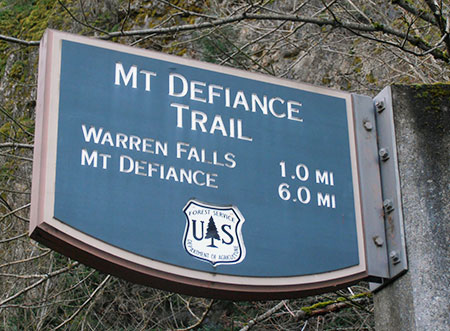
Missing from the revamped trailhead is the original Forest Service trailhead sign that once pointed to Warren Falls (below). It’s unclear if this sign will be reinstalled, but given that Warren Falls, itself, was not “reinstalled” as part of this project, the chances are probably slim.

hcrh_review01d

This sign has gone missing!

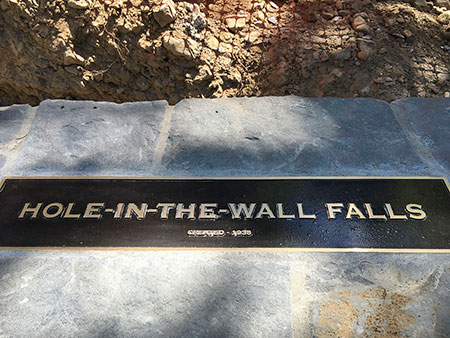
The sign actually referred to what is now called Hole-in-the-Wall Falls, where Warren Creek emerges from the diversion tunnel built by ODOT in 1939. The unintended reference to the original falls made for an inspiring Forest Service gaffe for advocates of restoring Warren Falls!

The first few yards of the new trail generally follows the existing route along the Starvation Creek wayside freeway exit ramp. It’s still a noisy, harsh walk through this area, but ODOT has dressed up this section with a sturdy cobble wall and new paving.

hcrh_review01e

Cobble retaining wall near Starvation Creek

The trail concrete barricades along this section that protect the trail from freeway traffic also feature the same decorative steel fencing found elsewhere on the HCRH State Trail, giving a bit more sense of separation from speeding vehicles. The new trail is also slightly elevated here, reducing the noise impacts somewhat from the old trail that was mostly at the ramp grade.

hcrh_review01f

Decorative steel fencing near Starvation Creek

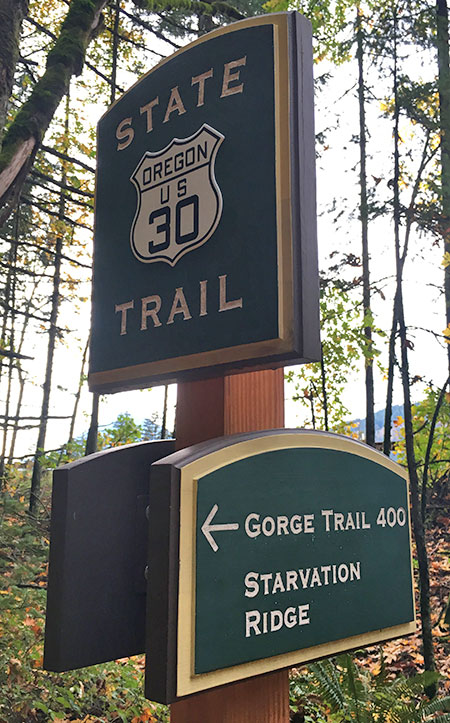
Soon, the new trail drops to the only original section of Columbia River Highway on this restored section of trail, where the old road passed in front of Cabin Creek Falls. An elegant but confusing signpost has been added at the junction with the Starvation Ridge Cutoff trail, pointing to Gorge Trail 400, which currently does not exist in this section of the Gorge.

I didn’t hear back from ODOT as to whether a trail renumbering is in the works that would extend the Gorge Trail to Starvation Creek, but it may be that the Forest Service is planning to stitch together a extension of the Gorge Trail from pieces of the Starvation Ridge and Defiance Trails. That would be a welcome development!

hcrh_review02a

Trail 400..? Is a trail re-numbering in the works?

The location of the new sign almost suggests that the infamous Starvation Cutoff trail – one of the steepest in the Gorge – would be renumbered as the Starvation Ridge trail, with the bypassed section of the current Starvation Ridge trail becoming Trail 400.

Confused..? So are many hikers who visit the area with its already confusing trail network. So, keep your fingers crossed that the Forest Service is rethinking trail numbers and signage in conjunction with the new HCRH trail.

For now, the actual Starvation Cutoff Trail has not changed, though HCRH workers added a nice set of steps at the start of this very steep route.

hcrh_review02b

New steps at the otherwise humble Starvation Cutoff trailhead

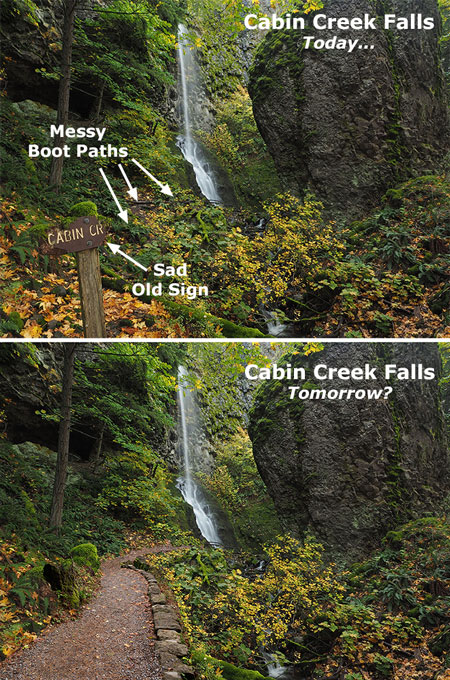
The old pavement in this original highway section was resurfaced with new asphalt as part of the project, but otherwise the route here is much as it was when the highway opened in 1916, including a roadside view of Cabin Creek Falls. However, ODOT missed an opportunity to organize the hordes of visitors who now scramble to the falls along a cobweb of boot paths.

Formalizing a single spur with a properly constructed trail (below) would be a great project for a non-profit like [link]Trailkeepers of Oregon (TKO)[/link] in conjunction with Oregon Parks and Recreation (OPRD), who now manage the trail and adjacent park lands.

hcrh_review02c

Cabin Creek could use a formal path to the falls… and a new sign

[click here for a large version]

Cabin Creek Falls is popular with families (where kids can safely play in the basalt-rimmed splash pool) and photographers (who love this delicate, mossy falls). For many casual visitors, this is already the turn-around point on their walk from the trailhead, with Cabin Creek being the highlight of their experience, so a spur trail would be a nice addition to allow visitors to get off the pavement and explore a soft trail.

hcrh_review02d

Cabin Creek Falls up close

ODOT also cleaned out the large, stone culvert (below) where Cabin Creek flows under the HCRH State Trail. This display of original dry masonry was mostly buried in debris and undergrowth until the trail project was constructed, so the restoration provides a nice look at the craftsmanship of the original highway.

hcrh_review02e

Original dry masonry culvert survives at Cabin Creek

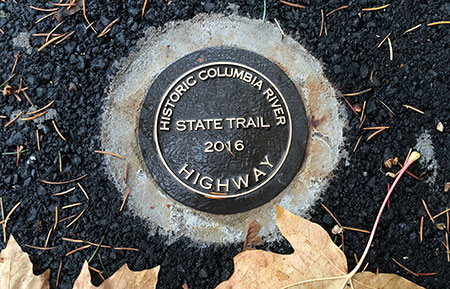
As the new trail route reaches the west end of the original highway section, ODOT thoughtfully place a small memorial (below) in the paving – a nice historic reference to the original highway.

hcrh_review03a

HCRH plaque marks the original highway route near Cabin Creek Falls

As the new route leaves the beautiful, forested section of original highway at Cabin Creek, it suddenly follows the freeway for about 200 yards due to steep slopes along the Gorge wall. This jarringly noisy section could use some replanting to at least create a visual buffer from freeway traffic.

hcrh_review03b

Noisy, barren stretch of the new trail west of Cabin Creek

Soon, the new HCRH route thankfully curves back into the forest on a surprisingly massive structured fill. This structure was required to maintain the modest trail grade as the route climbs from the freeway shoulder to a slight rise near Warren Creek.

This section is bordered with stained wood guardrails, a new design that departs from the vintage-style white guardrails in other sections of the restored highway, but provides a nice aesthetic that will also be easier to maintain.

hcrh_review03c

This large, structured fill west of Cabin Creek was required to maintain the trail grade for bicycles

This following view shows the same spot in July, at the height of construction, and before the fill was completed:

hcrh_review03d

Structured fill near Cabin Creek during construction last July

ODOT was careful to document cultural resources along the route when designing the new trail, including a set of stone ovens built by the original highway masons who camped here during highway construction in the early 1900s. The historic ovens are better protected than before by the raised trail design and guardrails (below), though still fully visible for those who know what they’re looking for.

hcrh_review03e

The historic stone ovens can be seen from the elevated trail section west of Cabin Creek… if you know where to look

One disappointing detail along this section of trail is a long gabion basket wall (below), apparently constructed to catch loose debris from an adjacent slope. The steel cages holding this wall together will hopefully be covered in moss and ferns in time, but for now it’s an eyesore on an otherwise handsome section of the trail.

hcrh_review03f

Would Sam Lancaster have approved of a wire mesh gabion wall..?

Another sore thumb in this forest section is a rusty mesh fence (below) along the freeway right-of-way that should have at least been painted, if not completely replaced as part of the project. Maybe ODOT still has plans to replace this eyesore?

hcrh_review03g

Nope, Sam Lancaster wouldn’t go for this…

As the new section of the HCRH State Trail approaches Warren Creek, it enters a significant cut section to maintain its gentle grade. Thankfully, a huge anthill along this section was spared, one of the interesting curiosities along the former soft trail that used to pass through this forest.

hcrh_review03h

Hydro-seeded cut slope and the big anthill near Warren Creek

This following view is from July, when construction was still underway and the ant colony was no doubt thankful for the protective fence:

hcrh_review03i

The giant anthill lives!

The view below was taken during the construction looks east at the cut section along the new trail. Because the rustic forest trail that once passed through this area was completely destroyed by the new HCRH trail, the reconfigured landscape will be a shock for hikers who hiked the trail in the past. Though hydro-seeded with grass, this section could benefit from some re-vegetation efforts to further speed up healing.

hcrh_review03j

The cut grade near Warren Creek under construction in July

Beyond the cut section, the new route crosses the original channel of Warren Creek, and for those with a sharp eye, a pair of cobble foundations for early homesteads that once lined the creek. Here, the trail reaches a half-circle bench where an all-access side trail curves up to the viewpoint of Hole-in-the-Wall Falls (more on that later in this article).

hcrh_review04a

Half-circle bench serves as the jump-off point to the Hole-in-the-Wall viewpoint

It’s unclear if interpretive signs will be added to this area, but at one time the story of how Warren Creek was diverted in 1939 was planned for the spot where the new trail crosses the old, dry creek bed.

Another new trail sign is also located at the all-access spur trail to Hole-in-the-Wall Falls, as this is also the route to the Starvation Ridge and Defiance Trails. This sign also includes a mysterious reference to Gorge Trail 400, further suggesting that a re-numbering of trails in the area is in the works. A large, multi-trunked bigleaf maple was also spared at this junction.

hcrh_review04b

Bigleaf maple spared… and another mystery reference to Trail 400..?

The following view is looking from the new HCRH State Trail toward the Hole-in-the-Wall spur trail, showing the proximity to Warren Falls. The green hydro-seeded area in the photo is where the construction staging area for the project, underscoring the missed opportunity to restore Warren Falls as part of the project – it was just a few yards beyond the staging area.

hcrh_review04c

So very close: Warren Falls from the main construction staging area

hcrh_review04d

Staging area during construction in July – the last time we’ll see heavy equipment this close to Warren Falls for generations?

The humble elderberry (below) in the middle of the staging area was spared by ODOT, a nice consideration in a project that did impact a lot of trees. Hopefully, there are plans to expand native plantings here, as this area was covered with invasive Himalayan blackberries for decades before the trail project and will surely revert to invasive species without a deliberate restoration effort.

hcrh_review04e

This apparently well-connected elderberry dodged the ODOT bulldozers!

Moving west, the new HCRH State Trail segment passes through another forested section where the trail rises on fill necessary to bring it to grade with a handsome new bridge over Warren Creek (visible in the distance in the view, below). This is an especially attractive section of trail.

hcrh_review05a

Looking west along the attractive new trail section approaching the Warren Creek Bridge

For some reason, many of the trees that were cut for this new section of trail were left piled along the base of the fill (below). The fill slope has been hydro-seeded, so it seems unlikely that the more work is planned to remove or repurpose the log piles, so apparently the were left in this manner on purpose?

hcrh_review05b

Piled logs along the elevated grade approaching Warren Creek Bridge

Looking back to the construction period last summer, you can also see the good work ODOT did to cut back English ivy that was rampant in this area. While ivy was left intact on the forest floor, it was cleared from dozens of trees in this section of the trail.

hcrh_review05c

Invasive English ivy was trimmed from dozens of trees near Warren Creek

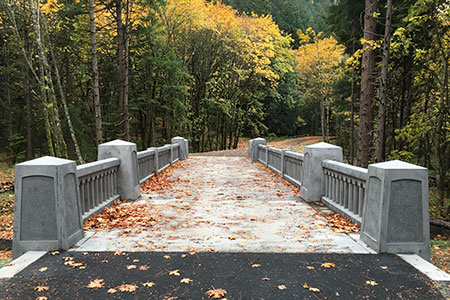
The highlight of the new HCRH trail segment is where the route crosses Warren Creek. Here, a handsome new bridge faithfully echoes the design ethic of Samuel Lancaster, but is probably more elaborate than the original bridge constructed at Warren Creek in 1916. Lancaster’s bridge was destroyed when the first version of the modern highway was built in 1950.

hcrh_review05d

The handsome new Warren Creek Bridge is the jewel of the new trail segment

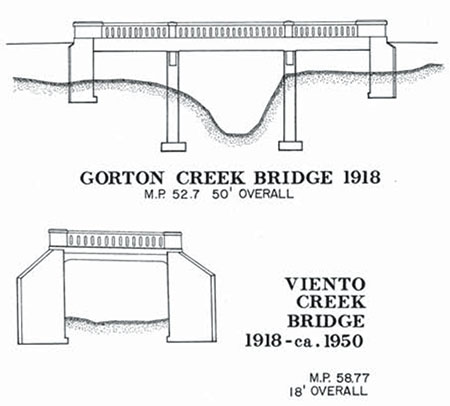
Though no visual record exists, the original Warren Creek Bridge was modest in length, at just 18 feet, and likely resembled the surviving bridge at Gorton Creek to the west, or possibly the original bridge at Viento Creek to the east (shown below).

hcrh_review05e

The original Warren Creek Bridge probably followed one of these designs

The design of the original Warren Creek Bridge inadvertently helped lead the Highway Department to bypass Warren Falls, as stream debris was clogging the bridge opening. The 1941 project files also describe the original bridge being “replaced in a different location” as part of the diversion project, so there may have been two version of the original bridge over Warren Creek before the modern highway was constructed in the 1950s.

hcrh_review05f

Warren Creek Bridge under construction in July

hcrh_review05g

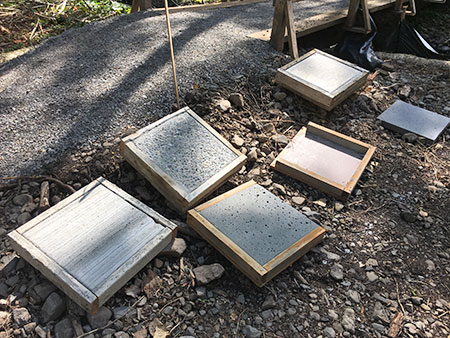
Pavement texture samplers being tested for the project

hcrh_review05h

Looking west across the new Warren Creek Bridge

hcrh_review05i

Railing detail and the view downstream from Warren Creek Bridge

Construction of the new HCRH bridge over Warren Creek was an involved undertaking, with the surprisingly wide span leaving plenty of room for a (someday) restored Warren Falls to move 70+ years of accumulated rock and woody debris down the stream channel.

hcrh_review05j

Built to last, with plenty of room for Warren Creek to once again move rock and log debris down its channel… someday…

There’s nothing natural about Warren Creek in this area, as it looks (and is) more like a drainage ditch. This is because original streambed is now a dry ravine several hundred yards to the east, and the current streambed is where the Highway Department moved the creek decades ago, when the modern highway was first built in the 1950s.

hcrh_review05k

Ditch-like, man-made channel of Warren Creek as viewed from the new bridge

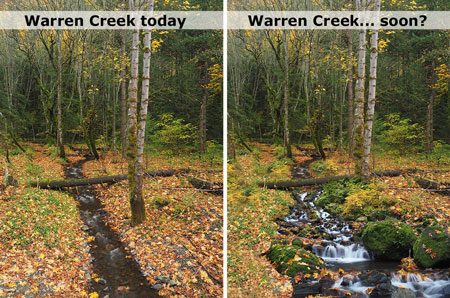
As described in the first part of this article, the someday restoration of Warren Falls will once again allow rocks and woody debris to migrate into the lower channel, eventually transforming the “ditch” into a healthy stream (below) that can fully support endangered salmon and steelhead.

hcrh_review05l

What a healthy Warren Creek might look like from the bridge, someday…

[click here for a larger version]

While ODOT missed the larger opportunity to help this stream restoration along when it declined to restore Warren Falls, the agency also missed the easy opportunity to simply add a few boulders and logs to the section of Warren Creek near the bridge when heavy equipment was in the area. That’s too bad, but perhaps the OPRD will someday enhance this stream section as part of managing the new trail.

hcrh_review06a

Looking west from near the Warren Creek Bridge to the Lancaster Falls viewpoint

From Warren Creek, the new trail follows another fill section to a mostly obstructed viewpoint of Lancaster Falls on Wonder Creek from a small seating area. This viewpoint (below) could use some light pruning to reveal the falls, and perhaps something that’s still in the works by OPRD.

hcrh_review06b

Lancaster Falls viewpoint

One oddity about Wonder Creek is that it mostly disappears into ground before reaching the culvert that carries Warren Creek under I-84 and to the Columbia River. This is partly due to the modest flow from spring-fed Wonder Creek, but also because the slopes below the falls are mostly composed of unconsolidated talus covered with a thin layer of soil and vegetation. So, most of the time the stream is simply absorbed into the water table below the falls.

Yet, in high runoff periods, the new state trail will accommodate the flow with extensive drainage features designed to carry Wonder Creek under the fill section and to the Warren Creek freeway culvert.

hcrh_review06c

Trail construction near the Lancaster Falls viewpoint in July

hcrh_review06d

Lancaster Falls viewpoint under construction in July

Another oddity of Lancaster Falls is its illusive nature. Though thousands of hikers each year view the modest, 20-foot lower tier of the falls where it spills across the Defiance Trail, few know of it’s full extent – and perhaps wonder why Samuel Lancaster wasn’t honored with a more spectacular landmark.

This is the view (below) of Lancaster Falls that most hikers see today, and this this is also the portion of the falls that can be glimpsed through the trees from the new HCRH trail viewpoint:

hcrh_review06e

Lancaster Falls as most know it, along the Defiance Trail

But viewed from across the Columbia River, along Washington’s Highway 14, Lancaster Falls takes on a completely different scale. This view shows the lower 20-foot tier that most know as “Lancaster Falls” completely dwarfed by the towering 300-foot extent of the falls:

hcrh_review06f

The full extent of Lancaster Falls as viewed from the Washington side of the Columbia

While it’s possible to scramble to the base of the main tier of Lancaster Falls, the slopes are unstable and already being impacted by off-trail visitors, so it’s probably best that only a most portion of the falls is (somewhat) visible from the new HCRH route. Hopefully, interpretive signage is in the works for the viewpoint that tells the story of Samuel Lancaster..?

hcrh_review06g

1920s view of the HCRH from Lindsey Creek looking toward Wind Mountain

From the Lancaster Falls viewpoint, the new trail heads west to a section where it once again follows the shoulder of I-84 to Lindsey Creek and the end of new construction. ODOT is working the next trail segment, which will connect from Lindsey Creek to the Wyeth Campground, crossing the base of famously unstable Shellrock Mountain along the way.

Hole-in-the-Wall Falls Spur Trail

hcrh_review07a

Original concept for the Hole-in-the-Wall Falls viewpoint

One of the design highlights of the new HCRH trail section is a short all-access spur tail to an overlook of Hole-in-the-Wall Falls, the man-made outflow tunnel that continues to drain Warren Falls of its water. The completed overlook has been scaled back from its original design (shown above), and now features one of the signature circular seating areas, complete with a picnic table (below).

hcrh_review07b

Hole-in-the-Wall Falls viewpoint

A small plaque at the viewpoint identifies Hole-in-the-Wall Falls, which until now has not been an officially recognized name or has appeared on any official maps. A nice nod to the origin if the “falls” is the byline “Created 1939”. Hopefully, there will be future interpretive displays here, as the story of Warren Falls would be a great addition to this overlook.

hcrh_review07c

Hole-in-the-Wall Falls viewpoint

hcrh_review07d

Hole-in-the-Wall Falls plaque

hcrh_review07e

Hole-in-the-Wall Falls viewpoint under construction in July

The Starvation Ridge Trail picks up from the south side of the Hole-in-the-Wall Falls overlook, heading across a footbridge over Warren Creek.

A closer look near the footbridge (below) reveals a surprising disappointment: the stump of a streamside Douglas fir cut improve the view of the falls. It’s too bad that the tree wasn’t simply limbed to provide a view, as it was one of the few larger trees stabilizing the banks of Warren Creek.

hcrh_review07f

Hole-in-the-Wall Falls bridge… and stump?

hcrh_review07g

Unfortunate remains of the offending Douglas fir along Warren Creek

While it’s disappointing to think about the opportunities missed at Warren Falls, the Hole-in-the-Wall Falls overlook and beautiful new Warren Creek Bridge, are still a big a step in the right direction toward someday moving Warren Creek from neglected afterthought to a valued resource that deserves to be restored. ODOT deserves major kudos for their thoughtful work on this section of trail!

“Love what they’ve done with the place…”

hcrh_review08a

Heavy construction of the new “trail” in July looked more like a road to many hikers

Last summer I encountered another hiker while surveying the progress of the new HCRH trail in the Warren Creek area. He was making his way to the Defiance Trail, and when he saw me taking photos, shouted angrily “Love what they’ve done with the place!”

I’ve heard this reaction to the State Trail from many hikers over the years, as avid hikers are often aghast at what they see as more of a “road” than trail. The scope of construction impacts on the natural landscape of the Columbia River Gorge National Scenic Area (CRGNSA) and the millions in public funds being spent on the project rankles hikers who don’t see themselves actually using the trail.

Many hikers are also mystified as to how this project can received tens of million in funding while other, heavily overused Gorge trails are falling apart for lack of adequate funding.

hcrh_review08b

Extensive cut and fill necessary to maintain trail grade meant a wide construction swath

These reactions are understandable, if misguided. The restoration of the surviving HCRH and the future trail segments that will soon complete the original route from Troutdale to The Dalles is an epic effort of ambition and vision in an era when both are rare quantities.

When the route is completed, it will become a world-class cycling attraction, and it is already drawing visitors from around the world. Guided bicycle tours have become a thriving business in the Gorge because of ODOT’s commitment to bringing the HCRH State Trail vision to reality, and businesses in Gorge towns are already seeing the benefits.

Other projects to promote the trail are also in the works. ODOT’s Gorge Hubs project is a new partnership with six cities in the Gorge to provide traveler information for trail users and boost the local economy. The Friends of the Gorge have launched the Gorge Towns to Trails project, a complementary effort to the HCRH State Trail to connect Gorge communities to public lands via trails.

hcrh_review08c

Tourism in the Gorge is as old as the historic highway, itself. This is the Lindsey Creek Inn that once stood where the newly completed HCRH State Trail approaches Lindsey Creek

Plenty of local visitors will continue to use the HCRH State Trail as the project nears completion over the next few years, but the real benefit for Gorge communities is from visitors coming from outside the region. Unlike local visitors, tourists coming from elsewhere will book hotel rooms, purchase meals and take home locally-made products and art from the Gorge to memorialize their trip. These visitors make a much larger contribution to the Gorge economy than a local visitor who might stop by a brewpub on the way back from a day trip.

hcrh_review08d

Gorge sunset from near Starvation Creek along the newly completed HCRH State Trail

A 2011 National Park Service study of tourism dollars shows outside visitors spending anywhere from 7 to 12 times the amount that local visitors spend on a visit to a given park, bringing hundreds of millions to local economies at many parks. There’s no reason why the Gorge can’t better manage the our already heavy demand from local visitors to the Gorge to allow for more outside visitors drawn by the HCRH State Trail to spend their dollars here.

The bigger picture is that anyone opposed to seeing casinos or bottled water plants in the Gorge should be part of supporting a tourism economy that builds on the scenery. Yes, tourism impacts must be managed to protect the Gorge for future generations, but the health of the Gorge economy is the essential ingredient to providing these protections over the long term.

The HCRH State Trail is part of that formula, and it deserves enthusiastic support from anyone who loves the Gorge. If you own a bicycle (or pair of walking shoes), give it a try — and then recommend it as an exciting new vacation destination to distant friends and family!

Meet Brian Chambers!

BrianChambers01

Editors note: periodically, I feature local artists and writers in this blog. Brian Chambers is a local photographer in Hood River who has been capturing stunning images of Mount Hood and the Columbia River Gorge. Here’s a recent conversation with Brian.

Brian has also offered to donate a portion of any sales resulting from this interview to the Friends of the Gorge, Trailkeepers of Oregon (TKO) and the Columbia Land Trust, so be sure to mention the blog if you purchase Brian’s photos! (more info following the interview)

_______________

WyEast Blog: Great to meet you, Brian! How long have you been shooting landscape photography in the area?

Brian Chambers: I first came to Hood River on vacation in 1996. I immediately fell in love with the place and had moved here within one year. That was back in the old days of film. I had done a ton of photography way back in high school and had my own darkroom but did less and less as I got older. I was doing a little bit of photography when I moved here but it wasn’t until I bought my first DSLR in 2008 that my hobby became a full-blown addiction.

BrianChambers02SevenmileHill01

Mount Hood from the Eastern Gorge

(click here to view a large version in Brian’s gallery)

WyEast: What are your favorite Gorge locations for shooting – the ones you go back over and again?

Brian: It changes so much from year to year. I tend to find a new location and maybe pre-visualize some images in my mind. I will go back over and over until I am satisfied with the images I can capture with my camera. I will keep trying until I get that special combination of light and composition that really matches what I had seen in my mind.

The thing I like the most about the gorge is the variety. If I had the energy I could shoot a fresh snow fall on a mountain stream at sunrise, at lunch take on moss covered waterfall, at sunset capture the most amazing wildflower scene, and a midnight capture an abandoned house in the middle of a wheat field. I really feel the options are arguably the best in the country.

BrianChambers03UpperHoodValley

Upper Hood River Valley orchards at sunrise

 (click here to view a large version in Brian’s gallery)

Some of my favorites include shooting the orchards of Hood River, Hood River itself with the river in the foreground and the mountain behind it, the view down the gorge anywhere there is exciting light from places like Rowena, Underwood viewpoint, Mitchell point. I have been heading to some of the more off-trail waterfalls and really enjoying the exploring aspect of that. I love Mt Adams in the fall for the color. I could go on all day.

Early in the spring I am really drawn to the east hills. A few years ago it was the Rowena crest, then it was Dalles Mountain, then it was the Memaloose Hills Hike area.

BrianChambers04RowenaSunrise

Sunrise a Rowena Crest

(click here to view a large version in Brian’s gallery)

WyEast: What makes those locations special?

Brian: One big factor is the flowers. Especially this year, although it was an early bloom, it was off the charts good. I don’t think I have ever seen it that good. I love the openness of the land, being able to see the light interacting with terrain. The different compositional options, with 360 degree views and the amazing mountain and gorge views in the background. Sitting in a field of wildflowers all alone watching the rising sun dancing with Mount Hood and lighting up the flowers. It doesn’t get much better than that.

WyEast: What about your favorite Mount Hood locations?

Brian: Well in the winter I spent a ton of time snowshoeing up the White River. It has such an easy access to an amazing mountain view with the river in the foreground. I am almost embarrassed to say how many times I have gone up there looking for the perfect light. I finally got a couple of images I am pretty happy with this year. Persistence can pay off.

BrianChambers05WhiteRiverSunrise

Sunrise on Mount Hood and the White River

 (click here to view a large version in Brian’s gallery)

In the summer I often am heading up to the WyEast Basin and Cairn Basin area. I like that you can take several different trails to get there and it is this wonderful mix of high alpine, lush wildflowers, refreshing streams and small waterfalls with some of the best close-up views of the mountain. The number of great subjects in such a small area is almost mind-boggling.

WyEast: Some of your most stunning photos are shot during the golden hours of early morning or evening – do you have any tips for shooting in those conditions?

Brian: Getting up earlier and staying out later is usually the simplest thing people can do to greatly improve their photography. It is very difficult to get as compelling a photo in the middle of the day. The rapidly changing light around sunrise and sunset can really add a ton of interest, color and excitement to your images. Watch the sky, satellite images and weather forecasts to see if there is going to be enough clouds to make the sky interesting but not too many so that the sun is blocked.

BrianChambers06CairnBasin

Late afternoon wildflowers near Cairn Basin on Mount Hood

 (click here to view a large version in Brian’s gallery)

A tripod is critical for getting clear shots when it is darker. I suggest shooting in RAW not JPEG and bracketing your exposures to capture all of the detail in the brightest and darkest parts of the image.

Be Patient. I can’t tell you the number of times I have been taking pictures and all the other photographers have left and 10 minutes after a boring sunset the sky just lights up.

BrianChambers07AdamsSunset

Autumn sunset at Mount Adams

(click here to view a large version in Brian’s gallery)

That being said, I would be lying if I didn’t say I am just like everyone else in that I sometimes can’t pull myself out of bed in the early morning and I sometimes head to the brewpub at sunset rather than out to shoot. My family is pretty tolerant of me heading out to shoot but I try to balance life and responsibility with photography. Find the balance that makes you happy.

WyEast: You also have some amazing photos that feature the night sky. How exactly do you capture those images?

Brian: It is surprisingly easy if you have a fairly new digital camera. Have a solid tripod. I suggest getting to your location before it gets dark. Set up all your gear, compose your image and focus. Cameras are unable to auto-focus in the dark so you need to focus before it gets too dark and then set your camera to manual focus so it will not try to refocus.

Start taking pictures before it is totally dark and see what happens. Learn how to adjust your camera in manual exposure. Set your aperture to wide open (the smallest number possible), your shutter speed to around 20 or 30 seconds. Crank your ISO up to 800 or 1600 or even higher and fire away. The beauty of digital is it doesn’t hurt to mess up. If it is too dark crank up your ISO higher or lengthen your shutter speed. If it is too bright turn your ISO down.  Look at your results and see what works and what doesn’t. Play and have fun.

BrianChambers08CooperSpurStars

Milky Way and Mount Hood from below Cooper Spur

 (click here to view a large version in Brian’s gallery)

WyEast: Those are great tips! Some of your images of Mount Hood and the Gorge also feature lightning, which seems especially challenging to capture. Other than not standing on high ground – which, actually, it looks like you were – what can you tell us about getting a great lightning photo?

Brian: First of all be safe. I think a lot photographers tell stories of risking life and limb to “get the shot”. Probably not worth it and often just an embellishment to make it sound more dramatic. I like to find a place where I can shoot while sitting in the car or at least find shelter immediately.

BrianChambers09EastGorgeLightning

Thunderstorm lighting up the East Gorge

(click here to view a large version in Brian’s gallery)

It helps to have a cable release or some other way of triggering your camera like a remote control. That allows you to be safe in the car while the camera is outside. If it is dark and you can use a long exposure you can just set the camera to shoot continuously. Sort of a “spray and pray” method but there is nothing worse than missing that solitary lightning bolt.

If it is daylight, the “spray and pray” method doesn’t work because most cameras get bogged down and stop shooting after 20 seconds or so. In that case you can just watch and try to push the button with every strike. It sounds impossible but it can work with a little practice. We don’t get much lightning here so I have yet to invest in a lightning trigger but it’s a device that senses the lightning and takes the photo for you. Pretty handy if you do a ton of lightning shots.

BrianChambers10LostLakeLightning

Lightning at Mount Hood and Lost Lake

 (click here to view a large version in Brian’s gallery)

I have a couple of apps that show you live lightning hits so you can see if it’s worth heading out. And be ready if the conditions change. One of my favorite lightning shots at Lost Lake (above) was purely luck. I was there to take a photo of the sunset when a small storm popped up. I kept taking pictures until I got my shot.

WyEast: You’re based in Hood River, Brian. I’m wondering where you see the fine art scene going in the Gorge over the long term? Do you see art becoming a significant part of the Gorge and Mount Hood economy in the future?

Brian: It is definitely growing. I don’t think there were any art galleries in town when I moved here in 1997. Now it seems like there is one on every block. Many restaurants and breweries also display local artists. Hood River has over 20 new outdoor works of art on display around town. There are so many talented artists in the gorge. I think people are drawn to the quality of life and inspired by amazing beauty at our doorstep.

BrianChambers11StormyGorge

Stormy Gorge evening

(click here to view a large version in Brian’s gallery)

Art can play a significant part in the economy. It is just one more great reason for people to visit the gorge and it fits well with the winery and brewery tours, the Fruit Loop orchard tour and outdoor recreational tourism that the gorge is so rightly known for. I think the artwork can be a long-term reminder of the specialness of the area and for both tourists and people who live here. I love when people look at one of my pictures and it reminds them of some special times they have had here.

BrianChambers12SpiritFalls

Spirit Falls on the Little White Salmon River

(click here to view a large version in Brian’s gallery)

One thing that I am very excited about is helping to organize a temporary art gallery event in downtown Hood River on July 1st -3rd week. Eighteen local artists, including myself, have banded together to showcase and hopefully sell our work. We are having beer and wine and small plates of food, with an opportunity to view work from wide variety of different types of artists.

We will all be on hand all three days to discuss our artwork. The event will be at 301 Oak Street in downtown Hood River. I encourage anyone interested to stop in and say “hello”!

WyEast: That sounds like a great event, Brian! As an artist working in the Gorge, what are some of the challenges you’ve faced in becoming established?

Brian: It has been a slow steady process. Sometimes it seems agonizingly slow.  When I first started taking pictures I didn’t dream that people would want to purchase them. I looked around and saw so many great photographers.

BrianChambers13DufurHomestead

Abandoned homestead near Dufur, Oregon

 (click here to view a large version in Brian’s gallery)

Early in my progression as a photographer I was lucky enough to be accepted into the Columbia Center for the Arts. At that time it was a critical place of support for me. They encouraged me and treated me as a true artist so that I began to think of myself that way. I started to sell some work and began to grow in confidence. Every year they would have a photo contest and I was fortunate enough to win first place among hundreds of entries, including some really talented photographers.

That was a big step for me. Then I branched out and started displaying my work in local bakeries, restaurants and brewpubs. I started to gain more followers and confidence. In the last year or so, I have started to post more consistently on Facebook (www.facebook.com/BrianChambersPhotography/) and connect with people there.

BrianChambers14GorgeHike

Brian teaching photography on a recent Friends of the Gorge outing

I have also begun teaching a little (including the Friends of the Gorge hike where we met). It is something I really enjoy and want to get better at, and something I have considered doing more frequently in the future.

Hood River is full of talented photographers and artists and most of them have been really supportive and welcoming to me.

WyEast: When we met recently on that Friends of the Gorge hike, we talked about the controversy over oil and coal trains traveling through the Gorge. Since then, of course, a worst-case scenario unfolded when an oil train derailed in Mosier on June 3 of this year. What are your thoughts on the oil and coal trains moving through the Columbia River rail corridor?

Brian: That was a real eye opener for me.  I had been out for a road bike ride in the exact location ½ hour before the accident. When I heard about it I actually went to take pictures from across the river. You can see a time lapse I took on my Facebook page. Just watching all the black smoke block out the view of Mt Hood was really a horrible sight.

BrianChambers14OilTrainStill

Brian captured this video of the June 3rd oil train crash in Mosier, Oregon

 (click here to view a large version of this video in Brian’s gallery)

I got stuck in a traffic jam heading home. It took me 2 hours to get home when it would normally take me 10 or 15 minutes. It really made me think about how the unique geography and infrastructure of the Gorge can really amplify any disaster. There are very limited driving options, and if one or two roads are closed people can become trapped.

I also think the accident was not a worst-case scenario. It was lucky it didn’t happen in the center of Mosier or Hood River, where there is a lot more potential for damage and it was lucky it happened on an unusually light wind day. If it had been windy I can only imagine how bad the fire could have been.

WyEast: You’ve hiked the trails of Mount Hood and the Gorge and have seen the growing crowds. Many are concerned that the area is being loved to death. What are your thoughts?

Brian: Wow, what a question. This is something I think about almost daily. Even in my short time here I have seen a tremendous change in the volume of hikers to areas that were once quiet and relatively unknown, like the Columbia Hills Park and Memaloose Hills. I used to go there in the spring and see almost no one. This year they were just packed with people. Which, on one hand, is wonderful that people are out there learning to love the gorge and discovering new places. It is great for society that people are out exercising and recharging in nature. I feel like people will fight to save places once they see how special they are.

BrianChambers16ColumbiaHills

Columbia Hills State Park in spring

 (click here to view a large version in Brian’s gallery)

On the other hand, overcrowded trails and unsafe parking lots are a real concern and take away from everyone’s enjoyment.  As a photographer, I am always looking for the un-crowded wild places and I am afraid as I share them I might be contributing to them becoming crowded and over used.

There is an area near The Dalles that I am just in love with right now and I went there more than a dozen times the last couple years during the wildflower bloom and saw less than a handful of other hikers, and usually didn’t see anyone. Although part of the reason for that is starting my hike before 5 AM! I am torn between never telling anyone about it and wanting everyone to know how amazing it is. The word is already getting out and I suspect it will be packed in a couple years.

BrianChambers17SevenmileHill02

Mount Hood from an “undisclosed location”…

 (click here to view a large version in Brian’s gallery)

I guess I am an optimist. Nature seems to have the ability to not just heal people, but also itself. Just last week I was walking through the Dollar lake fire on Mt Hood. A few years ago it was a scene of total destruction. Everything dead and blackened. Now it’s hard to see the ground due to the huge number of flowers. If we can just try to get out of the way the land can usually do amazing things to recover from damage.

BrianChambers18GorgeSunset

Gorge Sunset near Mitchell Point

 (click here to view a large version in Brian’s gallery)

Ultimately, I think the best answer is more trails. That is why I fully support the work you and others like you are doing. Saving the remaining wild places and creating sustainable hiking trails. I hope as the crowds worsen that will become a bigger priority for more and more people.

WyEast: Last question, and one you probably knew was coming: you’re a veterinarian by trade, so I’m wondering if you’d like to weigh in on bringing dogs into the Gorge? And in particular, what are some tips you would offer for keeping dogs (and people) safe, based on your experiences as a care giver?

Brian: Well, one disease that people new to the area may not have heard of is salmon poisoning. Don’t let your dog eat raw salmon or steelhead. It can cause severe vomiting and diarrhea that can be fatal. As I am sure all hikers already know, there are a few ticks in the area! There are plenty of good tick control medications available for your dog.

BrianChambers19GorgeRainbow

East Gorge rainbow

 (click here to view a large version in Brian’s gallery)

There are lots of dangers out on the trails and roads most of which can be avoided by keeping your dog on a leash and using common sense. I just recently saw a dog that was bitten by a rattlesnake on Dog Mountain. I have seen dogs killed by heat stroke, dogs killed by trains, falls from cliffs, cuts caused by skis, dogs lost in the wilderness, attacked by coyotes and other wild animals, falls from the back of pickup trucks, and too many hit by cars to count.

We also have a lot of poison oak in the Gorge. Keeping your dog on a leash is also a good way to make sure he stays out of poison oak, which can also be transferred to you from your dog’s coat.

BrianChambers20McCallSunset

Spring sunset in the Gorge from Memaloose Hills

 (click here to view a large version in Brian’s gallery)

Lastly, just like you and I, you should avoid overdoing the activity level for your dog’s fitness level. If you have an out of shape dog that doesn’t exercise, don’t start with a long bike ride on a hot day. As your dog starts to age you need to start to reduce the length of the hikes and bikes to ones that will not cause them pain or distress.

It can be hard to do because the dogs often want to go, even when their body is unable. Talk with your vet if your dog is slowing down or seeming stiff and sore, as there are plenty of options to help with that.

WyEast: That’s great information! Thanks for taking the time to chat, Brian – and for celebrating the Gorge and Mount Hood with your amazing photography. We look forward to seeing more of your work!

Brian: It really was my pleasure.

_______________

You can support Brian Chambers’ photography by following him on Facebook:

Brian Chambers Photography on Facebook

Through July 15th, Brian will be donating 20% of proceeds from photos he sells to people who mention this article to the Friends of the Gorge, Trailkeepers of Oregon (TKO) and the Columbia Land Trust, so it’s a great time to support him! (please note that this excludes the July 1-3 pop up gallery)

 Check out more of Brian’s images at:

Brian Chambers Gallery on Zenfolio

 And you can contact Brian directly through e-mail by clicking here.

And finally, learn more about the July 1-3 pop up art gallery in Hood River at:

Art in the Gorge on Facebook


The Other Mirror Lake

"Palisades, Columbia River" This 1880s scene captured by Frank J. Haynes, official photographer for the Union Pacific Railroad. Crown Point (then called "Thor's Heights") and its lacy waterfall are the backdrop for what was known as Echo Bay in the early days of settlement.

“Palisades, Columbia River” This 1880s scene captured by Frank J. Haynes, official photographer for the Union Pacific Railroad. Crown Point (then called “Thor’s Heights”) and its lacy waterfall are the backdrop for what was known as Echo Bay in the early days of settlement.

Though seen by far more travelers than the famous Mirror Lake on Mount Hood, a stunning lake by the same name in the Columbia Gorge is unknown to most. That’s because most of the visitors to the “other” Mirror Lake, in plain sight at the foot of Crown Point, are usually speeding by on I-84. Stealing a glimpse of this lovely lake while dodging the steady stream of Walmart trucks that race through the Gorge is risky business!

This “other” Mirror Lake also has a deeper identity crisis: after all, it has only been around since the modern highway through the Gorge was built in the 1950s, and sliced off what was once an inlet to the Columbia to form the shallow lake we know today.

"Echo Bay, Columbia River" by Frank J. Haynes (1885)

“Echo Bay, Columbia River” by Frank J. Haynes (1885)

When the earliest photographers were visiting the Gorge in the 1880s, the inlet was known as Echo Bay, formed where Young Creek (the stream that flows from nearby Shepperd’s Dell) meandered through extensive wetlands, and finally into the Columbia River.

The idyllic scene of Echo Bay in the late 1800s was framed by stately stands of Black cottonwood and Oregon ash, a rocky basalt island with a gnarled grove of Oregon white oak, flocks of ducks and geese and a wispy waterfall cascading down the massive cliffs of Crown Point, above. All of these scenic ingredients are still found there, today, albeit hemmed in by roads and railroads.

Early 1900s view of Crown Point, Echo Bay, Rooster Rock and the salmon cannery from Chanticleer Point.

Early 1900s view of Crown Point, Echo Bay, Rooster Rock and the salmon cannery from Chanticleer Point.

With an 800-foot buttress on one side and the main steam of the Columbia River on the other, Echo Bay was the path of least resistance when the railroads came to the Gorge in the late 1800s. Today’s Union Pacific tracks generally follow the historic railroad alignment, traversing the base of Crown Point along the south shore of the bay, and passing within a few feet of Crown Point’s waterfall.

This early 1900s topographic map shows Echo Bay as it existed until World War II (under the words Rooster Rock). Crown Point isn't labeled on this early map, but is the marked by the sharp bend in the historic highway directly adjacent to Echo Bay.

This early 1900s topographic map shows Echo Bay as it existed until World War II (under the words Rooster Rock). Crown Point isn’t labeled on this early map, but is the marked by the sharp bend in the historic highway directly adjacent to Echo Bay.

Another early map view, this time from around 1900, showing the steep access road that connected the cannery at Rooster Rock to Chanticleer Point and the historic Columbia River Highway on the rim of the Gorge.

Another early map view, this time from around 1900, showing the steep access road that connected the cannery at Rooster Rock to Chanticleer Point and the historic Columbia River Highway on the rim of the Gorge.

Later in the 1800s, a salmon cannery opened near the mouth of the bay, at another small cove at the western base of Rooster Rock (the cannery was also located near the spot where the Lewis and Clark Expedition had camped on November 2, 1805 on their westward journey). Until the late 1940s, the only land access to the cannery was along a narrow dirt road that descended from the rim of the Gorge at Chanticleer Point (explorers can still follow that old road, and state parks planners are considering reopening it as a trail in the future).

Rooster Rock and salmon cannery in the early 1900s.

Rooster Rock and salmon cannery in the early 1900s.

Few travelers used the old cannery road, so for more than sixty years of the post-settlement era in the Gorge, Echo Bay was most seen from train windows, or glimpsed from the high cliffs along the Historic Columbia River Highway after it was completed in 1916.

  1920s view east from near Chanticleer Point showing Rooster Rock, the salmon cannery, original railroad, Echo Bay and Crown Point.


1920s view east from near Chanticleer Point showing Rooster Rock, the salmon cannery, original railroad, Echo Bay and Crown Point.

1920s view east from Crown Point showing the wetlands and meadows of Young Creek that extended east from Echo Bay (the edge of the bay is in the lower left corner of this photo)

1920s view east from Crown Point showing the wetlands and meadows of Young Creek that extended east from Echo Bay (the edge of the bay is in the lower left corner of this photo)

By the end of World War II, the old highway was deemed too slow and narrow for the 20th Century and Americans were increasingly interested in traveling by automobile, not rail. So, by the 1940s a massive project to build a river-level, modern highway through the Gorge was underway.

The modern highway through the Gorge was built in a nearly straight line on twenty feet of rock fill across the lowlands below Crown Point. The elevated road kept the highway surface above flood levels, but also served as a dike, cutting off Echo Bay from the river and forming the strong of small lakes we know today.

1920s view from Chanticleer Point with the approximate route of the modern highway shown as the dashed orange line, along with other landmarks in the Gorge.

1920s view from Chanticleer Point with the approximate route of the modern highway shown as the dashed orange line, along with other landmarks in the Gorge.

[click here for a larger view]

At some point in the 1950s, the largest of these lakes became known as Mirror Lake, though the origin of the name is unknown. The newly created Mirror Lake joined a very long list of lakes with that name, and notably a very famous cousin that mirrors Mount Hood.

While the changes to the area that came with the 1950s construction of the modern highway through the Gorge were mostly in the negative column for the natural environment, the convenient new road access did allow ODOT (which once operated our state park system) to build a large new state park at Rooster Rock in the mid-1950s.

This 1954 map shows the (then new) modern highway and Mirror Lake of today, though the lake had not yet been named the Rooster Rock interchange and park developments had not been constructed.

This 1954 map shows the (then new) modern highway and Mirror Lake of today, though the lake had not yet been named the Rooster Rock interchange and park developments had not been constructed.

Land acquisition for the new Rooster Rock State Park began in 1937, and continued well beyond the development of the park, with a total area of nearly 900 acres by the mid-1980s.

The new park included its very own interchange on the highway, though it was built at the cost of pushing the eastbound exit ramp over a filled area of the lake. Hundreds of paved parking spots were build along a half-mile stretch of beach that once lined the Columbia River here, and Rooster Rock became one of the most heavily-visited state parks in Oregon.

The brand-new interchange and Rooster Rock State Park as it appeared in the late 1950s, adjacent to Mirror Lake.

The brand-new interchange and Rooster Rock State Park as it appeared in the late 1950s, adjacent to Mirror Lake.

Today, the beach (and the accompanying crowds) at Rooster Rock have mostly eroded away, in part because of changes in dredging of the shipping channel. Yet, one remnant of the former Echo Bay can still be seen here, as a small, unnamed cove at the eastern foot of Rooster Rock that is the truncated mouth of Echo Bay, cut off by the modern highway. The little cove now hosts a boat dock, and is easily seen by eastbound highway travelers.

The boat docks in the remnant of Echo Bay that still survives north of the highway, below Rooster Rock (the cliffs of Crown Point are in the background; photo Oregon State Pqrks).

The boat docks in the remnant of Echo Bay that still survives north of the highway, below Rooster Rock (the cliffs of Crown Point are in the background; photo Oregon State Pqrks).

Young Creek still flows into Mirror Lake, but is now channeled through a culvert under the highway to the small cove by Rooster Rock, where it then flows into the Columbia River.

For more than a century, the lowlands along Young Creek and Echo Bay were farmed by early settlers in the area, but in recent decades the entirety of the original Young Creek wetlands adjacent to Mirror Lake have come into public ownership as part of Rooster Rock State Park.

1950s view of the Young Creek lowlands east of Mirror Lake and the (then) new Highway 30.

1950s view of the Young Creek lowlands east of Mirror Lake and the (then) new Highway 30.

The State of Oregon has since been restoring the Young Creek lowland to its former natural state as a wildlife reserve, with a lush mosaic of tree stands, meadows, marshes and ponds. Mirror Lake, itself, has become a surprising haven for waterfowl, with flocks of geese, ducks and white egrets resting and nesting there — a surprising and welcome twist in an area so heavily impacted by human activity over the past 150 years.

Visiting Mirror Lake

While a lake flanked on one side by a freeway and a railroad on the other might not seem like a promising hiking destination, the views of Mirror Lake are just as spectacular today as they were when the first photographers visited Echo Bay in the 1880s.

You can visit the modern lake by taking the eastbound Rooster Rock State Park exit. The park access road curves left, across the freeway overpass. Instead, park on the gravel shoulder on the right, where a gated service road drops to the lake.

Modern topo maps of the Mirror Lake, Crown Point and the Rooster Rock State Park area.

Modern topo maps of the Mirror Lake, Crown Point and the Rooster Rock State Park area.

(click here for a larger map view)

You can follow the service road and explore along the lakeshore in about the same spot that Frank Haynes captured the iconic view at the top of this article in 1885. All of the land here is public, so feel free to explore and reflect on both the long human history and natural beauty of this remarkable spot!

2014 Mount Hood National Park Calendar

2014Calendar00a

Each year at about this time I assemble the Mount Hood National Park Scenic Calendar. The proceeds are modest, but do help support the Mount Hood National Park Campaign website, WyEast Blog and related project expenses. But the main purpose is to simply promote the national park concept by making the case for the campaign with pictures.

What the calendar looks like - oversized 11x17” pages you can actually use!

What the calendar looks like – oversized 11×17” pages you can actually use!

I’ve published the calendars through CafePress since 2004, so this year’s calendar marks the tenth edition. All of the photos in the calendar are from trips and trails I’ve explored over the past year.

I get a surprising number of questions about the photos, so in addition to simply announcing the 2014 calendar, this article tells a bit of the story behind the new images.

The 2014 Scenes

Cover: Sandy Headwall and Glacier from McGee Ridge

Cover: Sandy Headwall and Glacier from McGee Ridge

The cover photo of the Sandy Glacier headwall is really a nod to a chance encounter I had with Brent McGregor, the fearless cave explorer profiled in the Thin Ice: Exploring Mount Hood’s Glacier Caves, a recent Oregon Public Broadcasting feature. I had just posted a WyEast blog article on the program a few days prior, and happened to run into Brent and his climbing partner, Eric Guth, on the Timberline Trail that day in October.

2014Calendar02

Brent and Eric were on their way down from spending the night in the Snow Dragon glacier cave, and provided me with an amazing personal account of their adventures inside the caves. I also learned a bit of the glacier cave geography from the spot where we met atop McGee Ridge. The cover image for the calendar was taken from that spot awhile after the (now famous) ice cave explorers continued down the trail. A most memorable evening!

January: Tamanawas Falls dressed in white

January: Tamanawas Falls dressed in white

The monthly scenes begin with a snowy afternoon at Tamanawas Falls in the January image (above). The photo was taken in December 2013, and stitched together from three separate photos — the first of three such composite images in this year’s calendar.

The conditions were perfect that day, and a bit deceptive, as this was the first big snowfall of the season — and thus we was able to simply hike up the trail without snowshoes, albeit with the aid of boot spikes.

Brother-in-law David taking in the magic at Tamanawas

Brother-in-law David taking in the magic at Tamanawas

My brother-in-law David joined me for the hike to Tamanawas Falls, celebrating his return to Oregon after spending the past thirty years living in distant places, far from the life he knew growing up here among tall trees, big mountains and countless waterfalls – the best kind of reunion!

The February image (below) is an evening scene from one of the viewpoints along the historic Bennett Pass Road. The blanket of valley fog rolled in just as the sun dropped behind the mountain ridges, making for an especially peaceful scene.

February: WyEast's under-appreciated southeast side from near Bennett Pass

February: WyEast’s under-appreciated southeast side from near Bennett Pass

Ironically, the story behind the image is anything but quiet, as I was visiting Bennett Pass on New Years Day — apparently, along with the rest of Portland area population!

A “pristine” framing of this image suffered as a result, as the fresh blanket of snow from the previous night had already been heavily trampled by the small army of skiers and snowshoers (and their dogs) that day! Otherwise, I would have loved to included this image (below), with a pretty little noble fir in the foreground in the calendar. Maybe I should bring along a rake next time..?

Heavy ski and snowshoe traffic on New Years Day!

Heavy ski and snowshoe traffic on New Years Day!

For the March image, I picked a mid-winter Gorge scene captured at Elowah Falls on McCord Creek, just west of Cascade Locks (below). This is another composite image, made from a total of six photos, with the goal of giving a panoramic feel that matches the immensity of the setting.

This is the finished image:

March: Elowah Falls in late winter hues

March: Elowah Falls in late winter hues

The six separate images look like this before merging:

Six photos make up the original panorama at Elowah

Six photos make up the original panorama at Elowah

Once merged, I cropped the final image to fit the dimensions of the calendar:

The calendar image was then snipped from the composite image

The calendar image was then snipped from the composite image

There’s a bit of a story to this scene, too: the graceful, multi-trunked bigleaf maple framing the falls will soon succumb to the power of McCord Creek, as the stream has recently eroded the bank to the point that the main trunk of the tree is hovering over the creek, in mid-air (below).

Change is coming to this maple along McCord Creek

Change is coming to this maple along McCord Creek

This section of McCord Creek has suddenly experienced a lot of erosion in the past few years, so this is part of a larger change happening to this iconic spot – much more to come as we watch the power of nature at work, and a reminder that change is constant in the natural landscape!

For April, I picked a familiar spot in the Columbia Gorge at Rowena Crest (below), where the blooming lupine and arrowleaf balsamroot frame the river and town of Lyle in the distance. It was a typically blustery day in the Gorge last spring when I visit this spot, and though the overall bloom in the east Gorge in 2013 was somewhat disappointing, the McCall Preserve at Rowena still had a very good flower show.

April: blustery winds at Rowena Crest..? Naturally!

April: blustery winds at Rowena Crest..? Naturally!

The May image (below) is from the wonderful little loop trail at Butte Creek Falls, an gorgeous little canyon in the otherwise heavily logged foothills southwest of Mount Hood. This view shows the upper falls, a quiet, understated cascade that hides an impressive cave tucked behind the falls. The main falls of Butte Creek if just downstream.

May: pretty Upper Butte Creek Falls is tucked away in serious logging country

May: pretty Upper Butte Creek Falls is tucked away in serious logging country

I enjoy this trail because of the contrasts, as the approach to the trailhead passes through some of the most horrendously cut over timber corporation holdings in Oregon. By comparison, the vibrant, mossy canyon holding Butte Creek is a reminder of what we’ve lost — and hopefully will restore, someday.

Spring is waterfall season in Oregon, so the June image stays with the theme, this time countering little-known Upper Butte Creek Falls with the queen of all Oregon cascades, Multnomah Falls (below).

June: a composite photo from a very busy viewpoint

June: a composite photo from a very busy viewpoint

This image is the third blended photo in the 2014 calendar, this time composed of three separate images (below) taken at the perennially crowded lower overlook along the Multnomah Falls trail. As with the other composite images, my goal was to give broader context to the scene — in this case, the massive array of cliffs that surround Multnomah Falls.

Three photos came together for the Multnomah Falls image

Three photos came together for the Multnomah Falls image

As always, mountain scenes fill the summer months of the calendar, starting with a view of Mount Hood’s towering west face for July (below). This image was captured in mid-July, and though a bit late for the full glory of the beargrass bloom, it does capture the final phase of the bloom. This scene is from one of the hanging meadows high on the shoulder of McGee Ridge, looking into the valley of the Muddy Fork.

July: beargrass bloom in the hanging meadows above the Muddy Fork

July: beargrass bloom in the hanging meadows above the Muddy Fork

For the August calendar scene, I chose an image from a hike to Elk Cove. It’s a bit of a repeat from past calendars, but one of my (and most everyone else, I suspect) favorite views of the mountain. The alpine bloom came late to Elk Cove this year, and still hadn’t peaked when I shot this photo in early August:

August: my annual pilgrimage to "the view" from Elk Cove

August: my annual pilgrimage to “the view” from Elk Cove

I’ve shot this scene many times, but on this particular trip several hikers passed by while I waited for the afternoon light to soften. Two groups stopped to chat and pose for me, including a pair of hiking buddies doing the Timberline Trail circuit and a family from Olympia, Washington visiting Elk Cove for the first time (below).

Round-the-mountain hikers arriving for a night at Elk Cove

Round-the-mountain hikers arriving for a night at Elk Cove

This group traveled from Olympia to visit Elk Cove

This group traveled from Olympia to visit Elk Cove

Both shots let out a little secret about my favorite photo spot at Elk Cove: it’s only about ten feet off the Timberline Trail, which crosses right through the drift of western pasque flower in the foreground!

For the September scene, I picked an image of Wiesendanger Falls on Multnomah Creek (below), named for Albert Wiesendanger, a pioneering forester in the Columbia River Gorge.

September: Albert Wiesendanger earned a place name with his falls on Multnomah Creek

September: Albert Wiesendanger earned a place name with his falls on Multnomah Creek

Most hikers are (understandably) looking upstream, toward Wiesendanger Falls, when they walk through Dutchman’s Tunnel (not a true tunnel, but more of a ledge carved into the basalt cliff) along Multnomah Creek, just below the falls.

Thus, few see this inconspicuous bronze plaque at the south end of the tunnel honoring Albert Wiesendanger:

2014Calendar20

Wiesendanger not only had an important role in shaping of the trails and campgrounds we now enjoy in the Columbia River Gorge, he also went on to lead the Keep Oregon Green campaign. He is a little-known giant in our local history, and deserves to have his story more widely told.

The October scene isn’t from a trail, but rather, a somewhat obscure dirt road high on the shoulder of Middle Mountain (below), in the Hood River Valley. I learned of this spot several years ago, and often make the bumpy side trip if I’m passing through in early evening — it’s one of the more stunning views in the area, showing off the spectacular Upper Hood River Valley at its finest.

October: The upper Hood River Valley from a lesser-known viewpoint on Middle Mountain

October: The upper Hood River Valley from a lesser-known viewpoint on Middle Mountain

For November, I chose a photo of Wahclella Falls on Tanner Creek taken a year ago (below), in early November 2012. Why? Because the monsoons we experienced in September of this year really did a number on the fall colors. Foliage was battered by the winter-like weather, and trees were deprived of the normal autumn draught conditions that help put the brilliance in our fall.

November: Tanner Creek as it would normally appear in early November

November: Tanner Creek as it would normally appear in early November

The result of our cold, wet September was a very early leaf fall and generally muted fall colors, as can be seen in these views of Wahclella Falls taken from the same spot at almost the same time of year in 2012 and 2013:

Our rough September weather in 2013 was devastating to autumn foliage

Our rough September weather in 2013 was devastating to autumn foliage

Finally, a winter scene along the East Fork of the Hood River (below) wraps up the 2014 calendar as the December image. This photograph was taken from the footbridge leading to Cold Spring Creek and Tamanawas Falls, and was captured on the same day as the opening January image in this year’s calendar.

December: The East Fork Hood River in winter

December: The East Fork Hood River in winter

Among the missing elements in this year’s calendar are scenes from the Cloud Cap area and Cooper Spur, on Mount Hood’s north side. This is largely due to the indefinite closure of the historic Cloud Cap Road, abruptly announced by the Forest Service earlier this year.

This road closure had a big impact on recreation. While it’s possible for seasoned hikers to make the much longer trek from the nearby Tilly Jane trailhead, for most (especially families and less active hikers), it means that Cooper Spur and the spectacular views of the Eliot Glacier will have to wait until another year.

Cloud Cap Road in 2010: salvage logging slash lines the road two years after the Gnarl Fire swept through in August 2008

Cloud Cap Road in 2010: salvage logging slash lines the road two years after the Gnarl Fire swept through in August 2008

The reason for the Cloud Cap Road closure is a bit more worrisome: five years after the Gnarl Fire roared through the area — and four years after an extensive salvage logging operation toppled hundreds of “hazard” trees along the road — the Forest Service has decided that standing trees must once again be felled in order to “protect the public”.

Oddly enough, the road remains open to hikers, skiers and cyclists — apparently because the hazardous trees only fall on cars? We can only hope that the scars from this latest “improvement” don’t further degrade the historic road, when huge piles of slash were left behind, where they still line the old road.

One that didn’t make it…

Metlako Falls (from the wrong side of the fence)

Metlako Falls (from the wrong side of the fence)

The above view of Metlako Falls on Eagle Creek was in my folder of favorite 2013 images to include in the annual calendar, but I decided to save the scene for another year. Why? Because in July, I headed up a mighty (okay, two-man) Trailkeepers of Oregon crew to clear out the brush that has blocked safe viewing of Metlako Falls for many years.

Previously, the only way to capture a photo like the one above, photographers had to step OVER the cable hand rail, and stand perilously close to the 200-foot brink dropping into the Eagle Creek Gorge. The hazard to hikers was bad enough, but the “sweet spot” for photos was so over-used that it was starting to erode the ground underneath it, potentially destabilizing the rest of the cliff-top Metlako Falls overlook.

Chris Alley was one half of the TKO crew, and the only hiker with a 16-foot pole pruner on the Eagle Creek Trail that day!

Chris Alley was one half of the TKO crew, and the only hiker with a 16-foot pole pruner on the Eagle Creek Trail that day!

The solution was straightforward: the Gorge unit of the Forest Service approved our plan to trim the offending brush using a 16-foot pole saw. This kept us safely on the uphill side of the cable fence, with just enough reach to clip the brush.

The task at hand: trim overgrown brush and maple limbs

The task at hand: trim overgrown brush and maple limbs

With my Trailkeepers partner Chris Alley along for the project, we made quick work of the offending branches on a rather hot, sticky day. After a couple hours of sawing and lopping, Metlako Falls was once again safely in view! This is a project I’d wanted to do for awhile, so it was great to finally have it sanctioned as a Trailkeepers of Oregon project.

The author: "I can see clearly now (the brush is gone)!"

The author: “I can see clearly now (the brush is gone)!”

Now, I’m looking forward to next spring, when I’ll head up there during the waterfall prime time to re-capture the scene — safely, this time! I’ve already been back this year, and enjoyed seeing casual hikers admiring the unobstructed falls, snapping photos on their iPhones.
_________________

The thirteen images I chose for the 2014 calendar are from a few thousand images I’ve taken this year on close to 50 outings to Mount Hood and the Gorge! As always, the magnificent scenery only strengthened my conviction that Mount Hood should (and will!) be set aside as a National Park! Hopefully, the scenes in the calendar continue to make the case, as well.

How can you get one?

The new calendars are available online:

2014 Mount Hood National Park Calendar at CafePress

They are large and functional, measuring 17” across by 22” tall when hung, with plenty of room for writing notes and scheduling activities. CafePress packages them carefully, with each calendar sealed against a corrugated cardboard backing for support. You can also order them with gift wrapping at additional charge.

The calendars sell for $29.99 + shipping, with about 25% of the proceeds going to support the Mount Hood National Park Campaign. They make terrific stocking stuffers (…although you’ll need an 11×17” stocking…), and CafePress now makes it even easier by offering PayPal as an option.

And as always, thanks for your support of the blog and the campaign!

Camera Talk: A Trip to Punch Bowl Falls!

This fascinating 1920s postcard features hikers standing on the cliff above the falls and a huge gravel bar that has since disappeared

This fascinating 1920s postcard features hikers standing on the cliff above the falls and a huge gravel bar that has since disappeared

This is the second in a pair of articles for weekend photographers on how to get professional images with the use of a polarizer filter, tripod… and wet feet! In this article, we travel to iconic Punch Bowl Falls on Eagle Creek, one of the many national park-worthy jewels along the Mount Hood loop, and a scene known around the world through posters, art photography and advertising images.

The scene at Punch Bowl Falls hasn't changed much since this 1960s tourism photo was captured

The scene at Punch Bowl Falls hasn’t changed much since this 1960s tourism photo was captured

Punch Bowl Falls has been a popular hiking destination since the completion of the Eagle Creek Trail in 1919, a three-year construction effort of epic stature. The trail is a marvel of engineering and audacity, blasted into sheer cliffs and behind waterfalls as it traverses up the Eagle Creek canyon. A short spur trail drops to Punch Bowl Falls, where wading is required to view the falls in winter and spring.

Punch Bowl Falls has long been a favorite subject for photography, including pioneering Oregon photographers Ray Atkeson and Al Monner, who visited the falls as early as the 1930s and 40s. Today, you can find Punch Bowl falls in dozens of mass-produced calendars, books and art prints, yet it’s always a thrill to capture your own image of the famous falls.

"The Log" still blocked the view in this scene from 2008

“The Log” still blocked the view in this scene from 2008

In the late 1990s, “the log” appeared in front of Punch Bowl Falls, frustrating photographers for a decade until it was swept away in the winter of 2008-09. Today, the falls once again presents itself in magnificent form, just as it has appeared to visitors for nearly a century.

Photographing Punch Bowl Falls

Pick an especially gloomy day for your trip to Punch Bowl Falls -- the more overcast, the better!

Pick an especially gloomy day for your trip to Punch Bowl Falls — the more overcast, the better!

Punch Bowl Falls always looks beautiful, but capturing the beauty with your camera requires some skill. Anyone can capture a professional-looking, slow-shutter photograph of Punch Bowl Falls by following these basic steps:

Step 1: Pick an overcast day. For slow-shutter photography, bright sun is your enemy. Even with a polarizer filter (see previous article), direct sun will blow out your highlights, produce uneven, high-contrast lighting and reduce the vivid colors that long exposures usually capture.

The following photo pair of images from Weisendanger Falls on Multnomah Creek shows the difference. Both exposures were taken from the same spot and at the same shutter speed on a day when the sun was coming and going behind fairly heavy clouds:

Direct sun blows out the highlights on the foliage while leaving other parts of the image in dark shadows

Direct sun blows out the highlights on the foliage while leaving other parts of the image in dark shadows

The same scene with overcast conditions a few minutes later, with much less contrast and much better color saturation

The same scene with overcast conditions a few minutes later, with much less contrast and much better color saturation

The “sun” sample could be even worse: had the sun been shining directly on the bright white of the waterfall, it would have completely blown out any detail.

Another advantage of going on a grey, wet day is that you’ll be less likely to have crowds at the falls. Most people flock to the waterfalls in the Columbia Gorge when the sun is out, which also happens to be the worst time to photograph them! Ideally, pick an overcast, mid-week day for this trip and there’s a good chance that you’ll have the place to yourself for at least awhile. On a recent, somewhat misty Wednesday afternoon, I was the only person photographing the falls for a period of nearly 2 hours!

Step 2: Pack the “four essentials”. Photographing Punch Bowl Falls from stream-level usually requires wading into Eagle Creek. So in addition to the standard (1) tripod and (2) polarizer filter needed for slow-shutter photography, you’ll also want (3) a pair of wading shoes or sandals so that you won’t be squishing back to your car in a pair of soggy boots and (4) a hiking pole to help keep you upright as you negotiate the stream.

Packed for a trip to the middle of Eagle Creek

Packed for a trip to the middle of Eagle Creek

While it’s possible to wade barefoot, or even wear a pair of flip-flops, the bottom of the creek is uneven, slippery and has enough sharp rocks to make something more substantial on your feet a better solution. Remember, you’ll be standing in the creek for anywhere from 10 to 30 minutes, depending on how many photos you take… and how long your feet can tolerate the 45 degree water!

Yes, you will look ridiculous -- but your photos will be amazing!

Yes, you will look ridiculous — but your photos will be amazing!

Step 3: Timing and finding the right spot. If you haven’t been to Punch Bowl Falls before, it’s easy to find. Follow the Portland Hikers guide to Eagle Creek, and after crossing Sorenson Creek on a series of large, round concrete stepping stones, watch for a sign at a sharp bend in the trail pointing to “Lower Punchbowl”.

This spur trail drops one-quarter mile to the banks of Eagle Creek, where you will pass directly above 15-foot Lower Punch Bowl Falls on a somewhat slippery bedrock shelf (watch your step!). From here, head directly across a broad, cobbled beach toward the mossy opening where Eagle Creek seems to emerge from the cliffs. Punch Bowl Falls is set into a huge cavern in these cliffs.

During periods of heavy runoff, much of the beach below Punch Bowl Falls is underwater, and it's not safe to wade into the creek -- save it for another day!

During periods of heavy runoff, much of the beach below Punch Bowl Falls is underwater, and it’s not safe to wade into the creek — save it for another day!

During heavy runoff in spring, much of the rocky beach is underwater, and it’s not possible to safely wade out to the view of Punch Bowl Falls. As a rule of thumb, you should never venture above your knees in fast moving water, or you risk getting swept into the stream… and in this case, over the lower falls!

If you reach the bedrock section above Lower Punch Bowl Falls and water levels force you to duck and dodge among the logs and brush above the beach, then you should simply save the Punch Bowl Falls view for a better day, when water levels are lower. You’ll still have a beautiful view of the lower falls and the gorgeous grotto that surrounds this section of Eagle Creek, with plenty to photograph. After all, there is no such thing as a bad day to be at Eagle Creek, and it’s always best to err on the safe side when it comes to fording streams.

The classic view of Punch Bowl Falls is captured near the large hollow in the cliff shown in this photo

The classic view of Punch Bowl Falls is captured near the large hollow in the cliff shown in this photo

If water levels are low enough, you’ll likely see a little “jetty” of rocks piled in the creek by photographers and hikers who have preceded you, and you might be able to get a photo of the falls without having to wade. Later in summer, you can usually get to the falls view without leaving dry land at all. But for optimum water levels and the most vibrant foliage, it’s best to go from mid-May through mid-June, when you’ll almost certainly be wading for your photos of Punch Bowl Falls.

Assuming water levels are safe, it’s time to put on your water shoes, put your camera on your tripod, extend your tripod’s legs, grab your hiking pole and head out into the stream. Look across the creek for a large, rounded hollow in the opposite cliff (see photo, above) and aim for this part of the stream. When the falls comes into view, simply pick the spot that looks best to your eye.

Photographer standing in Eagle Creek for the "classic" shot of Punch Bowl Falls

Photographer standing in Eagle Creek for the “classic” shot of Punch Bowl Falls

Step 4: Setting up your shot. Once you’ve picked your spot in the stream, it’s time to set up your tripod and get started! If you’ve got a DSLR camera, you’ll want to have a lens somewhere in the 11-42 mm range for this scene. Any point-and-shoot will cover enough range, as well — provided you have threads for a polarizer filter (see previous article).

The classic falls view shown below is the conventional straight-on look into the huge cavern that holds Punch Bowl Falls, but you can vary your composition, of course. Once you’ve framed your image, adjust the polarizer to reduce glare and set the focus.

The "classic" view of Punch Bowl Falls that photographers from around the world come to capture

The “classic” view of Punch Bowl Falls that photographers from around the world come to capture

Next, using your DSLR or point-and-shoot on manual mode, you’ll want to set the shutter speed for 1/2 second to start with. Longer exposures will create a more smoothed shape for the falls, but are usually too long to shoot without adding a light-reducing filter. Exposures shorter than 1/4 second can result in lumpy details on the falls, but there’s no harm in experimenting with different exposures.

Finally, instead of pressing the shutter button on your camera, try using the timer, instead. Most cameras have 2-second and 10-second settings. Using the 2-second timer allows the camera to stop vibrating from your finger pressing the shutter, creating a super-sharp image.

For a less traditional shot, try setting your lens to a very wide field of view and placing the falls off-center — or, try a vertical shot that captures some of the tall trees behind the falls. The only limits are your creativity… and the degree of numbness in your feet!

A less traditional, super-wide view of Punch Bowl Falls captures some stream details

A less traditional, super-wide view of Punch Bowl Falls captures some stream details

After you’ve captured your classic images of Punch Bowl Falls, be sure to spend some time photographing the magnificent scenes below the falls, including Lower Punch Bowl Falls. You can also stop by the short spur to the Metlako Falls viewpoint on the way back to the trailhead for another classic photo opportunity. Eagle Creek is a truly remarkable place with world-class scenery, and it’s easy to spend hours here capturing the beauty in images.

The beautiful grotto below Punch Bowl Falls is well worth photographing, too!

The beautiful grotto below Punch Bowl Falls is well worth photographing, too!

Once you’re back home and downloading your images, you’ll discover that following the steps in this article will deliver terrific images right out of the camera, with little need for photo editing.

All you need to do now is pick the one that you’re going to print and frame!

Ticks! Ticks! (10 Common Myths)

Ticks00

Spring has arrived in the Columbia River Gorge, and as we explore among the unfurling fern fronds and explosion of wildflowers, we will also be keeping a wary eye out for a pair of nemeses who also make the Gorge their home: poison oak and ticks! Sure, there are other natural hazards out there, but poison oak wins the prize for quiet ubiquity while ticks are actually OUT TO GET YOU!

Naturally, a lot of mythology exists on both fronts, and I’ve previously debunked poison oak myths. In this article, I’ll tackle the kitchen remedies and common folklore that abound for ticks. The Centers for Disease Control is my primary source for information on the subject, and their tick resource pages are worth a visit for anyone who spends time in tick country. I’ve also relied on the Companion Animal Parasite Council (CAPC) for the best advice on managing ticks on our pets.

The one to watch for: Western Black-Legged Tick (Source: Public Health Image Library)

The one to watch for: Western Black-Legged Tick (Source: Public Health Image Library)

While poison oak can trigger a miserable rash, it’s rarely a serious health risk. Ticks are different. While their bites aren’t usually painful, these tiny members of the arachnid family (they’ve got eight legs – count ‘em!) can also transmit several blood-borne diseases, most notably the bacterium that can cause Lyme disease in humans and animals.

Western Black-Legged Ticks (from left) in nymph stage, adult male and adult female  (Source: California Health Dept.)

Western Black-Legged Ticks (from left) in nymph stage, adult male and adult female (Source: California Health Dept.)

While the potential for Lyme disease exists in just two tick species, all ticks have the potential to carry disease, and should be treated with equal caution. So, with that creepy-crawly introduction, here are ten common tick myths, debunked:

Myth 1: Ticks only occur in the Eastern Gorge

False. While it’s true that ticks are VERY common in oak and pine savannah of the Eastern Gorge, they have been reported throughout the Gorge, though in decreasing numbers as you head west. Based on my own experience, the tick population grows steadily as you head east of Bonneville.

The CAPC forecast for tick exposure in 2013, with hot spots Hood River and Clackamas counties and Southern Oregon (Source: CAPC)

The CAPC forecast for tick exposure in 2013, with hot spots Hood River and Clackamas counties and Southern Oregon (Source: CAPC)

Ticks are found throughout much of Oregon, as it turns out, but generally not in the prolific numbers as we find the Gorge. The CAPC map (above) shows the 2013 tick exposure forecast by Oregon county, with Hood River and Clackamas counties as a expected hot spots in northern Oregon and Jackson and Josephine counties showing higher risk in southern Oregon.

So, while you may have hiked in the “safer” areas of Gorge, it’s always good idea to do a tick check when you get home, no matter where you hiked. But if you’re hiking east of Bonneville, then it’s a good idea to expect ticks and take some precautions.

Myth 2: Ticks die in winter

False. Though tick populations generally decline in winter, in mild winters (such as the past one) ticks in the Gorge can continue to grow and thrive in the outdoors. When the temperature drops below freezing, ticks simply become inactive and burrow into leaf litter, emerging when conditions improve.

Year-round tick country: the Columbia River from the terraced slopes above Rowena Crest

Year-round tick country: the Columbia River from the terraced slopes above Rowena Crest

Tick research in the Northeast suggests a threshold temperature of 38º F and above for ticks to become active, though no research is available for the Pacific Northwest. But it’s safe to assume that you can encounter active ticks year-round in the Gorge in all but the coldest weather.

Myth 3: Ticks should be removed using a lit match

“Just light a match, blow it out, and put the hot tip on the tick to make it angry, and it will back right out!”

“I just used WD40 on a cotton swab to remove a tick from my 3 lb Chihauhau.”

(advice from the internet)

..or… paint thinner, dish soap, kerosene, nail polish remover and Vaseline. All of these folklore solutions have spread far and wide in the age of the internet, along with cult-like followings to defend them!
Ticks05

The idea that Vaseline or WD-40 will suffocate the tick and nail polish will kill it with toxins or cause it to detach on its own is sketchy, at best. Worse, these folk remedies could cause the tick to disgorge its contents into your bloodstream — exactly what you’re trying to avoid!

Instead, ticks should be gently pulled from the skin with tweezers or a custom tool for removing ticks (more on that later).

Myth 4: If parts of the tick break off when removing it, you have to dig them out to prevent Lyme Disease

Advice on this one varies: some sources recommend removing all parts of the tick to prevent a secondary infection, while others argue that you’ll do yourself more harm trying to dig them from your skin. But if you remove the living tick within 24 hours, you’ve likely removed any risk of infection with a tick-borne disease, even if you didn’t get the entire tick.

The safest bet is to check with your doctor if you find yourself in this situation. Even better, be sure to remove the tick properly, and you will be much less likely to break off any tick parts (again, more on that later).

Myth 5: Ticks can re-grow their bodies if the head is still intact

Headless is dead… even for the mighty tick!
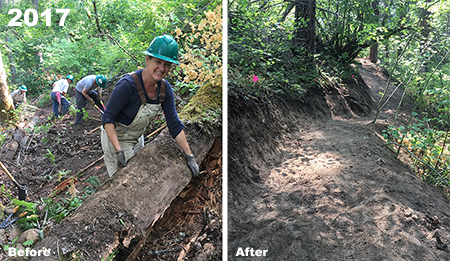
Headless is dead… even for the mighty tick!

False. This bit of folklore probably comes the (admittedly creepy) fact that the abdomen of a tick that has become engorged after several days of being attached to a host can become alarmingly large. Or maybe that some snakes and lizards can re-grow their tail? But a beheaded tick is just that, and can’t survive.

Myth 6: A hot, soapy shower will remove any ticks

Partly true. Ticks can survive a shower – or even a bath — and happily stay attached to your skin, but a shower can wash away ticks that haven’t attached yet. If you’ve done a visual tick check before jumping in the shower, it’s not a bad idea to do another fingertip check with the aid of soap and water, feeling for small bumps along the skin.

A fingertip check is especially helpful in finding small, immature ticks in the nymph stage, when they are about the size of the head of a pin. They often go unnoticed until fully engorged, and are therefore responsible for nearly all of human Lyme disease cases, according to the American Lyme Disease Foundation.

Myth 7: Ticks in Oregon don’t carry Lyme disease

Partly true. While not common in Oregon (yet), Lyme disease is here, with Oregon falling in the “moderate” range for disease risk in 2013, according to the CAPC (see map, below). However, in the Western states, Lyme disease is only transmitted through the Western Black-Legged Tick, just one of several tick species found here.

The 2013 Lyme Disease forecast by the Companion Animal Parasite Council puts Northwest Oregon in the moderate risk range (Source: CAPC)

The 2013 Lyme Disease forecast by the Companion Animal Parasite Council puts Northwest Oregon in the moderate risk range (Source: CAPC)

Though small, Oregon’s Lyme-carrying ticks are noticeably larger than the only other species known to the disease (found in eastern states), so they are easier to spot and remove. Small comfort, to be sure, but it does make coping with ticks a bit less troublesome in this part of the country.

A caveat to that size difference is that our Lyme-carrying ticks in the immature phase — known as a “nymph” are still very small, so warrant extra care during the spring and early summer and nymphs are most common. Nymphs spend most of their time on the ground, and generally feed on small animals as a result, but it’s still a good idea to look closely for nymphs when you check for ticks.

Myth 8: Only people can get Lyme disease

False. Lyme disease was first identified as a tick-borne illness for humans in 1978, and the actual cause (a bacterium) of the illness wasn’t discovered until 1981. By 1984, Lyme disease had been discovered in dogs, and soon after, in other domestic animals, including horses and cats.

In the Northeast, dogs with Lyme disease have become commonplace, to the point that some states have stopped tracking the infectious because of the flood of reports to veterinary clinics.

Oh, the injustice! The sleepy villages of Lyme and Old Lyme, Connecticut have the unfortunate distinction of having a tick-borne disease named for them..!

Oh, the injustice! The sleepy villages of Lyme and Old Lyme, Connecticut have the unfortunate distinction of having a tick-borne disease named for them..!

The test for Lyme disease in dogs takes just a few minutes, and dogs testing positive are generally treated with a 30-day regiment of antibiotics. For most dogs, visible symptoms of the disease are the same as for humans: swollen joints, lethargy, and in a small percentage, kidney failure. Veterinary clinics in the Northeast are now offering a Lyme disease vaccination for dogs in response to the increased rate of infection.

Myth 9: Lyme disease is always marked by a bullseye rash

False. While Lyme disease in humans typically causes a red rash to expand from the site of the tick bite, creating a “bullseye”, this distinctive rash only occurs in 70-80 percent of cases, according to CDC.

The classic Lyme disease bullseye (Wikimedia)

The classic Lyme disease bullseye (Wikimedia)

Usually, a tick must remain attached for a minimum of 24 hours to transmit Lyme disease, so if you remove a tick promptly, it’s soon enough to avoid an infection risk. If you’re not sure, or know that a tick was been embedded for more than 24 (even without the bullseye rash), it’s probably a good idea to check with a doctor about starting antibiotics as a precaution.

Myth 10: Every tick bite carries the possibility of Lyme disease

False. Most tick species do not carry Lyme disease. Only ticks in the genus Ixodes carry the bacteria B. burgdorferi which causes the disease. This includes the Deer tick (Ixodes scapularis) in the Northeastern states and the Western Black-Legged tick (Ixodes pacificus) in the West.

In Oregon, the adult Black-Legged tick measures about two-thirds the size of the more common Wood (or “dog”) tick (Dermacentor variabilis), which frequent similar habitat. However, while the Wood tick doesn’t transmit the Lyme bacteria, it does carry other diseases (including Rocky Mountain Spotted Fever), so the same care in managing ticks applies, no matter the species.

Black-Legged tick (left) compared to common Wood tick (right)

Black-Legged tick (left) compared to common Wood tick (right)

The risk of Lyme infection from a tick bite is estimated at 1-3 percent, so very low — but still cause for caution. Why? Because left untreated, Lyme disease symptoms may progressively affect joint, heart and central nervous system health. In most cases, the infection and symptoms are eliminated with prompt use of antibiotics. Delayed diagnosis and treatment can make the disease more difficult to treat and risk lasting disability, so it’s a serious concern.
_______________________________

When you’re in tick country…

Ticks are found where they can reliably attach to deer, livestock, other mammals, ground-dwelling birds and even lizards. Some of the most productive tick habitats in the Columbia Gorge are oak woodlands and areas of vegetation at the edge of forests, along forest hiking trails and game trails and in grassy meadows. They are also common in power line corridors that cut through forests, around campgrounds and in tall grass along roadways.

While ticks are definitely stalking YOU, it’s not an active pursuit. Instead, they wait on vegetation for passing hosts to come along. Ticks can detect hosts by sensing carbon dioxide, scents and vibrations from movement of their hosts. They can sometimes be seen at the tips of grass blades or plant leaves “questing.” This is a behavior in which the tick extends waving front legs ahead of an approaching host, looking to catch a ride!

Sure, it looks funny! But it’s a proven practice for tick prevention

Sure, it looks funny! But it’s a proven practice for tick prevention

When you’re in tick country, wear light colored long pants and long-sleeved shirts. Tuck pant legs into socks (see photo, above) and shirts into pants to close off points easy of entry at tick-level. This not only makes it harder for a tick to make its way to your skin, it also allows you to better spot ticks on your clothing, and simply brush them off.

Walk in the center of trails, and avoid brushing against tall grass or undergrowth along the trail. If you stop, sit on rocks or logs, not in grassy areas, and periodically brush your legs and sleeps to feel for ticks on your clothing. These simply practices not only help prevent ticks from going for a ride, they also help you avoid poison oak, so you get a twofer for these prevention basics!

Materials treated with DEET or permethrin are proven to repel and eventually kill ticks. Of the two, permethrin is the most effective and long lasting. This pesticide can be used to treat boots, clothing and camping gear and remain protective through several washings. It is toxic to cats, however — even from contact with recently treated clothing — so must be used with care!

DEET (left) is easier to use but Permethrin (right) is more effective for ticks

DEET (left) is easier to use but Permethrin (right) is more effective for ticks

DEET products are also widely available, and can be applied to both your skin and clothes (with some fabric limitations). Deet might be a good option if you’re hiking in warm weather and less inclined to cover up with clothing.

After your hike…

After you’ve been hiking in tick country, here’s an easy checklist to follow:

1. Check clothing for ticks when you return to the trailhead. Ticks may be carried home and into the house on clothing, so check before you get into the car. When you get home, be sure to immediately put clothing in the wash, then the dryer to take care of any stowaways you might have missed. Clothing that can’t be washed can go directly into the dryer, where an hour on high heat will kill any ticks.

2. Do a full body check. Before you get in the shower, use a hand-held or full-length mirror to view all parts of your body including your scalp, behind your ears and… gulp… around your privates! A thorough check should take about 30-45 seconds. Kids should be checked by parents!

3. Shower right away. Showering washes away un-attached ticks that you might not have spotted, and has been shown to reduce your risk of getting Lyme disease as a result. It also gives you an opportunity for a thorough fingertip tick check with soapy fingers.

4. Do another full body check. After a shower, repeat the full body check with a mirror.

You should continue to watch for ticks for a couple days after spending time in tick country, to ensure that you haven’t missed a tick.

What to Do if You Find an Attached Tick

Ticks13

Remove an attached tick as soon as you notice it with tweezers or a special tick removal tool. Grasp a tick as close to your skin as possible, pulling it straight out — and don’t “unscrew” the tick, as suggested in many folk remedies, as you’ll likely pull the head off the tick!

The tick remover kit shown below is one of the best available, and far superior to tweezers, as it involves no squeezing when pulling a tick — thus lessening the chance of infection or breaking off the head. This kit consists of a simple, forked spoon for lifting the tick out and a tiny magnifier for use in the field. I carry this kit in every one of my packs — it’s inexpensive, and easily found in outdoor stores or online.

The excellent Pro-Tick Remedy system makes pulling ticks a breeze!

The excellent Pro-Tick Remedy system makes pulling ticks a breeze!

Once a tick is out, wash the wound with soap or alcohol and monitor it for a day or two for signs of infection. Most tick wounds will heal up quickly, with no sign of the bite after a couple days.

It’s always safe to watch for any signs of tick-borne illness after you’ve been bitten, such as rash or fever in the days and weeks following the bite. If you suspect you have symptoms, see your doctor.

Ticks and your dog…

Dogs are very susceptible to tick bites and diseases, and of course, hikers love to take their dogs into the Gorge. While vaccines protect dogs from some tick borne diseases, they don’t keep your dog from bringing ticks into your home.

There are several things you can do to protect your dog from ticks. Most obvious is to simply leave your dog home when venturing into areas known for ticks — and that includes areas in the Eastern Gorge. But if you do take your dog into tick country, there are some preventative steps that will greatly reduce the chance of a tick attaching to Rover.

The most common (and simplest) solution for preventing ticks on your dog is a once-per month, non-prescription insecticide treatments available from most veterinarians, online or from pet stores. The best-known options are Frontline Plus™ and Advantix™.

Frontline Plus comes in doses adjusted for the weight of your dog, and is applied from a hard-to-open, somewhat awkward-to-use dropper that can spill onto your hands

Frontline Plus comes in doses adjusted for the weight of your dog, and is applied from a hard-to-open, somewhat awkward-to-use dropper that can spill onto your hands

The key ingredient that makes both Frontline Plus™ and Advantix™ effective on ticks is premethrin, the same common, widely-used pesticide used to treat clothing for ticks. Be very careful if you have cats in your home, however, as premethrin can be fatal to cats, whether inadvertently administered or even by exposure to a recently treated family dog. Both treatments are applied along the spine, beginning at the back of the neck and moving toward the tail, and are effective for up to one month.

These products should prevent ticks from attaching to your dog — and even if one does, the premethrin ingredient would likely kill the tick, eventually. But these products don’t prevent ticks from going for a ride in your dog’s fur, so it’s always a good idea to inspect your dog at the trailhead, using a brush, before loading up and driving home.

Advantix has the same premethrin ingredient as Frontline Plus, but is easier to administer with well-designed tubes that keep the product off your hands

Advantix has the same premethrin ingredient as Frontline Plus, but is easier to administer with well-designed tubes that keep the product off your hands

Tick bites on dogs can be hard to detect, as tick borne disease symptoms may not appear for up to three weeks after a tick bite. Call your veterinarian if you notice changes in behavior or appetite in you think your dog might have been bitten by a tick.

Tick! Tick! (…but don’t panic…)

Okay, so this article might have you nervously scratching your legs on your next hike and seeing every black speck on your boots as a TICK! But don’t let these little blood suckers get you down! Sure, they’re annoying… and kind of creepy. But the basic precautions outlined above are easy to build into your hiking routine, and more than enough to give you peace of mind when you’re out on the trail.

Ticks17

If you DO find a tick that has managed to attach to you, and you’re creeped out by the thought of pulling it — or can’t reach the tick yourself — simply head for the doctor’s office. They will take care of it for you, and the chances of any complications are extremely small. Even if you have pulled the tick, and are feeling sort of queasy about it, go to the doctor (with the tick). It will be worth the peace of mind.

For a lot more information on ticks (if you aren’t adequately freaked out by now), check out the Centers for Disease Control tick resources.

Then, by all means, get back out on the trail, ticks (and poison oak) be damned!

Money Plant

Spring brings a stunning array of wildflowers to the Columbia River Gorge, and one of the most striking is the Money Plant (Lunaria annua), also known commonly as Silver Dollar Plant and Honesty. Its botanical name “lunaria” refers to its moon-shaped seed pods. But it turns out that Money Plant isn’t really a native — more about that in a moment.

This beautiful species produces lush purple, lilac and white blossoms on tall stalks in spring. But it is the namesake “silver dollar” seed pods — known as a “silique” — in fall and winter that are most familiar to us.

Money Plant typically grows in scattered roadside drifts, and can be found along the western sections of the Historic Columbia River Highway where it favors sites with rich soils and filtered sunlight.

Typical Money Plant coming into bloom in its second year

Money Plant is a biennial, which means it takes two years to complete its lifecycle from germination to flowering and seed production.

In its first year the Money Plant sprouts from seeds in early spring, and over the course of summer develops leaves, stems, and roots substantial enough to survive the subsequent winter, when the plant becomes dormant.

In its second year, the Money Plant emerges from dormancy and “bolts” to produce tall flowering stems by late spring. The blossoms open from the bottom of the emerging stalk, and proceed to bloom at the growing tip of the flower stem, even as the earliest flowers have transformed into green, developing seed pods.

Money Plants blooms come in purple, lilac …and white

By early summer, most of the blooms have dropped, and the flower stalks have transformed into a bouquet of flat, green discs. These are the pods, or “siliques”, that hold developing seeds, and will soon mature to become the more familiar “silver dollars”.

Middle stage: green “dollars” forming along the flower stalk

“Dollars” are already forming on this plant, even as the tip of each flower stalk continues to bloom

Close-up view of the young seed pods shows the tiny dots that will mature into pea-sized seeds

By late summer of their second year, Money Plants have put all of their energy into producing viable seeds, whereupon the plant dies and turns a tawny brown as it dries.

Finally, the outer skin of each seed pod shrinks enough to become brittle, eventually popping off to release the seeds. Two to four flat, kidney-shaped seeds adhere to the pair of outer skins, allowing them to carried a short distance from the mother plant in the first fall storms, with the skin serving as a mini-sail.

Mature seeds still attached to the mother plant

Some of the seeds have fallen from these pods, revealing the first few “silver dollars”

Close view of the two outer skins of a silique and the shiny inner membrane “dollar”

Once the outer skins are shed from the seed pods, the Money Plant takes on its most familiar form. Each pod has an iridescent central membrane that dries to form the “silver dollar” that is reveled when the outer skins and seeds have been shed. These “dollars” remain on the plant through the winter and beyond, and even have commercial value as floral material.

Money Plant at the end of its lifecycle, with all of its seeds shed, leaving only a skeleton of the plant (source: Wikimedia)

Surprisingly… not native!

As non-natives go, Money Plant looks right at home among the native wildflowers of the Columbia Gorge. The plants are attractive, aren’t particularly aggressive and tend form only scattered small drifts among our native species.

It’s no secret how Money Plant naturalized: you can find Money Plant sold as a garden ornamental around the world, as the appeal of the plant is universal: showy flowers, attracts butterflies, valued for its dried form and easily grown from seed.

In a garden center near you?

Thus, this native to the Balkans of Southeastern Europe has since naturalized throughout the world – including our own Columbia River Gorge.

The following map shows Money Plant naturalizing in pretty much every temperate state, but notably where winters are cool enough to trigger its biennial growth stages:

Source: USDA

In Oregon, the plant is listed as “moderately invasive” by numerous public land agencies and native plant organizations, though not on the “100 Worst List” of noxious species targeted by the State of Oregon for eradication.

Meanwhile, Money Plant seeds have found a new niche as a promotional gimmick, with marketers selling customized seed packets — most often for financial institutions, but also for other organizations.

It is therefore unlikely that Money Plant will ever be eradicated from Oregon — but also doesn’t seem to be a destructive invader. It thrives among native plants, but doesn’t seem to smother them. Compared to other, more aggressive invaders, Money Plant seems more “naturalized” than “invasive”.

Should you grow Money Plant?

So, now you’re feeling guilty about those Money Plant seeds you collected to plant in your garden, right? Clearly, millions of Americans have done the same — or simply purchased a pack of seeds at their local garden center (or received a pack from their bank – as I recently did).

Once planted, Money Plant is also very good at propagating itself in your garden – just as it does on roadsides. So, for most gardeners, that’s a benefit since the plant is a biennial and must be replanted annually, though that is also what makes the plant invasive.

Who wouldn’t want this flower in their garden..?

So, is it okay to grow an “invasive” species..? Generally, the answer is “no”. But here’s a responsible way to grow Money Plant in your garden: simply cut the drying seed stalks (whether from your own garden, or collected in the wild) as they’re beginning to turn yellow, but before they’ve become brittle enough to release seeds. This prevents the seeds from scattering on their own, potentially beyond your garden.

Next, hang the cut plants in a garage or basement to completely dry. Once dried, you can shake the outer silique skins (and seeds) from the plants into a paper bag, and use the shiny inner “silver dollars” that remain on the stems for decoration. This allows you to collect and sow the seeds you harvest where you can keep an eye on the plants, and carefully control where the seeds go.

If you’ve collected your seeds in the wild, then you get bonus points: in addition to having some beautiful flowers in your garden, you’ve also done your part to keep the naturalized population in check, as well. That should go a long way in easing your guilt..!

Our Gorge: Their Summer Destination..!

Look! Behind you… it’s Multnomah Falls!

Thanks to being one of the country’s original motoring routes, countless automobile ads have been filmed along the Mount Hood Loop Highway over the years. Usually, our world-class scenery is little more than an un-credited extra in the casting, though always a welcome affirmation of the national park qualities of Mount Hood and the Columbia Gorge!

But this summer, two new ads from Infiniti get more personal with the Gorge as “your summer destination”. True, it’s the luxury Infiniti G Sedan (and the affluent buyers they are courting) that the company has in mind, but like few ads before it, these 30-second spots use the Gorge setting as the main selling point. They’re fun to watch for local Gorge enthusiasts, especially some digital slight-of-hand for the sharp-eyed.

Cruising Waterfall Alley

The first ad opens with a stylish 30-something couple in a contemporary art gallery, admiring a metal sculpture. Behind them is a rather nice abstract painting of Multnomah Falls, featuring the Benson Bridge (was it created for the ad?).

After a brief daydream involving a cruise ship and spritely grandpa running by in a red Speedo, the couple turns toward the painting behind them and proclaims: “Let’s go on vacation there!”

Ah, now you see it! Nice painting, too…

Cut to a lovely summer view of Multnomah Falls and Benson Bridge… and a car zipping across the pedestrians-only bridge…? Clearly, a driving maneuver made possible through the miracle of computer generated imagery (CGI), but fun to see for those who know the location!

Look out, pedestrians! Luxury sedan coming through..!

Before your eyes can zero in on the car atop Benson Bridge, the scene cuts to the same car coming across the similarly arched Shepperd’s Dell bridge. For the national audience watching this ad, the two bridges do appear to be the one and the same, adding to the fun for local Gorge aficionados who know better.

Aren’t you going to slow down for the waterfall..?

From Shepperd’s Dell, the sleek new Infiniti now passes in front of Horsetail Falls as the fine print appears: “Professional driver. Closed course. Do not attempt.” Good advice… especially if you still owe on your $37,000 luxury sedan!

Nope, not stopping at this falls, either…
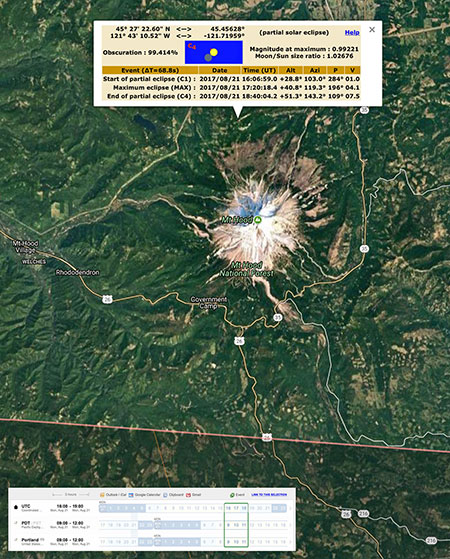
Next, the ad cuts to a section of historic highway that appears to be just east of Shepperd’s Dell, with a verdant green forest canopy reflecting off the hood of the well-polished Inifiti. A squiggly “sharp turns” sign completes the scene and message: sure, it looks like a sedan, but it drives like a sports car!

That squiggly arrow means “go faster”, right..?

Then, another abrupt U-turn, and we complete the high-speed tour of Waterfall Alley with a spin around Crown Point. The colors and river level in the background show this scene to have been filmed in the peak of spring in May or early June, under overcast skies, as were the previous clips in the sequence.

Hey, you’re speeding past a world-class viewpoint..!

The exception is the opening Multnomah Falls shot — the only clip without an actual vehicle operating in it. This clip appears to have been filmed later, possibly mid-summer, and clearly under sunny conditions, too. Could this be a stock video clip with the CGI added?

Here’s the complete video of “your summer destination” in Waterfall Alley – enjoy the ride!


______________________

Cruising Rowena Crest

One of these ads would be fun enough for local Gorge junkies to study, but a twin ad filmed in the eastern Gorge is equally intriguing. This commercial begins with a somewhat younger 30-something couple (the Infiniti G is apparently an “entry level” luxury model… hmm…) this time admiring a mysterious coffee table book in an upscale bookstore (is this a film set, or real location..?)
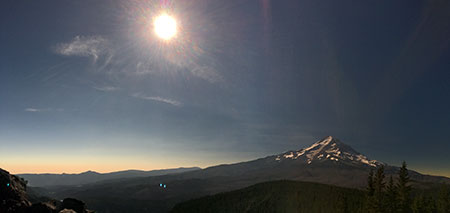
Definitely not Powell’s, but the book looks interesting…

Like the first couple, this pair daydreams of a tropical vacation (on Bora Bora), then comes to their senses when a coconut thumps the hood of their hyper-polished Infiniti sedan. Startled from their daydream, they take a look at the two-page spread in the huge art book before them and proclaim: “Let’s go here!”

…now the book looks REALLY interesting!

The colossal book looks like it must be a custom-made prop, but does have a caption running down the left side that describes driving this scenic route in Oregon — perhaps this is a real book?

If so, the camera crews went to extraordinary efforts to match the location for the first shot in first video sequence — or is it the other way around? If the book was created as a prop for the ad, the stills of this scene for the book were clearly shot later in the summer than the filming of the driving sequences, as evidenced by the summer colors along the freeway and Sevenmile Hill, in the background.

A couple of quick cuts in the opening sequence along the historic highway show off a lovely section of Samuel Lancaster’s beautiful old road, featuring the artful stonework and remarkable effort to blend with the landscape that continues to make the Historic Columbia River Highway a “summer destination” for visitors from around the world.

Ah… you might want to slow down on this curve…

…or not… glad there’s a “professional” at the wheel…

Next, the still spotless Infiniti sedan makes another time-travel maneuver, appearing on the Rowena Loops, just to the east of the opening clip. This is one of the most photographed sections of the old highway for the purpose of selling fast cars, so an expected clip in this ad.

Clearly, he saw another squiggly arrow sign…

The next clip is back in geographic sequence, picking up the sedan as it passes another terrific Lancaster design feature: the graceful roadside viewpoint just below Rowena Crest. Though a bit sketchy for pulling off (especially with professional Infiniti drivers speeding by), this little overlook is one of the lovelier details along the historic highway.

Wait! Another view… point… eh… never mind.

The second ad ends up with another leap to the east, near Rowena, proper, just below the loops. The amazingly bug and dust free Inifiti zooms past a nice section of restored wooden historic highway guardrail before the commercial fades to text.

The shiniest car to ever visit Rowena?

Here’s the complete video for the second ad – another fun 30-second ride!


______________________

Do these ads matter?

Beyond the welcome confirmation by Madison Avenue of the Gorge and Mount Hood as places of national park caliber (and generally assumed as such by most out-of-state visitors), these moments in the national spotlight have real benefits for our region. I tried a few web searches using the catch phrase from the ad, and found many queries and discussions from curious viewers trying to figure out where these ads were filmed.

A Google search for “Infiniti commercial” shows the waterfall spots to be popular

If ads like these translate into out-of-state visitors coming to experience the Columbia River Gorge and Mount Hood for themselves, it’s a big win for the local economy: visitors from outside our region spend much more than locals when they’re here, especially on lodging and dining.

That’s a good thing for the Gorge and Mount Hood communities, even if we can’t take credit for the free advertising — our breathtaking landscape gets star billing for that!

10 Common Poison Oak Myths

Spring in the Columbia River Gorge brings lush greens and a rainbow of wildflowers, but in this heavenly mix you will also find Toxicodendron diversilobum: Western poison oak.

If humans were as immune to the toxic oils of this plant as deer seem to be (they snack on the stuff!), we would simply admire it for the handsome foliage, and maybe even grow it in our gardens. After all, poison oak is an undeniably handsome plant… from a distance.

But instead, humans are prone to contact dermatitis when we encounter poison oak up-close, breaking out in itchy, blistering rashes that can take weeks to subside. Folklore on the cause and remedies for poison oak rash abound, and much of the information in this age of the internet is decidedly misleading.

Handsome devil: poison oak is as toxic as it is elegant.

Here are 10 common myths about poison oak — debunked — with information every hiker should know about this pesky plant:

Myth 1 – Many people are simply immune. I have hiked the poison oak-lined trails of the Columbia Gorge since the age of five, and thus have a 45-year streak of never reacting to it, despite some epic encounters. Am I immune? Maybe, but it turns out only about one-in-ten seem to have no reaction poison oak. Most of us who think we are immune have simply been careful enough — and lucky. If you have a perfect track record, assume it’s your reward for due caution, not immunity.

Myth 2 – Only the sap is toxic. Some believe it takes breaking a stem or crushing the leaves to release the toxic component of poison oak, a chemical called “urushiol” (pronounced “yoo-ROO-she-all”), and that simply brushing against it cannot transmit the toxin to your skin. In fact, urushiol is present throughout the plant, including the surface oils on the leaves and green stems of poision oak. This is especially true in spring, when new foliage literally glistens with toxic oils.

Poison oak usually looks like this in the Gorge: a spreading groundcover, 1-3 feet deep, and favoring open woods and forest margins.

Myth 3 – You’ll know you’ve got it by the next morning. While it takes only about 30 minutes for urushiol to penetrate your skin, the itchy, blistering skin reaction does not appear immediately. For most people, the symptoms are delayed at least 12 hours after exposure, and it usually takes up to 3 days for symptoms to appear — confounding hikers who think they’ve escaped a close encounter without consequence. For a first time sufferer, it generally takes even longer for the rash to appear – as much as 7 to 10 days!

Myth 4 – It takes a lot of exposure to cause a reaction. Poison oak is surprisingly toxic, and only a small amount of exposure can trigger a reaction. A single drop of urushiol on your skin contains more than enough toxin to cause a reaction, and a small amount is easily spread across your skin by perspiration or physical contact while you hike.

Myth 5 – Scratching will spread your rash. Scratching or rubbing a poison oak rash won’t make it spread to other parts of your body, assuming you’ve already washed thoroughly with soap and water. You can spread the rash if urushiol oil is still on your skin, of course. Scratching can lead to secondary skin infections, however, making your itchy misery a bit worse.

Poison oak is versatile, growing as a ground cover, shrub, or as a towering vine, as in this nightmarish scene along the McCord Creek trail.

Myth 6 – Breaking blisters will spread the rash. Breaking blisters won’t spread poison oak to other parts of your body, or other people. But open blisters can become infected and you may cause permanent scarring in the process. In very extreme cases, excessive fluid may need to be withdrawn by a doctor, though in most cases it’s best to simply let blisters heal on their own.

Myth 7 – Dead or leafless plants aren’t toxic. The bare winter stems of poison oak may look harmless, but still contain toxins. Urushiol oil has lasting power, and can stay active on any surface, including dead plants, for up to 5 years. Burning dead or dormant poison oak branches is an especially dangerous practice, as urushiol oils released in smoke can produce disastrous results, if inhaled.

Myth 8 – Dogs can’t get poison oak. Dogs are mostly protected from poison oak by their fur, though some can develop symptoms on their nose or underbelly. But all dogs can accumulate the oils on their fur, and transmit it to unwitting owners. This is especially true for off-leash dogs that might find a lush patch of poison oak just off the trail, but unseen by the dog’s owner.

The safest practice is to simply keep dogs on a leash when in poison oak country, so you know where they’ve been. Even better, give them a shampoo after the trip, as a precaution — or consider leaving Fido behind when you know you’re going to be in prolific poison oak country.

Poison oak growing in shrub form along the Rowena Plateau trail, showing the handsome bronze color of emerging leaves in spring — when the plant is especially toxic.

Myth 9 – You can develop immunity from exposure. False. With some 90% of humans allergic to urushiol, it’s only a matter of time before most of us will develop a reaction, and it turns out the more reactions you experience from exposure to urushiol, the more likely you are to react to with further exposure. But the reverse is also true: avoiding exposure (and outbreaks) reduces your susceptibility to a reaction. In other words, the myth has it backward: your best immunity comes from simply avoiding contact to begin with.

Sadly, the “develop your immunity” myth is among the more dangerous notions circulating on the internet, with countless testimonials on the “homeopathic” benefits of actually eating poison oak leaves in order to develop immunity. This is an incredibly foolhardy, dangerous idea that can lead to serious, life-threatening situations. Don’t even think about it!

Myth 10 – It’s just a rash. For most of us, this is true. But given the delayed (and varied) symptoms, poison oak reaction should always be taken seriously. As with any immune response to toxins, the symptoms can sometimes spiral out of control and become deadly. If you have a serious reaction, you need to see a doctor right away. Here are the American Academy of Dermatology guidelines for knowing if you’re having serious reaction:

• You should see a doctor if swelling persists, specially swelling that makes an eye swell shut or your face to swell.

• You should see a doctor if the rash covers a large part of your body, you have large blisters, or cannot sleep.

• If you have trouble breathing or swallowing, immediately go to an emergency room.

So, you’ve developed a rash from poison oak exposure, and it isn’t serious? Then you can treat it yourself. You can try one of these online resources for tips on managing your itchy journey ahead:

American Academy of Dermatology

Mayo Clinic

There are dozens of resources on the giving medical advice on treating poison oak rash, many with undocumented, anecdotal suggestions, so the best bet is to stick with these, or similarly respected clinical sources.

This impressive poison oak patch in the Viento area shows all three forms of the plant: groundcover, shrub and as a vine, climbing up the tree trunks.

Managing your Poison Oak exposure

The following hiking tips are adapted from recommendations by the American Academy of Dermatology and Mayo Clinic:

During your hike in poison oak country:

• If you are very sensitive, or heading into a lot of poison oak, consider one of the topical skin products containing bentoquatam, a non-prescription compound shown to protect the skin from absorbing urushiol.

• Wear long pants, long sleeves, boots, and gloves. Even when you apply a skin barrier that contains bentoquatam, you still need to cover your skin with clothing.

• Use hiking poles. They have the effect of keeping your hands up and in front of you, where you’re less likely to brush against poison oak.

• Keep your hands and arms away from your face.

• Rinse your skin right away with lukewarm water if you think you’ve been exposed. You may be able to rinse off the oil before the urushiol penetrates your skin.

Another view of an impressive patch of poison oak in the Viento area, growing in open Douglas fir forest.

After your hike in poison oak country:

• Take a shower — not a bath — with plenty of soap and lather.

• Wash all of the clothes you were wearing when you came into contact with poison oak with conventional laundry soap, set for two rinse cycles (if possible).

• Wash or wipe anything that may have urushiol oil on its surface with soap, including hiking poles, leashes, and your pet.

• Some hikers swear by Tecnu, an over-the-counter topical treatment for removing urushiol oils. Clinical tests show it to be somewhat more effective than plain soap, though neither a substitute for avoiding contact to begin with.

Learning to Recognize Poison Oak

Poison oak is easy to recognize: the old adage “leaves of three, let it be” applies, as poison oak generally has three leaflets per stem. With a bit of practice, you can learn to instantly recognize it as you hike, including the leafless stems in winter.

Here’s a close-up of the classic leaf shape (below), somewhat resembling an oak leaf, but with less pronounced lobes. In autumn, poison oak leaves take on striking hues of red and coral before dropping, leaving bare stems in winter. Note the tiny blossoms in the background — in summer, these will become clusters of greenish-white or tan berries.

Poison oak leaf detail: “Leaves of three, let it be..!”

Poison oak has several friends that it often grows with, and these plants can sometimes be confused with the real thing. They’re worth learning to identify, too, partly to know if you’ve been exposed to the real thing — but also because when you see these companion plants, you’re likely to be in poison oak habitat, and can keep an eye out for the genuine article.

One obvious example of a look-alike is the Oregon white oak (below), a classic companion of poison oak, and easily confused where brushy thickets of white oak grow in the eastern Columbia Gorge. Oak leaves are single, however, and usually larger with much deeper lobes than poison oak.

Oregon white oak can be confused with poison oak in the oak savannah country of the eastern Columbia River Gorge (courtesy PCC)

Another companion plant that is somewhat less common, but matches the “leaves of three” identifier is wild blackberry, or bramble (below). These plants are easily identified by their thorny, rambling stems that creep through the forest, small thorns on the underside of the leaves, and edible (and tasty) blackberries that form in summer.

Wild blackberry, or bramble, has “leaflets of three”, but is thorny, not smooth.

Still another companion plant that can be confused with poison oak is ocean spray, which prefers the same open woodland and forest margin habitat that poison oak enjoys. However, its leaves are single, and generally smaller than poison oak.

Ocean spray grows in dense clumps of arching stems, often reaching 8-10 feet in height. The name comes from “sprays” of hundreds of tiny, white blossoms in large clusters that cover plants in summer.

The leaves of ocean spray might initially look like poison oak, but are single and grow from a tall, arching thicket and have dramatic clusters of tiny white blossoms that give the plant its name.

Finally, snowberry is a companion plant of poison oak that normally has small, oval leaves, but in early spring grows larger, lobed leaves that can resemble poison oak at first glance. Snowberry can be identified by its thin, twiggy stems and white, inedible berries that give the plant its name. Most of its leaves are oval, and finely toothed, not lobed.

Early spring leaves on new growth are often exaggerated on snowberry, and can sometimes look like poison oak. The white berries on this plant distinguish it from the poison oak, and give the plant its name. In this view, the more typical oval leaves can bee seen in the background.

Where is Poison Oak Country?

Where can you expect to encounter poison oak? The answer is anywhere you might hike in the Gorge below an elevation of about 2,000 feet. It grows along most low-elevation trails throughout the Gorge, from Angels Rest on the west end to Dalles Mountain Ranch on the east.

Though the most prolific displays are east of Cascade Locks, you will find also lush bowers of poison oak draped over the rustic stone walls at Wahkeena Falls and Multnomah Falls, and along many sections of the popular Eagle Creek Trail (for Clackamas River hikers, it also grows in the lower canyon, under similar conditions).

Poison oak in early spring: new growth emerges in beautiful shades of copper, crimson and gold… though best appreciated from a distance!

The best bet is to assume its presence whenever hiking in the Gorge, and follow the simple precautions described in this article. It doesn’t have to ruin your hike: learning to recognize poison oak in its various forms is peace of mind, as you’ll be able to watch for it and manage your exposure with the knowledge that you know what you’re watching for.

Finally, if you’ve got small kids, there is no better way to teach them about plants than to start with identifying (and not touching!) poison oak. Print these photos of the plant (shown earlier in this article) for them to fold up and carry in a plastic sandwich bag on your next family hike:

(click here for a general view of poison oak)

(click here for a detailed view of the leaves)

It’s a great opportunity to teach young hikers to understand and respect nature, not fear it — and that goes for us grown-up hikers, too!

Warren Falls Mystery… Solved!


(Click here for a larger view)

It was the summer of 1939, and Depression-era Americans were escaping the hard times with the theater releases of “Gone with the Wind” and “The Wizard of Oz”. In Europe, Hitler’s invasion of Poland in September of 1939 ignited World War II.

Against the sweeping backdrop of this pivotal year in history, a odd story was playing out on obscure Warren Creek, near Hood River in the Columbia River Gorge. This is the story of how today’s manmade Hole-in-the-Wall Falls was created, and Warren Falls was (temporarily, at least) lost to time. It all began 15,000 years ago…

15,000 Years Ago – The string of waterfalls on Warren Creek were formed as a result of the Bretz Floods. Also known as the Missoula Floods, these were a cataclysmic series of bursts from glacial Lake Missoula that scoured out the Columbia River Gorge over a 2,000 year span. The events finally ended with the ice age, about 13,000 years ago.

J. Harlen Bretz faced decades of controversy before his flood theory was accepted

Today’s rugged cliffs in the Columbia Gorge were over-steepened by the Bretz floods, leaving tributary streams like Warren Creek cascading down the layers of sheer, exposed basalt bedrock. Geologist J. Harlen Bretz published his theory describing the great floods in 1923, just a few years before Warren Falls would be diverted from its natural channel.

June 6, 1916 – Samuel Lancaster’s Columbia River Highway is dedicated, and immediately hailed as one of the pre-eminent roadway engineering feats in the world. The spectacular new road brings a stream of touring cars into the Gorge for the first time, with Portlanders marveling at the new road and stunning scenery.

Samuel Lancaster touring his beautiful new highway in 1916

Lancaster’s new highway passed Warren Falls under what is now I-84, crossing Warren Creek on a small bridge, and passing two homesteads, a small restaurant and service station that were once located near the falls. Today, this section of the old road is about to be restored as a multi-use path as part of the Historic Columbia River Highway project.

July 29, 1939 – Robert H. “Sam” Baldock is midway through his 24-year tenure as Oregon State Highway Engineer (1932-1956), an influential career spanning the formative era of the nation’s interstate highway era. Baldock advocated for the construction of what would eventually become I-84 in the Columbia Gorge, initially built as a “straightened” US 30 that bypassed or obliterated Samuel Lancaster’s visionary Columbia River.

Thirties-era Chiefs: Oregon Highway Engineer Sam Baldock (left) and Assistant Highway Engineer Conde B. McCullough (right)

In a letter to the Union Pacific Railroad, Baldock describes an ingenious “trash rack” and bypass tunnel at Warren Falls that had just been released to bid, on July 27. The project was designed to address an ongoing maintenance problem where Warren Creek had repeatedly clogged the openings on the old highway and railroad bridges with rock and log debris.

While the Baldock proposal for Warren Creek seems a brutal affront to nature by today’s standards, an irony in this bit of history is that his assistant highway engineer was none other than Conde B. McCullogh, the legendary bridge designer whose iconic bridges define the Oregon Coast Highway.

McCullough designed several bridges along the Columbia River Highway, as well, yet he apparently passed on the opportunity to apply a more elegant design solution to the Warren Creek flooding problem. Otherwise, we might have an intact Warren Falls today, perhaps graced by another historic bridge or viaduct in the McCullough tradition!

Historic site map of the Warren Falls diversion project (1939)

(Click here for a larger view of this map)

At the time of the Warren Falls diversion project, the railroad was located adjacent to the highway (it was later moved onto fill in the Columbia River when the modern I-84 alignment was built in the 1950s).

The Union Pacific had already attempted to address the Warren Creek issue with a flume built to carry the stream over the railroad and away from the railroad bridge. This initial effort by the railroad appears to have been the catalyst for a joint project with ODOT to build an even larger diversion.

This map blends historic information from ODOT site plans with the modern-day location of Warren Creek.

(Click here for a larger view of this map)

August 10, 1939 – Union Pacific Railroad Resident Engineer S. Murray responds to Baldock’s July 29 letter, praising the “trash rack” and tunnel design solution, but also offering an alternative approach to the tunnel scheme:

“I think possibly we have all approached this problem from the reverse end. Above the falls there is a deposit of gravel about 600 feet long and of varying widths and depths, and possibly there are 10,000 yards of it ready to move.

Would it not be practicable and sensible to simply hoist a cat up the cliff and into the canyon and push this material down over the falls and then away from the course of the water, and then construct a small barrier of creosoted timber so as to hold back future deposits until they accumulate in sufficient amount to justify their being moved again?”

In the letter, Murray suggests that Baldock’s Highway Department do a comparative cost analysis of this alternative, as he expected to “have difficulty in obtaining approval” of the Union Pacific’s participation in the project “under [the] present railroad financial situation.”

The Union Pacific proposed hoisting a bulldozer like this one to the top of Warren Falls and using it to push debris over the brink!

August 30, 1939 – In his response to Murray, Sam Baldock declines to consider the counter proposal to simply bulldoze the debris above Warren Falls as an alternative to the tunnel project, and instead, continues advancing a $14,896.27 construction contract to complete the diversion project for Warren Creek.

September 2, 1939 – Murray responds immediately to Baldock’s August 30 letter. With disappointment and surprising candor, he dryly quotes a 1934 letter where Baldock had proposed completely moving both the highway and railroad to the north, and away from Warren Falls, as a solution to the debris problem, apparently to underscore his belief that Baldock’s tunnel project would be a short-term, costly fix at best.

This earlier 1934 correspondence from Baldock turns out to be prophetic, of course, with the modern-day alignment of I-84 and the Union Pacific railroad ultimately carrying out Baldock’s vision.

Baldock’s faster, straighter version of the Columbia River Highway began to emerge in the 1940s (near Mitchell Point).

These proposals for altering Warren Creek may seem brazen and completely irresponsible by today’s environmental standards, but consider that at the time the dam building era on the Columbia River was just getting underway. By comparison, these “improvements” to nature were just another effort to conquer the land in the name of progress.

These schemes also underscore how visionary Samuel Lancaster really was: far ahead of his colleagues of the day, and some 75 years ahead of the 1990s reawakening among engineers to “context sensitive” design in the modern engineering profession.

Cross-section plans for the “trash rack” design at the head of the Warren Creek diversion tunnel; the odd structure still survives and continues to function today.

October 2, 1939 – Work on the Warren Falls diversion project begins. The full project includes the diversion tunnel and flume, plus reconstruction of a 0.69 mile section of Lancaster’s historic highway and two bridges. In the fall of 1939, the highway contractor built a highway detour road, new highway bridges, and excavated the flume ditch and relief channels.

Work on the “trash rack” and associated blasting for the diversion tunnel bogged down, however, with the contractor continuing this work through the winter of 1940. Despite the modest budget, ODOT records show that the contractor “made a very good profit” on the project, and completed work on September 21, 1940.

The budget for the project was as follows:

Compared to modern-day transportation projects that routinely run in the millions, seeing costs detailed to the penny seems almost comical. Yet, at the time both the Oregon Highway Department and Union Pacific Railroad were strapped for cash, and very cost-conscious about the project. A series of letters between the sponsors continued well beyond its completion to hash out an eventual 50/50 agreement to pay for construction and ongoing maintenance of the stream diversion structures.

After the 1940s – the reconstruction of the Columbia River Highway at Warren Creek was part of a gradual effort to widen and straighten US 30 along the Columbia River. Today’s eastbound I-84 still passes through the Tooth Rock Tunnel, for example, originally built to accommodate all lanes on the straighter, faster 1940s version of US 30.

The beginning of the end: construction of the “new” bridge at Oneonta Creek in 1948, one of many projects to make the old highway straighter and faster. Both this bridge, and the original Lancaster bridge to the right, still survive today.

By the early 1950s, most of Sam Lancaster’s original highway had been bypassed or obliterated by the modernized, widened US 30. Much of the new route was built on fill pushed into the Columbia River, in order to avoid the steep slopes that Lancaster’s design was built on.

Passage of the federal Interstate and Defense Highways Act in 1956 moved highway building in the Gorge up another notch, with construction of I-80N (today’s I-84) underway. The new, four-lane freeway followed much of the US 30 alignment, though still more of Lancaster’s original highway was obliterated during the freeway construction. This was the final phase of freeway expansion in the Gorge, and was completed by 1963.

In the Warren Creek area, interstate highway construction in the late 1950s finally achieved what Sam Baldock had envisioned back in his correspondence of 1932, with the Union Pacific railroad moved onto fill reaching far into the Columbia River, creating what is now known as Lindsay Pond, an inlet from the main river that Lindsay, Wonder and Warren creeks flow into today. The “improved” 2-lane US 30 of the 1940s had become today’s four-lane freeway by the early 1960s.

Coming Full Circle: Restoring Warren Falls

Since the mid-1990s, ODOT and the Friends of the Historic Columbia River Highway have worked to restore, replace and reconnect Samuel Lancaster’s magnificent old road. In some sections, the road continues to serve general traffic, though most of the restoration focus is on re-opening or re-creating formerly closed sections as a bike and pedestrian trail.

The trail segment in the Warren Falls vicinity is now entering its design phase, and is slated for construction as early as 2016, commemorating the centennial of Lancaster’s road. Though initially excluded from the plan, the restoration of Warren Falls is now shown as a “further study” item — a step forward, for sure, but still a long way from reality. The plan does call for an overlook of both the historic Warren Falls and Hole-in-the-Wall falls (shown below).

Proposed trail alignment along the reconstructed Historic Columbia River Highway.

(Click here for a larger view of the trail plan)

There are three key reasons to restore Warren Falls now:

1. Funding is Available: The nexus for incorporating the restoration of Warren Falls into the larger trail project is clear: the trail project will require environmental mitigation projects to offset needed stream crossings and other environmental impacts along the construction route. Restoring the falls and improving fish habitat along Warren Creek would be a terrific candidate for this mitigation work.

2. The Right Thing to Do: Restoring the falls is also an ethical imperative for ODOT. After all, it was the former Oregon Highway Department that diverted Warren Creek, and therefore it falls upon ODOT to decommission the diversion tunnel and restore the falls. Doing this work in conjunction with the nearby trail project only makes sense, since construction activity will already be occurring in the area. Most importantly, it also give ODOT an opportunity to simply do the right thing.

Ain’t no way to treat a lady: the obsolete Warren Creek diversion tunnel is not only a maintenance and safety liability for ODOT (photo by Zach Forsyth)

3. Saves ODOT Money: Finally, the restoration makes fiscal sense for ODOT. The Warren Creek diversion tunnel is still on the books as an infrastructure asset belonging to ODOT, which in turn, means that ODOT is liable for long-term maintenance or repairs, should the tunnel fail.

The tunnel also represents a safety liability for ODOT, as more rock climbers and canyoneers continue to discover the area and actually travel through the tunnel. Decommissioning the tunnel and diversion would permanently remove this liability from ODOT’s operating budget.

Not good enough: excerpt from the HCRC restoration mentions the “Historic Warren Falls site”, missing the opportunity to restore the falls to its natural state.

How can you help restore Warren Falls? Right now, the best forum is the Historic Columbia River Highway Advisory Committee, a mostly-citizen panel that advises ODOT on the trail project. A letter or e-mail to the committee can’t hurt, especially since the project remains a “further study” item. You can find contact information for the committee on the HCRH page on ODOT’s website.

But it is also clear that Oregon State Parks will need to be a project partner to restore Warren Falls. The best way to weigh in is an e-mail or letter to the office of Oregon State Parks & Recreation (OSPRD) director Tim Wood. You can find contact information on the Oregon State Parks website. This is one of those rare opportunities where a few e-mails could really make a difference, and now is the time to be heard!
_______________________________________

Special thanks go to Kristen Stallman, ODOT coordinator for the HCRH Advisory Committee, for providing a wealth of historic information on the Warren Creek bypass project.

To read Oral Bullards‘ 1971 article on Hole-in-the-Wall Falls, click here. Though largely accurate, note that Bullards’ article is based on interviews of ODOT employees at the time, and not the original project files that were the basis for this blog article.

Next: a simple, affordable design solution for restoring Warren Falls!

New Lidar Maps of Mount Hood

The age of the microprocessor has ushered in a revolution in the fields of cartography and geosciences. After all, few could have imagined streaming Google Earth imagery over a worldwide web when the first air photos were being scanned and digitized in the 1980s.

The latest innovation on the geo-data front promises still more detailed geographic information than has ever been available before: Lidar (light detection and ranging) is a new technology that uses aircraft-mounted lasers to scan the earth at an astonishing level of detail. The resulting data can be processed to create truly mind-boggling terrain images that are rocking the earth sciences.

The Oregon Department of Geology & Mineral Industries (DOGAMI) has kicked off a project to develop a statewide lidar database. The effort began with a pilot project in the Portland metropolitan region in 2006, expanding to become a statewide effort in late 2007. Some of the first available imagery encompasses the Mount Hood region, including the Columbia River Gorge. The following map shows DOGAMI’s progress in lidar coverage (in gray) as of 2011:

A New Way to See Terrain

Lidar imagery has a “lunar” look, thanks to its tremendous detail and the ability for lidar new technology to “see through” forest vegetation. This view of Larch Mountain, for example, immediately reveals the peak to be the volcanic cone that it is, complete with a blown-out crater that was carved open by ice-age glaciers:

Move closer to the Larch Mountain view, and even more detail emerges from the lidar imagery. In the following close-up view, details of the Larch Mountain Road and parking area can be seen, as well as some of the hiking trails in the area:

The Oregon lidar imagery includes elevation contour data, and for hikers and explorers using the new information to plan outings, this is probably an essential layer to include. Here is the previous close-up image of Larch Mountain with elevation data shown:

The contours are not simply a rehash of USFS ground-survey data, but instead, derived from the lidar scans. In this way, the contours are as direct a reflection of the lidar data as the shaded relief that gives the images their 3-D drama.

There are some caveats to the new lidar technology: while it is possible to see most roads and even some trails in great detail, in many areas, lidar doesn’t pick up these features at all. Lidar also edits most vegetation out of the scene, though the state does provide topographic overlays for vegetation.
DOGAMI is now streaming the lidar data over its Lidar Data Viewer website, finally putting the new imagery in the eager hands of the general public. For this article, I’ll focus on the highlights of my first “tour” of the Mount Hood and Columbia River Gorge areas covered by the project so far — a familiar landscape viewed through the “new eyes” of lidar.

Seeing the Landscape with “New Eyes”

The first stop on the lidar tour is the Nesmith Point scarp face, a towering wall of cliffs that rise nearly 4,000 feet above Ainsworth State Park, near the rural district of Dodson. The Nesmith fault scarp has always been difficult to interpret from USGS topgraphic maps, with a maze of confusing contour lines that do little to explain the landscape. Air photos are even less helpful, with the steep, north-facing slopes proving nearly impossible to capture with conventional photography.

The lidar coverage of the Nesmith scarp (above) reveals the origin of the formation: a massive collapse of the former Nesmith volcano into the Columbia River, probably triggered by the Bretz Floods during the last ice age.

The Nesmith scarp continues to be one of the most unstable places in the Gorge. Over the millennia, countless debris flows have rushed down the slopes toward the Columbia, forming a broad alluvial fan of layered debris where traffic rushes along I-84 today. In February 1996, the most recent in this ancient history of debris flows poured down the canyons and across the alluvial fan, destroying homes and closing both I-84 and the railroad for several days.

Lidar provides a new tool for monitoring unstable terrain like the Nesmith scarp, and may help in preventing future loss of life and public infrastructure when natural hazards can be more fully understood.

The ability to track detailed topographic changes over time with lidar is the focus of the next stop on the lidar tour: the Reid Glacier on Mount Hood’s rugged west face. As shown in the lidar image, above, bands of crevasses along the Reid Glacier show up prominently, and for the first time this new technology will allow scientists to monitor very detailed movements of our glaciers.

This new capability could not have come at a better time as we search for answers in the effort to respond to global climate change. In the future, annual lidar scans may allow geologists and climate scientists to monitor and animate glaciers in a way never possible before.

Moving to Mount Hood’s south slopes on the lidar tour, this image shows the junction of US 26 and Highway 35, which also happens to be built on the alluvial fan formed by the Salmon River, just below its steep upper canyon.

Unlike the nearby White River, the Salmon has had relatively few flood events in recent history. To the traveling public, this spot is simply a flat, forested valley along the loop highway. Yet, the lidar image shows dozens of flood channels formed by the Salmon River over the centuries, suggesting that the river has temporarily stabilized in its current channel — but not for long.

DOGAMI geologists are already examining the lidar imagery for these clues to “sleeping” calamities: ancient landslides, fault lines and flood zones concealed by a temporary carpet of our ever-advancing forests.

The lidar images reveal a similar maze of flood channels at our next stop, where glacial Newton and Clark creeks join to form the East Fork Hood River. This spot is a known flood risk, as Highway 35 is currently undergoing a major reconstruction effort where debris flows destroyed much of the highway in November 2006.

While the highway engineers are confident the new highway grade will hold up to future flood events, the above lidar image tells another story: with dozens of flood channels crossing the Highway 35 grade, it seems that no highway will be immune to floods and debris flows in this valley.

The new lidar images also provide an excellent tool for historical research. The following clip from below Cloud Cap Inn on Mount Hood’s north side is a good example, with the lidar image clearly showing the “new”, gently graded 1926 road to Cloud Cap criss-crossing the very steep 1889 wagon (or “stage”) road it replaced:

The Cloud Cap example not only highlights the value of lidar in pinpointing historic features, but also in archiving them. In 2008, the Gnarl Fire swept across the east slopes of Mount Hood, leaving most of the Cloud Cap grade completely burned. Thus, over time, erosion of the exposed mountain slopes may erase the remaining traces of the 1889 wagon road, but lidar images will ensure that historians will always know the exact location of the original roads in the area.

Moving north to the Hood River Valley, the value of lidar in uncovering geologic secrets is apparent at Booth Hill. This is a spot familiar to travelers as the grade between the upper and lower Hood River valleys. Booth Hill is an unassuming ridge of forested buttes that helps form the divide. But lidar reveals the volcanic origins of Booth Hill by highlighting a hidden crater (below) that is too subtle to be seen on topographic maps — yet jumps off the lidar image:

Another, nearby geologic secret is revealed a few miles to the south, near the Mount Hood Store. Here, an enormous landslide originates from Surveyors Ridge, just south of Bald Butte, and encompasses at least three square miles of jumbled terrain (below):

Still more compelling (or perhaps foreboding) is the fact that the Bonneville Power Administration (BPA) chose this spot to build the transmission corridor that links The Dalles Dam to the Willamette Valley. The lidar image shows a total of 36 BPA transmission towers built on the landslide, beginning at the upper scarp and ending at the toe of the landslide, where a substation is located.

As with most of the BPA corridor, the slopes under the transmission lines have been stripped of trees, and gouged with jeep tracks for powerline access. Could these impacts on the slide reactivate it? Lidar will at least help public land agencies identify potential natural hazards, and plan for contingencies in the event of a disaster.

Mount Hood Geologic Guide and Recreation Map

You can tour the lidar data on DOGAMI’s Lidar Data Viewer, but for portability, you can’t beat the new lidar-based recreation map created by DOGAMI’s Tracy Pollock. The new map unfolds to 18×36”, and is printed on water-resistant paper for convenient use in the field.

Side A of the new map focuses on the geology of Mount Hood, with a close-up view of the mountain and most of the Timberline Trail:

(click here for a larger version)

Side B of the map has a broader coverage, and focuses on recreation. Most hiking trails and forest roads are shown, as well as the recent Mount Hood area wilderness additions signed into law in 2009:

(click here for a larger version)

You can order printed copies of this new map for the modest price of $6.00 from the DOGAMI website, or pick it up at DOGAMI offices. It’s a great way to rediscover familiar terrain through the new lens of lidar.

Columbia Gorge: The Fight for Paradise

On November 17, OPB’s Oregon Field Guide aired a special 1-hour look at the Columbia River Gorge Scenic Act, commemorating the 25th anniversary of the legislation.

The show provides a comprehensive look at the history of the Gorge Act, its friends and foes and some of the future challenges, including those never anticipated when the legislation was written — such as the recent land rush for wind turbine sites. Several of the most prominent early defenders of the Gorge are included, including Chuck Williams and Nancy Russell.

The program also includes in-depth look at the Native American legacy in the Gorge, and the ironic effect of the Gorge Act bringing a surge of new residents since it was signed into law — all seeking a life amid the scenery, and bringing demand for hundreds of new homes and new industry to a new level in the Gorge.

The program overlooks the massive increase in recreation demand over the past three decades, and the lack of trails to serve the crowds. Not much attention is paid to the future role of federal stewardship in the Gorge, and especially the national park vision that Chuck Williams advocated during the fight for protection.

Tsagaglalal or She Who Watches (USFS)

Likewise, Senator Bob Packwood is given too much credit for passage of the Gorge Act (in his own words, of course, in typical Bob Packwood form), while Senator Mark Hatfield is not given enough. Had Hatfield been alive to comment, he would undoubtedly have given a humble account of his key role in developing the legislation. This political history might make for a future documentary on the evolution of the Gorge Act, itself, perhaps based on Carl Abbot’s book Planning a New West: The Columbia River Gorge National Scenic Area.

Still, the program provides a very good overview of the Gorge Act over the past quarter century, and how much it has already changed the public/private balance of interests in the Gorge. Here is the documentary in full (approximately 55 minutes):