Parkdale Lava Flow

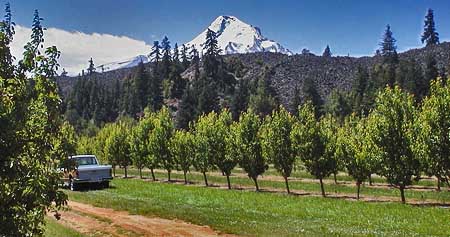
The dark wall formed by the Parkdale Lava Flow rises abruptly from the famous fruit orchards of the Hood River Valley

The dark wall formed by the Parkdale Lava Flow rises abruptly from the famous fruit orchards of the Hood River Valley

Tourists will soon be streaming into the Hood River Valley to marvel at the pink and white blossoms that blanket Oregon’s most famous apple and pear orchards each spring, with snowy Mount Hood towering above.

For many, the trip takes them to the tiny farm hamlet of Parkdale, in the heart of the upper valley. Here, the unexpected view of a dark wall of lava known as the Parkdale Lava Flow is a surprise to even longtime Oregonians. This dramatic flow is among the largest and youngest in the Cascades, yet remains surprisingly unknown.

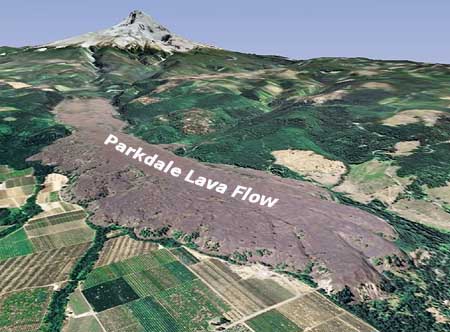
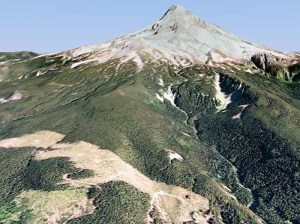
This Google Earth view looks south, from the toe of the Parkdale Lava Flow, toward its origin, at the foot of Mount Hood

This Google Earth view looks south, from the toe of the Parkdale Lava Flow, toward its origin, at the foot of Mount Hood

From the farms near Parkdale. the lava flow looks like a ridge of jumbled boulders, with the occasional Douglas fir or ponderosa pine poking out of the chaos. But viewed from above, the formation takes on a more recognizable form. Flowing north from a deep fissure at the foot of Mount Hood, the lava first poured down the valley in a single, broad stream, pushing the Middle Fork of the Hood River from its channel.

As the river of molten rock reached the flats of the upper Hood River Valley, the lava began to spread out from the river channel, with great lobes spilling sideways from the main flow onto the valley floor. By the time the eruption was over, the lava had traveled more than four miles, and poured more than 390 million cubic yards of molten rock on the surface. That’s 4 million dump truck loads of lava, and when the lava cooled, it covered nearly 3,000 acres to depths as much as 300 feet.

Aerial views show giant ripples and lobes in the Parkdale lava flow, and the displaced Middle Fork Hood River, flowing along the edge of the new lava

Aerial views show giant ripples and lobes in the Parkdale lava flow, and the displaced Middle Fork Hood River, flowing along the edge of the new lava

The Middle Fork of the Hood River must have been a hellish sight when the eruption occurred, as molten rock filled the stream bed, and vaporized both river and forest as it overwhelmed the landscape. Today, the river traces the west margin of the flow (shown on the right in the image above), with lava slopes rising steeply from the stream. This rugged terrain along the Middle Fork makes for one of the least-visited sections of river anywhere in the Mount Hood region.

The Parkdale Lava Flow is young by geologic standards at just 7,000 years old. That places the eruption at about the time when Crater Lake was formed, following the massive eruption and collapse of the former Mount Mazama.

The Parkdale Lava Flow falls partly into private ownership

The Parkdale Lava Flow falls partly into private ownership

Geologists note that the Parkdale flow overlays traces of Crater Lake ash deposited in the Mount Hood area, suggesting that the lava flowed just after the destruction of Mount Mazama. This puts both events within the period when the first Native Americans were living in the region, and we can only imagine how the ensuing chaos must have impacted these early residents.

Since the eruption 7,000 years ago, a few trees have pioneered the lava flow, mostly along shaded side slopes, but it mostly looks like it erupted very recently. As might be expected, the flow is also home to small wildlife that thrive in the shelter that the jumbled rock provides. Through sheer luck, the flow was never mined for aggregate, despite its proximity to huge construction projects, such as the dams and highways in the nearby Columbia River Gorge.

The Forest Service has designated 854 acres of the Parkdale Lava Flow as a geologic “Special Interest Area” for the stated purpose of “public recreation use, study and enjoyment.” In its forest plan, the agency has committed to managing such areas in a natural condition, pending a detailed implementation plan for each area. This is where the Parkdale Lava Flow stands today.

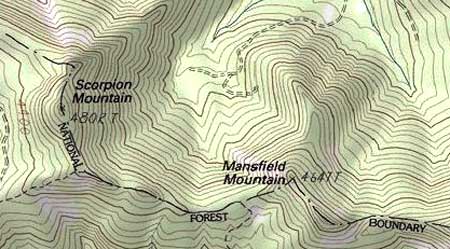
Part of the lava flow, along the northeast corner (see map), is on private land. While this private land is already inside the Mount Hood National Forest jurisdictional boundary, the agency rarely acquires land thanks to lack of dedicated funding or a clear mission on which lands ought to be acquired. So for now, this is yet another unique natural feature at risk of development.

In the long term, the Mount Hood National Park Campaign envisions bringing the L-shaped piece of private land into public ownership, and providing recreational and interpretive access to the area. Until that day, the area can be explored off-trail, with access from adjacent forest roads.

Restoring Celilo Falls

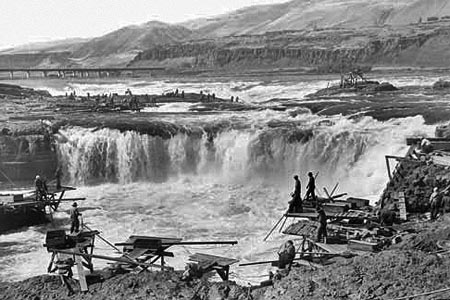
Celilo Falls has always been phantom of history to me, since I born a few years after the U.S. Army Corps of Engineers buried the falls behind The Dalles Dam in 1957. My understanding of the falls and the loss it now represents has come from old photos and maps, and a few shaky film images.

The railroad bridge in the background of this iconic view is the key to locating the falls today

The railroad bridge in the background of this iconic view is the key to locating the falls today

Yet for many, the falls and the native culture surrounding them are alive and vibrant in their memories, thanks to seeing and experiencing them first-hand. For Native Americans, the vivid memories only add to the pain of losing a place that quite literally defined a people for millennia.

The idea of restoring the falls — even temporarily — has been suggested over the years, usually to be slapped down quickly by the Corps of Engineers as unfeasible, or even dangerous. In the late 1980s, a brief, 30th anniversary movement to temporarily draw down the pool behind the dam briefly gained local momentum before the federal agencies killed any talk of the idea. The Corps likely realized that revealing the falls to the public even once could make it politically impossible to ever refill the dam again.

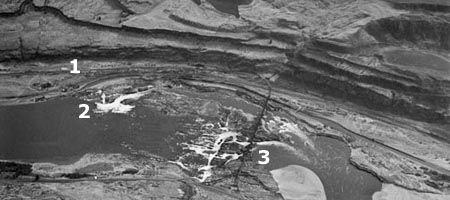
This 1940s aerial view shows the falls and railroad bridge, looking south

This 1940s aerial view shows the falls and railroad bridge, looking south

The hostility of the federal agencies toward even acknowledging the falls fanned the rumors among the local tribes that the falls had, in fact, been purposely destroyed by the Corps of Engineers just before they were inundated. This rumor persisted until last year, when a new mindset among Corps managers spurred the agency to compile a comprehensive sonar map of the falls to show that they are quite intact, beneath the still surface of the reservoir.

The sonar confirmation of the intact falls has breathed new life into the hopes of many that the falls will not just someday be restored, but perhaps someday soon. This is where the restoration of Celilo Falls fits within the scope of the MHNP Campaign: the emerging environmental theme in the coming century is restoration, and no place in the Pacific Northwest is more deserving — perhaps even the nation, considering that 11,000 years of Native American culture at Celilo makes it the oldest continuously settled place in North America.

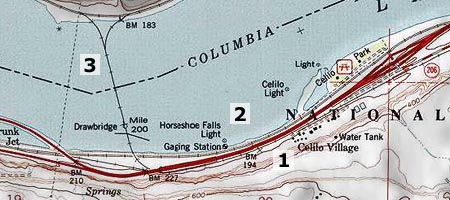
This map clip correlates today's landmarks to the aerial view of the falls, above

This map clip correlates today's landmarks to the aerial view of the falls, above

But the connection to Mount Hood is even more elemental: the mountain towers over the Celilo country like a beacon, and has been a similarly important feature in the culture of Lower Columbia tribes. Celilo and WyEast are connected, and so their restoration should be. A joined effort to heal these places expands the possibilities for both.

What will a restored Celilo Falls look like? Initially, it will likely be mineral-stained and muddy. But the new sonar maps confirm that silts have not overtaken the falls, so if the pool behind The Dalles Dam were simply lowered today, we would see a largely intact falls — perhaps even with traces of the cantilevered dip net fishing structures that once clung to the rocks around the falls. And over time, the falls would quickly recover to blend again with the surrounding landscape.

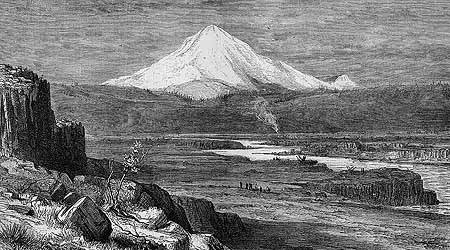
R. Swain Gifford's 1875 etching of Mount Hood towering over the Celilo Narrows is among the earliest geographically accurate renderings of the area

R. Swain Gifford's 1875 etching of Mount Hood towering over the Celilo Narrows is among the earliest geographically accurate renderings of the area

What would a restored Celilo Falls mean for the mid-Columbia economy? The immediate impact would be on power supplies, and it is unlikely that the falls could ever be restored without some alternate energy supply — perhaps a wind farm of equal wattage? — ensuring that no net loss in energy production would result.

The next big question would be impacts on shipping, but the good news here is that barges were already using the Celilo Canal to bypass the falls long before the dam was erected. The canal system would conceivably resume this function, if the falls were reborn, albeit with likely improvements and modernization.

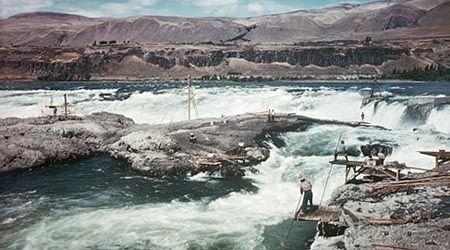
These scene was photographed in the mid-1950s, just before the falls was inundated

These scene was photographed in the mid-1950s, just before the falls was inundated

What kind of protection should the restored Celilo Falls receive? That part is easy. The astonishing scope of history tied to the falls easily qualify the site for World Heritage status within the U.S. National Park System, perhaps as a National Historic Site. This would put the restored falls in a category with places like Mesa Verde, in Colorado, and provide the needed framework to preserve and understand the historic resources that lie beneath today’s reservoir.

Restoration of Celilo Falls is a long-term dream of so many, but movement in that direction really began as soon as the falls disappeared in 1957. The falls has never left our collective consciousness, and thus demands restoration.

Another small step toward restoration will occur in 2009, when the commemorative Confluence Project will bring an art installation to Celilo. The project is marking the two centuries since Lewis and Clark passed through the region, and the millennia of human history that makes Celilo unique. A small step, but also a bit more progress toward what I believe will be the inevitable restoration of Celilo Falls — under the gaze of a restored Mount Hood.

Fire Forests of the Cascades

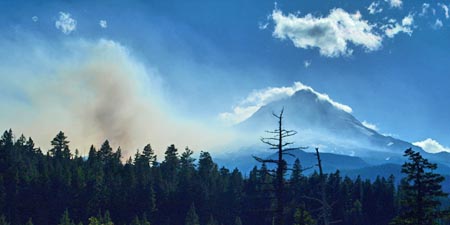
The Gnarl Fire of 2008 shocked Portlanders by racing across the east slopes of Mount Hood, and nearly destroying the historic buildings at Cloud Cap and Tilly Jane. But as an east side fire, the Gnarl burn was relatively small, and part of what has become an annual ritual for rural communities of fighting intense blazes along the east slope of the Cascades.

The 2008 Gnarl Fire, viewed in August from Dufur Mill Road

The 2008 Gnarl Fire, viewed in August from Dufur Mill Road

The cause for the intensity of these fires is well-known and well-documented. We know that a century of fire suppression, promotion of even-aged stands of second growth in logged areas and a changing climate are forces conspiring to burn the east side forests on a scale not seen in recent decades.

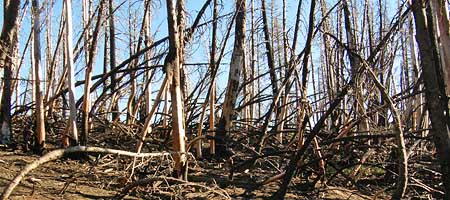
But not all of the east side fires are catastrophic, even with the fuel build-up from our history of fire suppression. The 2006 fire at Bluegrass Ridge was a glimpse into what was once a routine occurrence along the east side of the Cascades. The Bluegrass Fire began as a lightning strike in the dry season, and soon spread along the east face of the ridge in a mosaic pattern: some parts of the forest were completely killed, while others were a mix, where pockets of forest survived among the burned trees.

The aftermath of the 2006 Bluegrass Fire ranged from total destruction in areas like this, to mosaic patterns where less crowded forests existed

The aftermath of the 2006 Bluegrass Fire ranged from total destruction in areas like this, to mosaic patterns where less crowded forests existed

Most significantly, the larger, fire-resistant species like western larch and ponderosa pine often survive fires in these mosaic areas, and this was the case in the Bluegrass Fire. We will know in a year or two whether the extensive larch population in the Gnarl Fire area were similarly resistant.

The survival of these big trees is the key to the natural ecosystem that defines east side forests. Forest ecologists are now calling these east side regimes “fire forests”, as a counterpoint to the west side rain forests, where abundant rainfall is the operative element in defining the forests.

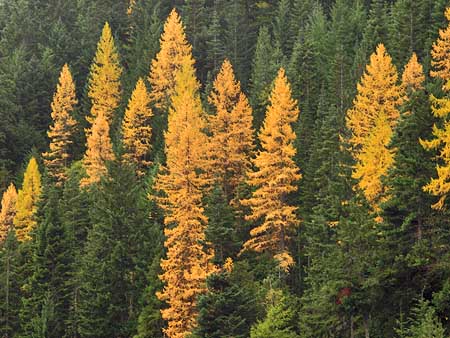
The “fire forest” name is apt, since we now know that a number of tree species in this dry forest system depend on fire for natural succession that creates mature forests. In the Mount Hood area, these east side trees are Douglas fir, western larch and ponderosa pine. All three have thick, fire-resistant bark that helps them survive moderate fires, and benefit from periodic clearing of undergrowth that competes for moisture and soil nutrients. Fires, in turn, release nutrients for the big trees, further enhancing the growth of fire-resistant species.

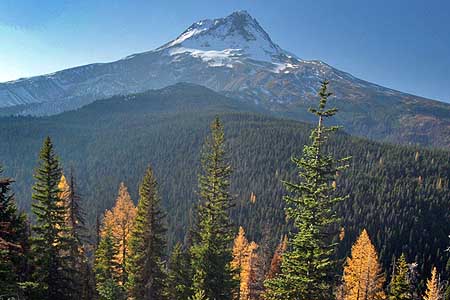
Western larch light up the eastside forests in autumn. Larch are among the fire-resistant species that require periodic burns for their long-term health

Western larch light up the eastside forests in autumn. Larch are among the fire-resistant species that require periodic burns for their long-term health

The question for the east side forest is not whether they will continue to burn — they have evolved with fire, after all — but rather, how we will learn to live with the fires. We now know that we cannot simply extinguish them. A century of fire suppression has created mammoth fires that we simply cannot control.

We also know that we cannot prevent forest fires from starting, since the large majority begin from lighting strikes. And we know that many more catastrophic burns will occur before the east side forests return to a more sustainable condition that mimics the natural ecosystem that once thrived.

Most ominous is the recent discovery — from tree-ring research — that the Western states are coming off an unusually wet century, and that the decades ahead are likely to carry more drought, not less. So it is imperative to help the east side forests stabilize before conditions make that proposition still more difficult.

These mature, healthy forests of western larch, ponderosa pine and Douglas fir along Bluegrass Ridge survived the fire

These mature, healthy forests of western larch, ponderosa pine and Douglas fir along Bluegrass Ridge survived the fire

A first step is continuing to thin tree plantations on logged lands to help prevent still more crowded, bug-infested forests like those that are currently driving the fire epidemic. The second step is more difficult: letting fires burn. This policy will be most difficult in the many areas where rural development has encroached on forest boundaries, but it is a necessary step. Both of these steps will require a new mindset about fire, not the least of which will be a public education shift away from Smokey Bear and fire suppression and toward a modern understanding of fire.

But a third step is most difficult of all: setting fires in prescribed locations to help restore forest balance. While the rash of east side fires in recent years has made this part of restoring forest balance less urgent, it will still be necessary — and controversial. Federal agencies have already begun employing this tool, but in cases where a controlled burn becomes a wildfire, the public is not prepared to understand why that risk is necessary — and perfectly natural. Still more public outreach and education will be needed.

The good news is that the scientists are winning this debate, and even the Forest Service has gradually begun to embrace fire ecology as part of their management philosophy. The Park Service is much further long, having successfully weathered the early criticism of their prescient decision to let the huge Yellowstone fires of the mid-1980s burn.

The remarkable resilience and recovery of Yellowstone in the intervening years has not only been vindication for that bold decision, but also an invaluable lesson to land agencies across the west who are responsible for managing “fire forests”. The time to embrace fires in our forests has arrived.

Phoca Rock

An early 1900s postcard shows a steam ship passing Phoca Rock

An early 1900s postcard shows a steam ship passing Phoca Rock

Anyone who has made a few trips through the Columbia Gorge has noticed the small monolith that pokes out of the center of the river near Cape Horn. This is Phoca Rock, and its distinction lies partly in the fact that it is one of the few landmarks in the Gorge that carries the name given by Lewis and Clark on their 1805-06 Corps of Discovery journey.

Lewis and Clark didn’t actually name the rock until they were camped on the Oregon Coast, and compiled their journals while suffering through a dank Northwest winter. William Clark named the rock for the abundant harbor seals spotted in the river – phoca vitulina.

Harbor seals basking in Alaska's Tracy Arm

Harbor seals basking in Alaska's Tracy Arm

Harbor seals are still native to the lower Columbia River, although in smaller numbers than when Lewis and Clark paddled through. Government bounties in Oregon and Washington killed more than 20,000 Harbor seals in the two states from the 1920s through 1972, when hunting was finally banned.

The Harbor seal population has since rebounded from fewer than 7,000 seals at the time of the ban to more than 17,000 today. Still, biologists in both states must monitor the seals for health and impacts from commercial fisheries.

Phoca Rock continues to serve as a river beacon today, marking the edge of shipping lanes on the Columbia. The rock marks the edge of two-foot shallows along Oregon’s Sand Island and the 45-foot deep Candiana Channel that separates Phoca Rock from Cape Horn, on the Washington side.

Phoca Rock today, as seen from Bridal Veil State Park

Phoca Rock today, as seen from Bridal Veil State Park

Clark estimated the rock to be 100 feet tall, but today we know it to be just 30 feet. Its prominence lies in its isolation, and early names for the rock underscored this point: beginning in the mid-1800s, Phoca was alternately called “Hermit’s Islet”, “Lone Rock” and “Sentinel Rock” before the federal government finally restored the original name given by Lewis and Clark, in the early 1900s.

This 1911 map shows Phoca Rock with its restored name

This 1911 map shows Phoca Rock with its restored name

So, why is Phoca Rock sitting alone, in the middle of the Columbia River? Chances are the rock isn’t a tiny cousin to nearby Beacon Rock, the exposed, solid core of an ancient volcano. Phoca is more likely an outcrop of the Grande Ronde basalt flows that produced the cliffs of Cape Horn, to the north, and the Pillars of Hercules, along the Oregon shore.

One of many old postcard views that show "Sentinel Rock", one of the itinerant names for Phoca Rock

Diminutive Phoca Rock is as tough as it is tiny. The rock survived multiple Missoula Floods, after all, and thousands of years of parting the waters of the Columbia River. And left alone, Phoca Rock will continue to weather the elements for millennia with little change, long after the ribbons of asphalt and steel that line the Gorge have vanished.

Unfinished work at Tumala

Most of us grew up using the word “squaw” as the counterpoint to “brave” in our one-dimensional, Hollywood version of Indian culture. But historians and Native Americans always knew this word to be derogatory and offensive in its original use, so the current national efforts to remove “squaw” from maps and places is long overdue.

In Oregon, the list of places using this name numbers 172, but nowhere was there such a concentration as in the Roaring River high country, where no less than four features — plus a road — were named “squaw”.

Acting on a legislative directive, the Clackamas County Commission began the work of changing the names of “Squaw” mountain, meadows, lakes and creek to “Tumala” in 2007, and the Oregon Geographic Names Board completed the work in early 2008. Tumala is a Chinook word meaning tomorrow, or afterlife, and is as good a name as you might wish for in this lovely mountain blend of craggy peaks, big trees and sunny meadows.

Beautiful Tumala Lakes and Meadows in the Roaring River backcountry

Beautiful Tumala Lakes and Meadows in the Roaring River backcountry

But the work here has only begun. Tumala Mountain and the surrounding country are rich with Native American and early pioneer history, yet little has been done to simply preserve the legacy, much less celebrate it.

Native Americans hunted and foraged along the high ridges of Tumala Mountain area for centuries, and likely set fires to keep the huckleberry slopes productive.

In the autumn of 1855, a 22-year old U.S. Army lieutenant named Henry Abbot and his 18-year old Indian guide, Sam-ax-shat, led a survey party across the Cascades. They followed the high divide between the Salmon and Roaring rivers, and passed through the Tumala Lakes basin, a protected refuge with water and grazing along the high ridge top.

Abbot’s journey lent his name to the early Forest Service road that would later be built along this route, in the 1920s. A string of fire lookouts, guard stations and a network of trails soon followed in this corridor. The lookout on Tumala Mountain was rebuilt at least twice, before it was finally removed in the 1960s, when the Forest Service burned hundreds of old lookout structures that were no longer in use.

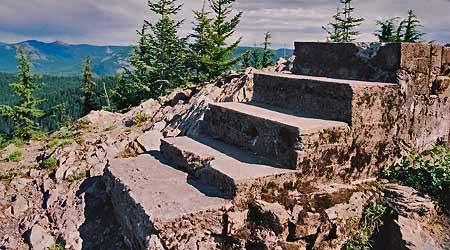
Stairway to the past, these steps once led to the lookout atop Tumala Mountain

Stairway to the past, these steps once led to the lookout atop Tumala Mountain

Today, the old road to the Tumala Mountain lookout site still exists, but serves mainly to deliver motorcycles and OHVs to the fragile mountain summit. The Abbot Road, itself, has become a sad, dangerous shooting gallery overrun by OHVs and target hunters. Tumala Meadows and Lakes are also within reach of the OHVs, despite efforts to keep them out of this remarkable basin.

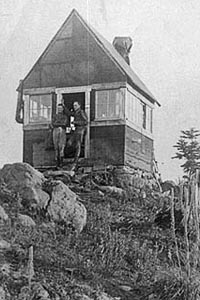
The original lookout on Tumala Mountain, pictured in 1916 (USFS photo)

The original lookout on Tumala Mountain, pictured in 1916 (USFS photo)

So the name change is a starting point, but the work here is unfinished. At Tumala Mountain, the solution is simple: the area must be managed for activities that build on the natural and cultural legacy, and help preserve the traces that still remain.

The first step in making this transition is to remove the shooters and OHVers from the area. Until they are gone, hikers, picnickers, cyclists and equestrians are unlikely to feel safe visiting the area, and the area will continue to suffer the abuse that is so evident today.

A message from the builders of the old lookout awaits hikers who discover the stairsteps that still remain

A message from the builders of the old lookout awaits hikers who discover the stairsteps that still remain

Unfortunately, the Forest Service is on the path to do just the opposite: the so-called “Mount Hood Travel Plan” currently underway has proposed that this area simply be written off as an OHV playground. This is unacceptable, and another reminder that the USFS agency mission simply does not allow it to behave as a responsible steward for the land.

But beyond the OHV problem, the second part of the puzzle is how to make the area more inviting for quiet recreation? There is no lack of scenery or interesting destination, after all. Indeed, this would most involve simple measures like better road and trail signs and improving lost campgrounds like those at Lookout Springs and Twin Springs — both would be excellent base camps for equestrians or cyclists. With a few improvements and the promise of finally solving the OHV and shooting problems, the area would become a prime outdoor destination.

This unfinished work can start now, by simply weighing in against the foolish, shortsighted OHV plan with the Forest Service. This would at least stop the bleeding.

But in the longer term, the unfinished work at Tamala — “tomorrow” — Mountain would be better managed by the National Park Service. Tumala is yet another reminder that the Forest Service cannot be trusted to protect and celebrate the natural and cultural legacy of Mount Hood.

Tamanawas Falls

Autumn colors on a foggy day in the huge amphitheater that surrounds Tamanawas Falls

Autumn in the huge amphitheater that holds Tamanawas Falls

For many years, the rustic path along Cold Spring Creek to Tamanawas Falls was a well-kept secret, but today the short trail to this 150-foot falls has become a popular hiking destination. Floods and a massive rock slide rearranged the trail at times in recent years, but the route has since been repaired, and is no less scenic for ravages of Mother Nature. The easy hike to the falls is described in the Portland Hikers Field Guide.

Cold Spring Creek is unique in that it drains a rather large portion of Mount Hood’s eastern slope, yet runs clear year-round because it carries no glacial outflow. The headwaters are formed by the sprawling Elk Meadows and the high, tundra-like slopes of Cooper Spur. A classic overnight backpacking trip (or long day hike) is the 15-mile loop along the Cold Spring Creek trail to Elk Meadows and return via Bluegrass Ridge.

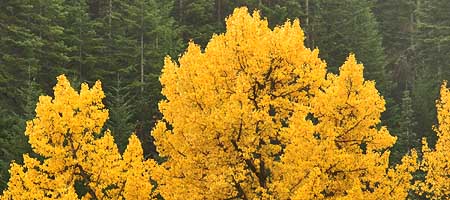
Brilliant cottonwoods light up the trail to Tamanawas Falls in late October

Brilliant cottonwoods light up the trail to Tamanawas Falls in late October

One of the subtle attractions of the trail is the mix of eastside and westside flora — you’ll find eastside species like Western larch, Ponderosa pine, Douglas maple and quaking aspen flanked by more western species like Western redcedar, white pine and Douglas fir. There are also a surprising number of wildflowers in display in early summer, and in autumn the trail is lined with brilliant cottonwoods and vine maple.

A close-up view reveals the huge cavern behind Tamanawas Falls

A close-up view reveals the huge cavern behind Tamanawas Falls

But the main attraction on this hike is Tamanawas Falls, a thundering spectacle during early summer snow melt, and more graceful curtain later in the season. “Tamanawas” is the Chinook jargon word for “friendly or guardian spirit”, and the current spelling was corrected by the Oregon Board of Geographic Names in 1971. With its broad, symmetrical shape, the falls is more in the form of a Gorge waterfall, since it flows in a perfect curtain over what appears to a layer of basalt. But the rock here is andesite, a more recent material that has erupted from the vents that formed Mount Hood and many of the smaller peaks in the area.

The massive rock fall just downstream from the falls provides a unique glimpse into the formation of the canyon, and how actively the creek continues to change the landscape. In this section, the re-routed trail climbs through truck-sized boulders that dropped from the cliffs rimming the canyon just a few years ago. A destroyed footbridge from the old trail can be seen in the creek, far below.

Adventurous hikers will not want to stop where the spur trail to the falls abruptly ends at a viewpoint. With a bit of careful scrambling, even better views of the falls can be had from the stream, just beyond the trail, and with a bit more scrambling, hikers can even make their way into the huge cavern behind the falls. The view from behind the water is especially awesome, though too rough to reach for younger children and less experienced hikers.

Boundary Clear Cut – Part Two

The Boundary clear cut consumed this tiny lake. The trees behind mark the wilderness boundary as it rides over the ridges

The Boundary clear cut consumed this tiny lake. The trees behind mark the wilderness boundary as it rides over the ridges

The first part of this article focused on the Forest Service failures that allowed the massive Boundary clear cut to happen on Mount Hood’s northwest shoulder. Now, a look at more of the fallout from the massive clear cut, and opportunities for restoring the area in the future.

First, some numbers. Using a conservative estimate of 100 trees per acre, the 800 acre Boundary complex contained at least 80,000 mature trees, mostly noble fir. Using the Forest Service’s Center for Urban Forest Research models (2002), a conservative estimate for storm water interception of each tree is at least 1,100 gallons per year, or some 88 million gallons of runoff from the Boundary clear cut area, alone. How much additional runoff is that? Enough to nearly fill the 33-story KOIN tower in downtown Portland.

The twin to the logged-over lake, pictured above, this peaceful tarn is located just two hundred yards away, safely inside the wilderness boundary

The twin to the logged-over lake, pictured above, this peaceful tarn is located just two hundred yards away, safely inside the wilderness boundary

Without the forest canopy, the bulk of the rain that falls upon these mountain slopes now runs off, eroding the thin soils, carrying mud and sediments to nearby streams and resulting spikes in stream flows that damage riparian areas and fish habitat. This effect is repeated, of course, across the thousands of clear cuts in the Mount Hood National Forest.

For the Boundary clear cut, the runoff impact is on the heavily logged West Fork Hood River drainage, which is already struggling to recover from the first wave of logging at the turn of the 20th Century (see “Just 75 years” article).

Like other clear cuts, the Boundary cut also triggered edge effects on the uncut forests bordering the timber sale. Because the Boundary clear cut is high elevation, and nearly crests Vista Ridge, these were impacts that timber planners surely could have expected. Yet the timber sale spread close enough to the historic Vista Ridge trail that blowdown triggered by the cut still fall across the trail with regulatory, and unnecessarily. Sadly, this was preventable.

These trees along the Vista Ridge Trail are victims of the Boundary clear cut, having been exposed to high winds by the removal of adjacent forests.

These trees along the Vista Ridge Trail are victims of the Boundary clear cut, having been exposed to high winds by the removal of adjacent forests.

What to do next? For the cut forests of the Boundary complex, the main treatments are road decommissioning and thinning operations in 15-20 years, when the plantations of young trees are likely to become a crowded monoculture.

Just beyond the edge of the Boundary cut, this lofty outcrop provides a stunning view

Just beyond the edge of the Boundary cut, this lofty outcrop provides a stunning view

But from a broader perspective, what about restoring recreation to the area? The Mount Hood National Park campaign calls for converting several roads in the area to single-track bike and horse trails, and adding a campground in proximity to these new trails, and the Vista Ridge trailhead.

There are also opportunities to connect the Vista Ridge trail to the Mazama Trailhead, across Ladd Creek. This new route would provide much-needed loop options that would disperse the heavy hiking traffic that Mount Hood experiences in summer, plus access to the little-known lakes and rocky viewpoints that lie just beyond the destruction zone of the Boundary clear cut.

The key in making this transition is restoration through recreation — bringing visitors back to the area with the express purpose of fostering a public sense of stewardship needed to ensure that a Boundary clear cut never happens again.

Boundary Clear Cut – Part One

Looking west across the devastation zone of the Boundary clear cut, where the forest was cut to the wilderness boundary, and across lakes and canyons that stood in the way

Looking west across the devastation zone of the Boundary clear cut, where the forest was cut to the wilderness boundary, and across lakes and canyons that stood in the way

Among the more grotesque of the thousands of clear cuts that sprawl across the Mount Hood National Forest is a nearly 800-acre complex along the west shoulder of Vista Ridge called the Boundary clear cut.

The Boundary cut is remarkable in that it quite literally defines the boundary of the Mount Hood Wilderness for nearly two miles, following an painfully straight line right over the lakes, streams and canyons that stood in its way.

The surgical precision of following such an arbitrary slice across the terrain betrays an astonishing degree of defiance and disregard for the management directive that comes with wilderness designations. The Forest Service planners who sold this timber in the late 1980s and early 90s were clearly carving off whatever could be rationalized under the narrowest interpretation of environmental law — if this was a lawful timber sale, at all. After all, how could cutting a pristine forest to the edge of wilderness have anything but a harmful effect on the adjacent wilderness value?

This GoogleEarth rendering shows the appalling proximity of the Boundary clear cut to Mount Hood's most pristine backcountry

This GoogleEarth rendering shows the appalling proximity of the Boundary clear cut to Mount Hood's most pristine backcountry

The price of this recklessness is substantial. The impact to the forest and watershed are the subject of this two-part article. This part focuses on the broken mindset that led to the devastation, and how it illustrates a fundamental flaw in the U.S. Forest Service mission: that this agency is simultaneously tasked with both protecting and exploiting the resources under its management.

The first flaw in agency mindset that led to this environmental tragedy is the notion that high-elevations forest can be farmed like so many rows of corn. At an elevation of 4,800 feet, the forest here consists almost entirely of slow-growing noble fir. In this zone, “sustainable” logging becomes tree mining, as it will be decades before these forests recover, and centuries before they regain their former stature as a mature ecosystem.

Noble fir are slow growing giants of our high-elevation forests; this fallen noble measures just over a foot in diameter, yet is more than 170 years old

Noble fir are slow growing giants of our high-elevation forests; this fallen noble measures just over a foot in diameter, yet is more than 170 years old

Consider the fallen noble fir pictured at left, found on a nearby hiking trail. Though measuring just over a foot in diameter, this tree is 170 years old. This should come as no surprise, given that nobles live in a zone that sees a winter snowpack of 6-12 feet in winter, and as few as four or five months when snow doesn’t cover the ground.

The second flaw in the Forest Service mindset is the notion that clear cuts and the associated network of logging roads are sustainable by any measure. Neither are, and only now has the agency begun to acknowledge this fundamental reality — more than three decades after the scientific community had debunked both practices as part of sound forest management.

Today, the tangle of deteriorating roads in the Boundary clearcut are gradually being decommissioned at taxpayer expense, to prevent further degradation of water supplies and fish habitat, and to discourage lawless behavior from off-highway thrill-riders.

The third flaw in Forest Service thinking that allowed the Boundary clear cut to happen is the assumption that timber harvest trumps all, and that steering the public away from logging operations somehow mitigates the lost recreational and scenic resources. Indeed, most trails that once threaded through the surrounding Vista Ridge area were dropped from Mount Hood National Forest maps in the 1950s and 60s, in preparation for the coming storm of industrial logging.

We now know that the logging heyday on our Forest Service lands was heavily subsidized by taxpayers, so the sight of piles of rotting logs left scattered across the Boundary clear cut only underscores the reckless, wasteful manner in which our forests were plundered

We now know that the logging heyday on our Forest Service lands was heavily subsidized by taxpayers, so the sight of piles of rotting logs left scattered across the Boundary clear cut only underscores the reckless, wasteful manner in which our forests were plundered

Sadly, this area held some of the most scenic spots found on the mountain, but the value of saw timber here trumped recreation in the Forest Service math, as was the case in much of the Mount Hood National Forest. The good news is that volunteers have recently re-opened one such trail on Vista Ridge (see the Portland Hikers Field Guide trip to Owl Point) There are also opportunities to reconnect some of the old, lost routes destroyed by logging by simply ducking inside the wilderness boundary, where the forests are still pristine and scenic.

It’s tempting to believe that the U.S. Forest Service can be reformed, and actually carry forward the restoration work needed to undo the damage that we see in places like the Boundary Clear Cut. This has been the agency message in recent years, and many well-meaning employees within the agency are working to change its course.

But the reality is that the Forest Service mission forever exposes the agency to the same political and economic winds that left us with the current logging aftermath. Only by moving Mount Hood’s battered lands into National Park Service stewardship can true restoration — and future protection from similar abuses — be truly guaranteed.

Just 75 Years

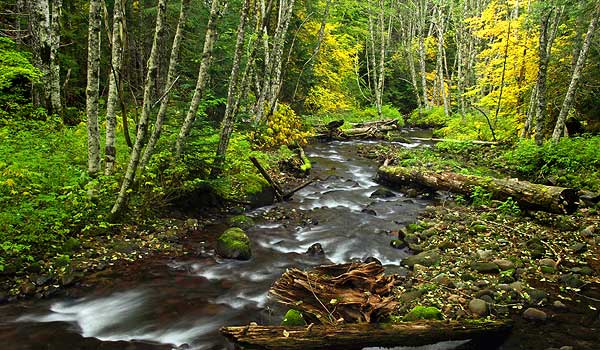
Autumn unfolds along McGee Creek, in the upper West Fork Hood River valley

Autumn unfolds along McGee Creek, in the upper West Fork valley

This scene in the headwaters of the West Fork of the Hood River was captured a few weeks ago, as early autumn colors began to sweep through the forest. This particular stream is McGee Creek, one of the larger tributaries that feeds the West Fork. Most hikers know McGee Creek from its alpine origins, where it tumbles from the wildflower meadows that sprawl below popular McNeil Point. But the creek soon enters lush forest on its way to joining the West Fork.

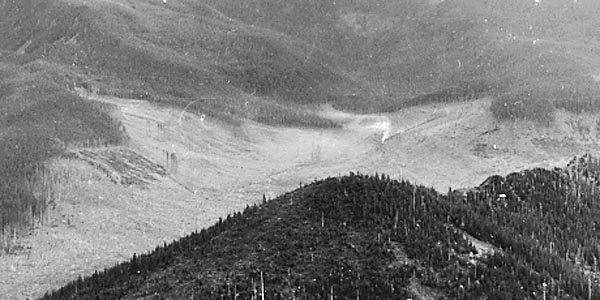
The surprise is that none of this existed just 75 years ago, when massive railroad logging operations had leveled the virgin forests of the West Fork. Look closely at the following image, captured in 1933 from high above the West Fork valley; the methodical clearing of the forests on the valley floor is nearly complete, and the steam plume from a log train headed back to the old mill town of Dee can also be seen:

By 1933, railroad logging had nearly cleared the West Fork valley

The steam engine in this old photo is at roughly the same spot as the autumn scene in the upper photo, illustrating the remarkable resilience of our forests. In about the span of an average lifetime — just 75 years — the forest along this stretch of McGee Creek has recovered from complete destruction, largely on its own. This is good news for other areas of Mount Hood and the Gorge that still show the scars of logging and road building. Given time and some modest restoration efforts, even the most damaged ecosystems will recover.

The autumn scene on McGee Creek also holds some lessons for restoration that may not be immediately obvious. The large log lying along the right side of the creek, for example, was carefully placed there by biologists, just a few years ago. This was in recognition that a century of logging has deprived our streams of large woody debris that turns out to be an essential ingredient for healthy fisheries.

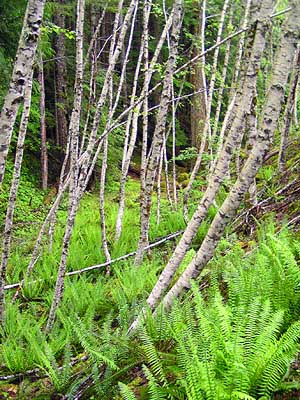
Perhaps most importantly, the white-trunked alders that line McGee Creek show that the forest here is recovering through natural succession. These pioneering trees provide quick cover and their dense root systems help prevent soil erosion.

Red alders are short-lived, adding their fallen debris to the rich duff layer they help build in recovering areas. Amazingly, they actually fix nitrogen in the soil through their roots, enriching it for the big conifers that will follow. Finally, the light canopy they provide allows for a complex understory of plants to develop in tandem with the alder groves, ensuring that forest diversity is re-established during the recovery cycle.

A typical red alder grove pioneering the recovery along an old road

A typical red alder grove pioneering the recovery along an old road

When McGee Creek was logged, the natural recovery that followed was mostly accidental — early timber operations viewed the forests as limitless, and logged areas were mostly ignored once the trees had been cut. The shift to cultivated tree farms didn’t begin until the late 1940s and the era of road-based logging.

In these more recently logged areas, the pioneer, non-commercial hardwoods like red alder were usually killed with herbicides in order to promote the quick growth of commercial timber species, especially Douglas fir. This practice has led to the thickets of crowded fir trees that we see today. These unnatural stands are vulnerable to disease and fire, and have almost no understory to provide for bio-diversity and wildlife habitat.

Sadly, it will take decades to thin these misguided plantations and decommission the failing logging roads that threaten streams and slopes. But though the task of forest recovery and restoration is a tall one, the good news is that the lessons of natural succession from places like McGee Creek have worked their way into forest management. Our scientists are now learning to work with nature, not control it — by letting the red alders grow.

As we continue to turn the page on past practices and begin a new era of restoration for the forests of Mount Hood, we can take some degree of consolation in knowing that a complete recovery is well within our reach. By watching and learning from the forest ecosystem, we now realize that the natural processes that have renewed our forests for millennia must be allowed to follow their ancient course, once again.

Reid Glacier

Soft evening light on Reid Glacier and Illumination Rock

Soft evening light on Reid Glacier and Illumination Rock

Reid Glacier, on Mount Hood’s rugged west flank, is one of the most interesting of the mountain’s 12 glaciers. This tumbling body of ice flows between the towering walls of Yocum Ridge and Hawkins cliffs, with the tall spire of Illumination Rock soaring above its deep crevasses. Oddly, Reid Glacier is the source of the Sandy River, whereas the Sandy Glacier gives birth to the Muddy Fork – some confusion on the part of early cartographers, perhaps? And while the Reid is among the most visible of Hood’s glaciers from Portland, few hikers actually make the long climb to the high meadows of Yocum Ridge for a close-up view of the glacier.

USGS view of the Reid Glacier

USGS view of the Reid Glacier

Reid Glacier is also unique as the only one of Mount Hood’s glaciers that wasn’t named for a local pioneer, or simply given a descriptive name. Instead, this secluded river of ice was named to honor Harry Fielding Reid, the eminent geophysicist who is considered to be the father of modern thinking on faults and tectonic forces.

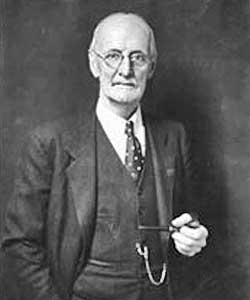
Harry Fielding Reid (1859-1944)

Harry Fielding Reid (1859-1944)

Reid never actually visited the glacier, though he was an avid mountaineer and did study the White River Glacier extensively. The Mazamas honored Reid by naming the glacier for him at a campfire ceremony held on the mountain on July 16, 1901.

Harry Fielding Reid’s research took him around the world, and his groundbreaking work at Glacier Bay in Alaska was recognized by the naming of yet another Reid Glacier for the scientist. The Alaska glacier by the same name is much larger, of course, and is a tidewater glacier flowing into the Reid Inlet in Glacier Bay. Thus, the smaller Reid Glacier on Mount Hood lives in the shadow of its larger sibling in Alaska, with few biographies of Harry Reid making mention of the more diminutive Mount Hood namesake.

Today, the Seismological Society of America awards its top honor, the Harry Field Reid Medal, for outstanding contributions to the fields of seismology and earthquake engineering.

Just Two Dead Trees

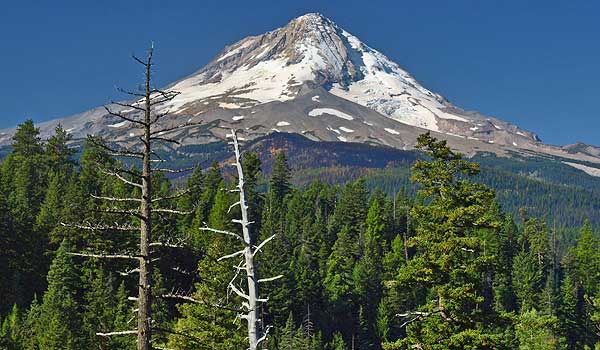
The two snags and Mount Hood in September 2008

The two snags and Mount Hood in September 2008

For many years, I’ve stopped at a favorite vantage point along Dufur Mill Road to photograph the massive east face of Mount Hood, framed by a trio of big ponderosa pines. In the beginning, two were living, and the third was a bleached, dead snag that stood between them. Then another died just a few years ago (the tree on the left in the photo), creating a new snag.

Each year, the two snags in this trio have become more weathered, with the remaining bits bark dropping from the silver wood of the older snag, and a few more branches dropping from the younger skeleton. I watched this evolving scene with interest, but also took for granted. I was thus surprised — and saddened — to discover that these two, old sentinels had been cut down sometime this fall.

They were left simply lying on the ground, in the ravine far below the road, and it’s unclear why they were cut. When I was there, a pair of grizzled men were cutting firewood along the road, a sanctioned activity permitted by the Forest Service. Yet, these two great snags were far enough below the road to represent a real chore to recover as firewood. Indeed, the men were working the uphill side of the road, where logs could simply be rolled down to their truck. More to the point, there is plenty of downed timber for woodcutting in the area, so it was unnecessary to cut any snags, much less these two giants.

But somebody felled them, and this is just one price of the casual culture of tree cutting that reduces every standing tree on U.S. Forest Service land, dead or alive, to a dollar value in board feed of lumber, or cords of firewood or cardboard boxes. What a waste.

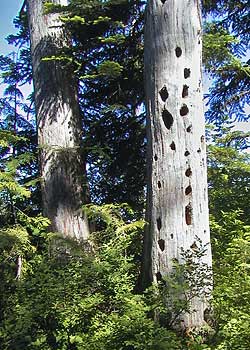
Two more fortunate snags live on as wildlife trees near Lost Lake

Two more fortunate snags live on as wildlife trees near Lost Lake

So this story remains a puzzle to me. I doubt many noticed these two old snags, but they surely added to the scene in ways both aesthetic — they were majestic and photogenic — and functional, since big snags are an important part of a diverse wildlife habitat in our forests. I’d often seen crows, and even a couple of hawks, sitting in these old snags over the years, and there were probably dozens of other creatures that lived in these old skeletons, or relied on them for survival.

They might have lasted for decades as bleached monuments, too. Mount Hood is dotted with century-old snags left from fires that occurred in the early 1900s, after all, since big trees like these have remarkable resistance to the elements as snags. But this pair will only remain standing in my imagination, and I’m thankful that I captured them in a few photographs over the years as a reminder of their beauty and value.