Incident at Starvation Creek

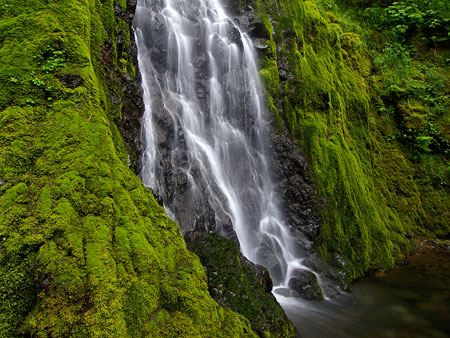
Foggy day at Starvation Creek…

What’s wrong with this photo? Okay, plenty from a photographer’s perspective – starting with the water spot on the lens and a picnic table sticking into the photo. But it turns out the REAL problem that foggy day last December at Starvation Creek Falls was happening BEHIND me. This is the story of how my backpack was stolen by a bold theft ring… and how I got it back! 

__________________

I was standing out in the middle of Starvation Creek on Christmas Eve last month with my camera on a tripod for long exposures. The Gorge streams were running high after weeks of steady rainfall, and I was mostly trying to keep spray off the lens that day. My embarrassingly large, overly stuffed winter backpack was sitting maybe 20 feet above me on the short user trail that follows the east side of the creek in this popular rest stop – just out of earshot. That’s where things went very wrong.

At some point, a woman across the creek on the paved “official” trail was waving to me. The falls and creek were very noisy with all the extra runoff, so I couldn’t hear her at all. I thought she was asking if she was stepping into my photo, so I yelled “no” and gave her a thumbs up. Well, it turns out she was asking if the two “kids” behind me were with me – I didn’t even know they were there! I learned this unfortunate reality a few minutes later when I turned around to discover that my pack had disappeared.
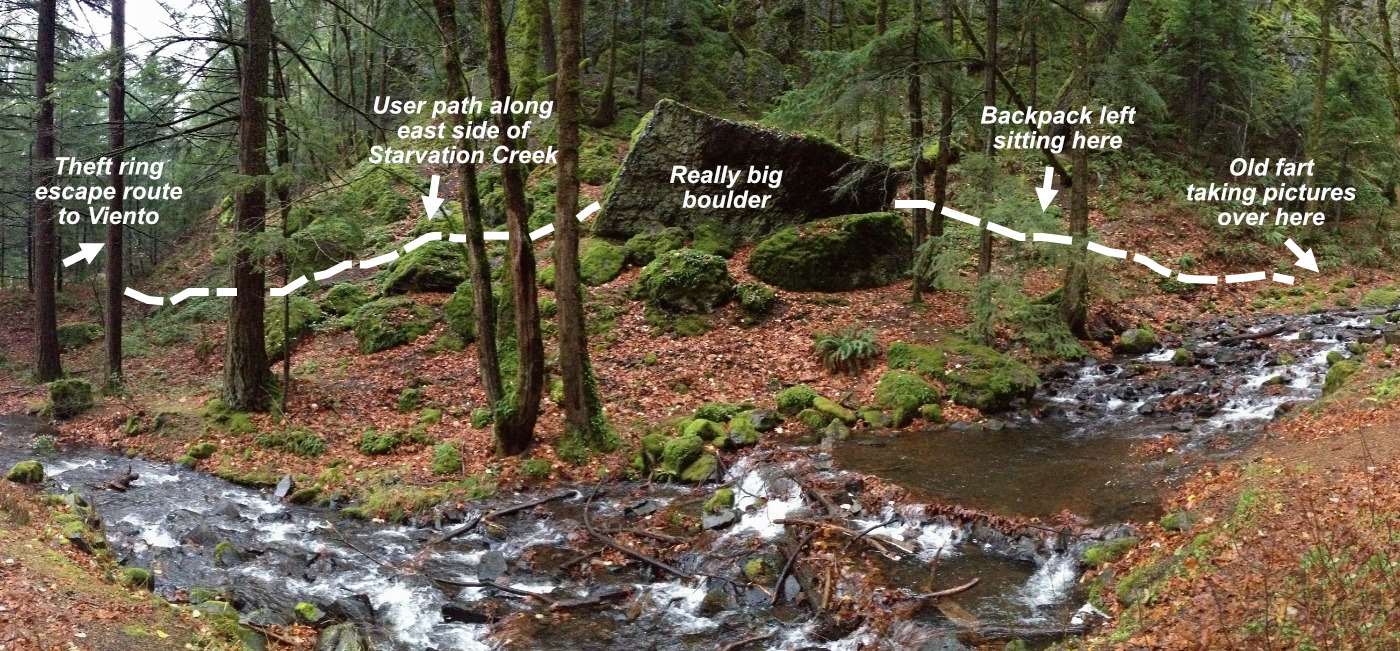
The scene of the pack heist at Starvation Creek…

[click here for a large version]

It was so brazen that at first I was stunned, thinking it must have rolled into the creek, instead. But when it was clear it had been stolen, I realized I might catch up the thieves at the Starvation Creek parking area. 

So, I sprinted back to the trailhead and, once again, met the woman who had called to me from across the creek. This is when I learned what she had been shouting to me about. She was very helpful and able to describe “two teenagers, one with bushy dark hair”. Critically, she also said they had gone east on the paved trail Historic Highway State Trail – away from the Starvation Creek trailhead that was just a few hundred feet away, and toward the next trailhead to the east, at Viento State Park, about one mile away.

Determined to head them off at the pass, I thanked her and jumped in the car, roaring east to Viento State Park. Along the way, I did a mental inventory of all that was in my pack: pretty much EVERYTHING but my camera, tripod and a car key that I always keep in a zipped pants pocket. My phone, wallet, house keys, camera lenses and a bunch of other gear — along with a fairly new winter pack that I loved were all gone. PRIMAL SCREAM MOMENT! (…and boy, did it feel good!)
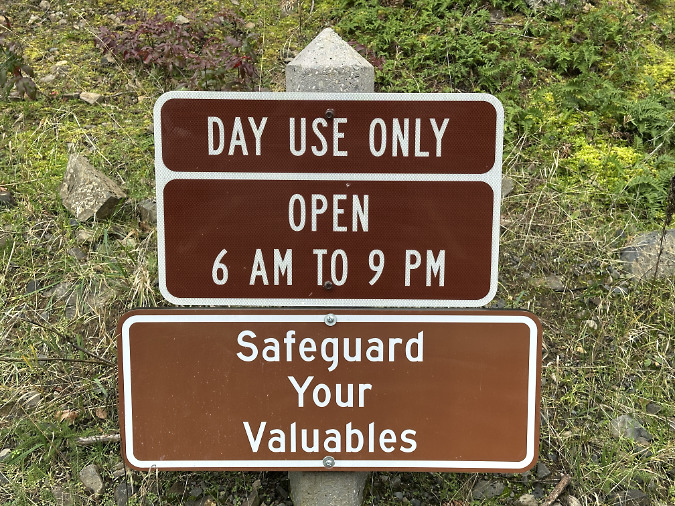
Sign at the Viento trailhead. Safeguard your valuables, indeed..!

Within a couple minutes, I pulled into the Viento trailhead, and — no cars! Weird. But knowing there was no way they could have made it this far on foot so quickly, I then circled under the highway to the north Viento Campground, located on the opposite side, to see if their getaway car was parked there.

As I approached the north campground entrance, an older, black sedan was heading toward me along the main access road. I waved my arm out the window to flag them down to see if they’d seen a couple teenagers with my large grey pack in tow. I could tell the driver wasn’t going to stop for me – frustrating — so I crowded over the center line, partly blocking the road, and held my hand up for him to stop. After all, who doesn’t stop when someone is waving for help?
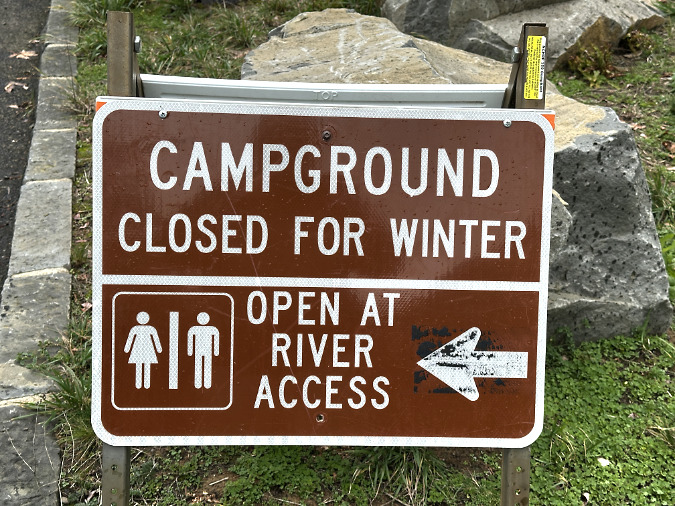
North Viento campground… where I encountered a sketchy dude…

The driver finally stopped, rolled down his window and responded with deadpan “no, I didn’t see any kids.” He was a sketchy guy and his car was trashed inside, so, a few alarms went off in my head. He also clearly just wanted to leave. However, there was no way he could have gotten this far on foot in the amount of time that had elapsed since my pack was snatched, and he was more like 30-something — not remotely a teenager. So, I said “thanks” and circled back to Starvation Creek to see if I could trap the teen thieves on the other end! 

This entailed backtracking five miles west on the freeway to the Wyeth exit, then doubling back four miles east to return to Starvation Creek State Park, which is only accessible eastbound. This turned out to be a VERY roundabout route when attempting to break up a backpack-stealing ring. I thus “may” have exceeded the speed limit slightly en route — and also let of a few more Chewbacca-esque PRIMAL SCREAMS! (…they did seem to help!)
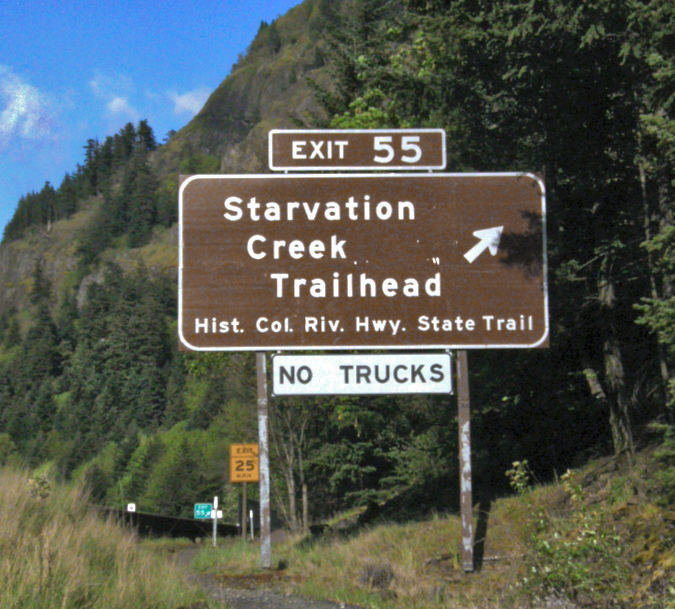
Whew… finally back to Starvation Creek!

Then came the serendipitous part of this saga: when I finally reached the Starvation Creek exit and was pulling in, the SAME SKETCHY DUDE in the black BMW from Viento was leaving! He was pulling out at exactly the moment I pulled in! My window was down, and we locked eyes as we passed each other. He then floored it onto the freeway ramp and I did a Dukes-of-Hazard-esque U-turn in the middle of the entrance road (okay, that’s how it was in my imagination, at least) and sped after him (that part is very true)!
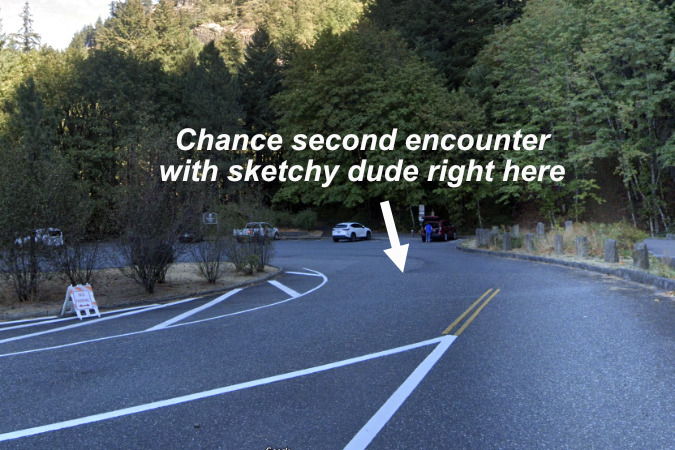
The scene of the chance re-encounter at Starvation Creek

The guy had barely merged onto the freeway when I saw something roll out of his passenger door and onto the shoulder… MY PACK!! I skidded off to grab it, threw it on the passenger seat, and jumped back in the car to resume the chase. I really had no idea what had been taken from it at that point in the saga and I was determined to at least get the license plate number on the getaway car.

Heading east in pursuit, I will admit to autobahn-like speeds, yet I never did catch up with the guy. However, to my great relief, my pack had held together despite being dumped from speeding vehicle, and I had already found my house key and iPhone in the top of my pack. Before dumping it with the pack, the thieves had clearly tried to disable my phone by smashing it against something (the dash of their car?), but didn’t even make dent (…thank you, Apple and polycarbonate screen protectors!). 
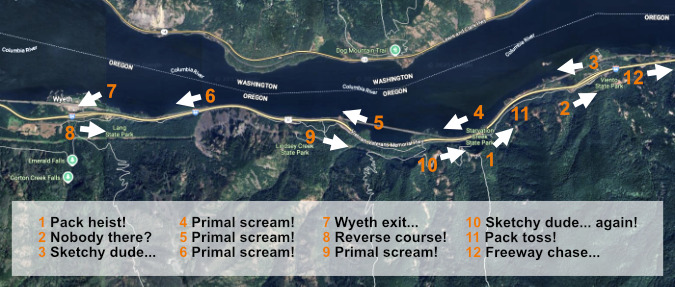
Forensic map of the great pack heist and subsequent perp chase…

[click here for a large version]

When I finally gave up the chase and pulled off the freeway at the west end of Hood River, I was able to do a better inventory. ALL of my camera great was still in there and intact, despite the pack being tossed out of a moving car at freeway speeds, unzipped! Only my wallet was gone, along with a few hundred bucks in cash, my driver ID, a couple blank checks and some credit cards. I can handle that! 

I then spent some quality time on my newly recovered phone with my wife, who was a complete ROCK STAR in getting credit cards frozen while I was still driving home. She was still on the phone trudging through that thankless task when I pulled in later that afternoon. Even better? She had homemade clam chowder in sourdough bread bowls waiting for me! That definitely took the sting out of an otherwise crappy Christmas Eve..!

A reasonable facsimile of my calming, much-appreciated Christmas Eve dinner… (photo: QVC)

On my trip back to Portland I also called the Hood River County Sheriff to report the theft, and this is where it got really interesting. After my initial call, a deputy called me back within 20 minutes to get a more detailed account. I described the sketchy guy in what I remembered to be a black, older BMW with Washington plates. This is also when I described the contents of my wallet and remembered the two blank checks (side note: if you’ve read this far, don’t carry blank checks with you, as that mistake meant racing back to Portland to reach the bank before early closing – it was Christmas Eve, after all – to completely close our checking account and open a new one). 
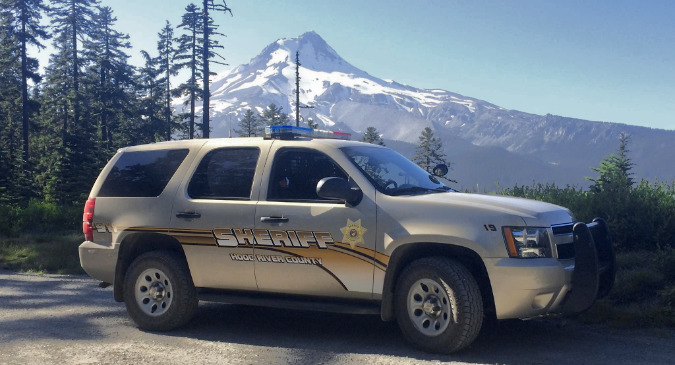
My new heroes! I took this photo of a Hood River County deputy near Bennett Pass several years ago, patrolling the old Bennett Pass Road.

Not long after the phone call, the deputy texted me two suspect photos! One guy was a clear match, with long, greasy black hair, where the other had sort of a buzz cut. I texted the deputy that, to my eye, they were the same guy, but slightly different angles and with radically different hair. Bingo! The deputy replied “I thought you might notice that. Yes, this is the same man. Do you think you could identify the vehicle you saw in a photo?” I replied “HELLLL YESSSSS, DEP-YOO-TEEEEE!!!” (Okay, so really, I just texted “Yes, happy to!”).

That’s where it stands. I’ve since sent documentation from a couple attempts to use the now-useless credit cards to the Hood River County Sherriff, but no word on a car to identify. That said, the mere fact that I talked to an actual police officer and that the ringleader in this theft was already on their radar was all I really needed to hear.

Lessons learned?

Takeaways from this saga? I don’t think this episode changes my practice of keeping my valuables in my pack when I’m on a trail vs. carrying them on me when I traveling to and from a trailhead. The exception on the trail is my car key, which I keep in a zipped pants pocket. Always. I shudder to think how things would have played out had I not had my car key! I also learned the hard way not to carry any checks with me. Nobody uses them much anymore, and they completely expose you if they are stolen along with ID. Lesson learned!

Reunited gear! This camera kit has traveled a lot of miles on my back, great that I was able to recover it!

It was also a pretty weird set of circumstances that day, so I’ve been careful not to overthink any takeaways going forward. I usually keep my pack a few feet away when it’s not on my back – and it’s almost always on my back when I’m hiking. That said, it is kind of creepy that the BMW dude’s accomplices seems to have followed me up that side trail with the intent of stealing my pack. This unfolded within a couple hundred yards of a freeway rest stop at Starvation Creek, so that’s a driving factor compared to being off on some trail, far from thieves and their getaway drivers.

The other twist is that the BMW guy and his accomplices seem to have been using the paved trail linking Starvation Creek State Park to Viento State Park as a getaway route. Now that I know it was the same sketchy dude I had originally questioned at Viento all along, my guess is that after encountering me, he called his accomplices while they were still on their escape route and told them to turn back to Starvation Creek, where he would pick them up. If so, he likely saw ME following him onto the freeway, backtracking the same route he was taking to pick them up! That might explain why they were able to toss the pack so quickly, including the bashed-up phone.
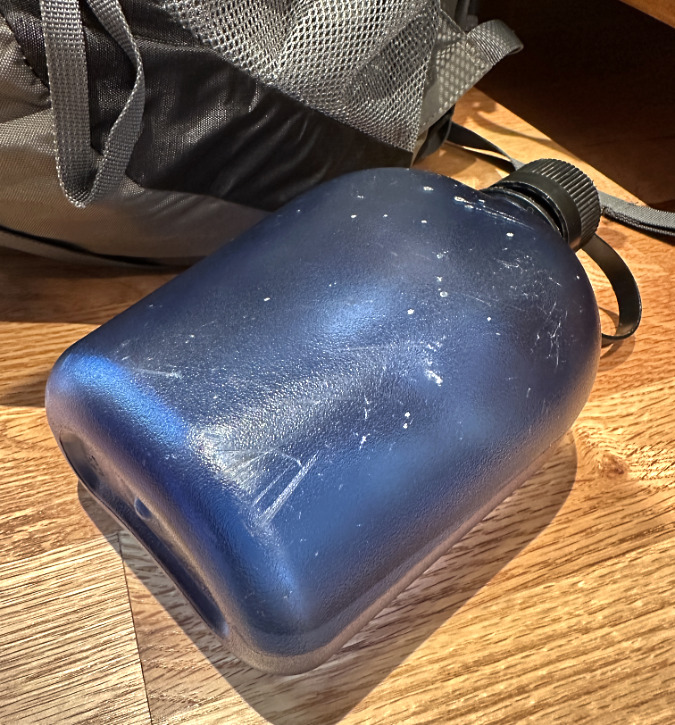
My main lasting souvenir from the episode is this water bottle that took a hard hit when my pack hit pavement on the shoulder of I-84. It survived with a few deep scratches to join me on many more adventures.

If this is all true, another theory I have is that they might have been using that side path along Starvation Creek as simply as a place to dump stolen items looted from cars parked at the rest stop to retrieve later. The side path is rarely used this time of year, and there are some truck-sized boulders with dry “caves” underneath them that could be used for precisely this purpose. 

If this theory proves true, it could explain how they stumbled upon me and my pack, and then realized that I had my back to them and couldn’t hear anything – sort of a chance opportunity compared to the much more common smash-and-grab theft from cars that continues to be a real problem in the Columbia River Gorge.

My original winter pack didn’t fare so well from being tossed from the getaway car, so it has since been honorably retired and replaced with this identical edition. Looking forward to many more adventures with this new friend!

I’ve shared this strange story with friends and family since the event, and chided by a few for taking chase in the way I did – that I was taking great risk in doing so. That’s a personal choice we all make, of course, but I have a good sense of situational safety and my mission wasn’t to confront the thieves, it was to identify them via the plates on their getaway car. The only face-to-face exchange I had was with the ringleader, and at that point I had no idea he was part of the theft, nor did he have reason to suspect that I did. Instead, he simply seemed very nervous and eager to get away both times that I made eye contact, not to engage me. I have no regrets, all things considered.

So, is a pain in the ass to lose your wallet on a supposed Christmas Eve escape to nature? Absolutely. But it could have been much worse, AND I’m also ridiculously, infinitely and disproportionately fortunate in this often very unfair world. Episodes like this only serve drive that point home more profoundly. In the larger picture of what really matters, I will take this bit of Christmas Eve coal and relish it with all that is good in my life. 

Making our Trailheads More Secure?
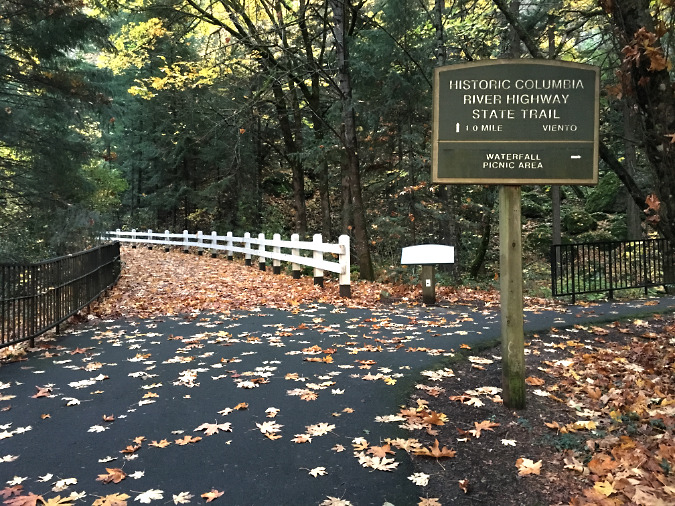
The lovely gateway to the Historic Columbia River Trail at Starvation Creek Falls. Should anyone have to fear being a theft victim by simply stopping here to enjoy this public space?

I’ll end this article with some broader takeaways on the theft problem that continues to plague visitors to the Columbia River Gorge. Yes, there are break-ins on some of the more popular trailheads on Mount Hood and elsewhere, but the Gorge has become notorious for the number of smash-and-grab thefts that occur every year.

Why the Gorge? Part of the answer lies in the sheer number of visitors and proximity to Portland and booming Gorge towns like Hood River. Quick access to I-84 makes it especially easy for smash-and-grab thieves to exit the crime scene and disappear into nearby towns within a few minutes. Over the years, Multnomah County, Hood River County and the Oregon State Police have periodically stepped-up their patrols, but all three law enforcement agencies face budget realities that make it hard to maintain steady patrols at Gorge recreation sites. Break-ins happen in a matter of a minute or two, and there’s really no way that current law enforcement can provide enough presence to deter that.
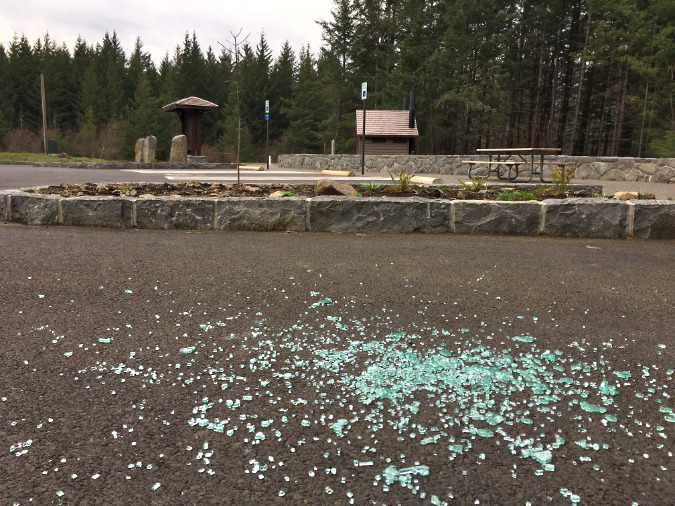
The beautiful new trailhead at Wyeth had barely opened when broken car window glass began to appear in 2020

While it’s true that property crimes are petty and mostly a nuisance, they do have an impact on the tourism economy of the Gorge communities that is concerning. This is especially true for high-dollar visitors from out of state or abroad who come here only to have their travel belongings stolen by local thieves. That’s the kind of experience that makes a return visit less likely, and is also likely to be shared in our modern world of social media and online travel reviews.

One option for expanding traditional law enforcement is a special patrol dedicated to the Gorge and independently funded through a lodging tax within the Gorge cities. Nobody likes raising taxes and policy makers fear even asking the voters the question, but many tourism-based communities have long enacted lodging taxes as a way to provide services that are especially connected to tourism. Perhaps this could fund special units based within the two county Sheriff departments dedicated to the theft problem?

Another approach that hikers have talked about for many years are trailhead cameras. Simply the existence of cameras could have an effect, just as photo radar cameras on our urban roads slow travel speeds and red light-running, whether they’re on or not. Cameras are gradually starting to show up in recreation areas around the country, too, so the idea does seem to be catching on – if only through necessity.
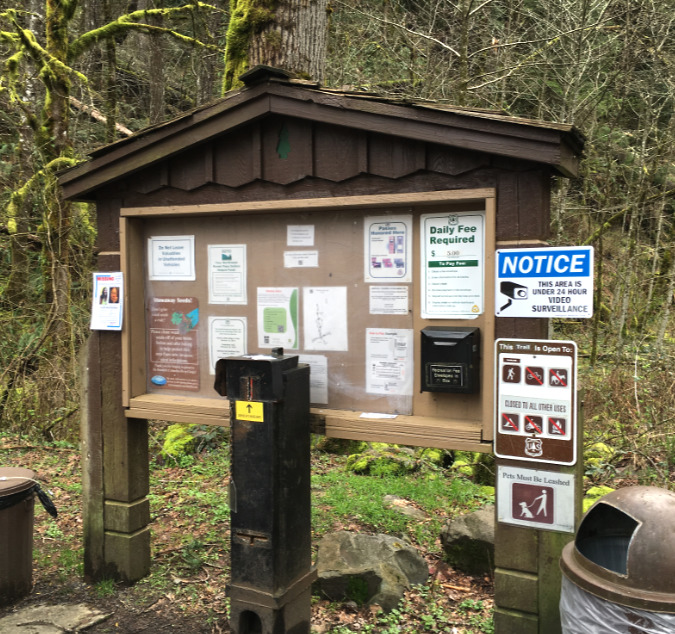
The blue sign on the right appeared at the Wahclella Falls trailhead in 2016,
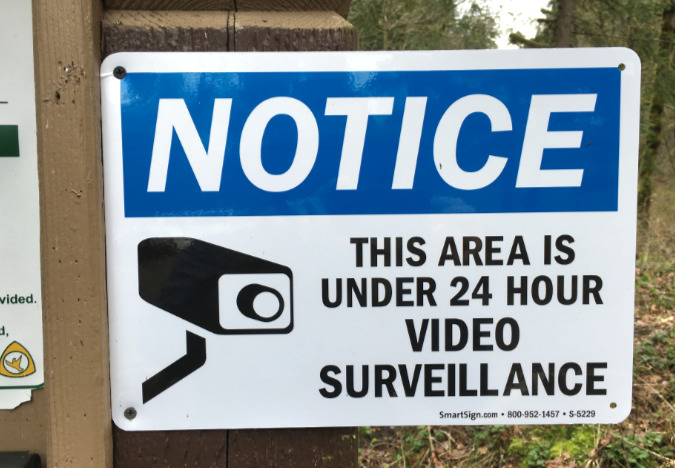
The surveillance (or at least the sign) at Wahclella Falls has since disappeared. It wasn’t there when my own car was broken into at this trailhead in April 2021.

The Forest Service placed the above camera notice at the Wahclella Falls trailhead in 2016, though I don’t know if the signs (or cameras?) have since been maintained. My own car was broken into at this trailhead on a beautiful Sunday morning in April 2021, and the signs (and cameras?) had been pulled at that time. I mostly suffered a smashed window in that incident, as I think the thieves were likely spooked by arriving hikers before they could do much looting. The story might have been quite different on a quiet weekday morning.

The 2016 sign at Wahclella Falls (and any other site) could also have been more effective in deterring thieves had it been posted prominently along the entrance road, and not lost in this blizzard of trail notices that even law-abiding visitors rarely stop to read. I suspect land managers are wary about making these too prominent, as placing surveillance cameras in public spaces of any kind remains controversial, whether for privacy or other concerns. 

I do share the concern that stepped-up policing and surveillance might prevent law-abiding visitors from going to the Gorge, given our current state of fear of law enforcement in this country and an openly racist, vindictive regime in power in Washington. As with all law enforcement, it’s a trade-off, but one that I think ought to be considered in the Gorge, and soon.

Despite the current political environment, I remain optimistic that we’ll figure this out, eventually. The Gorge means too much to us and we have a long tradition in Oregon of finding our own creative path to solutions. In the meantime, carry what you can’t afford to lose with you when you’re in the Gorge… and you might also consider investing in a Trunk Monkey until better solutions to the theft problem are found. 😊

________________

Tom Kloster • February 2025 
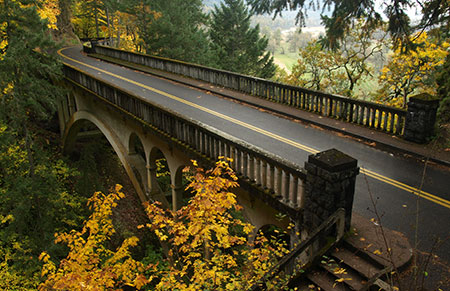
How will the summer of 2015 affect our fall colors?

Shepperd's Dell dressed in autumn golds

Shepperd’s Dell dressed in autumn golds

Oregon may not have the neon rainbow of New England’s fall colors, but we put on a pretty good show if you know where and when to look. However, 2015 will be different, as the extended drought and scorching summer heat has already affected our fall colors this year, even before the leaves began to turn.

To understand why, you have to start with the basics of how leaf colors change with the seasons, and how weather and other factors influence the autumn show each year.

Leaf Biology 101!

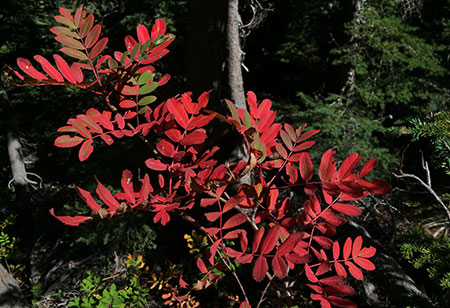
Most of our northwest deciduous trees and shrubs leaf out in spring, grow green leaves through the summer, then turn to various shades of yellow and gold in fall, with a few red leaves in the mix. Vine maple, huckleberry and mountain ash provide our most brilliant reds, and most of the larger deciduous trees in our forests turn to some shade of gold, orange or yellow.

Vine maple colors range from pale yellow (in shade) to bright crimson (in full sun)

Vine maple colors range from pale yellow (in shade) to bright crimson (in full sun)

The green color in summer and spring foliage comes from chlorophyll, the amazing molecule that absorbs sunlight and allows for photosynthesis — the process by which plants convert sunlight into carbohydrates (sugars) essential to their growth.

During the spring and summer growing seasons, chlorophyll is produced continually, keeping deciduous leaves green. But as the days shorten with the approach of winter, the decrease in sunlight triggers a change in how cells in the stem of each leaf divide, gradually blocking the flow of both nutrients and chlorophyll to leaves. The cells that form this barrier within the leaf stem are known as the “abscission layer”.

Like vine maple, mountain ash fall colors range from light yellow to brilliant red, based on sun exposure

Like vine maple, mountain ash fall colors range from light yellow to brilliant red, based on sun exposure

Ready for more leaf biology? Well, the yellows, reds and golds of autumn are colors that already reside in leaves, but are revealed as the change to the flow of chlorophyll is blocked by the development of the abscission layer in early fall.

Yellows and golds in fall leaves come from “xanthophylls”, a pigment thought to regulate light in the photosynthesis process. Reds and purples come from “anthocyanins”, a molecule that is believed to complement the green of cholorophyll in the photosynthesis process — but is more commonly is found in flowers, where it functions to attract pollinators.

Dark, cool and wet…

Okay, enough leaf biology! If deciduous leaves are certain to turn color in autumn by their very chemistry, how do environmental factors fit into the leaf cycle? Here are the key forces that shape the timing and brilliance (or lack thereof) in our autumn color show:

Bright sun and cool temperatures: a crisp, abrupt fall pattern speeds up and pronounces the abscission process by which chlorophyll is blocked from leaves. This helps to promote sudden and dramatic color shows. Likewise, a mild, extended Indian Summer tends to slow the process, with a more gradual color change and leaves changing and falling over a longer period.

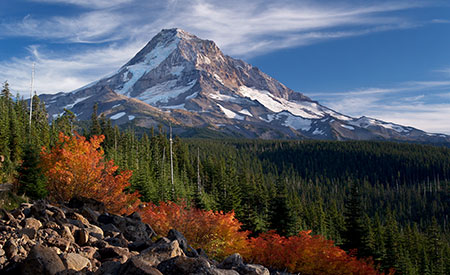
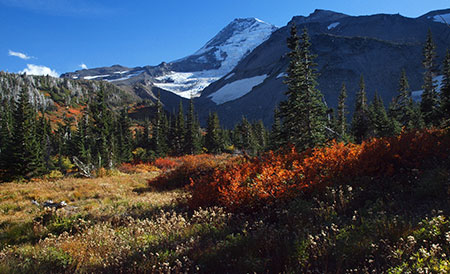
Cool mountain nights and bright, sunny days set these vine maple ablaze on Mount Hood's Vista Ridge

Cool mountain nights and bright, sunny days set these vine maple ablaze on Mount Hood’s Vista Ridge

Bright days and cool nights also enhance reds and purples in plants with abundant anthocyanins in their leaves. These include vine maple, huckleberry and mountain ash, our most vibrant fall foliage. That’s also why these colors are more prominent at higher elevations where bright days cool nights are guaranteed, even as the valleys are under a blanket of fog.

Early frosts: contrary to popular belief, early frosts hurt fall colors more than they help, as the production of anthocyanin-based colors of red and purple are abruptly interrupted by a premature formation of the abscission layer. If you’ve hiked in the mountains in late August after an early cold snap, you’ve undoubtedly seen a carpet of dropped leaves under huckleberries and other deciduous shrubs.

Drought: like early frosts, drought can trigger a premature formation of the abscission layer, leading to early color change and leaf drop. If you’ve been hiking in the Gorge or on Mount Hood this summer, you likely saw this effect of the drought we are experiencing. While some leaves survive later into autumn, the broader effect is a muted show, as many leaves have already dropped long before the typical fall color season. This is has already been the effect of the drought this year in both the Gorge and on Mount Hood.

Early autumn storms: the arrival of a Pineapple Express storm pattern during Labor Day week of 2013 did a fine job of stripping our maples and other deciduous trees of many of their leaves weeks before they would normally turn and begin to lose their foliage. It’s not common for early storms of this magnitude in our region, so it might be the most notorious culprit in stealing our fall colors!

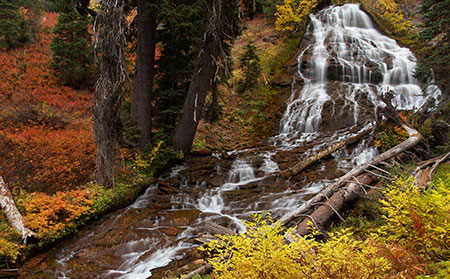
The colors in this view of Umbrella Falls on Mount Hood are mostly huckleberry -- red when in full sun and yellow in shady stream areas

The colors in this view of Umbrella Falls on Mount Hood are mostly huckleberry — red when in full sun and yellow in shady stream areas

In an ideal year, normal rainfall in spring and summer are followed by a cool, dry Indian summer with warm days and cool nights in the 40s or 50s. This year, we’ve got the Indian summer condtions, but the drought has already triggered leaf drop in a lot of our deciduous forests. Thus, we’re likely to have a so-so color display this Fall.

Where and When to Catch the Colors

A muted fall color display this year shouldn’t keep you from heading out to enjoy it! In a typical year, the high country colors peak in September through early October. Mid-elevation areas and canyons usually peak from mid-October through mid-November, depending on the mix of tree species.

Here are some of the best spots in the Mount Hood area to catch the autumn color:

Elk Cove from Vista Ridge – this 9-mile out-and-back hike is one of the best for exploring Mount Hood’s high country without having to ford glacial streams or suffer huge elevation gains (though you will gain substantial elevation). In September of a typical year, fall colors light up the trail, especially as you descend into Elk Cove, but note that the colors are long gone from this hike in our drought year — see the Oregon Hikers Field Guide description

Elk Cove in late September (in a typical year)

Elk Cove in late September (in a typical year)

Clackamas River Trail – another close option for Portlanders, with a moderately long hike to Pup Creek Falls, albeit with moderate elevation gain. This trail is lined with bigleaf maple, but also has impressive vine maple shows in a recovering burn section that bring shades or red and coral to the trail in October. You’ll also see Douglas maple here, a close but less common cousin to vine maple — see the Oregon Hikers Field Guide description

Brilliant vine maple along the Clackamas River Trail

Brilliant vine maple along the Clackamas River Trail

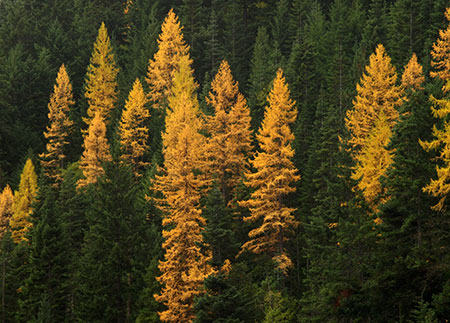
Lookout Mountain Loop – Always a spectacular hike on a clear day, in October you will also see the annual spectacle of western larch turning golden yellow across the eastern slopes of the Cascades. Larch are a deciduous conifer — a rarity, and an impressive sight — see the Oregon Hikers Field Guide description

Whole mountainsides around Lookout Mountain light up with western larch turning in mid-to-late October

Whole mountainsides around Lookout Mountain light up with western larch turning in mid-to-late October

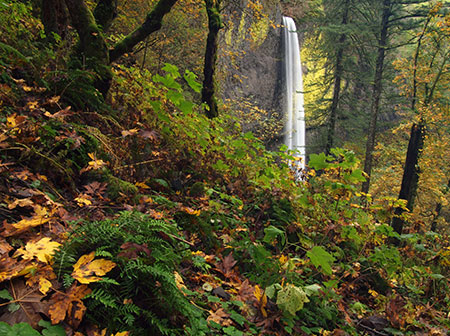
Latourell Falls Loop – Very close to Portland, this is a popular family hike that visits two waterfalls in a lovely rainforest canyon. In late October, bigleaf maple that dominate the forests here light up in shades of yellow and orange, often covering the trail ankle-deep in their huge leaves — see the Oregon Hikers Field Guide description

The Latourell Falls loop trail still has some color in early November

The Latourell Falls loop trail still has some color in early November

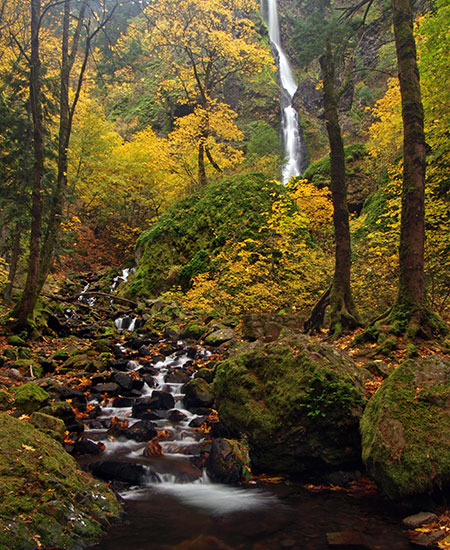
Starvation Creek Loop – like the Latourell loop, Starvation Creek has an abundance of bigleaf maple, but the crisper weather and abundant sun of the eastern Gorge often makes for a brighter show here. Families can simply explore the paved trails around the main falls, but the Lower Starvation hike makes for a fun, if sometimes steep loop past more waterfalls and clifftop viewpoints — see the Oregon Hikers Field Guide description

Bigleaf and vine maple put on a reliable show at Starvation Creek Falls in October

Bigleaf and vine maple put on a reliable show at Starvation Creek Falls in October

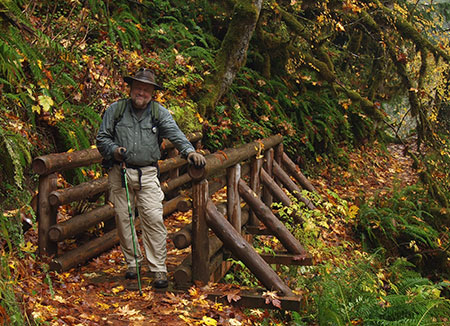
Butte Creek Trail – an under-appreciated family trail that does require navigating some harshly managed corporate timber holdings. The outrageous, utterly unsustainable clear-cutting only makes the pristine public forests and waterfalls along the trail that much more spectacular in comparison. This is an ideal October hike, with fall colors typically peaking in the last half of the month. This trail really shines in rainy or overcast weather, when the rainforest glows with countless autumn shades of yellow, gold and orange against a backdrop of deep green – see the Oregon Hikers Field Guide description

The author ankle-deep in maple leaves on the Butte Creek Trail

The author ankle-deep in maple leaves on the Butte Creek Trail

The great thing about taking in fall colors is that the weather really doesn’t matter — a soggy hike through the brilliant yellows of bigleaf and vine maple in a waterfall canyon is just as spectacular as a sunny day hiking through a sea of red and orange in Mount Hood’s huckleberry fields.

Better yet, if you have kids, it’s also a great time to expose them to hiking and exploring the outdoors… though you should also plan on hauling home a hand-picked collection of autumn leaves..!

Enjoy!

Starvation Creek Loop Hike

Cabin Creek Falls

This blog has featured a series of articles on restoration of the former (and future!) Warren Falls, located in the Starvation Creek area. But there is a lot more to see in this interesting and less-traveled corner of the Columbia River Gorge, and this loop hike explores an amazing variety of scenery on a short, but demanding circuit.

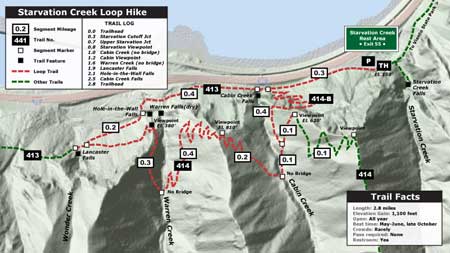
Along this way, you’ll see four waterfalls, one “dormant” waterfall, ford two creeks, visit hanging meadows, peer over the brink of some truly breathtaking cliffs and enjoy expansive views of the Columbia River Gorge. You’ll want to print the large version of the trail map, below, as the trail network in the area is dense, and trail signage unreliable.

[click here for a larger, printable trail map]

The hike is best done from late April through early November, as the conditions can be somewhat treacherous in icy winter conditions, and the stream fords difficult in winter and early spring. But for adventurous hikers, this loop is generally open year-round, and provides a nice hiking option when snow covers the high country.

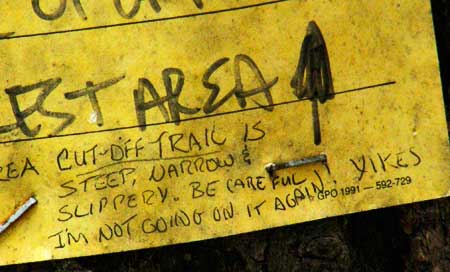
Hiker’s grim warning on a temporary sign at the Starvation Ridge Cutoff Trail..!

Note that the loop described here follows a specific direction, tackling the very steep Starvation Ridge Cutoff Trail first, in the uphill direction. This might seem counter-intuitive, but the steepness of this path is much harder on your knees going down than on your lungs and legs going up — and it can feel a bit slick and sketchy to descend, due to the steepness and exposure.

The Hike

The trail begins at the Starvation Creek Trailhead (directions at the end of this article). Head west from the parking area, walking parallel to the freeway exit, then drop into the trees following a section of the old Columbia River Highway. ODOT will soon be restoring this section of highway as part of a state recreation trail, so watch for construction to begin soon.

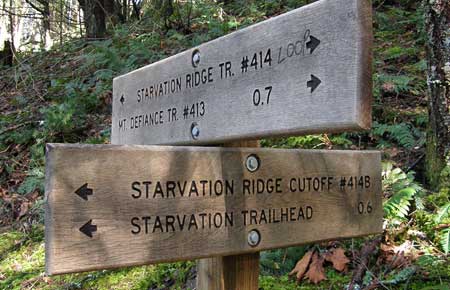
The welcome signpost marking the top of the Starvation Ridge Cutoff Trail

A short distance from the trailhead, you’ll see a signboard on the left marking the Starvation Ridge Cutoff Trail No. 414B (if you reach Cabin Creek Falls, you’ve gone too far). Take a deep breath, and begin the stiff climb up this trail, as it threads its way in a series of switchbacks through the towering cliffs that frame the Starvation Creek area.

Soon, the trail curves into the upper canyon of Cabin Creek, leaving the sounds of the freeway behind, and continuing steeply above the creek into dense forest until you reach the signpost marking the upper junction with the Starvation Ridge Trial No. 414.

The dizzying view of the trailhead from the top of the Cutoff Trail

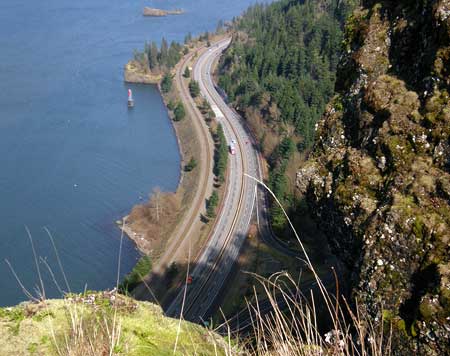
The main loop heads to the right (west), and crosses Cabin Creek. But before you continue in that direction, make a brief detour to the left (east), following the Starvation Ridge Trail uphill for about 200 yards to a spectacular cliff-top viewpoint, a few feet off the trail. From here, you can peer a dizzying 500 vertical feet down to the trailhead and the tiny cars, trucks and freight trains moving below.

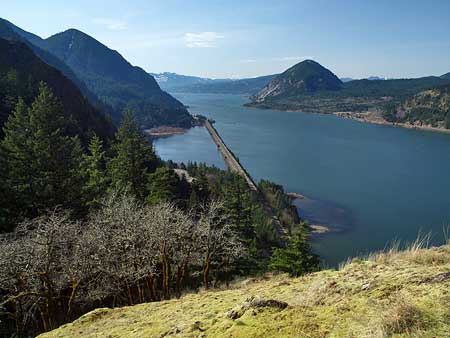
Looking west toward Shellrock Mountain and Wind Mountain from the Cabin Creek viewpoint

After resting your legs (and lungs) from the Starvation Cutoff trail, and enjoying the sweeping view from the overlook, retrace your steps back to the junction, and continue west on Trail 414, fording Cabin Creek. From here, the route climbs from the Cabin Creek canyon in a series of short, well-graded switchbacks, and passes another towering cliff-top viewpoint on the right.

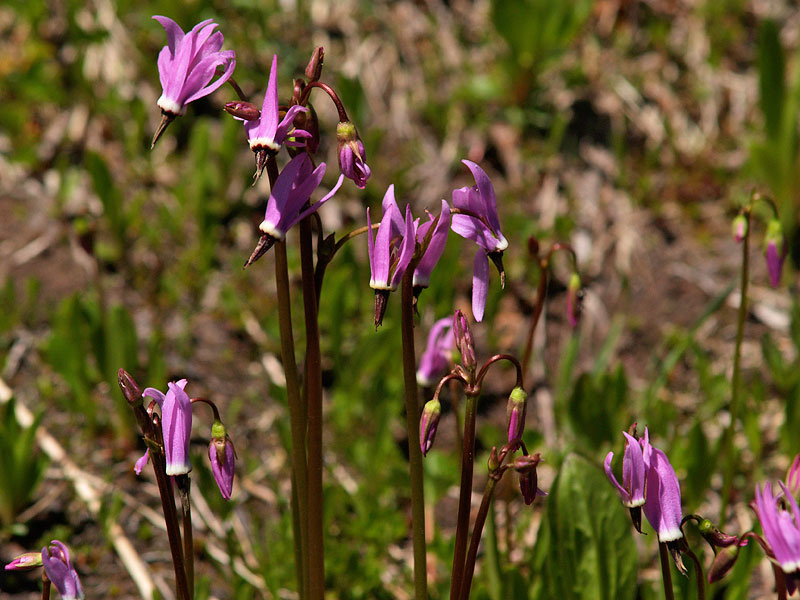
The trail soon crests a divide marked by a 1930s-vintage transmission tower, and descends into Warren Creek canyon in a series of switchbacks traversing an enormous hanging meadow. In late April and May, the meadow features beautiful displays of shooting star and other wildflowers, but offers stunning views any time of year.

Shooting Star in the hanging meadow above Warren Creek

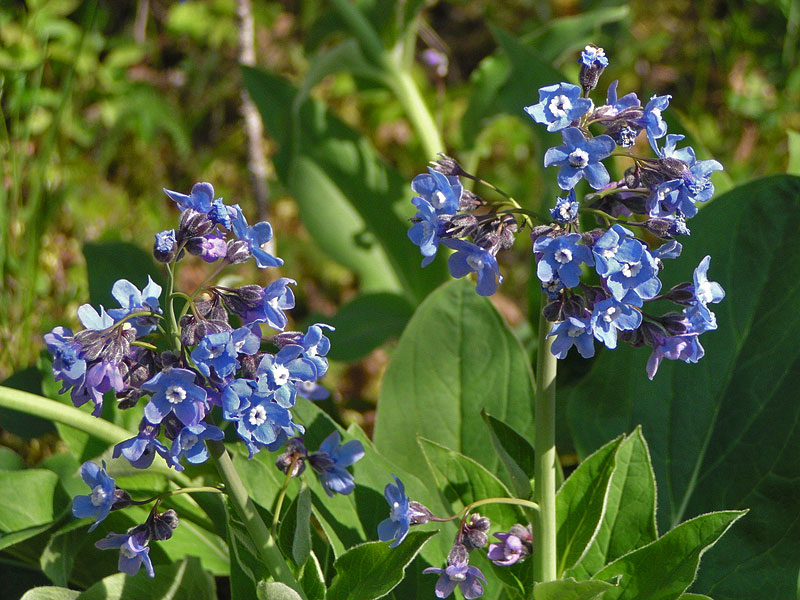
Great Hounds Tongue near Cabin Creek

Soon, the trail re-enters forest, then reaches Warren Creek, a potentially difficult ford in winter and early spring. There’s no bridge here, so cross carefully. Warren Creek is the stream that once flowed over Warren Falls, just downstream from the ford. Since 1939 it has been diverted through an odd bypass tunnel that now forms manmade “Hole-in-the-Wall Falls”. You’ll pass both later on the hike.

From Warren Creek, the trail makes a gentle traverse along the forested canyon wall, then turns and crests another ridge below a second transmission tower, before descending across another open area with terrific views of the Columbia River Gorge.

The trail passes this mossy, cliff-top rock garden near Warren Creek

The view west from the Warren Creek viewpoint

The trail now descends to a 3-way junction of the Starvation Ridge (No. 414) and Mount Defiance (No. 413) trails, poorly marked with a very old signpost. From here, the loop hike continues to the right, turning steeply downhill. But first, go straight 200 yards to beautiful Lancaster Falls on Wonder Creek. This magnificent waterfall is named for Samuel Lancaster, the visionary engineer who designed the Historic Columbia River Highway.

Lower, trailside tier of Lancaster Falls

The best trailside view of Lancaster Falls is from the west bank, so be sure to rock-hop your way across. From there, you can also see part of the tall, lacy main tier of this beautiful waterfall (if you’re feeling really adventurous, it’s possible to scramble to a close-up view of the upper tier by heading uphill from the trail, just east of Wonder Creek).

After cooling off at Lancaster Falls, backtrack to the 3-way junction, and rejoin on the Starvation Ridge Trail No. 414, heading left as it descends steeply across an open slope, soon reaching a sturdy, new footbridge over Warren Creek.

Part of the magnificent main tier of Lancaster Trails, located off-trail

You’ll have views of man-made Hole-in-the-Wall Falls from the bridge, but waterfall lovers should take a few minutes to follow the obvious boot path that parallels the dry streambed to the left of the falls.

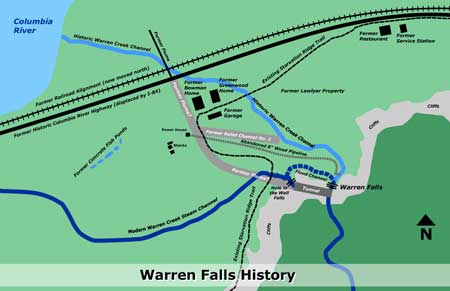
This streambed leads to the original, natural location of Warren Creek Falls — the topic of several articles on this blog. The hauntingly quiet amphitheater of the original falls is eerie, and it’s easy to imagine the sound and spectacle that once existed when Warren Creek poured over this cascade. During the periods of heavy winter runoff, Warren Creek occasionally overtops the diversion tunnel, and briefly flows down its natural falls. If you look closely, you’ll see evidence of winter storm events that have briefly brought the original falls and streambed back to life.

Warren Falls flowing in one of its rare winter appearances in March 2012

After taking in the scene at the former Warren Falls, retrace your steps on the boot path to the footbridge and turn right, continuing along the main trail for your return to the trailhead (note: the restored Historic Columbia River Highway and trail will soon be constructed in this area, with a new trailhead for the Starvation Ridge Trail relocated to this spot).

The route briefly passes an open area, and then re-enters forest. Watch for old, stone foundations covered in ivy in this area — you’re passing turn-of-the-century homesteads lost to time. Sharp-eyed hikers will also spot a pair of enormous anthills, each measuring six feet in height. A bit further, and you’ll also pass dome-shaped stone bake ovens, possibly built in the early 1900s by highway workers (see the map below for help in finding these traces of human history in the Warren Falls area).

[click here for a larger, printable map]

Finally, the trail rejoins the abandoned section of the old highway, following it to lovely Cabin Creek Falls. Photographers should take a moment to walk the short boot path to the base of the falls to capture the exceptionally beautiful scene. Crane your neck upward, and you will see the huge cliffs to the left of the falls that you skirted above on the Starvation Ridge Cutoff Trail!

To complete your journey, continue along the old highway grade back to the trailhead. A great way to end this hike is with a final stop at magnificent Starvation Creek Falls, the star attraction in this part of the Gorge. To reach the falls, head past the restrooms, and take the spur trail on the right. A string of streamside picnic tables make this an idyllic spot to relax after your hike, and enjoy a picnic lunch.

Misty base of Starvation Creek Falls

Hike Logistics

The usual Columbia River Gorge precautions apply on this hike: you’ll find poison oak, ticks and sheer cliffs, so it’s not a great choice for kids. If you’re bringing small kids on this hike, consider just hiking the lower portion to Lancaster Falls, where they will have plenty to enjoy without steep trails or dangerous exposure.

The steepness of the hike makes it a good candidate for cool weather, too. Hiking poles are especially helpful, and dogs should be leashed on this trail.

Getting there

The trailhead is at the Starvation Creek rest area, located at Exit 55 on I-84, about an hour east of Portland. The trailhead has water and restrooms, and no trailhead permit is required. The Starvation Creek exit is eastbound-only, so to return to Portland, you’ll need to drive another mile east to the Viento State Park exit, then follow the signs west to Portland.

For information on the Historic Columbia River Highway restoration project, check out the ODOT website, and click on “ongoing projects” for construction updates:

Historic Columbia River Highway Project

Visit Restore Warren Falls! on Facebook for more information on the project.

Proposal: Mark O. Hatfield Memorial Trail

Senator Mark O. Hatfield campaigning in 1967

One of the legacies of former Oregon Senator Mark O. Hatfield was expansion of the state’s wilderness system in 1978 and 1984, the largest expansion before or since that time. Though Hatfield was harshly criticized by conservationists for also sponsoring pro-logging legislation that led to the destruction of ancient forests, his role in creating new wilderness in Oregon remains a singular achievement that no other senator has yet matched.

To honor the senator, Congress renamed one of these new wilderness areas, the former Columbia Wilderness, as the Mark O. Hatfield Wilderness in 1996. This recognition marked the senator’s retirement from Congress after nearly a half century of public service that included serving as an Oregon legislator, Oregon’s Secretary of State, then Governor, before finally being elected to the U.S. Senate in 1967, where he served for 30 years

Senator Hatfield with wife Antoinette in 2008 (Willamette University)

The recognition also triggered another round of critiques by conservationists over Hatfield’s environmental legacy. But for many, it was also a fitting tribute to the senator who had pushed the Columbia River Gorge Scenic Act through Congress in the 1980s when it would have been easy for the Oregon Republican to simply leave the task to his Democratic counterparts.

Hatfield’s long service, and his independent stance on a number of topics, forced him to break ranks with the Republican Party on a number of progressive issues. These ranged from successfully sponsoring Oregon’s landmark civil rights legislation in 1954 (a full decade ahead of the U.S. Civil Rights Act) to his early opposition to American involvement in the Vietnam conflict, and later, the Gulf War.

His independence and principled “sanctity of life” stance that led him to champion civil rights for minorities and gays, while opposing wars, the death penalty and abortion later earned him his own chapter in Tom Brokaw’s “The Greatest Generation”.

Multnomah Creek along the proposed Hatfield Trail

Though his environmental legacy is a conflicted one, Hatfield’s landmark environmental protections in Oregon still exceed that of his fellow Democrats, who claim the natural constituency of environmentalists, but have seldom acted with such determination and vision.

The Mark O. Hatfield Wilderness originally spanned the most remote high country on the Oregon side of the Columbia River Gorge, but in 2009, President Obama signed a new wilderness bill into law that expanded the Hatfield wilderness significantly. The new boundary stretches the Hatfield Wilderness from Larch Mountain and Multnomah Creek on the west to the steep ridges and canyons of Mount Defiance, on the east.

The Concept

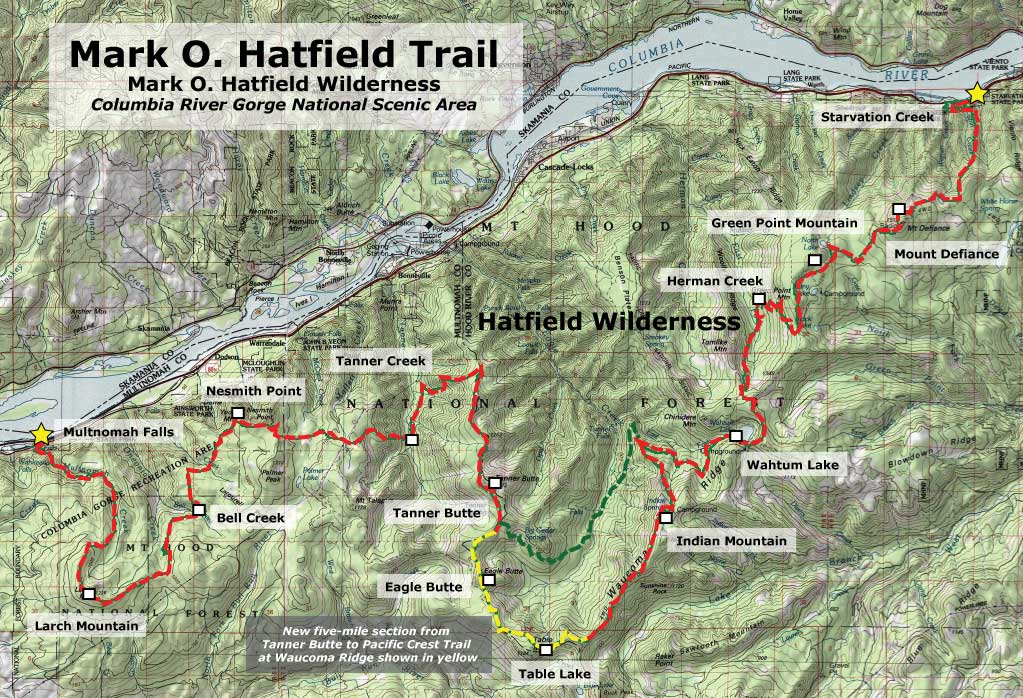
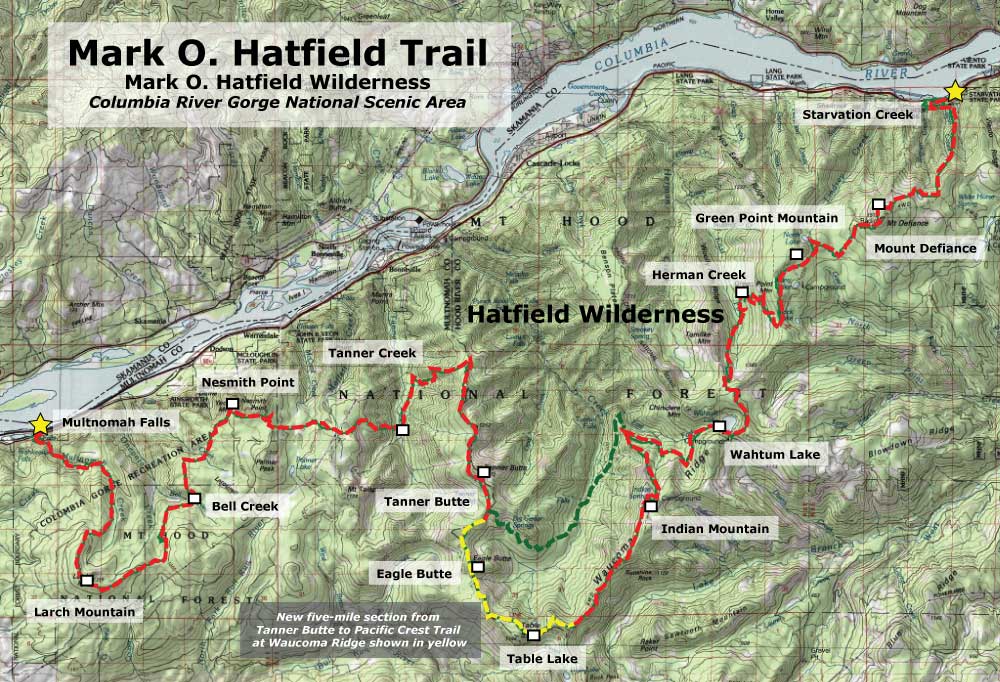
This Mark O. Hatfield Trail proposal is for a 60-mile memorial trail that spans the Hatfield Wilderness, beginning at Multnomah Falls and culminating at Starvation Creek Falls, passing through the most rugged, lonely country to be found in the Columbia River Gorge along the way. This new trail would join classic hikes like the Timberline Trail at Mount Hood and the Wonderland Trail at Mount Rainier as premier backpacking destinations of national prominence.

(click here to view a larger map)

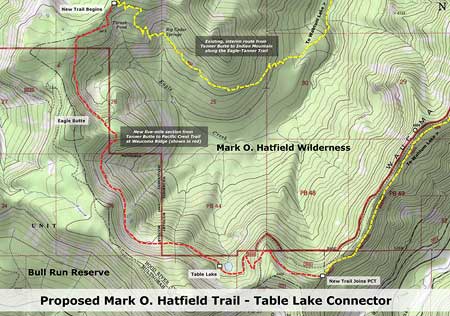
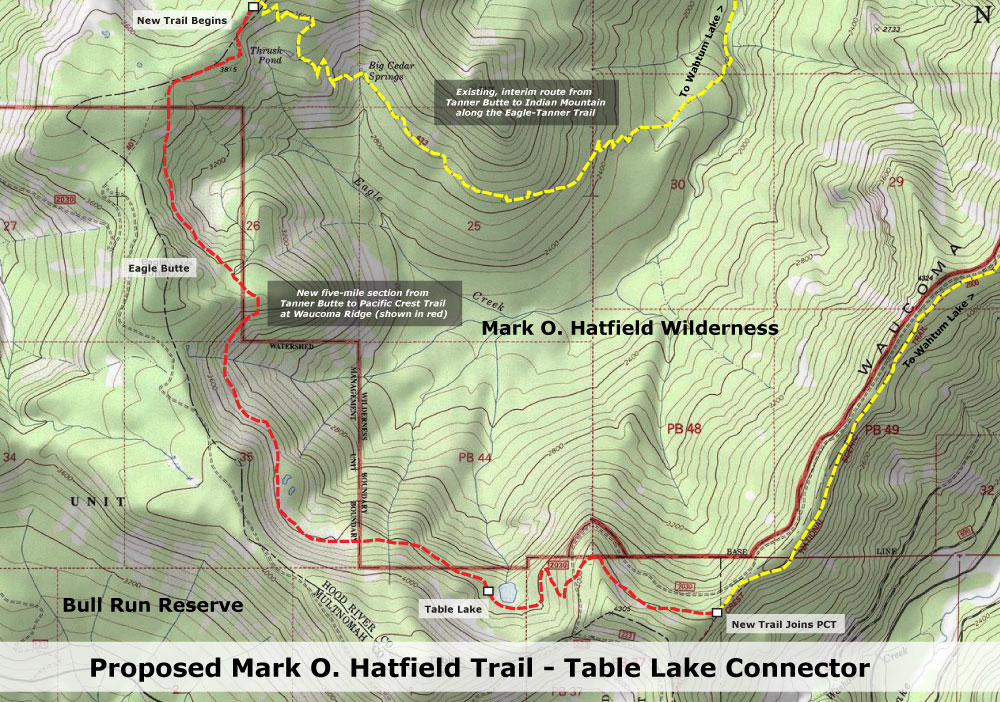
The new trail would largely be assembled from existing routes, but with a notable exception: a new, five-mile segment would curve just inside the Bull Run Reserve, along the headwaters of Eagle Creek. The new segment would bring hikers to little known Eagle Butte and rare views into the Eagle Creek backcountry that few have seen before.

Though this new trail segment would not physically enter the Bull Run watershed, it would nonetheless pass inside the reserve boundary. This would require special approval by the U.S. Forest Service, similar to that given the Pacific Crest Trail, where it crosses along the edge of Bull Run. Simply raising the issue might even challenge the absurd notion that trails and hikers present a risk to the watershed – a separate topic for another column!

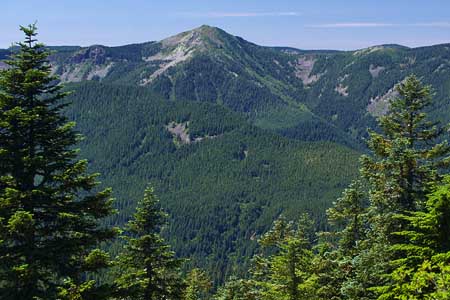
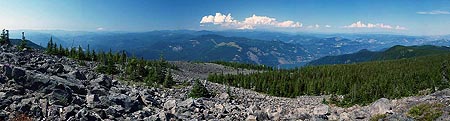
Rugged Tanner Butte in the Hatfield Wilderness

Along the route, there are also many trails that would be “saved” by this proposal – routes that have been badly neglected for decades, but deserve to be maintained. In some spots, short realignments would be needed to improve old or confusing sections. In the area of Starvation Creek, for example, a redesigned trail along the final stretch near I-84 is needed to improve on the current, rather jarring re-entry into civilization.

The Trail

The 60-mile route is designed as a six-day trek, beginning at the Multnomah Falls Lodge, then leaving civilization behind for most of the next six days as the route traverses through the rugged high country of the Hatfield Wilderness.

The following trip log shows the most prominent landmarks along the trail, with proposed camp spots for five nights on the trail. The up-and-down elevation changes inherent to the Hatfield Wilderness terrain will make this a challenging trek for any hiker. Segment and cumulative mileage is shown, along with net elevation gains and losses:

Day 1 to Bell Creek: the 60-mile trek would begin along the very popular Larch Mountain Trail, following Multnomah Creek beyond the reach of the throngs at Multnomah Falls, then climbing to historic Sherrard Point on Larch Mountain, another popular tourist destination. From here, the trail leaves the tourists behind, dropping into ancient forests along Bell Creek and the first campsite at 10.5 miles.

Day 2 to Dublin Lake: this is the most strenuous day along the circuit, covering 12.8 miles as the trail climbs over the shoulder of Nesmith Point, drops into Tanner Creek canyon, then climbs out again to arrive at Dublin Lake. At Nesmith Point, hikers can look down on the Columbia River nearly 4,000 feet below from the highest point on the Gorge rim, and on Van Ahn Rim hikers will get a rare look into the backcountry of the Tanner Creek canyon and into the Bull Run Reserve.

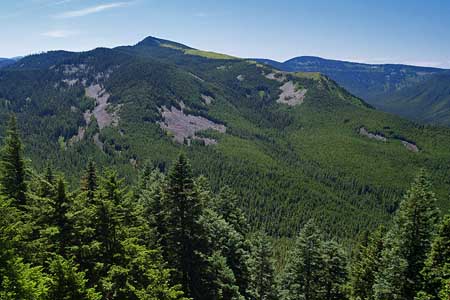
Indian Mountain with Eagle Butte in the distance

Day 3 to Table Lake: the third day of the proposed Hatfield Trail is a less challenging 9-mile hike along the high ridges of the Eagle Creek backcountry, allowing time for the spectacular side trip to Tanner Butte, along the way. The new trail segment begins north of Tanner Butte, and traverses across the rugged talus slopes and mountain tarns of Eagle Butte and Table Mountain, with expansive views into the Eagle Creek canyon, 3,000 feet below. The campsite for this proposed new segment is inside the Bull Run Reserve, at little-known Table Lake. Though the trail is inside the Bull Run boundary, the entirely of the trail is within the upper reaches of the Eagle Creek drainage, and is outside the physical watershed of the Bull Run.

Day 4 to Herman Creek: on the fourth day, the route joins the Pacific Crest Trail and passes high over the shoulder of Indian Mountain, then drops to popular Wahtum Lake. The lake provides a midpoint trailhead access for those looking for a shorter trip, an alternative camping spot or possibly a feed drop for those planning stock trips along the trail. From Wahtum Lake, the trail climbs over Anthill Ridge, then descends past Mud Lake before reaching a campsite at Herman Creek at the 12.6 miles.

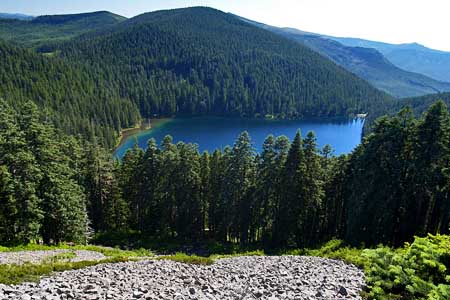
Wahtum Lake from Anthill Ridge along the proposed Hatfield Trail

Day 5 to Warren Lake: this is also a less demanding day, with most of the climbing in the first few miles, as the route climbs out of the Herman Creek canyon, and passes the rocky summit of Green Point Mountain, with expansive views of the surrounding wilderness. From here, the route passes above Rainy, North and Bear lakes before curving around the rocky north face of Mount Defiance, then dropping to beautiful Warren Lake at 9.5 miles.

While the recommended circuit includes a night at Warren Lake to enjoy the exceptionally rugged setting and wilderness scenery, the relatively short, final leg to Starvation Creek will draw many hikers to make this a 5-day trip, and skip the final campsite at Warren Lake. For these hikers, the lake might simply offer the opportunity for a quick swim before heading back to civilization.

Bear Lake and Mount Defiance along the proposed Hatfield Trail

Day 6 to Starvation Creek: the short, 5.6 mile final leg travels steeply down the north slope of Mount Defiance along Starvation Ridge, dropping 3,600 feet in just over five miles. Along the way, the trail passes above dizzying cliff-top viewpoints and shady side-canyon waterfalls before reaching the Columbia River and the end of the trail at Starvation Creek.

The restrooms, telephone, easy highway access and shady, un-crowded streamside picnic sites below lofty Starvation Creek Falls make this an ideal terminus for hikers seeking to relax after their adventure.

The following table summarizes the recommended 6-day hike, with running mileage and daily elevation gains:

What would it take?

Much of the trail network described is exceptional in scenic value, but suffers from years of deferred maintenance and modernization. Since most of the route is already in place, the Mark O. Hatfield trail concept would mostly require a stepped up commitment to maintaining and improving existing routes.

This would include basic maintenance, like brushing out overgrown routes, tread repair and drainage, but would also new signage and log bridges across major streams, consistent with the Wilderness Act . This work could begin immediately, but will require funding, as the route is generally too remote and rugged to depend entirely on volunteer labor.

(Click here for a larger map of the new trail)

Constructing the new 5-mile segment proposed inside the Bull Run Reserve is the boldest element of this proposal, and a tall order for the federal bureaucracy. However, a simple interim plan is to route the new trail along the existing Eagle/Tanner (No. 433) and Indian Spring (No. 435) trails. These trails are shown in yellow on the map, above, and in green on the map showing the entire Hatfield Trail proposal.

This interim route would reduce the total hike distance by about two miles, and add about 1,000 feet of elevation gain. However, the interim option would allow for full implementation the Hatfield Trail concept in the near term, rather than waiting for the bureaucracy to address the watershed issue.

Columbia River from rugged Mount Defiance, near Warren Lake

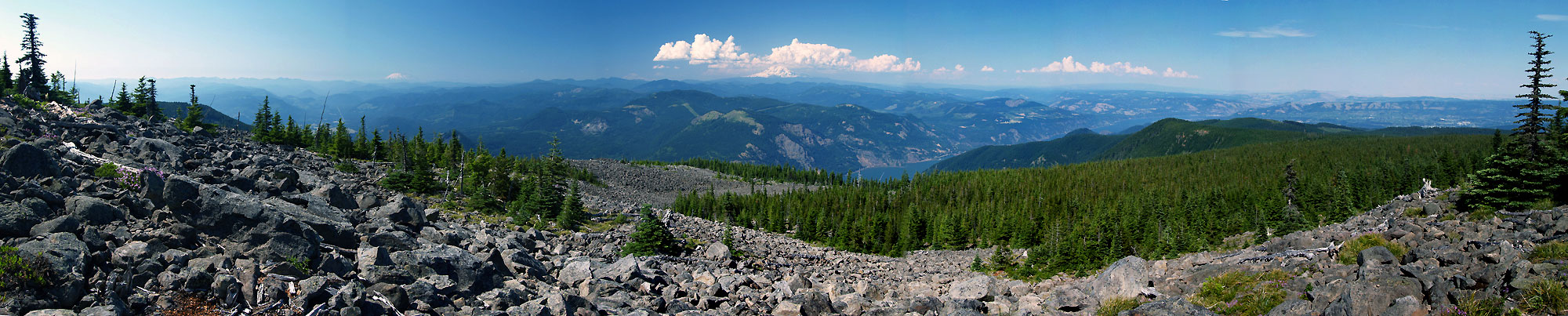
(Click here for a large view of the panorama)

Another possibility for the long term is to finally complete the long-stalled Gorge Trail (No. 400) connection from Wyeth to Starvation Creek. This missing piece is a segment that would curve around the steep face of Shellrock Mountain (the focus of a future WyEast Blog article), creating a 30-mile trail connection from Multnomah Falls to Starvation Creek.

This connection would allow for a loop hike for hardy backpackers looking for a 90-mile backpack. However, because substantial portions of the existing Gorge Trail 400 are exposed to freeway noise and other reminders of civilization, the loop is not included in the Mark O. Hatfield Trail concept.

Why now?

This isn’t a difficult project to realize, and it would pay fitting tribute to begin work on this concept in time for Senator Hatfield to personally see the project begin – possibly even to participate in the ground breaking.

Accomplishing this project would be well-deserved recognition for the heavy lifting he did as our senator to protect the Columbia Gorge and Oregon’s wilderness for generations to come. The better question: why not now?