Oneonta Gorge at 125 years… and an uncertain future?

Oneonta Gorge in the 1890s

Oneonta Gorge has been around since the ice age Missoula Floods shaped much of the modern landscape in the Columbia River Gorge 14,000 years ago.  Yet, in the past 125 years this exquisite work of nature has endured new threats brought on by the explosion of an especially pernicious invasive species: us! 

The past two decades have been especially unkind to Oneonta Gorge, with a massive wave of flip-flop wearing visitors drawn here by the invention of social media, followed by a catastrophic human-caused fire in 2017. This article is a retrospective on how we arrived at this crossroad, and what the future might hold for beautiful Oneonta Gorge.

1900-1940s: Early days at Oneonta…

Railroad tracks had arrived at Oneonta Bluff by the 1880s

First peoples in the Pacific Northwest populated the Columbia River Gorge by the thousands for millennia, and they no doubt knew about and visited places like Oneonta Gorge, just as we do today. But it wasn’t until the transcontinental railroad was connected through the Gorge on the Oregon side in 1882 that white settlement began in earnest. Most of the early focus was on logging the big trees grew on the Gorge slopes and harvesting the seemingly endless salmon runs in the river. 

That changed in the 1890s when a new stream of visitors began to follow the rails into the Gorge. Tourists, mostly from Portland, seeking the scenic wonders at each of the train stops along the way. In fact, some of the earliest parks in the Gorge were originally owned and operated by the City of Portland (including Multnomah Falls) to serve the growing interest.
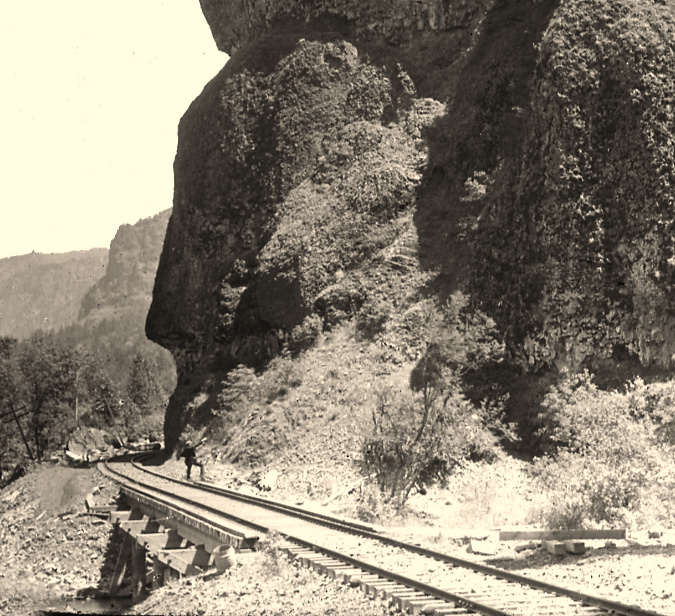
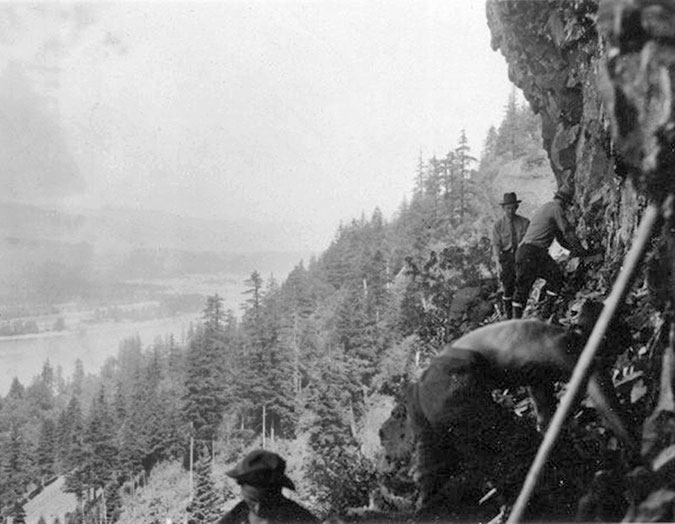
Highway surveyor – possibly Samuel Lancaster, himself –pointing to the site of the future Oneonta Tunnel in the early 1910s

The trickle turned to a tidal wave in the early 1900s, when local entrepreneur Sam Hill and his visionary road designer Samuel Lancaster opened the world-class Columbia River Highway to automobiles. Known today as the Historic Columbia River Highway, the artfully designed new road brought visitors to the Gorge by the thousands by the time it was completed in 1922, with dozens of roadside inns and restaurants springing up to serve the steady stream of motorists.

At Oneonta Gorge, Samuel Lancaster navigated a pinch point where the railroad tracks crowded the base of Oneonta Bluff by blasting a tunnel through the cliff for the new road. From the bridge at the west approach to the new tunnel, visitors also had a stunning view directly into Oneonta Gorge from their automobiles. As with other scenic spots along the road, Lancaster designed a pullout and even engineered a short, winding staircase down to the cool waters of Oneonta Creek that he knew tourists would want to explore.
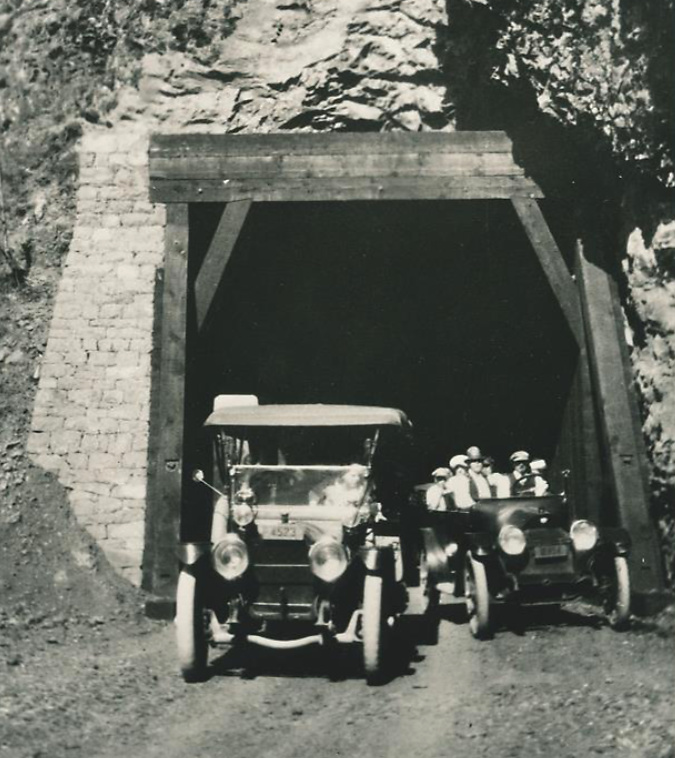
Motorists emerging from the Oneonta Tunnel in the late 1910s
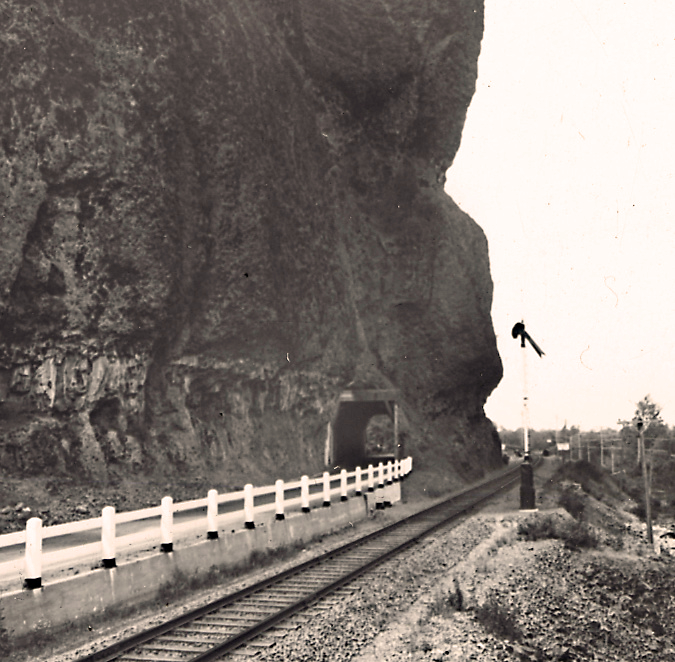
The east portal to the Oneonta Tunnel in the 1920s shows how the new highway was threaded between the vertical walls of Oneonta Bluff and the railroad – the pinch point that required construction of the tunnel

Curiosity inspired more intrepid visitors to wade into Oneonta Gorge, discovering that at the south end of the 1/3 mile long box canyon you are rewarded with a rare view of beautiful Oneonta Falls. Soon, the word was out, kicking off would be become a century of weekend adventurers making their way through the narrow gorge.

Despite its unique beauty and proximity to the new road, Oneonta Gorge was spared commercial development in the early days of motorists flocking to the new highway, when tourist stops dotted the route at many of the popular scenic spots. 

In the 1920s and 30s, most of the forest trails we know today were constructed by the Forest Service and Civilian Conservation Corps (CCC) to bring hikers to the series of waterfalls in the upper canyon of Oneonta Creek. These trails offered  new views into Oneonta Gorge from above, though wading the creek remained the only way to reach Oneonta Falls.
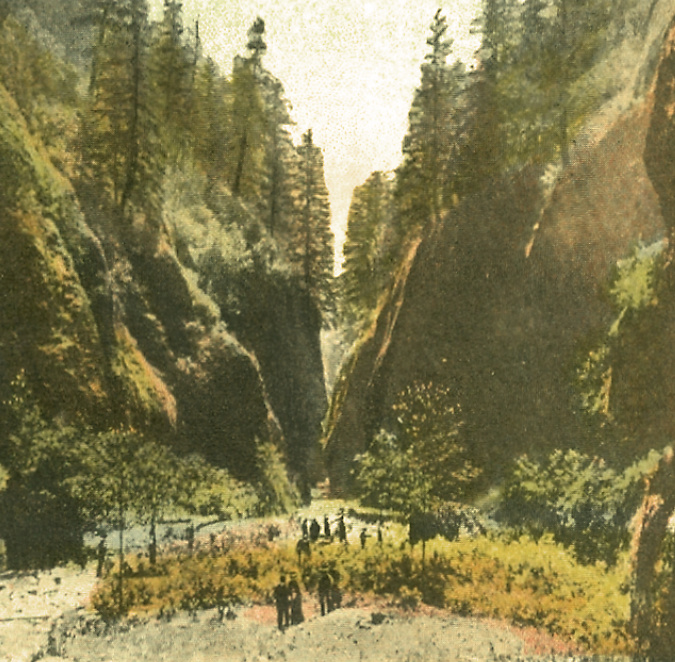
Visitors at Oneonta Gorge in the early 1900s

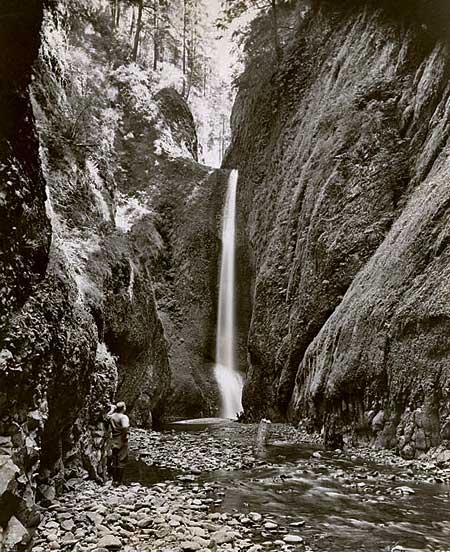
As the popularity of the area grew, the first photos from within Oneonta Gorge and of Oneonta Falls begin to appear in postcards, travel guides and tourist folios from this era. The pair that follow from the 1930s track a hiker (perhaps the photographer?) exploring Oneonta Gorge in late summer, when the water levels are typically low. Well into the 1990s, the trip through Oneonta Gorge was much like this, with just a few knee-deep pools to navigate in reaching the falls.
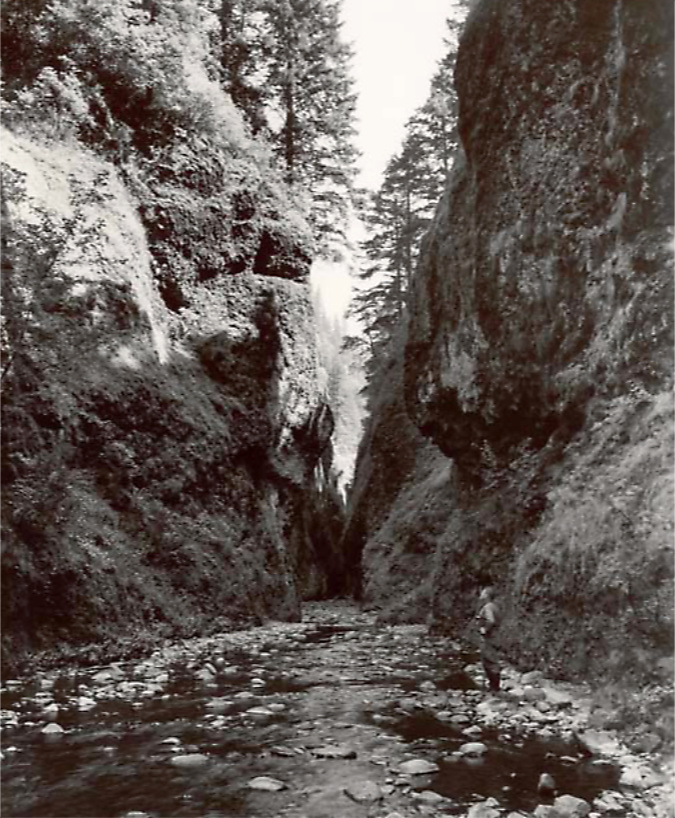
Oneonta Gorge and hiker in the 1930s
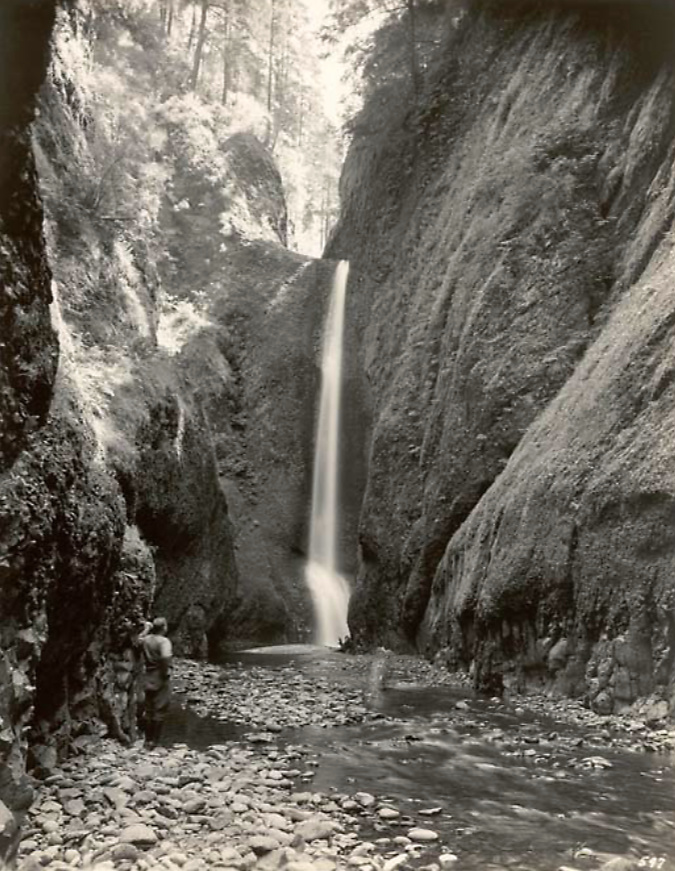
Oneonta Falls and hiker in the 1930s

This postcard view (below) from the 1930s is notable in showing boulders and a large log blocking Oneonta Gorge. From my own experiences there, the route was clear of debris on this scale from the mid-1970s until the rockfall that triggered the modern logjam in the late 1990s.  What happened to the debris in this photo? They were simply broken up and swept away.
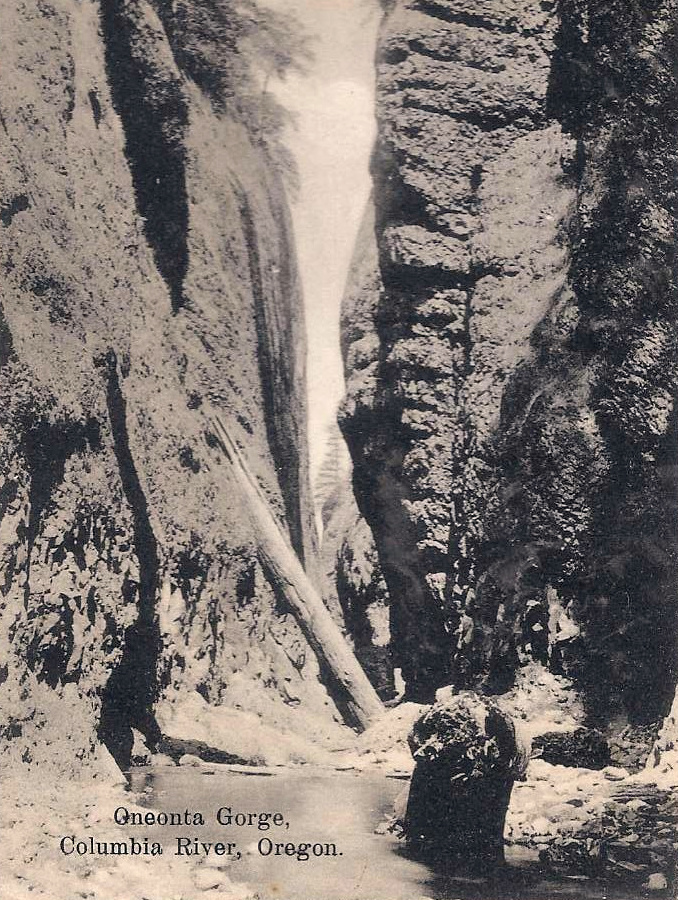
1930s postcard showing boulders and logs in Oneonta Gorge similar to today

Oneonta Gorge was created by a perpetual cycle of erosion, with the stream continually undercutting the vertical basalt walls, then clearing boulders and debris that periodically collapses into the stream. During high runoff events from November through March, Oneonta Creek can become a raging torrent, with enormous hydraulic force that can easily move whole trees and large boulders downstream, eventually breaking them apart into smaller, even more easily transported rock and debris the process (more on that toward the end of this article).

The tunnel at Oneonta Creek was an uncomfortably tight squeeze for passing vehicles from the beginning, so when the railroads moved their tracks away from cliffs of Oneonta Bluff sometime in the early 1940s, ODOT took the opportunity to move the road and bypass the old tunnel.

Oneonta Tunnel in the early 1940s with the relocated railroad line already away from the bluff

The tunnel bypass involved constructing a new bridge over Oneonta Creek (below), immediately adjacent to the old bridge. Both bridges survive today, with the newer bridge serving as the Historic Columbia River Highway route and the original bridge leading pedestrians and cyclists to the restored Oneonta Tunnel. 
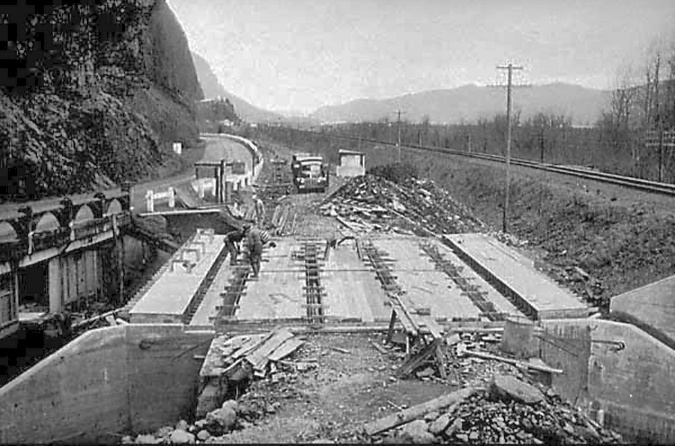
“New” highway bridge bypassing the Oneonta Tunnel under construction in 1948. The original bridge can be seen on the left

The tunnel bypass was completed in 1948 (below), and both ends of the Oneonta Tunnel were blocked with fill to prevent access. The original highway stub over the old bridge was left in place as a wayside for visitors to Oneonta Gorge.
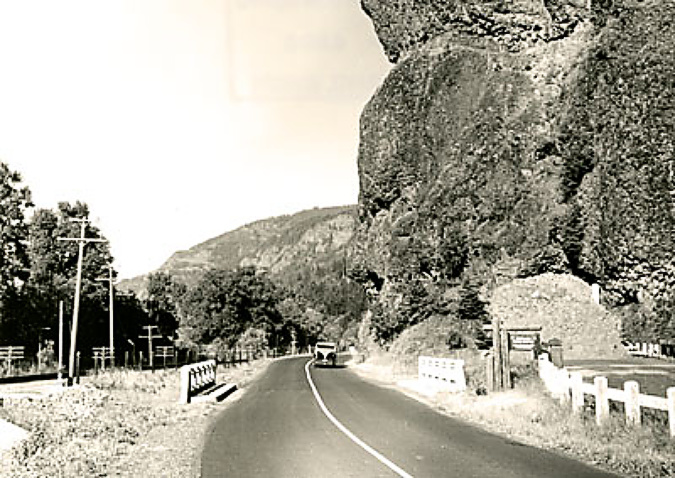
The completed bypass in the early 1950s with the old tunnel blocked with fill

The Oneonta Tunnel bypass in 1948 was part of a larger effort by the Oregon Highway Division to realign the original Columbia River Highway as a river-level route, completely bypassing whole sections, including the famous loops that climb over Crown Point and Rowena Crest. 

Much of this work was completed by the early 1950s, but in 1956 the federal Interstate and Defense Highways Act set construction of today’s Interstate-84 in motion, relegating the original versions of the Columbia River Highway to scenic routes in some areas, and being completely abandoned in others.

That might have been the end of the story for the mothballed Oneonta Tunnel, save for the following provision in the 1986 Columbia River Gorge National Scenic Area legislation:
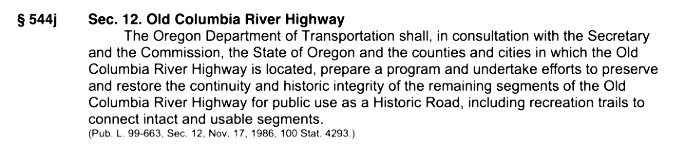
This unique provision was way ahead of its time in our country by recognizing the historic and recreation value of old, “obsolete” roadways. Since then, ODOT has steadily worked toward this bold vision with a string of exceptional restoration projects. As we approach the 40th anniversary of the scenic area legislation, a completely restored and reconnected historic route from Portland to The Dalles is on track to become a reality.

2003-09: Restoring the Oneonta tunnel and bridge
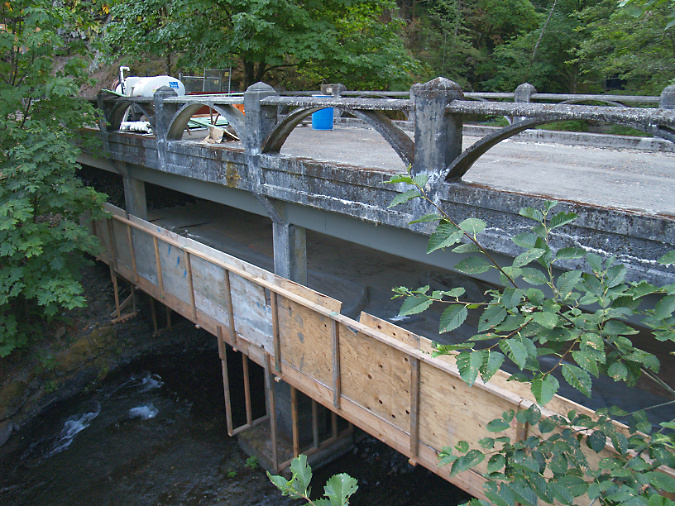
ODOT renovated the original Oneonta Bridge in the 2003

At Oneonta, the historic highway restoration included renovating the original highway bridge (above) and reopening the Samuel Lancaster’s original tunnel (below) after fifty years of closure. The 1948 tunnel bypass allowed for this segment to be reimagined as a pedestrian route, bringing visitors through the restored tunnel to a dramatic view from the historic bridge into Oneonta Gorge.
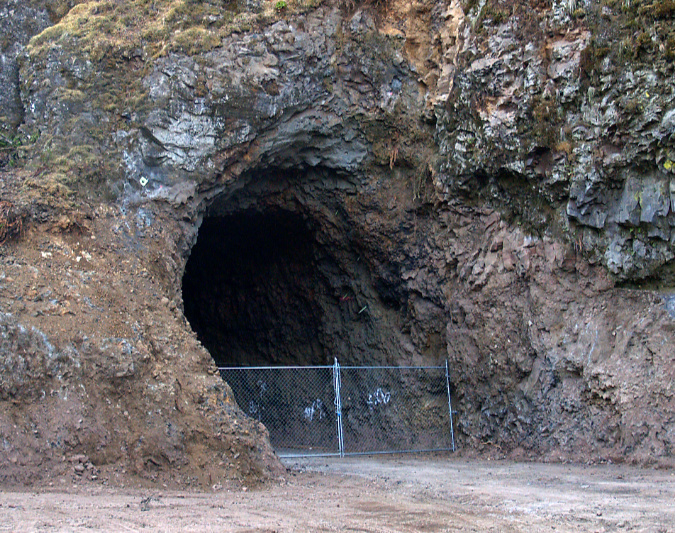
The newly excavated Oneonta Tunnel in 2006
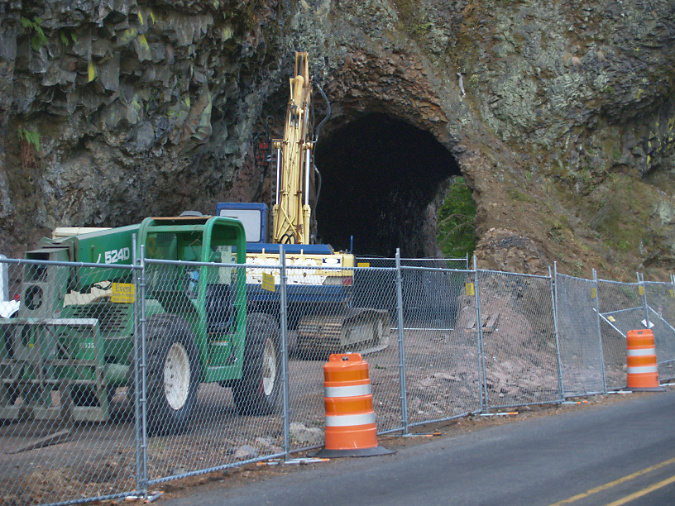
Restoration of the east portal to the Oneonta Tunnel in 2006
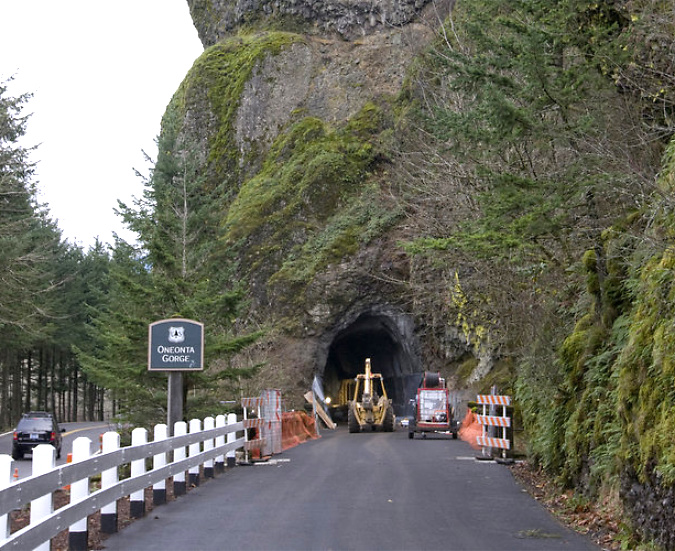
Restoration of the west portal to the Oneonta Tunnel in 2006

The tunnel restoration included recreating the stonework surrounding both portals and a completely rebuilt, wood tunnel lining (below). 
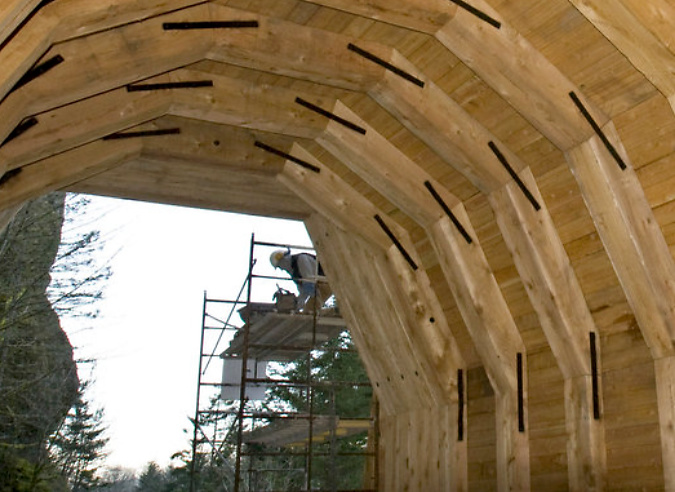
Construction of the wood interior lining in the restored Oneonta Tunnel

The newly restored tunnel was opened to the public in 2009. For hikers, the new route connected a hiking loop between the Oneonta and Horsetail trail systems. For motorists, it was a new place to explore among the traditional stops along the historic highway.
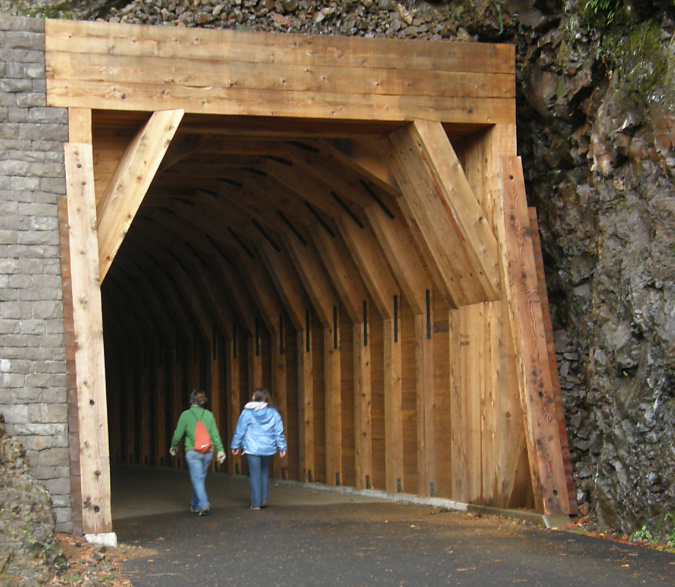
Hikers using the newly restored Oneonta Tunnel in 2009
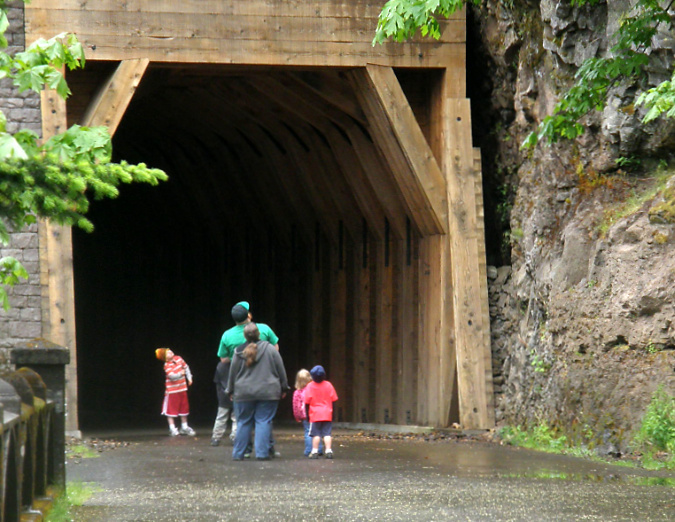
Family exploring the newly restored Oneonta Tunnel in 2009

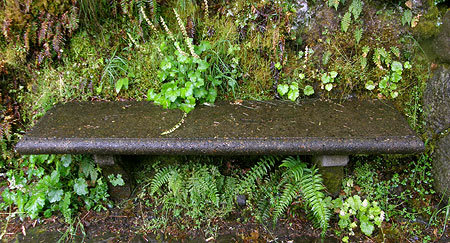
The Oneonta Bridge restoration included work at the west abutment, where a small alcove with an ornate bench from the original design was refurbished. This unassuming spot is one of the most delightful features in Samuel Landcaster’s vision for the highway. Knowing that visitors would want to explore, he built a tiny, winding staircase that hugs the cliff as it descends from the alcove to Oneonta Creek (below). The stairway is a fun surprise for visitors who stop, as it is not visible from the road.
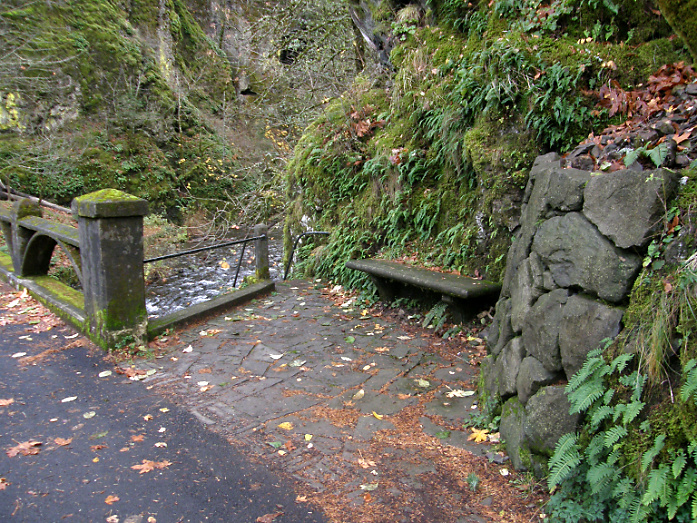
Restored alcove and bench at the head of the winding staircase to Oneonta Creek in 2009
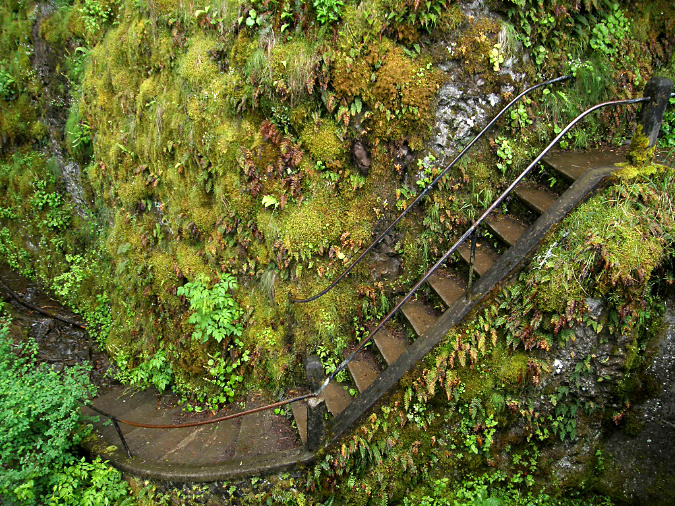
Historic winding staircase at Oneonta Creek in 2009
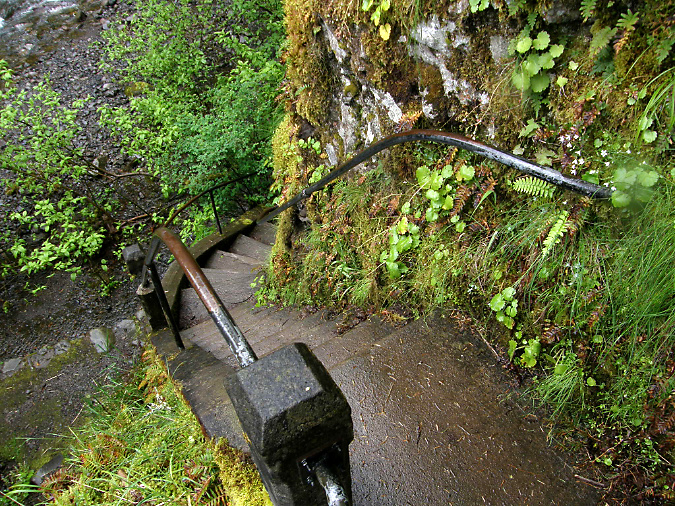
Looking down the historic winding staircase at Oneonta Creek in 2009

When these carefully crafted restoration efforts at Oneonta were finally opened to the public in 2009, few could imagine the impact that social media was about to unleash in the Gorge. Facebook had been founded in 2004, but only began its explosive growth in 2007, doubling from 50 million users to 100 million in 2008. It would reach a staggering 1 billion users by 2012. Instagram soon added to the impact after it was founded in 2010, reaching 10 million users within a year and 1 billion users by 2018. 

2010: The logjam + social media era… 
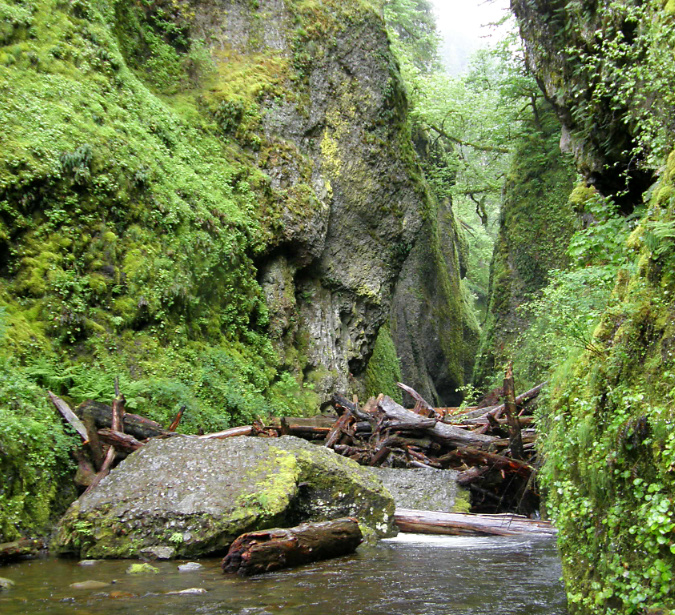
The Oneonta logjam in 2011

When you consider the recreation infrastructure in the Gorge – the trails, campground, picnic sites, scenic highway, Vista House and the lodge at Multnomah Falls – are much the same as they were in the 1930s, it’s surprising that the exponential growth in visitors in recent decades hasn’t been more destructive. That said, the arrival of social media, and its ability to concentrate large crowds overnight, impacted the Gorge, and especially Oneonta, like no nothing before. 

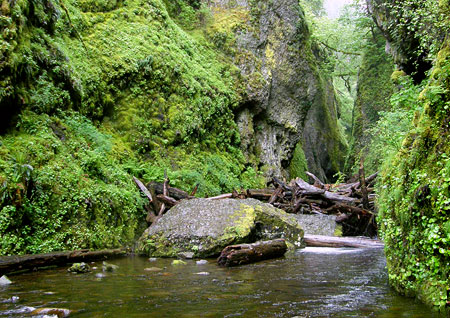
Compounding the “Instagram-effect” of social media in the years that followed reopening of the tunnel, the pair of van-sized boulders that had collapsed into the lower entrance to Oneonta Gorge in the late 1990s had stacked up enough logs to become a true hazard to cross. In the beginning, the boulders themselves weren’t difficult to navigate, but as log pile continued to grow, crossing the obstacle became a risky venture for social media novices drawn here by nothing more than a viral Instagram selfie. 

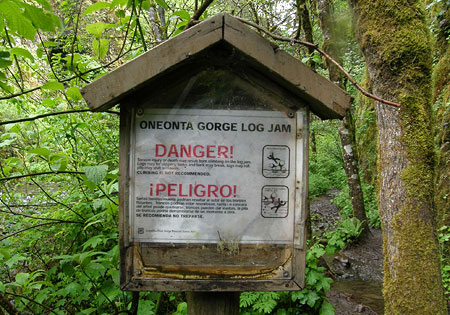
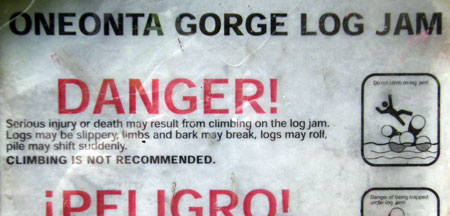
The Forest Service had posted a hazard warning around 2010, but Oneonta Gorge remained opened to the crowds that were growing exponentially each summer, and the signs went completely unnoticed by the growing horde.
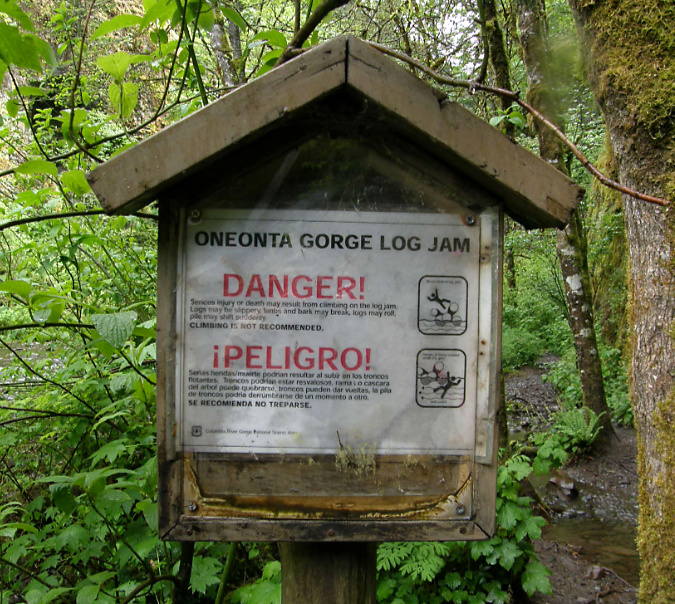
Logjam warning sign in 2011

The growing summer crowds at Oneonta Gorge were beginning to impact the newly restored Oneonta Tunnel, as well. For anyone who loves the Gorge, it was maddening to see vandalism to the pristine wood lining in the tunnel when it started to appear in 2012. The heavy crowds eventually impacted other features, including damage to the railing on the historic, winding staircase (below) and the fragile ecosystem of Oneonta Gorge, itself. It was a classic tragedy of the commons in the making, with the Forest Service seemingly paralyzed from intervening.
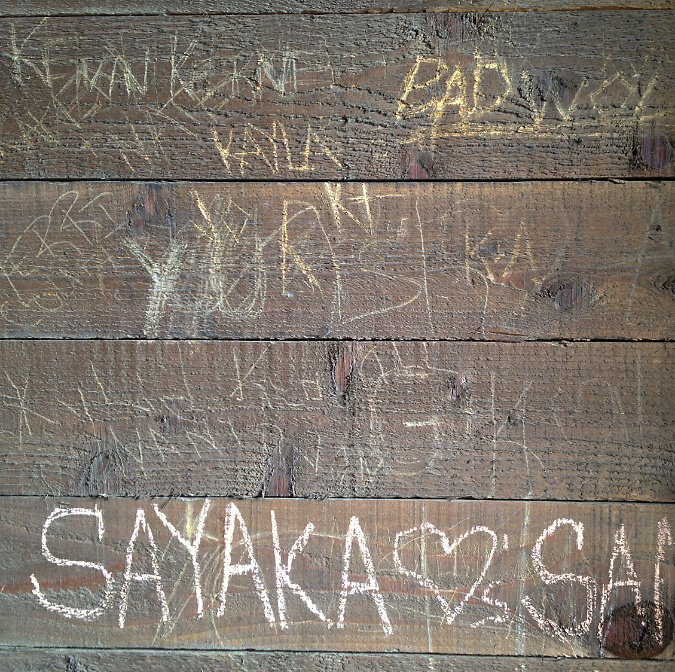
Vandalism began to appear in the Oneonta Tunnel by 2013
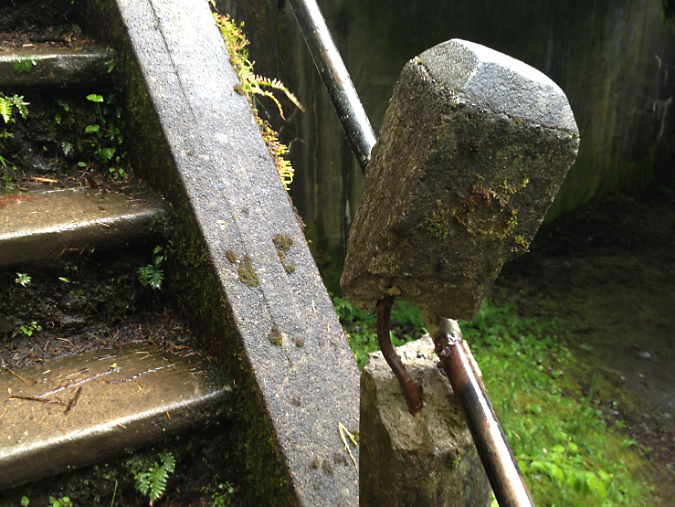
Damaged staircase railing at Oneonta in 2013

By 2015, the full brunt of social media – now including still more youth-oriented online platforms, like SnapChat and Reddit – was all too apparent at Oneonta Gorge. Summertime traffic came to a standstill on the old highway, with parked cars lining the shoulders in both directions and overflowing into the nearby Horsetail wayside. 

Oregon photographer extraordinaire T.J. Thorne (and a friend of the blog!) captured the following images that summer that describe the mayhem in ways words cannot match.

Social media crowds overwhelming Oneonta Gorge in the summer of 2015 (T.J. Thorne)

Crowds at Oneonta Gorge in the summer of 2015 (T.J. Thorne)

Vandalism in the tunnel spiked with the mobs, too, and by 2015 the beautifully restored walls had been almost completely destroyed by the thoughtless members of the summer crowds. Still more discouraging is that the damage was largely wrought by Millennials – a generation supposedly more in touch with environmental awareness, sustainability and mutual respect than any before it.
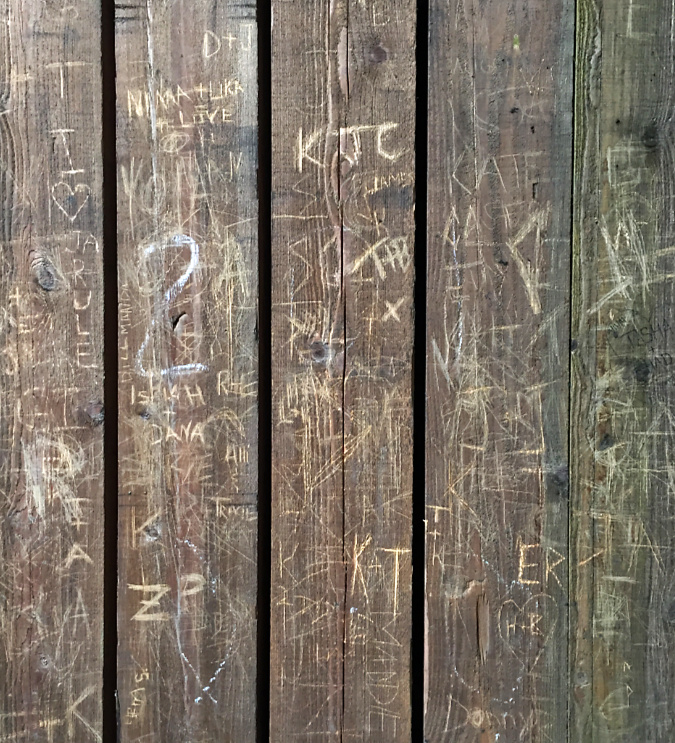
Vandalism overwhelmed the Oneonta Tunnel by 2015
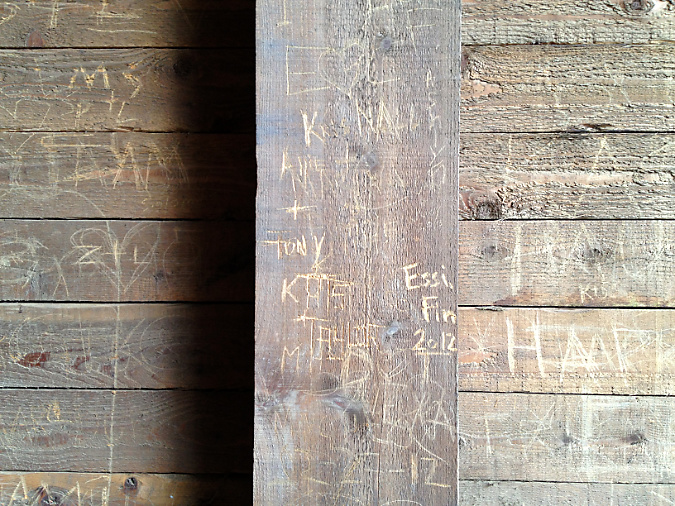
Heavy vandalism to Oneonta Tunnel in 2015

Tragically, at least one person was killed while crossing the log jam during this unhinged period, and there’s no way to know how many were injured – nor what the environmental price to the unique ecosystem in Oneonta Gorge has been from so many people pouring into this relatively tiny space. Yet, there was still no effort by the Forest Service to limit or manage access… that is, until the Eagle Creek Fire in 2017.

2017: Gorge Fire… and the future?
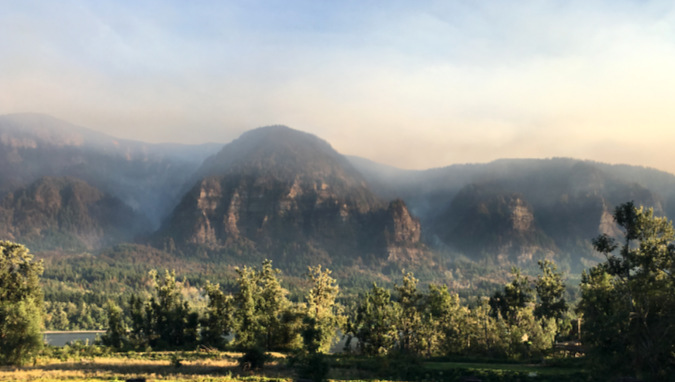
The Eagle Creek Fire as viewed from the Washington side of the Gorge in September 2017

The Eagle Creek Fire in 2017 reset everything in the Gorge. It was the first major fire since around 1900, yet was also somewhat typical of fires that have always burned in the Gorge. The only thing new about the event was the level of human development and activity that has come to the Gorge since the last big fire, underscored by the fact that it was a human-caused fire set off by a young hiker lighting fireworks on the Eagle Creek Trail.

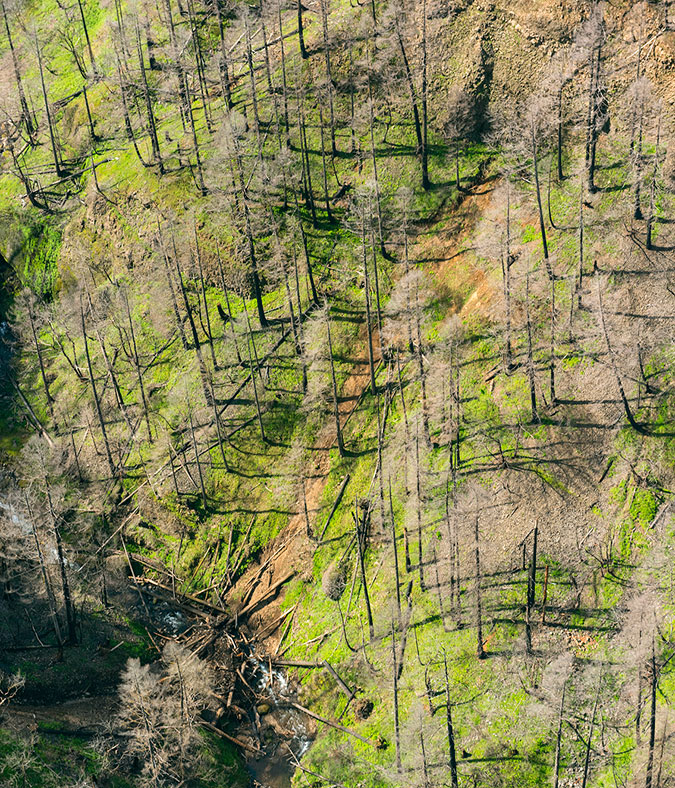
The Oneonta Creek watershed was hit especially hard by the fire, with much of the upper basin completely burned. The immediate aftermath of the burn was a lot of surface erosion and falling trees killed by the fire. More locally, the fire killed trees and loosened rocks and debris along the rim of Oneonta Gorge, creating an immediate hazard to anyone below.
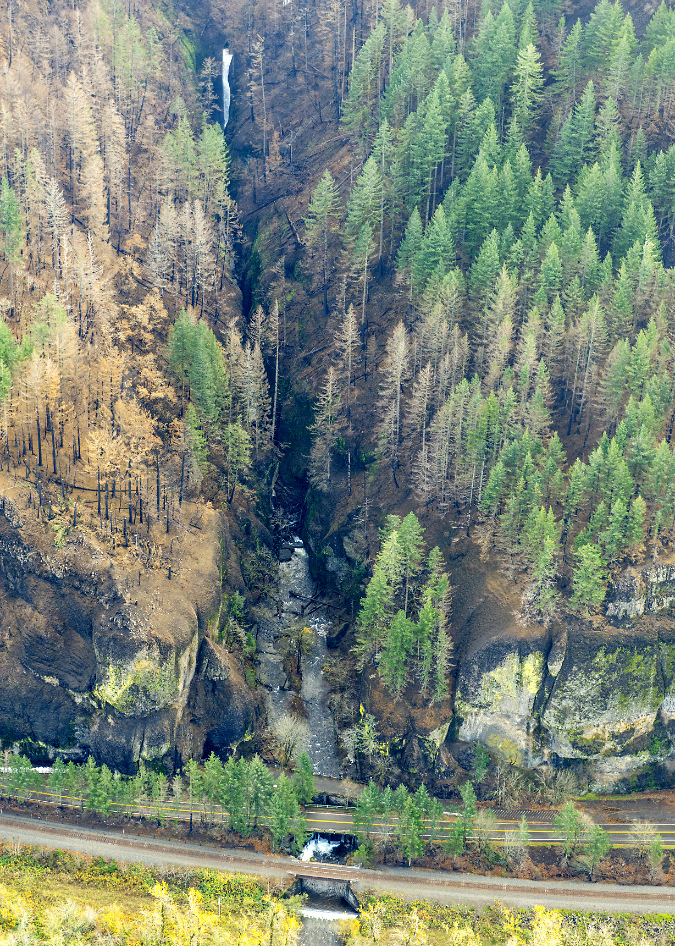
Aerial view of the fire impact along Oneonta Gorge in late 201. Oneonta Falls can be seen at the far end of the gorge in this view

Aerial view of fire impact to Oneonta Gorge and the larger watershed in the distance in 2017

Over time, the extensive burn upstream has released hundreds of logs into Oneonta Creek, with many more to come. It didn’t take long for winter storms to carry these logs and other debris downstream to Oneonta Gorge, where the logjams have now grown to epic proportions.
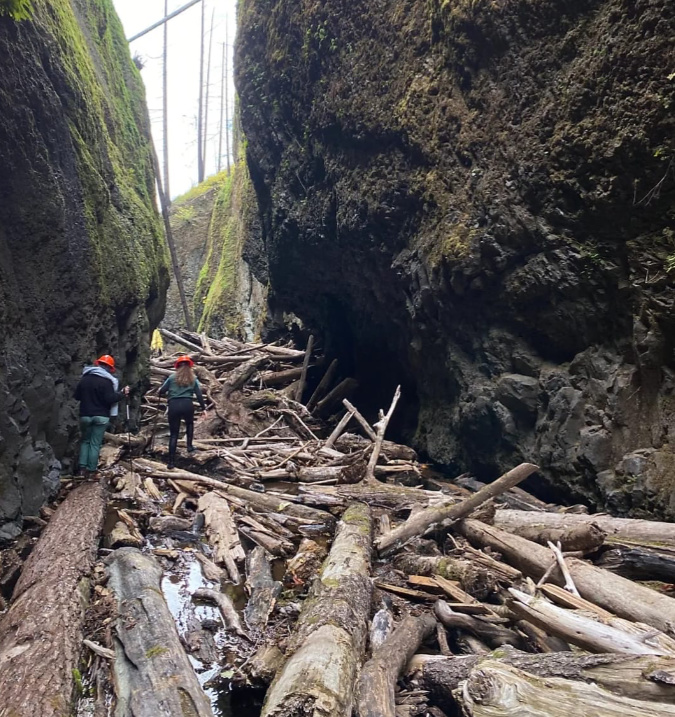
Forest Service crew documenting the growing, post-fire logjams in Oneonta Gorge in 2023 (USFS)

Most of the burn was immediately closed to the public after the fire, but the Forest Service has gradually reopened much of the area as trails are cleared and the forest recovery takes hold. An exception is Oneonta Gorge, however, where the agency continues to prohibit public access.

That’s a good thing, and overdue. Nobody knows how long it will take for Oneonta Creek to clear the logjams from Oneonta Gorge, but the hazards they create should at least help the Forest Service take the time to enact a new access policy that limits when and how many people are allowed to enter the gorge. 
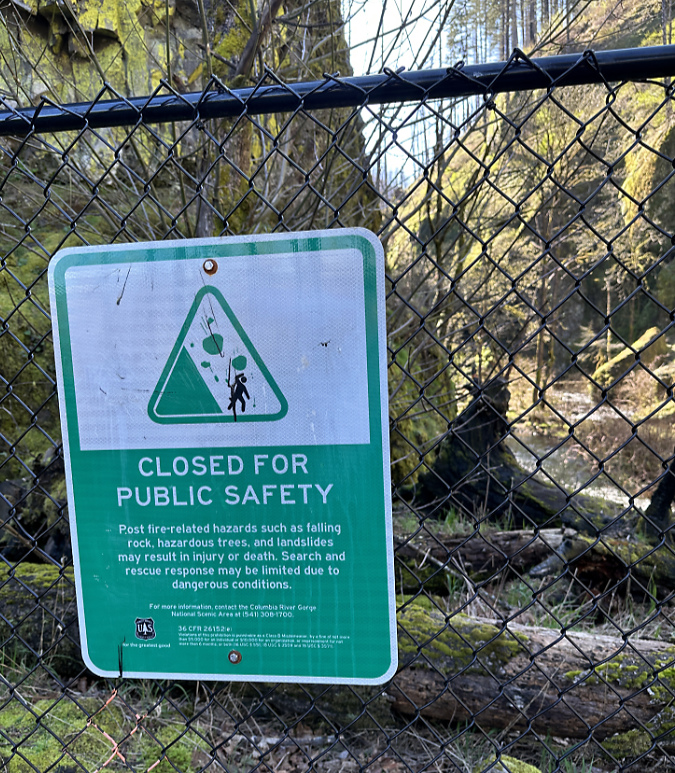
Oneonta Gorge sign announcing indefinite closure following the 2017 fire

Statesmen Journal outdoor reporter (and another friend of the blog!) Zach Urness recently reported on Forest Service plans to consider reopening Oneonta Gorge later in this decade. According to Zach’s reporting, the agency will consider these options for the future:

1) Unrestricted access

2) Complete closure to access

3) Seasonal public access outside of salmon and steelhead spawning

4) Open or seasonal public access with trigger points to limit use

My hope is that something like the fourth option will be pursued in the interest protecting Oneonta Gorge from being loved to death in the future. The Forest Service planning effort will begin later this year.
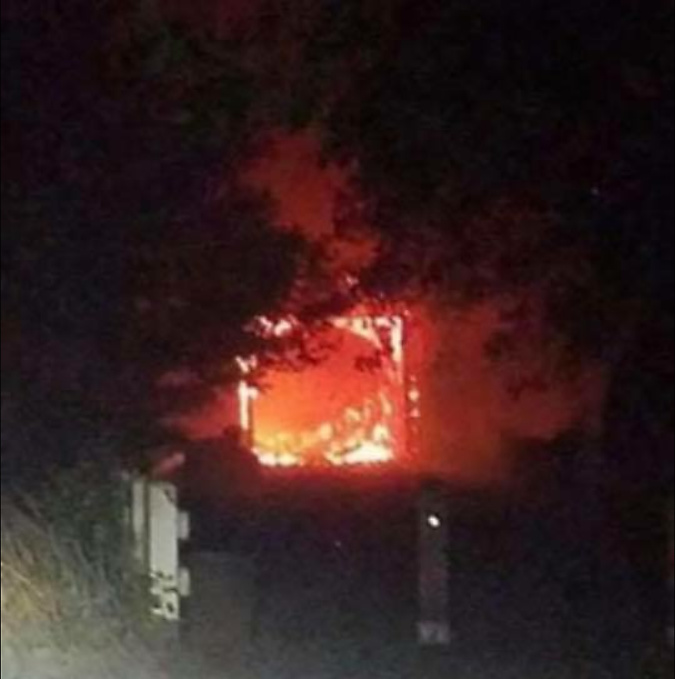
The Oneonta Tunnel became an inferno during the 2017 Eagle Creek Fire (USFS)

The fire had a devastating impact on the Oneonta Tunnel, as well. When I saw the above image of the tunnel in flames during the 2017 Eagle Creek Fire, I had mixed emotions: the first was sadness over the loss of this beautifully restored piece of our history, and the second was a sense of opportunity. If the tunnel were restored again, perhaps this time it could be more closely managed to prevent the grotesque scale of vandalism that had defaced it before the fire?
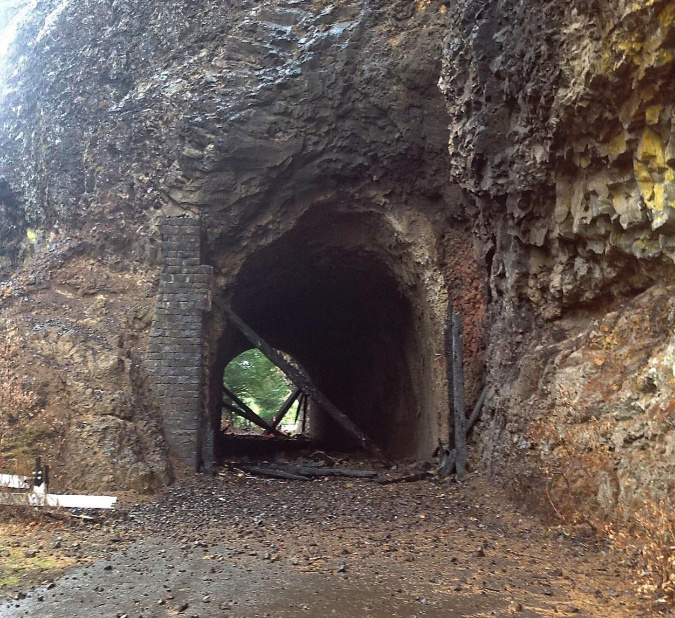
West portal to the Oneonta Tunnel immediately after the 2017 fire (ODOT)
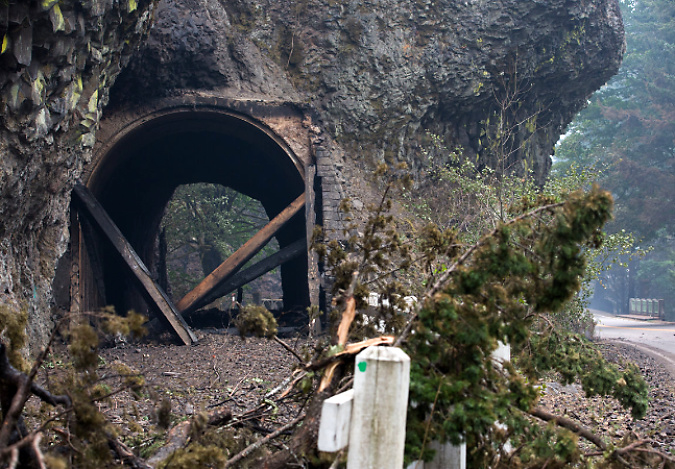
East portal to the Oneonta Tunnel immediately after the 2017 fire (ODOT)

In 2020, ODOT began repairs to the Oneonta Tunnel, once again bringing it back to its original glory with a wood-lined interior. The re-restored tunnel reopened to the public in May 2021.
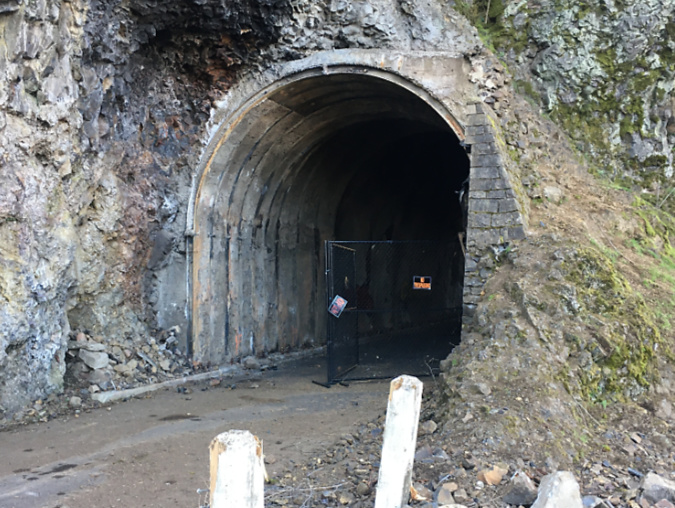
Oneonta Tunnel cleared and ready for repairs 2020
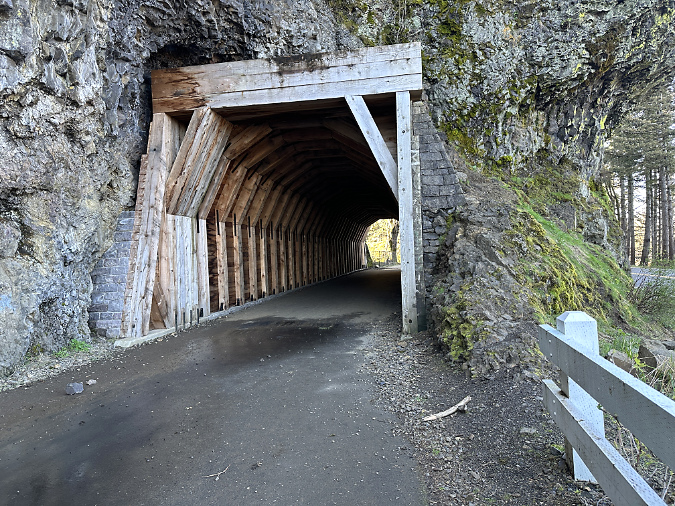
Re-restored the Oneonta Tunnel in 2024
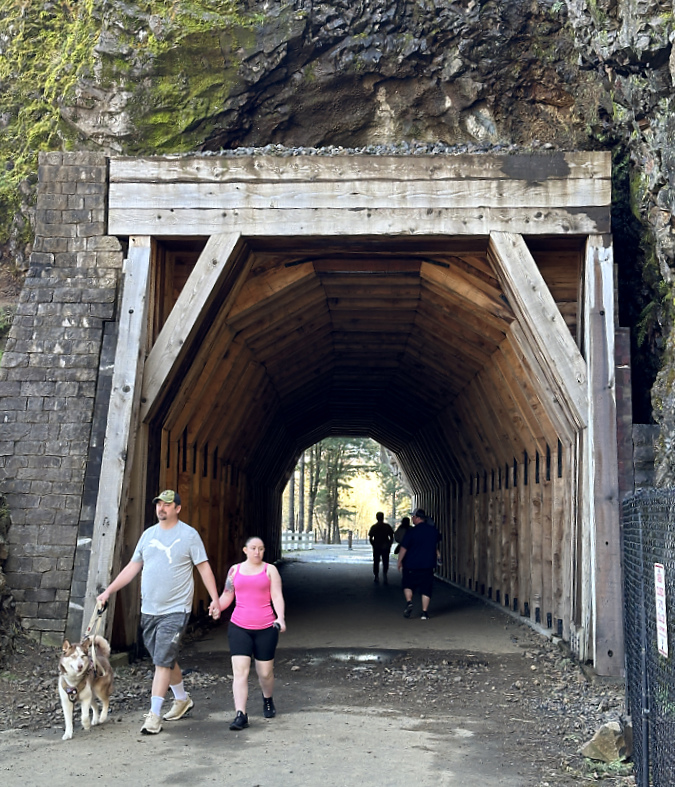
Visitors exploring the reopened Oneonta Tunnel in 2024

Though the Oneonta Gorge flip-flop crowds are no longer here, vandalism in the newly reopened tunnel continues, albeit at a more manageable pace. While much of the damage before the fire was from names and messages being carved into the soft wood, most of the new vandalism is in the form of spray paint tagging that bedevils our society pretty much everywhere these days. While frustrating, this damage is somewhat easier to repair – assuming ODOT has the capacity and makes it a priority to do so.

When the agency was drawing up plans for the restoring the tunnel a second time, after the fire, I testified to the steering committee that oversees the Historic Columbia River Highway restoration work to consider gating both ends of the tunnel and having State Parks rangers lock it during off-peak hours. I still think this could dramatically reduce vandalism in the tunnel.
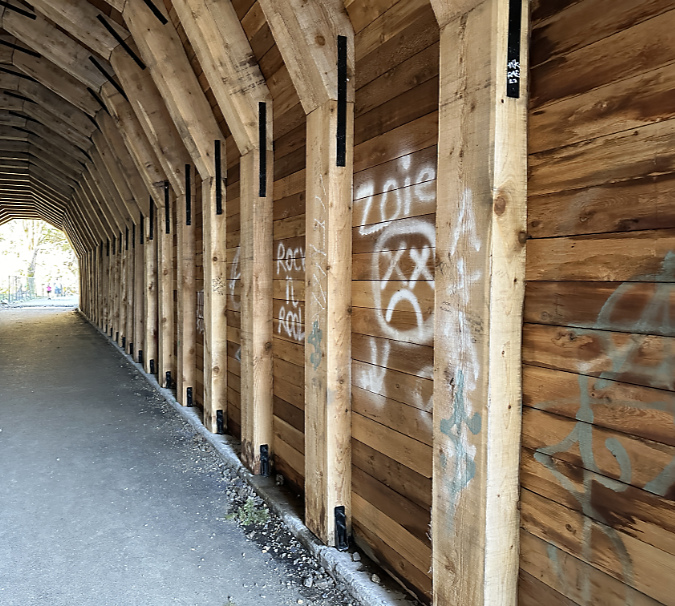
Vandalism in the tunnel continues in 2024, despite the Oneonta Gorge closure
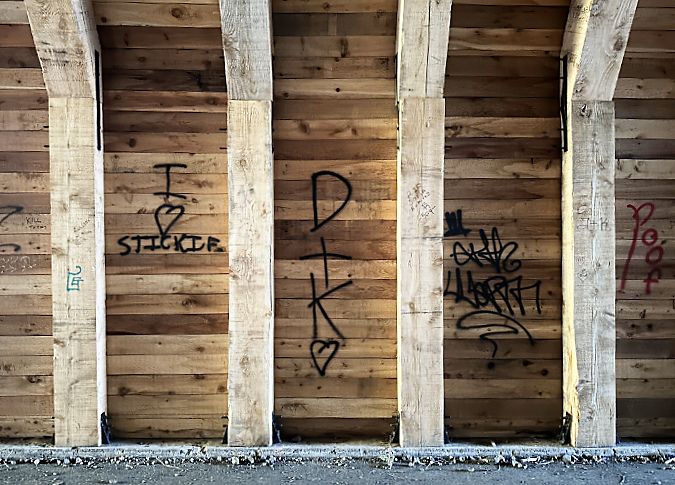
Oneonta Tunnel vandalism in 2024

What’s next for Oneonta Gorge? Mostly, a much-needed break from humanity, at least in the near-term. Hopefully, the Forest Service will opt for a long-term plan that places the ecological health of this place at the forefront, but nature has no timeline for clearing out the logs that are making it impassible right now. Over time, the force of water will win out, but that could be decades from now, perhaps longer.
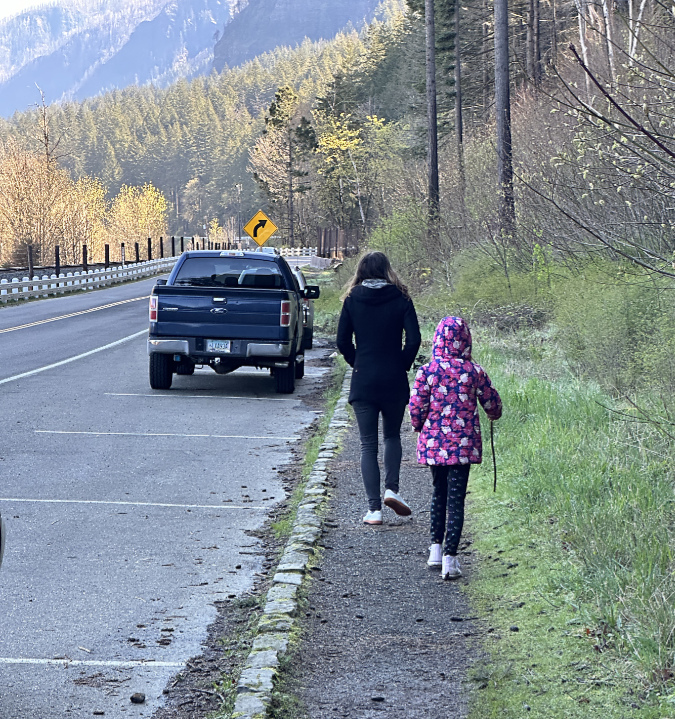
Visitors walking the muddy shoulder to the east portal parking pullout in 2024

I’m also hopeful that ODOT will not only take action to keep pace with vandalism to the tunnel, but also continue to make minor improvements for visitors stopping to explore the tunnel and take in the view of Oneonta Gorge. One that stands out to me when I visits is the surprising lack of even a gravel path to serve the parking pullout near the east tunnel portal (above). A boot path has formed, of course, but I watched several visitors with young kids struggle between the choices of a muddy, narrow boot path and walking adjacent to traffic along the fog line of the eastbound highway lane. 
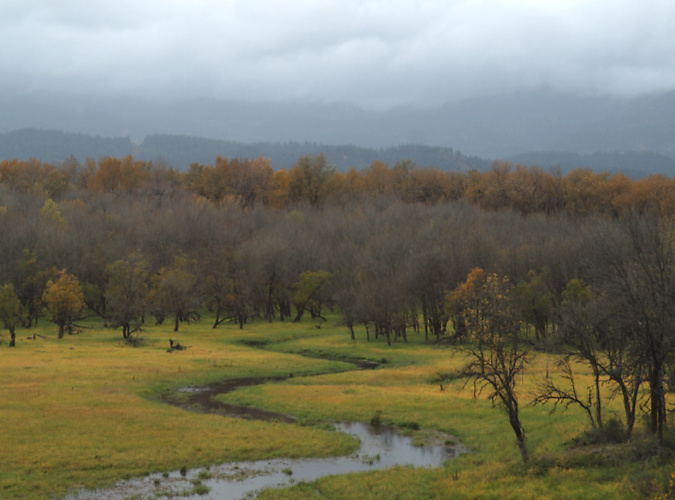
Horsetail-Oneonta wetlands in 2024

If you have followed this blog, you know I’ve posted several articles on Oneonta over the years. This piece surely won’t be the last! For past reads on this magical spot, here are some links:

Let’s Clear the Logjam at Oneonta (2011)

Oneonta Loop Trail (2020)

A Second Chance and New Vision for Oneonta? (2020)

If you’d like to hear a recent interview I had with Zach Urness on the future of Oneonta Gorge, you can listen here:

Explore Oregon Podcast: The ballad of beloved Oneonta Gorge

(…and yes, it’s true –I took my wife of nearly 40 years to wade Oneonta Gorge on our first date, way back in September 1981! She didn’t hold it against me…)

________________

Tom Kloster | April 2024
Proposal: Oneonta Loop Trail

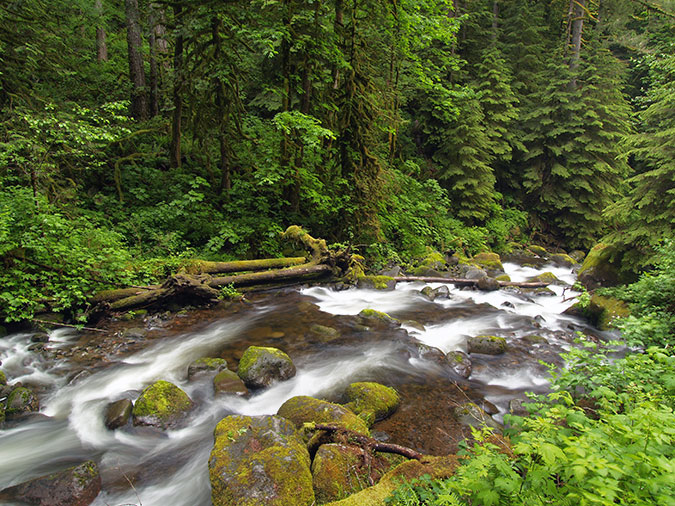
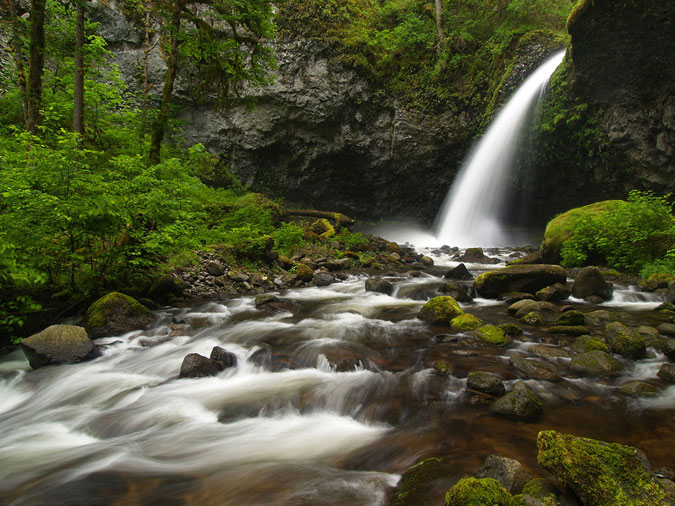
Beautiful Middle Oneonta Falls

The Columbia River Gorge is so rich with natural beauty that it’s pretty hard to pick favorites. Yet, when it comes to graceful waterfalls cascading through verdant, rainforest canyons, Oneonta Creek is near the top of my list. A previous article on this blog presented a new vision for managing access to stunning Oneonta Gorge and restoring the historic Oneonta Tunnel. This article examines Oneonta Canyon above the Oneonta Gorge, where more waterfalls and rugged beauty brought thousands to the trails here before the 2017 Eagle Creek Fire.

Iconic Triple Falls on Oneonta Creek

The fire has since changed the Gorge landscape for most of our lifetimes, and the forest is just beginning a post-fire recovery cycle that has unfolded here countless times over the millennia. But while the starkness of the burned landscape is something that we are still adjusting to, the fire gives us a once-in-century opportunity to rethink and rebalance how we recreate in the Gorge.

Oneonta Creek experienced some of the most intense burning during the fire, and almost none of the dense forest canopy survived, and still the forest has already begun to restore itself. What can we do to restore our human presence at Oneonta in a way that will be sustainable for the next century, leaving a legacy for future generations like the one that we inherited?

Before the 2017 Fire: Signs of Stress

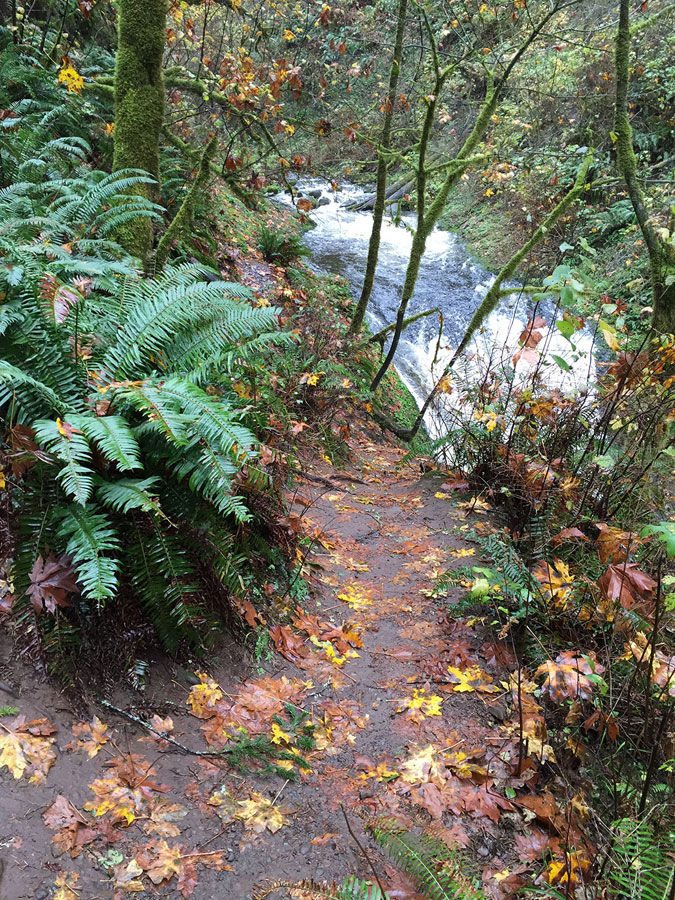
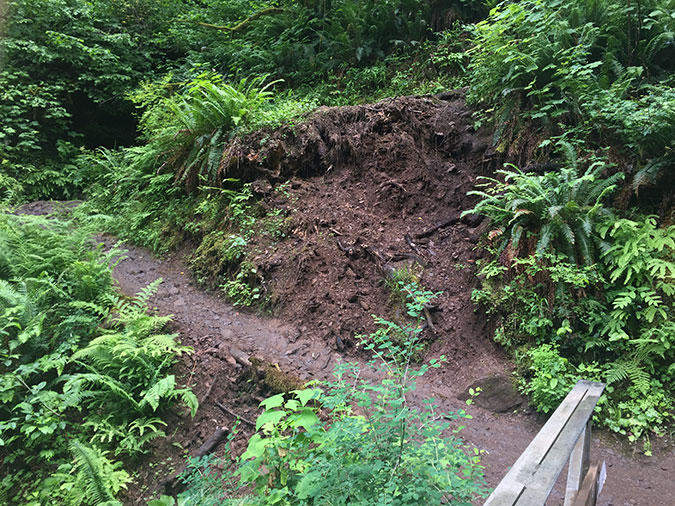
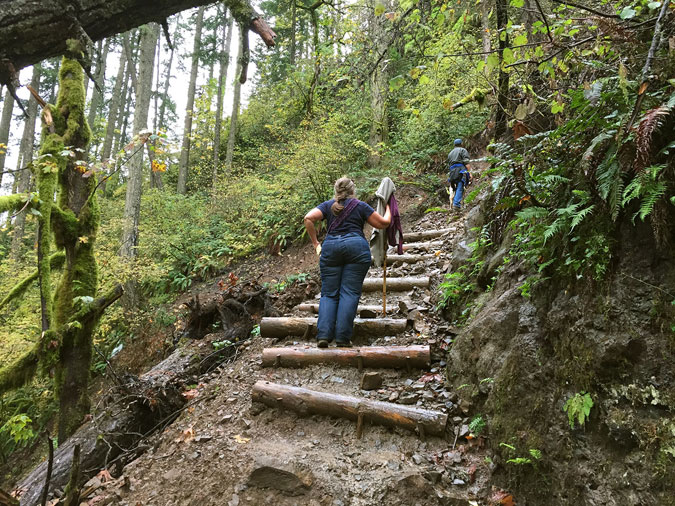
The spectacular scenery along the Oneonta Creek was already drawing huge, unsustainable crowds of hikers well before the Eagle Creek Fire roared through Oneonta Canyon, and the visible impacts were everywhere. Some of the impact was on the human environment, including the very trails and bridges that brought hikers into Oneonta Canyon. And some of the impact was on the land, itself, with hikers straying from developed trails to create destructive social paths and shortcuts in many spots. These informal trails had become badly eroded, often undermining the main trails, themselves. 

Social trail damage near the lower Oneonta Creek footbridge

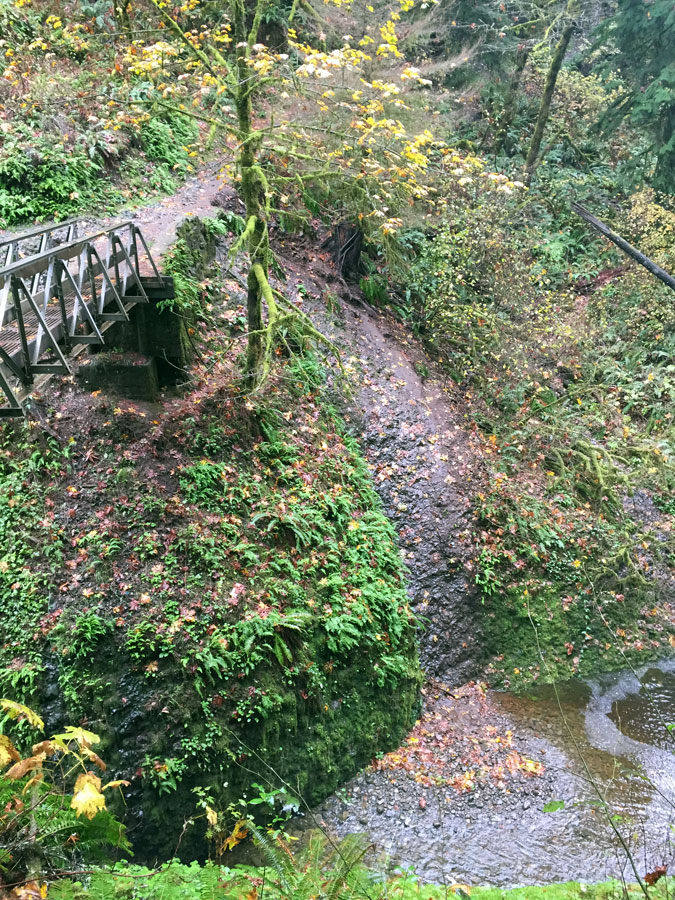
One place where these impacts escalated alarmingly in the years before the fire was the lower footbridge on Oneonta Creek, located just above Oneonta Falls and just below Oneonta Bridge Falls. As shown in the photo above, crowds of hikers had carved a new path to a pool in the creek at the west abutment of the bridge, stripping away fragile vegetation and filling the pool with eroded debris.

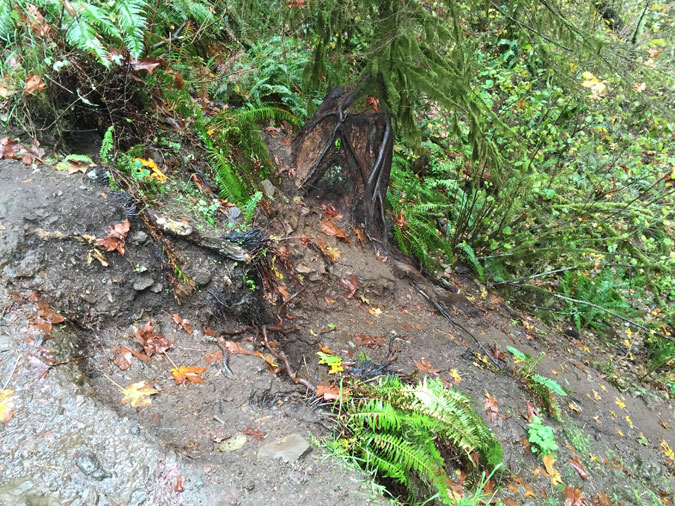
The photo below shows how this social path has not only destroyed the thin layer of soil and forest understory on the slopes of Oneonta Creek, but was also undermining the main trail, itself, which was gradually sliding down the slope.

Social trail eroding both the slope and the shoulder of the main trail (on the left)

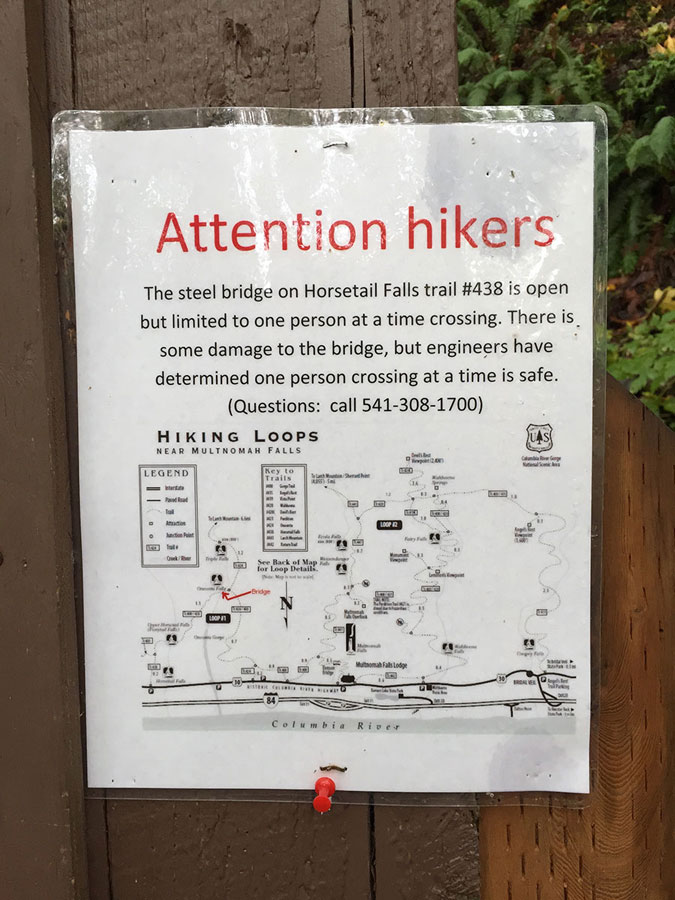
Even the lower Oneonta footbridge was in trouble before the fire. The Forest Service began posting a warning on the bridge a few years before the fire limiting it to one hiker at a time, yet another reminder of the serious disinvestment we have been making in our Gorge trails for the past thirty years. The rapid growth in visitors during this same period only increased the impact on structures like this, which were long overdue for repair or replacement.

Warning sign for hikers approaching the lower Oneonta footbridge

Meanwhile, at the east end of the lower Oneonta Bridge, curious crowds had pushed a new social path upstream, past Oneonta Bridge Falls (below). Social paths form when hikers head off-trail in search of a new viewpoint or water feature. When more hikers the steps of the first, the increasing foot traffic gradually formalizes social until they become hard to distinguish from legitimate trails — except that they are rarely “built” in a way that is sustainable, and often bring serious harm to the landscape.

Social trail heading toward Middle Oneonta Falls from the lower Oneonta Creek bridge

Meanwhile, things were getting worse on the east side of the lower Oneonta Bridge, too, where hikers had cut the short switchback just above the bridge (below) to the point that it began collapsing before the fire closed the area to the public. Why do people do this? Mostly, it’s ignorance, inexperience and overcrowding, and often by children who are not getting needed guidance from parents on why this is not okay.

Heavy damage from shortcutting on this switchback at the east end of the lower Oneonta Creek bridge

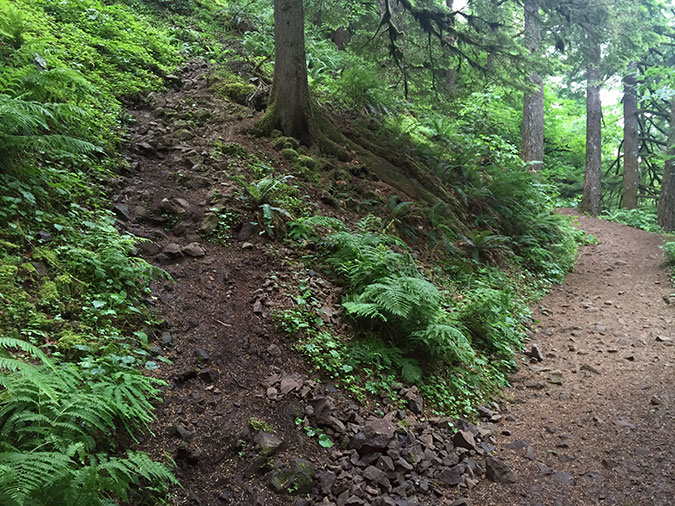
Heading beyond the lower Oneonta bridge, another major social path had formed on the west side of the creek (below), where hikers had created a long shortcut directly down the canyon slope where a long switchback exists on the main trail. The damage here was obvious and quite recent when this photo was taken about 18 months before the fire. When social paths become this prominent, the damage begins to spiral, with new or inexperienced hikers mistaking them for a legitimate route, and further compounding the problem with still more foot traffic. The overcrowding on the Oneonta Trail only added to the spiraling effect.

Hikers shortcutting this switchback have created a new social trail nearly as wide as the main Oneonta Creek trail

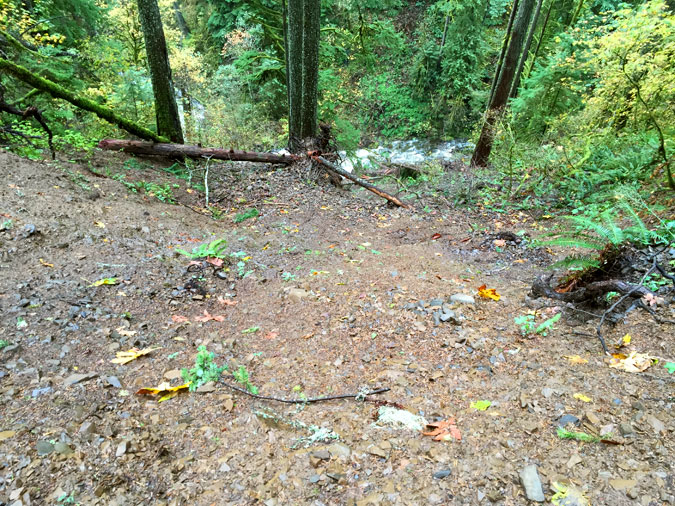
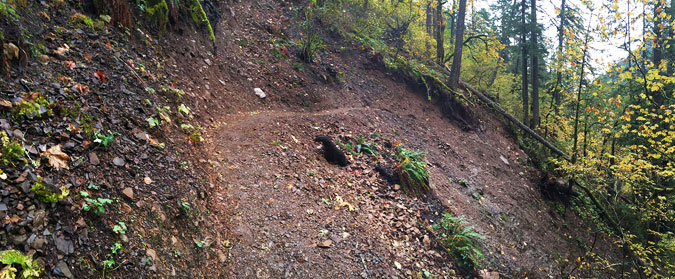
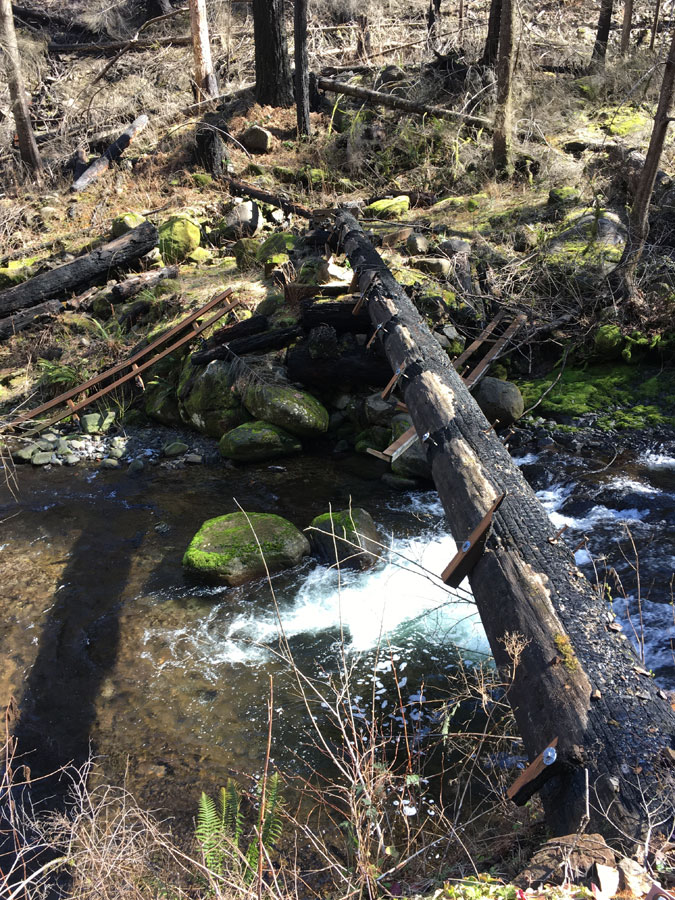
While hikers were causing the bulk of the impact before the fire, Mother Nature was busy in Oneonta Canyon, too. The photo below was taken after the 2017 fire, and reveals a major landslide that began moving years before the fire. The slide extends from Oneonta Creek (where it has left a pile of trees and debris visible in this photo) to the cliffs well above Oneonta Trail. A fifty-yard section of the trail was erased by the slide, with several efforts in the years just before the fire to stabilize a new route above the old trail.

Landslide along the middle section of Oneonta Creek that threatens long-term viability of the current trail

Here’s a view (below) of the landslide looking downhill toward Oneonta Creek from where the original Oneonta Creek Trail was once located. The big trees still standing in the path of the landslide in this view were burned in the fire, which will further destabilize this slope and allow the slide to accelerate in coming years.

Looking down the landslide toward Oneonta Creek in 2015, before the fire

When the original section of the Oneonta Trail was swept away by the landslide, the Forest Service built this set of stairs (below) to a new crossing of the slide, about 30 yards uphill from where the old trail had been.

Bypass trail built to temporarily navigate the Oneonta Trail landslide

This photo (below) shows the new, temporary crossing of the slide as it existed before the fire, but volunteer trail crews visiting the Oneonta Trail earlier this year report that this temporary route has also become eroded since the fire. The continued instability of the landslide raises real questions about whether a safe route can be maintained here in the near-term.

Wide angle view of the temporary route built across the landslide a few years before the 2017 Eagle Creek Fire

Landslides like this are an ongoing part of the Gorge geology, but in this case, it also marks a spot where an increasingly busy social path dropped down to Middle Oneonta Falls. The growing traffic to this off-trail falls was already taking its toll on the terrain before the slide. So, was the landslide triggered by erosion along the social path? There’s no way to know, but it’s certainly possible that the social path contributed to the sudden instability of the slope.

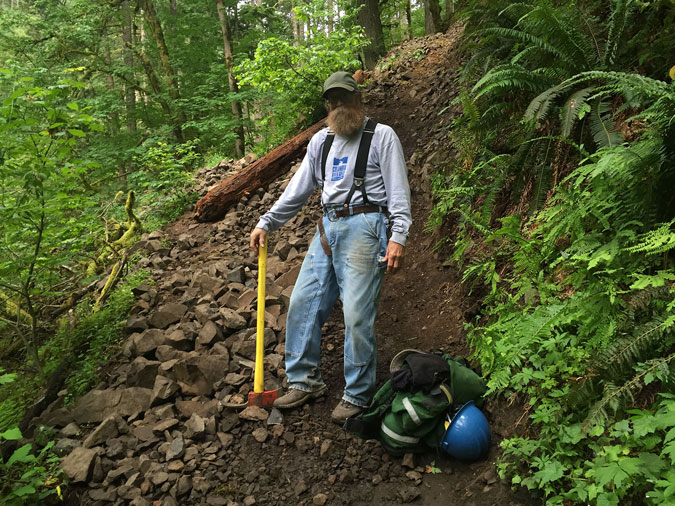
On my last visit to the upper Oneonta Canyon before the 2017 fire, I ran into bit of trail legend named Bruce, who was a longtime trail worker in the Gorge dating back to the 1980s. He was rebuilding the approach to the slide, and we talked about how Forest Service crews were struggling to simply keep pace with the impact of growing crowds and shrinking agency staff for basic trail maintenance. Major repairs, like those required the slide, were completely overwhelming his crews.

Gorge trail crew legend Bruce (now retired) working near the slide on the Oneonta Trail in 2014

Bruce was wistful about the situation, as he was planning to retire soon, and the trails he had worked so hard on were not faring well as he prepared to turn them over to a new generation of trail workers. 

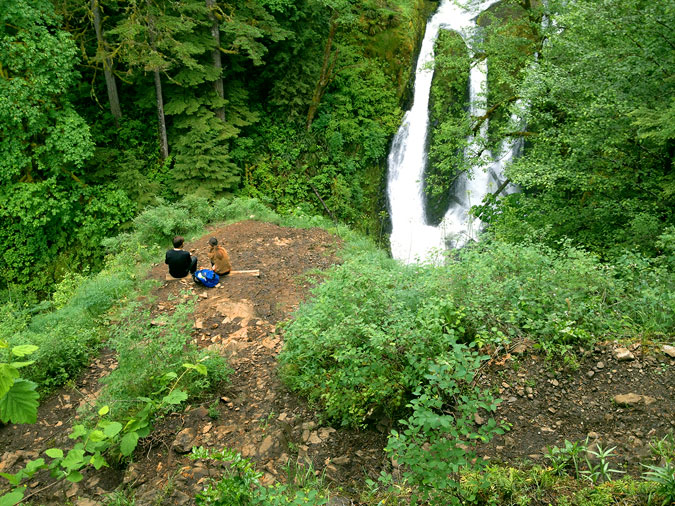
Beyond the problematic landslide, the Oneonta Trail arrives at Triple Falls, an iconic destination that most hikers are coming here for. In the years before the fire, the overlook at Triple Falls was literally crumbling under the pressure from overuse. The photo below shows the view from the main trail, where a tangle of social paths cutting directly downslope to the badly eroded viewpoint can plainly be seen.

Widespread slope damage where a network of social trails has cut into the Triple Falls overlook

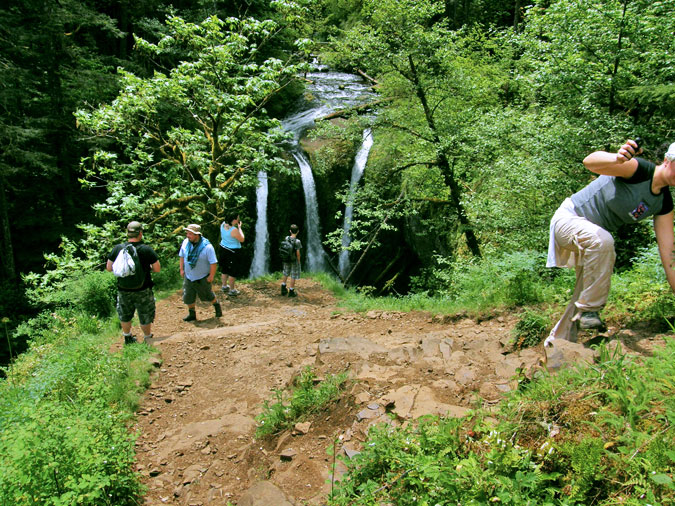
A well-graded spur trail provides access to the viewpoint, but few used it. Instead, most follow the steps of this hiker (below) and simply cut directly up the slope to rejoin the trail. Over the past decade, the damage from erosion here had increased alarmingly.

Another hiker adding to the impact of the social trails at the Triple Falls overlook in 2014

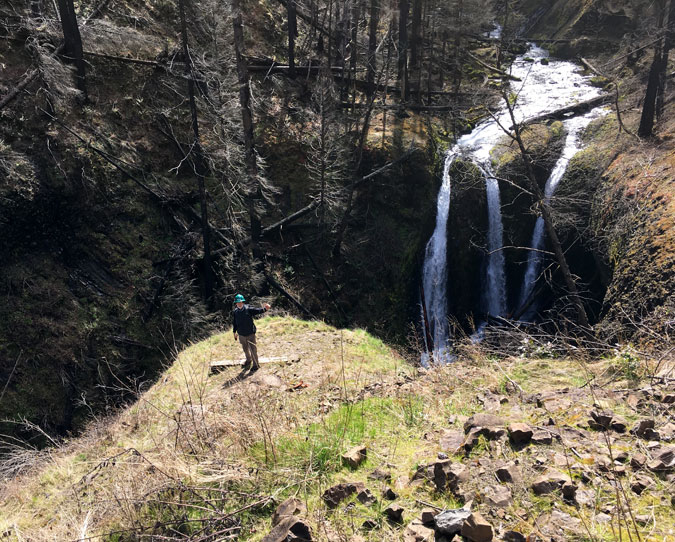
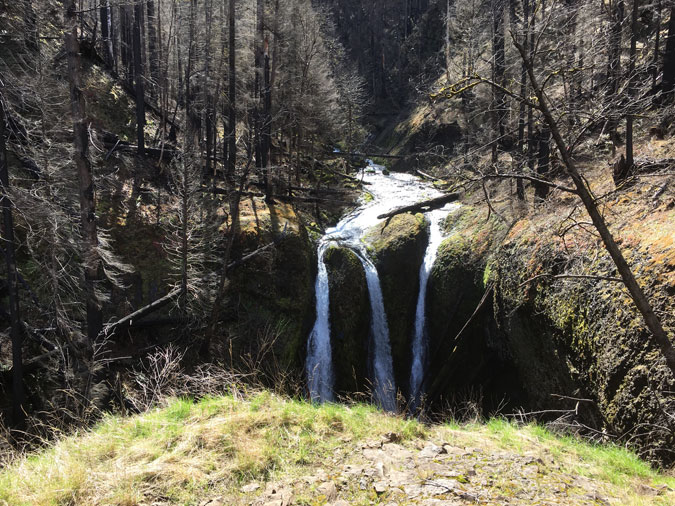
Earlier this year, the volunteer trail crews assessing the Oneonta Trail captured these views of the Triple Falls overlook, showing how the burned over landscape also offers a unique opportunity to rethink and rebuild this overlook trail before hikers are allowed to return.

The Triple Falls overlook was stripped bare by the Eagle Creek Fire (photo: Trailkeepers of Oregon)
Triple Falls after the Eagle Creek Fire (photo: Trailkeepers of Oregon)

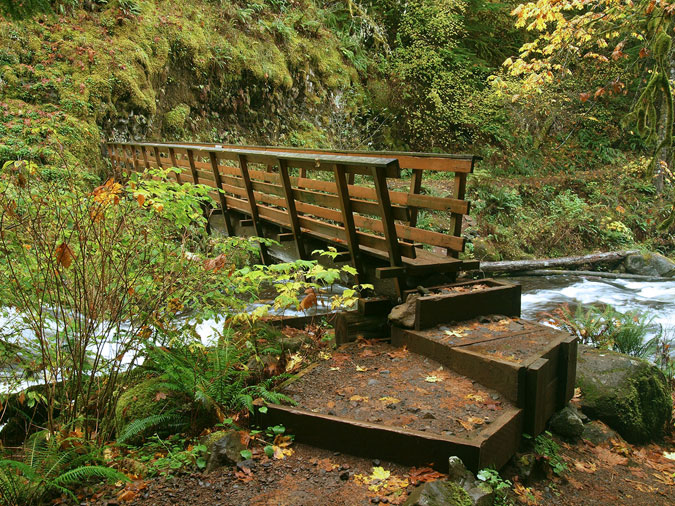
Just beyond Triple Falls, the Oneonta Trail crossed the creek on this upper footbridge (below), installed by volunteers and Forest Service crews about ten years ago.

Upper Oneonta Creek footbridge before the 2017 Gorge Fire

 This year’s volunteer crews found that the 2017 fire hadn’t spared the upper bridge, as the photo below shows. This represents yet another opportunity to think about how the area will reopened. While the bridge provides critical link to the rest of the Oneonta Creek trail system, it also led to a growing network of eroding social paths on the east side of Triple Falls.

Upper Oneonta Creek Footbridge after the Gorge Fire (photo: Trailkeepers of Oregon)

Today, we have a unique opportunity for a reboot, with the canyon just beginning its post-fire recover and still closed to the public. As traumatic as the Eagle Creek Fire was for those who love the Gorge, having the forest burned away was like lifting a window shade on the terrain beneath the forest. Where the fire destroyed a dense forest, it also laid bare the underlying terrain and geology, providing a rare opportunity to plan for our Gorge trail system as it enters its second century.

For trail builders, it’s a perfect opportunity to take a good look at the land for opportunities to refine existing trails and to build trails for future generations of hikers. This includes adjusting existing trail alignments to more stable terrain and replacing social paths with sustainable trails that can help curious hikers explore the beauty of the area without harming it. The fire also cleared the forest understory, making trail building a lot easier.

A New Vision for Oneonta

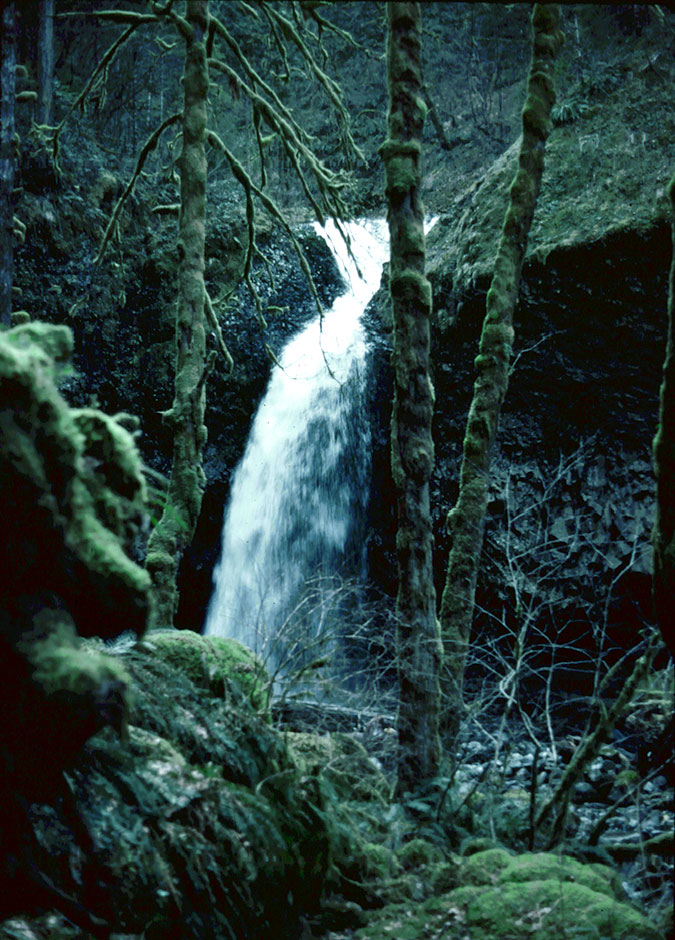
With this unique opportunity in mind, this proposal focuses on a new loop trail along the middle section of Oneonta Canyon, where little known Middle Oneonta Falls has been hidden in plain sight over the century since the first trail was built here. Middle Oneonta Falls is among of the most graceful in the Columbia Gorge, and waterfall enthusiasts have long followed the steep, brushy social path that led to the falls. I made my first trip there in the late 1970s, when I was 16 years old, and returned many times over the years.

Though my photography skills were pretty rough 38 years ago, this is how Middle Oneonta Falls looked way back in 1982. This is also where the falls would first come into view on the proposed Oneonta Loop Trail 

It’s hard to know why the original trail builders passed by Middle Oneonta Falls, and chose to route the main trail high above the falls. The falls can plainly be heard thundering in the forest below, and from one spot on the trail, the brink of the falls can be seen. But for most hikers, Middle Oneonta Falls remained unknown.

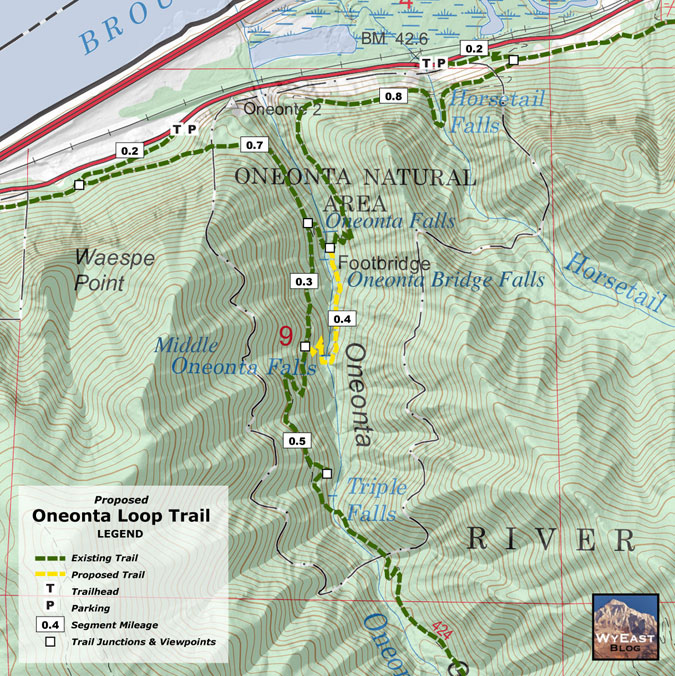
This proposal would change that, with a new loop that would not only lead hikers to Middle Oneonta Falls on a well-designed trail, but also take them behindthe falls! More on that, in a moment. Here’s the general location of the proposed loop (shown in yellow) as it relates to the existing Oneonta and Horsetail Creek trails (shown in green):

[click here for a large map]

Why build a new loop trail at Middle Oneonta Falls? One reason is pragmatic: the word is out, and this beautiful waterfall is no longer a secret, as well-worn social paths prove. And, with the forest now burned away, the falls will be plainly visible from the main Oneonta trail, making it impossible to prevent new social paths from forming as curious hikers look for a way to reach the falls.

Given these realities, this concept also focuses on how to make a new loop trail to Middle Oneonta Falls one that provides a new and much-needed destination for casual hikers and families with young kids looking for something less strenuous than what a lot of Gorge hikes require. Loops are the most popular trail option for hikers, too, since they provide a continuous stream of new scenery and adventure.

In the long-term, loops also offer a management tool that is seldom used today, but has great merit in heavily traveled places like the Gorge: one-way trails. On crowded trails in steep terrain, one of the biggest impacts comes from people simply passing other hikers coming from the option direction, gradually breaking down the shoulders of trails over time. One-way trails eliminate this problem, and the provide a better hiking experience with less sense of crowding, too.

With these trail themes in mind, what follows is a tour of the proposed Oneonta Loop Trail, using an exceptional series of aerial photos captured by the State of Oregon in the aftermath of the Eagle Creek Fire. 

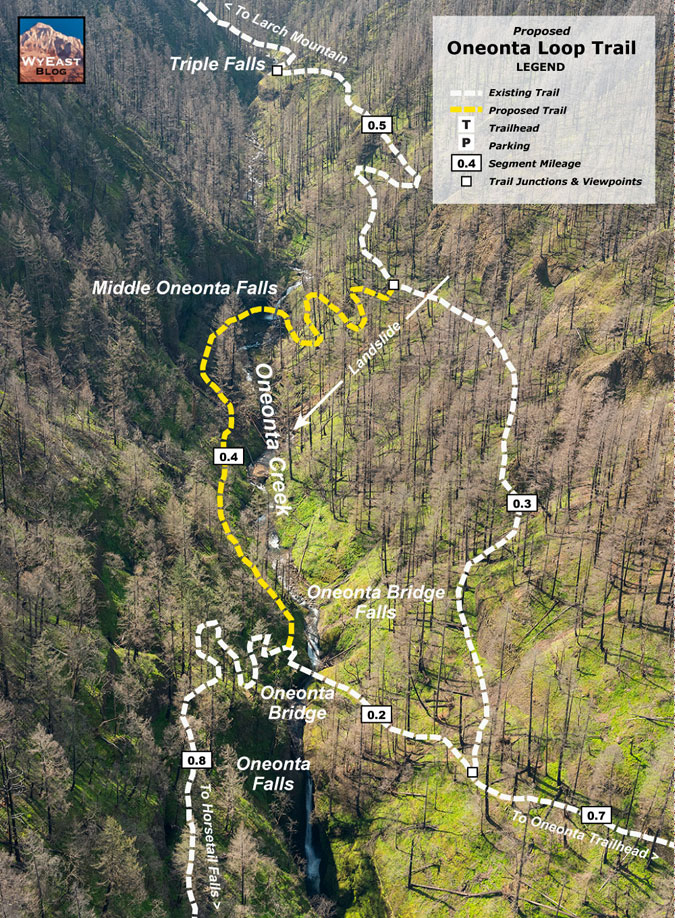
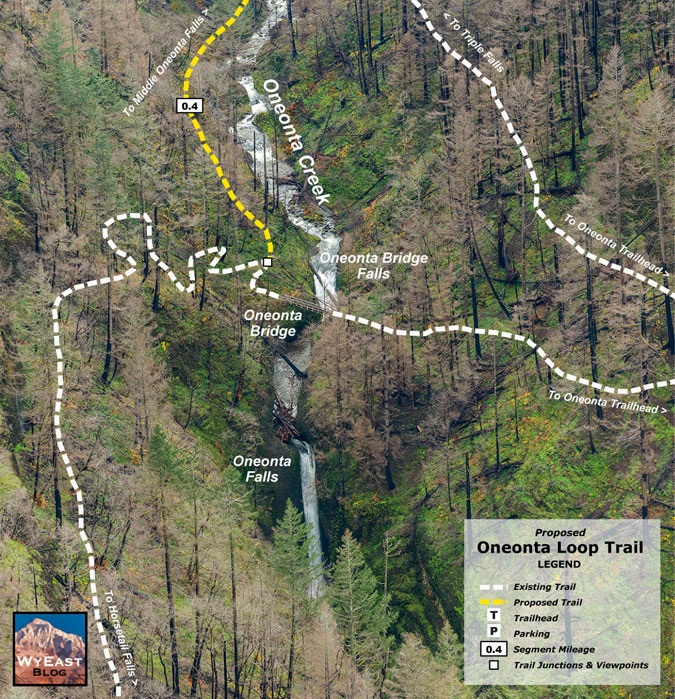
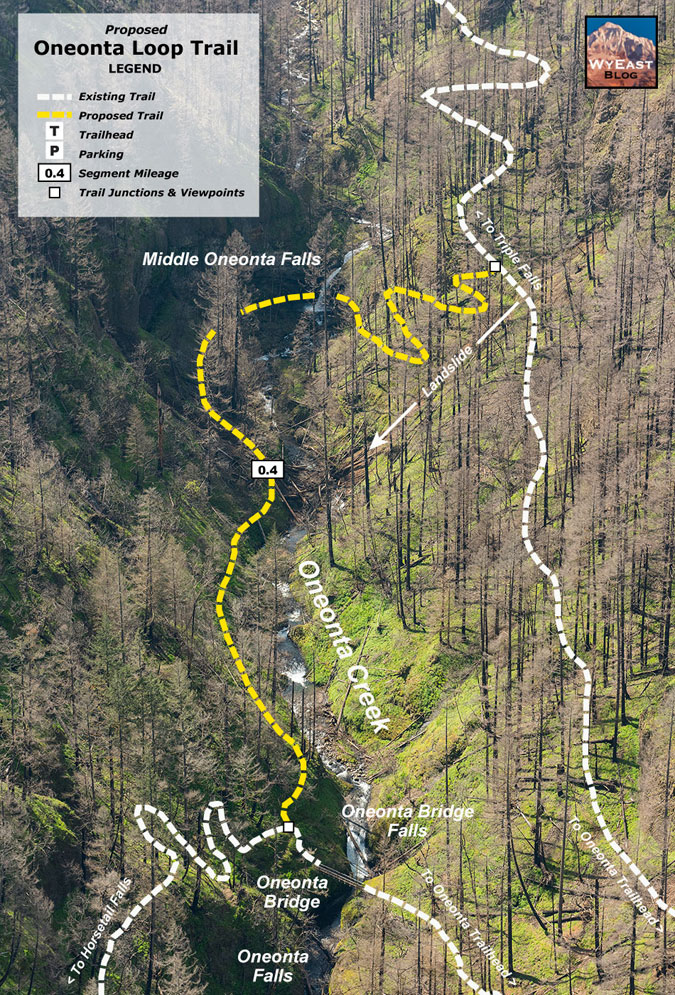
The first view (below) captures the existing Oneonta Canyon trail system from Oneonta Falls to Triple Falls, with the proposed new loop trail shown in yellow. The new loop trail would follow the more stable east side of Oneonta Canyon, avoiding the landslide on the west side (which is also shown on the map).

[click here for a large map]

As the above map shows, another benefit of the proposed loop is that it could also serve as a reroute for the existing Oneonta Creek Trail if it becomes impossible to maintain a trail across the landslide, as the new loop would connect to the main trail upstream from the slide.

The next series of maps walk through the proposed loop trail in more detail, starting at the bottom, where the new trail would begin where a social path already extends into the canyon from the lower Oneonta Bridge (below).

[click here for a large map]

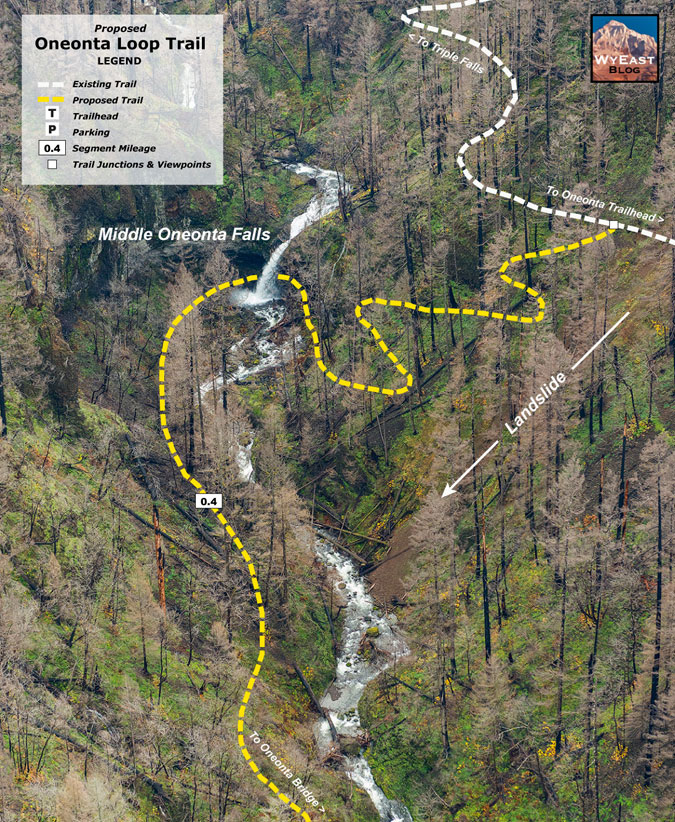
From there, the route to Middle Oneonta Falls is surprisingly straightforward (below), and quite short — less than one-half mile. This would make the falls an easy destination for young families and hikers who don’t want to tackle the longer and more strenuous climb to Triple Falls.

[click here for a large map]

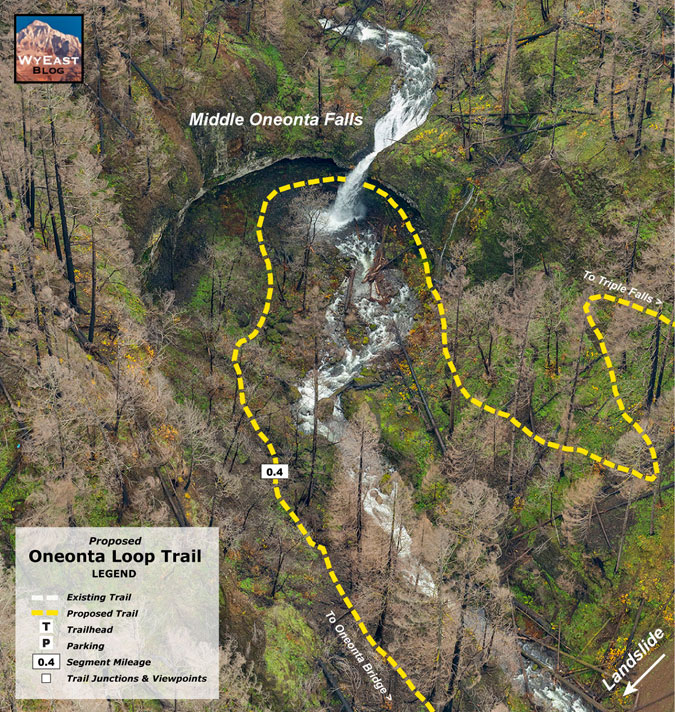
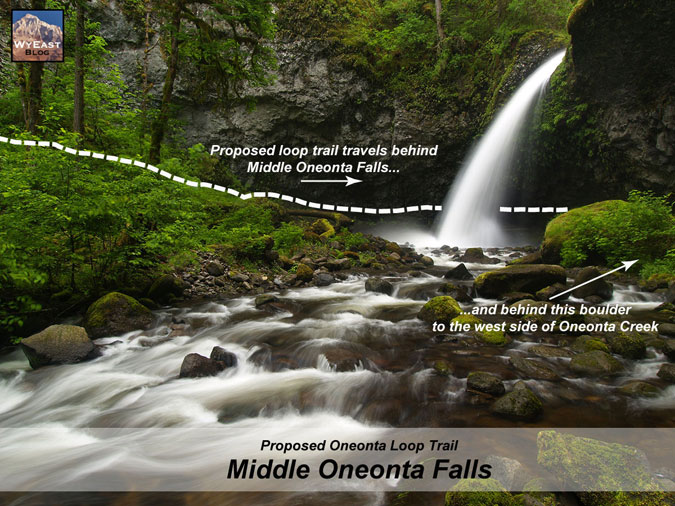
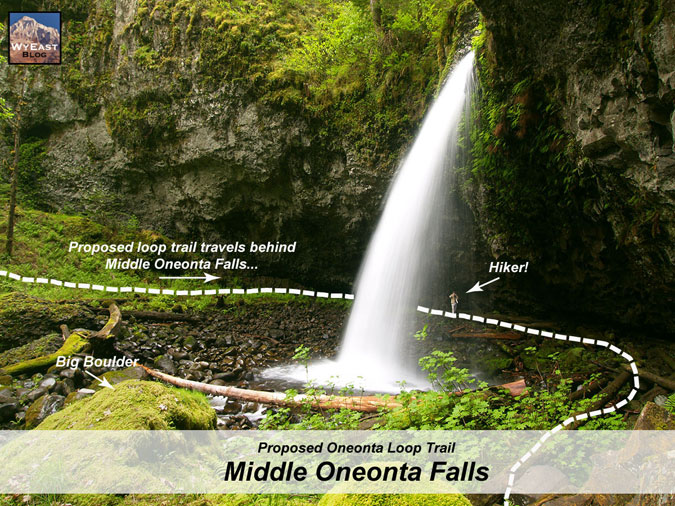
Once at Middle Oneonta Falls (below), the new trail would take advantage of the huge cavern behind the falls to avoid building and maintaining another trail bridge, and simply pass behind the falls, instead. 

[click here for a large map]

For hikers coming from the Horsetail Falls trailhead, this would also be the second behind-the-falls experience, having already passed behind Ponytail Falls along the way. This would make the hike to Middle Oneonta Falls a magnet for families with kids, as nothing quite compares with being in a cave behind a waterfall for young hikers!

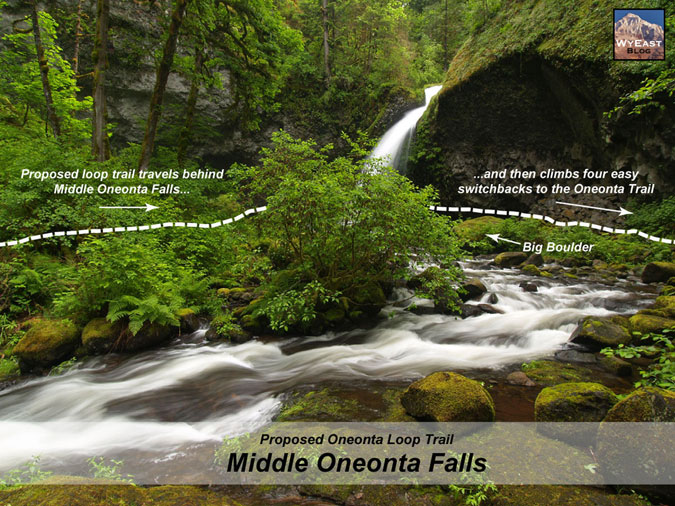
After passing behind Middle Oneonta Falls, the new loop trail (below) would climb the west slope of Oneonta Canyon just upstream from the slide in a series of four switchbacks, and rejoin the main trail. From there, hikers could continue on to Triple Falls or turn back to the trailhead to complete the new loop.

[click here for a large map]

The next few schematics show how the trail would pass behind beautiful Middle Oneonta Falls. The first view (below) is from slightly downstream, and shows the forested bench opposite the falls where the new trail would descend toward the cave.

[click here for a large schematic]

The next view (below) is from the base of the cliffs at the west side of the falls. The big boulder shown in the previous schematic should help you orient this view, as it is marked in both schematics. This view provides a better look into the cave, which is made up of loose river cobbles and well above the stream level in all but the heaviest runoff. Note my fellow waterfall explorer behind the 90-foot falls (!) for scale. 

[click here for a large schematic]

A third schematic of the falls (below) is from further downstream. This view gives a better sense of the large bench in front of the falls where the approach trail would be located, and how the exit from the cave would navigate a narrow spot between the creek (by the “Big Boulder”) and cliffs on the west side of the falls.

[click here for a large schematic]

As the photos in these schematics show, this is an exceptionally beautiful spot, and though it is now recovering from the fire, it would still make for an easy and popular new destination in the Gorge. Would more visitors make it less pristine? Perhaps, but on my last trips to Middle Oneonta Falls I had to clean up campfire rings built directly adjacent to the creek and carry out beer cans and trash, so it’s also true that legitimizing the trail here would bring “eyes on the forest that would help discourage this sort of thoughtless damage.

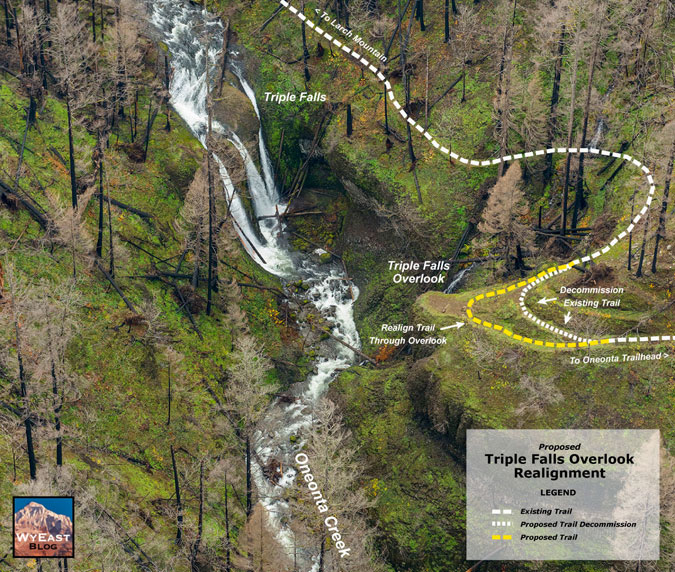
Further upstream, there’s also work to do at Triple Falls. This map (below) shows how the main trail could be relocated to follow the existing (and seldom used) spur to the viewpoint and be extended to simply bypass the section of existing trail that drives creation of social trails.

[click here for a large map]

This would provide a long-term solution to the maze of social paths that have formed between the existing trail and the Triple Falls viewpoint. This is a very simple fix, and should be done immediately, while the area is still closed to hikers and the burned over ground and exposed rock make trail construction much easier.

What would it take?

The entirety of Oneonta Canyon is within the Mount Hood National Forest, but administered by the Columbia River Gorge National Scenic Area (CRGNSA) unit of the Forest Service. Despite the creation of the scenic area in 1986 as a celebration of the beauty of the Gorge, there have been no new trails on Forest Service lands in the western Gorge for more than three decades. In fact, the agency has periodically proposed abandoning some of the lightly used backcountry trails in the Mark O. Hatfield Wilderness that have fallen behind in maintenance. 

Oneonta Creek scene before the fire near Triple Falls

The Forest Service is reacting to a long period of strained recreation budgets dating back to the 1990s, but our recent history of disinvestment should not prevent us from looking ahead to the needs of this century. The lack of a future vision is part of what prevents new trails from being designed and built, as there are already plenty of ideas for new trails that could be sustainably built in the western Gorge to help take pressure off the existing system.

The last new trail built in this part of the Columbia River Gorge is the Wahclella Falls loop, completed in 1988. Today, this wonderful loop trail is iconic and among the most beloved in the Gorge. But until the 1980s, a brushy, sketchy user path is how hikers reached Wahclella Falls. Recognizing the need to formalize an official trail, the Forest Service worked with volunteers who completely rebuilt the old trail and added a new leg on the west side of the canyon, creating the well-designed, exceptional loop we know today.

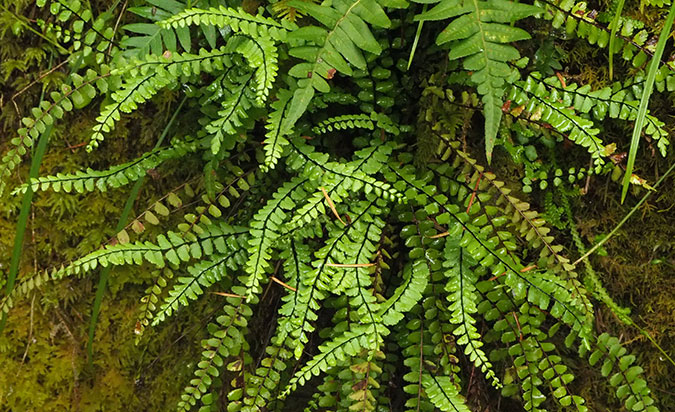
Tiny Maidenhair spleenwort (for scale, the larger fronds at the top of Licorice fern!) are as uncommon as they are beautiful, and are found along the Oneonta Creek Trail near Triple Falls

This proposal for an Oneonta Loop trail would be a great candidate for a similar effort, with Forest Service and volunteer workers creating a new trail that would not only provide a much-needed trail option in the western Gorge, but that would also remedy the social trails that have developed and potentially serve as a new, main route if the landslide on the current trail cannot be stabilized. 

In the aftermath of the Eagle Creek Fire, now is a perfect time to reboot trail building in the Gorge and Oneonta would be the perfect spot to get started. The area is still closed to the public, and trail volunteers have already begin scouting the trail to assess fire damage and make plans for repairs. This scouting work could be expanded to site the new loop trail, and there’s no better way to bring volunteers to trail projects than to build new trails. 

Civilian Conservation Corps (CCC) crews building the cliff-hugging trail above Elowah Falls in 1936

And finally, consider this: almost all of the trails in the Columbia Gorge (and the rest of Mount Hood National Forest) were built over the course of just two decades, in the 1920s and 30s. Amazingly, the system we have today is less than half of what was existed before the industrial logging era began after World War II. And in that period of decline, few new trails were added.

While forest trails were initially built as basic transportation for forest rangers, the Great Depression brought a new focus on recreation and enhancing our public lands through the work of the Civilian Conservation Corps (CCA) and Works Progress Administration (WPA). Our best trails were built during this golden age of trail construction, when trails were designed to thrill hikers with amazing views and adventures. These federal workforce program were put in place under Franklin D. Roosevelt as part of the national recovery plan, when unemployment during the Great Depression exceeded 20 percent, with no end in sight.

Sound familiar? Our normally gridlocked U.S. Congress has just allocated nearly $4 trillion in emergency funding to shore up the country as an unprecedented Coronavirus pandemic takes hold. And congressional leaders are already proposing more stimulus funding in the form of public infrastructure to continue pumping money into the economy and creating work for the jobless. Are we on the brink of another trail-building renaissance in our national forests? Quite possibly — but only if we begin planning for that possibility now.

___________________

And one more thing…

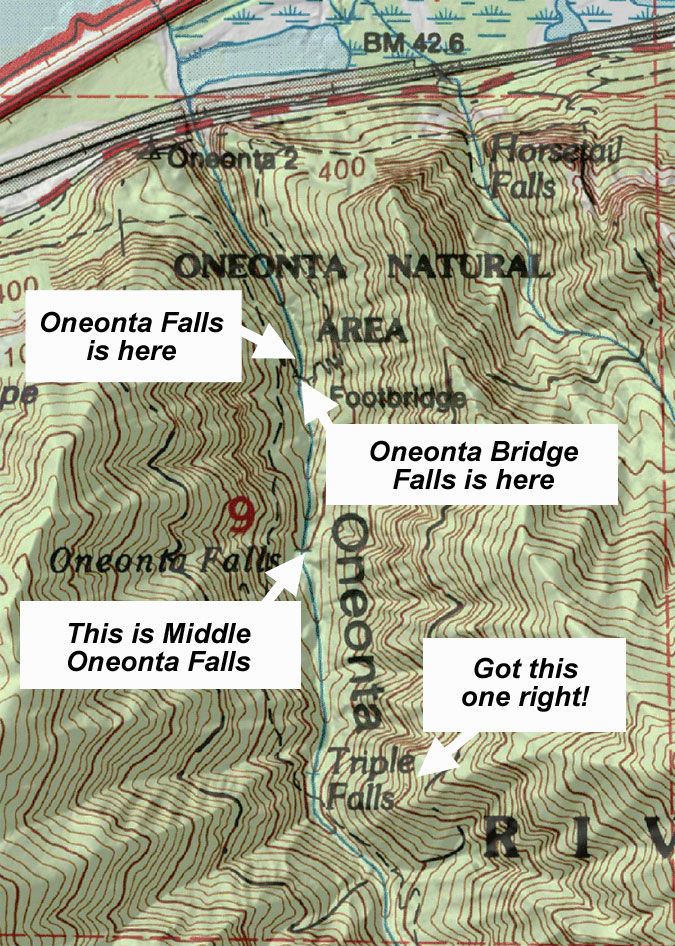
There is a LOT of confusion about place names on Oneonta Creek. USGS topographic maps show only Oneonta Falls and Triple Falls, but Oneonta Falls is shown where Middle Oneonta Falls is located. This is clearly a map error, though one that has endured (and confused) for a very long time. In fact, Oneonta Falls is the tall, narrow falls at the head of Oneonta Gorge and is identified as such in early photos of the Gorge taken long before anyone knew much about the upper canyon.

A case of mistaken waterfall identity at Oneonta…

Meanwhile, there’s a small waterfall right in front of the lower Oneonta footbridge that is often called “Middle Oneonta Falls”, only because it’s in plain sight and so few know that there’s a much larger “Middle Oneonta Falls” just a half-mile upstream. Fortunately, the USGS got Triple Falls right!

So, for the purpose of this article (and in general), I refer to the small falls by the lower footbridge as “Oneonta Bridge Falls”, just to clear things up a bit. Creative, right? Well, neither is “Triple Falls”! Or “Middle Oneonta Falls”, for that matter! But at least we know which waterfalls we’re talking about. Remember, there’s no detail too small for THIS blog!

Thanks again for reading this far, folks!

___________________

Tom Kloster | May 2020

Let’s clear the logjam at Oneonta Gorge

The logjam at Oneonta Gorge in May 2011

Over nearly a century, a summer rite of passage for thousands of Oregonians has been wading through the vertical-walled Oneonta Gorge to the beautiful falls hidden at the head of this slot-canyon. Since 1914, the old Columbia River Highway has brought a steady stream of visitors to the tempting view into the gorge from atop a graceful bridge.

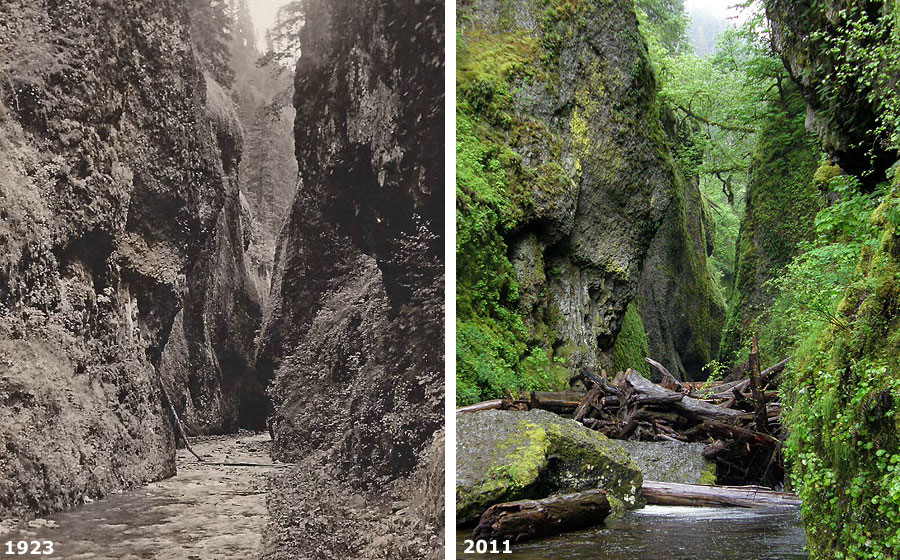
More recently, this tradition has been tarnished by a series of natural events that have made the trip up Oneonta Gorge downright dangerous. First, a rockfall near the entrance to the Gorge in the late 1990s that left three pickup-sized boulders in the stream. Then a logjam formed behind the boulders, creating a slippery maze that hundreds of visitors each summer now struggle to navigate. Sadly, the danger prevents many families with children from even attempting the trip.

Two weeks ago, Portlanders were reminded of the dangers of the logjam when 22-year old hiker Hassan Roussi tragically — and needlessly — drowned after slipping on the logjam. In the spirit of preventing another tragedy at Oneonta Gorge, this article proposes a few solutions that address both the safety and quality of experience for visitors to this uniquely beautiful place.

Phase 1: Log the Logjam

The logjam must go. Immediately. Just saw it out, with chainsaws. The log pile took one life this month, and that’s one too many. Add the many unreported accidents that have likely occurred here, and it’s long overdue to simply remove the hazard.

The logjam and boulders that created it are a recent change at Oneonta

(click here for a larger version of this comparison)

Forget any excuses about ecological concerns, the stream playing out its natural processes or budget constraints. The arguments in favor of removing the logjam are simple:

Environmental Impacts: hundreds of visitors hike through Oneonta Gorge every summer, so the stream is only as pristine as a few hundred pairs of feet allow. Running chainsaws during an “in water” window, when salmon and steelhead are not spawning, would be no more disruptive than any of the in-stream activities that occur across the Mount Hood National Forest every year — from road projects and culvert repairs to timber harvesting.

Natural Systems: it’s true that Oneonta Creek has flushed logs from the drainage for millennia, so why one just let the natural order play out? One simple reason is public safety, of course. Unless the Forest Service is willing to close the gorge to visitors, then clearing the logjam is the only responsible option.

But there is also an economic argument against allowing the logjam to grow: eventually, it could burst during a flood event, pushing a wall of rock, logs and water against the pair of highway bridges and railroad bridge, 100 yards downstream. The result could be disastrous for these historic structures. Removing the logjam just makes sense for ODOT.

Budget Constraints: this is the standard argument for doing nothing in our national forests, but at some point, the agency will be held legally accountable for allowing recreation hazards like the logjam to persist. It might take that kind of shock to the system for the Forest Service to put recreation — and especially safety needs — ahead of other forest projects. Given the logjam has been accumulating since the 1990s, there has been plenty of opportunity for the agency to remedy this problem.

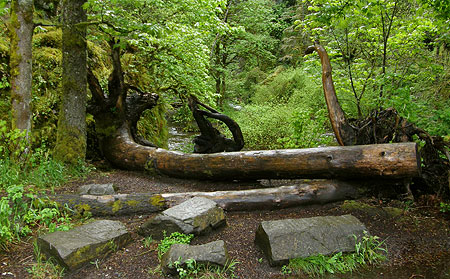
Signs like this mark the bootpaths to Oneonta Gorge

Though these signs are mostly intended to absolve the USFS from legal action, they don’t excuse the agency for allowing this hazard to accumulate

Since the boulders that created the logjam will likely take decades (or centuries) to move downstream from Oneonta Gorge, periodic logging out of accumulated debris is the obvious and appropriate action. It should happen this summer — with the recent tragedy as the impetus for fast-tracking this project. There really is no excuse for waiting.

This is completely within the scope and funding capability of the Forest Service, but could also be a joint responsibility shared with ODOT, given the risk the logjam represents for the highway bridges. It’s also a moral imperative for public agency stewards, given the risk to visitors, and the fatal outcome last week.

After the present logjam is cleared, it should be logged out regularly, perhaps every year or two. Just as other trails in the forest are cleared of winter downfall, Oneonta Gorge should be regularly cleared of dangerous logs.

Phase 2: Embrace the Bootpaths

The safety concerns at Oneonta Gorge aren’t limited to the logjam. Visitors to the area are naturally tempted by the view into the gorge from the historic Columbia River Highway bridge over Oneonta Creek, and an inviting stairway leads down from the bridge to the west bank of the stream.

Oneonta Creek from the historic highway bridge

Once at the bottom of the stairs, visitors usually follow a braided system of unofficial boot paths that climb along the west wall of the canyon, formed by thousands of feet that have tramped this way for decades.

Much of this path is a watery slog in the rainy months, ending in a slippery scramble over rock outcrops, but all of it is completely salvageable as a trail, with careful design and some tread work.

The swampy boot path along the west approach to Oneonta Gorge

On the east side of the bridge, the Forest Service and ODOT have done their best to deny access to the stream, but with little success. Hikers have pushed beyond the piled logs and root wads at the “trailhead”, keeping the long-established route to the creek obvious and well-used.

Like the boot path along the west side of the creek, the east approach would be easily upgraded to a formal trail with a bit of design and tread work.

Nice try, but no dice: intrepid creek explorers aren’t stopped by this Forest Service blockade at the east approach to Oneonta Gorge

Together, the pair of boot paths flanking Oneonta Creek offer an excellent trail opportunity. Instead of trying to keep visitors out, a formal loop trail could safely bring less hardy hikers right to the mouth of Oneonta Gorge, while better managing some of the streamside impacts that the current maze of informal routes create.

The Proposal

Over the past decade, ODOT has spent a considerable amount restoring a section of the Historic Columbia River Highway at Oneonta Creek. The project included repaving the old highway and converting it to a hike/bike trail, with new parking for visitors and, most notably, restoring the old highway tunnel through Oneonta Bluff.

The beautifully restored Oneonta Tunnel

The highway restoration project was done beautifully, but many in the recreation community questioned the expense, given the many other unmet recreation needs in the area — the Oneonta logjam among them. Now is the time to backfill this project with trail improvements that connect the restored highway to the Oneonta Gorge — the main attraction in this area.

This proposal is simple: build on the beautiful restoration of the old highway and tunnel with a simple loop trail that follows the existing boot paths to the mouth of Oneonta Gorge. Coupled with removal of the logjam, these paths would lessen the impact of the many visitors who head up the gorge each summer. But the loop would also provide an excellent opportunity for less able hikers and families with children to take a short hike and see Oneonta Gorge, up close.

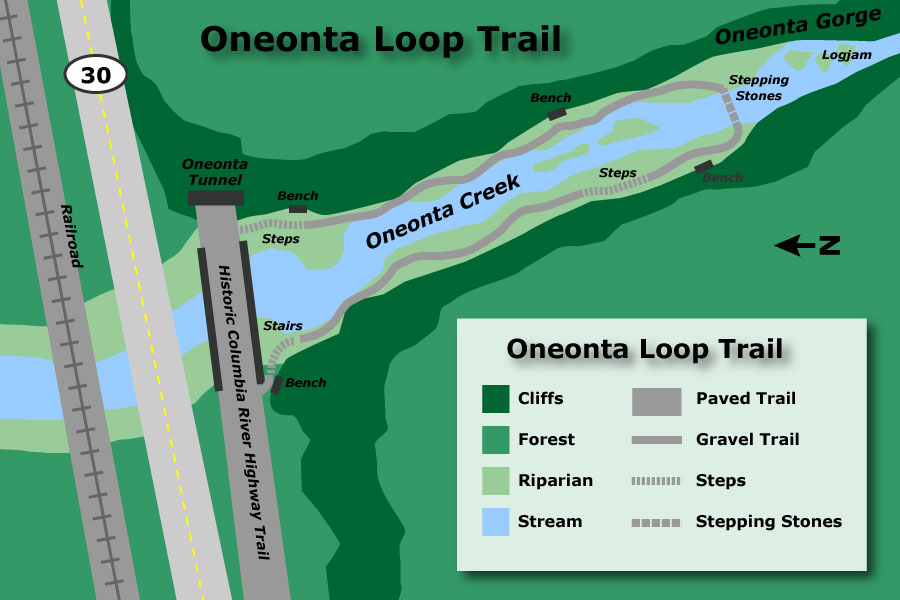
The following map shows the proposed loop trail:

[click here for a larger version of the map]

The loop would expand on several existing elements. First, it would take advantage of the historic stairway at the west end of the old highway bridge as the starting point for the loop, since most visitors already approach from this side of Oneonta Creek.

The stairway sets a wonderful rustic tone for the trail, more like a narrow footpath than a modern trail. This scale should be reflected in how the rest of the loop is designed, as it is perfectly scaled (and completely irresistible) to small children.

The wonderful old stairway at the west end of the Oneonta Bridge

The stairway is in amazingly good repair, given the neglect it has suffered for nearly a century. Though at least one of the railing posts needs to be restored, the stairway is completely serviceable in its present condition.

The bench at the top of the stairs is another important design element, and would be repeated at three new locations along the proposed loop. If the tiny stairway is a perfect magnet for children, the bench is ideal for less able visitors who might walk a portion of the loop, or perhaps just the first few feet of the trail.

The historic bench at the top of the old stairway

Using these basic design cues, the loop would formalize the boot paths on both sides of Oneonta Creek, with the new trail specifically designed for periodic flooding. This is because the entire riparian area between the walls of the gorge is subject to being submerged by high water, so trail elements would have to be designed accordingly.

An excellent design prototype already exists on another Columbia Gorge trail for accomplishing this all-weather design. The newly reconstructed trail at nearby Bridal Veil Falls provides an excellent blueprint for constructing a gravel-surfaced, flood-resistant trail. In the Bridal Veil design, the gravel trail is contained by a low border of basalt rocks (below).

The newly reconstructed Bridal Veil Falls trail

The proposal also calls for steps at a couple of rock outcrops along the west side of Oneonta Creek, and where the loop connects to the old highway on the east side of the creek. These would be mortared steps, in the “CCC” style seen throughout the Columbia River Gorge.

The most unusual element of this trail proposal is the means of crossing Oneonta Creek, at the mouth of Oneonta Gorge. In low water months, this is a slippery rock hop for visitors, but with some careful design and periodic maintenance, it could be designed as a more formalized series of steppingstones, providing a safe crossing over a much longer season.

The steppingstone design would be a durable alternative to a conventional footbridge (which would not be appropriate in this location, given the visual impact), and would also be in tune with the rustic nature of the trail, itself. Depending on water levels and ability, hikers could opt to stop at the crossing, or venture across to complete the loop.

Steppingstone crossing near Pup Creek Falls on the Clackamas River Trail

The Forest Service has also provided an excellent prototype for the steppingstone crossing, though not in the Columbia Gorge. Instead, the stream crossing pictured above, on the Clackamas River Trail, serves as an excellent blueprint. The stream flow in the scene is pictured in mid-winter, and similar to the summer flows on Oneonta Creek. A design like this is clearly feasible at Oneonta, though it would take periodic maintenance to ensure that steppingstones are adjusted or replaced, as needed, to maintain a safe crossing.

Finding a Creative Path Forward

Many of the ideas in these proposals require a break from conventional Forest Service practices, but “no action” at Oneonta Gorge isn’t a serious option. The Forest Service must address the logjam hazard, at a minimum.

Hiker visiting Oneonta Gorge in 1923

The loop trail proposal would move the Oneonta area from a band-aid, substandard level of recreation support to an experience that could be a memorable highlight for many Columbia River Gorge visitors. The public should expect no less from our agency stewards.

How to get there? Clearly, the Forest Service must re-allocate funding to address the safety issue at the logjam, and soon. ODOT could be a partner in this effort, given their interest in protecting the highway bridges downstream.

But it’s also possible that ODOT or the Oregon State Parks could partner with the Forest Service in developing the loop trail. The work could also be underwritten by a corporate sponsor, given the high profile of Oneonta Gorge as a destination along the old highway.

The only limit at Oneonta Gorge is our imagination — and the willingness of our public land stewards to step up to the challenge. Now is the time.