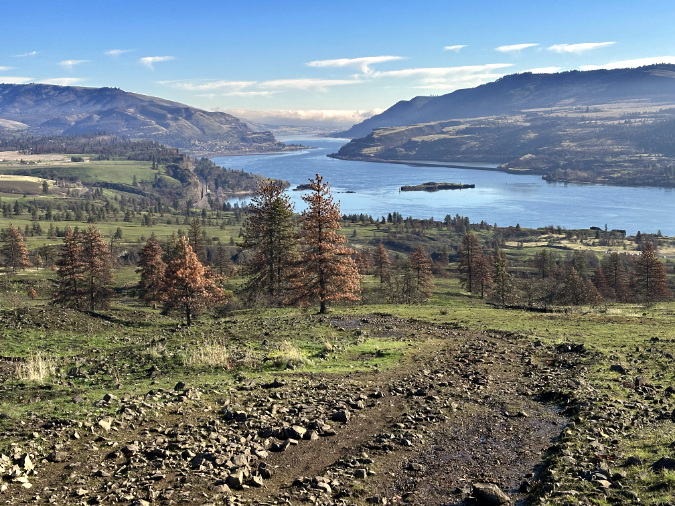
Burdoin Fire: Catherine Creek Surprises!

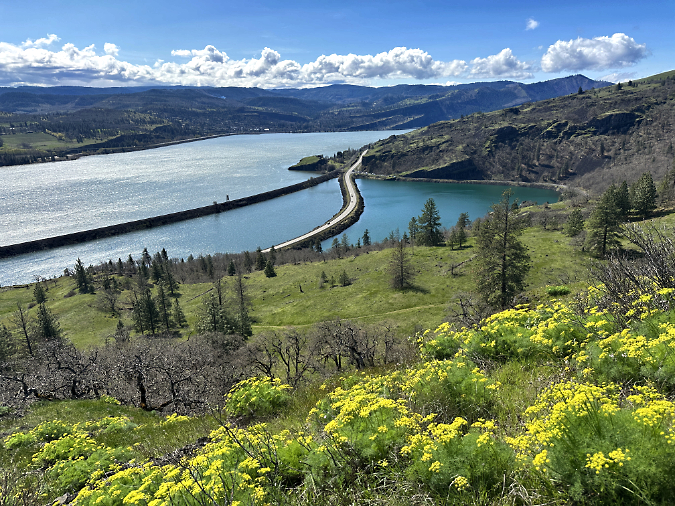
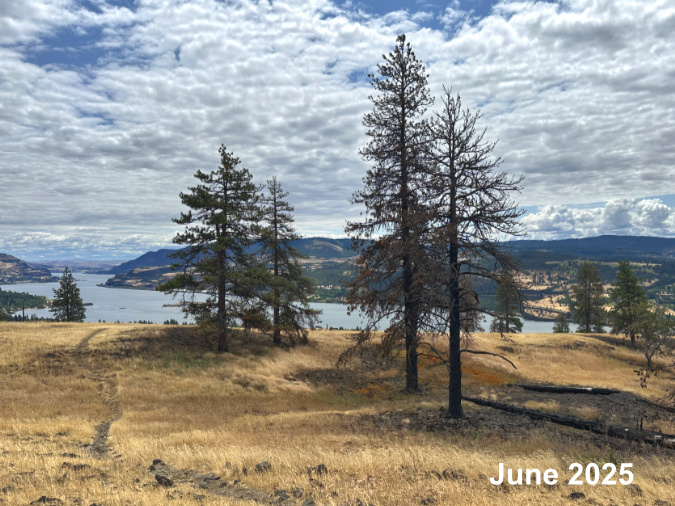
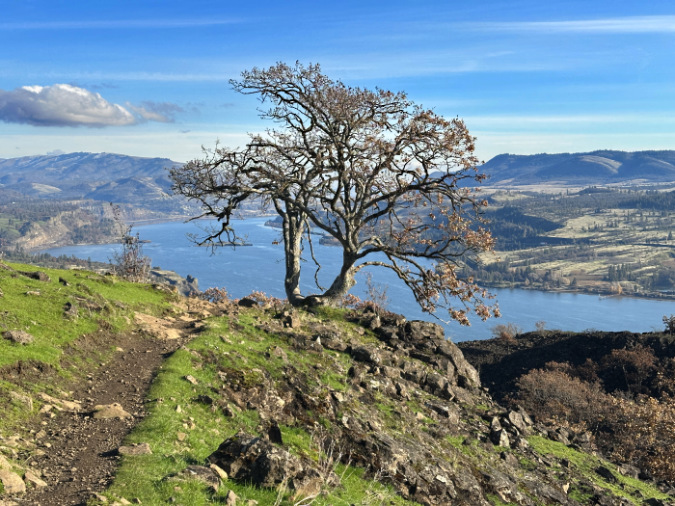
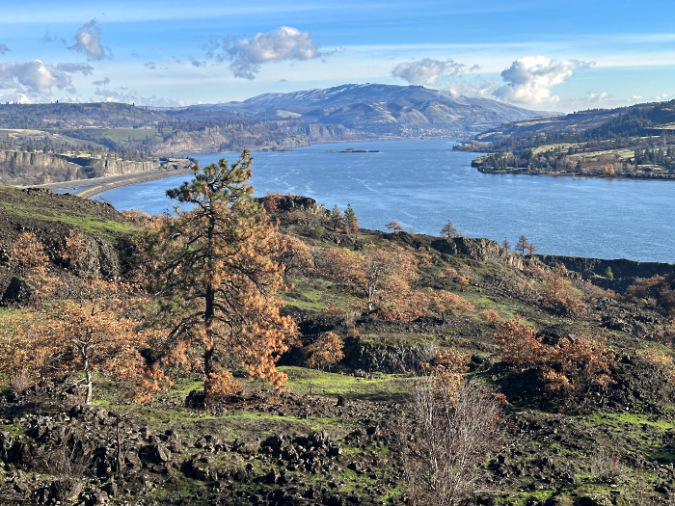
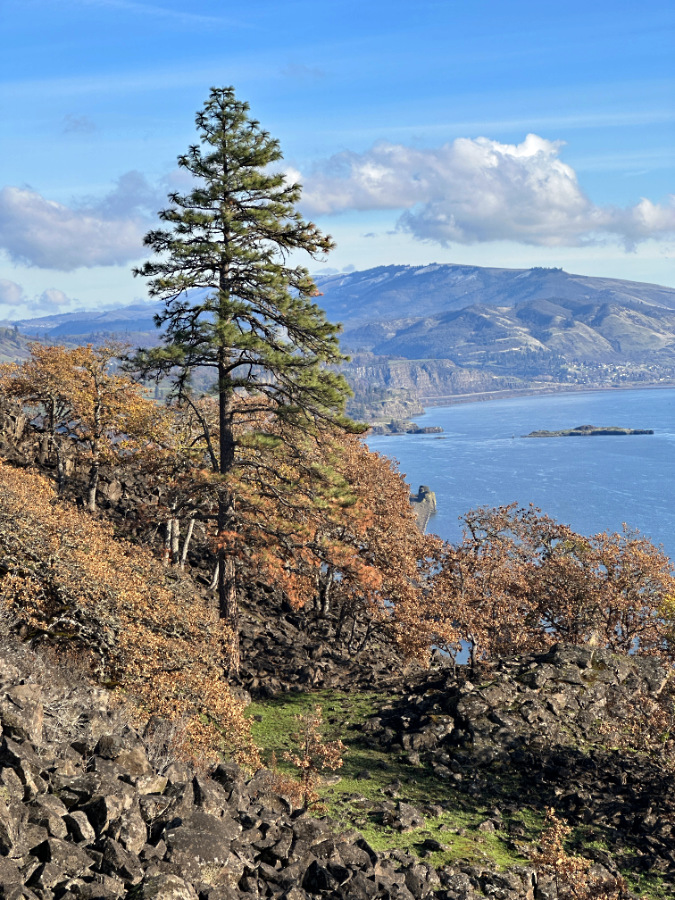
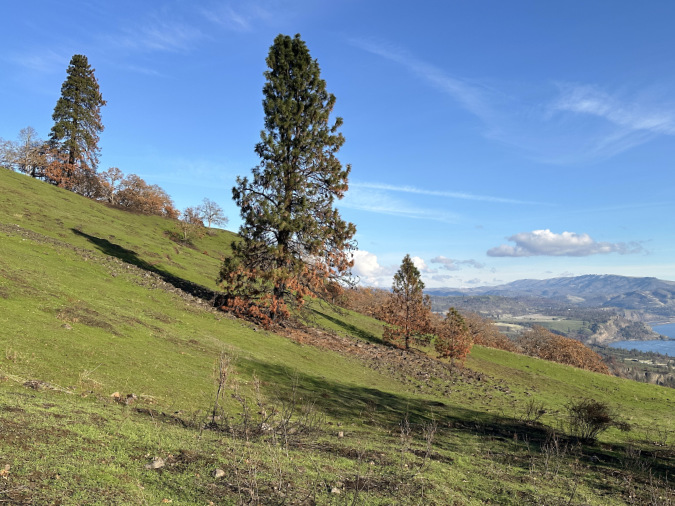
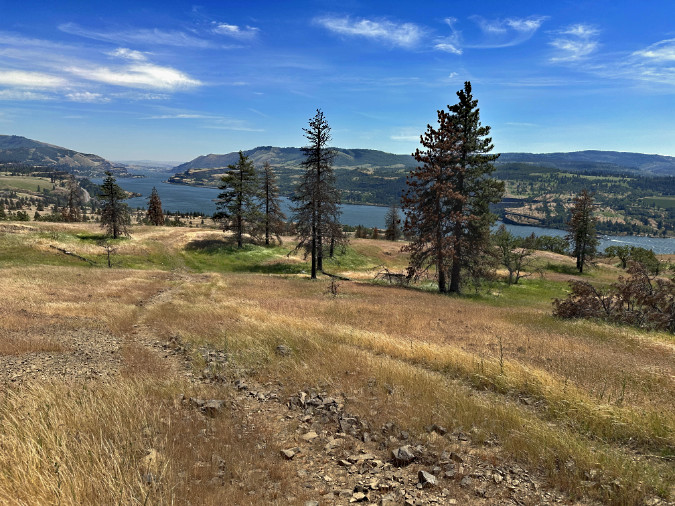
The Catherine Creek savannah already turning to summer hues in early May of this year

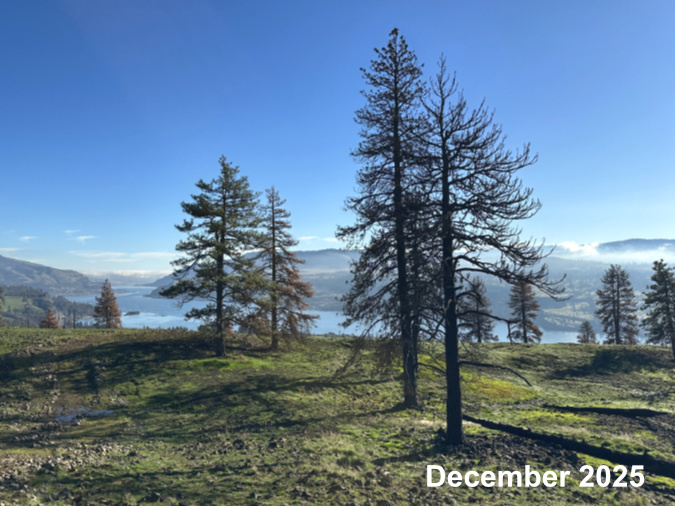
As a follow-up to the previous three-part series on the aftermath of the Burdoin Fire (links to all recent articles on the fires at Catherine Creek are at the bottom of this article), I stopped by West Catherine Creek in early May to check on the recovery, just ten months after the fire swept through last July. The fire burned especially hot here, and less than a year after the 2024 Top of the World Fire had roared through. Things looks especially bleak for the keystone Oregon white oak and Ponderosa pine when I last visited in December.

Here’s the good news: given the back-to-back pummeling this area has endured, the resilience on display on this visit is both surprising and inspiring. Yes, there’s likely a long, hot summer ahead for the survivors, but what I saw last month bodes well for the larger recovery of the larger Catherine Creek savannah. Read on for a deeper dive!

The Bulldozer Road

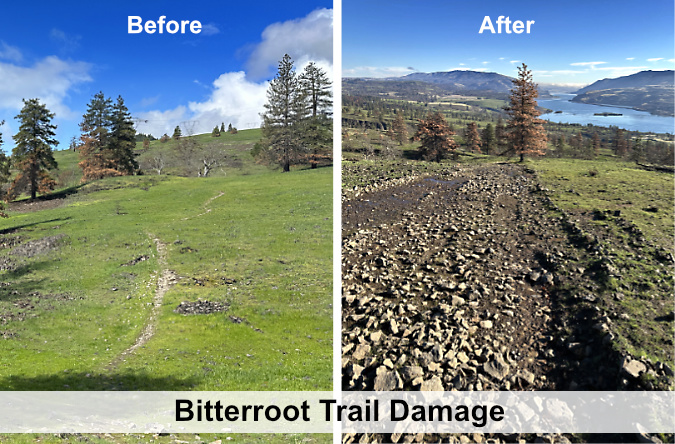
In this earlier article I lamented a new fire lane that had bulldozed the upper portion of the Bitterroot Trail, destroying one of the better informal paths in the Gorge and worsening erosion of already fragile savannah soils in the aftermath of the fire. After posting the previous article, I also learned that the rough state of the fire lane on my last visit was, in fact, the “restored” surface, with no Forest Service plans to further mitigate the impacts. 

The good news: I’ve since learned that the general routing of the fire lane was made on the fly, literally in the heat of the Burdoin Fire event. It was not an intentional effort to erase the Bitterroot Trail. Still more encouraging, there’s a real possibility the Forest Service might someday recognize this popular trail as part of the formal system, thus opening the door to non-profits partnering with the agency to retore the tread and improve it to sustainable design standards.
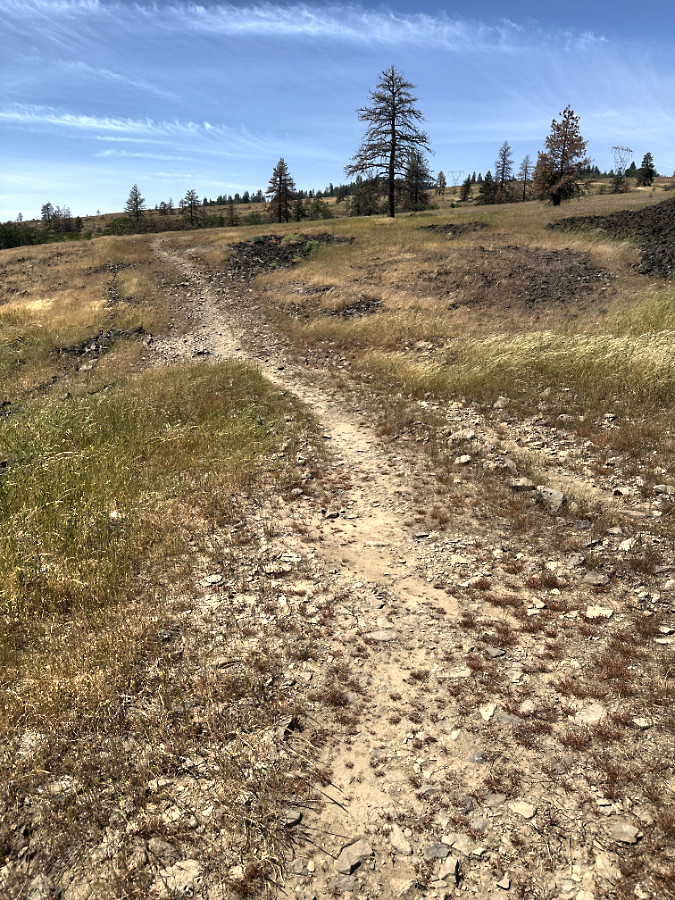
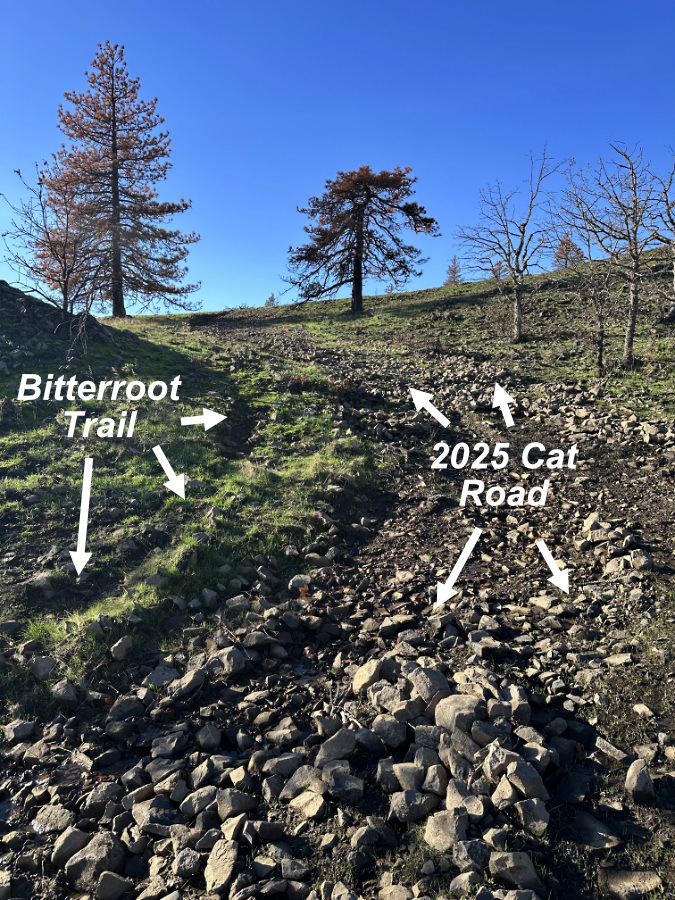
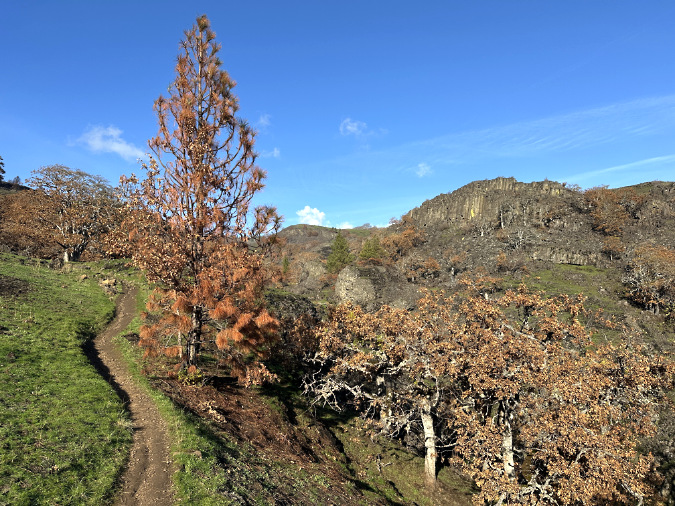
Hikers have already begun to redefine a single path through the bulldozed fire lane that used to be the upper Bitterroot trail

In the meantime, I was reminded on my most recent visit to never underestimate the power of hikers who love their trails. In the five months since my winter visit, hikers had clearly voted with their feet (and boots) on their preferred option among the two ruts left by the bulldozers, thereby beginning an informal restoration of the Bitterroot Trail. 

In most cases, the less popular ruts have already begun to grow over with savannah grasses, and even a few wildflowers. In some of these sections the less-favored ruts have been rejected because of deep erosion leaving them a cobbly, ankle-twisting mess. Messy as they are, these scars, too, will stabilize over time with the recovery of the meadow ecosystem.
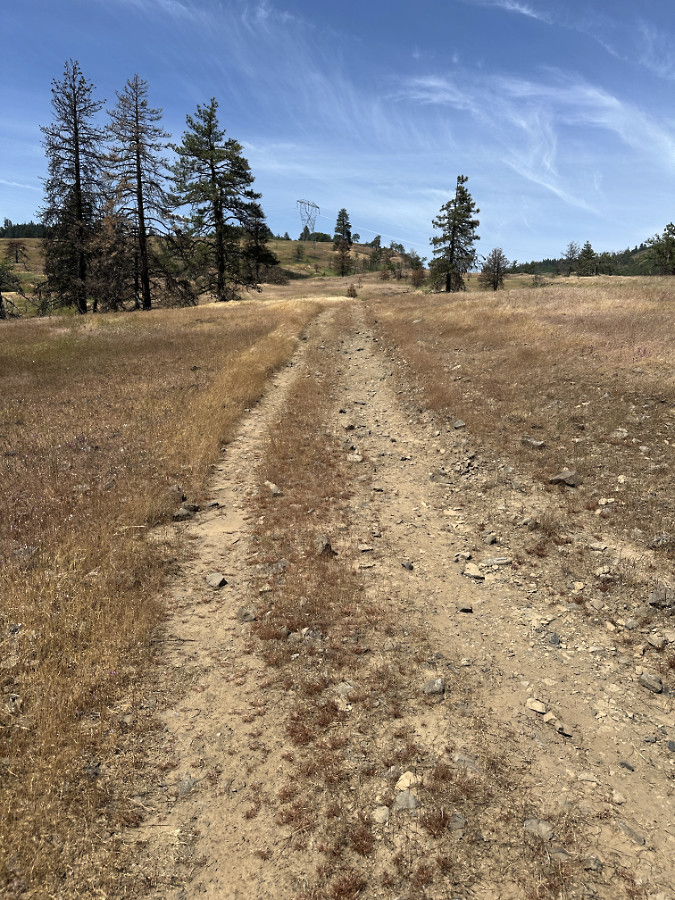
In this section of the fire lane the verdict is split, though on most of the route hikers are picking the uphill (left) track
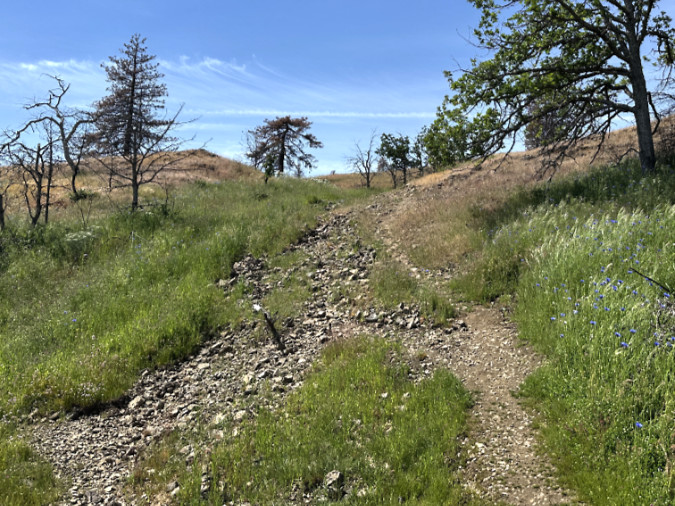
This spot on the old Bitterroot trail was always messy, and the bulldozers made it much worse. Ironically, that was the impetus for hikers to completely circumvent the rocky old route with this surprisingly well-placed path, uphill from the old route

There are still a few spots where a preferred hiker path has yet to emerge, mostly near the upper end of the trail, where the fire lane is quite wide. However, it was also clear that I wasn’t the only hiker kicking rocks off the emerging, hiker-defined tread in an effort to help the Bitterroot Trail once again offer the experience it provided before the Burdoin Fire.
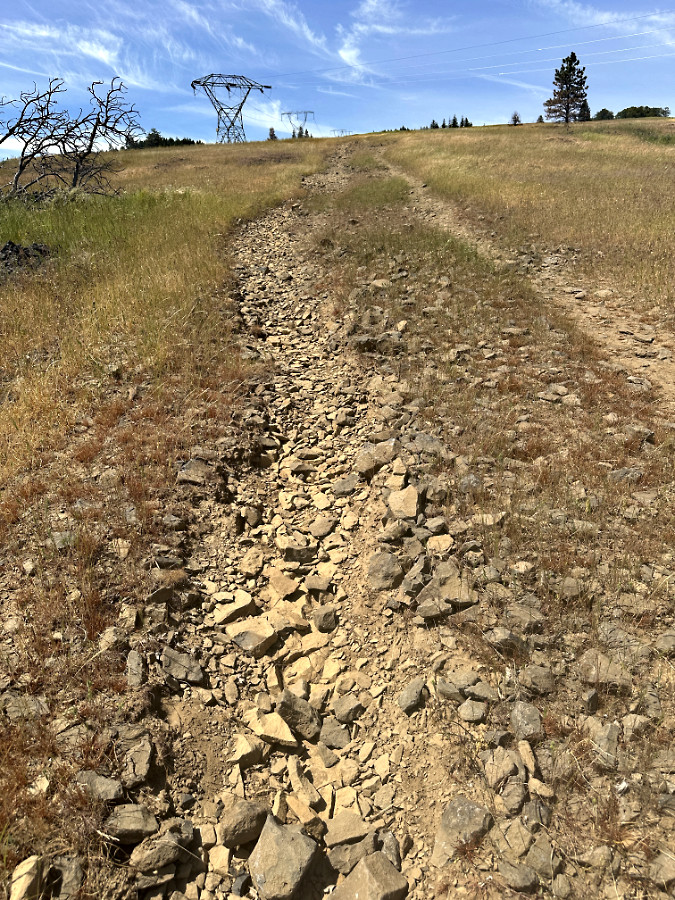
At the upper end of the old Bitterroot Trail the erosion from uncontrolled runoff in the lower track is discouraging, but it has also pushed hikers onto the upper track (on the right), redefining the trail here. Over time, returning savannah grasses and wildflowers should eventually stabilize the eroded track on the left

Then-and-now photos (below) of a spot featured in previous articles on West Catherine Creek show meadow grasses quickly moving into what was a bulldozed mess at this scenic spot along the Bitterroot Trail. It will take more time to completely heal, but it’s encouraging to see the recovery taking hold so quickly, in just the first spring since the fire.
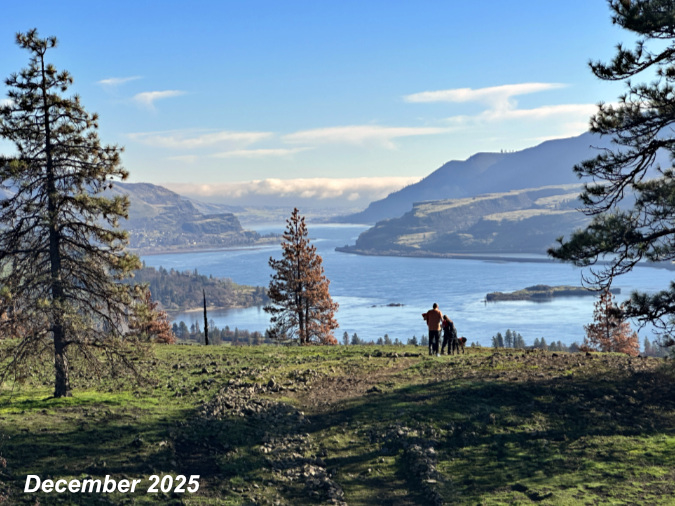
The impact of the bulldozer on the burned landscape was bleak when these hikers struggled through last December…
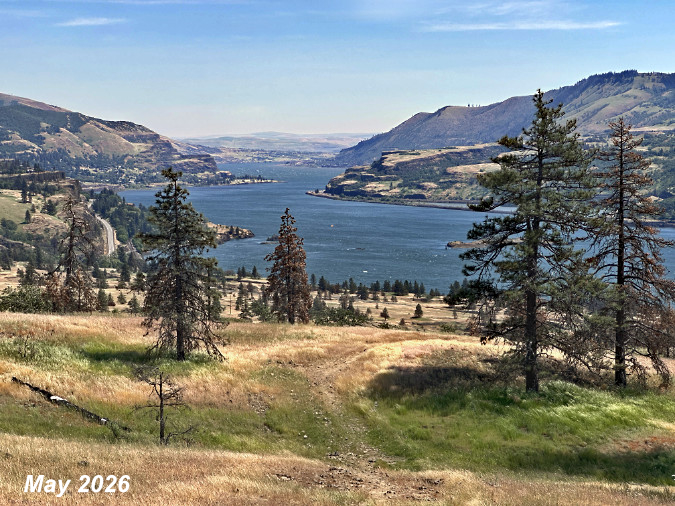
…but spring rains have begun to heal the scars and hikers have begun to restore the footpath with the power of hundreds of determined hiking boots

The Savannah Wildflowers

Wildflowers have surged back to live across the West Catherine Creek savannah in this first spring since the fire. Species that grow from bulbs or rhizomes were especially well-prepared to survive the burn, and seemed mostly unaffected, though wildflowers with less underground reserve are also bouncing back.

While the speed of the wildflower recovery is welcome, it shouldn’t be completely surprising, even with back-to-back fires. Most of these species are not only built for fire, but rely upon it to thrive. This relationship has been on full display after other recent fires in the East Gorge, most notably the massive Substation Fire that burned 80,000 acres along the lower Deschutes River canyon in 2018. There, the ecosystem rebound has been explosive, and provides a helpful preview of what to expect in the years ahead for the Burdoin Fire – provided the area is given time to fully recover.

Who are the stars of the wildflower recovery? The following is a sampler of the most prolific of the late season wildflowers rebounding at the heart of the burn scar….
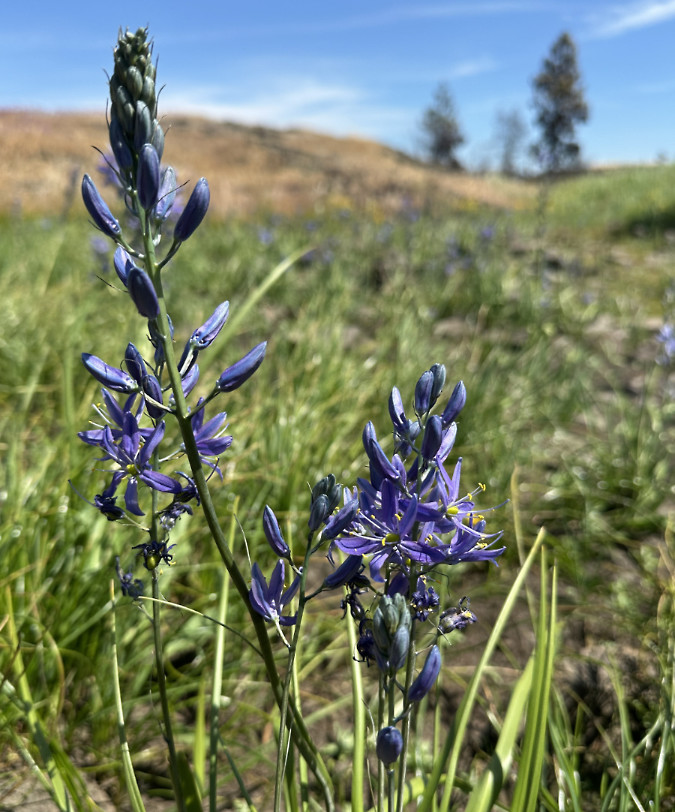
Camas is thriving at the ponds, notable because they are vernal ponds, and had gone dry for the summer at the time of the Burdoin Fire, leaving the soil here exposed to the full brunt of the fire
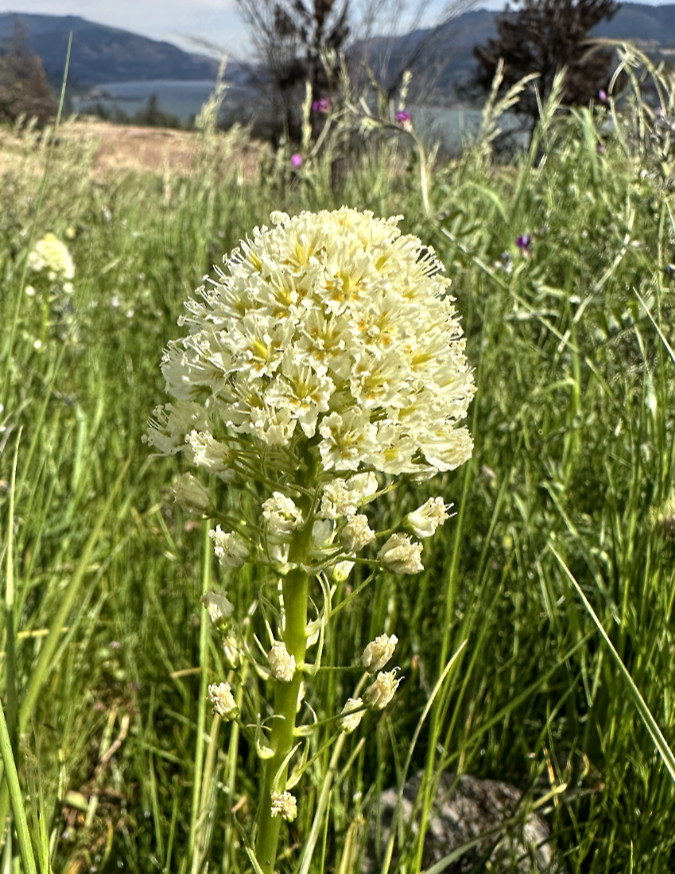
Death Camas is also at the ponds, like its less deadly cousin
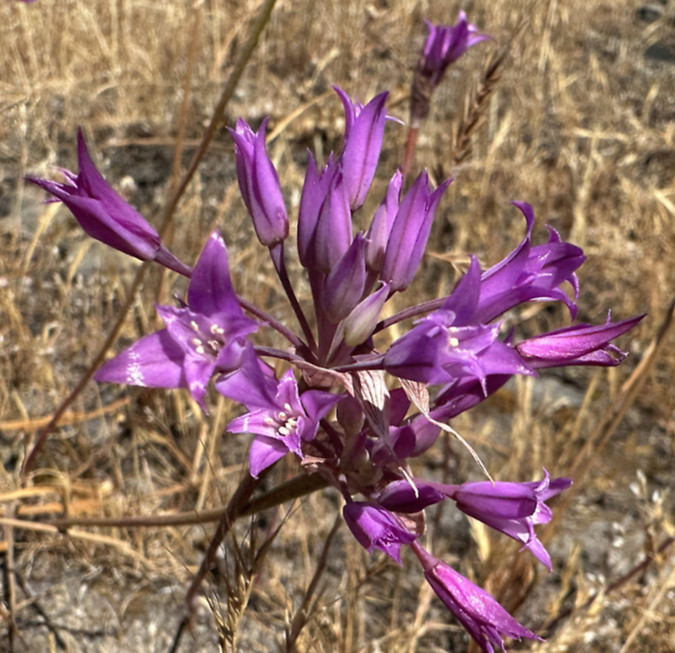
Wild Onion is thriving along the west Catherine Creek Rim, thanks to its tiny onion bulbs that were protected from the fire by several inches of soil
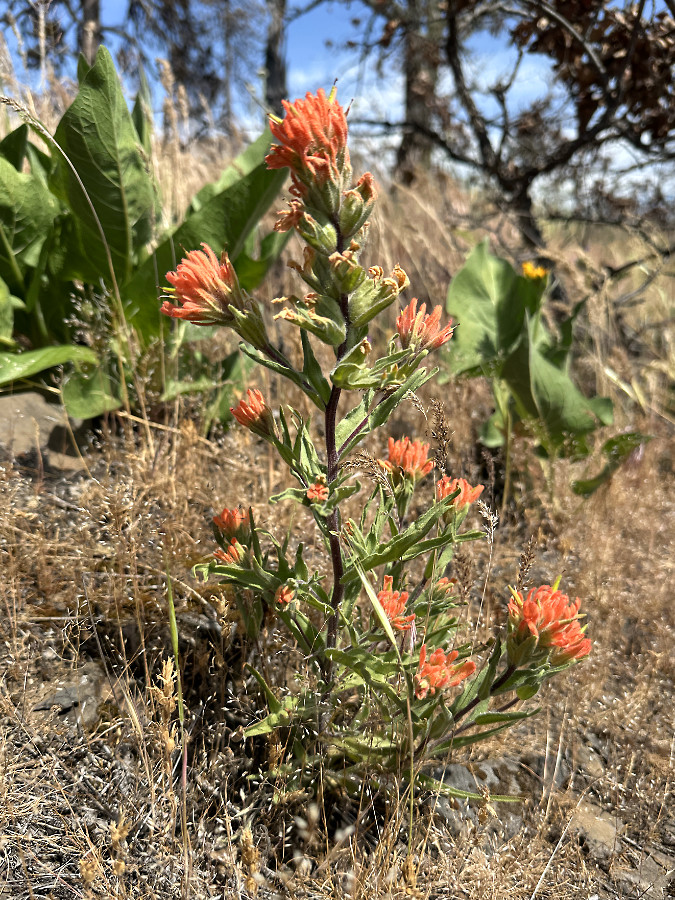
Paintbrush (and Balsamroot, beyond) are thriving above Rowland Wall, but mostly along the cooler margins of the burn. They will be important to reseeding nearby, more severely burned areas
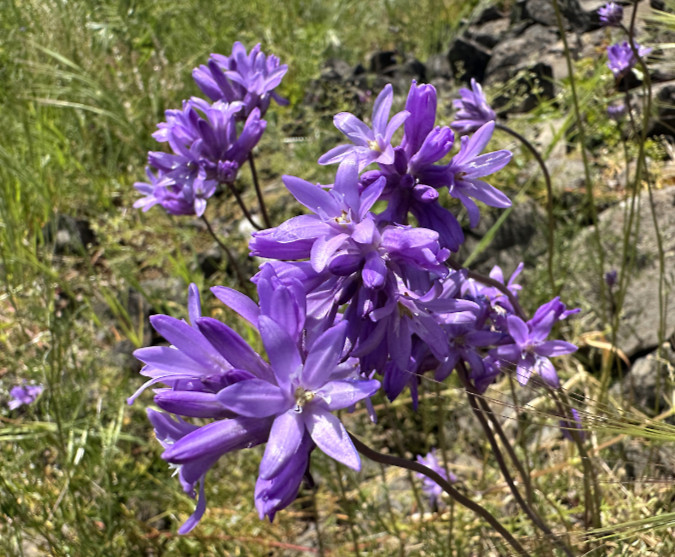
Ookow dotted the savannah, but are most prolific along the west Catherine Creek Rim where the fire was somewhat less intense
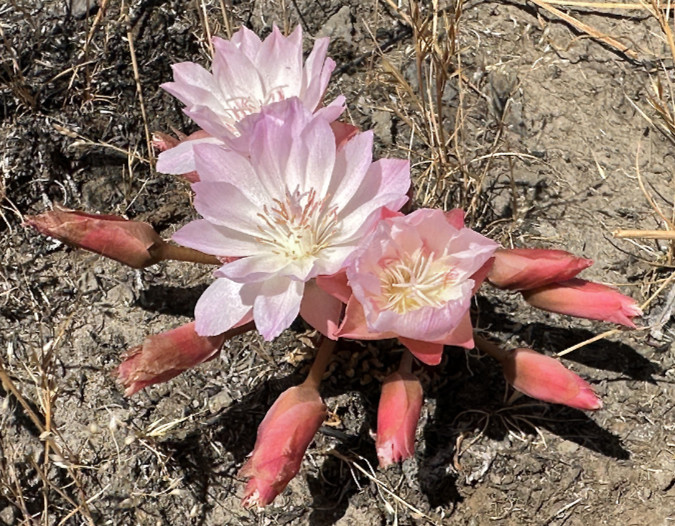
Bitterroot is thriving along the west Catherine Creek Rim and the exposed areas of the Rowland Wall. These unique plants are known for their disappearing act in summer, and had already shed their blooms and foliage before the Burdoin Fire last July. Their tough taproots and brief growth cycle in late winter through spring make these iconic wildflowers especially adapted to fire

If the resiliency of spring wildflowers weren’t enough to inspire optimism, I came across this unexpected resident (below) high in the savannah meadows, along the upper section of the Bitterroot trail. Not much larger than a nickel, this treefrog was sheltering in the shade of a tuft of meadow grass.
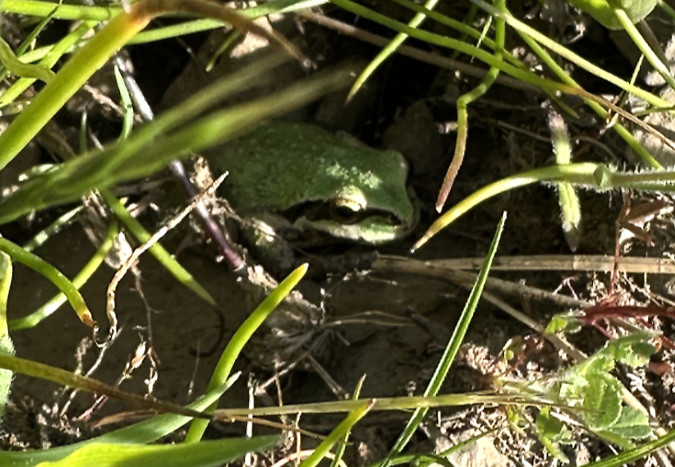
…and an unexpected treefrog high in the savannah meadows!

Though it’s surprising that they can thrive in the desert country east of the Cascades, treefrogs adapt by sheltering in burrows in the heat of summer. This likely helped some of these creatures survive the fire last year, living on to produce another generation of offspring this year.

Oak and Ponderosa Survivors

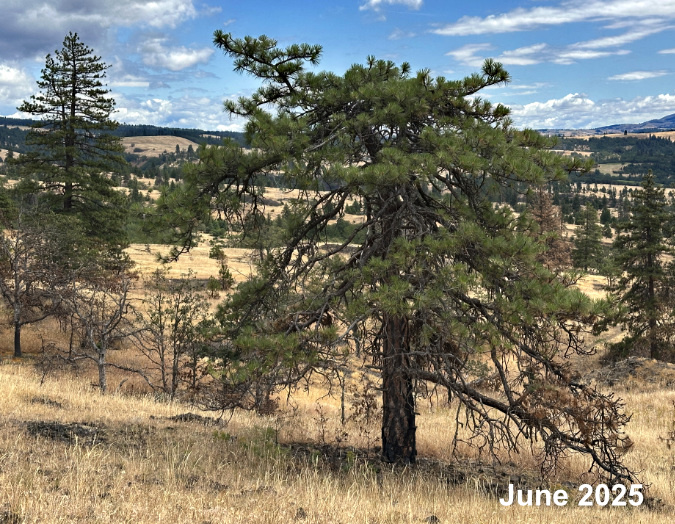
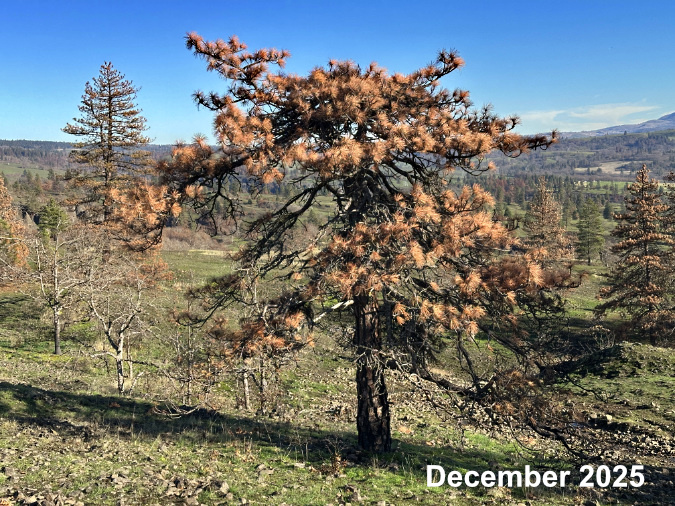
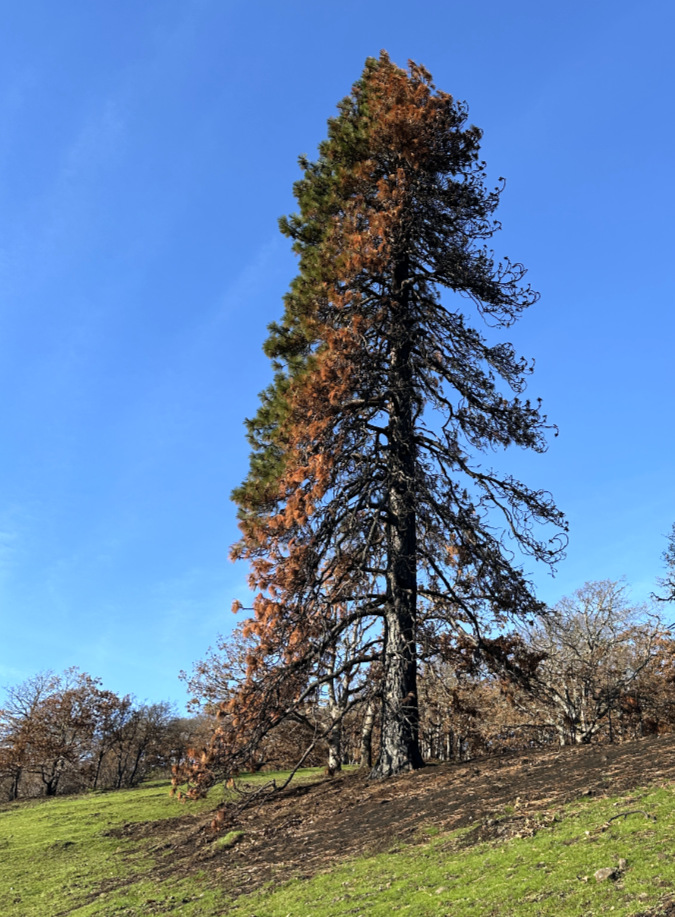
The most unexpected part of the recovery at West Catherine Creek (to me) is the resilience of the Oregon white oak groves and Ponderosa pine sprinkled across the savannah. Their future looked grim when I visited last winter, after the back-to-back fires, but now there are signs of life on even the most badly burned trees. 

A sampling of some of some of the more remarkable survivors follows, some marked with inset boxes for subsequent photos that provide greater detail…
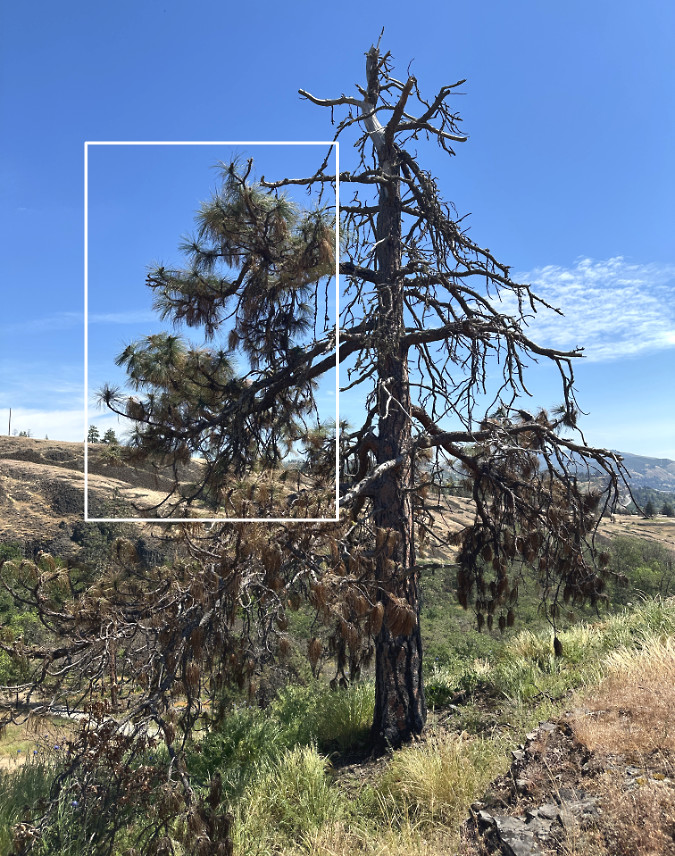
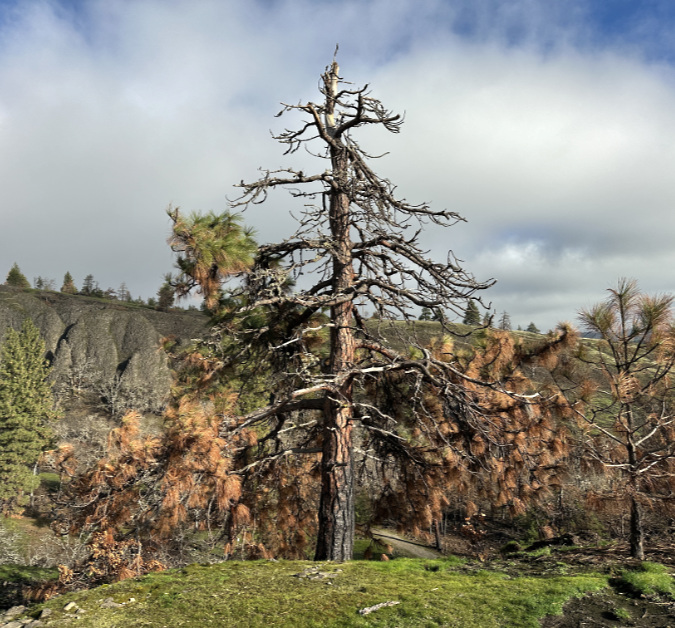
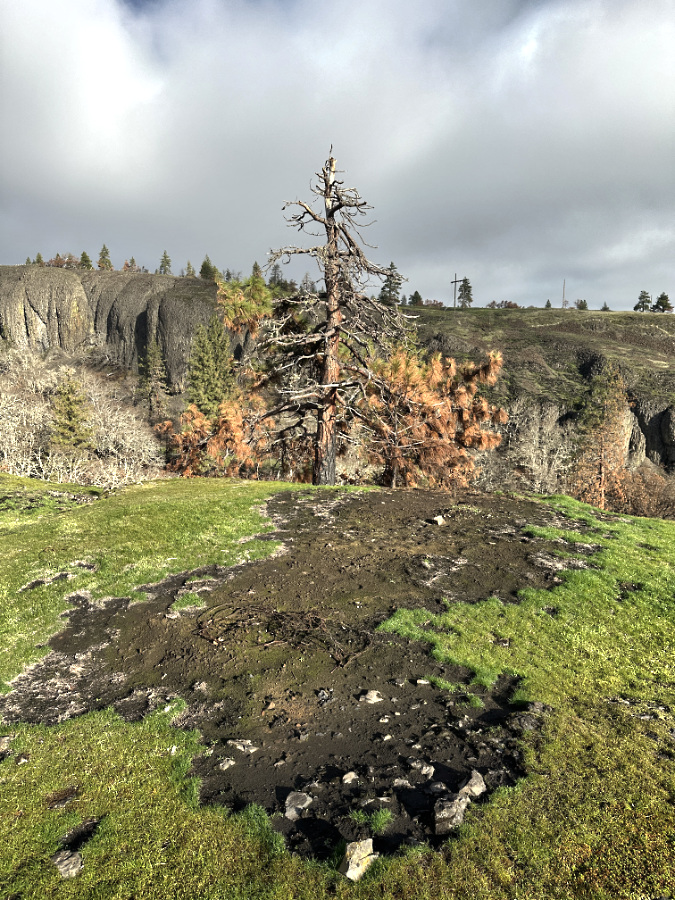
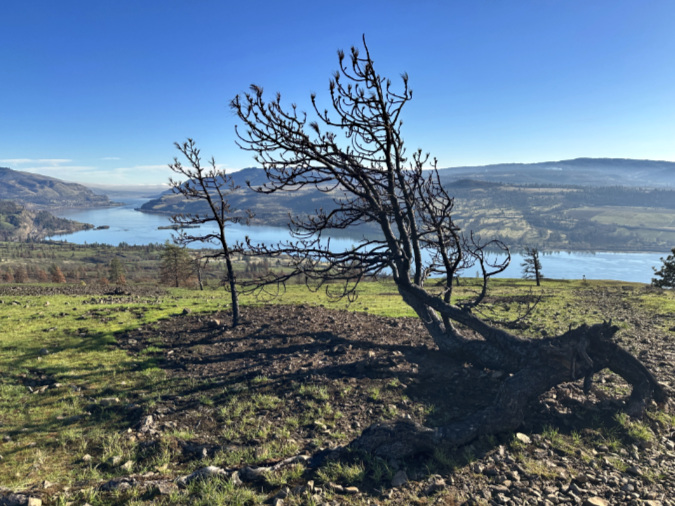
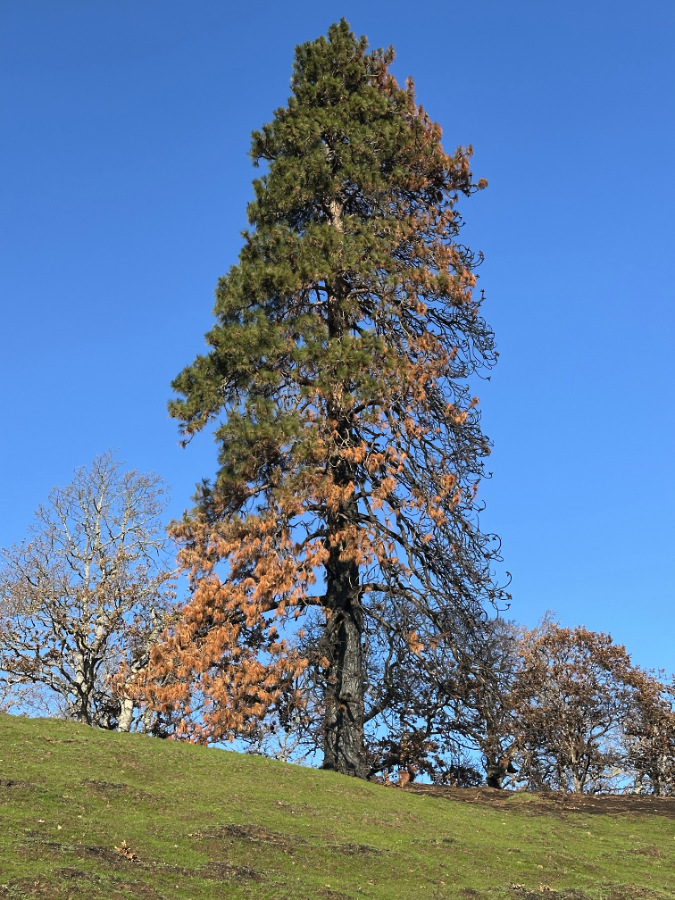
Somehow, this torched old Ponderosa on the west Catherine Creek rim is still hanging on – or, at least part of it is…
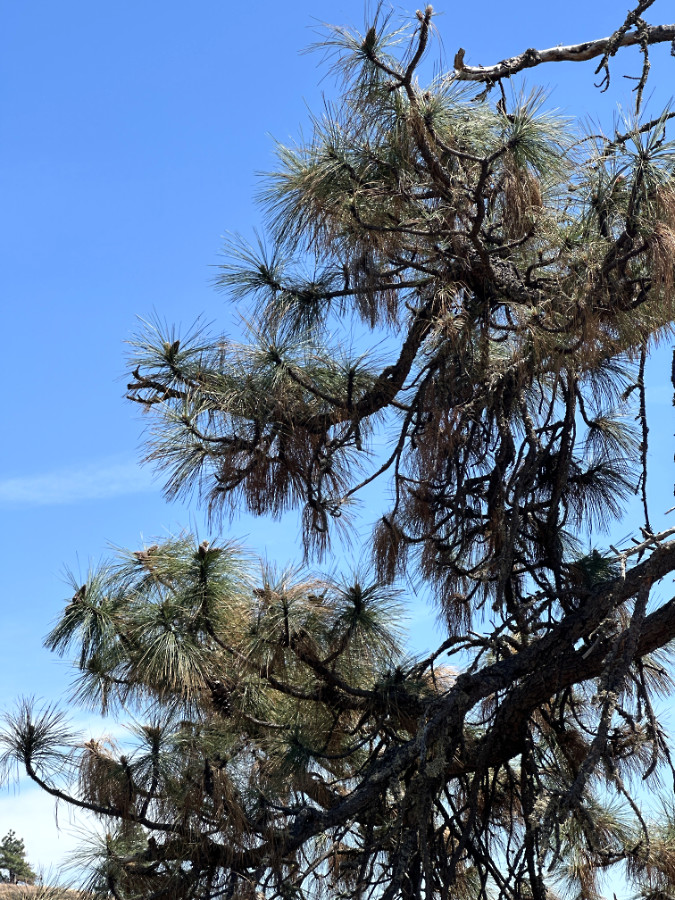
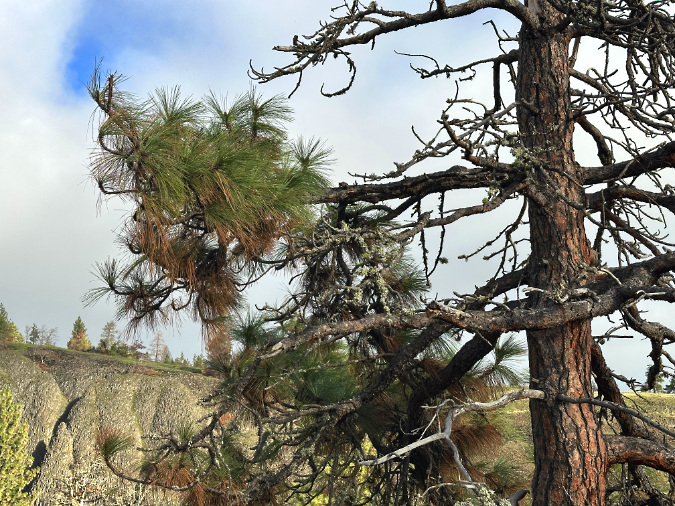
A closer look at the surviving limbs. Will these be enough to save the tree? Quite possibly, as there are many gnarled examples of trees just like this across the Catherine Creek savannah
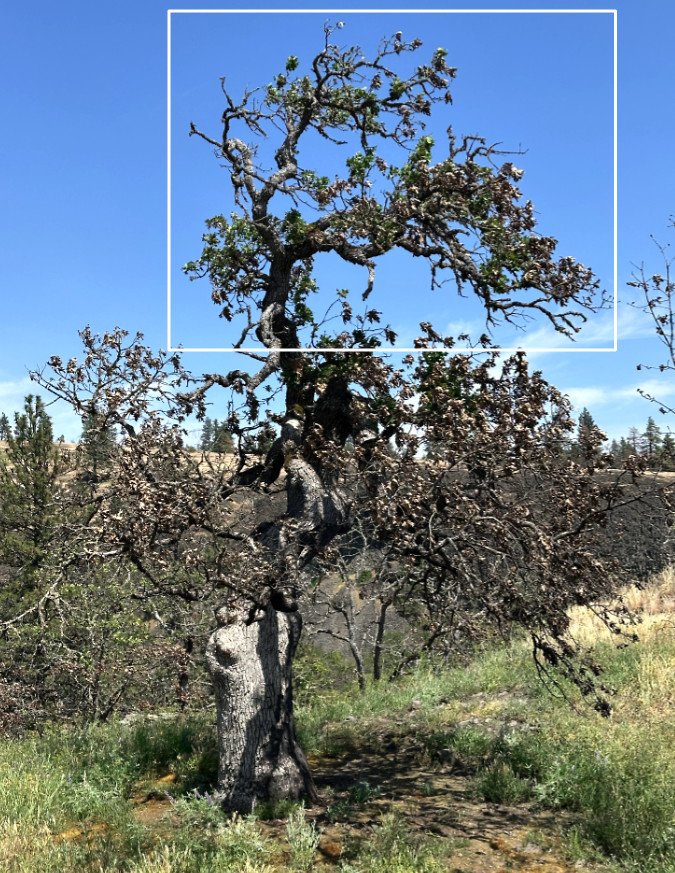
This future of this ancient Oregon white oak looked grim last winter…
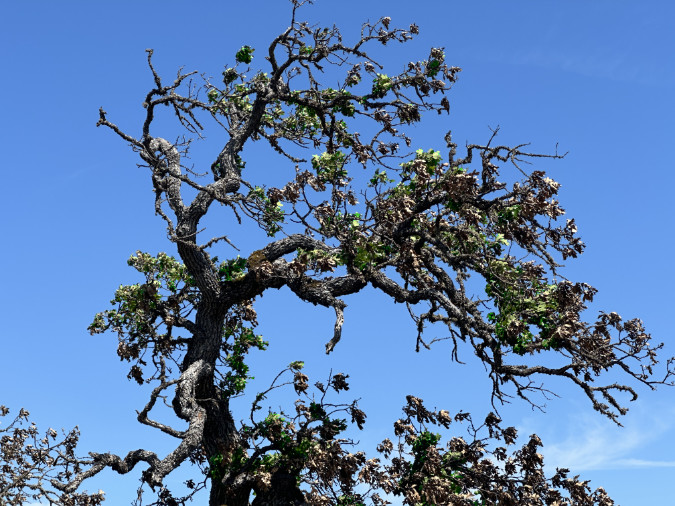
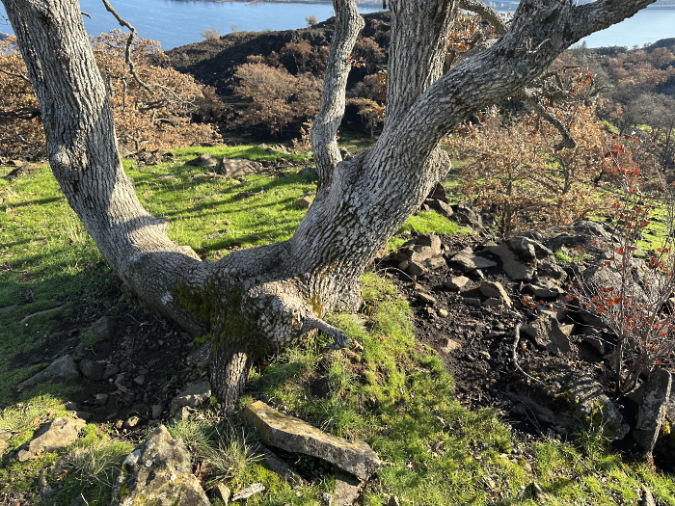
…but a closer look this spring shows lots of new growth emerging from its scorched limbs. This tree has a very good chance of surviving. 
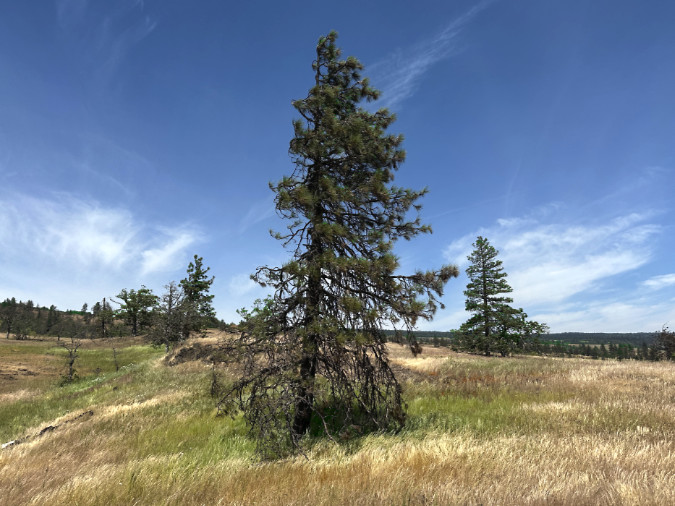
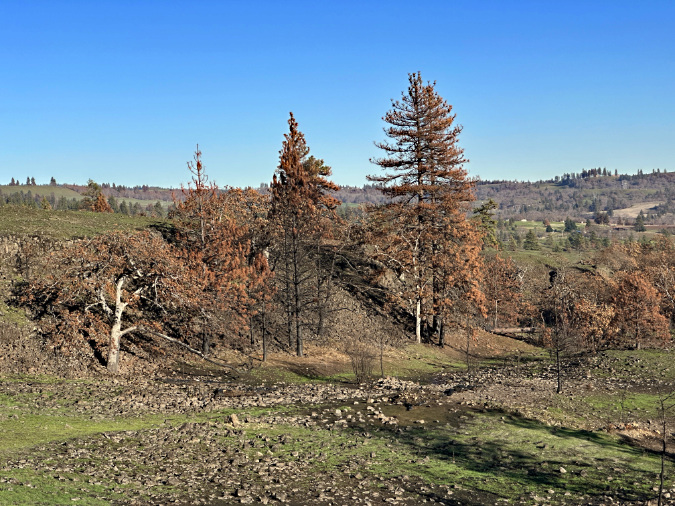
This trio of Ponderosa in the heart of the West Catherine Creek savannah fared especially well, possibly because of more abundant ground water (as indicated by the still-green grasses and wildflowers) they have access to?
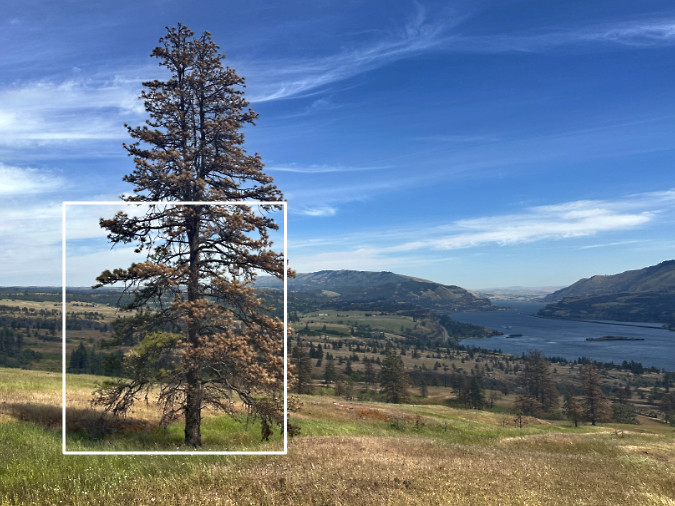
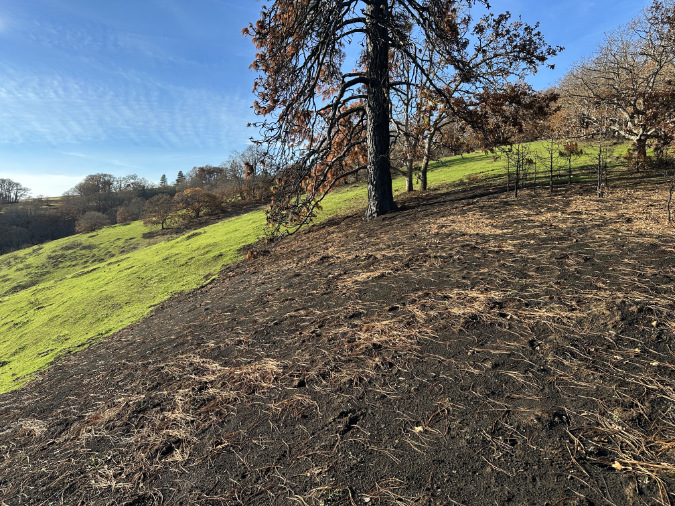
Further upslope, this big Ponderosa didn’t fare as well and seemed a total loss last winter…
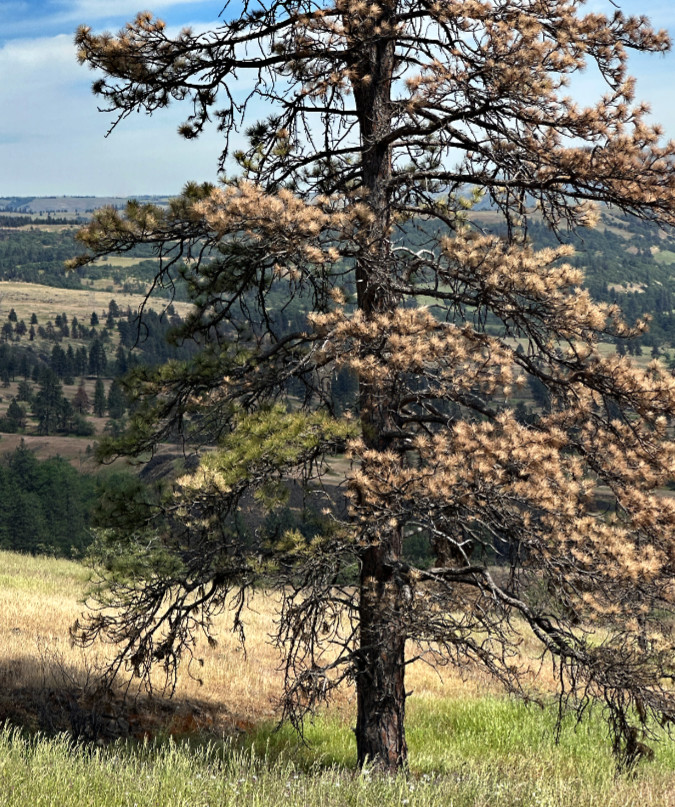
…but this closer look shows some living limbs near the base of the tree. If it does survive, this tree is one its way to becoming another gnarled, scrappy survivor in this harsh environment
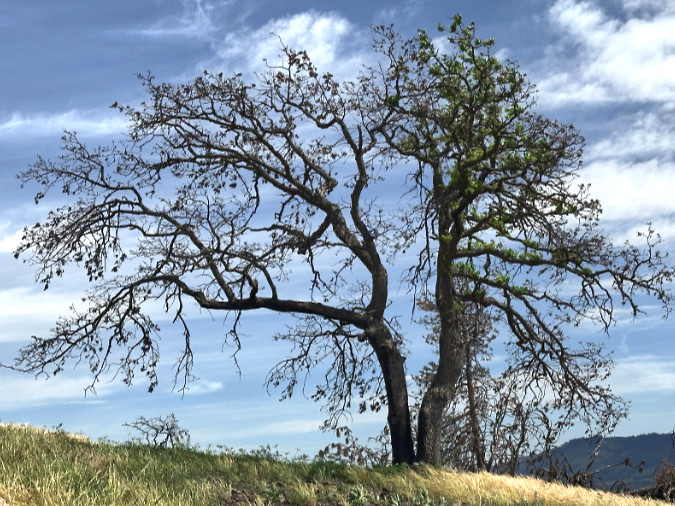
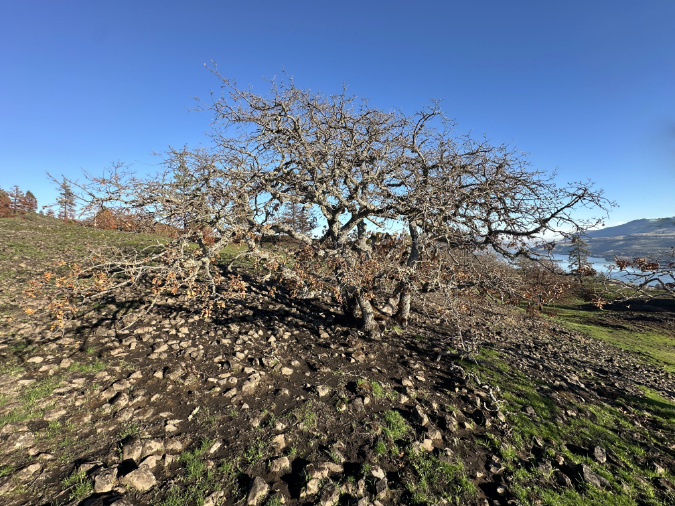
This pair of large oaks along the Rowland Wall show just how seemingly random the impact of a wildfire can be. The tree on the left didn’t make it, but why did its twin just a few inches away survive? In the end, the surviving tree now has less competition for groundwater and soil nutrients – including those that will someday come from its decaying twin – an ecosystem benefit that favors the stranger, surviving oak
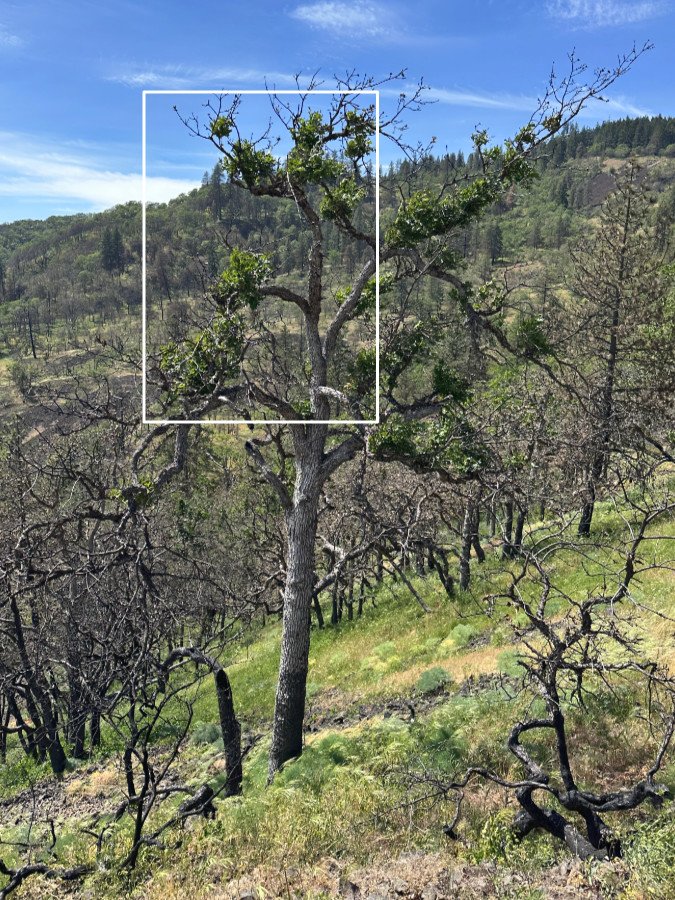
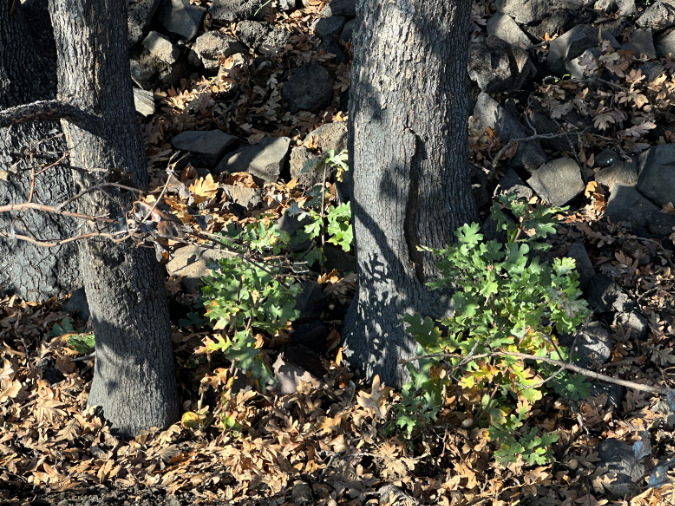
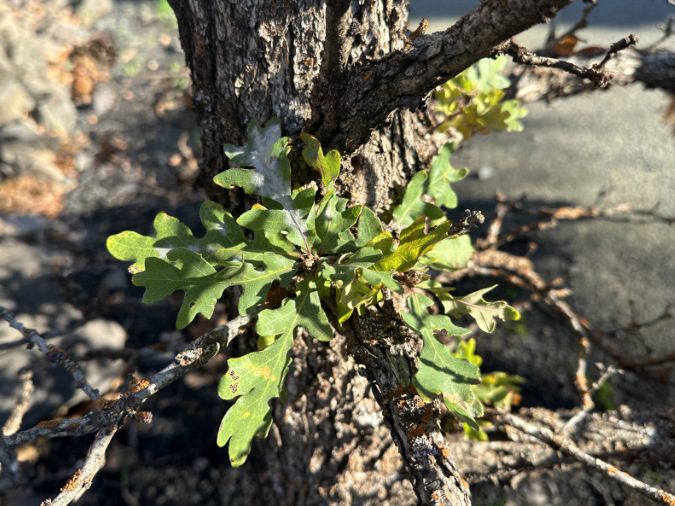
Throughout the oak stands below the Rowland Walls, what looks like mistletoe….
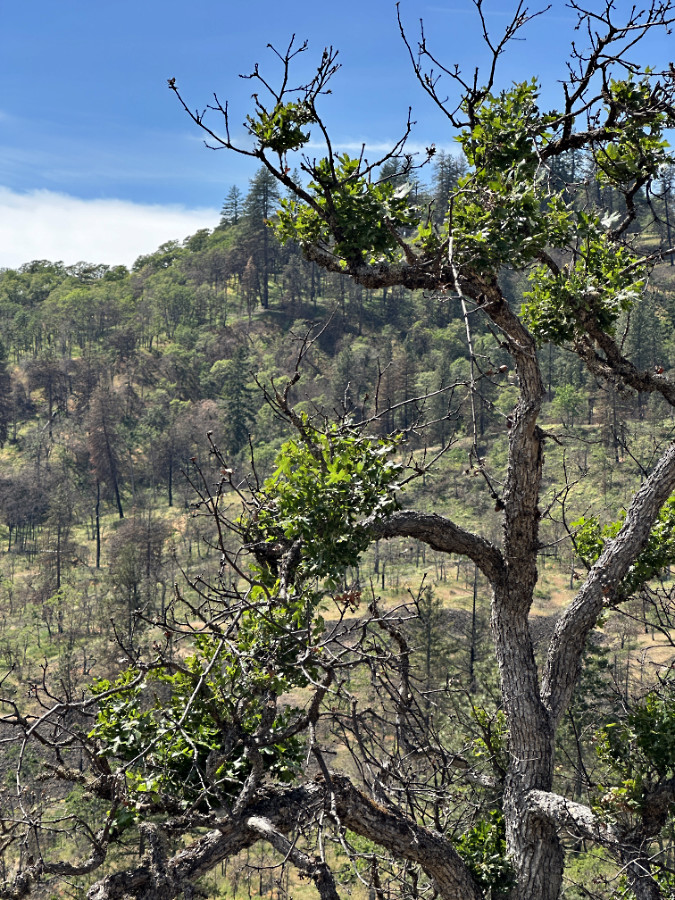
…but are really explosions of new shoots and foliage from larger, living limbs that survived the fire
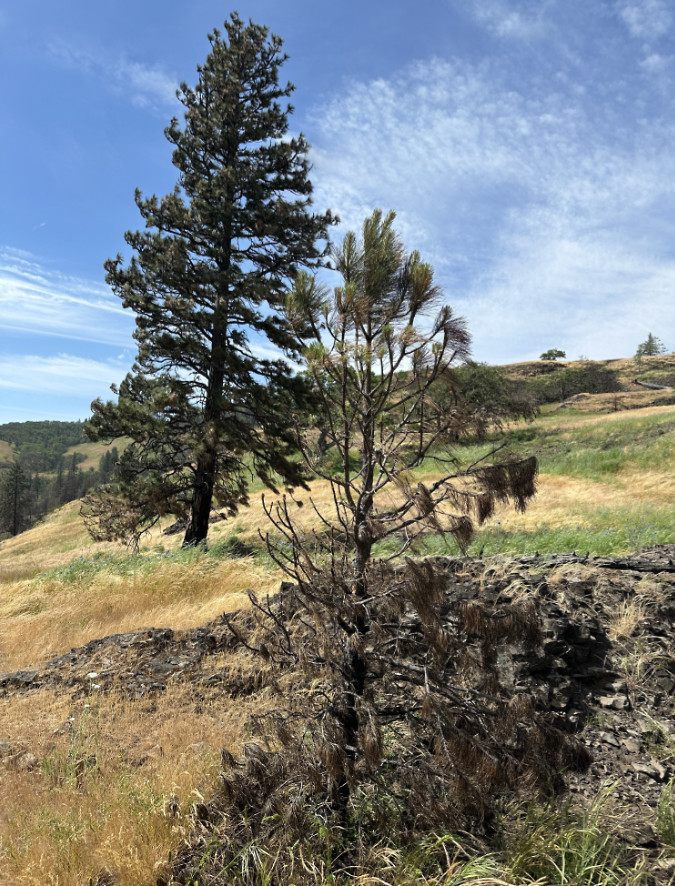
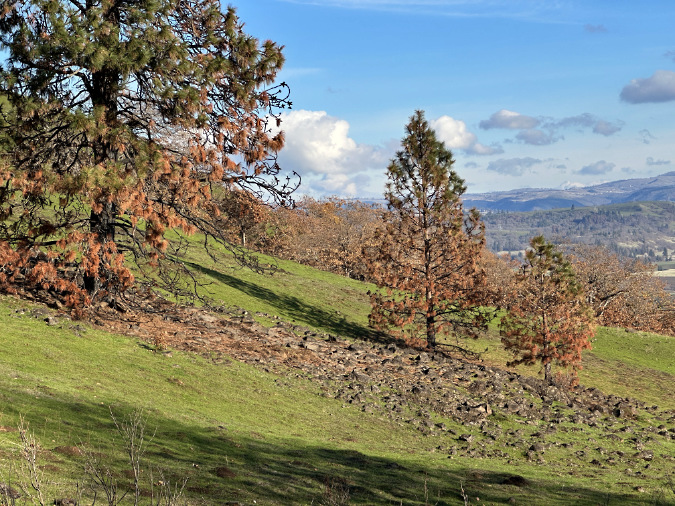
The young Ponderosa in the foreground has beat the odds so far, somehow surviving the fire. Its presumptive parent (in the background) was only lightly affected by the burn, and will benefit by shedding its scorched lower limbs, making it less vulnerable to future burns
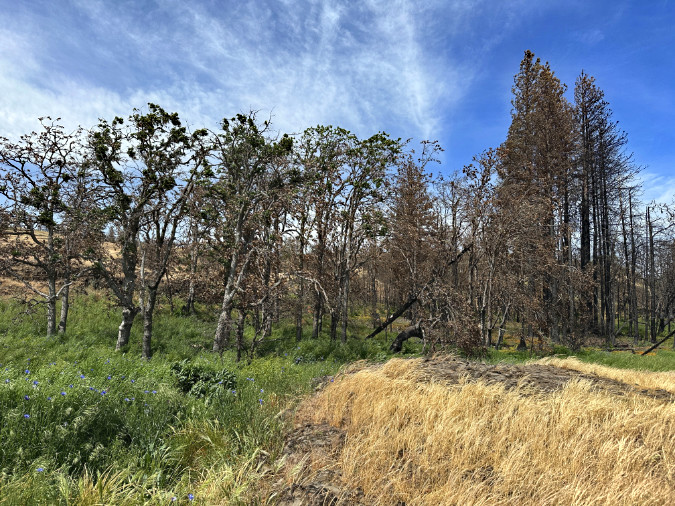
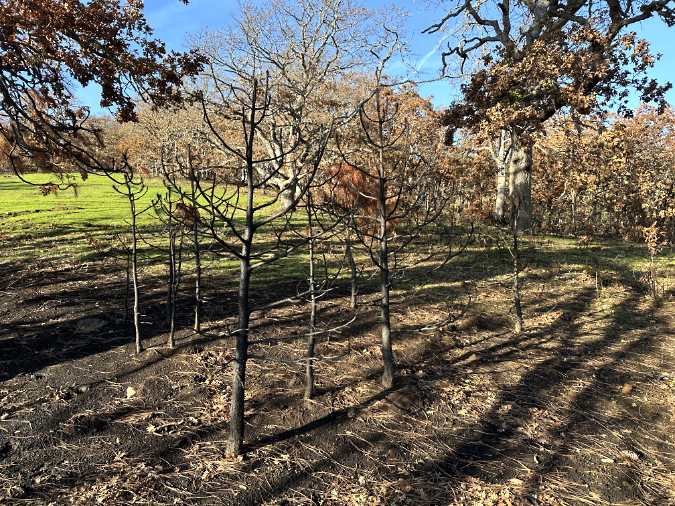
On my winter visit, I had written off this entire stand of crowded young oaks and pines. While the thicket of young Ponderosa on the right was, indeed, completely killed, roughly half the oaks in the grove on the left are making a surprising recovery
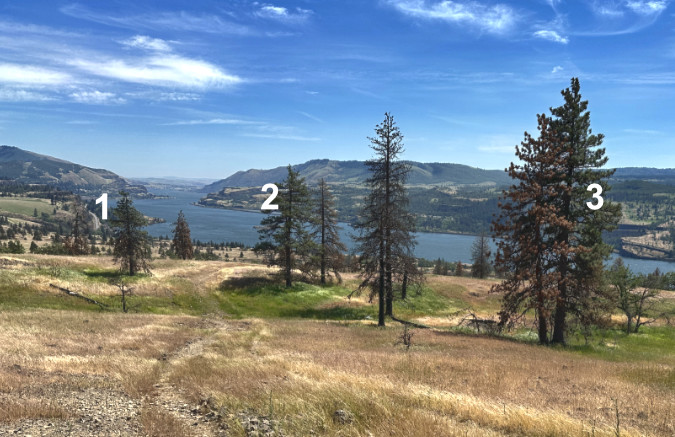
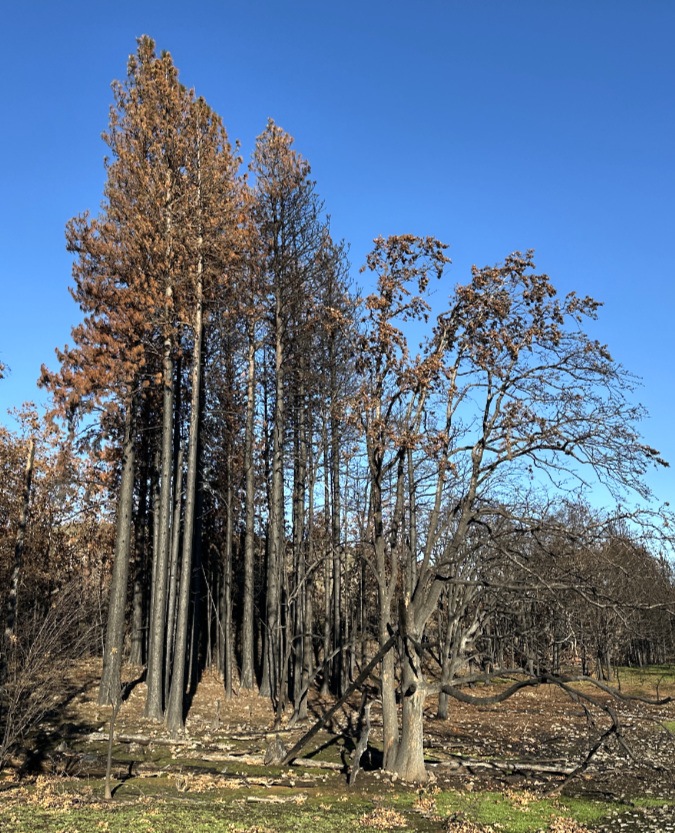
This stand of Ponderosa in the upper meadow was a focus of previous articles on both the 2024 and 2025 fires, as both burned very hot and long under these trees due to heavy accumulation of downed trees and brush. Of the seven trees shown, three (numbered) seem likely to survive, with new growth emerging this spring. This stand is another good example of the benefits of fire to the surviving trees – both in reducing competition for water and soil nutrients, but also by raising their canopy ahead of the next fire, as all three surviving trees lost lower limbs to the burn

Favorites and old friends…

I’ve mostly kept this series focused on ecosystem recovery and the health of the savannah, but it’s no secret that most who go there each year are seeking more than science. The beauty and uniqueness of the landscape is breathtaking, as are the ancient, gnarled oaks and pines that grow here. They become old friends to us. 

In that spirit, I’ll finish with updates on a few of these places in the West Catherine Creek area and the old friends who grow there.  First, the good news: for those who love the Catherine Creek canyon, the fire was both beneficial — clearing accumulated brush and downfall and thinning thickets of young trees — while visually minimal. The shelter provided the cliffs and the relatively moist soils along the creek appears to have helped most of the oak groves and scattered Ponderosa pine on the canyon floor survive – and now thrive. 

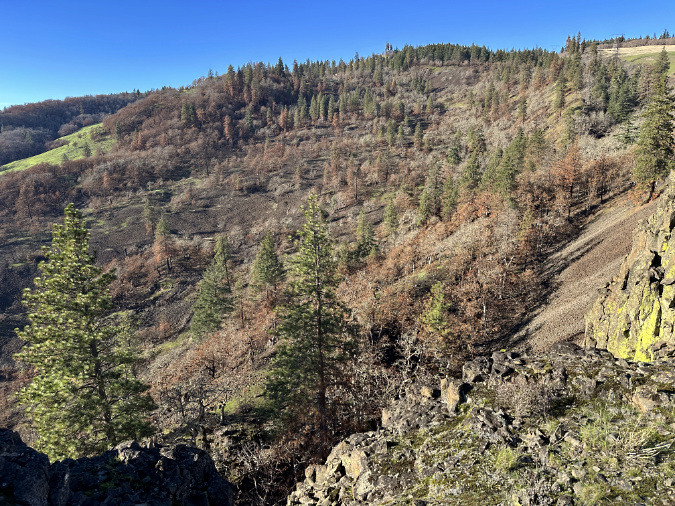
The following views into the Catherine Creek canyon from the west rim tell the story…
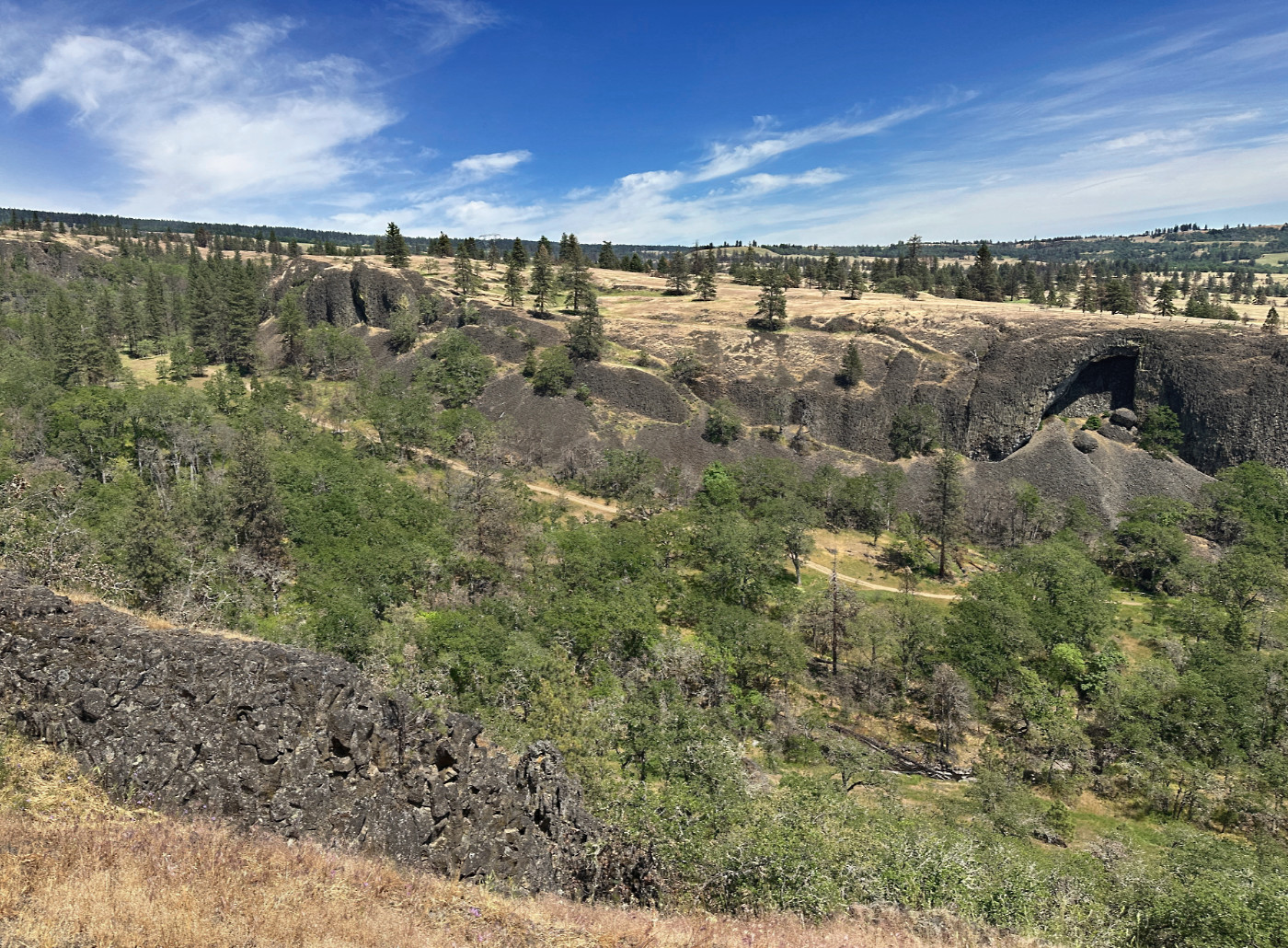
Looking across the Catherine Creek canyon from the west shows an oak and pine forest that has largely survived in the relatively moist, wind-protected confines. The trees in the less intensely burned savannah on the far side of the canyon also seems to be largely recovering after the fire
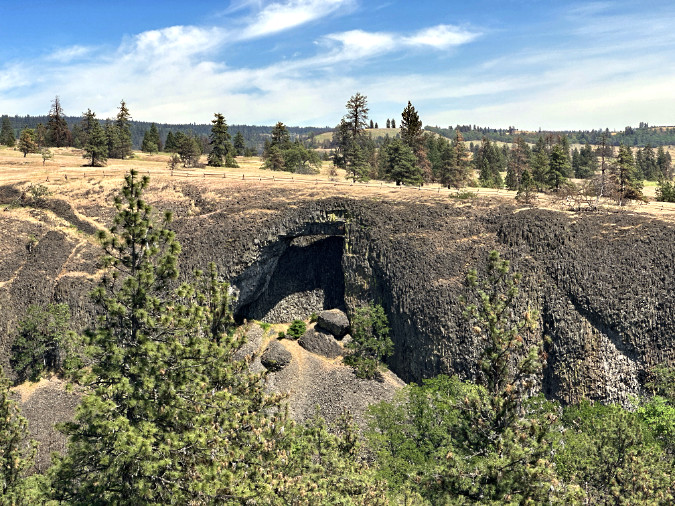
A few trees above the Catherine Creek Arch were lost to the fire, but most of the groves within the protected cultural area near the arch seem to be recovering

At the lower end of West Catherine Creek, a trio of big oaks tower above a familiar seasonal pond surrounded by spring wildflowers (below). It’s a favorite, much-photographed spot along the trail, and one of the most picturesque scenes in East Gorge. Two of the oaks here survived, though the smallest oak in the trio did not. 

Last winter, it was unclear if any of these trees would survive, but the surviving pair on the right appear to have been just large enough to make it through the fire. Both show a lot of new growth, and stand a very good chance of living on to thrill visitors for years to come. Their younger sibling on the left does not seem to have survived, however.
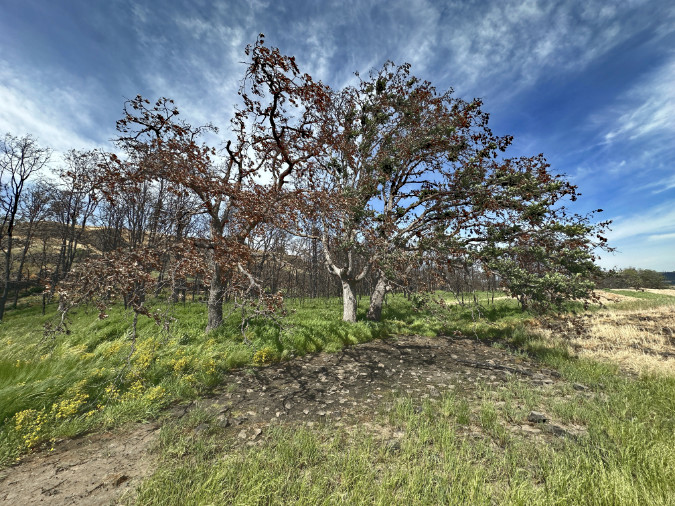
The “Oak Trio” grove at the (already dry in this view) west pond is now the “Oak Duo”, with the younger tree on the left losing the battle to the fire. The twin siblings on the right are thriving in their recovery.

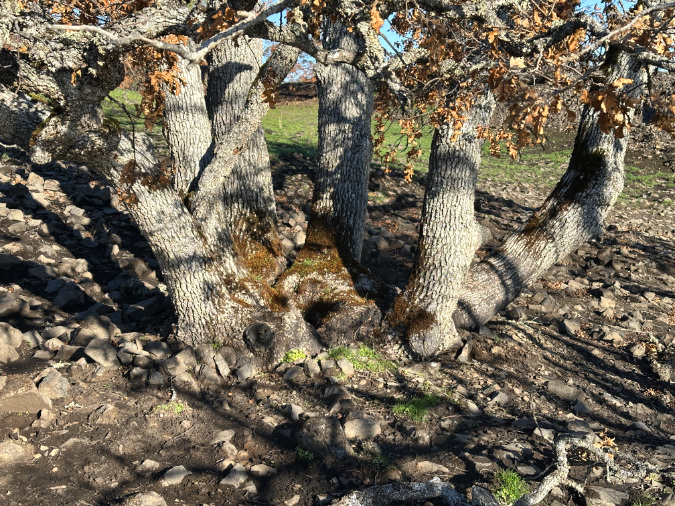
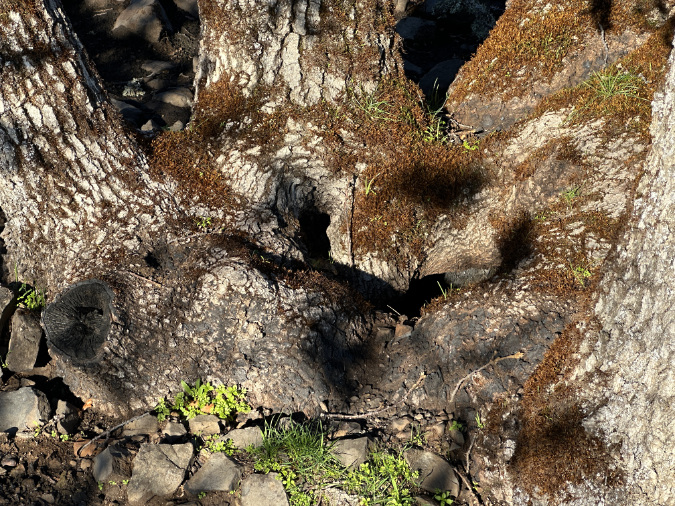
In a previous article, I profiled this picturesque “grove” of oaks (below) that turns out to be a single tree. Its original trunk now just a hollow in the middle marking a fire or lightning event from long ago, replaced by a circle of shoots that have become trunk-sized. This is among my sentimental favorites for its uniqueness, and thus a welcome sight to see it bouncing back strongly after two successive wildfires. 
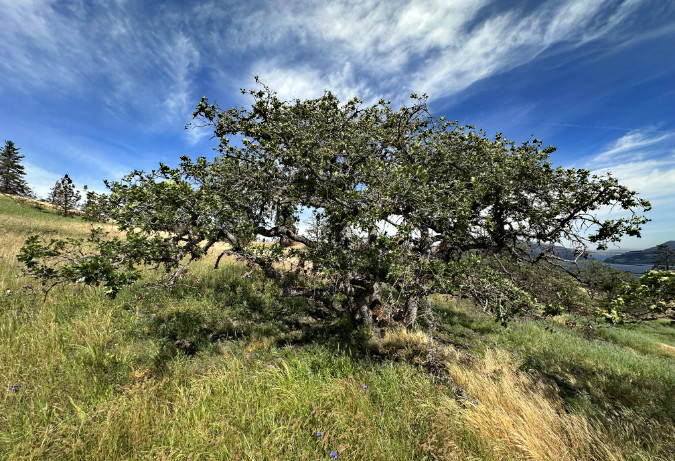
The sprawling old oak that decided to become its own grove is alive and well at West Catherine Creek

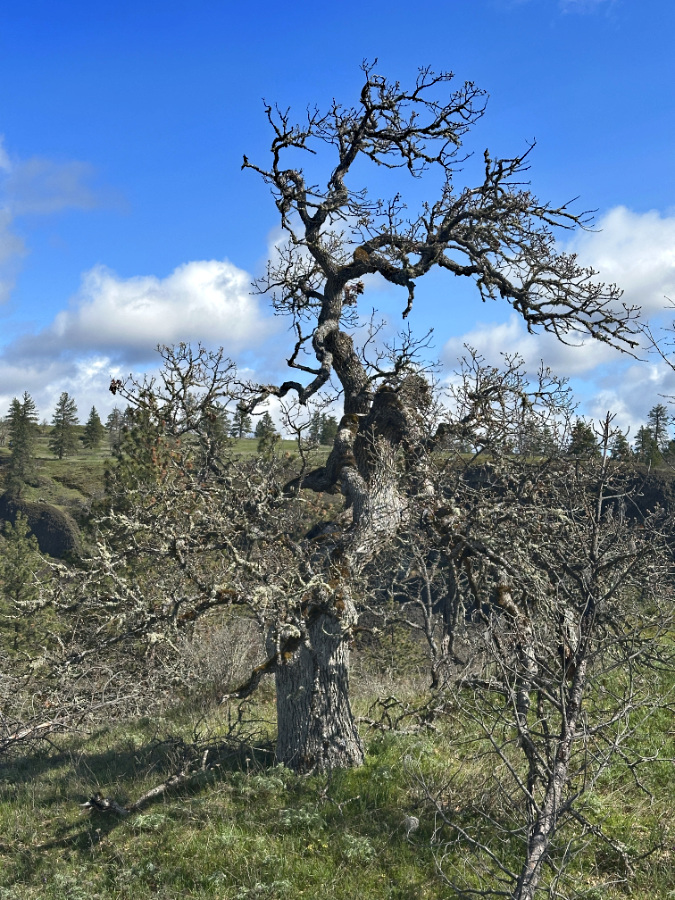
Finally, there is the impossibly contorted old oak creeping along the exposed rim of Rowland Wall (below). The winds from the west were especially powerful the day I was there, providing some insight into why this tough old tree is only a few feet tall (though nearly twenty feet long!) Both fires somehow missed this rocky outcrop completely. 

Had the fire burned here, I’m certain this old tree would have been killed, as its low limbs have no chance of reaching above even a modest brushfire and much of its trunk is deadwood, just waiting to become fuel.
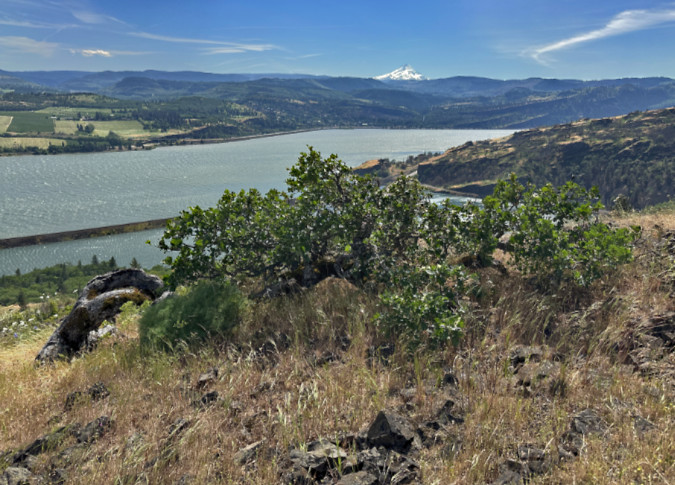
This ancient, battered oak dodged the back-to-back fires to live another season and produce another cycle of acorns

Instead, this old sentinel has survived to live for a few more years and produce acorns. A few of its seeds might even go unnoticed by local ground squirrels and take root, someday replacing this old tree and completing the cycle – that’s the science of this ecosystem. But my sentimental side hopes this spectacular old tree outlives me by many decades.
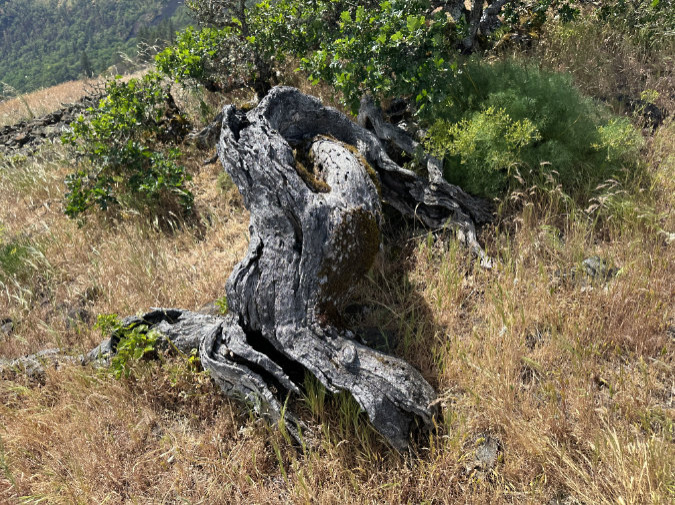
More driftwood than tree, the old oak atop Rowland Wall is the living embodiment of the extreme conditions here

As hard as it has been to watch old survivors in the Catherine Creek savannah finally lose their battle to live over the course of these fires, it was losing an equally tortured old pine [add the link here] (below) just a few hundred yards up the ridge from the ancient oak that caused me to rethink my appreciation for these old trees. It was the realization that human fire suppression had artificially extended the longevity of these tree for our aesthetic benefit, yet undermined the very health of the ecosystem they exist solely to perpetuate – for their benefit.

Thus, where my mindset before the fires was to greet these old friends as museum pieces and romantic testaments to their instinct to survive, I’m now attempting to reverse that expectation. 

On this trip, I made a point of appreciating the gnarled, surviving old oak at Rowland Wall for both its tenacity and good luck, and the privilege of learning a bit more each time I visit — about the forces that continue to shape it, and the forces within this oak that have enabled it to endure seemingly impossible odds. And if this old oak suddenly joins its Ponderosa neighbor to become another bleached skeleton on my next visit? Well, then there will be new lessons to learn as it slowly fades into the savannah grassland.
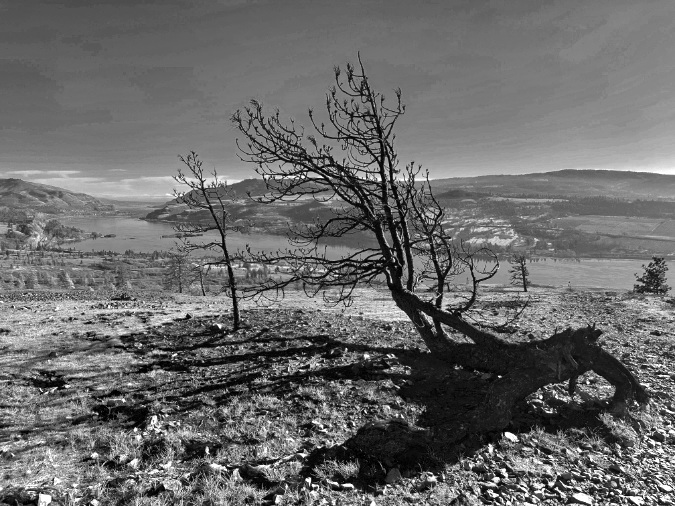
I avoided looking at this old Ponderosa on my first visit after it was killed by the Burdoin Fire. Now, I’m learning to appreciate it for the story it will tell for decades to come as the bleached reminder of a tree that once figured out how to survive in this impossible spot atop Rowland Wall

All of this sounds easy enough, but letting go of old ways is never easy. It’s a new mindset of embracing a present that I deeply treasure as simply a fleeting part of the continuum, as opposed to something to be preserved, often against its own nature. Fire-deprived landscapes in the East Gorge are our invention, after all. 

Therefore, part of the journey for all of us in restoring fire to this landscape requires adjusting our sentimental side to a new sense of what constitutes “beauty” – and to nudge my own sensibilities in that direction, I’ve added a new category to the article tags in the blog to include “ghost trees”. Watch for more of those in the future!

As always, thanks for reading this far – and I hope to see you on the trail, sometime!

________________ 

Previous articles on the Burdoin Fire aftermath:

• Secrets of the Fire at Catherine Creek  (Feb 14, 2025)

• Goodbye to an old friend… or is it?  (Jan 1, 2026)

• The Burdoin Fire – Part 1: Resiliency  (Feb 2, 2026

• The Burdoin Fire – Part 2: Fragility  (Feb 17, 2026)

• The Burdoin Fire – Part 3: Sustainability  (Mar 6, 2026)

________________ 

Tom Kloster | June 2026
The Burdoin Fire – Part 2: Fragility

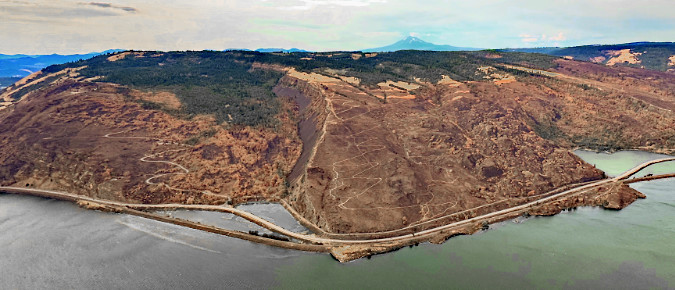
Aerial view taken last fall of the scorched aftermath of the 2025 Burdoin fire (Wikimedia)

The Burdoin Fire erupted east of White Salmon in late July last year, burning across some of the most popular recreation lands in the East Gorge. The fire began along State Route 14 and quickly spread eastward, and by the time it was controlled in mid-August, it had burned a swath nearly 10 miles long and blackened more than 11,000 acres.  More than 100 structures were lost in the fire, though no lives were reported lost. 

This is the second article in a 3-part series that provide a virtual tour of the aftermath of the fire on public land ecosystems across three separate areas. Each article is centered on popular trail, each with a different story to tell. The photos for this series are from mid-December 2025, when winter rains had already begun to rejuvenate the wildflower grasslands.  Part 1 of the series can be found here.  

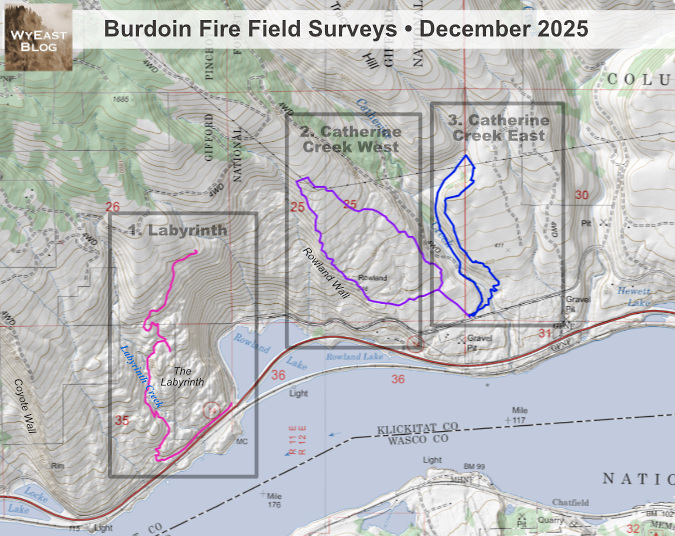
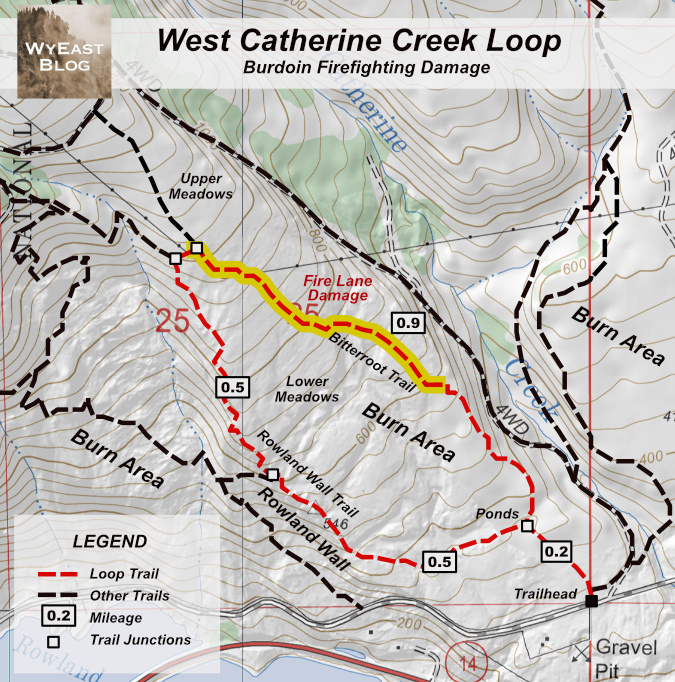
This second installment examines the central part of the fire, where it burned across the section known Rowland Wall and the meadows of the West Catherine Creek savannah (shown as subarea 2, below). This subarea is defined by the popular Rowland Wall-Bitterroot trail loop, shown in purple on the map.

[click here for a larger map]

This section of the Burdoin Fire is unique from the rest of the burn, as it was the second major fire to burn through this in less than a year. The impacts of the previous burn, known as the Top of the World Fire, are described in this 2025 WyEast Blog article

When documenting the landscape for the 2025 article, it didn’t occur to me that the area could burn again, so soon, as there wasn’t much fuel left from the previous fire. With fire as a natural and essential part of the dry savannah ecosystem, we’re somewhat conditioned to think the burn cycles have some degree of order to them, only sweeping through occasionally, when they can be beneficial in rejuvenating the landscape. 

Not so for the West Catherine Creek area, however. For many of the groves of Oregon white oak and Ponderosa pine that are keystone species in this subarea, the Burdoin Fire proved too much, too soon. Only a few trees that survived the first fire seem to have survived the second burn, though we won’t know the full impact until this spring – and beyond.

Catherine Creek West: A Cautionary Story of Fragility

The popular trail that follows the exposed basalt rim of Rowland Wall is how most people visit the meadows west of Catherine Creek, often following a loop that includes the Bitterroot Trail that follows the west rim of Catherine Creek, about a mile east of Rowland Wall. While there are Forest Service plans to someday formalize some of these routes, the unofficial user trails people know today are rocky, winding ascents through Missoula flood-scoured terrain. The two trails eventually climb just above the reach of the ice age floods, connecting where they cross sweeping wildflower meadows and grasslands.

Trees are scarce along the Rowland Wall, limited to just a few gnarled oak and pine krummholz clinging to the basalt. Move away from the exposed rim and groves of oak and pine are scattered across the meadows in a textbook example of the oak savannah ecosystem.

Oak savannah landscape of West Catherine Creek in spring 2025, bouncing back after the September 2024 fire had burned through the area.

As described in the previous article on the Top of the World Fire recovery, the burned portions of western Catherine Creek bounced back strongly last winter and spring, just months after the fire. If measured by the buildup of woody debris and heavy brush among the groves of oak and pine, that fire was overdue. Some trees were killed by the 2024 fire, though most of the Ponderosa pine survived, often improving their fire-readiness by shedding scorched, lower limbs that risk serving as a “ladder” to a fatal crown fire in future burns. 

The Burdoin Fire was that fire, and it simply came too soon. Along with their thick, jigsaw-puzzled bark, shedding low-hanging canopy is a literal trial-by-fire adaption of Ponderosa pine to a fire forest ecosystem, with ancient survivors carrying their foliage high above their thickly barked trunks. The Burdoin Fire granted no such time for the survivors of the 2024 fire to adapt.

These back-to-back fires at West Catherine Creek underscore a challenging reality in coping with fire in an era of changing climate and a long history of fire suppression: while our east side forests and savannahs require fire for their health, fires that burn too hot or too frequently can also set forest recovery back by decades. As resilient as they have evolved to be, the dry east side ecosystem can be equally fragile when stressed beyond the point of recovery.

The Oaks

While the keystone Oregon white oak groves along the Labyrinth Trail (in the first installment to this series) had already begun to recover over the fall months, the oaks in the West Catherine Creek area fared poorly, most having already endured the Top of the World fire. Few were showing any sign of rebound since the Burdoin as of December, though we won’t know until spring foliage emerges in late April just how impacted these trees are. 

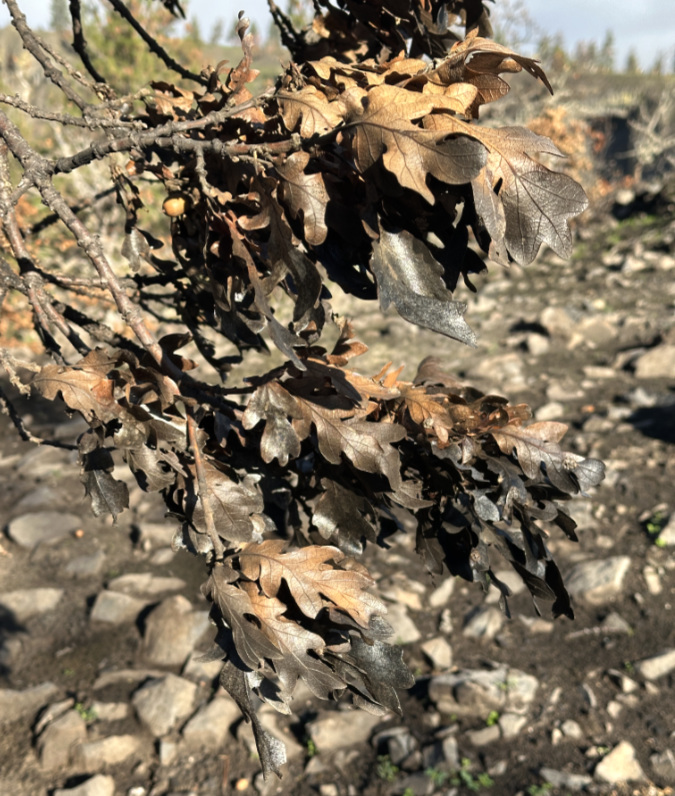
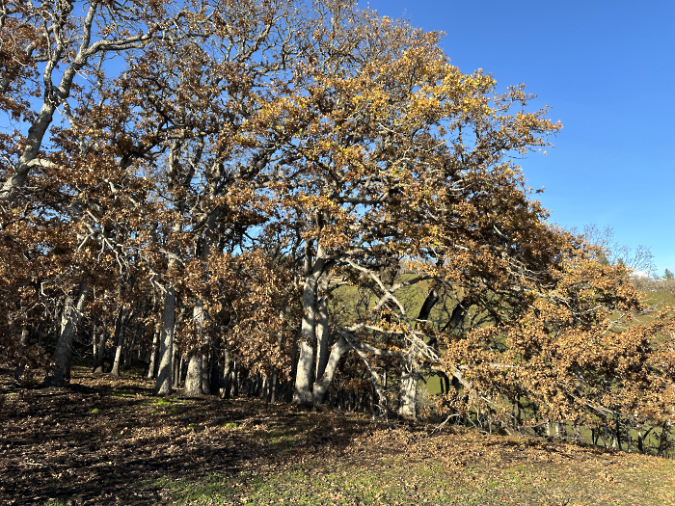
Like those in the Labyrinth, the oaks west of Catherine Creek that burned still held many of their dead leaves into December, as their normal autumn leaf-drop cycle was interrupted on limbs killed in the fire.

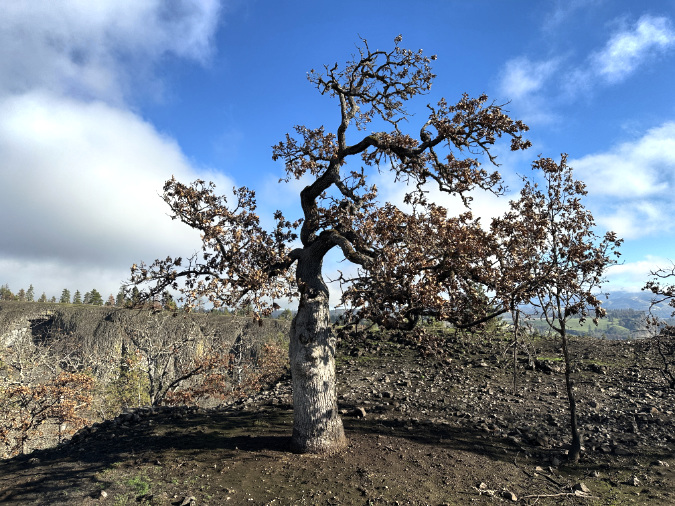
This venerable oak on the west edge of Catherine Creek canyon was hit hard by the Burdoin Fire, like so many of the oaks in this part of the burn.

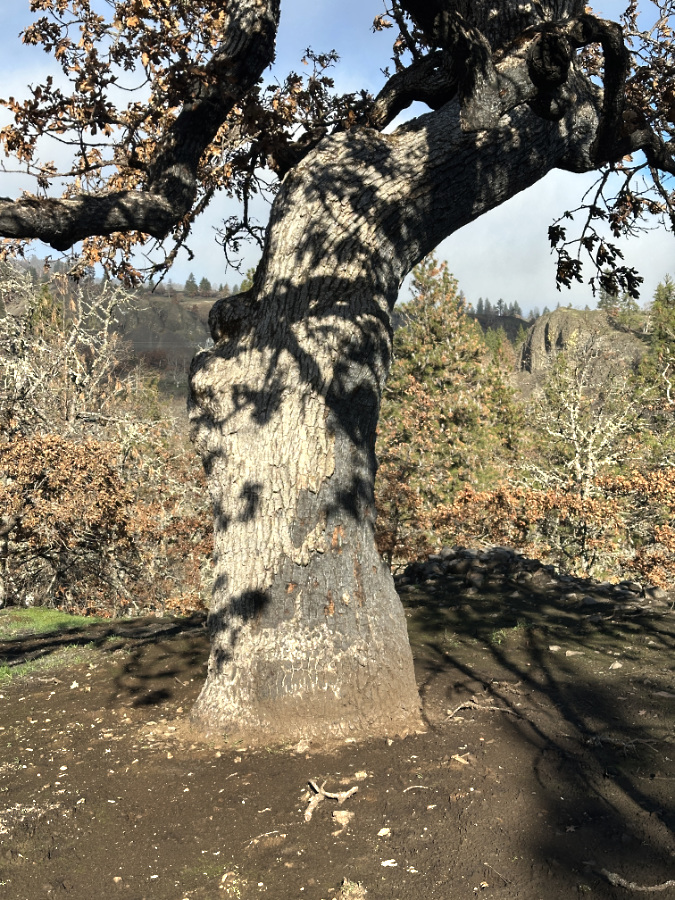
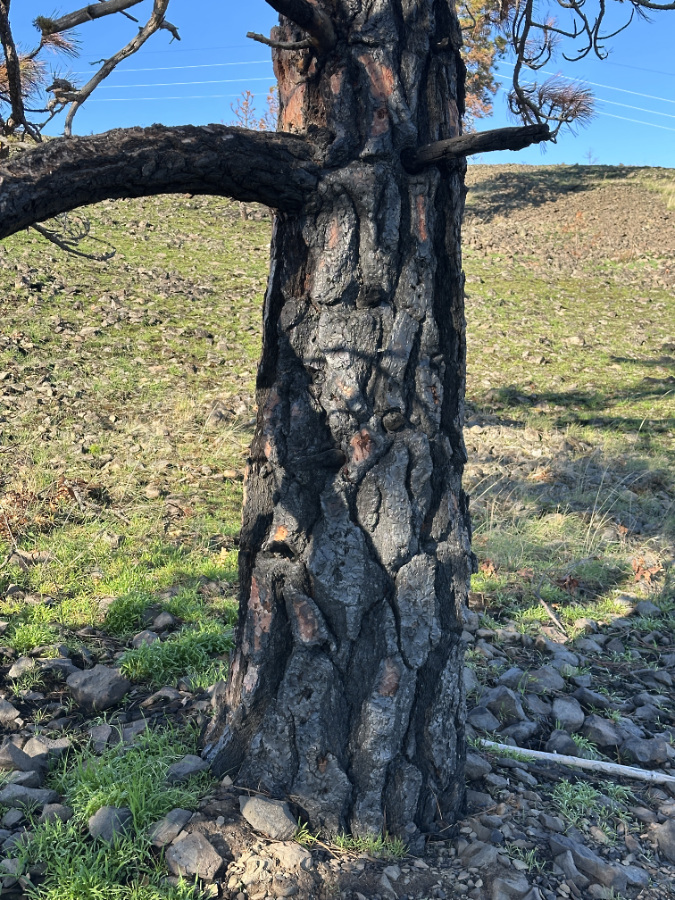
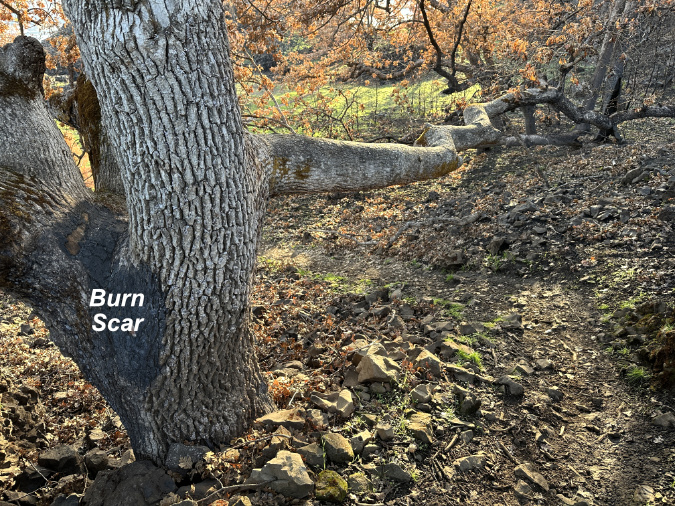
The burn scars on the trunk of this tree tell the story: the fire burned hot on the right side of the tree, enough to kill the bark and most of the tree’s foliage. 

The fire burned hot enough to completely blacken the leaves on the lower limbs of this tree. We won’t know until spring if trees like these somehow survived the fire.

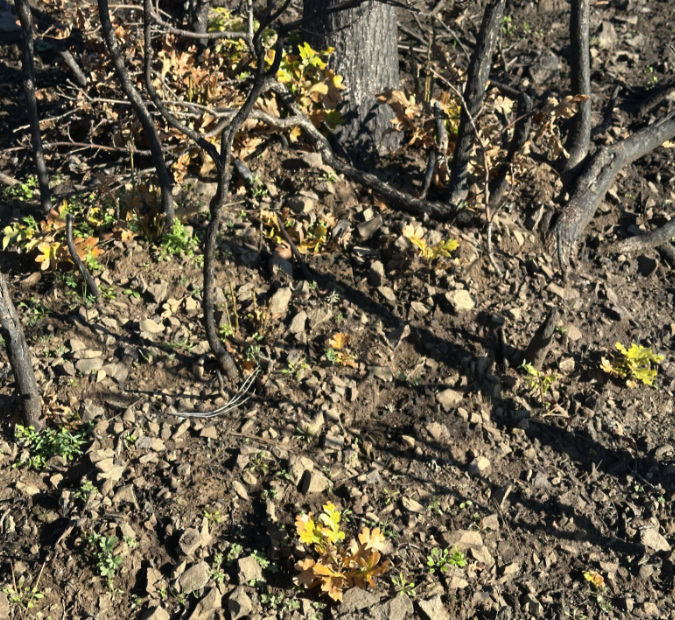
Unlike the nearby Labyrinth area, few oaks showed new growth since the fire – this tree was among the few in the West Catherine Creek area to push up new shoots from its surviving roots over the summer and fall.

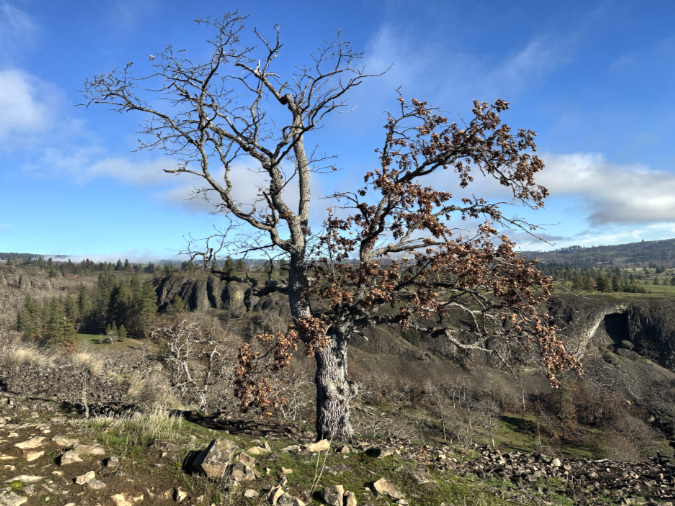
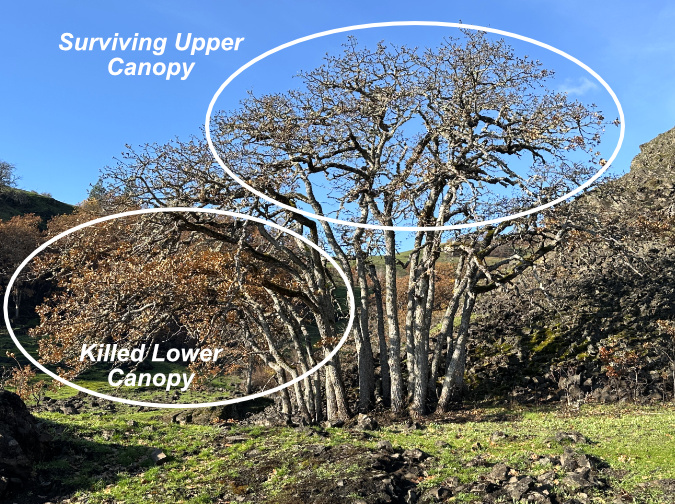
This oak along the west Catherine Creek rim has a good chance of surviving the fire. Browned foliage marks the parts that were likely killed by the fire, but the bare upper canopy is a sign that at least part of the tree survived long enough to drop its leaves normally in fall.

Though the oaks in the west Catherine Creek area did not show the almost immediate signs of recovery seen in The Labyrinth, some of the badly burned oaks here will still likely produce new growth from their surviving roots. For the burned oaks that don’t bounce back in spring, their long-term replacement will depend on acorns carried in from a few unburned trees scattered along the rim of Catherine Creek canyon and other surviving groves along the fire’s perimeter.

For us, this could mean decades before we will see mature oaks again in the most intensely burned part of the Burdoin fire. For the oak trees, this is an expected, cyclical event in their ecosystem they have evolved to rely upon, and a recovery process they have repeated time and again over the millennia. 

Scattered oak ancients along the west Catherine Creek rim completely dodge the fire. These trees will become the parents to new groves when their acorns help reseed nearby burned areas.

At first glance, this oak grove seems to have survived the fire. But it isn’t a grove at all…

…as a closer look reveals this to be a multi-trunked, single oak tree….

…and a still-closer look reveals a hole at the center that marks this as a tree that rebuilt itself from surviving roots decades ago with the original trunk – now gone — was likely killed in a wildfire. This tree is living example of how our Oregon white oak have completely adapted to fire as an essential part of their ecosystem, periodically rejuvenating the landscape.

The Pines

If the Ponderosa pines in the West Catherine Creek area had been allowed a few years to shed lower canopy killed in the 2024 fire, the story might be different here — one of emerging, future giants becoming increasingly invulnerable to fire. Instead, the pines that survived the first fire at didn’t have time to shed killed limbs, which then became tinder-dry fuel for the flames to climb still more quickly into crown fires, killing many trees. Due to this effect, only a few Ponderosa survived in this part of the Burdoin burn. This is surprising, given that little understory or downed debris remained from the first fire to provide fuel to the second burn, suggesting the heat stress of a second fire, alone, was too much for many of these trees to survive.

Young Ponderosa and older, wind-stunted trees built low to the ground were the main victims in the second fire. Some of these trees had made it through the first fire having lost half or more of their canopy, yet surviving enough to add new foliage last spring. However, this left them weakened and vulnerable when the Burdoin Fire came through, and most surviving small or low trees were completely killed in this second round.

As described in this article, the rocky margins of Rowland Rim were spared in the 2024 fire, but burned in the second event, killing some of the most iconic “krummholz” trees in the area. However, the fire seemed to lose intensity as it reached the west rim of Catherine Creek canyon, and several of the iconic Ponderosa that burned in this area stand a chance of surviving. This could be due to the lack fuel from brush and dry debris that had already burned in the 2024 fire.

What will the Ponderosa groves look like in this area in the future? Some large trees seem likely to survive, ready to re-seed and rebuild burned groves until the next fire event sweeps through.

This sturdy Ponderosa was hit hard by the fire. Like most of the stunted pines in exposed areas, it wasn’t tall enough to escape the reach of the fire as typical Ponderosas of this age is adapted to do.

The deeply burned patch to the west of the old pine tells the larger story. This scar likely marks a downed tree, dense brush – or both – that burned long and hot enough to all but kill the old Ponderosa that was just downwind during the fire.

A handful of green limbs are still hanging on, giving this tree at least some chance of surviving, despite having already lost its crown prior to the fire – possibly from lightning. Still, the odds remain long for this old tree.

Some of the most intense burning at the West Catherine Creek savannah was along the lower slopes that didn’t burn in the 2024 fire. Here, the dense understory and buildup of debris burned hot enough to completely kill this mixed grove of Ponderosa pine and Oregon white oak.

The Burdoin Fire also killed this crowded stand of young Ponderosa on the lower slopes that was spared by the 2024 fire, crowning in several of the trees. Tough as this scene is to look at, Ponderosa in the East Gorge rely upon fire to prevent crowded stands and competing with overgrown underbrush.

This grove of Ponderosas was hit hard by the 2024 fire due to a buildup of fallen logs and other dry debris, and tree canopies that extended to the ground. The pair of pines on the left survived the first fire, while the heat from the two fallen logs killed the tree on the right and appeared to have doomed its neighbor, at center. This photo is from just a month prior to the Burdoin Fire, showing the already tinder-dry grasslands last summer.

This view shows the same grove just six months later. The lack of remaining fuel on the ground left from the first fire seems to have helped the grove endure the Burdoin Fire. The large Ponderosa at center is still hanging on, though it lost much of its canopy in the two fires, and it will be slow to recover if it does survive. The pair on the left seem to have survived the second fire, though the smaller of these Ponderosas lost much more of its canopy to the second fire after surviving the 2024 fire largely intact. 

This Ponderosa had somehow escaped the flames during the 2024 Top of the World Fire, despite its low canopy and vulnerability to fire. Only a few limbs burned in the first fire…

…but the Burdoin Fire proved too much for this little tree. It was completely killed on the second fire…

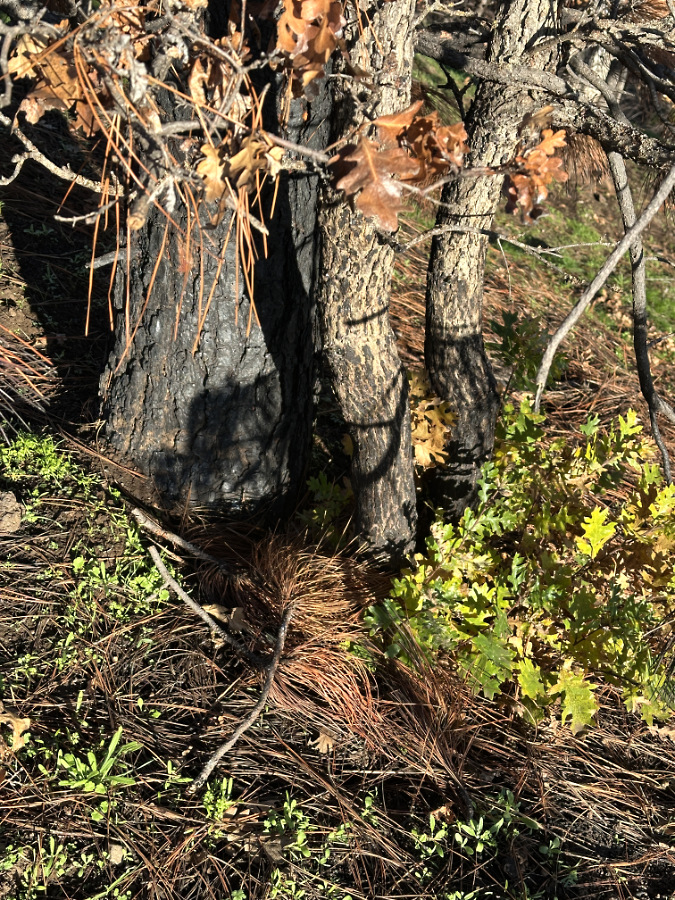
…and the story of told through its charred bark. Though its trunk had been scorched in the first fire, the second fire proved too much, killing the tree’s living cambium layer beneath.

The story of this iconic Ponderosa (and its offspring) is in this previous blog post. It was among the many krummholz that were lost to the second fire to burn through the West Catherine Creek area in less than a year.

Looking west from Rowland Wall toward the Labyrinth, the scope of the fire comes into view. Surviving Ponderosa are green and easy to spot compared to browned pines killed by the fire. Oak groves with rusty-brown leaves still attaches are also likely killed by the fire, while groves with bare (gray in this view) branches likely survived – though we won’t know until spring.

Firefighting Scars

Until 1988, the public lands we know today as the Catherine Creek natural area were part of a private ranch called “Sunflower Hill”.  The Forest Service began acquiring lands here as part of the creation of the Columbia River Gorge National Scenic Area in 1988. The Friends of the Columbia Gorge, Columbia Land Trust and the Nature Conservancy have also been active in acquiring and restoring what had been heavily impacted private grazing land in the East Gorge, including at Catherine Creek.

While the Forest Service has since developed a few trails according to their master plan for Catherine Creek, most trails here are long-established user trails or old jeep tracks that date back to the ranching days. Such is the case for both the Rowland Wall and Bitterroot trails that form the loop described in this article. As user trails, they have no real status with the Forest Service, no matter how cherished or popular they may be with hikers. The Rowland Wall trail has some official standing for its proximity to a planned Forest Service trail that has yet to be built, but the Bitterroot Trail has no such status or protection.

And thus, it was disheartening to discover that firefighters battling the Burdoin Fire last summer had transformed a half-mile section of the Bitterroot Trail into a bulldozed fire road – which, notably, failed to prevent the fire from burning eastward for several miles. Though federal laws require the Forest Service to restore trails impacted by firefighting, the Bitterroot Trail is simply an unofficial user path. Therefore, the Forest Service has no responsibility to retore the trail, despite its popularity and (formerly) excellent condition

[click here for a large map]

However, the bulldozer road seems a clear candidate for restoration, as the Forest Service is obligated to decommission roads and bulldozer tracks created as part of fighting a wildland fire. Normally, this work would occur immediately after a fire event as part of the required Burned Area Emergency Responseprocess that is designed to prevent erosion and restore burned areas to their natural state. That said, we’re living in a time where the Forest Service capacity has been deeply compromised by the current administration, with environmental considerations being pushed aside in favor of increasing timber harvests and selling off mineral rights.

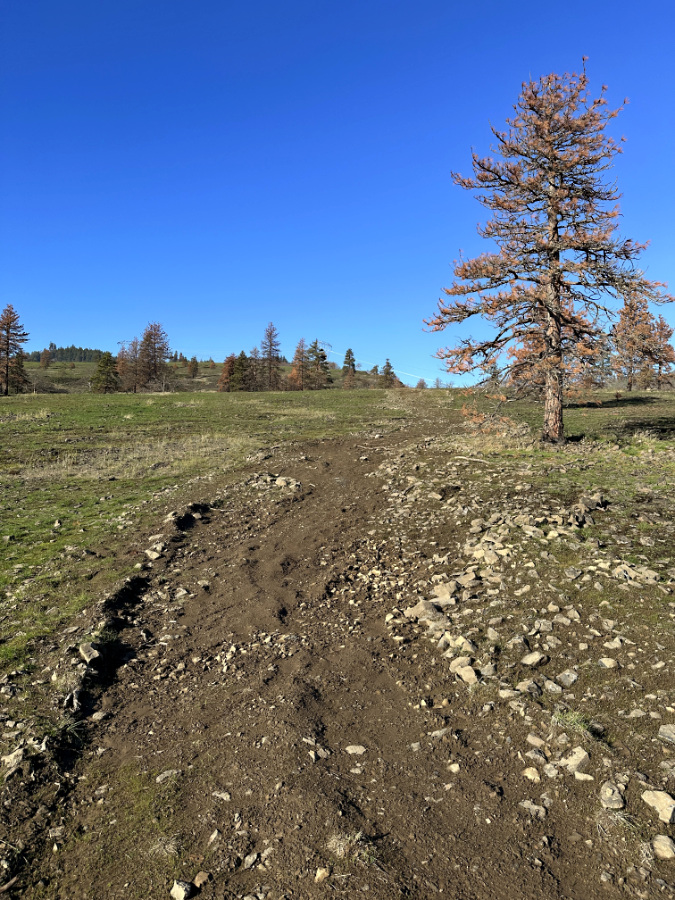
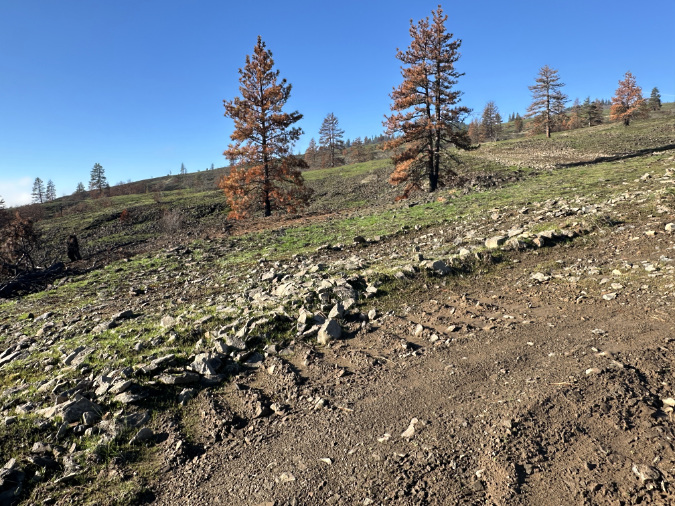
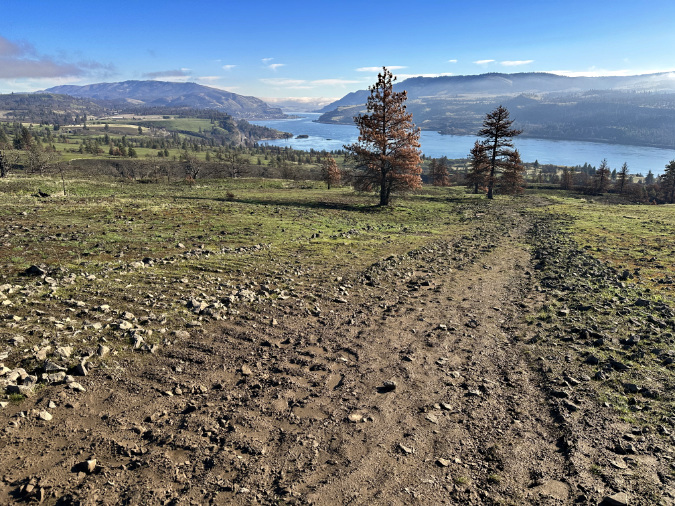
As of mid-December, when I last walked this section of trail, it was still in the shape left by the firefighters: a 15 to 20-foot scar across the open meadows of West Catherine Creek. Deep ruts left by the bulldozers were already channeling winter runoff and causing rill erosion, eroding the thin savannah soils this area was intended to protect when it was acquired by the Forest Service. Piles of rubble dredged up in the roadbuilding line the route, amplifying erosion by channeling runoff directly in the fall line of the slope. 

An unwelcome legacy from the Burdon Fire: a haphazard cat road built by firefighters now replaces part the Bitteroot Trail with this ugly scar on the landscape.

My hope is that the Forest Service will at least decommission the bulldozer tracks, as they not only obliterated a popular trail, but also destroyed a significant amount of savannah grassland that should be restored. Time is of the essence, too, as the cool-season grassland growing season has already begun in the East Gorge and typically ends by early June.  

Many wildflowers will return to the Burdoin burn this spring, and the oaks and Ponderosa pine will return in time. But unless restored, this man-made scar will remain for decades – a scar on the land and for those who cherished this trail.

So, what will happen to the Bitterroot Trail?  If the Forest Service does not restore the bulldozer road, then the same hikers who have unofficially maintained this trail for decades will now be tasked with “unofficially” undoing the harm done by the bulldozers as part of restoring the trail. A better solution would be for the agency to come around to the idea of doing both: remediate the damage to the meadow by decommissioning the road, while also being open to formally recognizing a trail that has long brought the public to this area – including re-routing, if needed to provide a sustainable tread.

The following is a visual tour of the bulldozer track that replaces what was once the upper half-mile of the Bitterroot Trail.

The new cat road was already channeling runoff and eroding precious soil from these meadows in mid-December, even before the heavy rains arrived later that month. Had it been decommissioned ahead of the winter rainy season this scar could have been recovering along with the surrounding meadows.

Cat tracks and deeply gouged ruts mark the new road, with no drainage features to manage runoff and erosion, though it runs directly downslope across the meadows.

In this view, the cat tracks on the right had already been erased by heavy rill erosion that was actively stripping soil from the scar.

Near the upper end of the new cat track, the main impact was to disturb the cobbled bedrock that is just inches below the thin meadow soil in this area, leaving rock piles and ruts that will persist for decades unless they are decommissioned and the area restored to its pre-fire condition.

On the day I visited in mid-December, hikers following the Bitterroot Trail were already attempting to navigate the bulldozer track, slipping on loose cobbles, through mud holes, or heading cross-country to avoid the mess, and thus further impacting the meadows. Like me, many were probably encountering the destruction for the first time on a day when they were already absorbing the impact of the fire on the ecosystem. It was hard to watch.

The Bitterroot Trail survived this steep stretch of cat road construction, where the bulldozers briefly ran parallel to the trail. While the environmental impacts and sustainability of user trails are valid Forest Service concerns, the brutality and carelessness of the new cat road renders the argument moot in this side-by-side comparison.

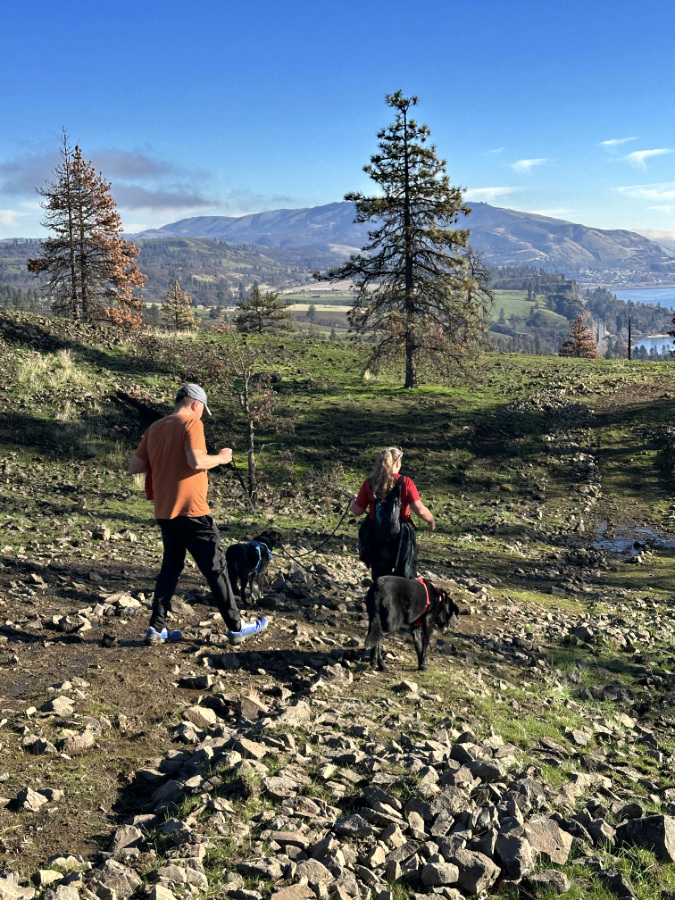
What should have been a relaxing, rejuvenating day on the trail for this couple turned into an ankle-twisting exercise in frustration as they discovered that part of the Bitterroot Trail had been destroyed, replaced by a crude cat road. Here, they are descending the steep, loose section shown in the previous photo.

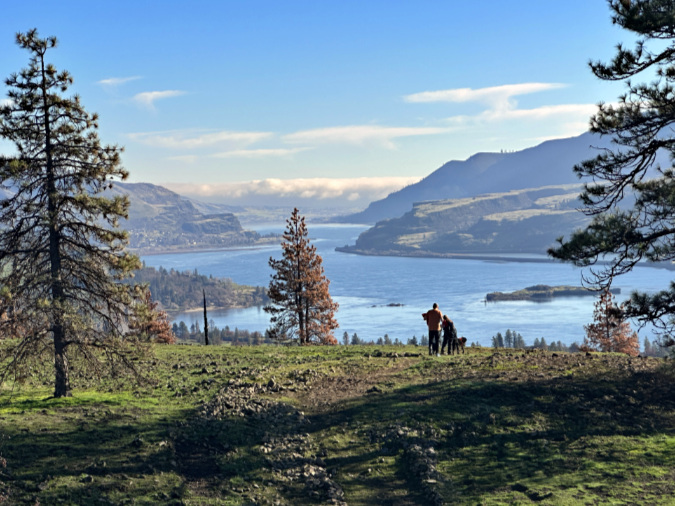
While a section of the Bitterroot Trai has been destroyed, the views have not. This pair stopped to take in the sweeping panorama before continuing their scramble along the new cat road to the resumption of the Bitterroot Trail.

As I watched the pair shown above struggle through the frustrating mess, then suddenly pause at the astonishing view that unfolded before them, I regained my optimism that we can make this right. Catherine Creek – and the Gorge – are simply too precious to be treated this way. This is undeniably a world-class landscape, and even if our public land agencies don’t always live up to that standard, I do believe that our collective appreciation of the unique beauty and vulnerability of landscape will lead us to do better.

Next up: Catherine Creek East

The third and final piece in this series is more uplifting (I promise!) and will focus on the eastern savannah of Catherine Creek, where the fire was more clearly beneficial in sustaining the grassland ecosystem. 

Thanks for taking the time to read this far, and for visiting the blog!

_____________

Tom Kloster | February 2026
(Postscript: have you visited the new companion WyEast Images Blog? Be sure to subscribe while you’re there!)

The Burdoin Fire – Part 1: Resiliency

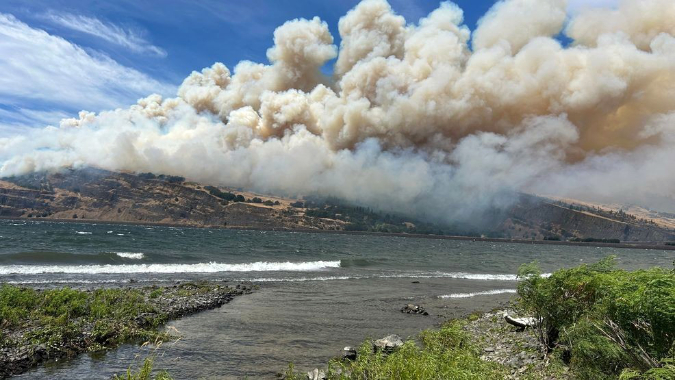
The Burdoin Fire was already moving east toward Coyote Wall on July 18, 2025, just hours after it started (photo: KVAL)

The Burdoin Fire erupted along the shoulder of Washington State Route 14 on a warm Friday afternoon last July, about two miles east of the town of White Salmon. Like most wildfires in the Gorge, it was human-caused and could have been prevented. Fanned by summer winds, the fire quickly spread eastward, sweeping across some of the best-known, most treasured public lands in the Columbia River Gorge, burning through iconic places like Coyote Wall and Catherine Creek. 

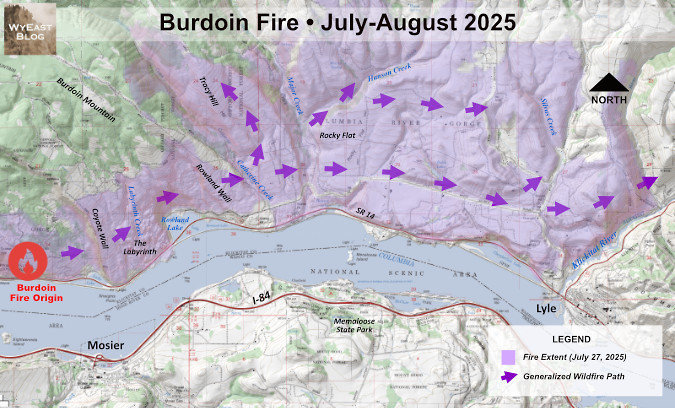
On just the second day, the fire had roared into the Catherine Creek area and was now threatening the town of Lyle, a full seven miles upriver from its origin. That day, the Klickitat County Sheriff issued a Level 3 “Go now!” order and the town and surrounding area were evacuated. More than 900 wildland firefighters would eventually be on the ground over the next two weeks to help contain the blaze. The map below shows the general path of the fire over the days that followed.

[click here for a large version of the map]

By the time it was controlled in mid-August, the fire had burned a swath nearly 10 miles long and blackened more than 11,000 acres.  Though the town of Lyle was spared, more than 100 structures were lost in the fire. No lives were reported lost in the event. The full scope of the impact on the Oak Savannah ecosystem remains unknown until spring, when it will become clear how the Oregon white oak trees fared. This 3-part series of articles is a snapshot in time as of early December, when the ecosystem recovery had visibly begun, but with many questions about long-term resiliency unanswered.

What’s dead and what’s alive?

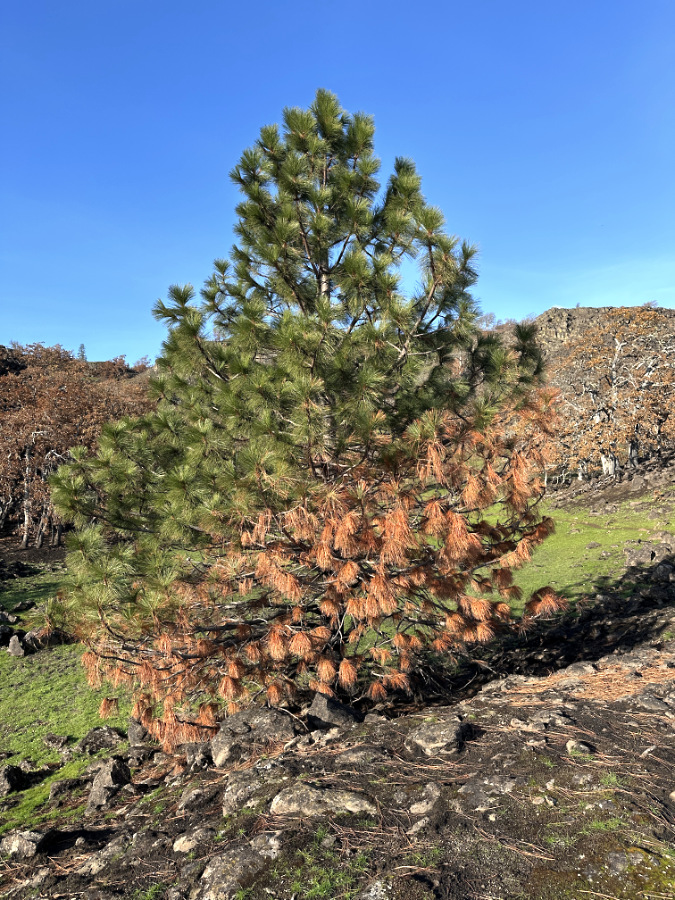
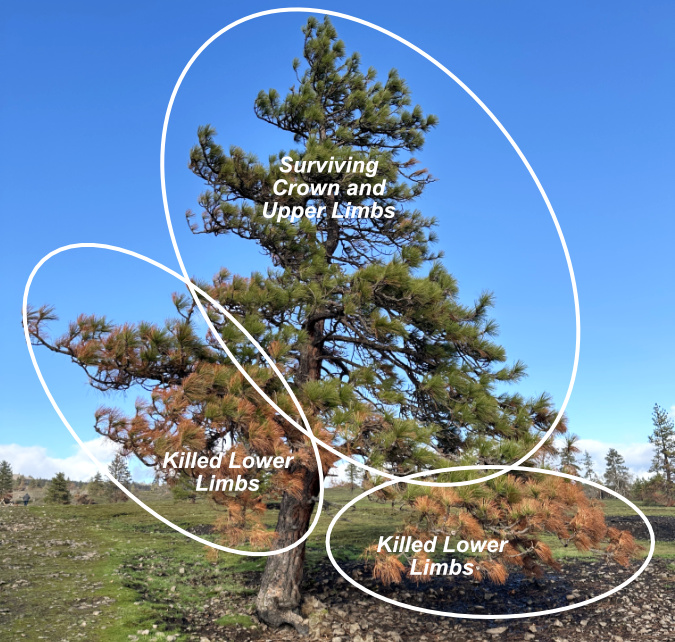
With Ponderosa pine it’s easy to see where fire has killed limbs or whole trees simply by where green foliage remains a few months after a fire. Sometime conifers can produce new growth from limbs whose needles were browned or even burned off by fire, but usually they sacrifice these limbs and focus their energy on green, healthier limbs. 

The impact of fire on conifers is almost immediate, with burned areas turning brown (or with foliage completely burned away) and surviving areas retaining their green, living foliage.

There’s a benefit to sacrificing low-hanging limbs that is an evolutionary adaptation for fire-dependent conifers like Pondersosa pine, Western larch and Douglas fir. By shedding lower limbs over time, whether through exposure to fire or simply aging, they reduce the risk of these limbs providing a “ladder” for intense fires to climb into the crown of a tree, which it is much less likely to survive. Their fire-adapted thick bark, especially on older trees, helps protect the trunk against all but the hottest fires.

Over the longer term, conifers that lose more than half their foliage will often struggle to rebuild a canopy sufficient to survive, so in the years following a fire some heavily impacted Ponderosa pine in the Burdoin area may weaken and eventually lose the battle. 

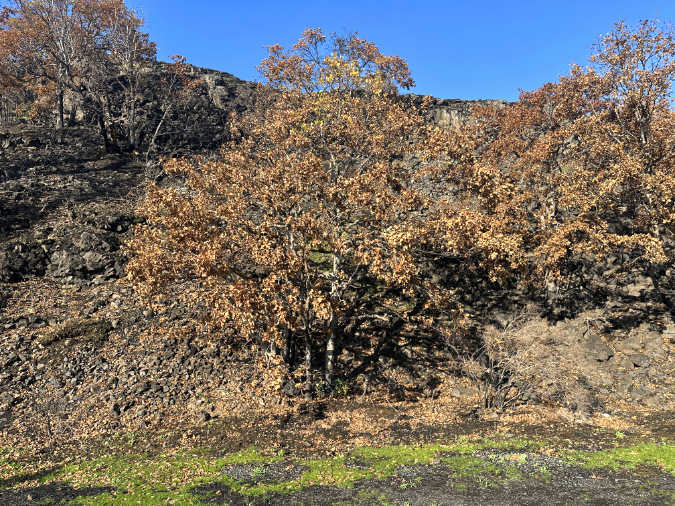
For deciduous trees in the dry East Gorge, like the dominant Oregon white oak and occasional Bigleaf maple, the visual impact of fire in the months after a burn can be counter-intuitive. With most fires occurring in the dry summer months, the immediate impact is browned leaves left hanging on scorched limbs, killed by the heat but not completely burned away. In fall, healthy leaves on surviving trees will turn color and drop naturally, following their annual cycle. 

Understanding what survived on deciduous trees in the first winter after a fire is counter-intuitive, as the burned limbs and trees typically don’t drop their leaves in fall.

However, brown, killed leaves tend to hang on during the first winter, whether on just a burned limb or an entire tree killed in the fire, thus interrupting the normal process of dropping leaves in fall as they enter winter dormancy. Trees or limbs killed by fire are thus frozen in time, with brown, dead leaves hanging from killed limbs seeming to be the survivors, and healthy, bare limbs seeming to be killed by the fire. After the first winter the burned leaves will eventually drop off, and when new foliage emerges in spring the surviving trees will be more intuitive – green foliage on the survivors, with bare limbs and trees showing the true impact of the fire.

Learning from the Aftermath in Three Parts

With any wildfire, there is much to learn in the immediate aftermath, and this is especially true in the oak savannah grasslands of the East Gorge, where a single season of regrowth can erase much of the visible burn scar left from a fire. This 3-part series is a virtual survey of the aftermath of the 2025 Burdoin Fire in three separate areas of the burn (shown on the map, below), each centered on a popular trail and each with a different story to tell.

[click here for a large version of the map]

This first installment examines the west end of the fire, nearest its origin, where it burned across the area known as the Labyrinth. The second installment will focus on open savannah country between the Rowland Wall and Catherine Creek, and an area that had already burned in the fall of 2024. The third installment will survey Catherine Creek canyon and the burned savannah areas to the east of the canyon. The trail routes followed for each survey are also shown on the above map. The photos for these tours were taken in December 2025.

The Labyrinth: A Story of Wildfire Resiliency and Renewal

Few trails in the Gorge reveal the power of the ice age Missoula Floods that shaped the landscape like the Labyrinth Trail, which winds through a tortured landscape of basalt walls, fins and mesas stripped bare to bedrock by these massive floods just 13,000 years ago – a geologic blink of an eye. 

The trail corkscrews steeply upward through this rocky maze until it suddenly reaches the gentle, wildflower-filled upper slopes. Here, above the high-water flood levels that rose to be as much 600 feet deep, soils were left intact. We’re only beginning to understand the scale of these floods, though scientists now believe there were at least 40, and perhaps as many as 100 of these catastrophic events over two millennia, shaping the rugged Gorge as we know it today.

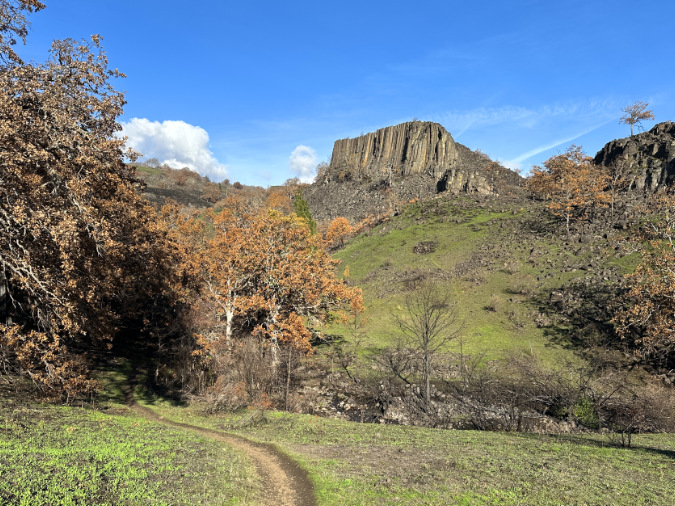
The basalt mesa known to hikers as Accordion Rock rises above a burned landscape in the Labyrinth. Bright green grasses and meadow wildflowers had already begun to emerging by late November, just four months after the Burdoin Fire had burned through. The Oregon white oak trees in this view aren’t showing fall color; instead, these are leaves killed by the fire and left hanging long after healthy oaks have dropped their leave and entered winter dormancy. We won’t know the full impact of the fire on trees like these until spring.

Along its route, the Labyrinth trail passes through dense groves of mostly stunted Oregon white oak and scattered, often stunted Ponderosa pine growing in the thin soils that exist within the flood-scoured maze of the Labyrinth. Trees in this area were hit hard, in part because they live a stressed life in the already harsh conditions. By comparison, the deeper soils and gentler slopes above the Labyrinth support thriving groves of large oaks and impressively tall Ponderosas. Size and vigor matter for trees exposed to fire, and trees on these upper slopes seem to have fared somewhat better, at least at this early stage of recovery. We won’t really know until spring.

This was the first major fire to hit the Labyrinth in many years, another factor shaping how and where the burn impacted the landscape, as some of the most impacted areas are where a dense understory vulnerable to fire had formed over decades, often with accumulated debris in the form of fallen trees and limbs. This had a striking impact in fueling the flames in ways that can already be seen in just the few months since the fire, so there is already much to learn about fire resiliency and ecosystem renewal in the Labyrinth.

The Fallen Oaks

Together with Ponderosa pine, our native Oregon white oaks are a keystone species in the East Gorge, supporting hundreds of species of wildlife that rely upon them. One of the important benefits they bring are the signature cavities that form in older trees where they have been scarred or have simply shed limbs, providing critical shelter for wildlife. 

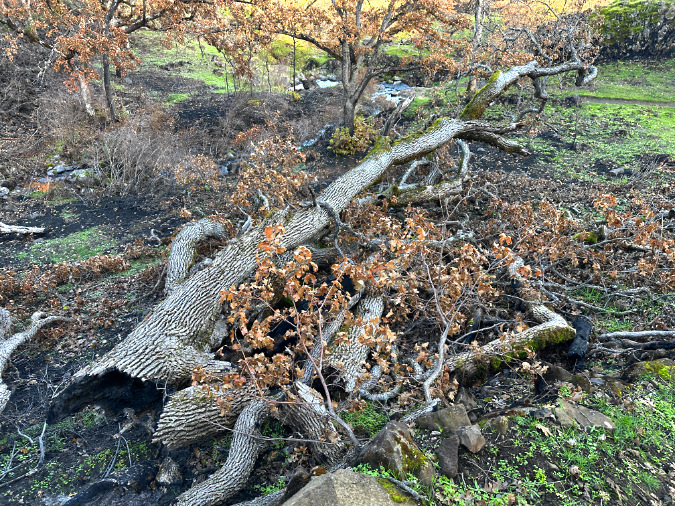
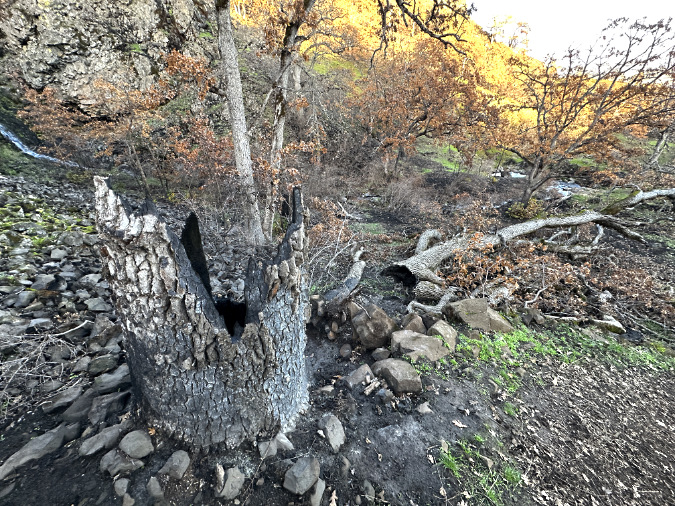
The fire aftermath along the Labyrinth Trail shows how fire can both create these cavities while also exploiting them to topple whole trees. By creating new scars, fires can expose heartwood that will eventually decay to become hollows. Yet, the same openings also allow fire to reach dry heartwood, ultimately felling entire trees by burning them from the inside out. There are many large oaks that met this fate throughout the Labyrinth 

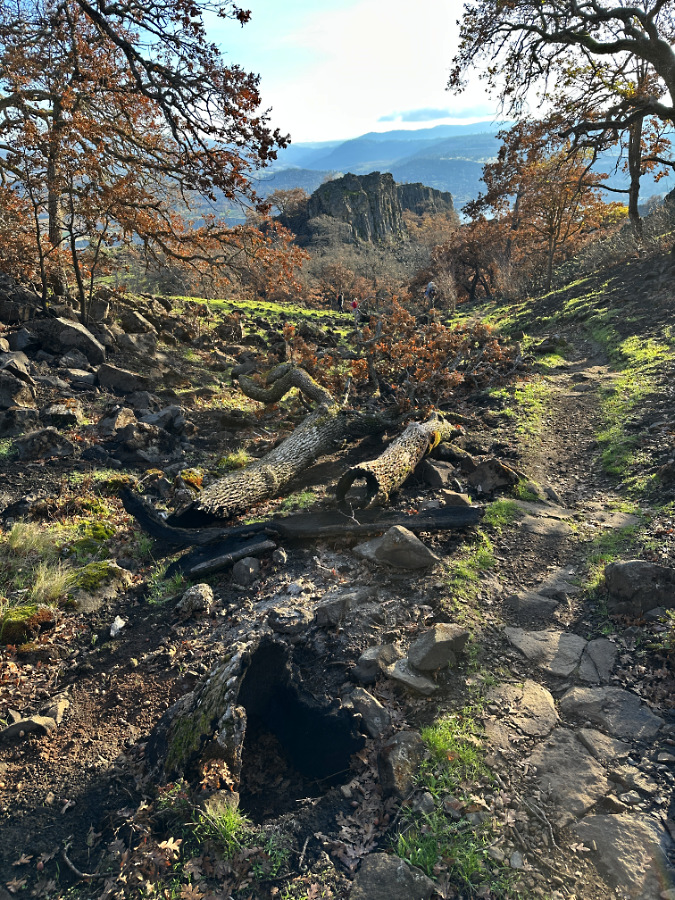
This big oak along the Labyrinth Trail was felled by the fire, yet it didn’t entirely burn. Instead, the fire burned from inside the tree’s hollow base. The unburned bark and browned leaves on its downed top suggest that it fell after the main fire event had move eastward, yet left the tree’s hollow core smoldering until it finally collapsed under its own weight.

This is the stump of the tree shown in the preview view (the top can be seen in the background) showing how the fire burned inside the tree long enough to completely hollow it, eventually causing the tree to collapse.

This big oak along the Labyrinth trail met a similar fate, with its charred, hollowed-out stump in the foreground and the tree’s  collapsed, unburned trunk and limbs beyond.

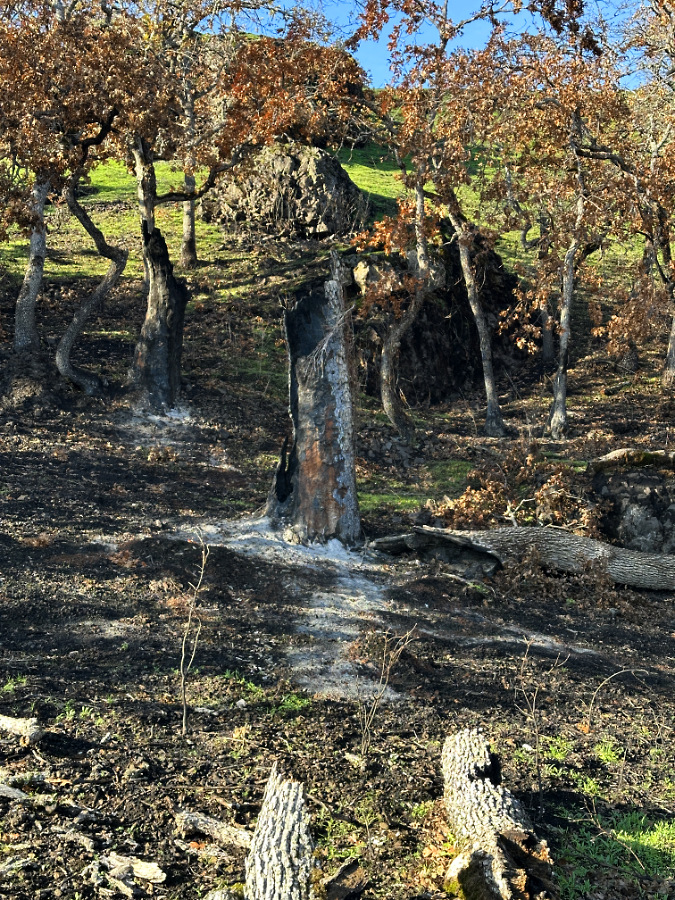
This big oak was also toppled by fire burning within its hollow trunk. Part of the tree’s top is lying to the right, unburned because it likely fell after the fire had already swept through and consumed the understory brush and debris here. The blackened area in front of the tree tells the story of a main trunk that had enough deadwood inside to fuel a complete burn, leaving only a white line of ashes to mark where it fell.

This wide view of the previous fallen oak shows the line of ashes left from the completely burned main section of its trunk and a scattering of green, upper limbs left mostly unburned by the fire. Like the previous examples, the unburned bark on these limbs show that the tree fell sometime after the fire had already cleared the understory here and moved eastward.

Oak Showing their Resilience

In the central Gorge, where the Eagle Creek Fire roared through in 2017, Bigleaf maple have emerged as a super-species in the forest recovery process. Throughout the lower elevations of the Gorge fire burn scar, thickets of new leaders exploded from the stumps of burned Bigleaf maple trees within a year. Today, many of these newly sprouted stems have grown to be 10-15 feet tall. Over time, 3-5 of these leads will become dominant. We know this from the mature,  multi-trunked rainforest maples that are so familiar and iconic in the Gorge – only, now we can better understand one reason why this form is so common.

This survival strategy is much the same for Oregon white oak. While they lack the thick, protective bark of a Ponderosa pine to protect the living cambium layer beneath their bark, many oaks along the Labyrinth Trail are already cashing in their adaptive insurance policy by pushing up new shoots from their base. This, just months after the fire and long after the normal spring growing season, shows how completely adapted to – and reliant upon – wildfire our native oaks have become.

Like many of the Oregon white oak in the Labyrinth, this tree looks quite dead at first glance, still covered with killed foliage that should otherwise have been shed with the fall leaf drop. But a closer look….

…reveals this oak to have already pushed up new shoots from its intact roots.

Still more surprising, new growth was also emerging from the main trunk, where the tree’s bark was thickest and protected the tree just enough to lose its limbs to the fire, but not its main trunk.

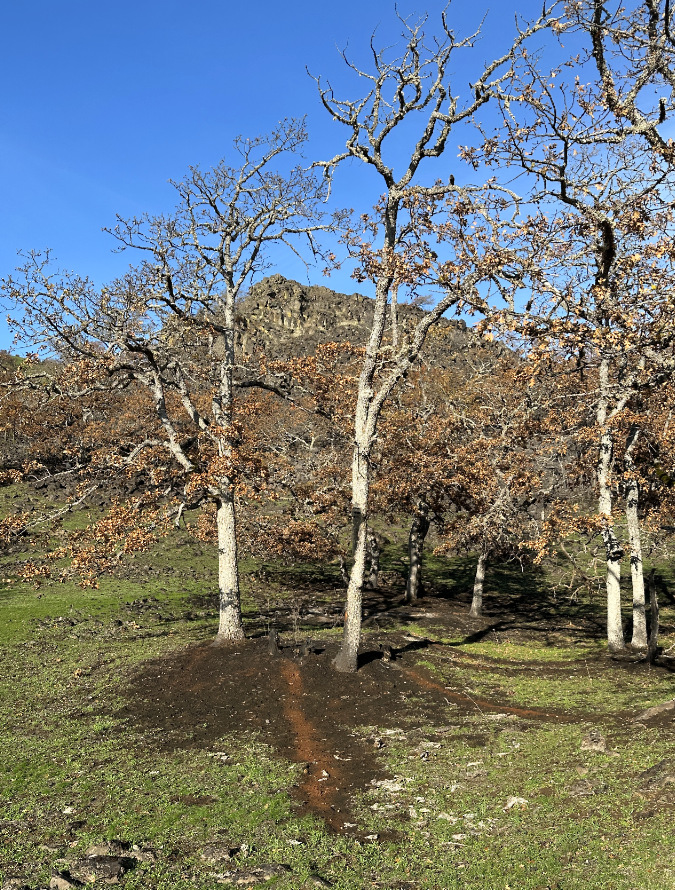
This grove of oaks in the Labyrinth was cleared of most of its understory and accumulated debris by the fire. Many of the lower limbs have been killed by the fire, as revealed by the scorched leaves still hanging from the lower third of these trees. The upper limbs survived long enough to shed their leaves in the fall, leaving them bare for the winter and more likely to produce new foliage in the spring.

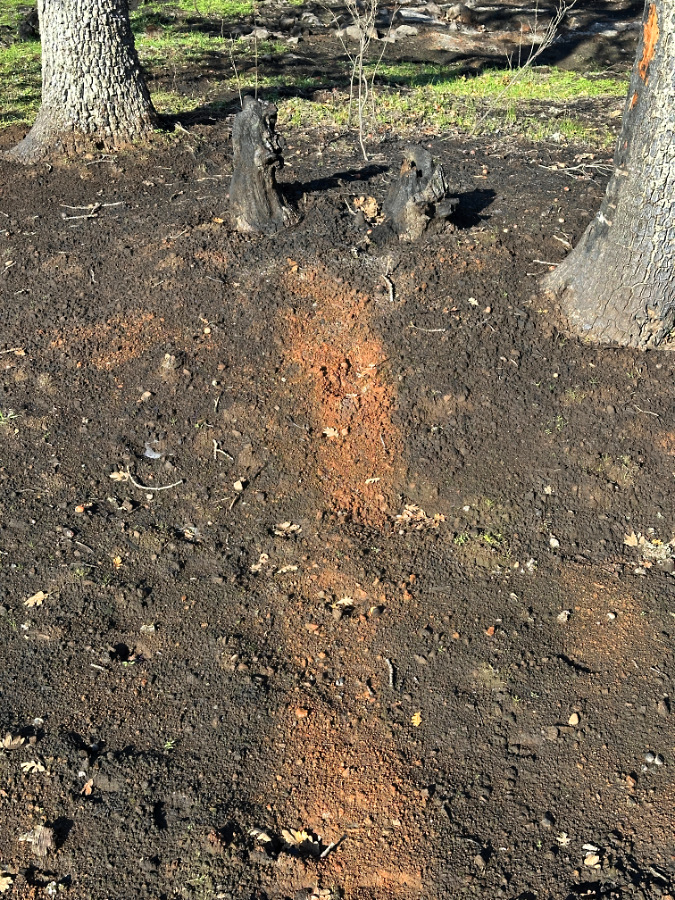
This close-up view of the previous image shows a rusty stripe within a larger bare patch extending from a burned-out stump – all are telltale signs that a tree that was downed in the fire (or perhaps already on the ground), and burned long and hot here. The lingering embers burned hot enough to turn brown, living soil into red, mineral soil, marking where the fallen tree trunk lay. The surrounding, darker soil marks the area where the fire had sufficient fuel to burn long enough to kill the roots and seeds of understory plants that are otherwise rebounding around this cleared patch.

It’s hard not to become attached to iconic trees, and this picturesque twin-trunked oak at the top of the Labyrinth is a sentimental favorite to many. Though the fire swept through here, this fine tree seems to have survived… though we won’t know for certain until spring foliage appears.

A closer look at the charred area to the right of this iconic oak shows how narrowly this tree dodged the fire – just a few inches that might have decided its fate.

In the upper meadows above the Labyrinth, the oaks are much larger, thanks to deep soils above the flood-scoured Labyrinth. However, the better soils here and an absence of fire in recent years also contributed to an overgrown understory and accumulation of debris that completely burned away in the fire. We’ll know in the spring if the heat from this intense burning was too much for these big groves to survive.

Bigleaf maple aren’t common in the East Gorge, though they thrive in niche locations along cliff walls and protected gullies that produce groundwater seeps and concentrate stormwater sufficient for them to live in this desert climate. This Bigleaf maple clearly lost its lower limbs to the fire – those still covered in scorched foliage – but its upper limbs lived to shed their foliage normally in the fall, suggesting the fire move fast and low here, allowing the main trunk and upper limbs to survive.

Another bigleaf maple in the Labyrinth that seems to have survived the fire, with the yellow leaves on the left making limbs that survived long enough to turn in the fall and scorched leaves on the right that were killed in the fire. Like the oaks, we’ll know in the spring whether these maples have survived the fire to grow for another season.

Mighty Ponderosa

Ponderosa pines are scattered throughout The Labyrinth, with some of the largest, most stately trees growing in the upper meadows, well above the Missoula flood zone. While these trees are completely adapted to periodic, low-intensity fire with their protective, fire-resistant bark and high limbs, the Burdoin Fire managed to reach the crowns of several of the largest Ponderosa along the Labyrinth Trail, revealing the intensity of the fire. Most of these trees still hold green foliage, but their loss of living canopy will slow their growth for many years, and some may not survive the loss of foliage over the long term. 

Smaller Ponderosa pine are highly vulnerable to fire, as they haven’t had time to build up a protective bark layer and their foliage is still close to the ground, creating an easy “ladder” for fires to climb into their canopy. Thus, many of smaller Ponderosa along the Labyrinth Trail were killed by the fire. Unlike their adaptive oak neighbors, pines don’t grow new shoots from their roots, so it will be up to the surviving large Ponderosa to re-seed the area in the aftermath of the fire.

This big Ponderosa pine in the hearth of the Labyrinth lost most of its foliage to the fire due to a “ladder” of low limbs that allowed the fire to climb into its crown. Ponderosa have evolved to thrive with frequent, low-intensity fire, shedding their lowest, scorched limbs to become even more resilient for the next fire event. In the absence of regular fires, this big Ponderosa matured with its lower canopy fully intact, exposing it to a crown fire when an intense burn like the Burdoin Fire finally arrived.  If this tree survives, it will take many years to build enough new canopy to bring the tree back to health.

This young trailside Ponderosa didn’t have a chance, but upon closer inspection…

…a pair of young oaks sharing space with the pine are already pushing up new shoots from their surviving roots, a super-power that allows oaks to quickly bounce back after fire in the East Gorge..

This young Ponderosa passed the test, sacrificing lower limbs to the fire, yet retaining its crown. Eventually shedding those killed lower limbs will help the tree survive future fires.

This large Ponderosa in the Labyrinth, with its tall canopy and high limbs, seems to have survived a hot spot in the fire that was intense enough to kill most of the oak grove that surrounds it. This pine might be old enough to have experienced wildfire in the distance past, before aggressive fire suppression began.

These large Ponderosa in the upper meadows enjoy deep soils and better growing conditions than the rocky Labyrinth areas, below. The large tree at center has clearly survived and been made more fire resistant in the future by losing its lowest limbs to the fire.

A closer look at this tree shows that both of its young offspring still have some green foliage, and have a chance of surviving, as well.

From the west, this towering Ponderosa at the top of the Labyrinth Trail seemed to fare reasonably well at first glance, losing a few of its lower limbs to the heat. However…

…the entire east side of its canopy burned, nearly to the top of the tree, providing an example of the ladder effect on large trees that retain limbs within the reach of fire. The fact that this tree had low limbs also suggests that it has not faced a wildland fire in its many decades of growing here, if ever. Though this tree lost at least half of its canopy, the crown is intact and the tree  stands a good chance of slowly recovering over time.

A closer look at the base of this big pine shows a wide charred area where meadow perennials have haven’t bounced back. Why? This blackened area marks where a dense patch where the accumulation of understory brush and fallen debris fueled the fire long and hot enough to climb into the canopy of the big pine and kill the roots of the understory plants. This is a good example of how savannah fires can convert woodlands and brushy areas back to grassy meadows.

This group of young pine skeletons were offspring of the big pine and part of the brush and fuel buildup that put the large tree at risk. Crowded Ponderosa pine seedling colonies like these were among the hardest hit by the Burdoin Fire.

Understory Heroes

Beneath the canopy of those big keystone tree species are a multitude of shrubs, small trees, wildflowers, ferns and grasses that complete the savannah ecosystem in the East Gorge. Like the oaks and pines, these species are also well-adapted to fire, relying upon it for their periodic renewal. 

This is most evident with perennial wildflowers, ferns and grasses that had already begun to emerge on charred, black slopes in a carpet of bright green, quickly sprouting from their surviving roots soon after the first fall rains arrived in September. Our mild winter (thus far) has only helped them continue to slowly grow and recover ahead of the spring growing season.

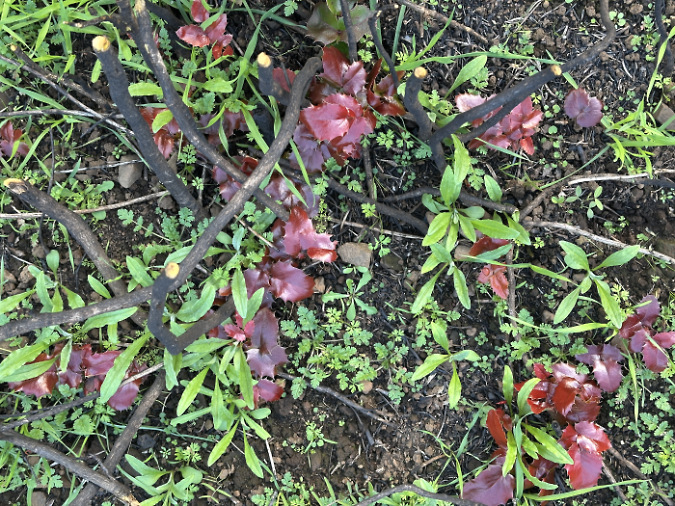
Native shrubs were also largely torched by the fire, though the roots of many survived and have also begun to regrow, renewing themselves with young vigorous stems that will replace old, woody thickets. For these plants, periodic low-intensity fire is an essential rejuvenator in the savannah environment.

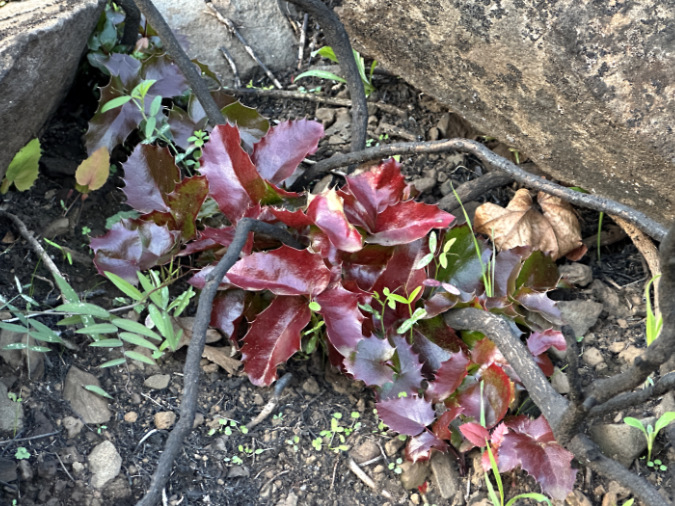
Oregon grape respond well to fire, pushing brilliant, vigorous new foliage up from its roots within weeks to replace burned thickets of old stems.

These emerging Oregon grape stems are surrounded by wildflowers and grasses that are also recovering quickly throughout the Labyrinth.

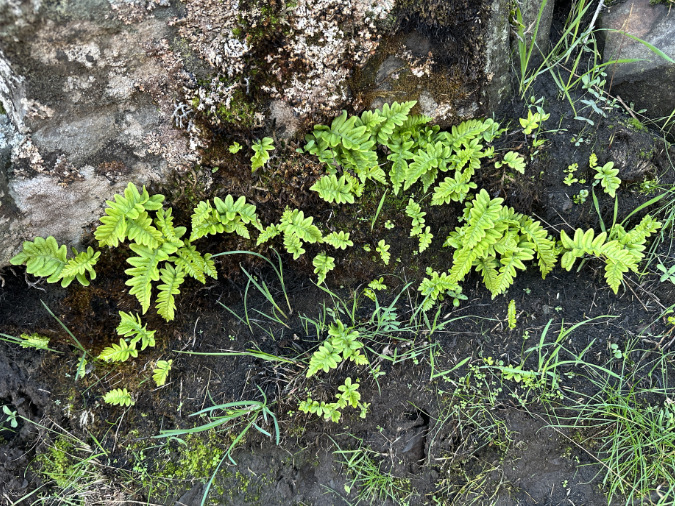
Ferns in the Labyrinth are mostly dormant in the dry months, dropping their foliage when the summer drought begins, then re-emerging for the winter months when rains return in fall. This timing worked well for these Polypodium ferns, whose underground rhizomes survived the heat and are already pushing up another season of winter fronds.

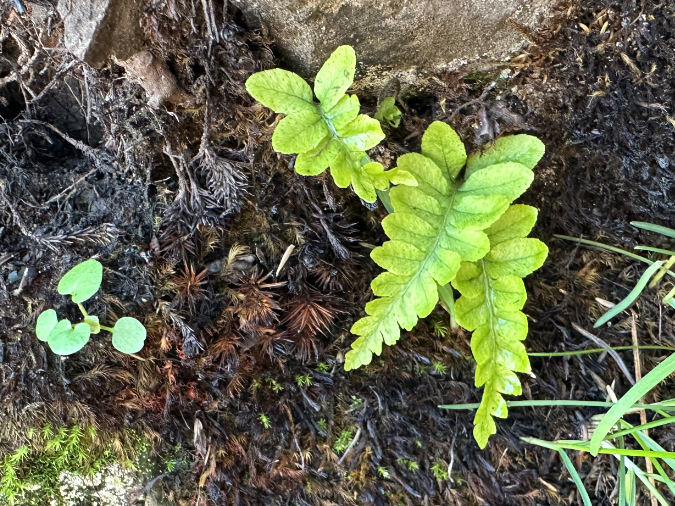
The fire was hot enough in this spot to kill a thick layer of moss where it bordered a boulder in this view, yet the dormant fern rhizomes underneath survived to push up tiny new fronds once cool fall temperatures and rain showers returned to the Labyrinth.

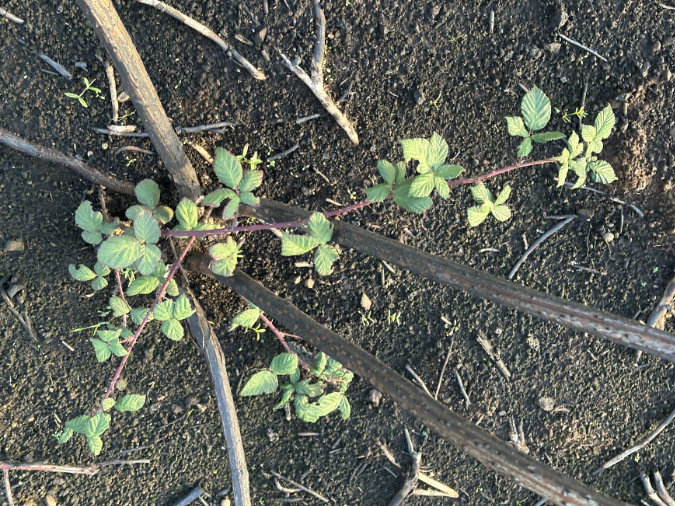
Invasive plants are opportunistic and can take hold after fires like the Burdoin. This invasive blackberry was already here, however, and is quickly rebounding.

One of the surprising effects of fire in the East Gorge is how meadow rocks superheat from the flame, holding their heat long enough to kill the roots and seeds in the soil around them. This ring-of-death effect is common throughout the open savannah areas of the Burdoin Fire.

The moss on this large boulder tells a unique story: the fire burned low and fast here, enough to kill the moss on the 2-foot high face of the boulder, yet not sweep over it – and not hot enough to kill the roots and seeds in the soil that are already emerging.

Among the recovering shrubs is the nemesis of Gorge hikers, our native Poison oak. Beyond its toxic quality that makes it a bane to humans, this is an important understory species for wildlife who don’t mind is toxins, relying upon it for cover and forage. Deer are immune to its urushiol oil, and browse the foliage from spring through fall and its stems in winter. Birds feed on its attractive (if toxic to us!) berries. The ability of Poison oak to quickly bounce back from fire may be bad news for hikers, but it’s good news for wildlife and the health of the larger ecosystem.

If it didn’t make us itch, we’d grow it in our gardens. Useful to all but humans, these Poison oak are bouncing back with vigor from their surviving roots and underground stems. Sorry, hikers!

Two old icons…

These are two Oregon white oak giants along the Labyrinth Trail that I would be remiss if I did not report on, as they are well-known to hikers, and are truly impressive trees.

This sprawling oak (below) is not far from the trailhead, with an infamous long, horizontal limb (on the left) that is low enough to make many hikers duck as they pass under it. The trail curves under the limb, then through a gap in the rocks just behind the tree, making this a memorable spot on the trail. 

This familiar oak with his head-bumping lower limb looks to have survived the fire largely intact.

Looking down the long head-bumping limb from behind the oak reveals a burn scar on the back of the trunk that will likely become a hollow someday if the tree is unable to close the wound with new bark.

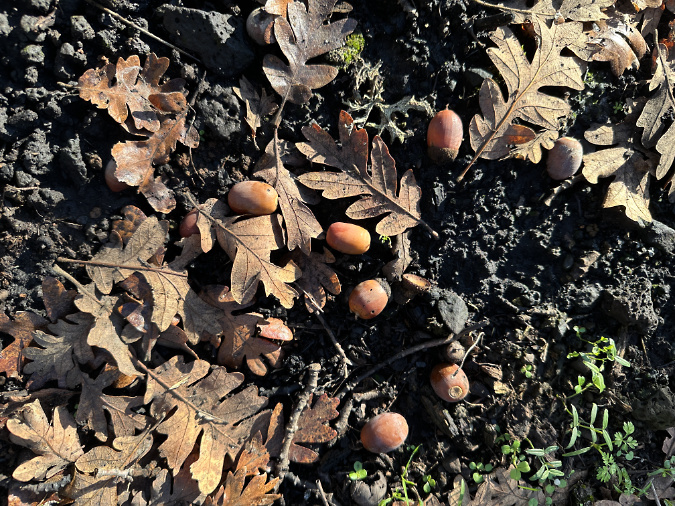
A sign of new growth to come in spring, healthy, fallen leaves and fully developed acorns give reason for optimism that the head-bumping oak will leaf out once again this spring.

Like most of the fire-impacted oaks, we won’t know for sure if this big tree has survived until spring. The fire burned hot enough here to completely clear the understory and all debris, right up to the rocky outcrop beyond the tree, leaving a burn scar on the tree’s trunk in the process. However, its limbs do seem to have sprouted some late season growth, giving a hint that it will survive largely intact, ready to bump more hiker heads for years to come.

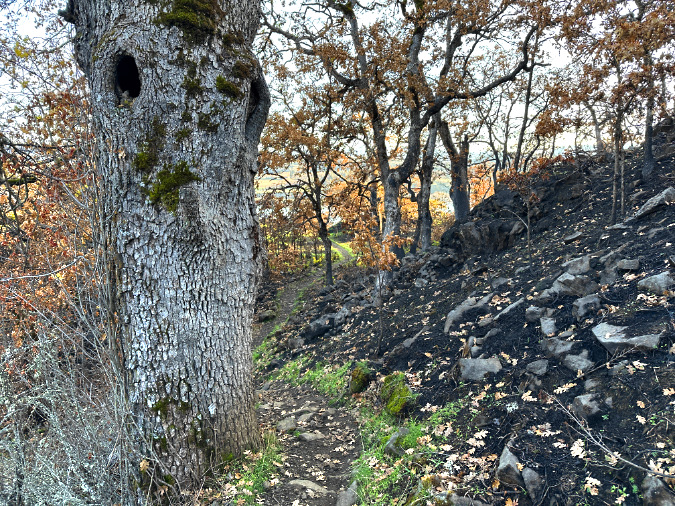
A second iconic giant is just a few dozen yards uphill from the first big oak, and it fared quite well. As you can see in this image (below), the trail served as a fire break of sorts, and this very old tree seems to be largely untouched by the flames — though the heat many have scorched some of its lower limbs that hang above the blackened area on the slope to the right. 

This giant, old trailside oak seems to have survived the fire almost completely unscathed.

Had the fire reached the base of this ancient oak, it could easily have found its way into the heart of the tree, as its trunk holds numerous large cavities that are part of what make this tree so iconic.

Next up: Catherine Creek West

Part two of this 3-part series will focus on the western savannah of Catherine Creek and the Rowland Wall, an area that was hit hard by the Burdoin Fire just nine months after the Top of the World Fire had raced through. This area has a tougher story to tell, but one with important takeaways for those who love the Gorge and seek to protect this place. I’ll have this second installment posted shortly.

As always, thanks for taking the time to read this far, and for visiting the blog!

_____________

Tom Kloster | February 2026
New! Have you visited the companion WyEast Images sister blog? Have a look and be sure to subscribe while you’re there!